Khan Academy is the best math learning app for most learners: it is completely free, rated 4.5 out of 5 on G2, and covers math from early arithmetic to calculus with short videos and practice. Pick IXL for standards-aligned school practice, or Photomath for step-by-step help with homework problems.
How we make this list: we compare pricing pages, product documentation and public user reviews, then re-check every price before each update. No product paid for a place. Disclosure.
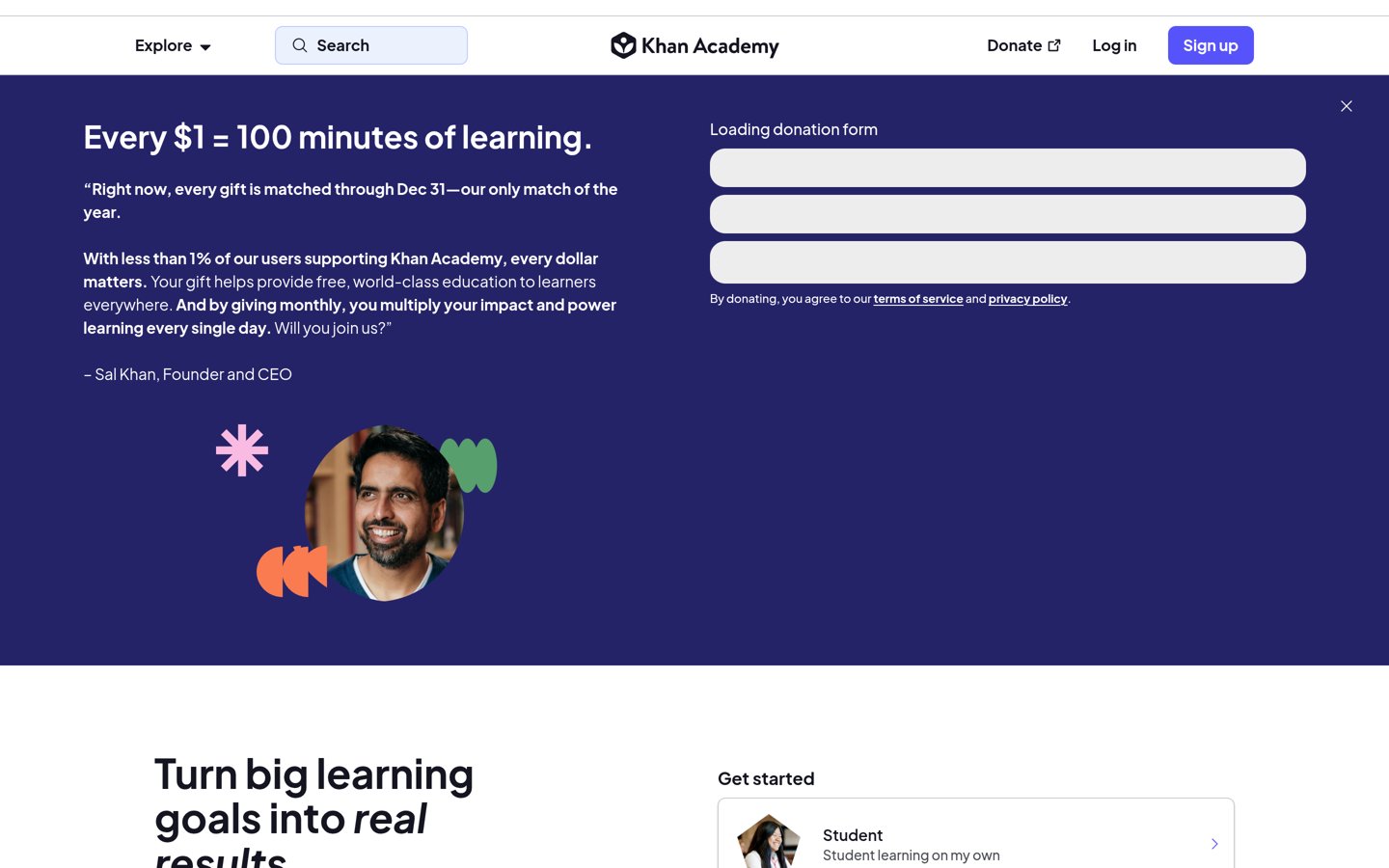
Khan Academy is free and covers math from early arithmetic to calculus, with video lessons and practice at every step.
IXL is the strongest school-aligned practice app, with 4,900+ math skills from pre-K to calculus and a $79 a year single-subject plan.
Brilliant teaches through interactive problems rather than lectures, but Premium costs $240 a year at its regular price.
Photomath and Symbolab solve problems step by step; Photomath scans with a camera, Symbolab covers 500+ calculators.
Prodigy, DreamBox, SplashLearn and Matific are built for kids, and all four use games or adaptive lessons to keep practice going.
Six of the nine apps have a genuinely free plan; paid plans in this list run from $29.99 to $240 a year.
What to look for in a math learning app
A math app should teach, not just check answers. The best ones explain a concept first, then give practice that adjusts when a learner gets stuck.
Age range matters more than the feature list. Apps built for young children use games and short sessions, while apps for teens and adults focus on algebra, calculus and test prep.
Free plans vary a lot. Some apps give away the full curriculum, while others show answers for free and charge for the steps, so check what the free plan actually includes before paying.
Short quizzes show whether a lesson stuck. Our guide on creating a quiz in LearnDash explains how quick checks catch gaps early, and the same idea works when you review any app.
Khan Academy is a free nonprofit learning platform with video lessons and practice covering math from early arithmetic to calculus. Learners watch a short video, try practice problems, and move on when they show mastery, with progress tracking for parents and teachers and no ads anywhere on the site.
The trade off is depth of feedback. Khan Academy explains concepts well but gives less personal guidance than a tutor, and its practice questions can feel repetitive for a child who already knows the topic. It suits families who want a free, complete math course from elementary school through high school.
4.3/5on App Store (206,096 reviews, checked Nov 2026)
Paid from$79/yr
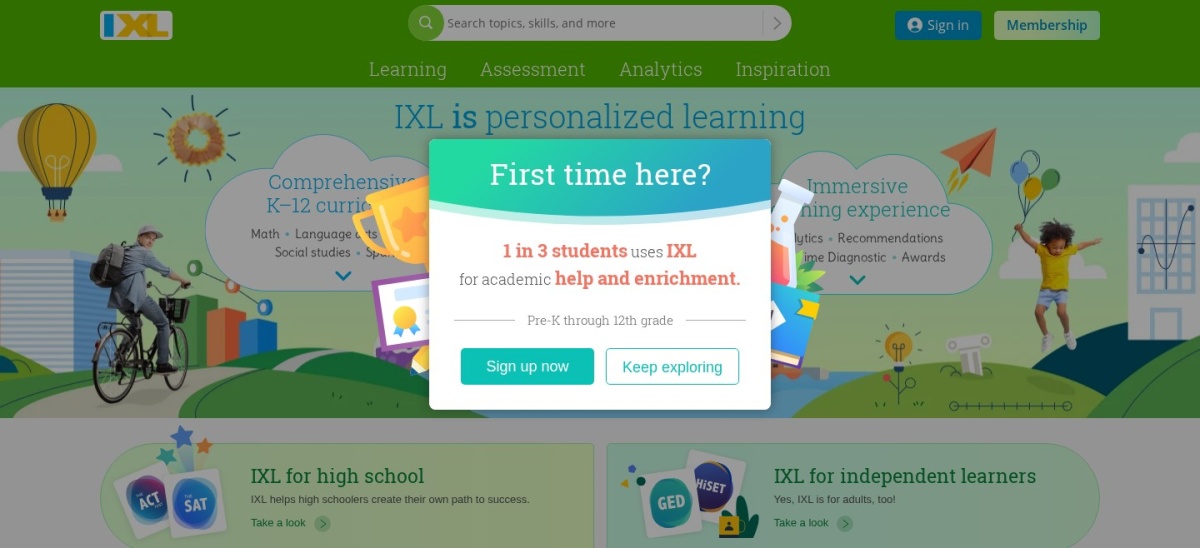
Best for school-aligned math practice
Math skills4,900+, pre-K to calculus
DiagnosticReal-Time, 45 min per subject
SubjectsMath, language arts, science
Single subject$79/yr, 30-day guarantee
ixl.com
IXL homepage, captured Nov 2026.
IXL is a practice platform with 4,900+ math skills from pre-K to calculus, each mapped to school standards by grade. A Real-Time Diagnostic finds a child's level in about 45 minutes per subject, then the SmartScore system tracks mastery from 0 to 100 as questions get harder.
The trade off is teaching. IXL drills skills rather than explaining new ideas, and the SmartScore can drop sharply after a wrong answer, which some children find discouraging. It suits families who want structured practice that matches schoolwork and detailed reports on progress.
What we like
Skills mapped to school standards by grade
Diagnostic pinpoints gaps in 45 minutes
Detailed parent and teacher reports
Covers pre-K to calculus in one plan
Watch out for
Practice, not lessons: it rarely teaches a new idea
4.2/5on Trustpilot (3,000 reviews, checked Nov 2026)
Paid from$240/yr
Best for teens and adults who like puzzles
Courses60+ interactive STEM courses
AI tutorKoji, on Premium
Free tierDaily problems, limited
Premium$240/yr, 7-day trial
brilliant.org
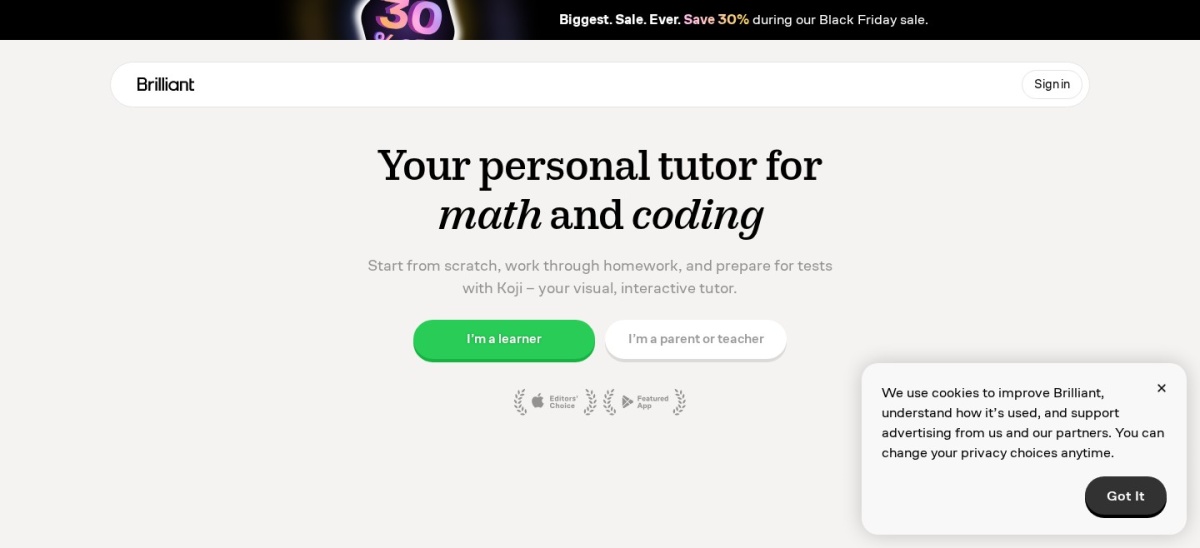
Brilliant homepage, captured Nov 2026.
Brilliant is an interactive learning platform that teaches math, science and coding through problems you solve rather than lectures you watch. Its 60+ courses use diagrams and short challenges, and the Koji AI tutor asks guiding questions and sketches on screen until the idea clicks.
The trade off is price. Premium lists at $240 a year at its regular price, and the free tier only gives a few problems a day, so real study needs the subscription. A Black Friday sale cut the yearly plan to $168 at the time of writing. It suits teens and adults who enjoy working problems out themselves.
4.8/5on App Store (733,151 reviews, checked Nov 2026)
Paid from$69.99/yr
Best for step-by-step homework help
Camera scanYes, printed and handwritten
Math rangeArithmetic to calculus
Free tierStep-by-step solutions
Plus$69.99/yr, animated tutorials
photomath.com
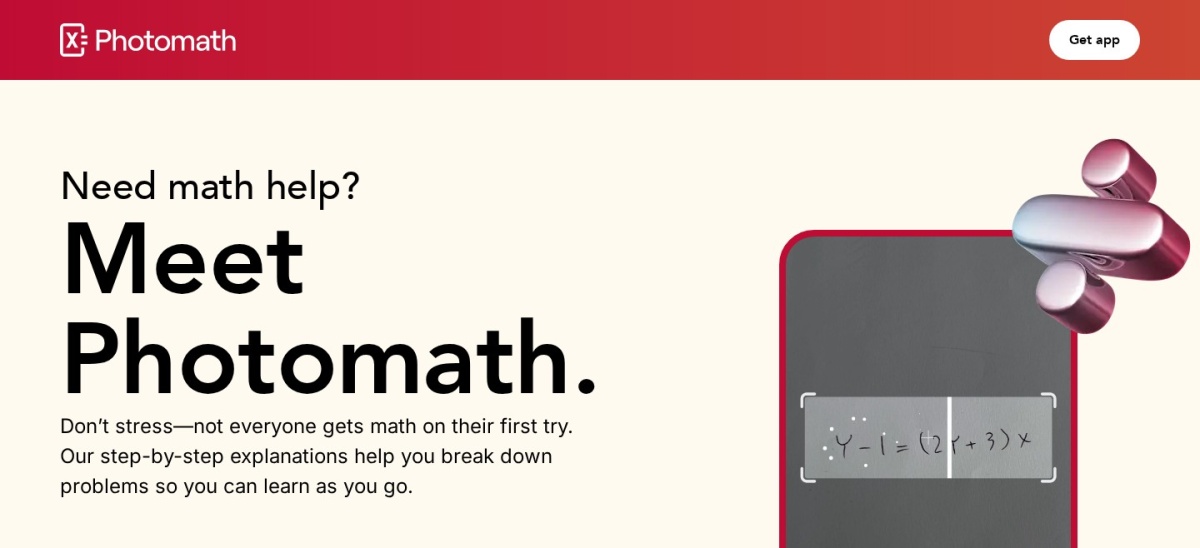
Photomath homepage, captured Nov 2026.
Photomath is a camera-based math solver from Google that reads a problem, printed or handwritten, and shows the solution step by step. The free version covers arithmetic through calculus with worked solutions, and it explains the method behind each answer instead of only giving the result.
The trade off is that the deepest help is paid. Animated tutorials, extra hints and textbook solutions need Photomath Plus at $9.99 a month or $69.99 a year, and a scan can misread messy handwriting. It suits students who want to check homework and learn the steps behind an answer.
What we like
Camera scan solves printed and handwritten problems
Step-by-step solutions are free
Rated 4.8 from 733,000+ App Store ratings
Watch out for
Animated tutorials and textbook solutions need Plus
4.8/5on App Store (257,351 reviews, checked Nov 2026)
Paid from$58.95/yr
Best for kids who will not sit through drills
Grades1 to 8
Questions45,000+, standards-aligned
Math contentFree, all of it
Core membership$58.95/yr, game extras
prodigygame.com
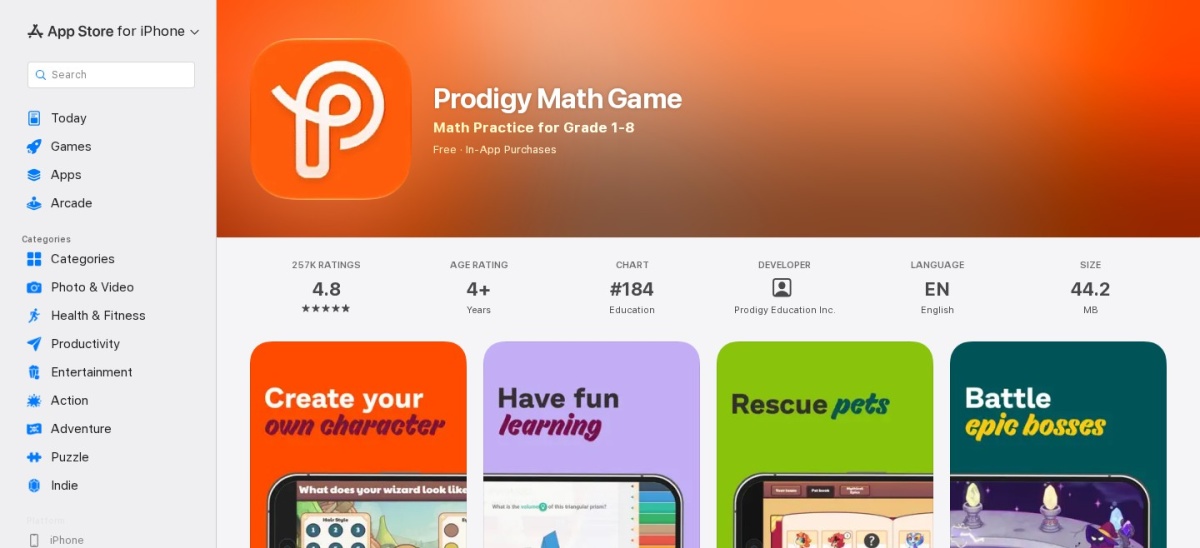
Prodigy Math homepage, captured Nov 2026.
Prodigy Math is a fantasy role-playing game where children answer math questions to win battles and explore new zones. All 45,000+ curriculum questions for grades 1 to 8 are free, the difficulty adapts to each child, and parents get progress reports and a monthly report card.
The trade off is upselling. The game constantly shows member-only pets, gear and rewards, and a Core membership at $58.95 a year buys game extras rather than more math. It suits reluctant learners in grades 1 to 8 who need a reason to practice every day.
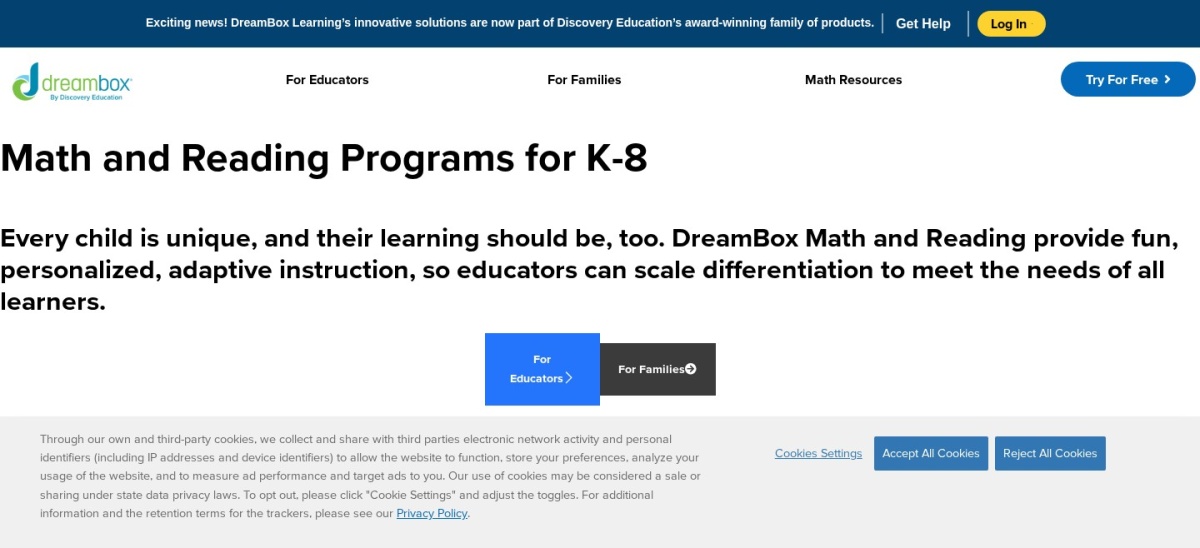
DreamBox Math is an adaptive K-8 math program, now part of Discovery Education, that adjusts each lesson while a child works. Lessons use virtual manipulatives and real-world problems, and the program holds a Strong rating from Evidence for ESSA, based on studies of school results.
The trade off is price and polish. An individual plan costs $99.95 a year, family plans cost $149.95, and reviewers note confusing instructions and a dated interface. It suits families who want adaptive lessons with published evidence behind them.
4.5/5on App Store (32,000 reviews, checked Nov 2026)
Starts at$69.99/yr
Best for preschool to grade 5 games
GradesPre-K to 5
ActivitiesAbout 9,000 math and reading games
TeachersFree for classrooms
Parent planYearly from $69.99
splashlearn.com
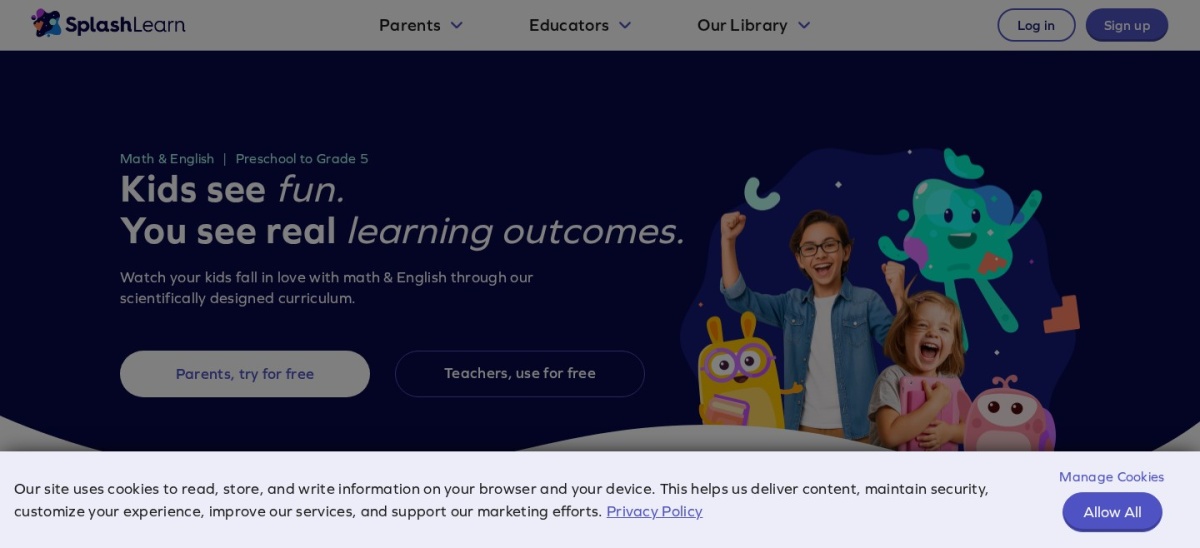
SplashLearn homepage, captured Nov 2026.
SplashLearn is a game-based learning app for pre-K to grade 5, with about 9,000 math and reading activities. Children follow a personal learning path that adjusts to their level, earn rewards as they finish games, and parents track progress in a dashboard. It is free for teachers and schools.
The trade off is scope and price clarity. SplashLearn stops at grade 5, and parent pricing is confusing, with monthly plans from $7.99 to $11.99 and yearly plans from $69.99. It suits families with young children who want one app for math and reading practice.
4.6/5on App Store (26,000 reviews, checked Nov 2026)
Paid from$29.99/yr
Best value step-by-step solver
Calculators500+, algebra to calculus
Free tierAnswers with basic steps
Pro annual$29.99/yr, full steps
PlatformsWeb, iOS and Android
symbolab.com
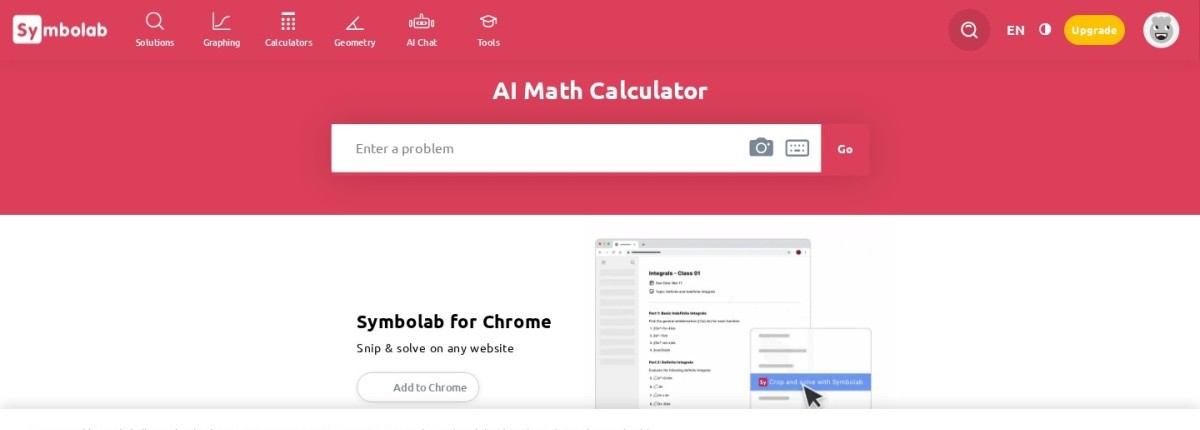
Symbolab homepage, captured Nov 2026.
Symbolab is a math solver with more than 500 calculators covering algebra, trigonometry and calculus. The free version gives answers with basic steps, and it works on the web and in mobile apps, with a camera input for typed or photographed problems.
The trade off is the paywall. Full step-by-step solutions need Pro, which costs $6.99 a month or $29.99 a year on the web, and Symbolab publishes no pricing page, so the price only appears behind the upgrade button. It suits students who want the cheapest full-step solver.
What we like
Cheapest full-step plan in this list at $29.99 a year
500+ calculators through calculus
Free answers with basic steps
Watch out for
Full steps need a Pro subscription
No public pricing page; price hides behind upgrade
4.7/5on App Store (1,200 reviews, checked Nov 2026)
Starts at$78.99/yr
Best game-based math for ages 4 to 12
Ages4 to 12, grades K to 6
StyleAdventure game, adaptive
Free trial7 days
Annual plan$78.99/yr
matific.com
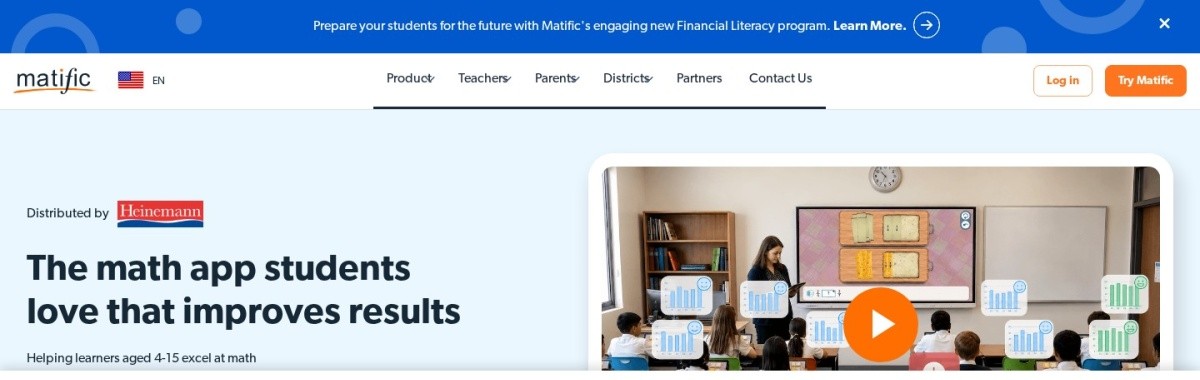
Matific homepage, captured Nov 2026.
Matific is an adaptive math adventure game for children aged 4 to 12, covering K to 6 skills from counting to fractions and early algebra. Children explore islands, collect treasure and customize avatars as they master topics, with audio prompts for children who cannot read yet.
The trade off is structure. Matific teaches through games rather than a set lesson sequence, and it costs $9.99 a month or $78.99 a year after a 7-day trial, with no free plan. It suits young children who learn best by playing and exploring.
Free plans cover a lot in this list. Khan Academy is fully free, and Prodigy, Photomath and Symbolab give away real math without paying.
Paid plans mostly add steps and tracking. Photomath Plus adds animated tutorials, Symbolab Pro unlocks full steps, and Prodigy memberships add parent tools and game items.
For school-age children, the paid apps that teach are IXL at $79 a year and DreamBox at $99.95, while the game apps run from $58.95 to $78.99 a year.
Start free and pay only when a child hits a limit. If the free plan covers the homework, there is no reason to subscribe.
How we chose
We started from the math apps families and schools use most, then kept nine with a public rating and a published price.
Prices come from each vendor's pricing page or app store listing, checked on 25 November 2026. Ratings come from G2, Trustpilot or the App Store on the same day, because the other review sites hold too few reviews for most kids' apps to be useful. Where a vendor shows a sale, the list shows the regular price.
We left out apps with no public rating, including Zearn and Beast Academy. No vendor paid for a place, and we do not claim to have used these tools ourselves.
How to choose a math learning app
Start with the learner's age and the job the app has to do, then match the price to how often it will be used.
Match the app to the learner's age. Apps for young children use games and short sessions, while teens need algebra, calculus and test prep. An app built for grade 3 will bore a high-school student.
Decide whether you need lessons or practice. Khan Academy and Brilliant teach new ideas, while IXL, DreamBox and Prodigy drill skills a child has already met. Solvers such as Photomath and Symbolab help with homework, not with learning a topic from scratch.
Try the free plan first. Most apps in this list let you use the core features without paying. Give it two weeks of regular use before subscribing, and check what the paid plan actually adds.
Check the price per year, not per month. Monthly prices hide the yearly total: IXL costs $119.40 over twelve monthly payments against $79 a year. Compare the annual figure before you commit.
FAQ
What is the best math learning app?
Khan Academy is the best math learning app for most learners. It is completely free, covers math from early arithmetic to calculus with video lessons and practice, and is rated 4.5 out of 5 on G2 from 177 reviews.
What is the best free math learning app?
Khan Academy is the best free option because the whole curriculum is free, with no ads and no paywall. Prodigy is the best free pick for younger children who like games, since all of its math questions are free.
Is IXL or Khan Academy better for math?
Khan Academy is better for learning new ideas because it teaches with videos before practice. IXL is better for practice because its 4,900+ skills are mapped to school standards, with a diagnostic and detailed reports. Many families use both.
Can Photomath do my homework for me?
Photomath shows step-by-step solutions, so it can finish a problem set quickly, but that does not teach the method. Use it to check answers and study the steps, then try similar problems without it to see whether the idea stuck.
How much do math learning apps cost?
Paid plans in this list run from $29.99 a year for Symbolab Pro to $240 a year for Brilliant Premium. Khan Academy is free, and Prodigy, Photomath and Symbolab all have useful free plans, so start free before paying.
Which math app is best for a 7-year-old?
Prodigy and SplashLearn are the best picks for a 7-year-old because both use games and short sessions. Prodigy covers grades 1 to 8 and all of its math is free, while SplashLearn covers math and reading up to grade 5.
SaaS SEO and WordPress specialist with about 8 years of experience. Rakib compares WordPress plugins, themes, hosting and software using public pricing, documentation and user reviews. See how we rank.