Best Lead Tracking Software in 2026: 9 Tools Compared
WLWPLegible EditorsLast verified 23 Nov 2026How we rank11 min read
★ Short answer
HubSpot is the best lead tracking software for most small teams, with a free CRM that tracks unlimited contacts and deals for up to two users. Pick Pipedrive for the clearest visual pipeline and Zoho CRM for the most features per dollar at $14 a month.
How we make this list: we compare pricing pages, product documentation and public user reviews, then re-check every price before each update. No product paid for a place. Disclosure.
HubSpot is the only tool here with a genuinely useful free CRM, covering unlimited contacts and one pipeline for two users.
Pipedrive has the clearest pipeline view, with drag-and-drop deals from $14 a user a month billed yearly.
Freshsales is the cheapest paid plan at $9 a month, with phone, email and chat built in from the start.
Close and Capsule share the highest G2 rating at 4.7, but Close team seats cost $35 a month while Capsule starts at $18.
Salesforce is the deepest platform here, but its $25 starting price and setup effort suit larger teams.
What lead tracking software should do
Lead tracking software keeps every lead, conversation and deal in one place, so nothing slips through. The core is a pipeline view that shows where each deal sits and what happens next.
A good tool logs activity for you. Calls, emails and meetings should land on the lead record without manual entry, which is where HubSpot, Pipedrive and Close differ most.
Free plans are worth a real look here. HubSpot, Zoho CRM, Freshsales, Capsule and Bigin all let you track leads without paying, though each caps users or contacts. Our guide to free lead management software compares the free tiers in detail.
Per-seat pricing adds up fast. Count your users first, then multiply the monthly price by twelve before comparing, since most tools only show the cheaper annual rate.
HubSpot is the best free place to track leads. The free CRM holds unlimited contacts and companies, one deal pipeline and email tracking, and every lead carries its full history of emails, calls, meetings and deals on one timeline.
The trade off is the upgrade path. The free plan stops at two users, and automation and detailed reporting wait for Professional at $90 a seat a month. It suits small teams that want to start free and grow into marketing and sales tools on one database.
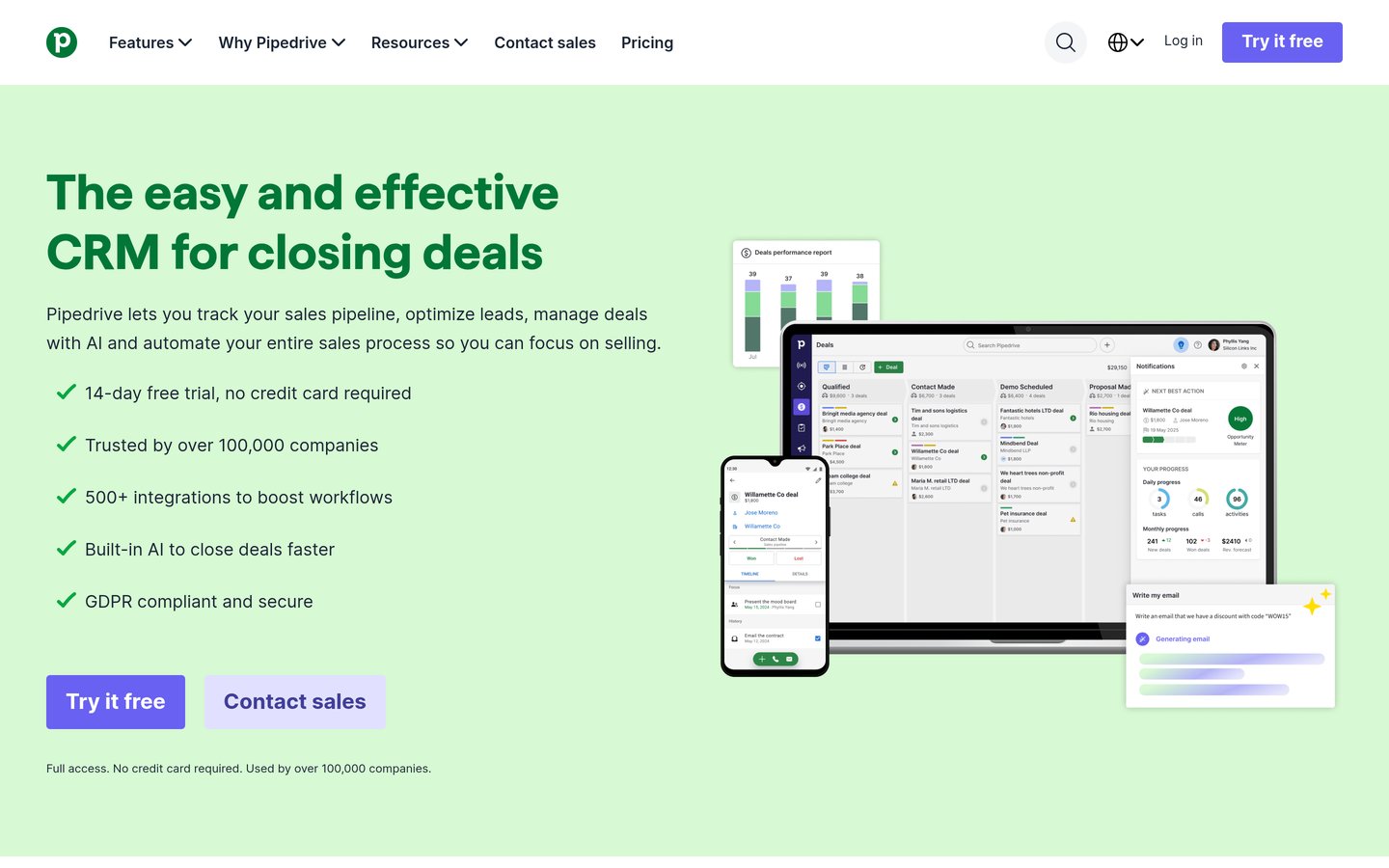
Pipedrive is built around the pipeline view: every lead and deal is a card you drag from stage to stage, so anyone can see what needs doing today. Lite costs $14 a user a month billed annually and covers lead, calendar and pipeline management with 500+ integrations.
The trade off is the missing free plan. There is only a 14-day trial, and lead scoring needs the Premium plan at $59 a month. It suits small sales teams that want to work the pipeline by Friday without a long setup.
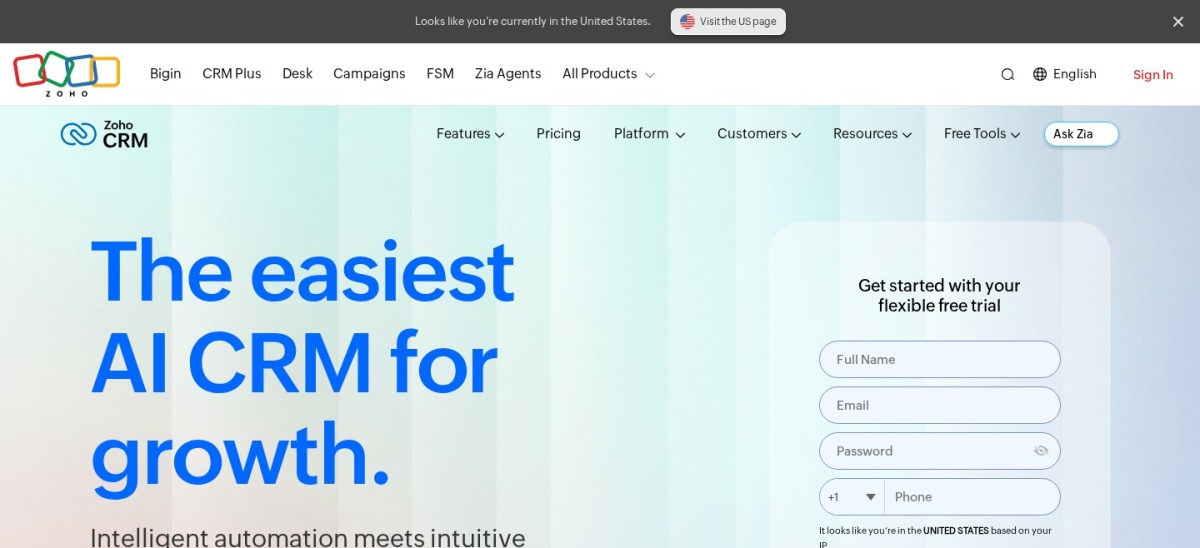
Zoho CRM is a full-featured CRM that gives a small team enterprise-grade reporting at a small-team price. The free plan covers three users, and Standard costs $14 a user a month billed annually with multiple pipelines, sales forecasting, data enrichment, custom modules and email integration.
The trade off is the learning curve. G2 reviewers rate setup lower than HubSpot and Pipedrive, and storage and support add-ons sit outside the seat price. It suits budget teams that want lead scoring rules and automation without paying more.
What we like
Free plan for three users
Forecasting and custom modules on Standard
Built-in calling included
Watch out for
Steeper setup than HubSpot or Pipedrive
Lowest G2 rating in this list at 4.1
Professional adds Blueprint and predictive intelligenceVisit zoho.com
04
Freshsales
4.5/5on G2 (1,237 reviews, checked Nov 2026)
Paid from$9/mo
Best for built-in phone and chat
Free planYes, 3 users
Built-in phoneYes, on Growth
AI lead scoringYes, Freddy AI
Paid planGrowth, $9/mo
freshworks.com
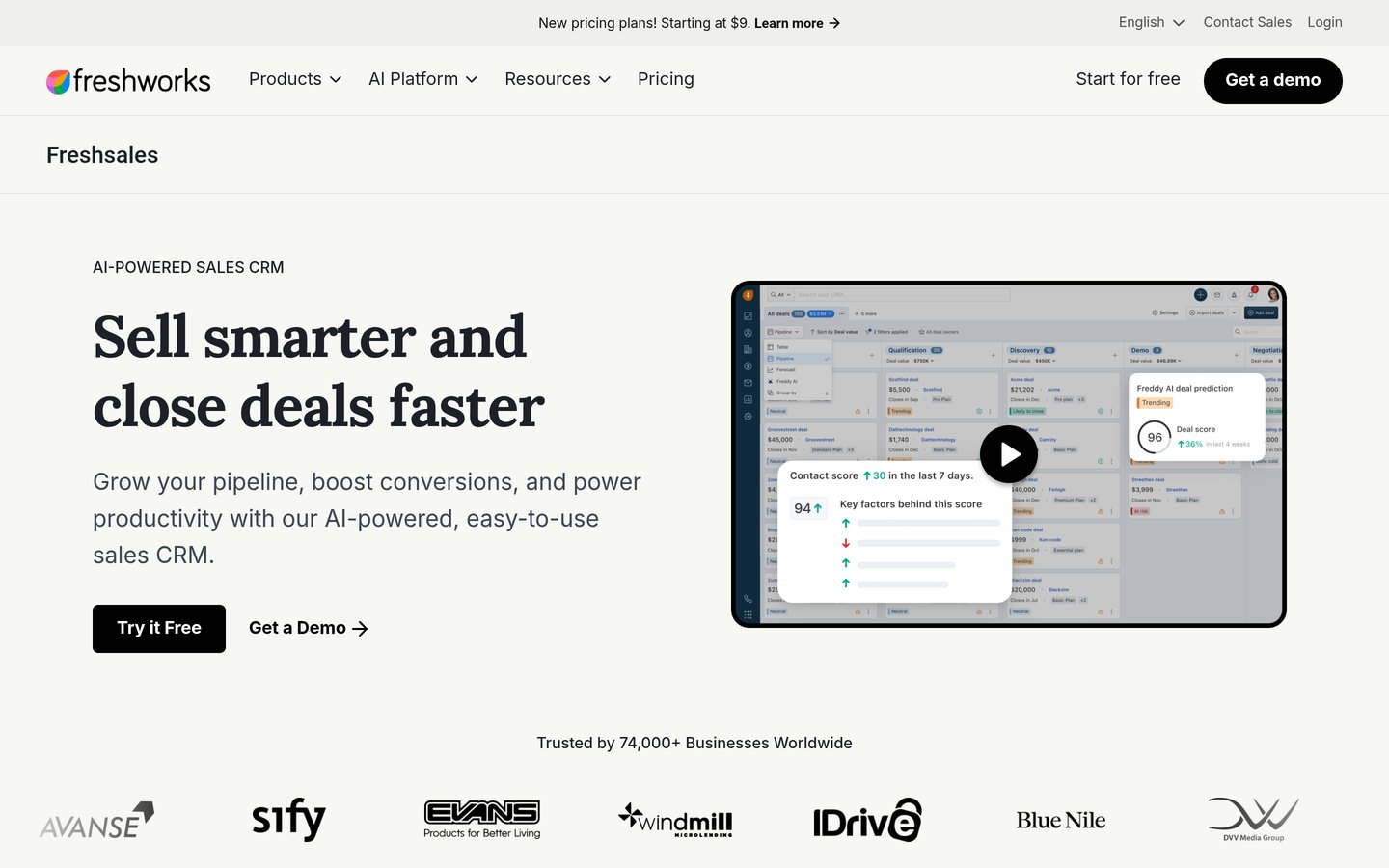
Freshsales homepage, captured Nov 2026.
Freshsales is the sales CRM from Freshworks, and it suits teams that sell by phone and email. Growth costs $9 a user a month billed annually and includes a Kanban pipeline, contact lifecycle stages, built-in chat, email and phone, plus basic workflows.
The trade off is automation. Full workflow automation waits for Pro at $39 a user a month, and the interface can feel busy on small screens. It suits small teams that want calling, chat and email in one low-cost seat.
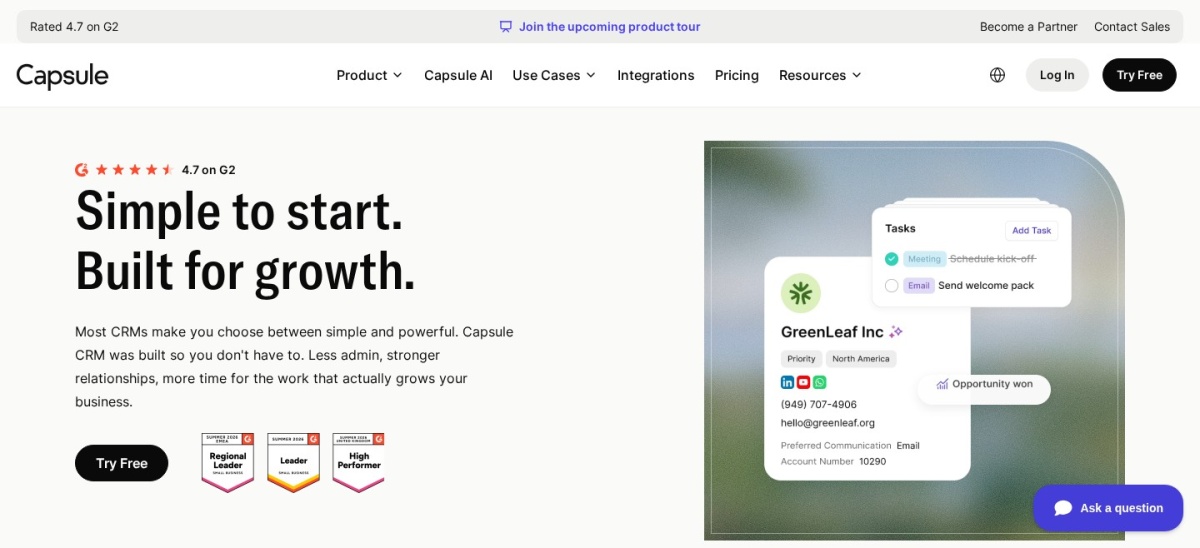
Capsule is a contact-first CRM for small teams that want organized contacts, clear follow-ups and a short setup. The free plan covers two users and 250 contacts, and Starter costs $18 a user a month billed annually with 30,000 contacts and email templates.
The trade off is depth. Workflow automation starts on Growth at $36 a month, and reporting stays basic on Starter. It suits small professional teams that sell on relationships and want the easiest CRM to learn.
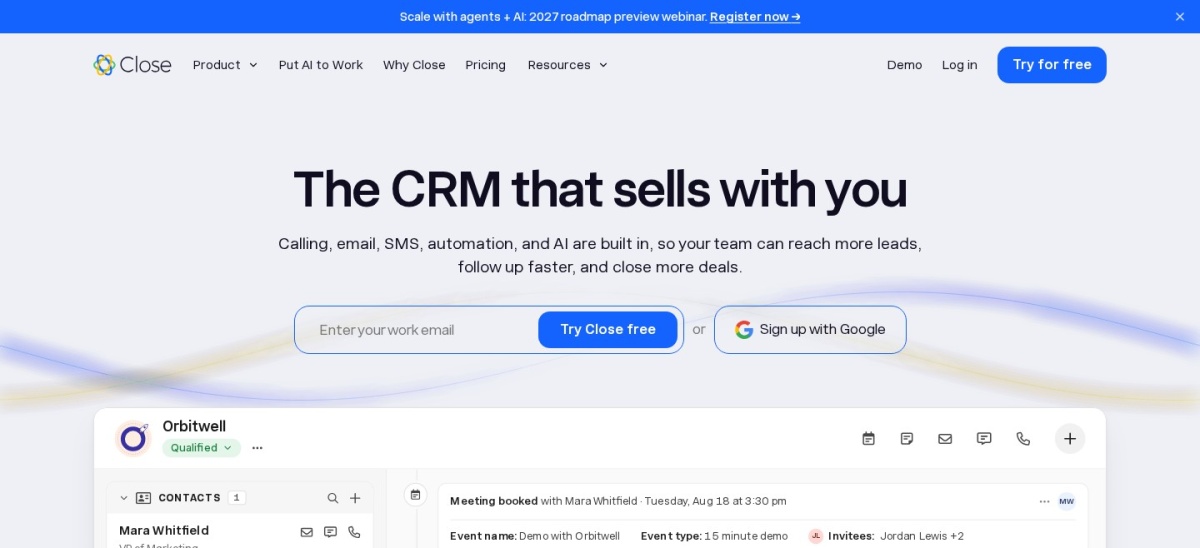
Close is the CRM for teams that sell by talking. Calling, texting, email and automation live in one interface, so every conversation lands in the deal record without manual logging. Solo starts at $9 a user a month billed annually for one user.
The trade off is price as you grow. Essentials costs $35 a user a month, and the value only shows if your team actually calls. It suits inside sales and SDR teams making high call volumes with sequences and a power dialer.
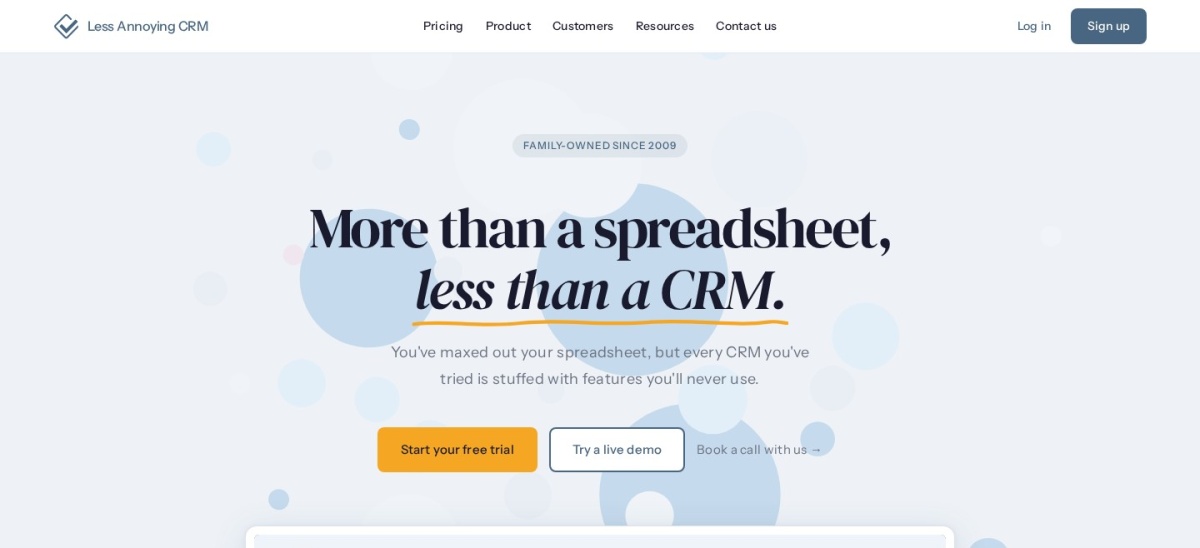
Less Annoying CRM is a simple CRM that keeps contacts, companies, tasks and pipelines for small businesses on one plan with no tiers. Every feature is included for $15 a user a month, with free phone support for everyone and a daily email that tells you who is due a follow-up.
The trade off is growth. There is no automation, thin reporting and few integrations, so a team that outgrows it has to migrate. It suits very small teams that want no-frills simplicity and no pricing games.
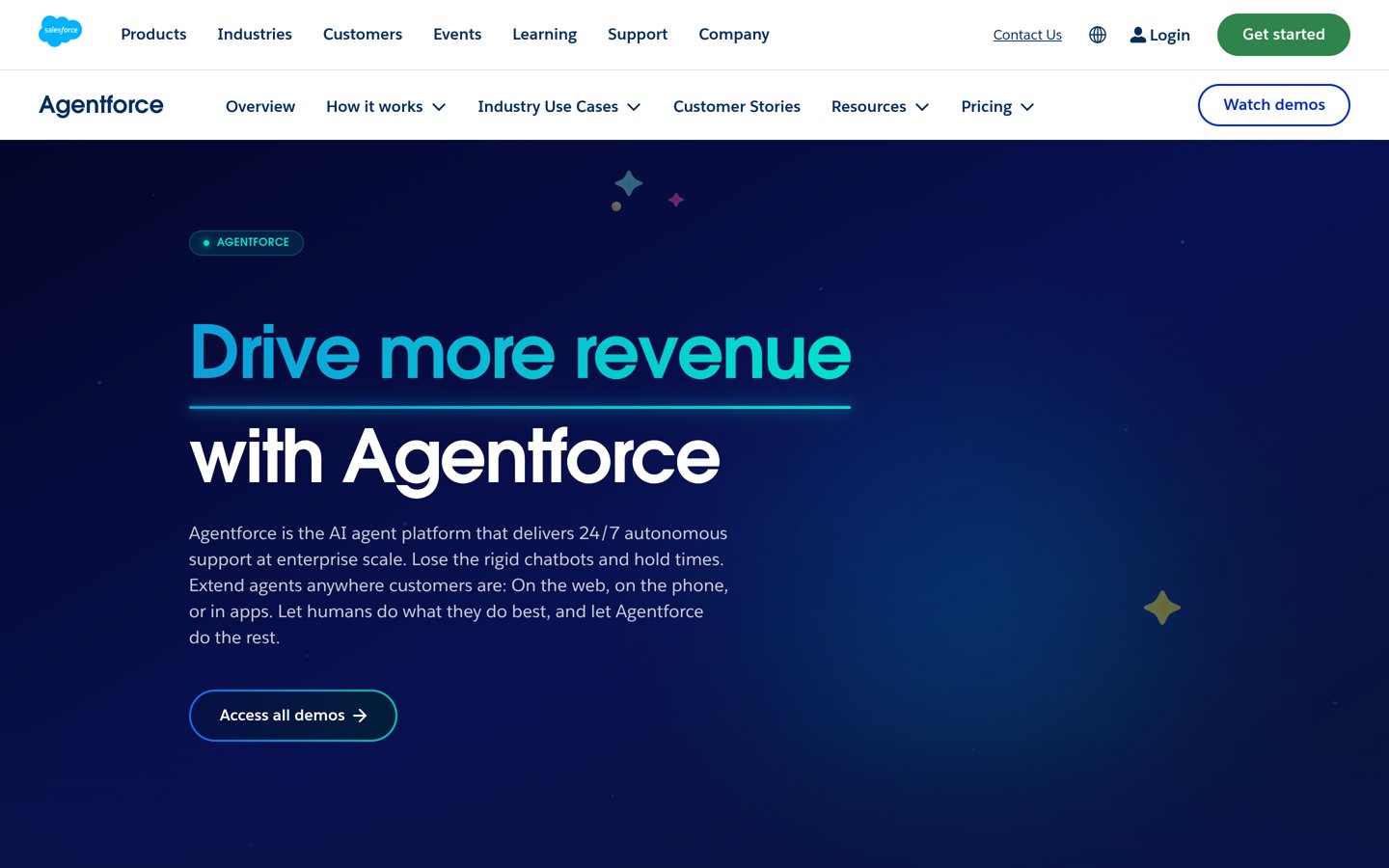
Salesforce Sales Cloud homepage, captured Nov 2026.
Salesforce Sales Cloud is a CRM that tracks leads, accounts, contacts and opportunities with the deepest customization here and the AppExchange marketplace behind it. Starter costs $25 a user a month billed annually and covers the core lead tracking a small B2B team needs.
The trade off is effort. G2 reviewers rate ease of setup below HubSpot and Pipedrive, and most teams need an admin or partner to run it well. It suits B2B teams with complex deals that expect to grow past 20 reps on one platform.
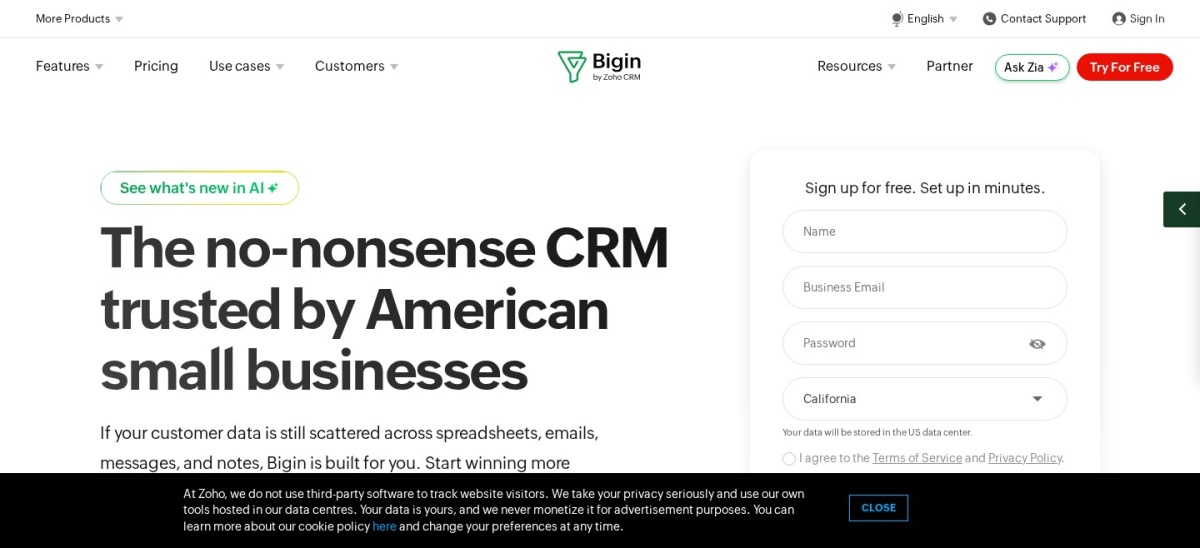
Bigin is the simple pipeline CRM from Zoho for small businesses moving off spreadsheets. The free edition covers one user and 500 records, and Express costs $7 a user a month billed annually with three team pipelines and 50,000 records.
The trade off is scale. Bigin is built for small teams, so a growing sales org will outgrow it and move to Zoho CRM. It suits a solo founder or tiny team that wants one pipeline, calling and email without a full CRM.
Five of these nine tools have a free plan. HubSpot, Zoho CRM, Freshsales, Capsule and Bigin all let you track real leads without paying, though each caps users, contacts or pipelines.
The cheapest paid seats are Bigin at $7 a month and Freshsales and Close Solo at $9 a month, all billed yearly. Pipedrive and Zoho CRM both start at $14 a month.
Free plans end where automation starts. If you need sequences, lead scoring or detailed reports, budget for a paid plan from the start rather than migrating later.
How we chose
We started from the lead tracking tools with the most G2 reviews and the clearest pipeline views, then kept nine that publish a price or offer a free plan.
Prices come from each vendor's pricing page, checked on 23 November 2026. Ratings and review counts come from G2 on the same day. Where a vendor shows a sale, the list shows the regular price.
We left out tools with no public pricing and no free tier. No vendor paid for a place, and this list is based on pricing, docs and reviews, not on using the tools ourselves.
How to choose lead tracking software
Start with your team size and how you sell, then match the tool to that shape.
Count your users first. Every tool here except Close Solo and Less Annoying CRM charges per seat, so multiply the sticker price by your headcount before comparing.
Try the free plan on real leads. HubSpot, Zoho CRM, Freshsales, Capsule and Bigin all have free tiers. Run a week of real deals through one before you pay.
Check how calls and emails get logged. If your team sells by phone, pick a tool with built-in calling such as Close or Freshsales, so activity logs itself.
Plan for the second year. Starter prices are cheap, but automation and scoring often sit two plans up. Check what the plan you will need in a year costs today.
FAQ
What is the best lead tracking software?
HubSpot is the best pick for most small teams. Its free CRM tracks unlimited contacts and deals for up to two users, and G2 rates it 4.4 out of 5 from more than 13,900 reviews.
What is the cheapest lead tracking software?
Bigin is the cheapest paid option at $7 a user a month billed yearly. Freshsales and Close Solo both start at $9 a month, and Pipedrive and Zoho CRM start at $14 a month.
Is there a free lead tracking software?
Yes. HubSpot has the strongest free CRM, with unlimited contacts for two users. Zoho CRM is free for three users, Freshsales for three users, and Capsule for two users with 250 contacts.
Is Pipedrive or HubSpot better for lead tracking?
HubSpot is better if you want a free start and shared marketing and sales data. Pipedrive is better if you want the clearest visual pipeline and the fastest setup, from $14 a user a month.
Does lead tracking software include calling?
Some do. Freshsales, Close, Zoho CRM and Bigin have built-in calling, while HubSpot and Pipedrive add calling minutes on paid plans or through integrations with phone tools.
Can I track leads without a CRM?
You can start in a spreadsheet, but leads get lost fast once volume grows. A free CRM such as HubSpot or Bigin keeps every conversation on the lead record with no extra work.