Chili Piper is the best lead routing software for most inbound teams, because it qualifies a form fill and books the meeting with the right rep at once, and it holds a 4.6/5 G2 rating from 736 reviews. LeanData fits complex Salesforce routing, while RevenueHero is the cheaper inbound option at $25 per user a month.
How we make this list: we compare pricing pages, product documentation and public user reviews, then re-check every price before each update. No product paid for a place. Disclosure.
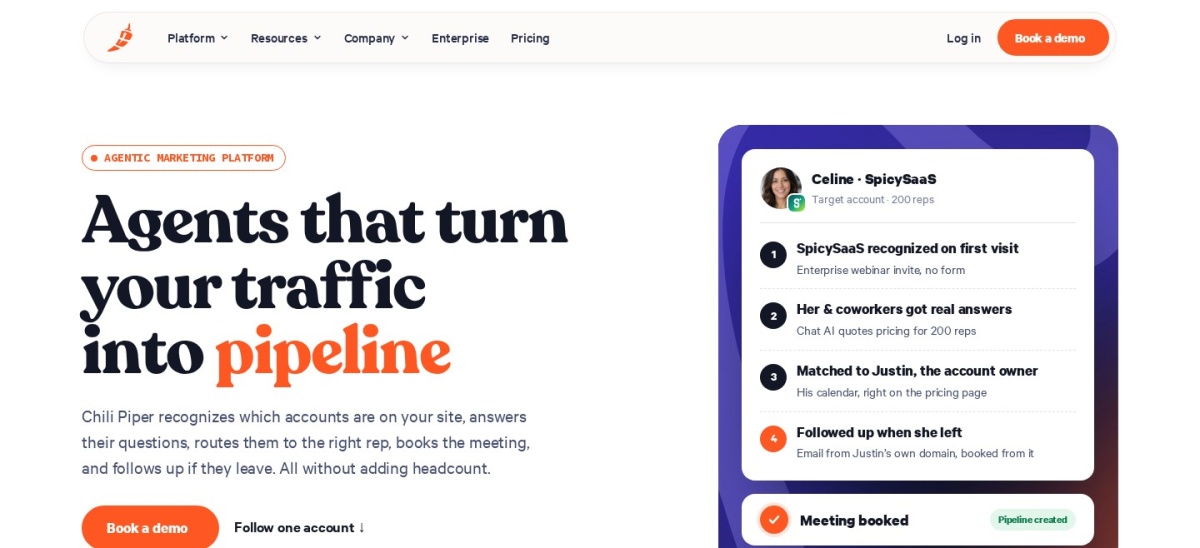
Chili Piper turns a form fill into a booked meeting with the right rep, but Growth starts at $1,250 a month for 15 seats.
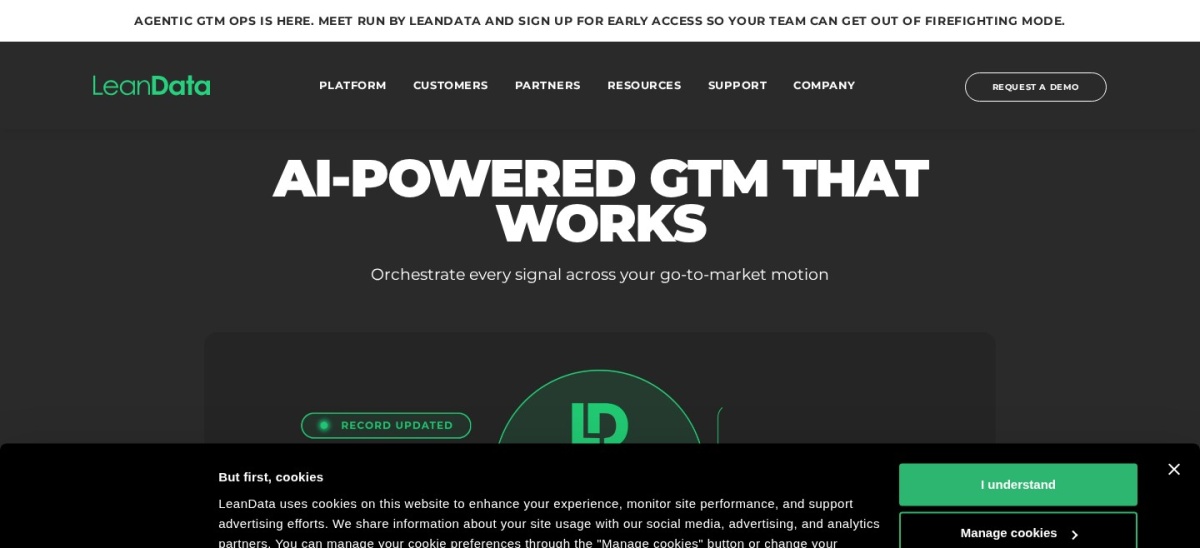
LeanData is the deepest Salesforce router here, rated 4.6/5 from 1,022 G2 reviews, with quote-only pricing.
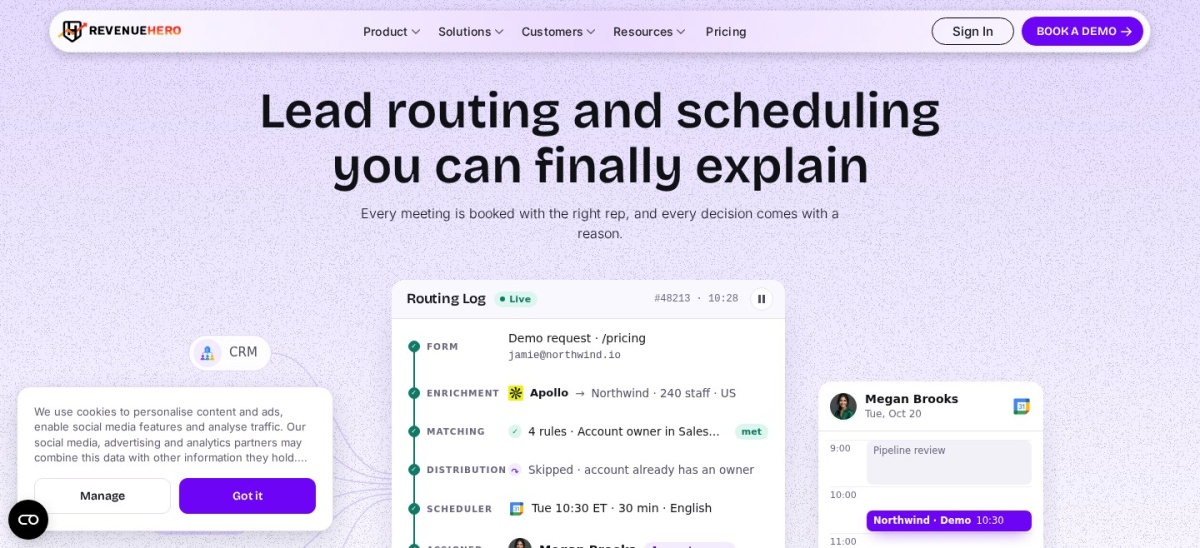
RevenueHero is the cheapest dedicated inbound router, rated 4.8/5 from 167 G2 reviews at $25 per seat a month plus a $79 platform fee.
Zoho CRM is the cheapest CRM routing option at $14 per user a month, and Kubaru holds 4.9/5 on G2 from 8 reviews at $20 a month.
Calendly Teams at $16 per seat a month is the cheapest paid routing plan here, but Salesforce owner routing needs Enterprise.
What lead routing software should do
Lead routing decides which rep gets each new lead, and how fast. A good tool assigns the lead the moment it arrives, using rules your team sets once, instead of leaving it in a queue for someone to sort by hand.
The rules that matter most are round robin, territory, account ownership, rep capacity and SLAs. Round robin shares leads fairly, territory sends them to the rep who owns the region, and account ownership sends a lead from an existing customer straight to its account owner.
Form-to-meeting routing goes one step further: the lead is qualified and offered a booking calendar at once, so no rep has to chase them by email. If the booking step sits on a WordPress site, our guide on adding Calendly to WordPress shows the setup.
Price varies more than in most software categories. Entry plans run from $15 to $25 per user a month, while the leading inbound platform starts at $15,000 a year, so check seat minimums and platform fees before you compare headline prices.
Chili Piper is a demand conversion platform that qualifies inbound leads from a form and books them with the right rep at once. Its Growth plan covers Form Concierge, Distro routing, Handoff and ChiliCal scheduling, with round-robin and weighted distribution, territory rules and Salesforce and HubSpot integrations.
The trade off is the price floor. Growth starts at $1,250 a month billed annually, or $15,000 a year, with 15 seats included and $45 a month for each extra seat. It suits inbound teams measured on booked meetings that can fund a five-figure annual contract.
LeanData is a Salesforce-native orchestration platform that matches each lead to an account and routes it by territory, round robin or custom logic. Its visual FlowBuilder handles leads, contacts, accounts and custom objects, with fuzzy lead-to-account matching, deduplication and audit logs.
The trade off is cost and setup. Pricing is quote-only across Standard, Advanced, Premium and Enterprise, and G2 reviewers report implementation taking about 2 months. It suits large Salesforce teams with complex territories and dedicated RevOps staff.
RevenueHero is an inbound routing tool that qualifies a form fill, matches the lead to a rep by round robin or account domain, and shows a booking calendar at once. Essentials covers instant scheduling, qualification rules and native HubSpot and Salesforce integrations, with no seat minimum.
The trade off is the platform fee. Essentials costs $25 per seat a month plus a $79 a month platform fee when billed yearly, so a one-seat team still pays $104 a month. It suits small inbound teams that want Chili Piper-style routing without a five-figure contract.
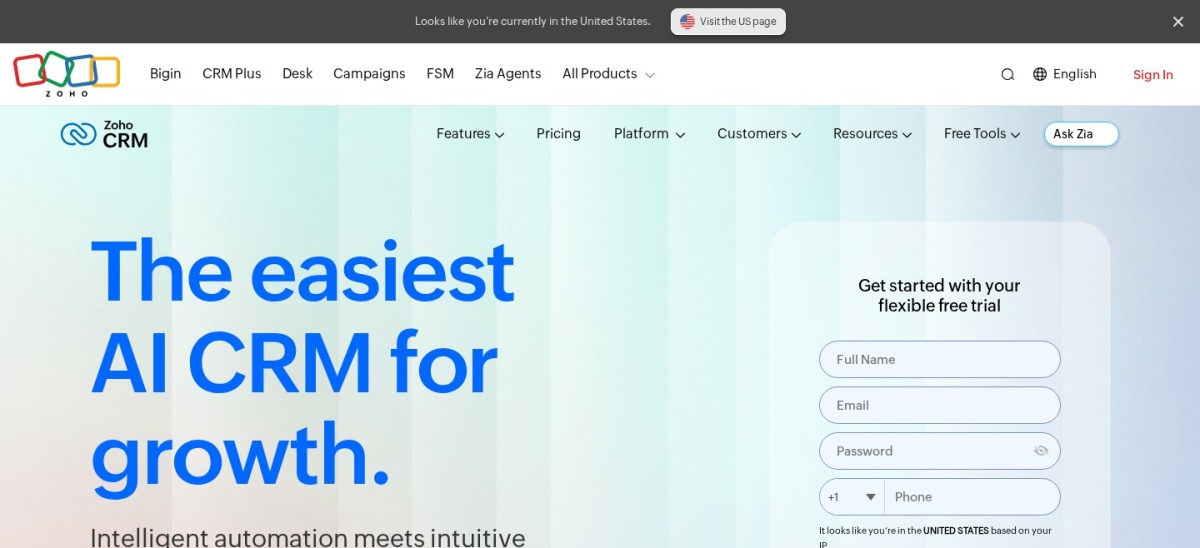
Zoho CRM is a full CRM whose Standard plan adds lead assignment rules, workflow automation and territory management. Leads can be assigned by round robin, by territory or by custom criteria, and the free edition covers up to 3 users with leads, contacts and deals.
The trade off is setup effort. Zoho packs in a lot of settings, and G2 reviewers note a learning curve around advanced customization. It suits small teams that want a cheap CRM with routing built in, rather than a dedicated routing tool.
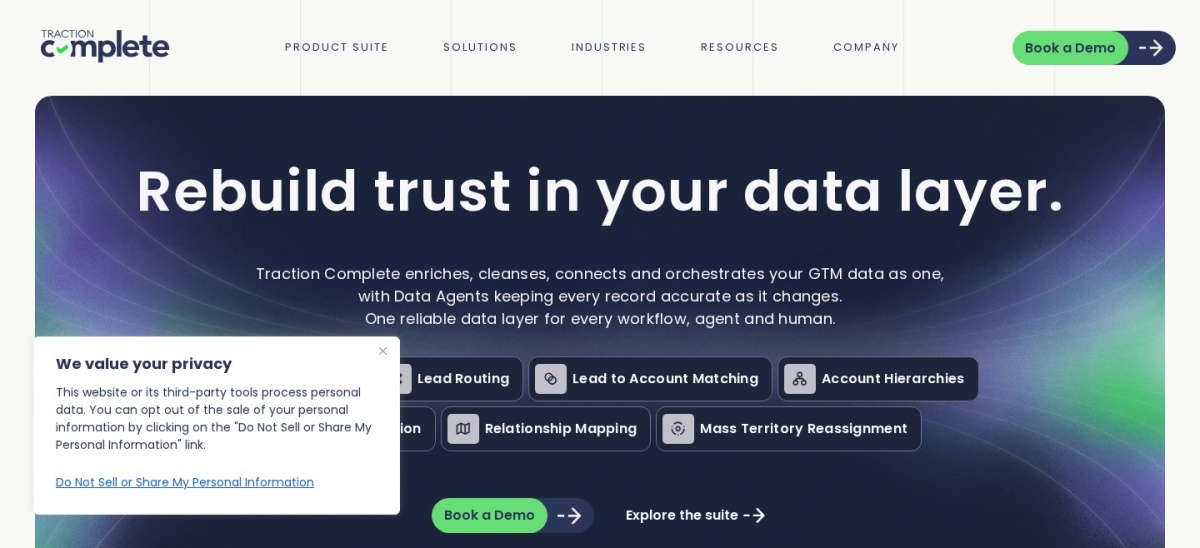
Traction Complete is a Salesforce-native suite that routes leads, contacts and accounts and cleans the data behind the routing. Complete Leads adds lead-to-account matching, deduplication and hierarchy views, so routed leads land with the right owner instead of a duplicate record.
The trade off is pricing. G2 lists a Basic plan at $15 per user a month, but the vendor publishes no prices and its modules are largely quote-based, so the final contract needs a sales conversation. It suits Salesforce teams that want routing plus data cleanup in one suite.
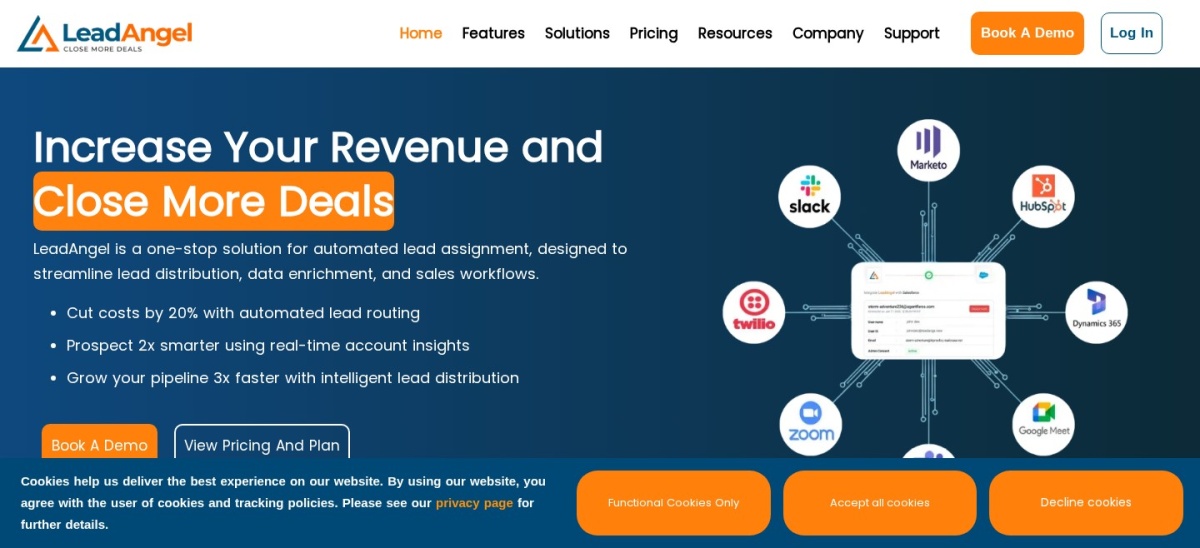
LeadAngel is a lead routing and matching platform that works across Salesforce, HubSpot and Microsoft Dynamics 365. It matches leads to accounts, removes duplicates, enriches records and routes by territory, round robin or custom rules, with scheduling built in.
The trade off is pricing. Both current editions, Professional and Professional Plus, are quote-only, and the vendor says the actual cost varies by signed contract. It suits RevOps teams routing across more than one CRM that need matching, dedupe and scheduling together.
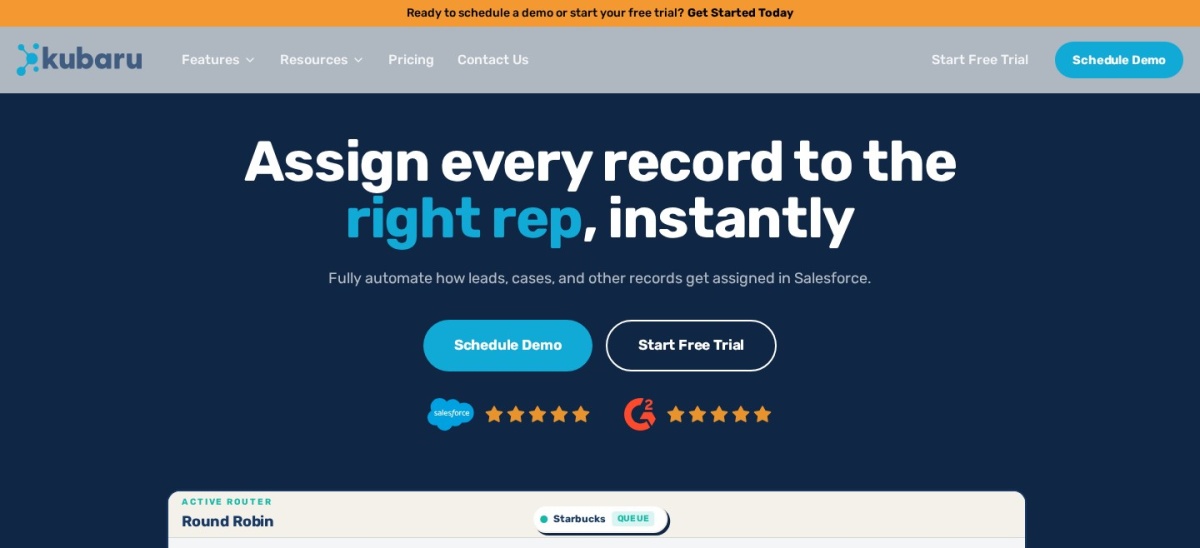
Kubaru is a Salesforce-native routing app that assigns leads, cases and other records by weighted round robin, territory or skill, with workload balancing and SLA rules. Every feature is included in its single $20 per user a month plan, with no tiers to compare.
The trade off is the thin review record. It holds 4.9/5 on G2, but from only 8 reviews, plus more than 150 five-star reviews on the Salesforce AppExchange. It suits Salesforce teams that want simple, predictable routing without an enterprise sales process.
Calendly is a scheduling platform whose Teams plan adds routing forms that qualify invitees and distribute bookings round robin. It can route by HubSpot record ownership on Teams, and it connects to Salesforce, HubSpot, Marketo and Pardot forms.
The trade off is routing depth. Salesforce owner lookup needs Enterprise, which starts at $15,000 a year, and Calendly has no lead-to-account matching. It suits teams that mainly need booking links with light routing, not a full RevOps engine.
HubSpot is a CRM whose Starter plan adds round-robin lead assignment inside the system where contacts already live. The free CRM covers contacts, companies, deals and email tracking for up to 2 users, and Starter adds 1,000 marketing contacts per hub.
The trade off is that routing is basic. Starter has no lead-to-account matching, territory engine or meeting router, and costs climb fast as seats and contacts grow. It suits small teams that already run on HubSpot and want simple assignment without another tool.
A router can only assign the leads it receives. If forms collect bad data, the best rules still send leads to the wrong rep, so clean capture matters as much as routing logic. Our guide on creating a contact form in WordPress covers the capture side.
Speed matters after the assignment too. A lead routed in seconds still cools off if no rep follows up, so check SLAs and reassignment rules before you buy.
Finally, confirm the CRM match. Salesforce-native tools do nothing for a HubSpot team, and a HubSpot-only router will not help a Salesforce org.
How we chose
We started from the lead routing tools named most often in G2 categories and RevOps comparisons, then kept the established tools with a public G2 rating and a real routing feature, not just scheduling.
Prices and plan details come from each vendor's pricing page or provider-supplied G2 pricing, checked on 25 November 2026. Ratings and review counts come from G2 on the same day. Where a vendor shows a sale or a first-year offer, the list shows the regular price.
We left out tools with no public rating and single-purpose schedulers without routing rules. No vendor paid for a place, and we do not claim hands-on testing for this list.
How to choose lead routing software
Start with your CRM, then match the routing logic to your team size.
Check your CRM first. Salesforce-native tools only work in Salesforce. HubSpot teams should shortlist HubSpot, RevenueHero, Chili Piper or Calendly instead.
Map your routing rules. List the rules you actually need: territory, account ownership, round robin, capacity or SLA. Buy the tool that covers them on its entry plan, not a higher tier.
Count the real annual cost. Add platform fees, seat minimums and extra seats. Chili Piper starts at $15,000 a year for 15 seats, while RevenueHero adds a $79 a month platform fee to its $25 seats.
Trial the routing, not just the demo. Run a small set of real leads through the rules and check where each one lands, including the fallback when no rep matches.
FAQ
What is the best lead routing software?
Chili Piper is the best pick for most inbound teams. It qualifies a form fill and books the meeting with the right rep at once, and it holds a 4.6/5 G2 rating from 736 reviews. LeanData fits complex Salesforce routing instead.
How much does lead routing software cost?
Entry plans run from $16 per seat a month for Calendly Teams to $1,250 a month for Chili Piper Growth, which is $15,000 a year for 15 seats. LeanData and LeadAngel are quote-only, and RevenueHero adds a $79 a month platform fee.
What is the difference between lead routing and lead distribution?
Routing is the decision: which rep should get this lead, based on territory, account ownership or capacity. Distribution is the delivery step that assigns the lead to that rep. Most tools in this list do both in one motion.
Does HubSpot do lead routing?
Yes. HubSpot Starter at $20 per seat a month adds round-robin lead assignment inside the CRM. It has no lead-to-account matching or territory engine, so teams with complex account rules need a dedicated router instead.
Is Chili Piper worth $15,000 a year?
It depends on inbound volume. Teams measured on booked meetings can justify it when form fills turn into meetings at once. Smaller teams should look at RevenueHero at $25 a seat or Calendly Teams at $16 a seat first.
Which lead routing tool is best for Salesforce?
LeanData is the deepest choice for complex Salesforce routing, with fuzzy lead-to-account matching across any object. Kubaru is the cheaper Salesforce-native option at $20 per user a month, and Traction Complete adds data cleanup at $15.
SaaS SEO and WordPress specialist with about 8 years of experience. Rakib compares WordPress plugins, themes, hosting and software using public pricing, documentation and user reviews. See how we rank.