Best Lead Nurturing Tools in 2026: 7 Tools Compared
WLWPLegible EditorsLast verified 22 Nov 2026How we rank15 min read
★ Short answer
ActiveCampaign is our top lead nurturing tool for behavior-triggered email sequences, with Starter advertised at $15 per month billed annually for 1,000 contacts and a 4.4/5 G2 rating. Brevo is better for affordable multichannel communication, while MailerLite suits small teams building their first automated follow-up campaigns.
How we make this list: we compare pricing pages, product documentation and public user reviews, then re-check every price before each update. No product paid for a place. Disclosure.
ActiveCampaign Starter starts at $15 per month billed annually for 1,000 contacts, with a 4.4/5 G2 rating and more than 14,800 reviews.
Brevo offers a free marketing plan and Starter from $9 per month, with unlimited contact storage and a 4.5/5 rating from 2,780 G2 reviews.
MailerLite Comfort starts at $12 monthly, supports 50 automations and 3 user seats, and has a 4.6/5 rating from 1,114 G2 reviews.
GetResponse Starter costs $19 monthly and includes unlimited email sends, welcome sequences and 1 custom automation workflow.
Omnisend Standard starts at $16 monthly, while its free plan supports 250 recipients and 500 email sends per month.
Kit Creator costs $39 monthly for up to 1,000 subscribers and includes unlimited visual automations and automated email sequences.
What to look for in lead nurturing software
Lead nurturing software helps businesses maintain contact with prospects between their first interaction and a buying decision. Instead of relying on manual follow-ups, marketing teams can deliver relevant emails and messages based on interests, actions and the stage of the sales process.
Start with automated workflows. A useful platform should send welcome messages, follow up after form submissions and adjust communication when a prospect clicks a link, visits a page or completes another meaningful action.
Next, examine segmentation and personalization. Grouping leads by interests, engagement and purchase readiness helps prevent every subscriber from receiving identical messages. More advanced systems offer lead scoring, conditional branches and CRM integrations.
Reporting should connect nurturing activity to outcomes. Email opens and clicks provide engagement signals, but form completions, booked meetings, qualified leads and purchases help establish whether a campaign supports business goals.
Finally, compare pricing by contact count, email volume and automation features. Some low-cost plans restrict workflow actions or advanced segmentation. A slightly more expensive edition may be necessary for genuinely behavior-driven nurturing.
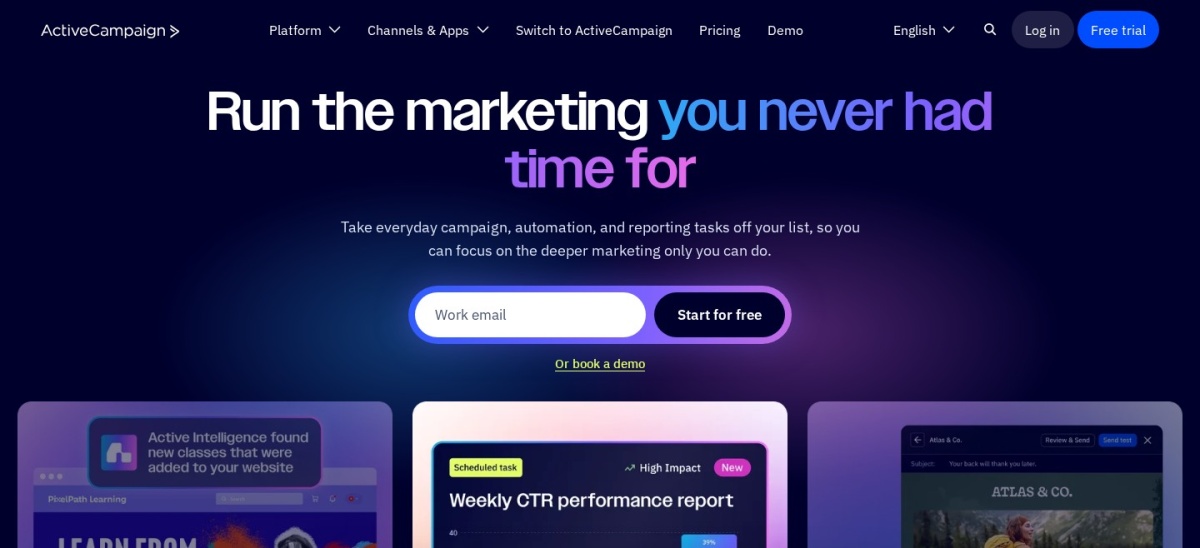
ActiveCampaign is a marketing automation platform for nurturing prospects through email, website behavior and connected sales systems. Starter is advertised at $15 per month billed annually for 1,000 contacts and includes email automation, forms, website tracking and 5 actions per automation. Its G2 rating is 4.4/5 from approximately 14,882 reviews.
The trade off is that Starter limits automation complexity, while Plus adds broader triggers, actions, landing pages and multichannel features at a higher contact-dependent price. The published $15 starting rate requires annual billing, and the pricing calculator controls other configurations. It suits teams prioritizing behavior-based follow-ups.
What we like
Behavior-based email automation
Website tracking and contact segmentation
Ecommerce integrations
Large customer review base
Higher plans support advanced multichannel journeys
Watch out for
Starter limits workflow actions
Advanced automation requires higher tiers
Pricing increases with contact volume
Building sophisticated workflows requires planning
Plus adds broader automation triggers, landing pages and multichannel marketing.Visit activecampaign.com
02
Brevo
4.5/5on G2 (2,780 reviews, checked Nov 2026)
Paid from$9/mo
Best affordable multichannel lead nurturing tool
Entry planStarter
Starting price$9/mo
Contact storageUnlimited
Annual discount10%
brevo.com
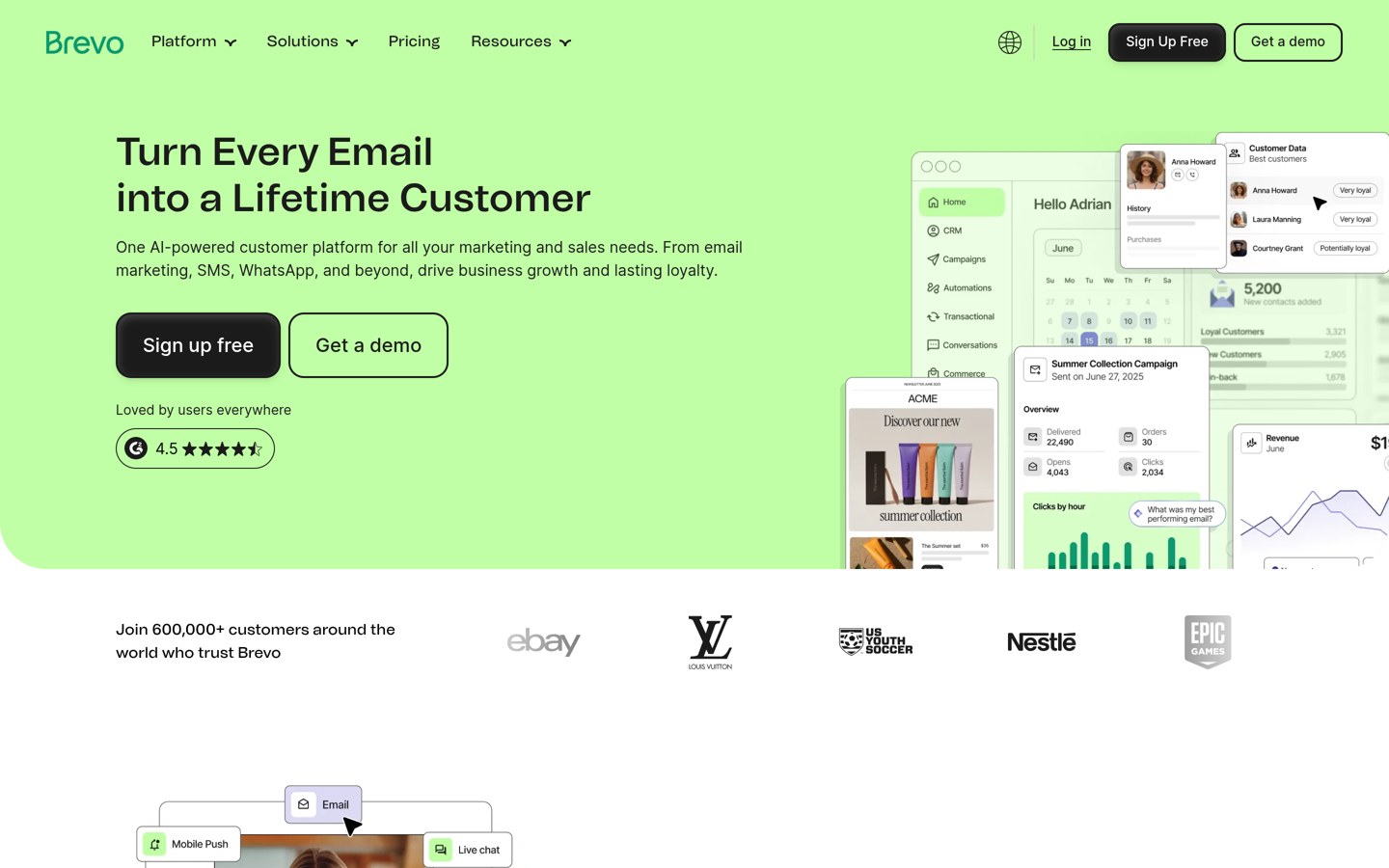
Brevo homepage, captured Nov 2026.
Brevo is a customer relationship and marketing platform combining email campaigns, automation, contact management, SMS and messaging tools. Its free marketing edition provides a starting point, while Starter begins at $9 per month and includes the free features with higher email capacity. G2 rates Brevo 4.5/5 from 2,780 reviews.
The trade off is that Starter is primarily designed for basic email marketing, while the Standard plan adds broader marketing automation and more advanced reporting. Removing Brevo branding from Starter also costs extra. It suits small businesses wanting inexpensive email communication with room to add sales and multichannel workflows.
What we like
Free marketing edition available
Unlimited contact storage
Email and SMS capabilities
Contact management and sales tools
Paid plans scale by sending requirements
Watch out for
Starter has limited advanced automation
Removing branding can cost extra
SMS and WhatsApp usage carry separate charges
Advanced reports require higher plans
Standard adds broader marketing automation, advanced reporting and removes branding.Visit brevo.com
03
MailerLite
4.6/5on G2 (1,114 reviews, checked Nov 2026)
Paid from$12/mo
Best for simple email nurturing workflows
Entry paid planComfort
Starting monthly price$12
Automations50
User seats3
mailerlite.com
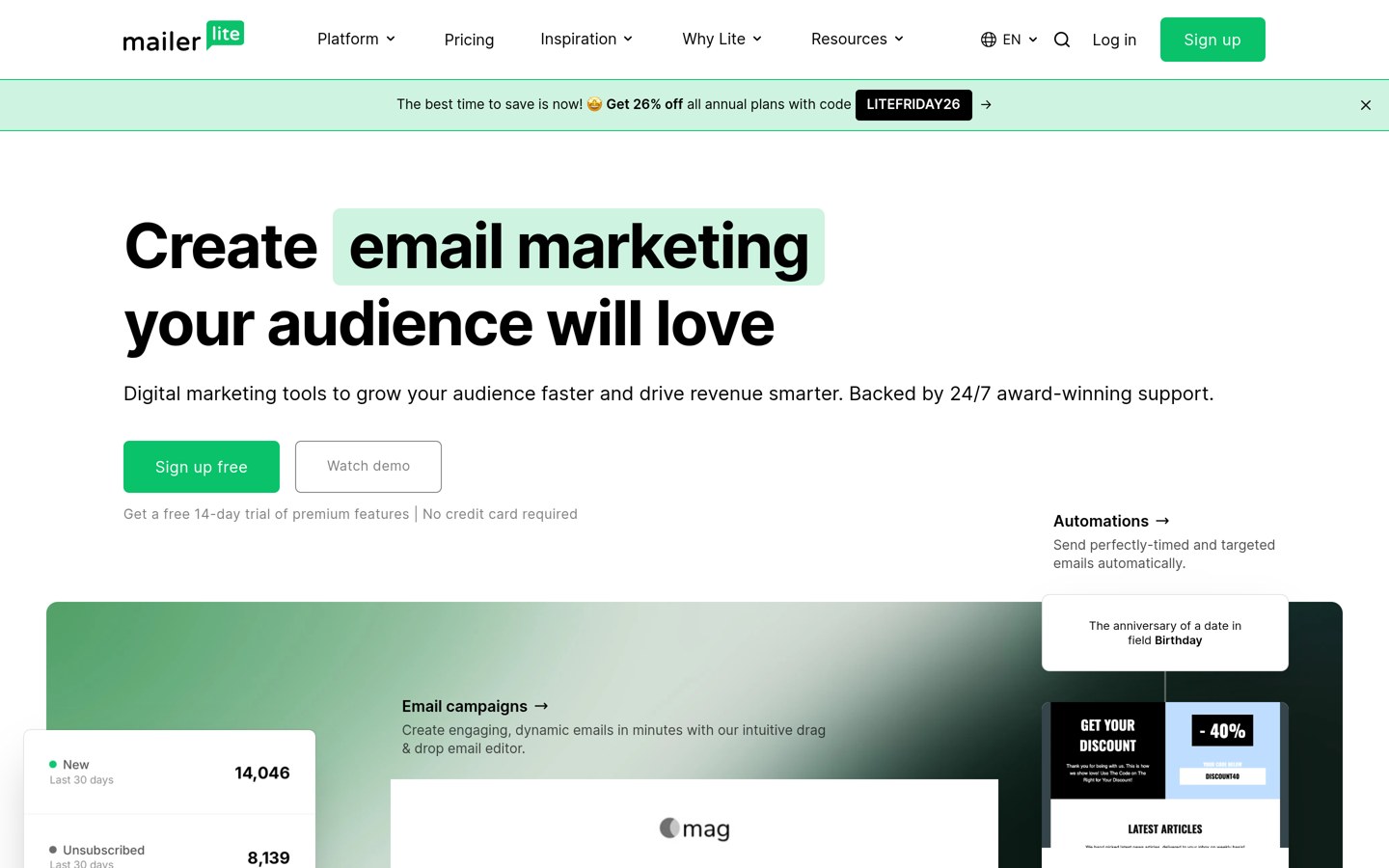
MailerLite homepage, captured Nov 2026.
MailerLite is an email marketing platform that helps businesses capture leads through forms and landing pages, then nurture them through automated messages. Comfort starts at $12 per month and includes 50 automations, 10 forms, 10 sites and 3 user seats. It holds a 4.6/5 G2 rating from 1,114 reviews.
The trade off is that Comfort limits automation and publishing capacity, while Power removes those limits at a higher subscriber-dependent price. Annual billing provides a standard discount, and pricing grows with the subscriber list. It suits small teams that want approachable email nurturing without a full CRM.
What we like
Free plan available
Visual email automations
Forms and landing pages
Comfort includes 3 users
Strong public review rating
Watch out for
Comfort limits automation quantity
Subscriber growth increases pricing
No built-in sales pipeline comparable to a full CRM
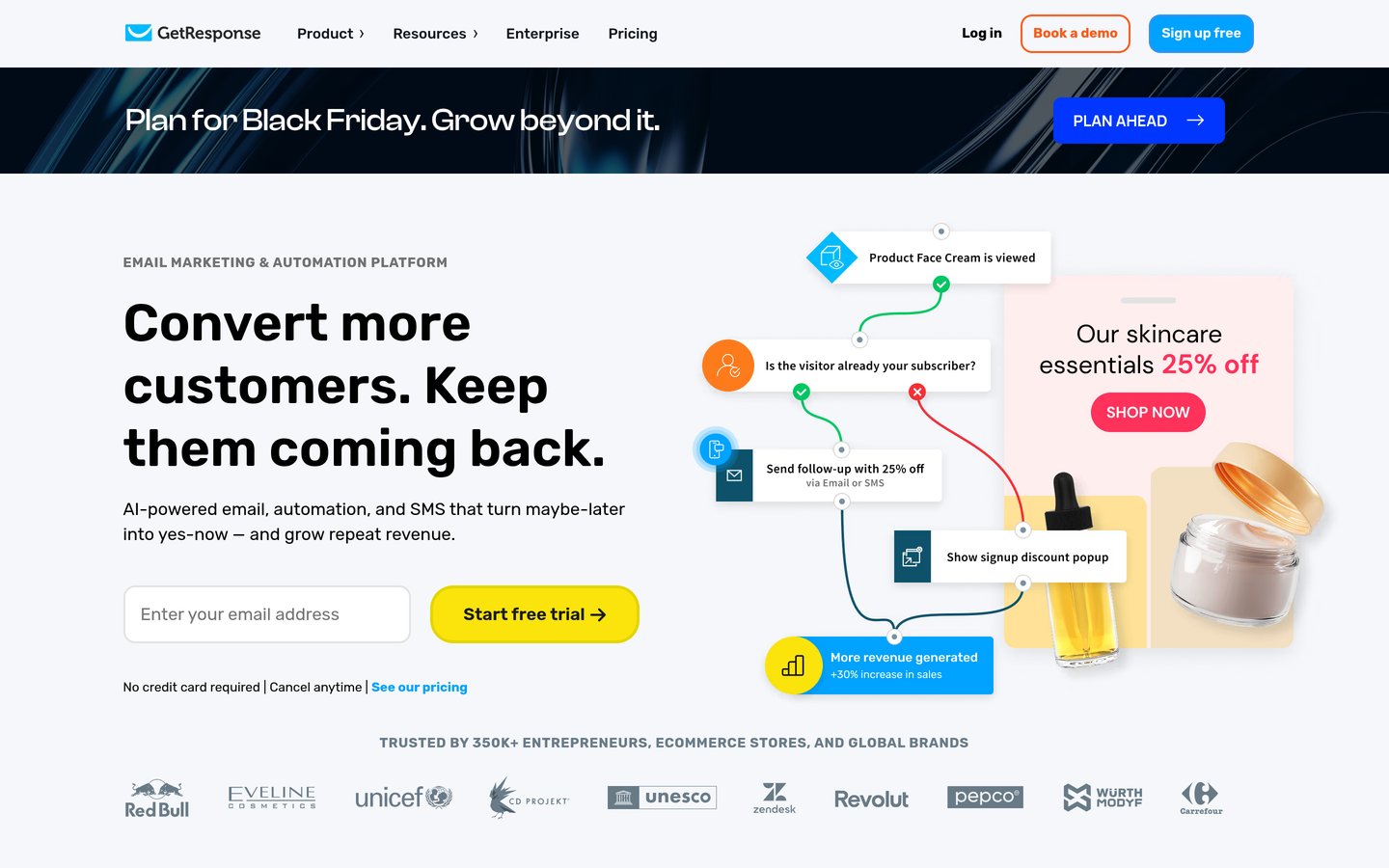
GetResponse is an email marketing and automation platform for building subscriber lists, sending follow-ups and converting prospects. Starter costs $19 per month and includes unlimited email sends, welcome sequences, forms, popups, landing pages and 1 custom automation workflow. Its G2 rating is 4.3/5 from approximately 1,142 reviews.
The trade off is that Starter limits custom workflows, while Marketer costs $59 monthly and adds unlimited workflows, advanced segmentation, abandoned-cart recovery and sales funnels. Annual billing reduces Starter to $15.58 per month. It suits marketers who want nurturing emails alongside landing pages and conversion tools.
What we like
Unlimited email sends on Starter
Welcome email sequences included
Landing pages and signup forms
AI-assisted content tools
Marketer offers more advanced nurturing
Watch out for
Starter includes only 1 custom workflow
Advanced segmentation requires Marketer
Ecommerce recovery features require upgrading
Contact-based pricing can increase over time
Marketer adds unlimited workflows, advanced segmentation and sales funnels.Visit getresponse.com
05
Omnisend
4.6/5on G2 (1,264 reviews, checked Nov 2026)
Paid from$16/mo
Best for ecommerce lead nurturing
Entry paid planStandard
Starting price$16/mo
Free email allowance500/mo
Free recipient allowance250
omnisend.com
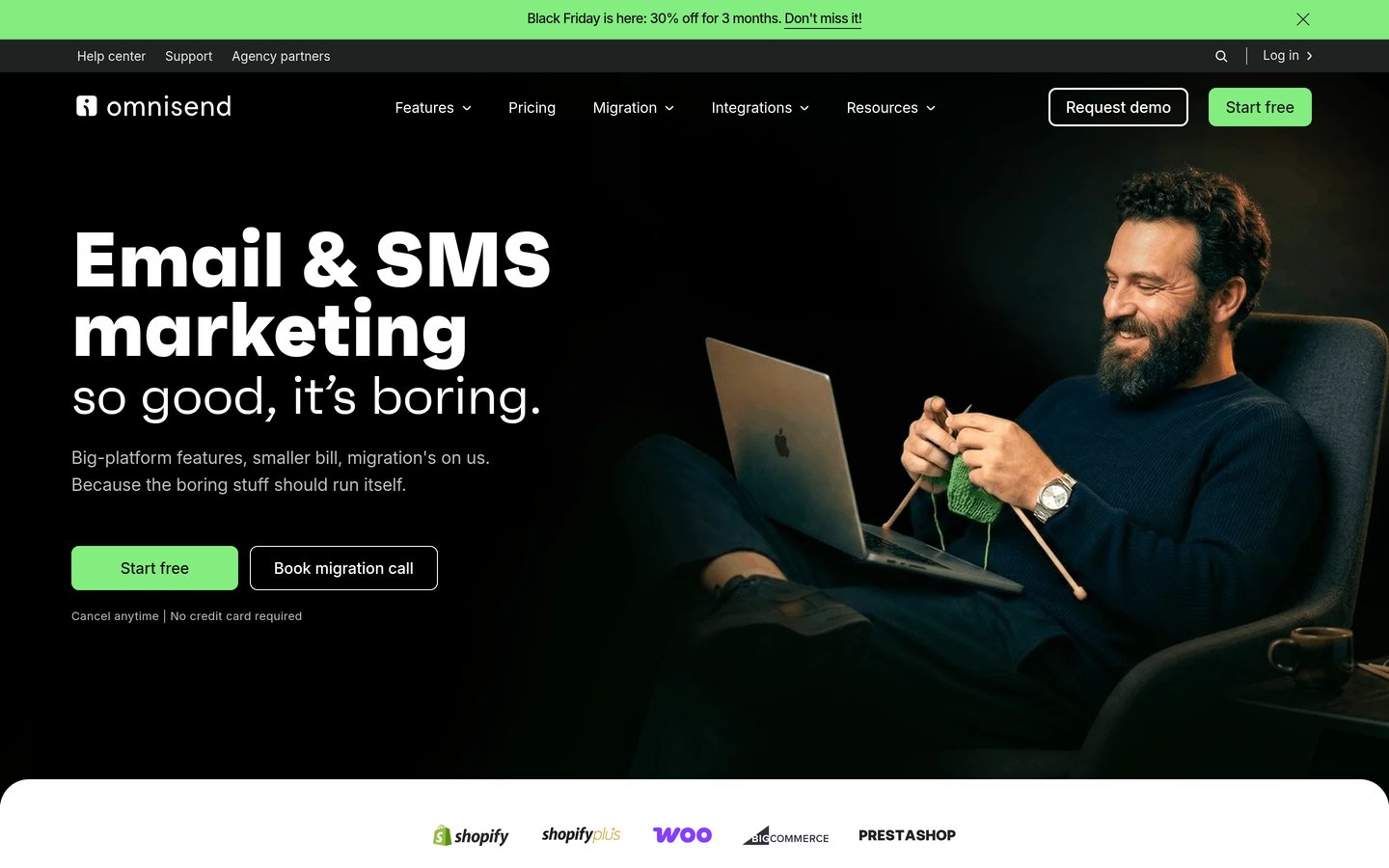
Omnisend homepage, captured Nov 2026.
Omnisend is an ecommerce marketing platform for nurturing shoppers through email, automated workflows, segmentation and web push notifications. Its free plan allows 500 monthly emails to 250 recipients, while Standard starts at $16 monthly with an allowance of 12 email sends per billable contact. G2 rates it 4.6/5 from 1,264 reviews.
The trade off is that pricing grows with contact count, and SMS credit subscriptions for new customers require Pro under the vendor's updated plan rules. Standard supports email automation and push notifications but excludes that SMS subscription option. It suits online stores nurturing subscribers and recovering abandoned purchases.
What we like
Free plan includes marketing automation
Prebuilt ecommerce workflows
Email segmentation and customer insights
Unlimited web push notifications on Standard
Store integrations and reporting
Watch out for
Standard email capacity depends on contact count
SMS credit subscriptions require Pro for new customers
Less suitable for complex B2B sales pipelines
Subscription cost increases as the audience grows
Pro adds larger sending allowances and SMS subscription eligibility.Visit omnisend.com
06
Mailchimp
4.3/5on G2 (13,001 reviews, checked Nov 2026)
Paid from$13/mo
Best for basic audience nurturing and campaigns
Entry paid planEssentials
Starting price$13/mo
Free contact limit250
Standard starting price$20/mo
mailchimp.com
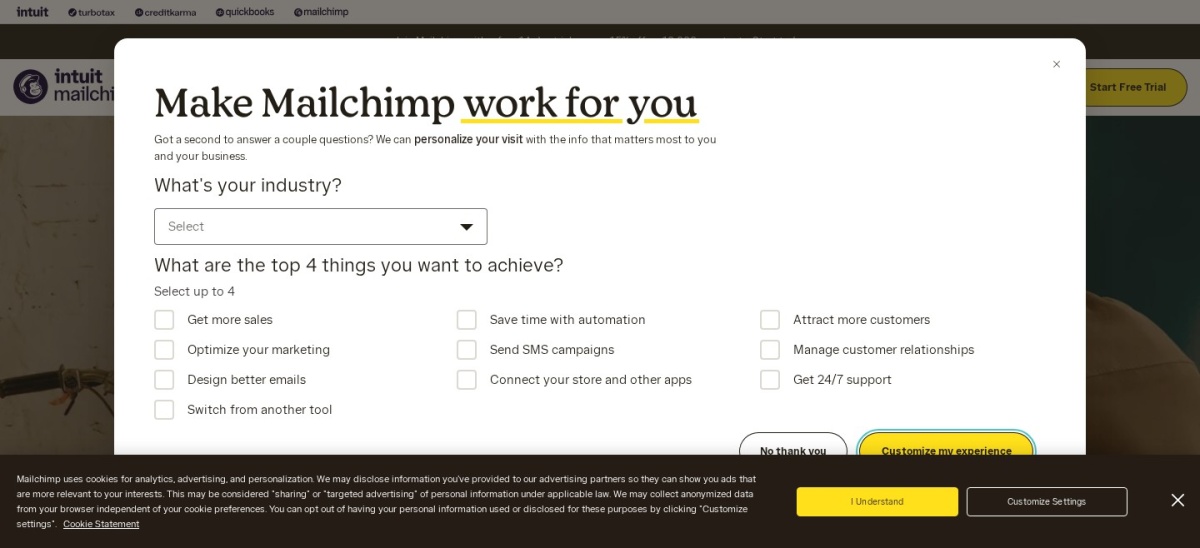
Mailchimp homepage, captured Nov 2026.
Mailchimp is an email marketing platform for capturing subscribers, segmenting audiences and sending follow-up campaigns. Its free plan supports up to 250 contacts, while Essentials starts at $13 monthly with email scheduling, templates and testing capabilities. G2 lists a 4.3/5 rating from approximately 13,001 reviews.
The trade off is that Essentials focuses on basic email campaigns, while Standard starts at $20 monthly and provides enhanced automation and audience insights. Contact and sending allowances affect the subscription, and overage charges may apply. It suits businesses starting with newsletters and expanding into automated nurturing.
What we like
Free plan for small contact lists
Email templates and scheduling
Audience segmentation tools
Large integration ecosystem
Standard adds enhanced nurturing automation
Watch out for
Free plan has a small contact allowance
Advanced journeys require Standard
Contact-based pricing can increase quickly
Sending overages may create additional charges
Standard adds enhanced automation, personalization and audience insights.Visit mailchimp.com
07
Kit
4.3/5on G2 (237 reviews, checked Nov 2026)
Paid from$39/mo
Best for creator-led lead nurturing
Entry paid planCreator
Starting price$39/mo
Subscriber allowanceUp to 1,000
Visual automationsUnlimited
kit.com
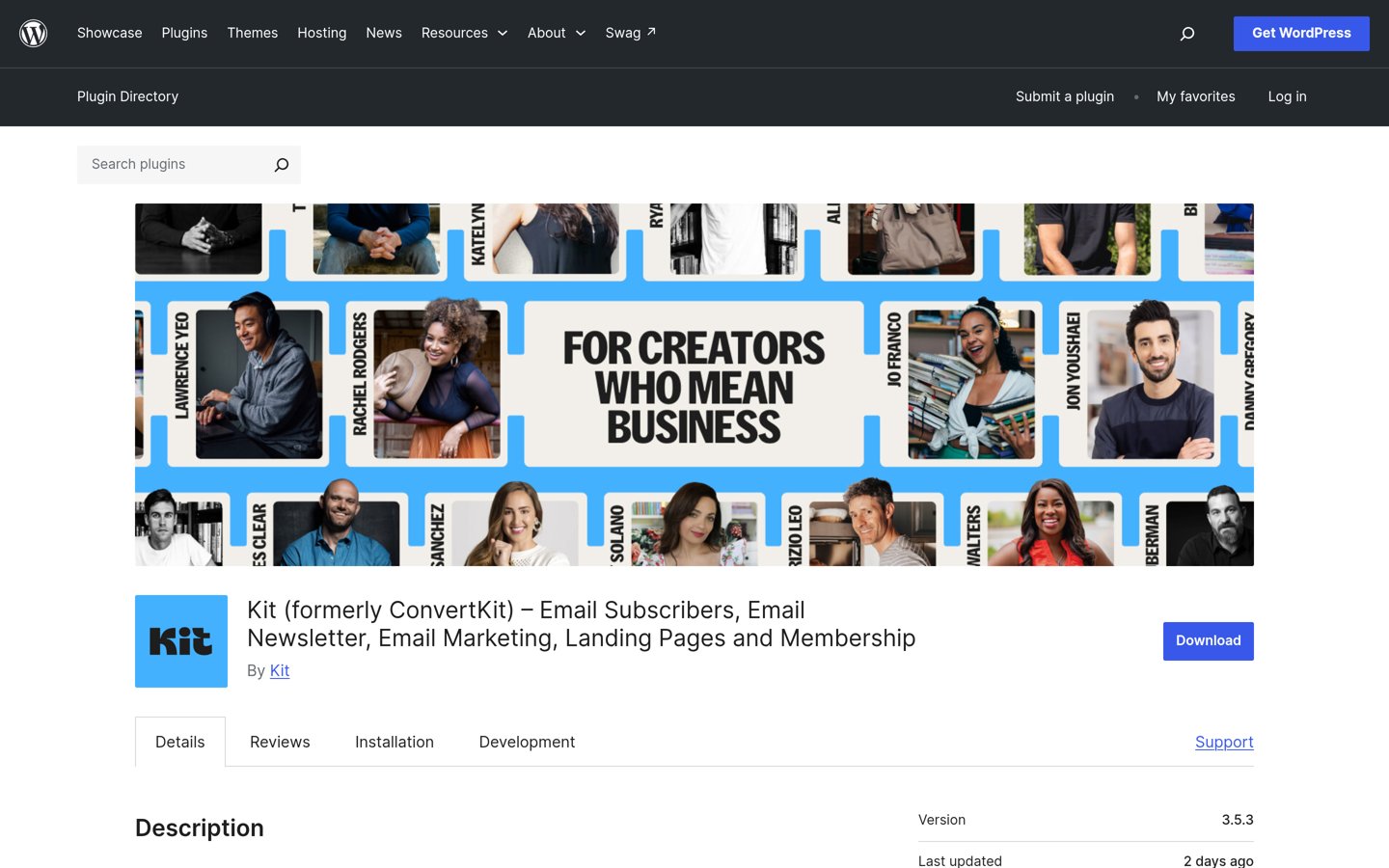
Kit homepage, captured Nov 2026.
Kit is an email marketing and automation platform for creators, educators and audience-led businesses. Creator starts at $39 monthly for up to 1,000 subscribers and includes unlimited visual automations, automated email sequences, landing pages, forms and 2 user seats. G2 rates Kit 4.3/5 from 237 reviews.
The trade off is that lead scoring, advanced engagement analytics and collaborative editing are reserved for Pro, starting at $79 monthly for the same subscriber tier. The vendor currently advertises a temporary Creator promotion, but the regular price remains $39. It suits creators nurturing subscribers toward courses, memberships and digital products.
What we like
Free plan for audience building
Unlimited visual automations on Creator
Automated email sequences
Landing pages and subscriber tagging
Digital product and newsletter monetization
Watch out for
Creator costs more than basic email tools
Engagement scoring requires Pro
Less focused on traditional sales CRM workflows
Costs grow with subscriber count
Pro adds engagement scoring, advanced analytics and collaborative editing.Visit kit.com
Lead nurturing workflows worth setting up first
A welcome sequence is a useful first automation. When someone downloads a resource or joins a mailing list, send a confirmation, deliver the promised material and introduce the next relevant step.
Behavior-based follow-ups can respond to engagement. A subscriber who clicks a product comparison may benefit from a case study, while someone requesting a demonstration should move into a sales-focused sequence.
Ecommerce businesses often use abandoned-cart reminders, product recommendations and post-purchase education. Omnisend specializes in these workflows, while ActiveCampaign provides broader behavior-based automation.
Measure outcomes beyond email opens. Track qualified inquiries, purchases, booked meetings and unsubscribes. Review whether each message helps prospects make an informed decision without excessive follow-up.
Lead nurturing software vs. CRM software
Lead nurturing software focuses on delivering relevant communication throughout a prospect's decision process. CRM software maintains customer records, sales opportunities and interactions across the relationship.
The categories overlap. ActiveCampaign combines marketing automation with connected CRM capabilities, while Brevo offers marketing and sales tools within its broader platform.
Email-focused tools such as MailerLite, Kit and GetResponse can nurture subscribers effectively but may require a separate sales CRM for complex opportunity management.
Choose based on who manages the relationship. Marketing-led businesses may prioritize automated campaigns, while sales-led companies often need lead ownership, deal stages, task management and a reliable handoff from marketing to sales.
How we chose
We selected established email marketing and automation platforms with documented lead capture, segmentation, follow-up or lifecycle messaging capabilities. The shortlist includes general marketing automation, ecommerce nurturing and creator-focused email tools. We compared workflow functionality, contact management, integrations, reporting, published pricing and public customer reviews.
Prices and ratings were researched for the 22 Nov 2026 editorial date, with official pricing and review pages opened again on 23 Nov 2026. We used published regular entry prices rather than limited-time promotions. Annual-billing requirements are identified, and monthly rates were multiplied by 12 for yearly comparison.
We excluded tools without confirmable public starting prices, products without sufficient evidence of adoption and systems focused only on cold prospecting rather than permission-based nurturing. Entry-plan limitations are highlighted because advanced nurturing often requires an upgrade. No vendor paid for a place, and we do not claim testing for this list.
How to choose the right lead nurturing tool
Identify the actions that move prospects toward a purchase, then compare automation features, data requirements and subscription costs.
Map your lead nurturing journey. Write down how prospects enter your list, what information they need and when sales should follow up. Begin with a welcome sequence and a small number of relevant next steps. Avoid creating complicated automations before defining the decisions they should support.
Check triggers, segmentation and personalization. Compare form submissions, email clicks, website activity, purchase events and CRM updates. Confirm which triggers are included in the entry plan and whether conditional branches or lead scoring require an upgrade. Choose a platform that can use the data you already collect.
Connect nurturing to sales outcomes. Review CRM integrations, lead ownership, reporting and conversion tracking. Establish how leads become qualified and who receives them when they show buying intent. Track business outcomes rather than relying exclusively on email engagement statistics.
Calculate costs as your contact list grows. Compare published prices using your current contact count and expected sending volume. Include additional users, automation tiers, SMS charges and overage fees. Review trial and promotional terms separately from regular subscription pricing before committing.
FAQ
What is the best lead nurturing software in 2026?
ActiveCampaign is our top choice for businesses needing behavior-based email automation and flexible nurturing journeys. Its published Starter entry rate is $15 per month billed annually for 1,000 contacts. Brevo suits budget-conscious teams, while MailerLite provides accessible email sequences and lead capture tools.
What is a lead nurturing tool?
A lead nurturing tool helps businesses communicate with potential customers through relevant messages over time. It can automatically send welcome emails, educational content and follow-ups based on subscriber activity. More advanced platforms combine segmentation, lead scoring and CRM data to guide prospects toward the next appropriate action.
Are there free lead nurturing tools?
Yes. Brevo, MailerLite, Omnisend, Mailchimp and Kit offer free entry options with different contact, sending and automation restrictions. Free plans can support initial audience building and basic follow-ups, but advanced behavioral workflows or larger audiences may require a paid subscription.
How much does lead nurturing software cost?
Published starting prices include Brevo at $9 monthly, MailerLite Comfort at $12, Mailchimp Essentials at $13, Omnisend Standard at $16 and GetResponse Starter at $19. ActiveCampaign advertises Starter at $15 monthly with annual billing. Costs increase with contacts, sending requirements and advanced features.
What is the difference between lead nurturing and lead generation?
Lead generation focuses on attracting potential customers and collecting their interest or contact information. Lead nurturing builds on that interest through useful communication and relevant follow-ups. The processes work together: a form can capture a prospect, while an automated sequence provides information until the prospect is ready for a sales conversation.
Which lead nurturing software is best for small businesses?
Brevo and MailerLite are practical options for smaller budgets. Brevo combines email communication with broader customer management tools, while MailerLite provides forms, landing pages and automation. Businesses needing more sophisticated behavior-based journeys can consider ActiveCampaign, provided its automation features and subscription costs fit their requirements.
Can lead nurturing software integrate with a CRM?
Yes. Many platforms connect with CRM systems through native integrations, application connectors or APIs. ActiveCampaign provides connected marketing and sales capabilities, while other email platforms can synchronize contact data with external CRMs. Confirm supported fields, synchronization direction and lead ownership rules before implementation.
How do I measure lead nurturing performance?
Track email engagement alongside meaningful business outcomes such as qualified inquiries, booked meetings, trial activations and purchases. Compare results by audience segment and sequence. Review unsubscribes and complaints to identify excessive messaging. Conversion trends provide better evidence of success than email open rates alone.
How often should I send lead nurturing emails?
Frequency depends on your audience, buying cycle and the value of each message. Begin with a short welcome sequence and allow engagement or explicit preferences to guide later communication. Avoid sending messages merely to maintain a schedule. Monitor responses, unsubscribes and conversions when adjusting timing.