Rancher is the best Kubernetes management tool for most platform teams, with a free open source edition rated 4.4/5 on G2 from 164 reviews. Pick Portainer for a light console on small estates, or Google Kubernetes Engine if you want Google to run the control plane.
How we make this list: we compare pricing pages, product documentation and public user reviews, then re-check every price before each update. No product paid for a place. Disclosure.
Rancher is the top pick for multi-cluster fleets: free open source core, rated 4.4/5 on G2 from 164 reviews.
Portainer is the highest-rated tool here at 4.8/5 from 297 G2 reviews, with 3 nodes free and Starter at $1,045 a year.
The managed cloud services charge $0.10 per cluster-hour for GKE and EKS, or nothing on the AKS free tier, before node costs.
OpenShift is the enterprise pick, rated 4.5/5 from 306 G2 reviews, but self-managed pricing is quote-only.
Komodor costs $1,000 a month and Platform9 Growth starts near $480 a month, so both suit larger budgets.
Spectro Cloud Palette, rated 4.5/5 from 13 G2 reviews, is quote-only and fits multi-cloud and edge fleets.
What a Kubernetes management tool should cover
Kubernetes clusters multiply fast. One team can end up with clusters in two clouds, a data center and a few edge sites, each with its own access rules and upgrade schedule.
A management tool gives you one console for that fleet. Look for multi-cluster provisioning, central access control, upgrade automation and a clear view of workload health.
Managed services and platforms solve different problems. A managed service such as GKE runs the control plane for you, while a platform such as Rancher governs clusters wherever they run. Our guide on server control panels explains the same split for servers.
Free tiers are generous in this category. Rancher, Portainer and Platform9 all have a free tier, and AKS charges nothing for cluster management on its free tier, so start free and pay when the limits bite.
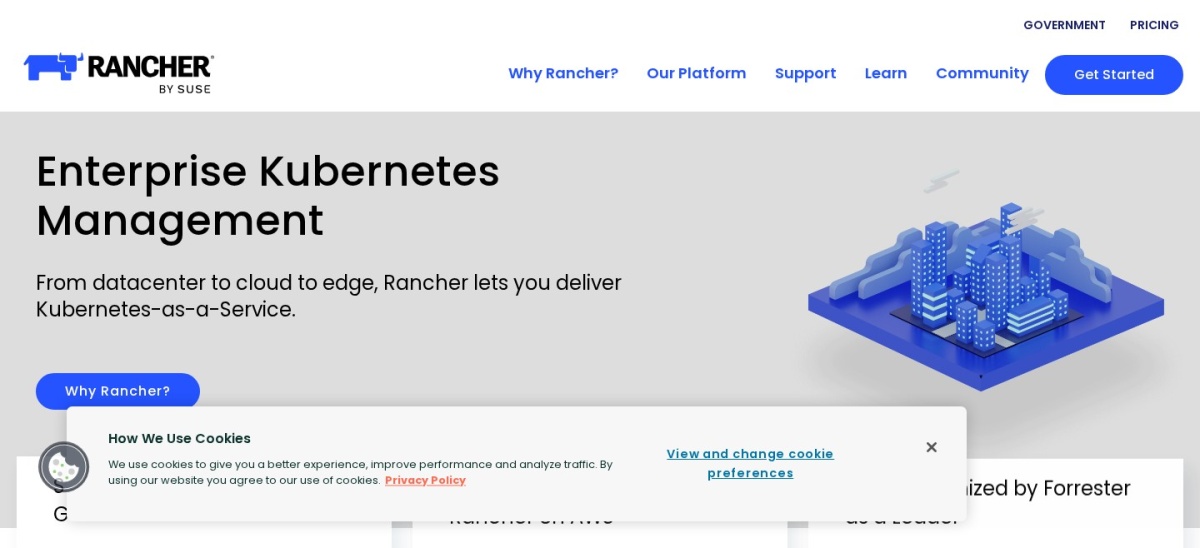
Rancher is SUSE's open source platform for running many Kubernetes clusters from one console. The free community edition provisions and manages RKE2, K3s and imported EKS, GKE and AKS clusters, with central role-based access control and Fleet for GitOps delivery across the fleet.
The trade off is support. The free edition has no vendor support or SLA, so teams that need guaranteed help must buy Rancher Prime, which is sold by subscription and priced on request. It suits platform teams that run clusters in more than one cloud or data center.
What we like
Free open source core with no cluster limit
One console for clusters in any cloud or data center
Fleet GitOps built in for fleet-wide deploys
Watch out for
No vendor support on the free edition
Needs a dedicated management cluster to run
Prime pricing is quote-only
Rancher Prime adds SUSE support and a supported release channelVisit rancher.com
02
Portainer
4.8/5on G2 (297 reviews, checked Nov 2026)
Paid from$1,045/yr
Best for small teams and mixed estates
Free nodes3 nodes
Also managesDocker, Swarm, Podman
GitOpsBuilt-in engine
Paid planStarter, $1,045/yr
portainer.io
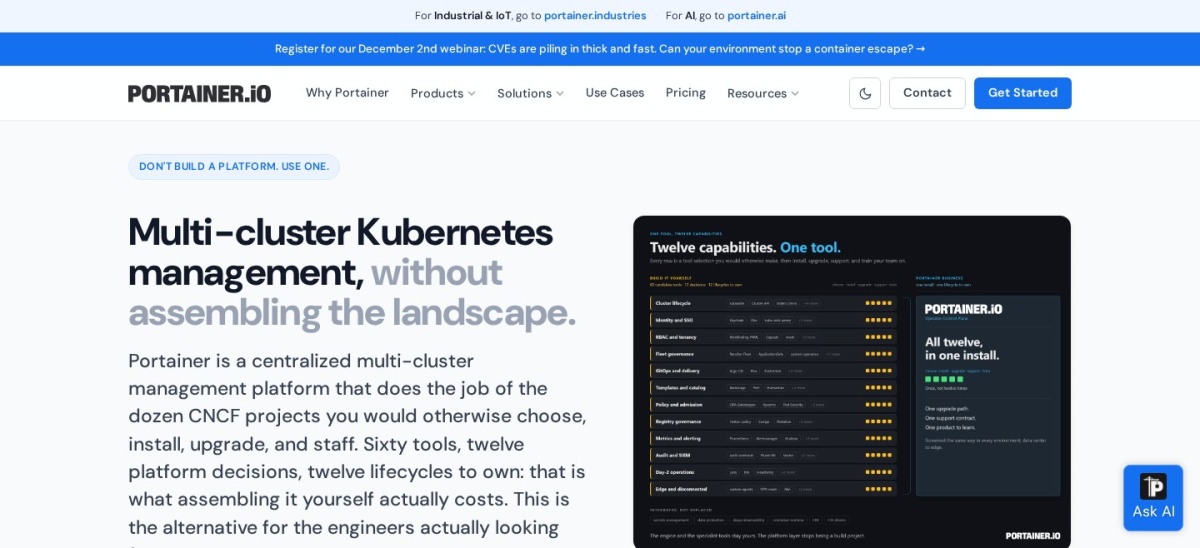
Portainer homepage, captured Nov 2026.
Portainer is a lightweight web console for Docker, Swarm and Kubernetes under one login. The free Community Edition covers 3 nodes, and paid plans add role-based access control, audit logs, GitOps and policy controls for larger estates.
The trade off is depth. Portainer manages workloads well but does not provision cloud clusters or run a full fleet lifecycle the way Rancher or Spectro Cloud do. Starter costs $1,045 a year for 5 nodes. It suits small teams that want a simple governed console without a heavy platform.
What we like
Highest G2 rating in this list at 4.8/5
Covers Docker and Swarm beside Kubernetes
Node-based pricing suits teams with many operators
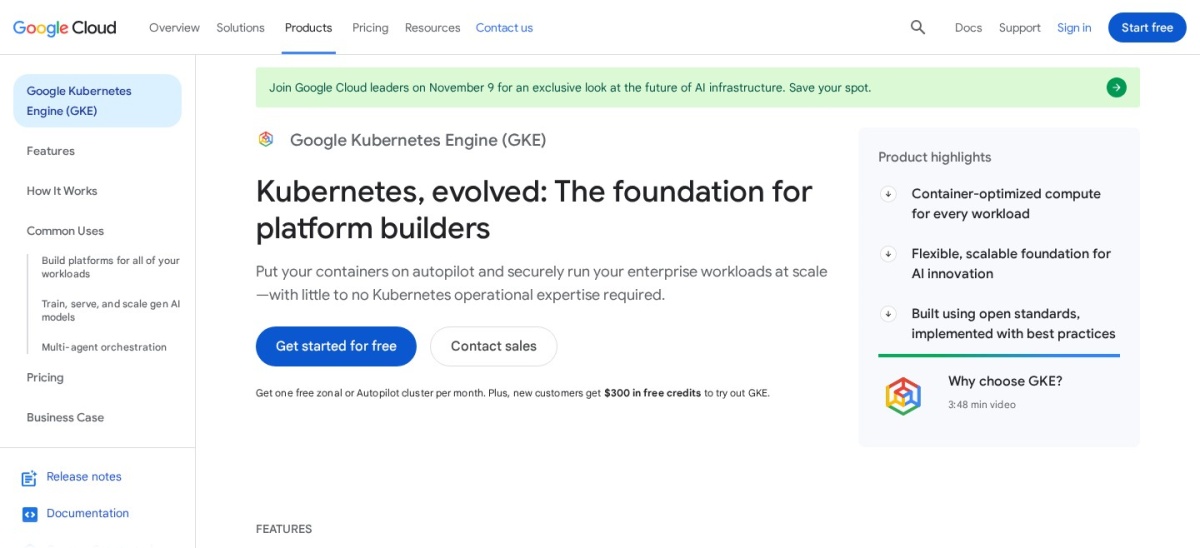
Google Kubernetes Engine homepage, captured Nov 2026.
Google Kubernetes Engine is Google Cloud's managed Kubernetes service, which runs the control plane for you. Clusters autoscale, and Google applies $74.40 in monthly credits per billing account, which covers the $0.10 per cluster-hour fee for one small cluster.
The trade off is lock-in. GKE works best inside Google Cloud, and costs beyond the control-plane fee, such as nodes and storage, can grow fast. It suits teams already on Google Cloud that want autoscaling without running a control plane.
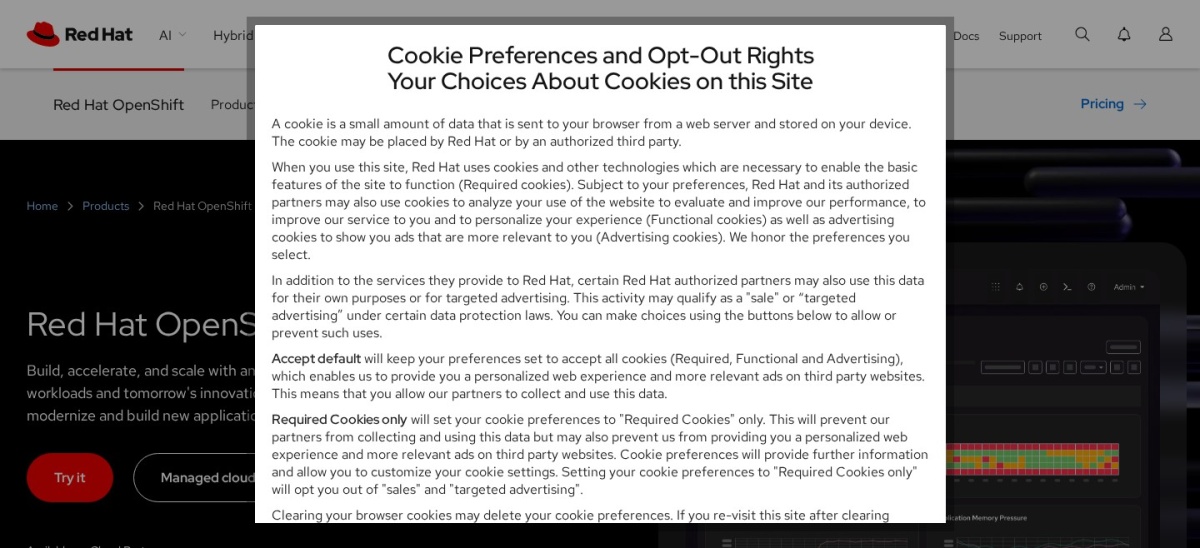
Red Hat OpenShift is an enterprise Kubernetes platform with built-in security, CI/CD and operator support. The managed service lists worker nodes from about $0.076 an hour on a three-year term, and a free developer sandbox is available for trying it out.
The trade off is cost and weight. Self-managed editions are subscription-priced by cores and usually need a sales quote, and the platform is heavier than plain Kubernetes. It suits regulated teams that want supported, compliant clusters.
What we like
Built-in security, CI/CD and operators
Strong enterprise support from Red Hat
Runs on-premises and in every major cloud
Watch out for
Self-managed pricing is quote-only
Heavier than plain Kubernetes
Steep learning curve for new teams
Paid subscriptions add support, Platform Plus parts and SLAsVisit redhat.com
05
Amazon Elastic Kubernetes Service
4.5/5on G2 (110 reviews, checked Nov 2026)
Starts at$0.10/hr
Best managed Kubernetes on AWS
Control-plane fee$0.10/cluster/hr
Free tierNo
AWS integrationIAM, VPC, native
Paid planPay as you go
aws.amazon.com
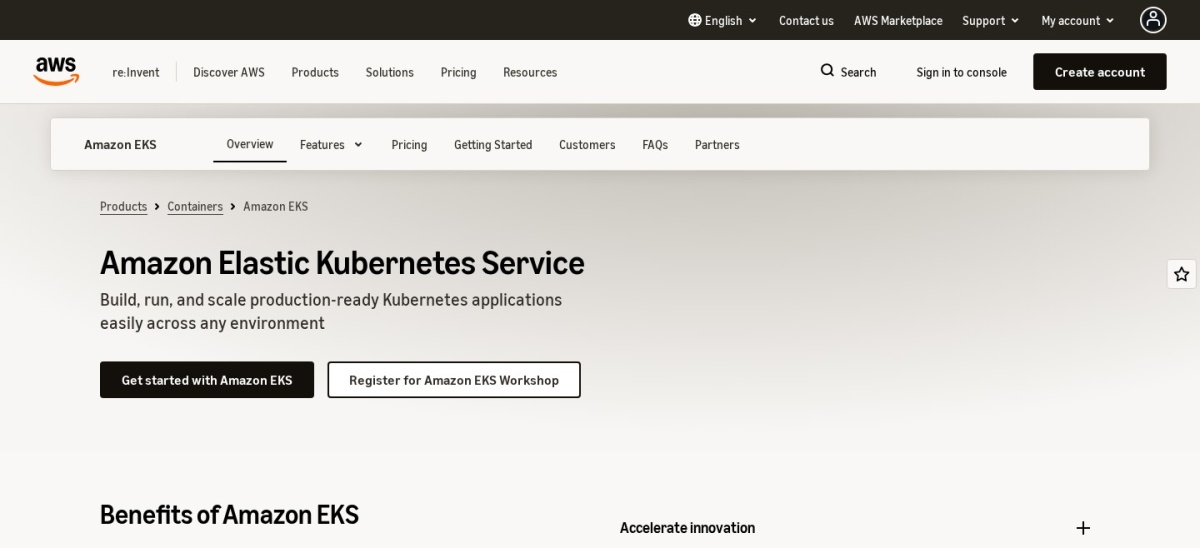
Amazon Elastic Kubernetes Service homepage, captured Nov 2026.
Amazon Elastic Kubernetes Service is AWS's managed Kubernetes service. AWS runs the control plane for $0.10 per cluster per hour, and EKS connects to IAM, VPC networking and the other AWS services your workloads already use.
The trade off is the AWS bill. There is no free cluster tier, and node, storage and data-transfer costs sit on top of the control-plane fee. It suits teams that already run production workloads on AWS.
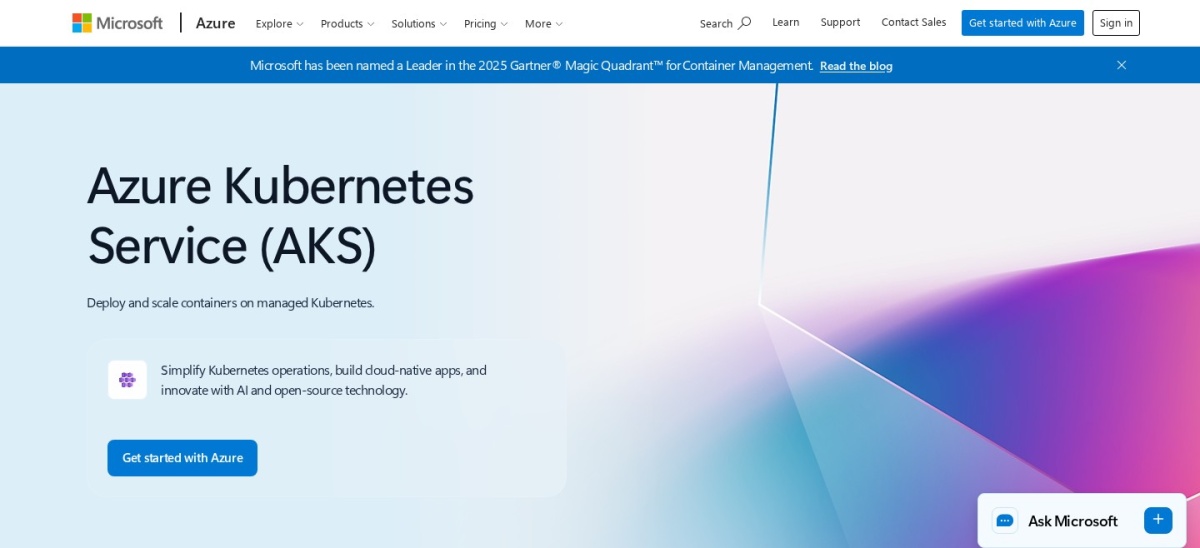
Azure Kubernetes Service homepage, captured Nov 2026.
Azure Kubernetes Service is Microsoft's managed Kubernetes service. Cluster management is free on the Free tier, and the Standard tier charges $0.10 per cluster per hour, with deep links into Entra ID and Azure Monitor.
The trade off is pricing complexity. Paid tiers, node pools and add-ons make the monthly total hard to predict, and the best experience needs an Azure setup. It suits teams that already run on Microsoft Azure.
Komodor is a Kubernetes troubleshooting platform that puts deployments, events and changes on one timeline. It adds AI-guided root-cause analysis and playbooks so developers can fix failed workloads without waiting on the platform team.
The trade off is price. The Basic plan lists at $1,000 a month, and the free tier was removed, so small teams pay enterprise prices. It suits larger teams that spend a lot of time debugging production clusters.
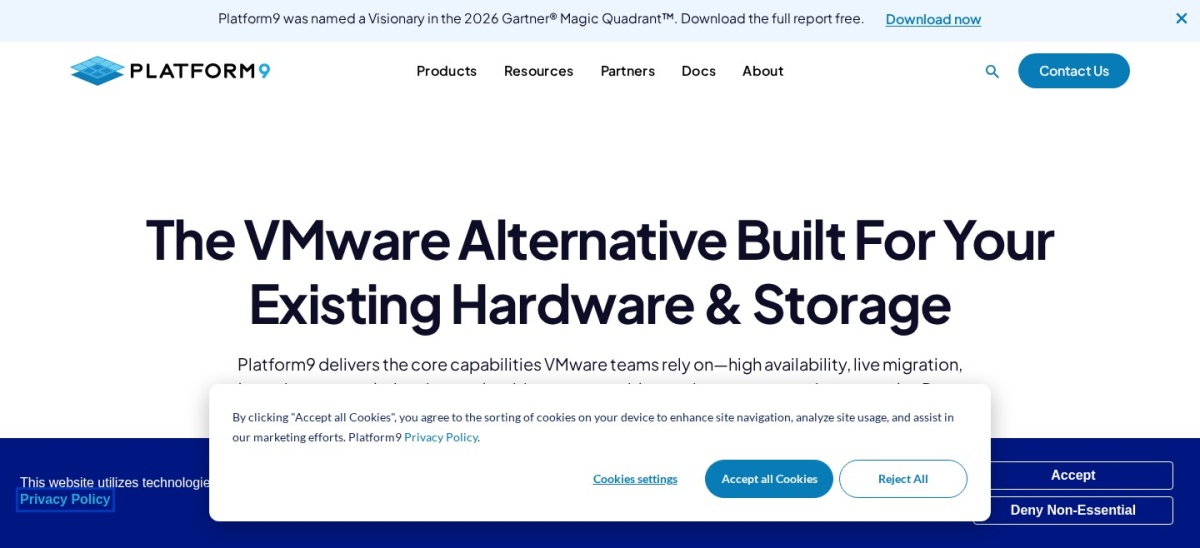
Platform9 is a SaaS-managed Kubernetes service for on-premises, cloud and edge clusters. The free Freedom tier covers up to 3 clusters, 20 nodes or 800 vCPUs, and the paid Growth tier adds enterprise support and higher limits.
The trade off is the minimum. Growth starts at about $480 a month on annual billing because of a three-node minimum, and the wider private-cloud product is quote-only. It suits teams that want managed Kubernetes on their own hardware.
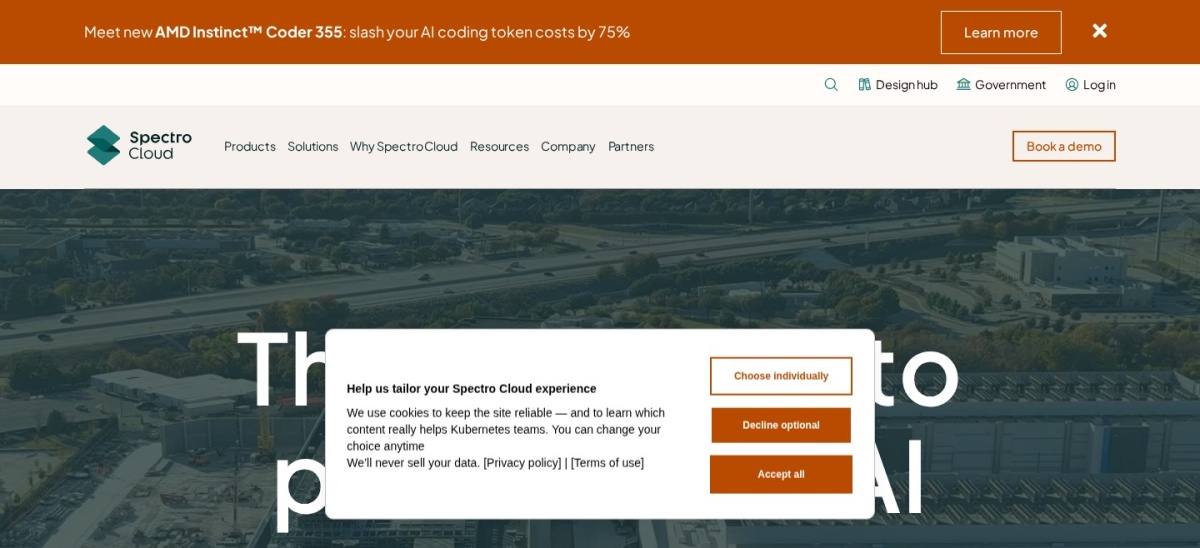
Spectro Cloud Palette homepage, captured Nov 2026.
Spectro Cloud Palette is a multi-cluster management platform for cloud, data center and edge Kubernetes. It provisions full-stack clusters from declarative profiles and automates upgrades, so one team can run the same setup in many places.
The trade off is pricing. Palette is sold as a usage-based subscription with no public unit rates, so budgeting needs a sales quote. It suits enterprises that run Kubernetes across clouds, data centers and edge sites.
Pick a managed service if your workloads already live in one cloud. GKE, EKS and AKS run the control plane, patch it and scale it, and you pay a small hourly fee per cluster.
Pick a platform if your clusters live in more than one place. Rancher, Platform9 and Spectro Cloud manage clusters across clouds, data centers and edge sites from one console.
Pick a console such as Portainer or Komodor if the clusters already exist and the problem is day-to-day work. Portainer covers deploys and access, while Komodor focuses on finding why a workload failed.
How we chose
We started from the most-used Kubernetes management tools: multi-cluster platforms, web consoles, and the three big managed cloud services.
Prices come from vendor pricing pages and vendor-supplied pricing on G2, checked on 25 November 2026. Ratings and review counts come from G2 on the same day. Where a vendor shows a sale, the list shows the regular price.
We left out tools with no public rating, such as k9s and Headlamp, and Lens, which has only 4 G2 reviews. No vendor paid for a place, and we do not claim hands-on testing for this list.
How to choose a Kubernetes management tool
Start with where your clusters run, then match the tool to that shape.
Count your clusters and where they live. One cloud points to that cloud's managed service. Two or more clouds, or a data center, points to Rancher, Platform9 or Spectro Cloud.
Check the free tier first. Rancher is free and open source, Portainer covers 3 nodes free, and AKS charges nothing for cluster management on its free tier.
Price one cluster for a year. At $0.10 an hour, a managed cluster costs about $876 a year before nodes, so compare that with Portainer Starter at $1,045 a year.
Test access control before you buy. Central roles, audit logs and GitOps matter more as the team grows, so confirm they are in the plan you would pay for.
FAQ
What is the best Kubernetes management tool?
Rancher is the best pick for most platform teams. Its free open source edition manages clusters across clouds and data centers from one console, and it is rated 4.4 out of 5 on G2 from 164 reviews.
Is Rancher really free?
Yes, the Rancher community edition is free and open source with no cluster limit. Rancher Prime is the paid tier, which adds SUSE support and a supported release channel, and it is priced by subscription on request.
How much does managed Kubernetes cost?
GKE and EKS charge $0.10 per cluster per hour, about $876 a year for one cluster before node costs. AKS charges nothing for cluster management on its free tier, and GKE offers $74.40 a month in credits.
What is the cheapest Kubernetes management tool?
Rancher costs nothing for its open source edition, and Portainer is free for 3 nodes. For managed services, AKS is free on its free tier, while GKE and EKS start at $0.10 per cluster per hour.
Do I need a management platform if I use EKS, GKE or AKS?
Not always. A managed service runs the control plane, which is enough for one cloud. Add Rancher, Platform9 or Spectro Cloud when you run clusters in more than one cloud, data center or edge site.
Which tool is best for troubleshooting Kubernetes?
Komodor is built for that job, with a change timeline and AI-guided root-cause playbooks. It costs $1,000 a month, so smaller teams often start with Portainer and add Komodor later.
SaaS SEO and WordPress specialist with about 8 years of experience. Rakib compares WordPress plugins, themes, hosting and software using public pricing, documentation and user reviews. See how we rank.