Instrumentl is the best grant writing software for most nonprofits, pairing a 450,000-plus funder database with deadline tracking at 4.9 out of 5 on G2. Pick GrantStation for low-cost research, or Submittable if your team reviews applications from others.
How we make this list: we compare pricing pages, product documentation and public user reviews, then re-check every price before each update. No product paid for a place. Disclosure.
Instrumentl leads with a 450,000-plus funder database, deadline tracking and a 4.9/5 G2 rating from 130 reviews.
GrantStation is the cheapest research option at $699 a year, but it has no pipeline tracking or drafting tools.
Submittable covers grants, scholarships and awards in one review workflow, rated 4.5/5 on G2 from 168 reviews.
Foundant Grant Lifecycle Manager starts at $9,900 a year and is built for funders, not for nonprofits seeking grants.
Five of the nine tools publish no price at all, so expect a sales quote before you can compare costs.
Seeker tools and funder tools are different jobs
Grant writing software covers two different jobs. Seekers need to find funders, track deadlines and draft proposals. Funders need to collect applications, run reviews and track awards.
Buying the wrong side wastes money. A funder platform will not help a nonprofit write a better proposal, and a discovery database will not run a review committee. Our guide on whether WordPress is free for nonprofits is one example of how nonprofits check costs before they commit.
Discovery depth matters most for seekers. Look for funder profiles with giving history, deadline alerts and a way to track each opportunity from first interest to submission.
For funders, the review workflow is the product. Check how applications are scored, how reviewers are assigned and how decisions and payments are recorded.
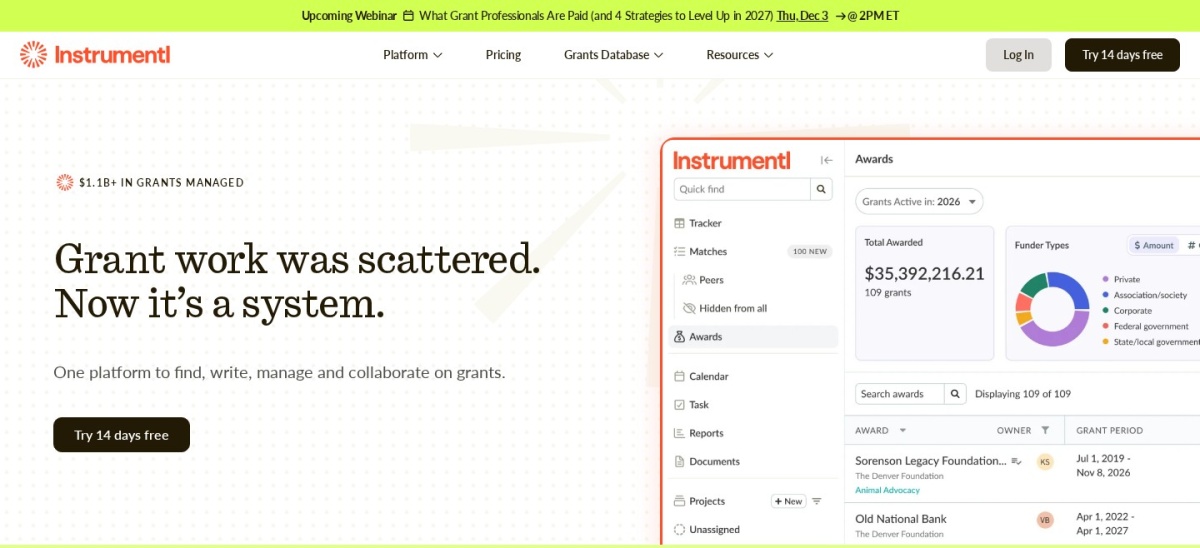
Instrumentl is a grant discovery and tracking platform for nonprofits. It matches an organization to funders from a database of more than 450,000 funder profiles, then tracks deadlines, tasks and documents for each opportunity in one workspace.
The trade off is price. Discover costs $299 a month billed annually, or $349 month to month, and AI drafting and post-award tracking sit on higher tiers at $499 and $999 a month. It suits nonprofits with a dedicated grants person and a steady pipeline of applications.
What we like
Largest funder database in this list
Deadline, task and document tracking in one place
Rated 4.9 out of 5 from 130 G2 reviews
Watch out for
Entry plan is $3,588 a year
AI drafting needs the $499-a-month tier
No free plan, only a 14-day trial
Higher tiers add AI drafting, collaborator access and post-award trackingVisit instrumentl.com
02
GrantStation
4.7/5on G2 (29 reviews, checked Nov 2026)
Starts at$699/yr
Best low-cost grant research
Funder profiles150,000+
Curated grants15,000+
Pipeline trackingNo
Entry plan$699/yr
grantstation.com
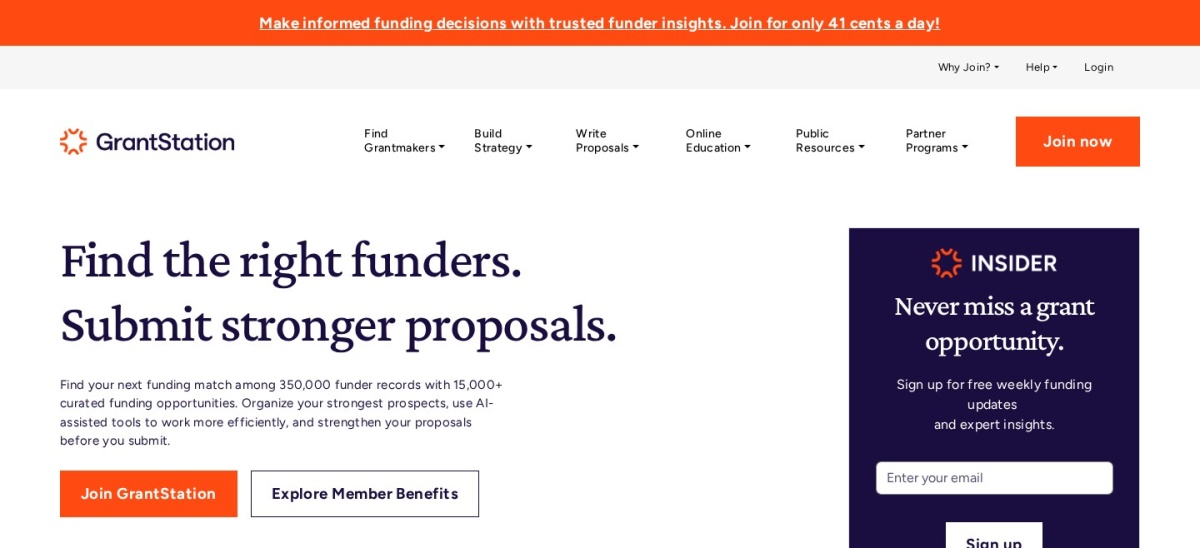
GrantStation homepage, captured Nov 2026.
GrantStation is a research membership for nonprofits seeking grants. It covers more than 150,000 funder profiles and 15,000 curated grants, plus proposal-writing guides and templates for teams learning to write stronger applications.
The trade off is that it is research only. There is no pipeline tracking, no deadline management and no application drafting, so teams still track applications in a spreadsheet or another tool. It suits small nonprofits that need funder research and writing guidance on a tight budget.
Submittable is an application intake and review platform for funders, schools and companies. It collects applications through online forms, assigns reviewers, scores submissions against rubrics and manages awards and payments in one workflow.
The trade off is price and focus. Submittable publishes no price, so costs come by quote and depend on application volume, and its breadth means less grantmaking depth than specialist funder tools. It suits teams running grants alongside scholarships, awards or corporate giving programs.
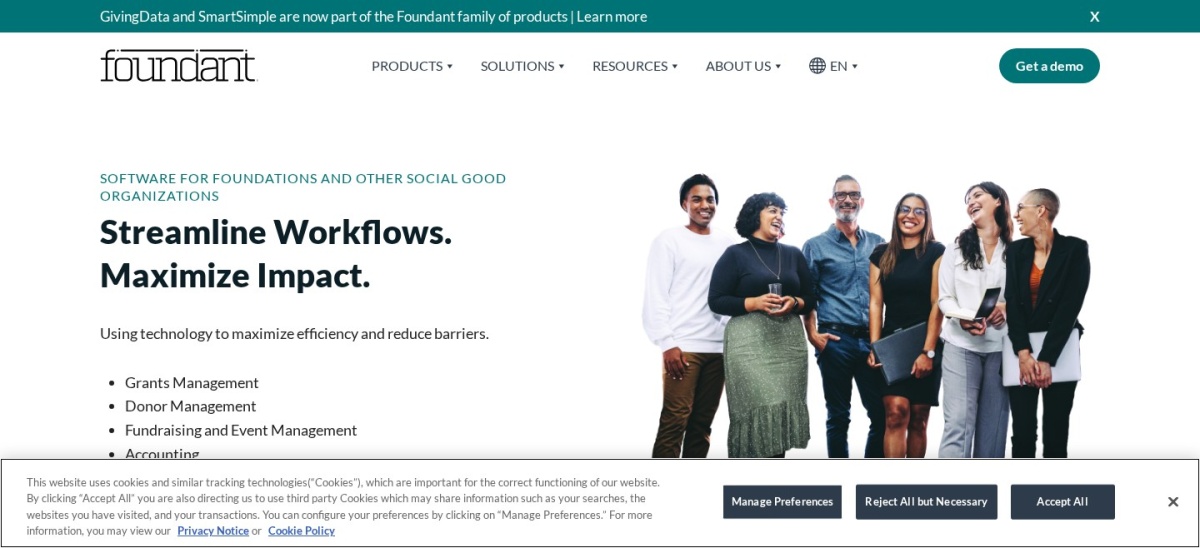
Foundant Grant Lifecycle Manager homepage, captured Nov 2026.
Foundant Grant Lifecycle Manager is grantmaking software for foundations and other funders. It runs online applications, eligibility checks, review workflows, awards and reporting, and it connects to Foundant fund accounting for community foundations.
The trade off is that it serves funders, not seekers. A nonprofit looking for grants will not find a funder database or drafting help here, and the Standard plan starts at $9,900 a year. It suits community foundations that want grantmaking and fund accounting in one system.
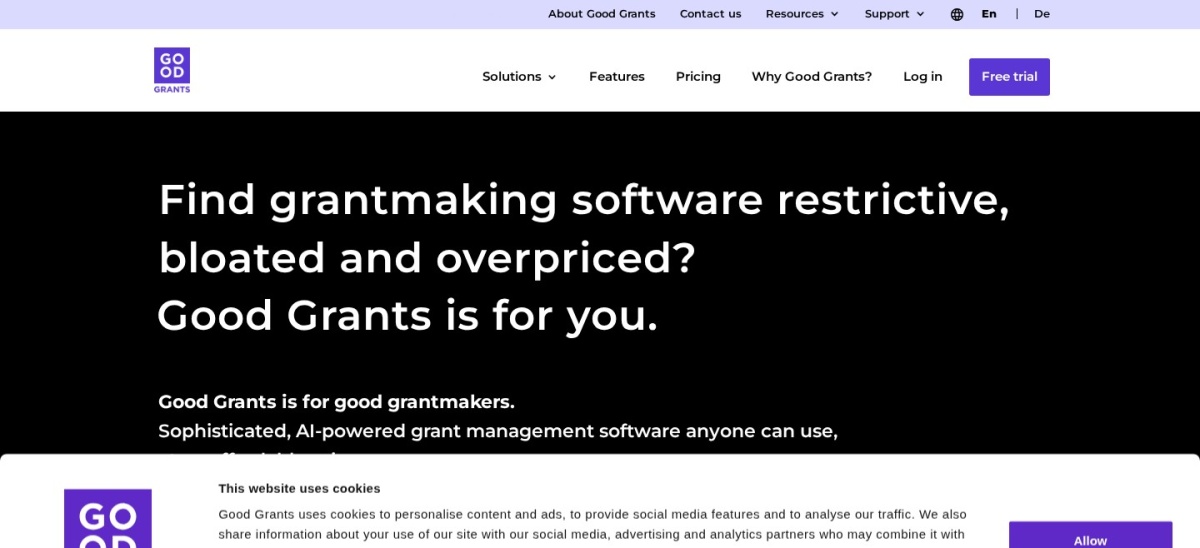
Good Grants is a grantmaking platform for funders running awards, grants and scholarships. It offers configurable application forms, reviewer scoring, judging workflows and award administration, with support that reviewers praise for fast replies.
The trade off is pricing in euros. G2 lists its Intro plan at €3,200 a year, so there is no published US dollar price to budget against, and some reviewers find it costly for limited use. It suits small and mid-size funders that want flexible forms without enterprise complexity.
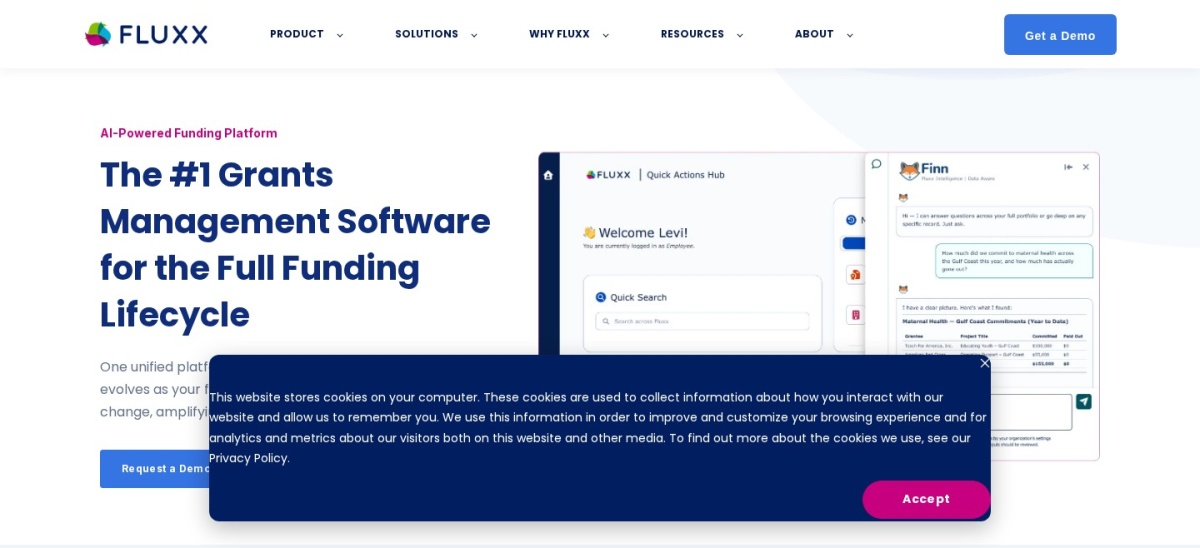
Fluxx is enterprise grantmaking software for foundations and corporate givers. It manages online applications, review workflows, approvals, payments and outcomes reporting, with dashboards for program officers, finance teams and executives.
The trade off is weight. Fluxx publishes no price and expects an enterprise sales cycle and implementation, so smaller funders may find it heavy for their needs. It suits large foundations standardizing complex, multi-stage grant programs.
What we like
Full funding lifecycle in one system
Strong among large foundations
Configurable review and approval workflows
Watch out for
No published price
Enterprise implementation takes time
Too heavy for small funders
Quoted plans cover the full lifecycle, from intake to impact reportingVisit fluxx.io
07
SmartSimple Cloud
4.3/5on Capterra (31 reviews, checked Nov 2026)
PricingCustom/yr
Best for complex, configurable programs
ConfigurationHighly flexible
InternationalMulti-currency
SecurityEnterprise controls
PricingQuote only
smartsimple.com
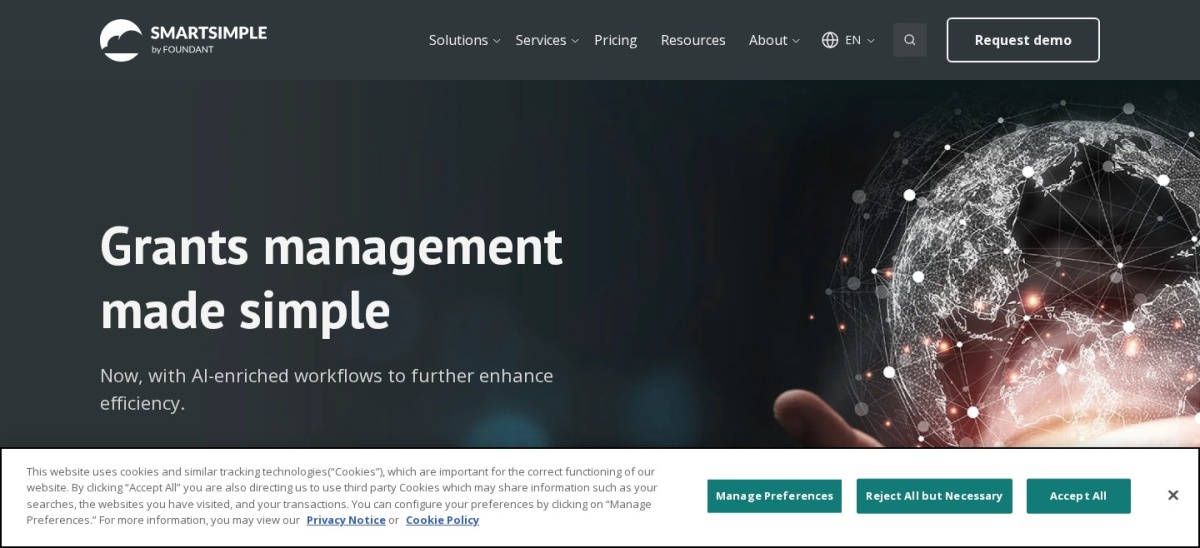
SmartSimple Cloud homepage, captured Nov 2026.
SmartSimple Cloud is a configurable grant management platform for corporations, foundations and government agencies. It handles application intake, review, approval, disbursement and reporting, and it supports multi-currency and multi-language programs.
The trade off is setup effort. SmartSimple publishes no price, and its flexibility means implementation needs planning and experienced administrators. It suits organizations with complex grantmaking rules and the staff to run them.
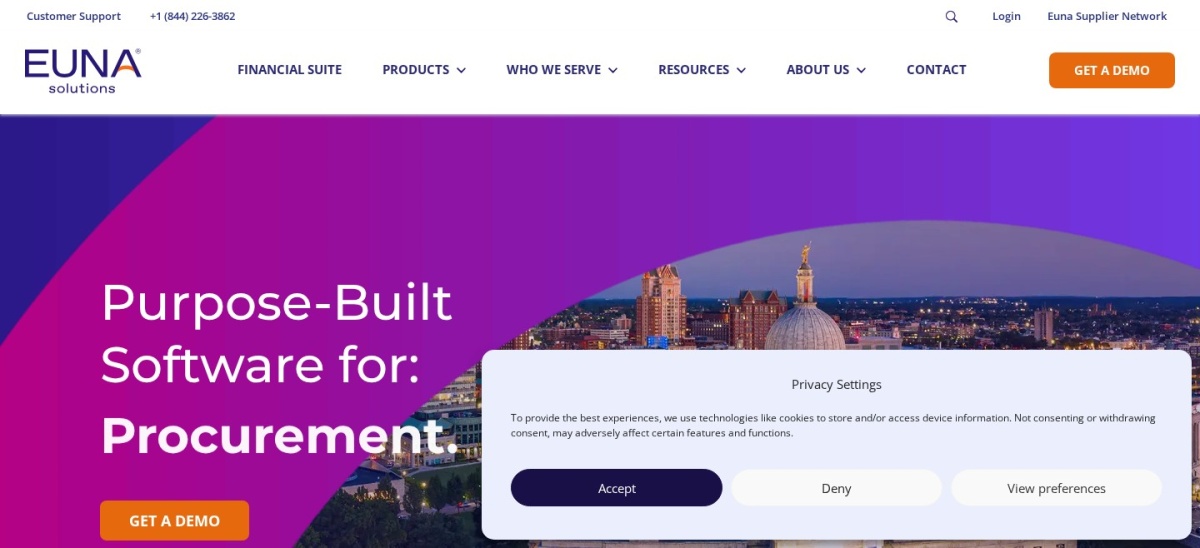
Euna Grants is grant management software for government agencies. Formerly sold as AmpliFund, it covers applications, review, awards, expense tracking and closeout reporting, with audit trails built for public funds.
The trade off is price transparency. Euna publishes no price, and third-party listings disagree on the entry point, so a quote is the only way to budget. It suits public agencies managing federal or state grants with strict reporting duties.
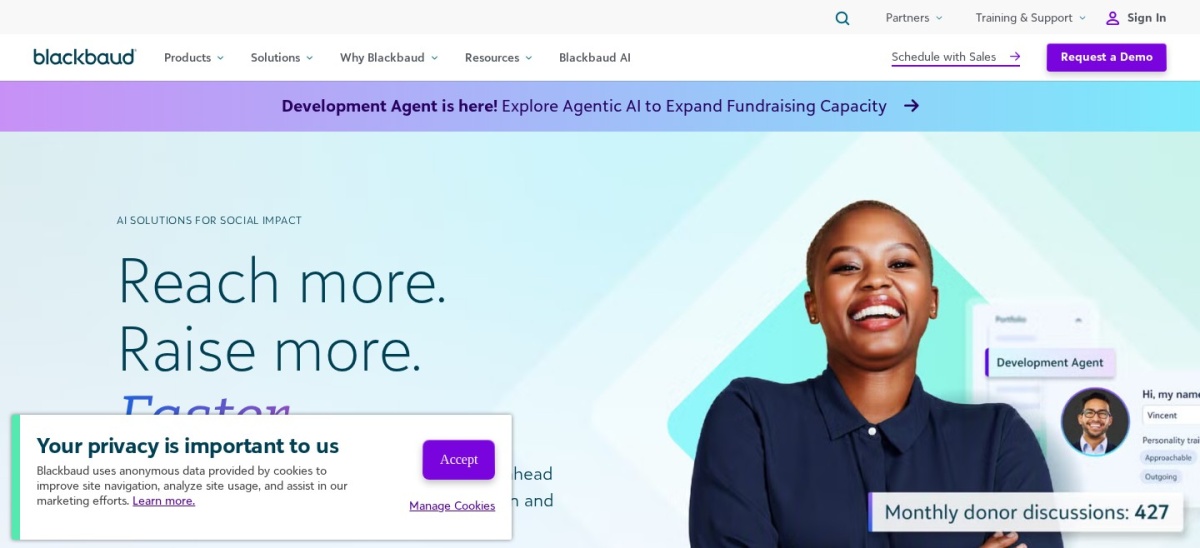
Blackbaud Grantmaking homepage, captured Nov 2026.
Blackbaud Grantmaking is funder software for organizations already running Blackbaud products. It manages applications, reviews, awards and payments, and grantee data connects to Blackbaud fundraising and financial tools.
The trade off is ecosystem value. Standalone buyers get less of the integration benefit and still pay enterprise prices, and its 3.9 out of 5 G2 rating is the lowest in this list. It suits Blackbaud shops that want grantmaking inside the stack they already run.
If you write proposals for your own nonprofit, start with Instrumentl, GrantStation or an AI drafting tool. Funder platforms will not find you new grants.
If you give money away, start with Submittable, Foundant or Fluxx. Discovery databases will not run your review committee.
Some teams need both sides. A nonprofit that also runs a scholarship fund can pair a discovery tool with a review platform, but budget for two subscriptions.
How we chose
We started from the established grant management tools with public ratings on G2 or Capterra, then kept nine that serve either grant seekers or grantmakers.
Prices come from vendor pricing pages and vendor-provided G2 listings, checked on 25 November 2026. Ratings and review counts come from G2 and Capterra on the same day. Where a vendor shows a sale, the list shows the regular price.
We left out tools with no usable public rating, including Grantable, which has a single G2 review, and Foundant GrantHub, which was discontinued in January 2026. No vendor paid for a place, and we do not claim hands-on testing for this list.
How to choose grant writing software
Start with which side of the table you sit on, then match the tool to your volume and budget.
Decide whether you seek grants or give them. Seekers need discovery and drafting; funders need intake and review. Buying the wrong side wastes the subscription.
Count your active grants and applications. A team tracking five grants needs less than a foundation reviewing 500 applications. Volume decides whether a quote-based platform is worth it.
Check the drafting help on offer. Instrumentl adds AI drafting on its higher tiers, while GrantStation only helps with search terms. Treat every AI draft as a starting point and rewrite it with specific program detail.
Ask for a quote before you shortlist. Five of the nine tools publish no price. Get the quote early, and ask what implementation, training and support cost in the first year.
FAQ
What is the best grant writing software?
Instrumentl is the best pick for most nonprofits. It combines a database of more than 450,000 funder profiles with deadline and document tracking, and it is rated 4.9 out of 5 on G2 from 130 reviews. Its Discover plan costs $299 a month billed annually.
How much does grant writing software cost?
It ranges from $699 a year for GrantStation research to $3,588 a year for Instrumentl Discover, and most funder platforms are quote-only. Foundant Grant Lifecycle Manager starts at $9,900 a year. Budget for implementation and training on top of the subscription.
What is the difference between grant seeker and grantmaker software?
Seeker software helps nonprofits find funders, track deadlines and draft proposals. Grantmaker software helps foundations collect applications, run reviews and track awards. Instrumentl and GrantStation serve seekers, while Fluxx, Foundant and Submittable serve funders.
Can AI write my grant proposal?
AI can draft sections from your past proposals and program descriptions, but funders expect specific, verifiable detail. Use AI for first drafts and outlines, then rewrite with real outcomes, budgets and timelines. Never submit an AI draft without a human review.
What happened to Foundant GrantHub?
Foundant discontinued GrantHub and GrantHub Pro on 31 January 2026 to focus on funder software. Its remaining flagship for grantmakers is Grant Lifecycle Manager. Nonprofits that used GrantHub for tracking should look at Instrumentl or a spreadsheet-based tracker instead.
Is there a free grant writing tool?
None of the nine tools in this list has a free plan. Instrumentl and Good Grants offer free trials, and Grantable has a free tier, but it has only one G2 review so it did not make this list. GrantStation at $699 a year is the cheapest paid option here.
SaaS SEO and WordPress specialist with about 8 years of experience. Rakib compares WordPress plugins, themes, hosting and software using public pricing, documentation and user reviews. See how we rank.