Duolingo is the best foreign language app for most learners. Its full courses are free in 40+ languages, and it holds a 4.7 out of 5 App Store rating from 5.6 million ratings. Pick Babbel for structured grammar lessons and Pimsleur for speaking practice on the move.
How we make this list: we compare pricing pages, product documentation and public user reviews, then re-check every price before each update. No product paid for a place. Disclosure.
Duolingo is the only app here with full courses free, covering 40+ languages with ads and an energy cap.
Babbel explains grammar in plain language across 14 languages, with a 12-month plan at $107.40 a year.
Rosetta Stone teaches 25 languages by immersion with speech feedback, at $159 a year.
Busuu adds corrections from fluent speakers to CEFR courses in 14 languages, from $72.99 a year.
Memrise is the cheapest yearly plan here at $61.99, built on native-speaker videos and AI chat practice.
What to look for in a foreign language app
A good language app should match how you actually study. Short daily lessons suit a commute, while reading real articles suits learners past the basics.
Check the free plan first. Some apps give full courses free, some give one free lesson per course, and some offer only a short trial.
Speaking practice is the weak spot in most apps. Only a few give real feedback on pronunciation, and none replaces talking with a real person.
Prices vary by plan length and by store. Annual plans cost far less per month than monthly billing, and the price on the website can differ from the price in the app store.
4.7/5on App Store (5,625,773 reviews, checked Nov 2026)
Paid from$83.99/yr
Best foreign language app overall
Languages40+
Free planYes, full courses
Paid planSuper, $83.99/yr
Speaking practiceYes, with AI chat
duolingo.com
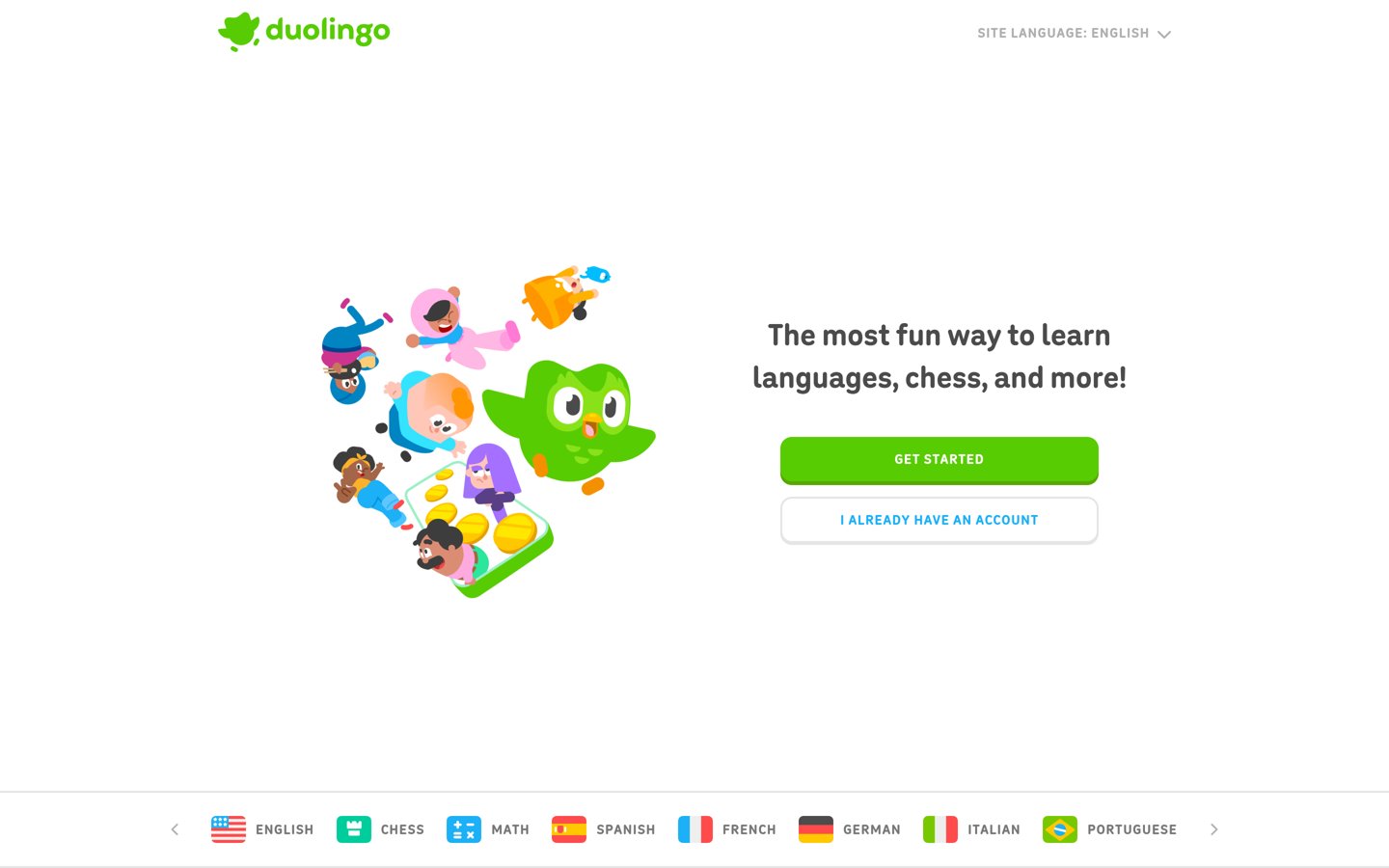
Duolingo homepage, captured Nov 2026.
Duolingo is a free app that teaches 40+ languages through short game-like lessons with streaks and leagues. The free version covers every course, with ads and a daily energy cap, and Super removes ads and the cap.
The trade off is depth. Grammar gets little explanation, and most learners report levelling off around the lower-intermediate stage. Super lists at about $12.99 a month, or $83.99 a year on the annual plan, though Duolingo shows different prices to different accounts. It suits beginners who want a free daily habit.
4.7/5on App Store (758,926 reviews, checked Nov 2026)
Starts at$107.40/yr
Best for structured grammar lessons
Languages14
Free planFirst lesson only
Paid plan12 months, $107.40
Speaking practiceYes, speech recognition
babbel.com
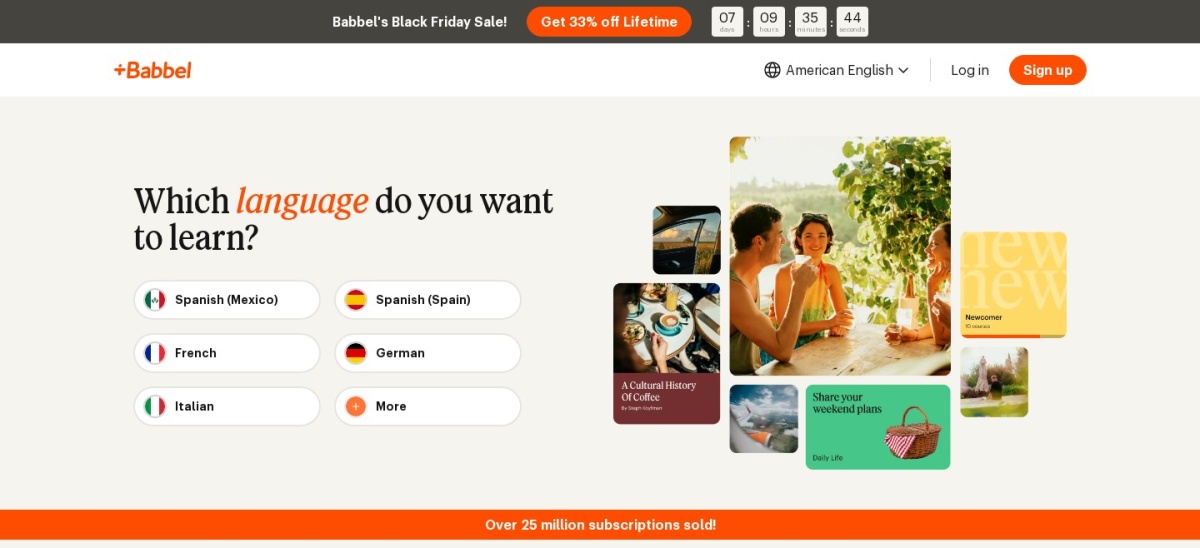
Babbel homepage, captured Nov 2026.
Babbel is a subscription app with structured 10 to 15 minute lessons built by more than 200 language experts. Courses follow realistic dialogues, explain grammar as it comes up, and use speech recognition to check pronunciation.
The trade off is that there is no free plan beyond the first lesson of each course. A single month costs $17.95, while the 12-month plan costs $107.40 a year, or $8.95 a month. It suits adult learners who want grammar explained clearly.
4.8/5on App Store (238,883 reviews, checked Nov 2026)
Starts at$159/yr
Best for learning by immersion
Languages25
Free planTrial only
Paid planYearly, $159
Speaking practiceYes, TruAccent feedback
rosettastone.com
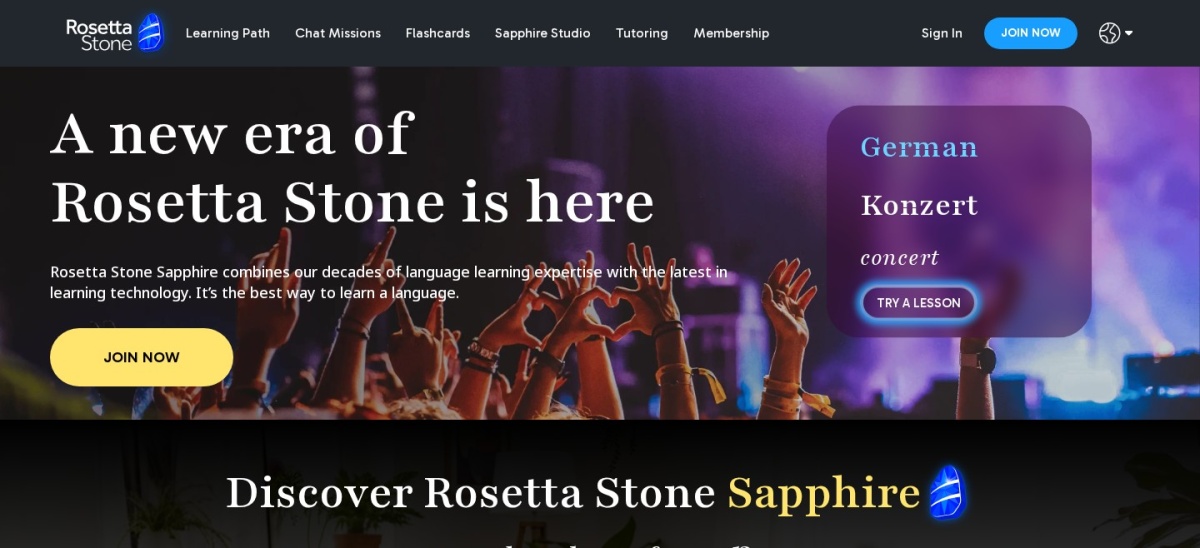
Rosetta Stone homepage, captured Nov 2026.
Rosetta Stone is an immersion app that teaches 25 languages with pictures and native audio instead of translations. Its TruAccent tool gives feedback on pronunciation, and Chat Missions practise real-life conversations such as ordering food.
The trade off is price and pace. The yearly plan costs $159, or $19.99 a month, and the method can feel slow because it never explains grammar in your own language. It suits visual learners who want to think in the new language from day one.
4.7/5on App Store (101,679 reviews, checked Nov 2026)
Paid from$72.99/yr
Best for feedback from fluent speakers
Languages14
Free planYes, limited
Paid planPremium, $72.99/yr
Speaking practiceYes, community feedback
busuu.com
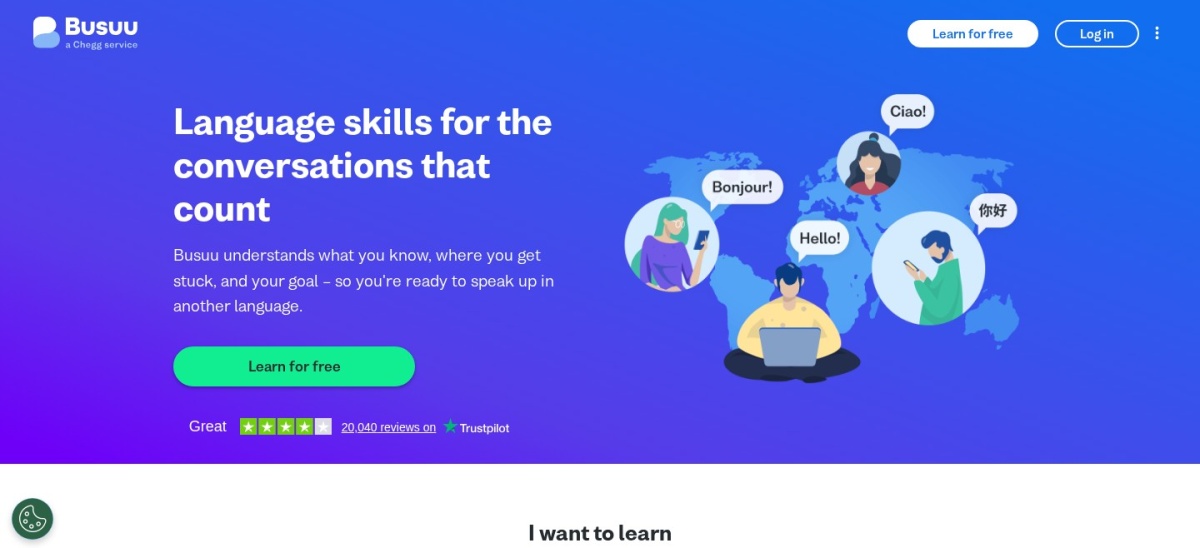
Busuu homepage, captured Nov 2026.
Busuu is a course app that teaches 14 languages on CEFR-aligned courses from A1 to B2 or C1, depending on the language. Learners can send writing and speaking exercises to fluent speakers in the community, who correct them and reply.
The trade off is range. Only 14 languages are covered, and the free plan is limited. Premium costs $12.49 a month or $72.99 a year, and Premium Plus adds AI conversations at $87.90 a year. It suits learners who want a structured course plus feedback from real people.
What we like
Corrections from fluent speakers
CEFR levels and certificates
One of the cheapest yearly plans here
Watch out for
Only 14 languages
Free plan covers little of each course
Premium Plus adds AI conversations and pronunciation feedbackVisit busuu.com
05
Memrise
4.8/5on App Store (217,824 reviews, checked Nov 2026)
Paid from$61.99/yr
Best for vocabulary and listening
Languages23 official courses
Free planYes, limited
Paid planPro, $61.99/yr
Speaking practiceYes, AI chat partner
memrise.com
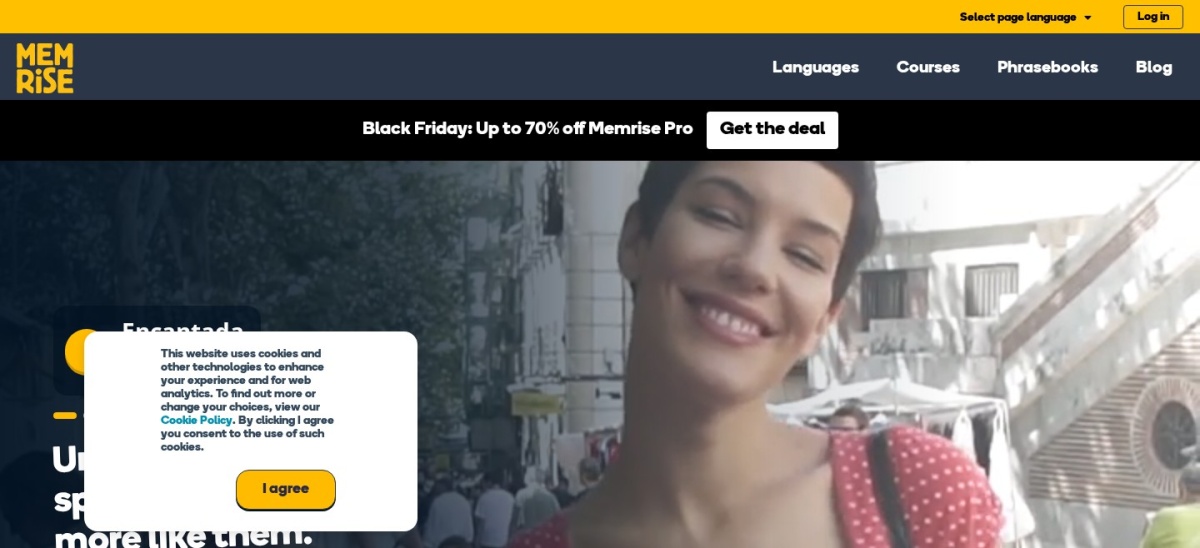
Memrise homepage, captured Nov 2026.
Memrise is a vocabulary app built on short videos of native speakers, so learners hear real accents and everyday phrases. Pro adds unlimited speaking practice with an AI chat partner, grammar drills, and removes ads.
The trade off is the monthly price. Pro costs $24.99 a month, but the annual plan drops to $61.99 a year, about $5.17 a month, which is the cheapest yearly plan in this list. It suits learners who want to build vocabulary and listening fast.
What we like
Cheapest yearly plan in this list
Real native-speaker video clips
AI chat practice on the Pro plan
Watch out for
Monthly billing is far dearer than annual
Grammar gets little explanation
Lifetime access is listed at $329.99 as a one-time paymentVisit memrise.com
06
Pimsleur
4.7/5on App Store (31,047 reviews, checked Nov 2026)
Starts at$164.95/yr
Best for speaking on the move
Languages51
Free plan7-day trial only
Paid planAll Access, $164.95/yr
Speaking practiceYes, core method
pimsleur.com
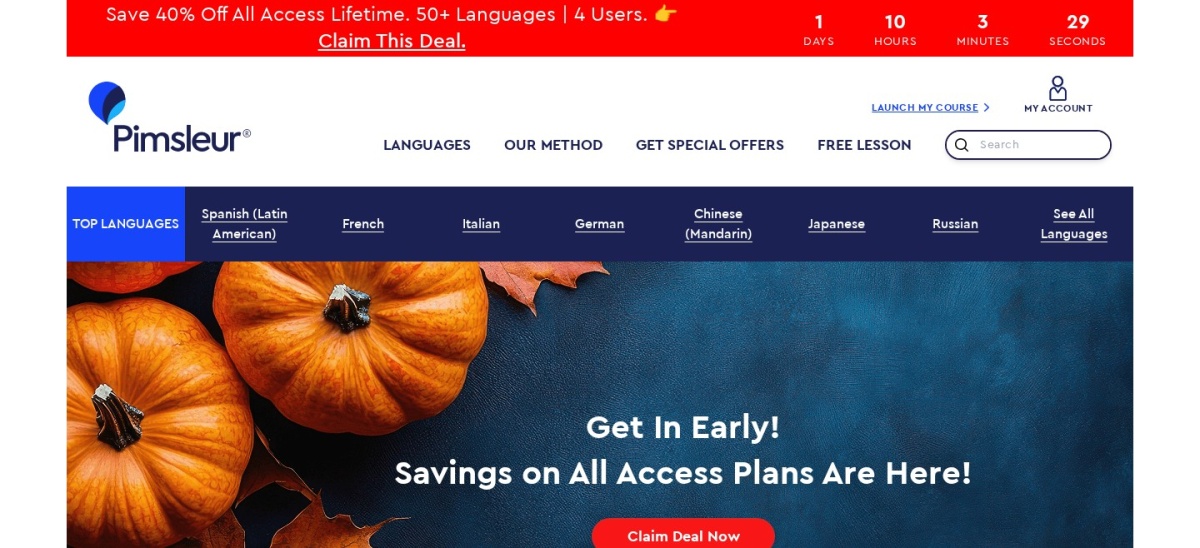
Pimsleur homepage, captured Nov 2026.
Pimsleur is an audio-first course built on 30-minute spoken lessons that learners answer out loud, with spaced repetition. All Access covers 51 languages and adds practice tools, reading lessons and an AI voice coach.
The trade off is cost. All Access costs $20.95 a month or $164.95 a year, the dearest yearly plan in this list, and there is no free plan beyond a 7-day trial. It suits commuters and walkers who want to speak from the first lesson.
4.7/5on App Store (10,535 reviews, checked Nov 2026)
Paid from$119.99/yr
Best for reading real content
Languages50+
Free plan20 saved words
Paid planPremium, $119.99/yr
Speaking practiceNo, reading focus
lingq.com
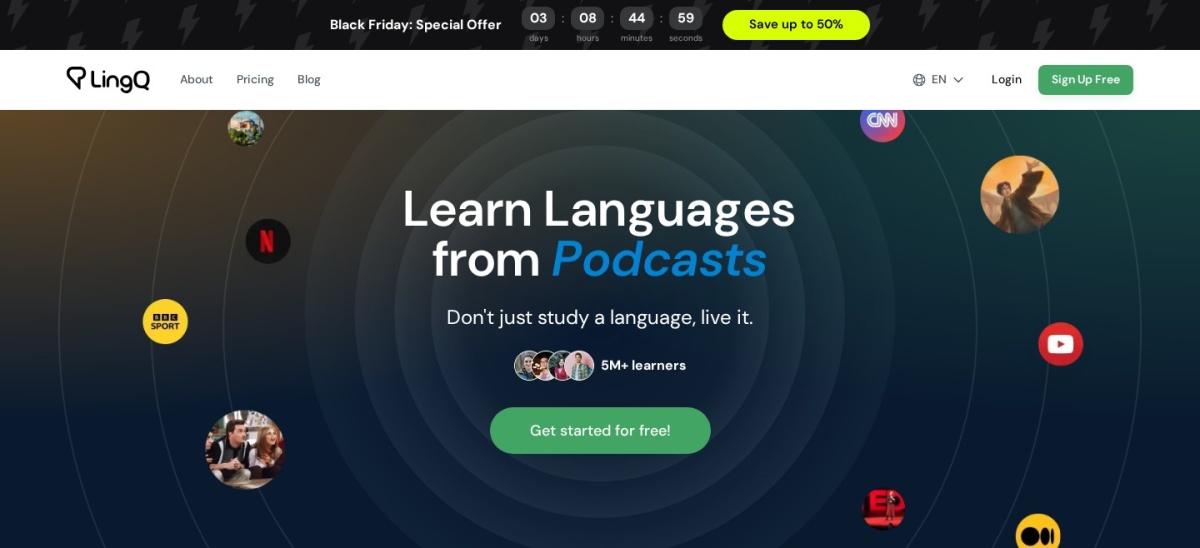
LingQ homepage, captured Nov 2026.
LingQ is a reading and listening app that lets learners import books, podcasts, videos and articles in 50+ languages. Unknown words can be tapped, saved and reviewed, which builds vocabulary from material the learner chose.
The trade off is the free plan, which caps saved words at 20 and imported lessons at 5. Premium costs $14.99 a month or $119.99 a year, and removes those caps with offline access. It suits intermediate learners who already know the basics.
What we like
Learn from real books and podcasts
Import your own content to study
50+ languages on one plan
Watch out for
Free plan caps saved words at 20
Weak for beginners and speaking practice
Premium Plus adds AI voices and chat tools at $269.99 a yearVisit lingq.com
08
Mondly
4.7/5on App Store (33,525 reviews, checked Nov 2026)
Paid from$74.90/yr
Best for less common languages
Languages41
Free planDaily lessons only
Paid planPremium, $74.90/yr
Speaking practiceYes, chatbot
mondly.com
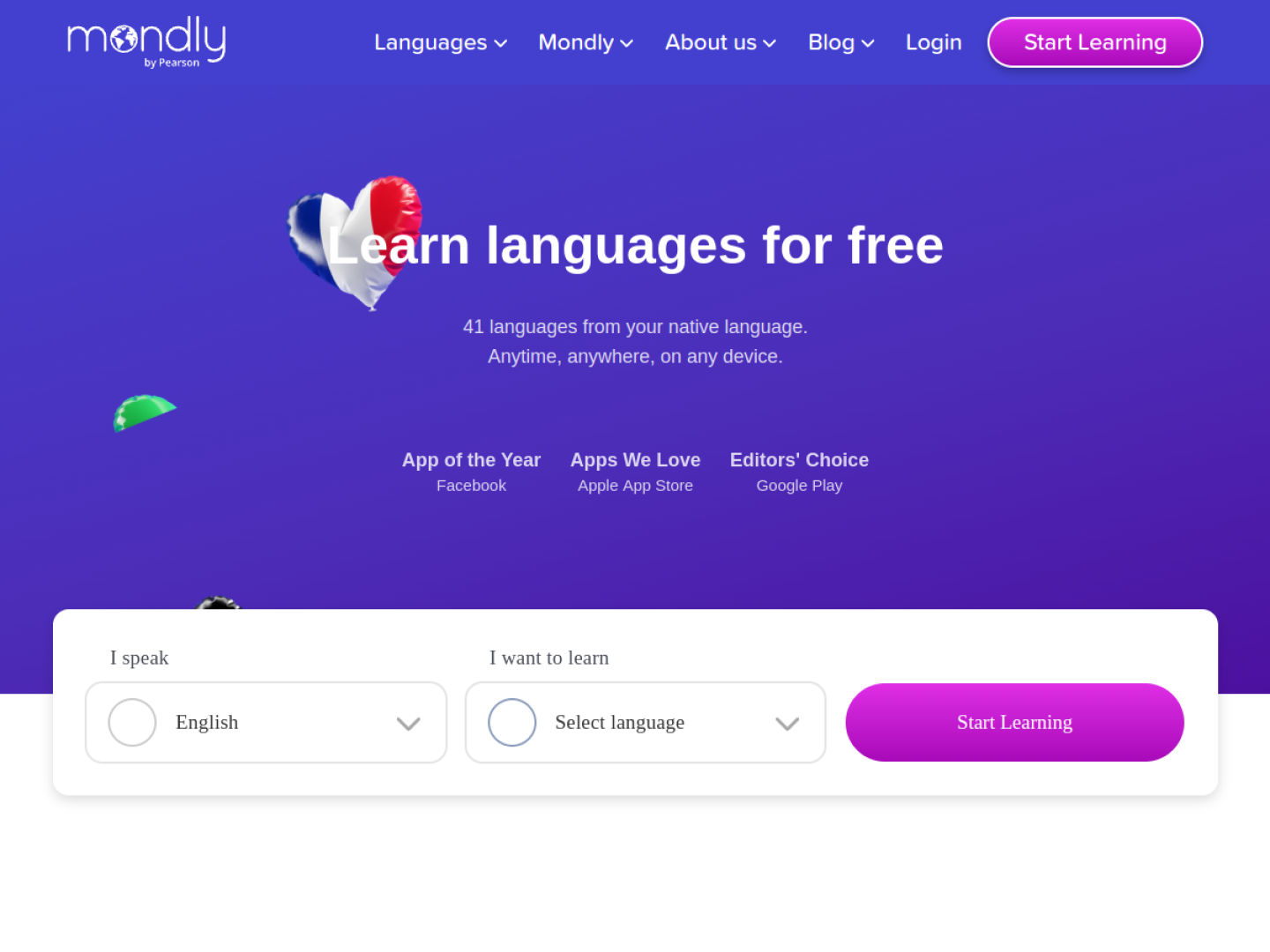
Mondly homepage, captured Nov 2026.
Mondly is a course app covering 41 languages, including less common ones such as Tagalog, Urdu and Afrikaans. Premium opens daily lessons, a speaking chatbot with speech recognition, verb conjugation tables and grammar features.
The trade off is the free plan, which covers only daily lessons, the Hello category and one chatbot lesson. The App Store yearly plan costs $74.90, while the website lists $154.80 a year before its frequent discount codes. It suits learners whose language is missing from smaller apps.
What we like
41 languages, including less common ones
Speaking chatbot with speech recognition
Learn from a native language other than English
Watch out for
Free plan is very narrow
Website and store prices differ a lot
Monthly billing in the App Store costs $15.90 a monthVisit mondly.com
09
Drops
4.7/5on App Store (71,771 reviews, checked Nov 2026)
Paid from$69.99/yr
Best for quick vocabulary games
Languages56
Free plan5 minutes per 10 hours
Paid planPremium, $69.99/yr
Speaking practiceNo, vocabulary only
languagedrops.com
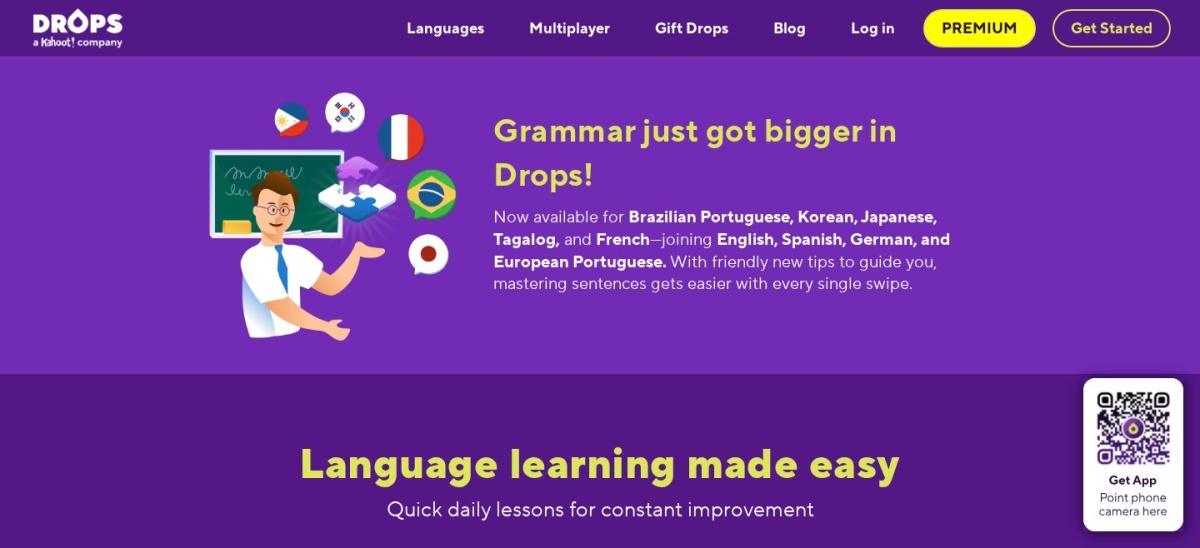
Drops homepage, captured Nov 2026.
Drops is a vocabulary app that teaches 56 languages through five-minute picture games. Each word is matched to an illustration and a native-speaker recording, and learners match, swipe and spell their way through themed word lists.
The trade off is scope. Drops teaches single words and short phrases, not grammar or conversation, so it works as a top-up beside a full course. Premium costs $12.99 a month or $69.99 a year, and removes the session cap. It suits busy learners who want a daily word habit.
Free plans cover the basics in different ways. Duolingo gives full courses free, while Babbel, Rosetta Stone and Pimsleur give only samples or a short trial.
Paid plans mostly add unlimited study and speaking practice. You lose the daily cap, unlock full courses and get AI chat or pronunciation feedback.
Annual billing is where the saving sits. Memrise drops from $24.99 a month to about $5.17 a month on its yearly plan, and Busuu from $12.49 to about $6.08.
If you study every day, a yearly plan usually pays for itself within a few months. If you study once a week, the free plan may be enough.
How we chose
We started from the most widely used language apps with a published App Store rating, then kept those with a real free plan or trial and a clear paid price.
Prices come from each vendor's pricing page or App Store listing, checked on 25 November 2026. Ratings and review counts come from the US App Store on the same day. Where a vendor shows a sale, the list shows the regular price.
We left out tutor marketplaces and apps with no public rating. No vendor paid for a place, and we do not claim to have used these tools ourselves.
How to choose a foreign language app
Start with how much time you have each day, then match the app to that habit.
Pick your daily time first. Five minutes a day suits Drops or Duolingo, while 30 minutes suits Babbel, Busuu or Pimsleur.
Check the free plan before paying. Try the free lessons or trial for a week. If you hit the cap every day, the paid plan is worth it.
Match the method to your weak spot. Choose Pimsleur or Busuu for speaking, LingQ for reading, and Memrise or Drops for vocabulary.
Pay yearly only when you are sure. Annual plans cost far less per month, but only if you keep studying. Start monthly, then switch to yearly after a month of daily use.
FAQ
What is the best foreign language app?
Duolingo is the best foreign language app for most learners. Its full courses are free in 40+ languages, and it holds a 4.7 out of 5 App Store rating from 5.6 million ratings.
Which language app is completely free?
Duolingo is the closest to completely free, with full courses at no cost, though ads and a daily energy cap apply. Busuu, Memrise, LingQ, Mondly and Drops all have limited free plans.
Which app is best for speaking practice?
Pimsleur is best for speaking, because every 30-minute lesson asks you to answer out loud. Busuu adds corrections from fluent speakers, and Babbel checks pronunciation with speech recognition.
Is Babbel or Duolingo better?
Duolingo is better for a free daily habit across 40+ languages. Babbel is better for structured study, because it explains grammar in plain language and builds lessons around real conversations.
Can an app make you fluent?
An app alone rarely makes anyone fluent. Apps build vocabulary, grammar and listening, but real fluency also needs regular conversation with real speakers.
Which language app is cheapest per year?
Memrise is the cheapest yearly plan in this list at $61.99 a year. Drops follows at $69.99 a year, then Busuu at $72.99 a year, all on annual billing.
SaaS SEO and WordPress specialist with about 8 years of experience. Rakib compares WordPress plugins, themes, hosting and software using public pricing, documentation and user reviews. See how we rank.