Salesforce Marketing Cloud is the best enterprise email marketing software for most large senders, with 4,854 G2 reviews behind it. HubSpot suits teams that want CRM and marketing in one place, while Klaviyo is the pick for large ecommerce brands.
How we make this list: we compare pricing pages, product documentation and public user reviews, then re-check every price before each update. No product paid for a place. Disclosure.
Salesforce Marketing Cloud leads for most large senders, with 4,854 G2 reviews and a Growth edition from $1,500 a month.
HubSpot Marketing Hub Enterprise costs $3,600 a month with 10,000 contacts and 200,000 sends, plus a $7,000 onboarding fee.
Klaviyo is the highest-rated tool here at 4.6/5 and the best pick for ecommerce, with a free plan up to 250 profiles.
Braze and Iterable publish no prices; third-party data puts entry deals near $60,000 a year for both.
Customer.io is the most transparent enterprise option, with published pricing from $100 a month.
What enterprise email marketing should cover
Enterprise email marketing is about volume, deliverability and governance, not just templates. The tools in this list send millions of messages a month, orchestrate journeys across email, SMS and push, and keep every send auditable.
The market splits three ways. Salesforce, Marketo and Eloqua serve B2B and CRM-led enterprises; Braze and Iterable serve consumer brands with apps; HubSpot, Klaviyo and ActiveCampaign serve teams that want one platform without a six-figure contract.
Pricing is mostly hidden at this level. Only Salesforce, HubSpot, Eloqua, Klaviyo, ActiveCampaign and Customer.io publish a starting price; Braze, Iterable and Marketo sell by quote.
Deliverability and data rules matter more than features here. Check SOC 2, GDPR and HIPAA coverage, and whether the platform stores data in your region, before you compare feature lists.
Salesforce Marketing Cloud homepage, captured Nov 2026.
Salesforce Marketing Cloud is the de facto enterprise standard for email marketing, built for high-volume cross-channel campaigns with Journey Builder, Einstein AI and native Salesforce CRM integration. The Growth edition starts at $1,500 a month, with Advanced at $3,250 a month.
The trade off is complexity and cost. Implementation needs dedicated marketing operations staff, and the bill grows quickly with extra products and volumes. It suits large Salesforce-committed organisations with dedicated marketing ops teams.
HubSpot Marketing Hub homepage, captured Nov 2026.
HubSpot Marketing Hub is an all-in-one marketing platform with a fully unified CRM, marketing, sales, service and CMS on one architecture. Enterprise starts at $3,600 a month with 10,000 marketing contacts, 5 core seats and 200,000 email sends a month, plus a $7,000 one-time onboarding fee.
The trade off is cost at scale. Contact-tier pricing climbs as lists grow, and the mandatory onboarding fee adds $7,000 in year one. It suits mid-enterprise teams that want enterprise capability without stitching Salesforce and Marketo together.
Adobe Marketo Engage is the enterprise B2B marketing automation leader, built for account-based marketing, lead scoring and multi-touch revenue attribution across long sales cycles. It integrates natively with Adobe Real-Time CDP, Analytics and Experience Manager.
The trade off is headcount and price. Marketo needs dedicated marketing operations staff and publishes no list price, with enterprise deals typically above $1,000 a month. It suits large B2B teams with complex multi-touch funnels.
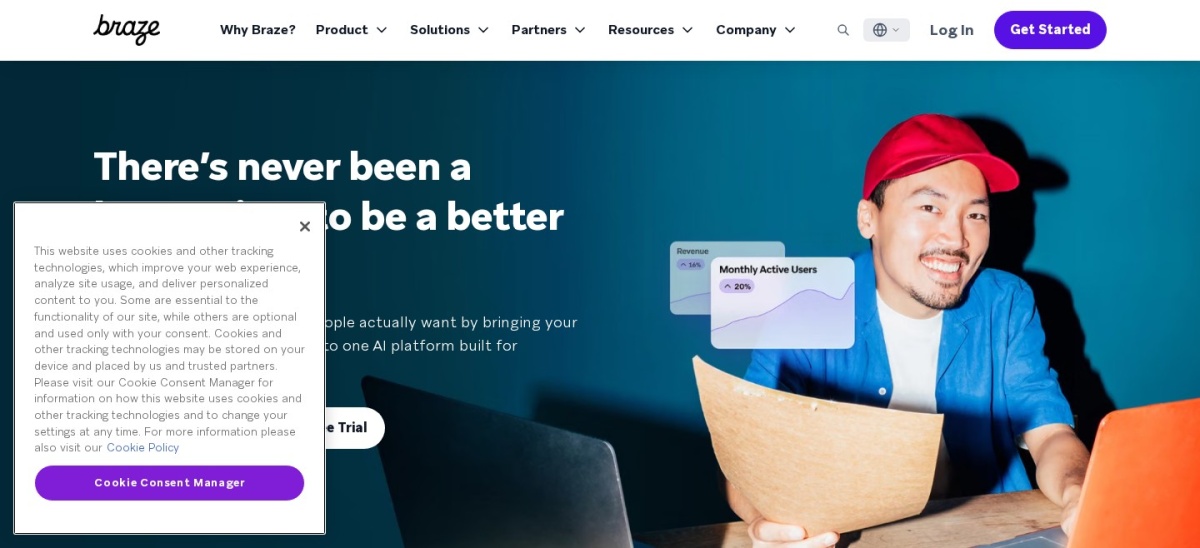
Braze is a cross-channel customer engagement platform for consumer brands, sending real-time personalised email, push and in-app messages at scale. It combines streaming ingestion, dynamic segmentation and cross-channel journeys for apps with millions of users.
The trade off is price opacity. Braze publishes no pricing, with third-party data putting entry deals near $60,000 a year, and it has no B2B features. It suits consumer brands and mobile-first companies with large audiences.
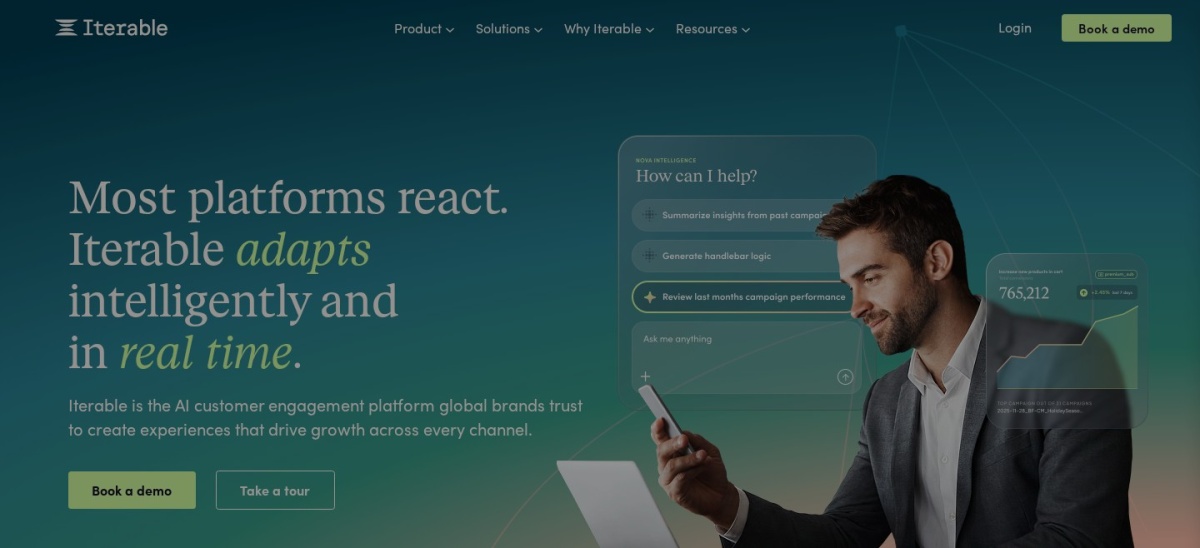
Iterable is a cross-channel messaging platform for enterprise B2C teams running mobile-first campaigns. Its visual journey canvas, experimentation tools and AI optimisation let growth marketers build personalised journeys without heavy engineering.
The trade off is pricing and scope. Iterable is quote-only, with third-party data putting entry deals near $60,000 a year, and it offers no B2B pipeline tools. It suits growth teams running lifecycle campaigns at consumer scale.
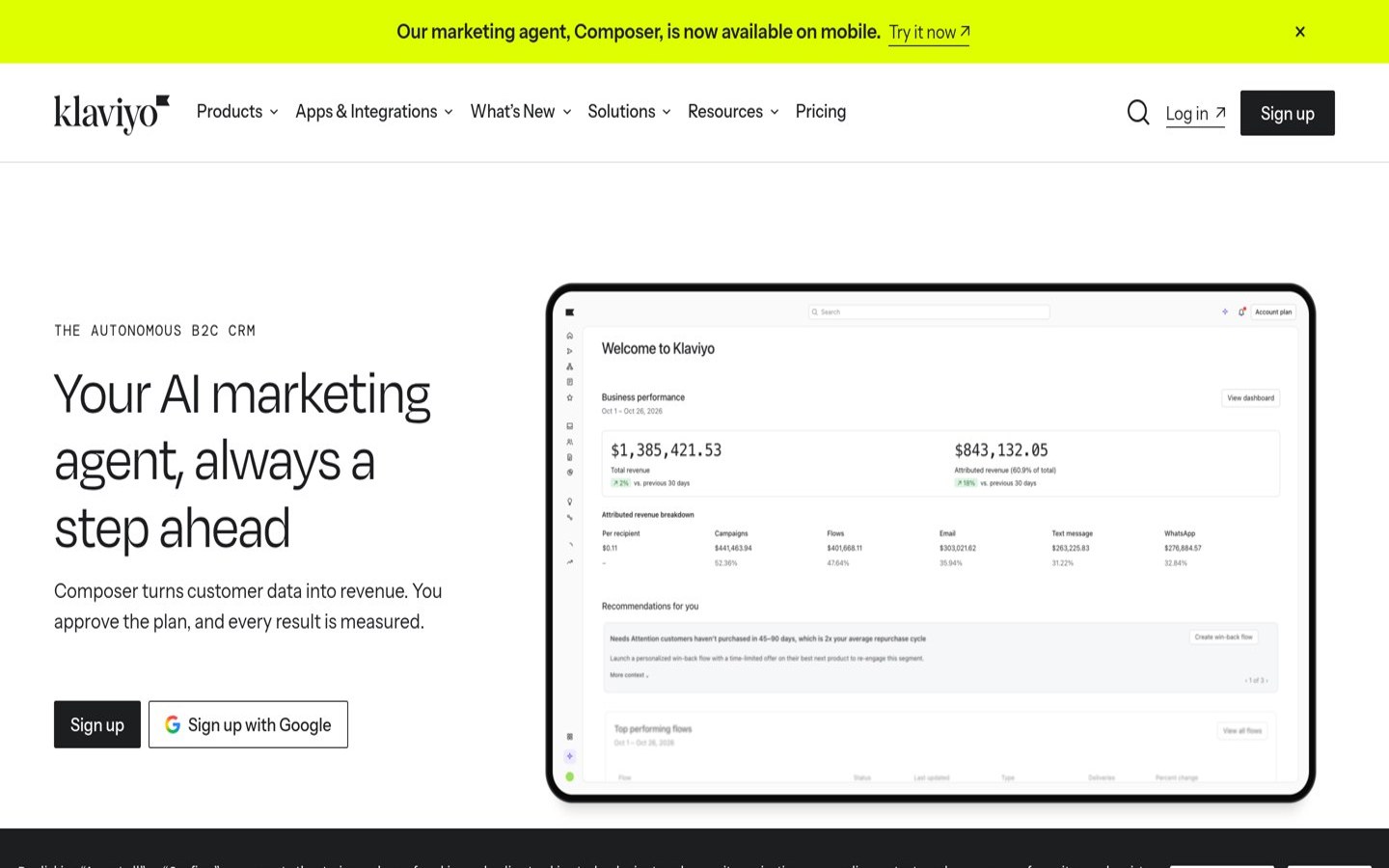
Klaviyo is an email and SMS platform built for ecommerce, with pre-built commerce flows, revenue attribution and 350-plus integrations. The free plan covers 250 profiles, and paid Email starts at $45 a month for 1,001 to 1,500 profiles.
The trade off is cost growth. Pricing scales with profile count, so a large store can pay several hundred dollars a month, and SMS costs add up fast. It suits large ecommerce brands that want revenue attribution on every flow.
Oracle Eloqua is a B2B marketing automation platform for large enterprises running complex lead nurturing and account-based campaigns. Marketing Basic costs $2,000 a month for up to 10,000 contacts, with deep segmentation, scoring and Oracle CX integration.
The trade off is the interface and talent pool. Reviewers call the UI slow and dated, and Eloqua specialists are harder to hire than HubSpot or Marketo staff. It suits global B2B enterprises with strict compliance needs.
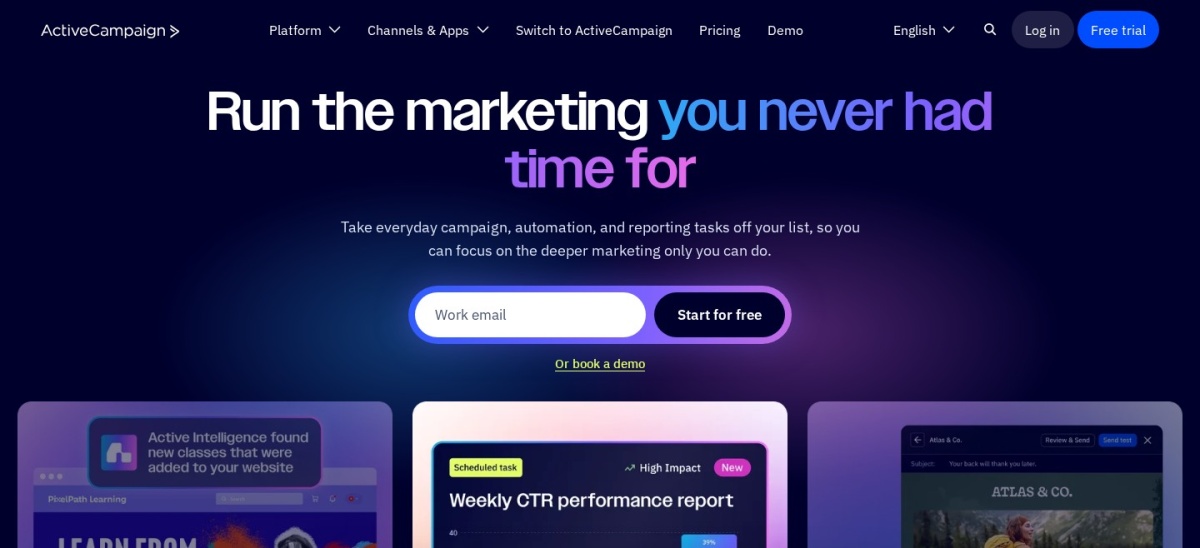
ActiveCampaign is a marketing automation platform with a visual automation builder, built-in CRM and deal pipelines. Enterprise starts at $145 a month for 1,000 contacts on annual billing, with 5 seats and 15 times the contact limit in email sends.
The trade off is attribution. ActiveCampaign has no revenue attribution or advanced ABM features, so larger B2B teams may outgrow it. It suits lean mid-market teams that want deep multi-branch automation without enterprise prices.
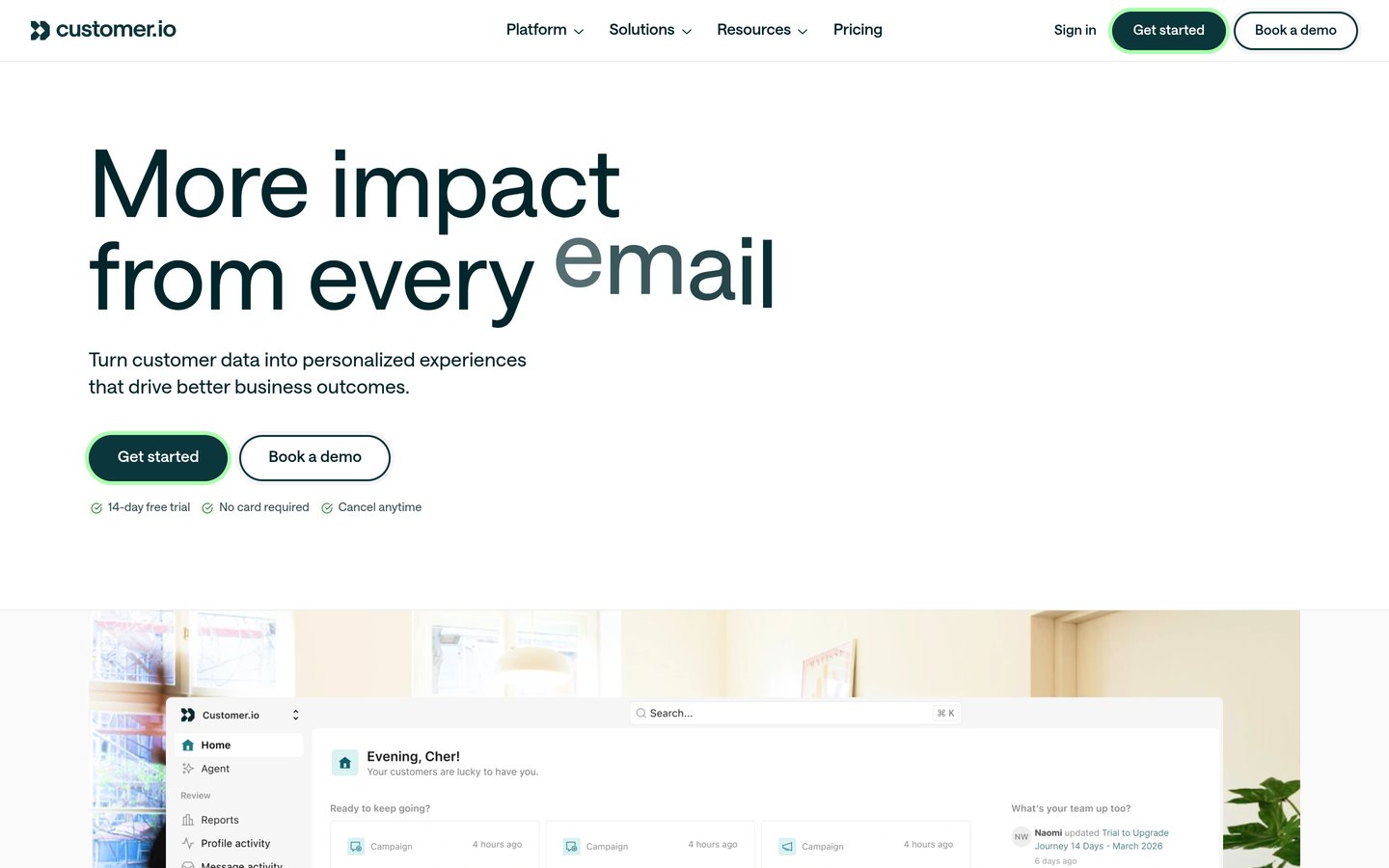
Customer.io is an event-driven messaging platform for data-driven teams, sending email, push and SMS from live product events. Plans start at $100 a month, with native event-based campaigns and a flexible data model that updates as customer data changes.
The trade off is scope. Customer.io has no CRM and no B2B lead management, so it fits product-led SaaS teams rather than sales-led enterprises. It suits teams that want transparent published pricing and event-based automation.
Three of the nine platforms in this list publish no price at all. Enterprise email deals depend on send volume, contact count, channels and data residency, so vendors quote per account rather than per plan.
Published prices still anchor the market. Customer.io starts at $100 a month and Klaviyo at $45, while Salesforce starts at $1,500 and HubSpot Enterprise at $3,600. Expect Braze and Iterable entry deals near $60,000 a year, per third-party data.
Always ask for the total first-year cost. HubSpot adds a $7,000 onboarding fee, and several vendors charge separately for implementation, deliverability consulting and extra seats.
How we chose
We started from the email marketing platforms most compared on G2 in 2026, keeping those with a verifiable G2 rating and an enterprise-grade story.
Prices and ratings were checked on 25 November 2026. Published prices come from each vendor's own pricing page; where a vendor publishes no price, the list says Custom and the notes record that the pricing page is quote-only.
We left out SMB-only newsletter tools and tools with no verifiable rating. No vendor paid for a place, and we do not claim hands-on testing for this list.
How to choose enterprise email marketing software
Start with your audience type and your CRM, then shortlist by channel fit.
Decide B2B or B2C first. B2B teams need lead scoring, nurture and ABM, so shortlist Marketo or Eloqua. Consumer brands need real-time push and in-app, so shortlist Braze or Iterable.
Check your CRM fit. Salesforce shops should start with Marketing Cloud, HubSpot shops with Marketing Hub, and Adobe shops with Marketo. Native CRM integration saves more time than any feature.
Get quotes on one send volume. Give every vendor the same contact count and monthly send volume, so the quotes you compare cover the same work.
Pilot deliverability on a free tier. Klaviyo and HubSpot both offer a free entry point. Test inbox placement on your own list before signing an annual contract.
FAQ
What is the best enterprise email marketing software?
Salesforce Marketing Cloud is the best overall pick for most large senders, rated 4.1 out of 5 on G2 from 4,854 reviews. Its Growth edition starts at $1,500 a month, with Journey Builder and native Salesforce CRM integration.
How much does enterprise email marketing cost?
Published entry prices run from $45 a month for Klaviyo and $100 for Customer.io through $1,500 for Salesforce Marketing Cloud and $3,600 for HubSpot Enterprise. Braze, Iterable and Marketo are quote-only, with entry deals near $60,000 a year.
Which platform is best for B2B email marketing?
Adobe Marketo Engage is the strongest B2B pick, with account-based marketing, lead scoring and multi-touch attribution. Oracle Eloqua is the alternative for global B2B teams with strict compliance needs.
Which platform is best for ecommerce email?
Klaviyo is the best pick for large ecommerce brands, rated 4.6 out of 5 on G2 from 1,360 reviews. It offers pre-built commerce flows, revenue attribution and 350-plus integrations, with a free plan up to 250 profiles.
Is there a free enterprise email marketing platform?
Klaviyo offers the only free plan in this list, up to 250 profiles and 500 email sends a month. HubSpot has free marketing tools, and Braze offers a free trial, but the enterprise platforms here are paid.
What is the difference between Braze and Iterable?
Both serve consumer brands with real-time cross-channel messaging. Braze leads on streaming ingestion and push at scale, while Iterable leads on its visual journey canvas and experimentation. Both are quote-only, so compare them on a sales proposal.
SaaS SEO and WordPress specialist with about 8 years of experience. Rakib compares WordPress plugins, themes, hosting and software using public pricing, documentation and user reviews. See how we rank.