Best Email Software for Small Business in 2026: 9 Tools Compared
WLWPLegible EditorsLast verified 23 Nov 2026How we rank12 min read
★ Short answer
Sender is the best email software for small business, rated 4.7 out of 5 on G2, with the most generous free plan here at 2,500 subscribers. For ecommerce, pick Omnisend, and for the deepest automation, ActiveCampaign.
How we make this list: we compare pricing pages, product documentation and public user reviews, then re-check every price before each update. No product paid for a place. Disclosure.
Sender leads this list with 4.7 out of 5 on G2 and the most generous free plan, covering 2,500 subscribers and 15,000 emails a month.
Omnisend is the best ecommerce pick at 4.6, though SMS left the Standard plan for new subscribers in May 2026.
MailerLite is the best all-rounder at 4.6, with a $12 a month Comfort plan and a free tier for 250 subscribers.
ActiveCampaign has the deepest automation here, but Starter is $19 a month month-to-month and there is no free plan.
Moosend is the cheapest automation option at $9 a month, though it has no free plan and was sold to Constant Contact in June 2025.
What to look for in email software for small business
Email software for a small business is not the same as email software for a big one. You need a tool that works on day one, charges by list size rather than by seat, and does not need a specialist to run it.
The free plan is where most small businesses start. Sender covers 2,500 subscribers free, MailerLite covers 250, and Omnisend covers 250 contacts with 500 emails a month. Moosend and ActiveCampaign have no free plan, only a trial.
Prices in this list are monthly-billing rates for the smallest paid tier, usually 500 to 1,000 contacts. The bill grows with your list, so check the price at your contact count, not just the entry price.
Deliverability matters more than features. A tool with a 90 percent inbox rate beats a tool with prettier templates that lands in spam, so check independent deliverability tests before you commit.
The 9 best email software tools for small business
01
Sender
4.7/5on G2 (300 reviews, checked Nov 2026)
Paid from$9/mo
Best email software for small business overall
Free planYes, 2,500 subscribers
Standard$9 a month
Emails on free15,000 a month
SMSIncluded on Standard
sender.net
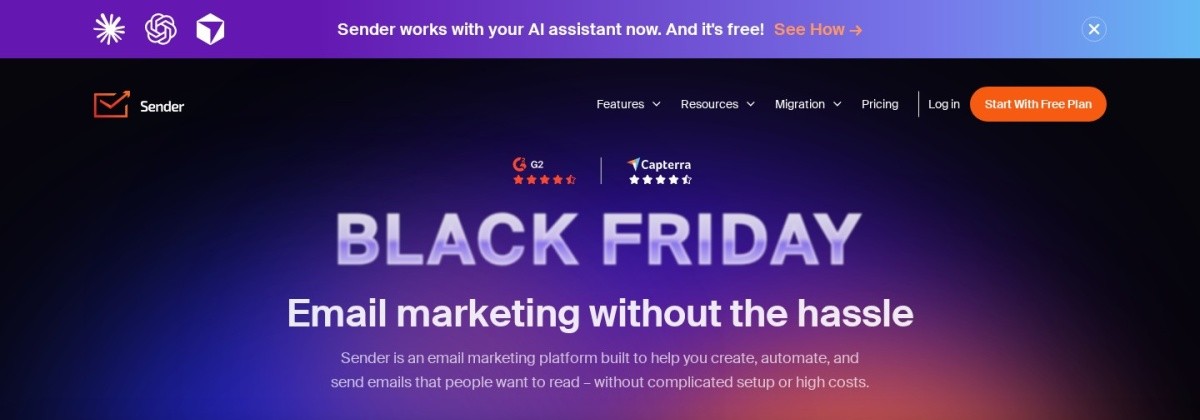
Sender homepage, captured Nov 2026.
Sender is an email and SMS marketing platform built for small businesses, with campaigns, automation, landing pages, popups and SMS in one login. It is rated 4.7 out of 5 on G2 from 300 reviews, the highest in this list, and Standard costs $9 a month.
The trade off is scale. Sender's free plan is the most generous here, covering 2,500 subscribers and 15,000 emails a month with automation included, but the platform is simpler than HubSpot or ActiveCampaign. It suits small businesses that want a complete email program before paying anything.
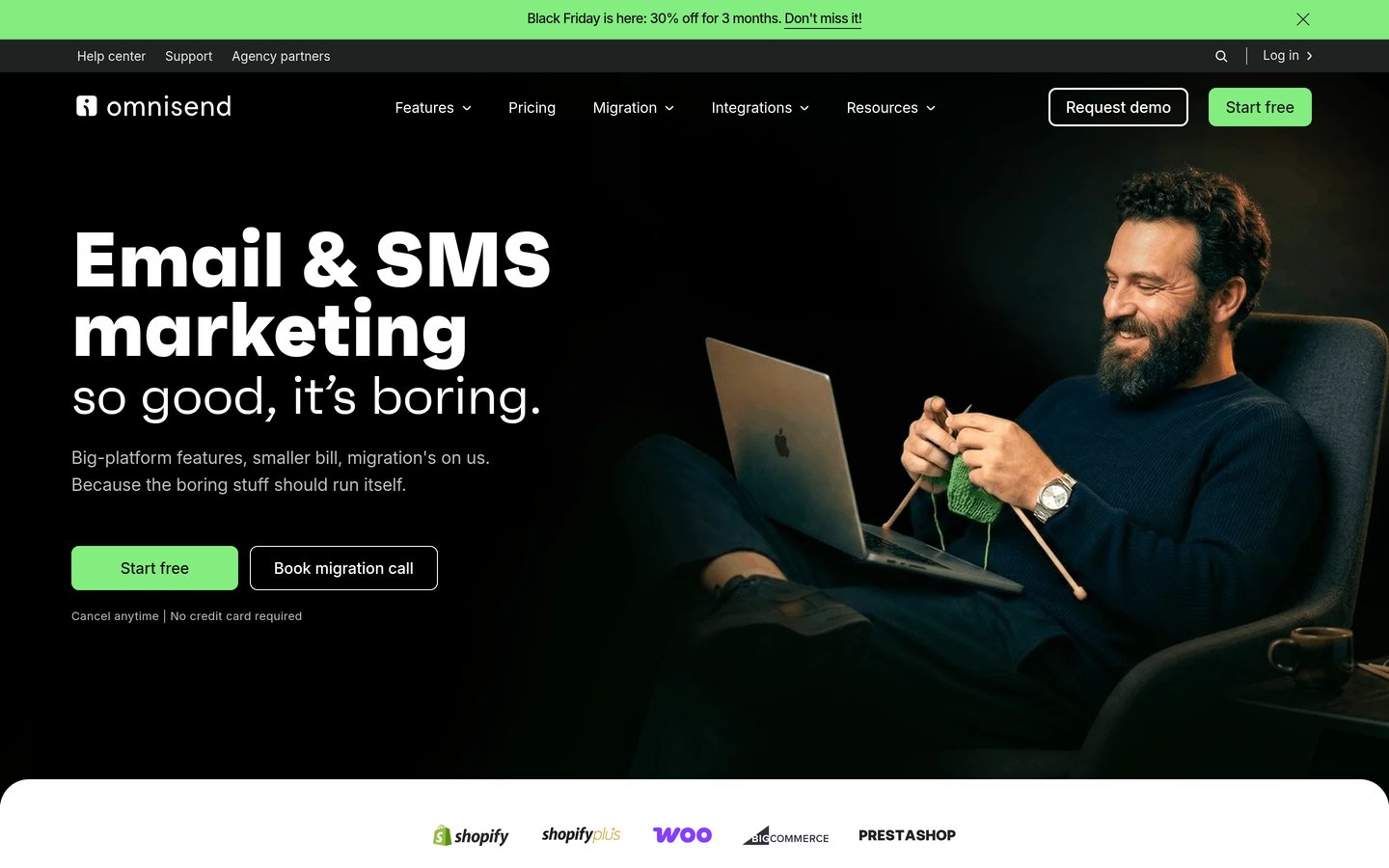
Omnisend is an email, SMS and web push platform built for ecommerce stores on Shopify and WooCommerce, with abandoned-cart flows, product recommendations and popups. It is rated 4.6 out of 5 on G2 from 1,258 reviews, and Standard costs $16 a month for up to 500 contacts.
The trade off is the May 2026 change. SMS left the Standard plan for new subscribers on 4 May 2026, so SMS now needs Pro from $59 a month, and the price rises steeply with list size. It suits ecommerce stores that want email-first automation with 24/7 support.
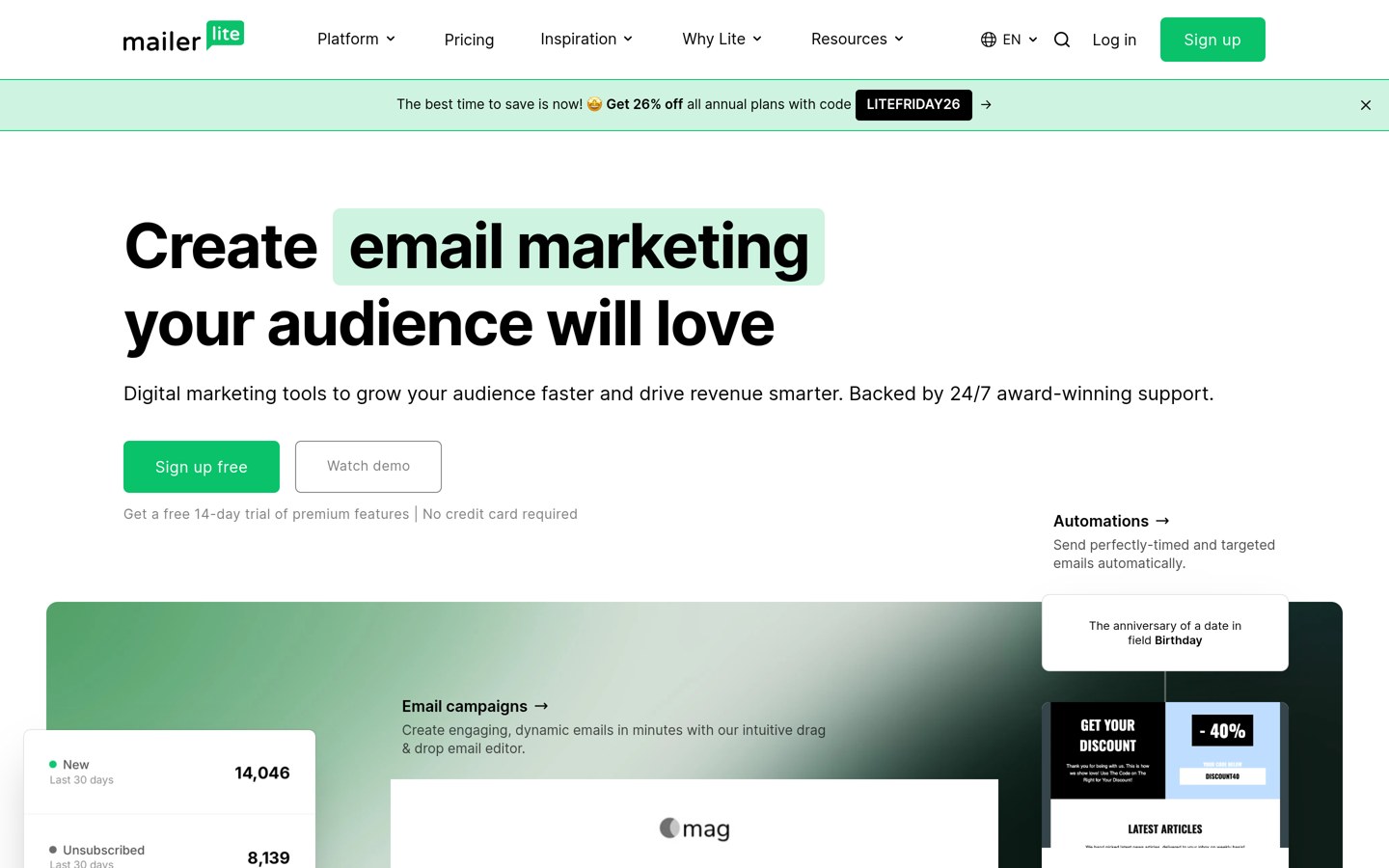
MailerLite is an email marketing platform with campaigns, automation, landing pages, forms and a website builder, built for small businesses and creators. It is rated 4.6 out of 5 on G2 from 1,115 reviews, and Comfort costs $12 a month, with a free plan for 250 subscribers and 2,500 emails.
The trade off is scale. MailerLite is simpler than HubSpot or ActiveCampaign, and larger lists get expensive fast, with Power at $25 a month for the same 500 contacts. It suits small businesses that want a clean, simple tool that just works.
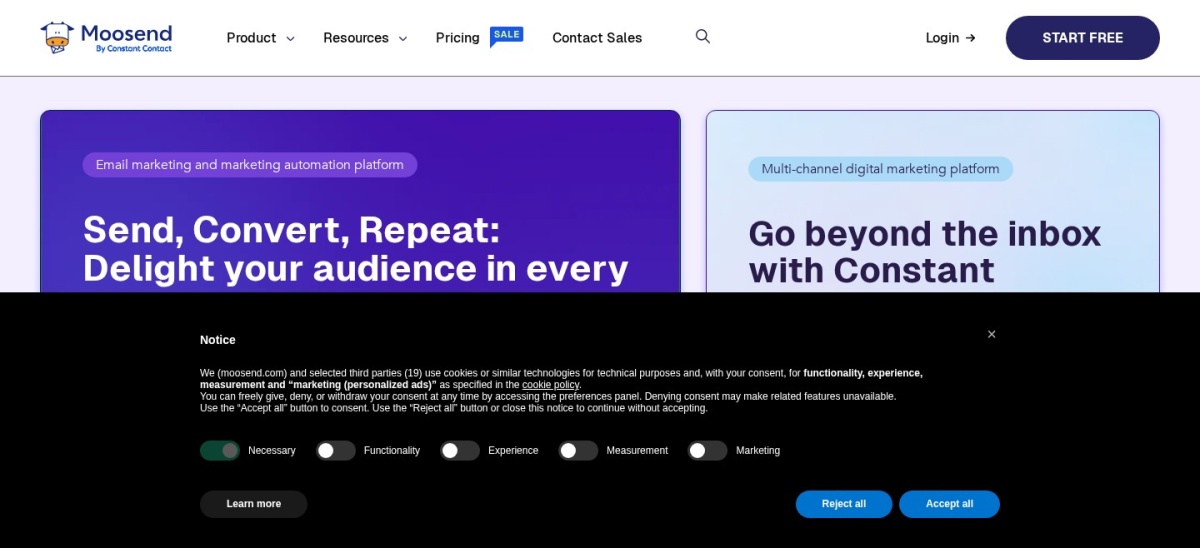
Moosend is an email marketing platform with a visual automation builder, landing pages, forms and unlimited sends, at one of the lowest prices in this list. It is rated 4.6 out of 5 on G2 from 744 reviews, and Pro costs $9 a month for 500 contacts, or $7 on annual billing.
The trade off is ownership and the missing free plan. Moosend was sold twice in four years, most recently to Constant Contact in June 2025, and there is no permanent free plan, only a 30-day trial. Trustpilot rates it 2.9 from 85 reviews, with support complaints after the sale. It suits small businesses that want real automation on the smallest budget.
What we like
Real automation at $9 a month
Unlimited sends on every paid tier
4.6 out of 5 on G2 from 744 reviews
30-day trial with no card required
Watch out for
No permanent free plan, 30-day trial only
Sold twice in four years, now Constant Contact-owned
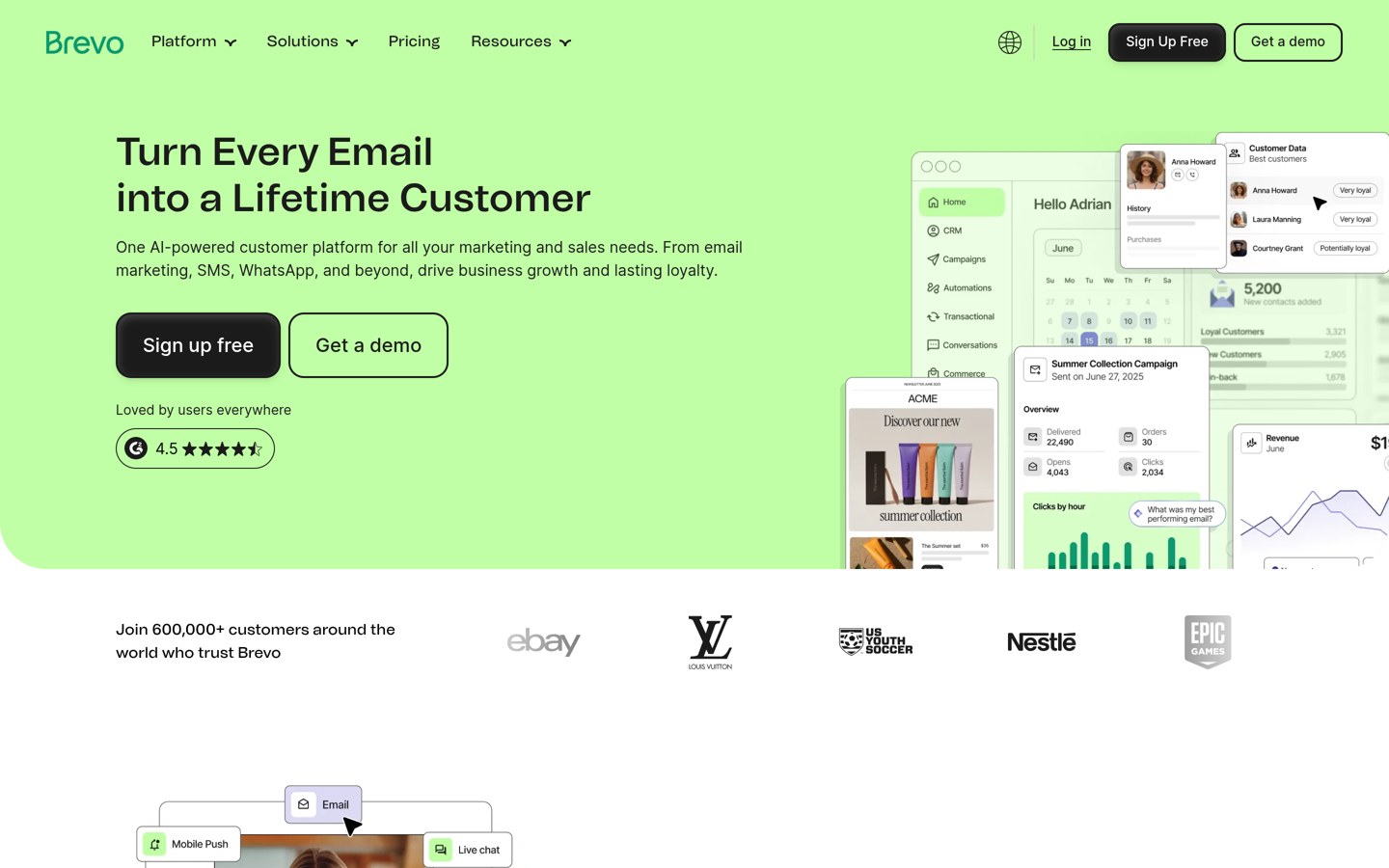
Brevo is an email, SMS and WhatsApp marketing platform that charges by email volume rather than by contact count, which suits businesses with big lists and infrequent sends. It is rated 4.5 out of 5 on G2 from 2,780 reviews, and Starter costs $9 a month, with a free plan for 300 emails a day.
The trade off is the send cap. The free plan covers only 300 emails a day, and the Starter plan's 5,000-email monthly allowance is small for a growing list. It suits businesses with large lists that send a few campaigns a month.
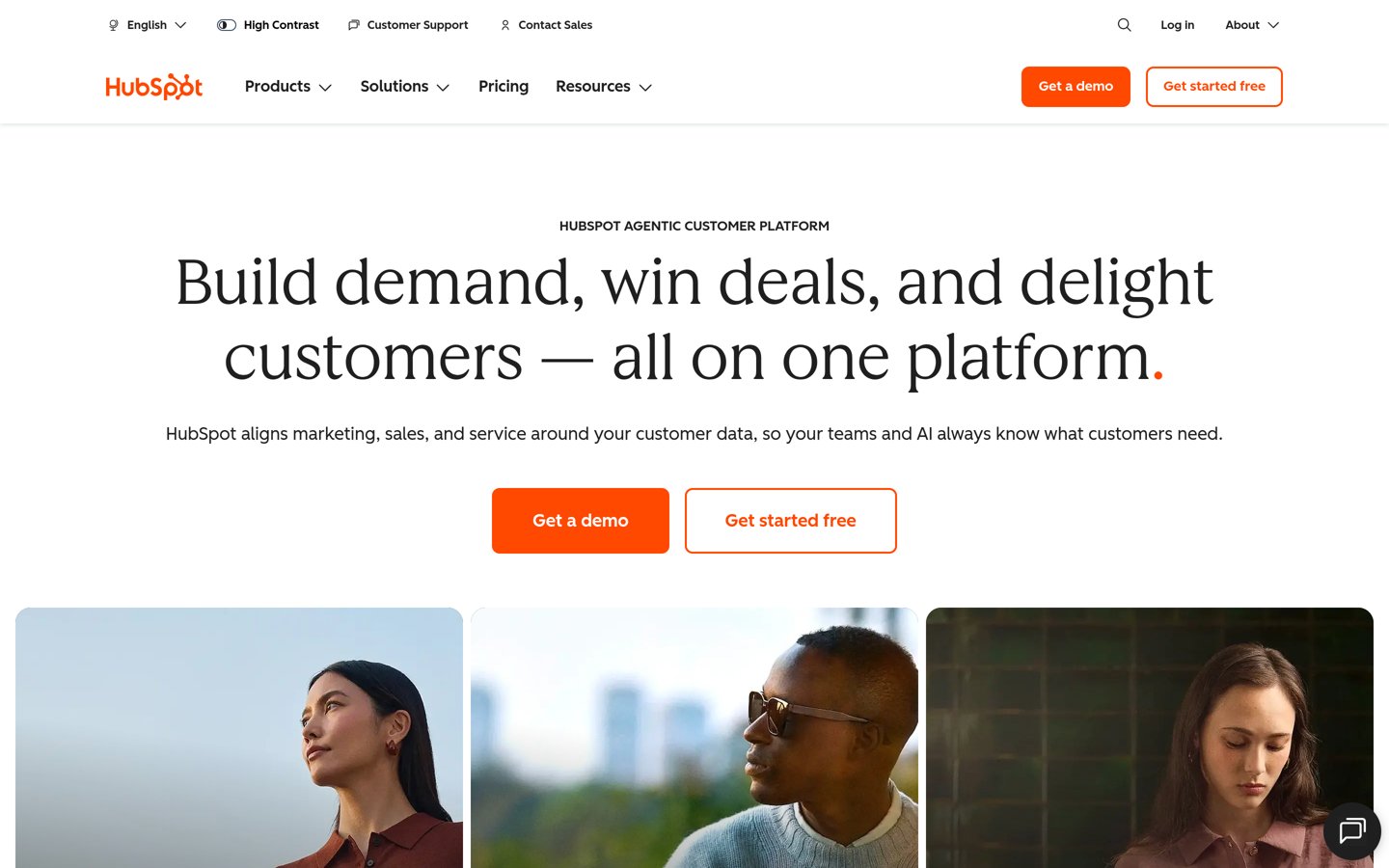
HubSpot Marketing Hub is the email arm of HubSpot's CRM platform, with campaigns, automation, landing pages and a free CRM underneath. It is rated 4.4 out of 5 on G2 from 16,091 reviews, the largest review base in this list, and Marketing Hub Starter costs $15 a user a month.
The trade off is the price curve. HubSpot gets expensive as contacts and seats grow, and one independent check puts Starter at $20 a month for 1,000 contacts rather than $15. Nonprofits get 40% off. It suits businesses that want email and CRM in one place.
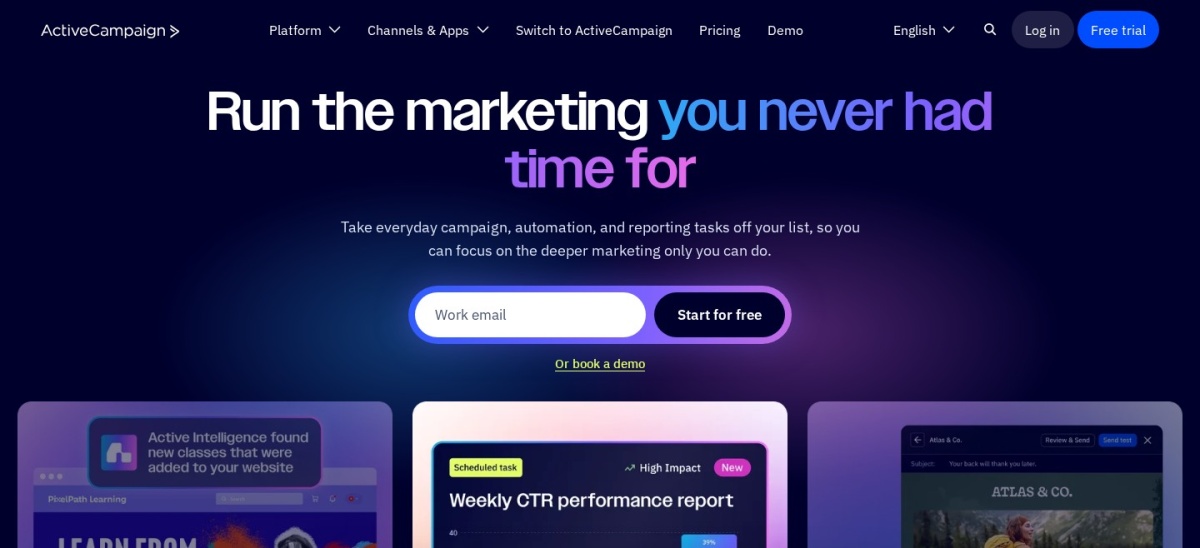
ActiveCampaign is a customer experience automation platform with a visual automation builder, segmentation, a built-in CRM and predictive sending. It is rated 4.4 out of 5 on G2 from about 14,689 reviews, and Starter costs $19 a month month-to-month, or $15 on annual billing, for 1,000 contacts.
The trade off is the funnel. Starter caps automations at 5 actions and omits the CRM, lead scoring and predictive features that make ActiveCampaign worth choosing, so the realistic plan is Plus at $49 a month. There is no free plan, only a 14-day trial. It suits businesses whose revenue depends on behaviour-based automation.
Mailchimp is the best-known email marketing platform for small businesses, with campaigns, automation, landing pages, a website builder and hundreds of integrations. It is rated 4.3 out of 5 on G2 from about 13,000 reviews, and Essentials costs $13 a month, with a free plan for 500 contacts.
The trade off is the price and the automation gate. Visual automation sits behind paid plans, and Mailchimp costs more than MailerLite or Sender at the same list size. It suits businesses that want the biggest ecosystem and the most integrations.
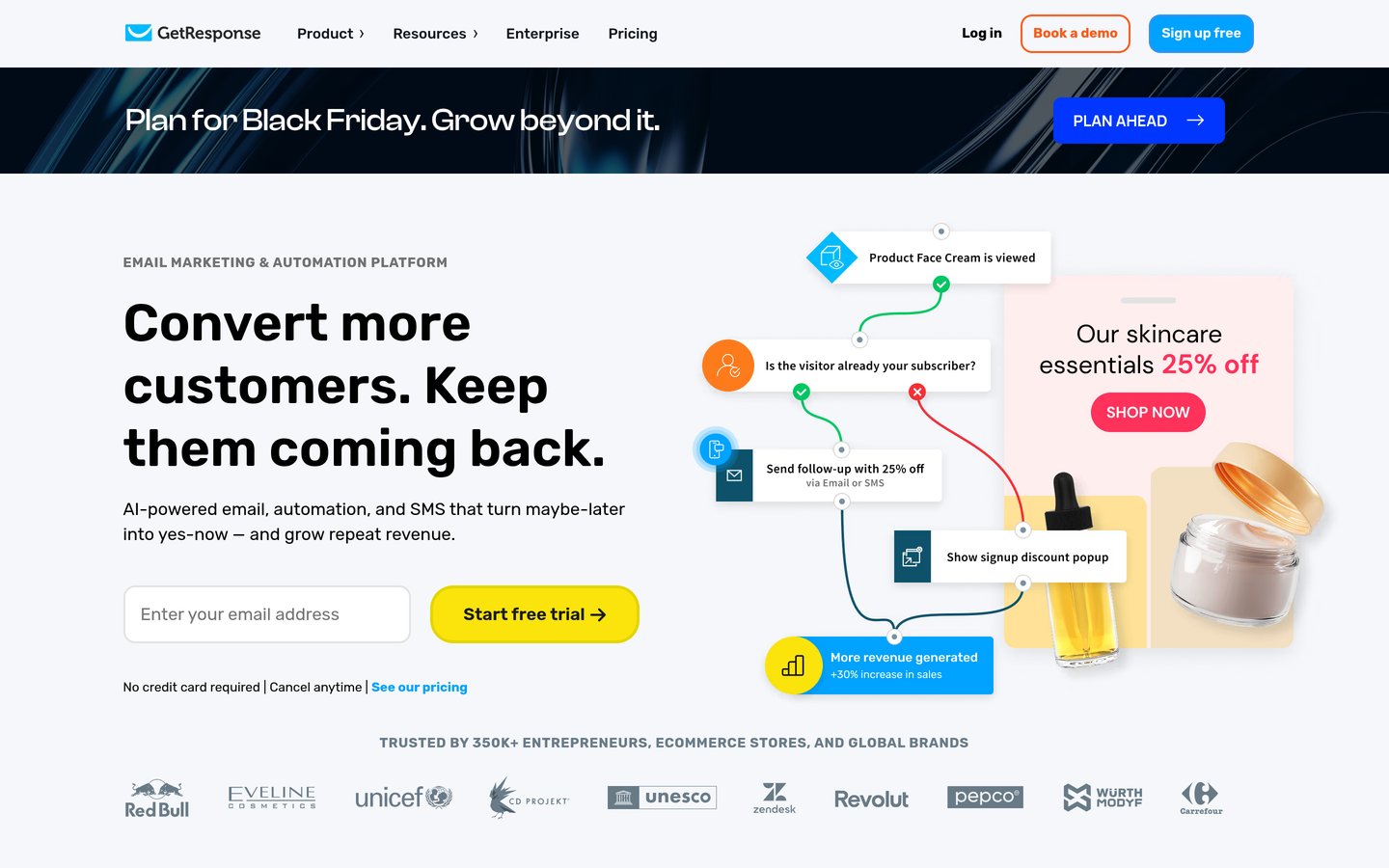
GetResponse is an email marketing platform with campaigns, automation, landing pages, webinars and a funnel builder in one login. It is rated 4.3 out of 5 on G2 from 1,100-plus reviews, and Starter costs $19 a month, with a free plan for 500 contacts and 2,500 emails.
The trade off is the price and the currency. The Starter price is in US dollars on the US site but shows as 16 euros on the EU page, and $19 is the joint-highest entry price in this list. It suits small businesses that run webinars and funnels alongside email.
Export your list with consent records. Most tools export subscribers as a CSV, and the consent date and source matter if you are ever challenged under GDPR or CAN-SPAM.
Clean the list before you import. Remove hard bounces and people who have not opened in a year. A clean import protects your sender reputation on the new tool.
Warm up the new sender slowly. Send to your most engaged subscribers first, then widen the send over two weeks. A sudden blast from a new domain looks like spam.
Keep the old tool running for a month. If an automation breaks or a form stops working, you can switch back while you fix it.
How we chose
We started from the email marketing tools with the most G2 reviews, then kept nine that suit small businesses: low entry prices, free plans or trials, and no enterprise-only sales process.
Prices come from each vendor's G2 pricing listing or the vendor's own pricing page as read by independent checkers in October and November 2026, and are regular monthly-billing rates for the smallest paid tier. Ratings and review counts come from G2 on 23 November 2026.
Two prices need care: ActiveCampaign is $19 a month month-to-month and $15 on annual billing, and Moosend is $9 monthly and $7 annual. Omnisend removed SMS from Standard for new subscribers in May 2026. AWeber and Constant Contact were left out on rating, at 4.2 and 4.1. No vendor paid for a place, and we do not claim hands-on testing for this list.
How to choose email software for small business
Start with your list size, then with what you sell.
Count your contacts first. Check how many subscribers you actually have, then price each tool at that tier. The entry price is for 500 contacts, and your list may already be bigger.
Try the free plan with real sends. Sender, MailerLite, Omnisend and Brevo all have free plans. Send a real campaign to a small segment and check the open rate before you pay.
Test the automation you need. Build your welcome series and abandoned-cart flow on the trial. If the builder fights you on day one, it will fight you every week.
Check deliverability, not just features. Ask for the tool's inbox placement rate, or check independent tests. A cheap tool that lands in spam costs more than an expensive one that lands in the inbox.
FAQ
What is the best email software for small business?
Sender is the best pick, rated 4.7 out of 5 on G2 from 300 reviews, with a free plan covering 2,500 subscribers and 15,000 emails a month. MailerLite is the best all-rounder at 4.6, and Omnisend is the best pick for ecommerce stores.
What is the cheapest email software for small business?
Sender and Moosend are the cheapest paid options at $9 a month, with Brevo also at $9. Sender's free plan is the most generous, covering 2,500 subscribers and 15,000 emails a month at no cost.
Is there a free email software for small business?
Yes. Sender is free for up to 2,500 subscribers and 15,000 emails a month, including automation. MailerLite is free for 250 subscribers, Omnisend for 250 contacts, and Brevo for 300 emails a day. Moosend and ActiveCampaign offer trials only.
How much does email software for small business cost?
Entry plans in this list run from $9 a month for Sender, Moosend and Brevo to $19 a month for ActiveCampaign and GetResponse. The price rises with your contact count, so budget for the tier your list will reach in a year.
What is the best email software for ecommerce?
Omnisend is the best ecommerce pick, rated 4.6 out of 5 on G2 from 1,258 reviews, with email, SMS and web push built for Shopify and WooCommerce. Note that SMS left the Standard plan for new subscribers in May 2026 and now needs Pro.
Which is better, Mailchimp or MailerLite?
MailerLite rates higher on G2 at 4.6 from 1,115 reviews against Mailchimp's 4.3 from about 13,000, and it costs less at $12 a month against $13. Mailchimp has the bigger ecosystem and more integrations, while MailerLite is simpler and cheaper for small lists.
Do I need a CRM with my email software?
Not at first. Most tools here include basic contact management and segmentation. HubSpot is the pick when you want a real CRM behind your email, with Marketing Hub Starter from $15 a user a month and a free CRM tier.
What is the best email automation software for small business?
ActiveCampaign has the deepest automation in this list, rated 4.4 out of 5 on G2 from about 14,689 reviews, with a visual builder for behaviour-based workflows. Starter costs $19 a month month-to-month, or $15 on annual billing, for 1,000 contacts.