Best Email Sending Software in 2026: 9 Tools Compared
WLWPLegible EditorsLast verified 23 Nov 2026How we rank12 min read
★ Short answer
Resend is the best email sending software for developers, with a clean API, React Email support and a 4.8 out of 5 G2 rating, though that rests on only 9 reviews. Pick SMTP2GO for the best-rated SMTP relay at $10 a month, or Amazon SES for the cheapest sending at scale at $0.10 per 1,000 emails.
How we make this list: we compare pricing pages, product documentation and public user reviews, then re-check every price before each update. No product paid for a place. Disclosure.
Resend leads this list with a 4.8 out of 5 G2 rating and the clearest pricing, though the rating rests on only 9 reviews.
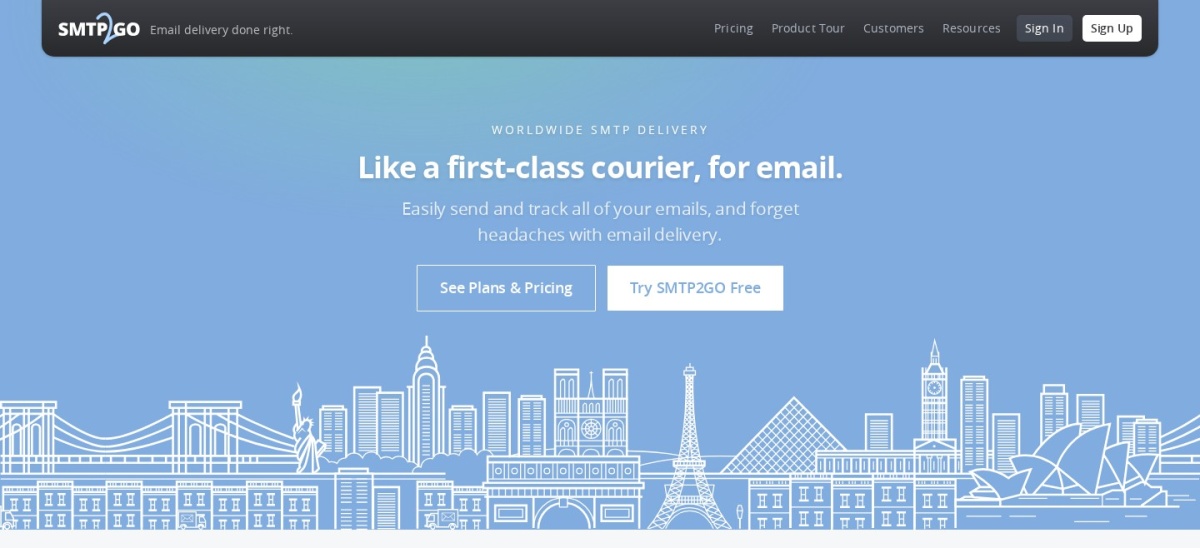
SMTP2GO is the best-rated SMTP relay here at 4.7 from 226 reviews, with a $10 Starter plan for 10,000 emails a month.
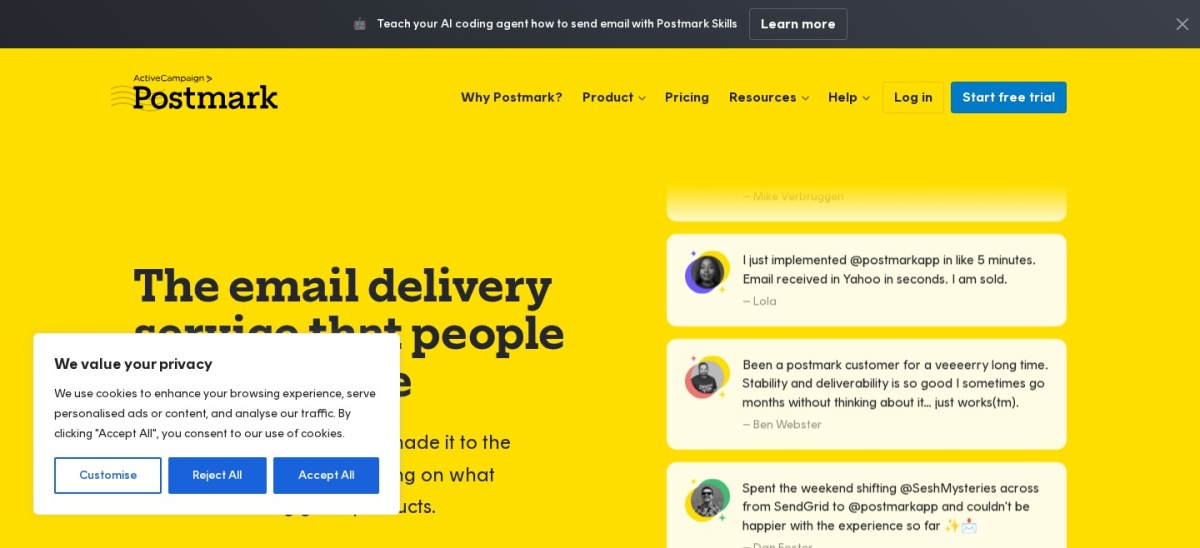
Postmark is the deliverability pick, with separate message streams for transactional and bulk mail at $15 a month.
SendPulse gives the most free volume at 12,000 emails a month, and its paid plan starts at $8.85.
Amazon SES is the cheapest at scale at $0.10 per 1,000 emails, with no monthly fee.
What to look for in email sending software
Email sending software delivers the transactional and bulk mail your app or business sends: password resets, receipts, order updates and newsletters. It is the pipe between your code and the inbox, and its deliverability decides whether mail arrives.
There are two pricing models. Most tools charge a flat monthly fee for a send allowance, with overages per 1,000 emails. Amazon SES charges only per email sent, which is cheapest at scale but needs AWS know-how.
Deliverability is the real product. A cheap sender that lands in spam costs more than a pricier one that reaches the inbox. Check bounce handling, dedicated IP options and how the provider polices spammers on shared IPs.
Free plans differ wildly, from 100 emails a month on Postmark to 12,000 on SendPulse. Match the free tier to your real volume, and check whether it expires or caps daily sends.
Resend is a developer-first email API built for React and Next.js teams, with a clean REST API, official SDKs and native React Email support. The free plan includes 3,000 emails a month, and Pro costs $20 a month for 50,000 emails with overages at $0.90 per 1,000.
The trade off is youth. Resend was founded in 2023, its G2 rating rests on only 9 reviews, and reviewers report abrupt account suspensions. It suits developers who write emails in code and want the clearest pricing in this list.
SMTP2GO is an SMTP relay and email API for apps and businesses that need reliable outbound mail without infrastructure. The Starter plan costs $10 a month for 10,000 emails, with real-time reporting, automatic authentication, subaccount management and chat, ticket and phone support.
The trade off is price at scale. Professional jumps to $75 a month for 100,000 emails, and reviewers note account suspensions for unusual activity. It suits small teams and agencies that want a simple relay with strong support.
Postmark is a transactional email service owned by ActiveCampaign, known for strong deliverability and separate message streams that keep password resets apart from bulk mail. Basic costs $15 a month for 10,000 emails, with fast, detailed analytics and inbound processing on Pro.
The trade off is price at volume. At 50,000 emails a month Postmark costs $55 against $20 on Resend, and dedicated IPs need 300,000 emails a month. It suits teams whose transactional mail must arrive fast, every time.
SendPulse is an all-in-one messaging platform with email, SMS, web push and chatbots. Its free plan includes 12,000 emails a month, the most in this list, and the paid Pro plan starts at $8.85 a month for 25,000 emails.
The trade off is that the 4.6 G2 rating covers the whole SendPulse platform, not just sending, and the 100,000-email tier jumps to $74.85. It suits small teams that want free volume plus SMS and chatbots in one login.
What we like
Most free volume here, 12,000 emails a month
Cheapest paid plan at $8.85 a month
Email, SMS, push and chatbots in one tool
726 G2 reviews, the largest base here
Watch out for
G2 rating covers the whole platform, not just sending
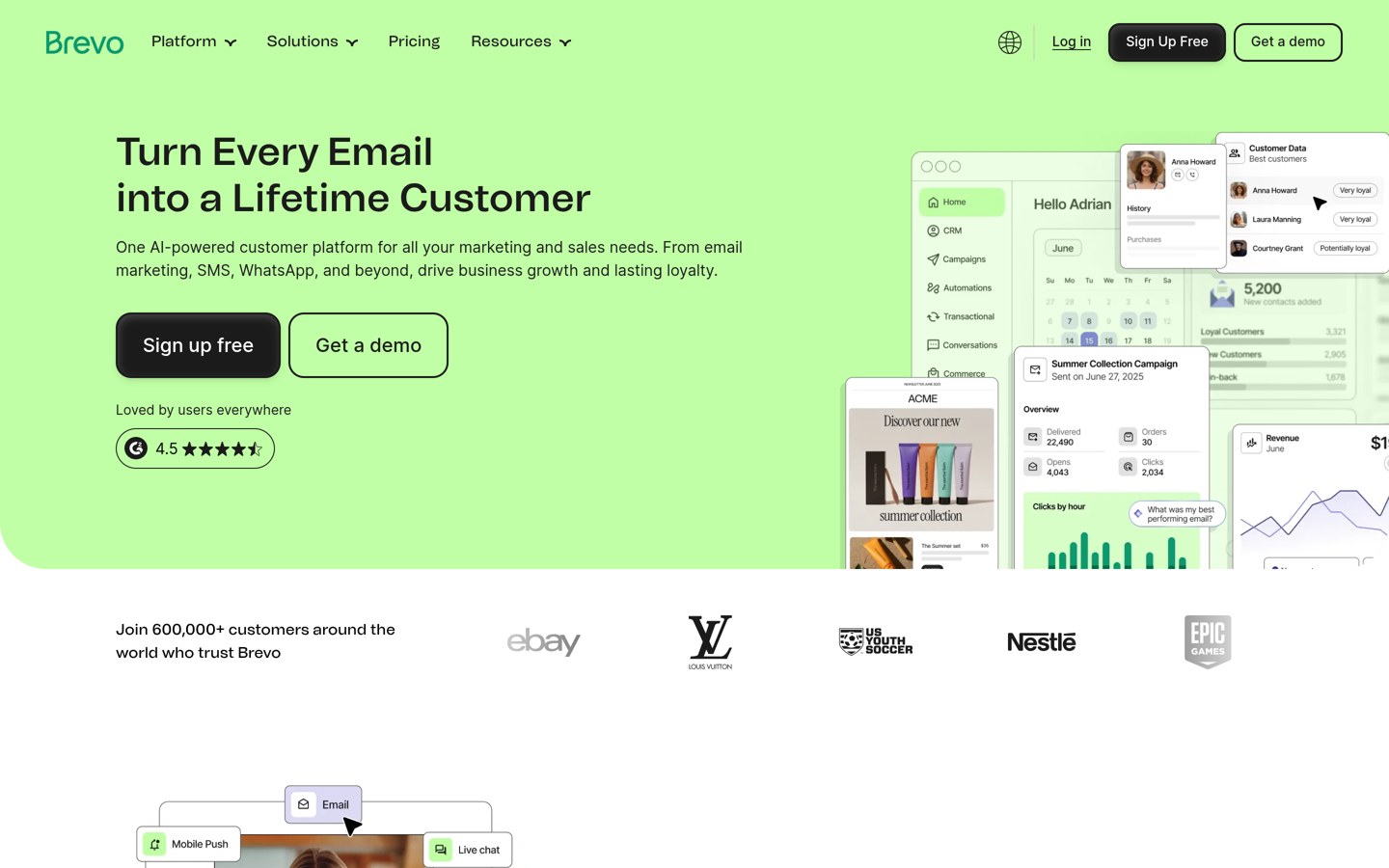
Brevo is an all-in-one platform for transactional email, marketing campaigns, SMS and CRM. The Starter plan costs $9 a month for 5,000 emails, and the free plan allows 300 emails a day. With 2,780 G2 reviews, it has the broadest review base among the all-in-one tools here.
The trade off is transactional pricing. At 50,000 emails a month Brevo charges $56 on Starter against $19.95 on SendGrid, so it suits marketers more than high-volume transactional senders.
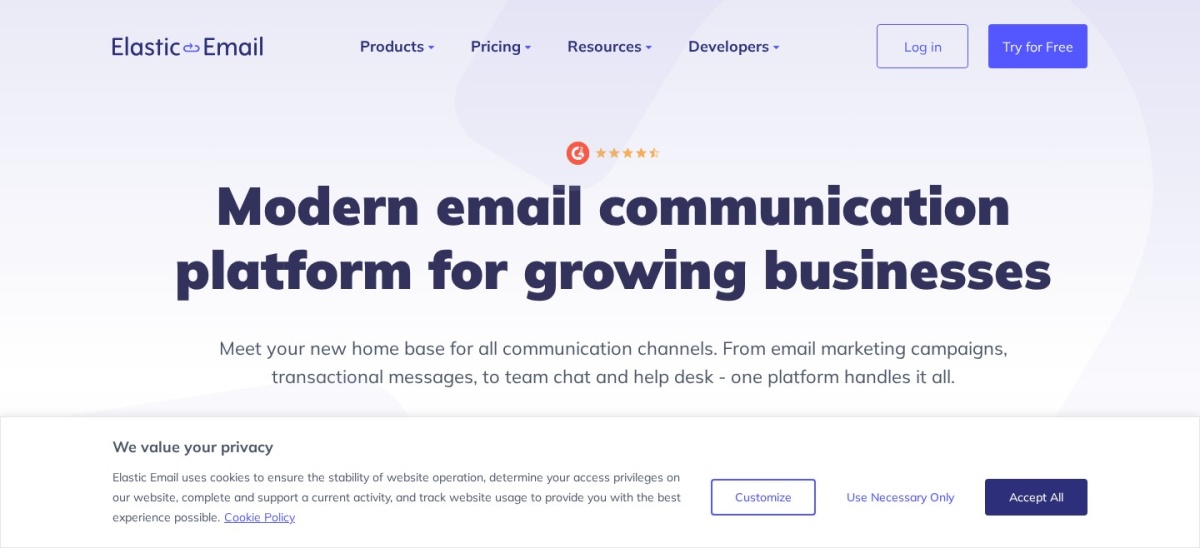
Elastic Email is a developer-focused email API and SMTP relay with a marketing platform built in. The Email API Starter plan costs $19 a month for 50,000 emails, which undercuts Resend at the same volume and includes tracking, templates and a drag-and-drop builder.
The trade off is support. G2 reviewers rate support lower than SMTP2GO or Postmark, and the dashboard feels dated. It suits developers who want cheap volume and do not need hand-holding.
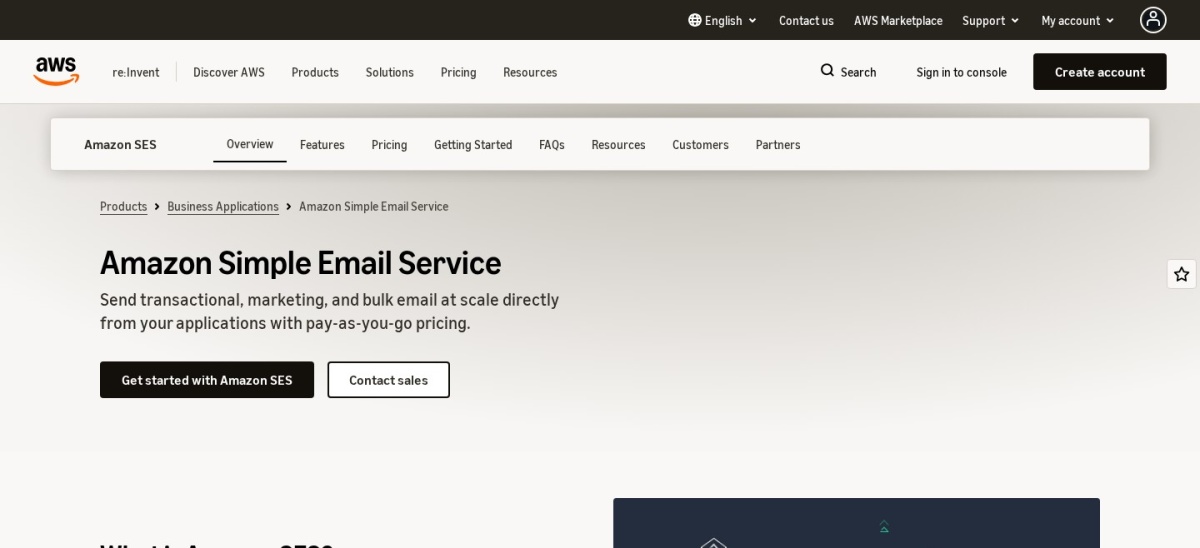
Amazon SES is AWS's email sending service for transactional and bulk mail, priced at $0.10 per 1,000 emails with no monthly fee. At 50,000 emails a month it costs about $5, against $20 on Resend and $19.95 on SendGrid, and dedicated IPs cost $24.95 a month.
The trade off is setup. SES is infrastructure with no campaign builder, it needs AWS know-how, and new accounts start on the Essentials plan since July 2026. It suits AWS teams sending high volumes of app-generated mail.
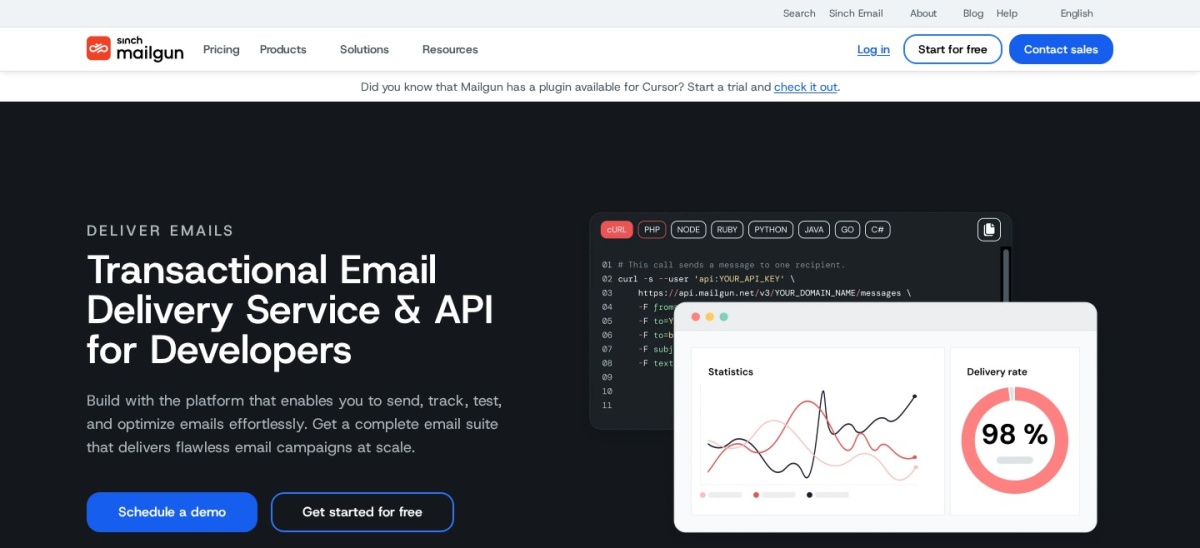
Mailgun is a developer-focused transactional email platform built around a RESTful API and SMTP relay, with inbound routing, detailed logs and email validation. The Basic plan costs $15 a month for 10,000 emails, and the free plan allows 100 emails a day.
The trade off is cost at scale. Overage fees add up fast, dedicated IPs cost $59 a month, and reviewers report sudden account suspensions. It suits developers who need inbound routing and detailed delivery logs.
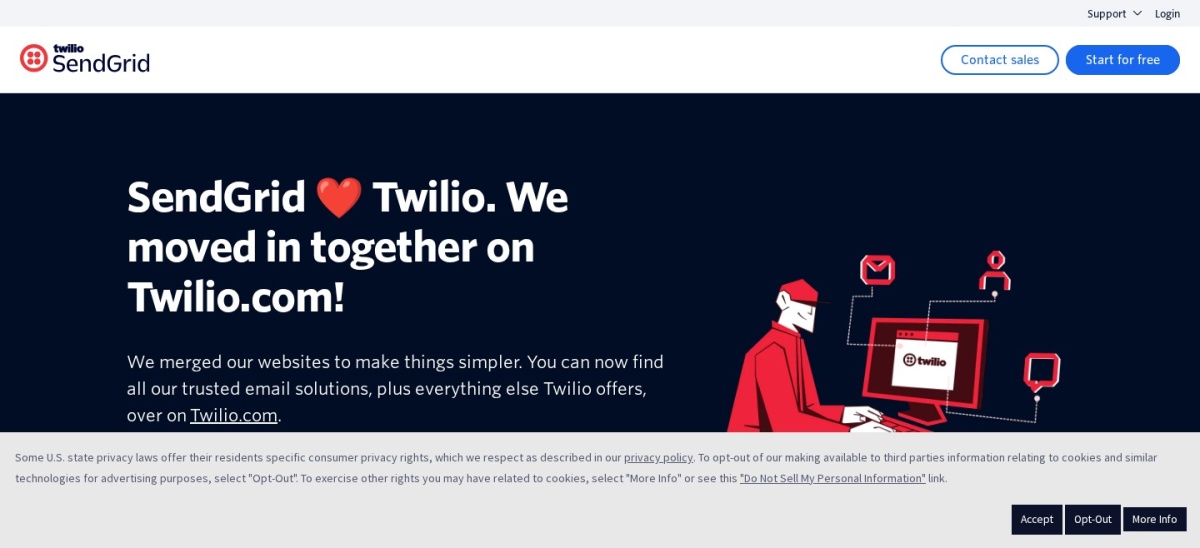
SendGrid is Twilio's cloud email delivery platform for transactional and marketing email, with high deliverability tooling, detailed analytics and dedicated IPs. The Essentials plan costs $19.95 a month for 50,000 emails, and Pro at $89.95 adds a dedicated IP, subusers and single sign-on.
The trade off is support and the free plan, which was retired in May 2025. Reviewers cite slow support and abrupt account suspensions, and activity history is only 3 days on Essentials. It suits large senders already on Twilio.
Compare at your real volume, not the entry price. At 10,000 emails a month, Postmark and Mailgun both cost $15, while SendGrid costs $19.95 and Amazon SES costs about $1. At 50,000, SendGrid at $19.95 and Resend at $20 beat Postmark at $55.
Watch the overage rate. Postmark charges $1.80 per extra 1,000 emails on Basic, Mailgun from $1.80, and Resend $0.90. A plan that looks cheap can double your bill in a busy month.
Dedicated IPs cost extra almost everywhere: $50 a month on Postmark, $30 on Resend, $24.95 on SES, and included from Pro on SendGrid at $89.95. You only need one once you send hundreds of thousands of emails a month.
Check what the free plan really gives. SendPulse offers 12,000 emails a month free, Resend 3,000, Mailgun 100 a day, and Postmark only 100 a month. SendGrid has no free plan since May 2025, only a 60-day trial.
How we chose
We started from the transactional and bulk email platforms with the most G2 reviews, then kept nine that cover developer APIs, SMTP relays, all-in-one senders and pay-as-you-go infrastructure.
Prices come from each vendor's pricing page as read by independent checkers in November 2026, and are regular monthly rates for the entry paid plan. Amazon SES is usage-based, so its ladder figure is the cost of 1,000 emails a month. Ratings and review counts come from G2 on 23 November 2026.
Resend's 4.8 rating rests on only 9 G2 reviews, and SendPulse's 4.6 covers its whole platform, not just sending, so both are flagged. No vendor paid for a place, and we do not claim hands-on testing for this list.
How to choose email sending software
Start with your volume, then with who writes the code.
Work out your monthly volume. Count transactional and marketing mail separately. A 10,000-email app pays $15 on Postmark or Mailgun, while a 50,000-email sender pays less on SendGrid or Resend.
Pick API or SMTP. Developers building in React or Next.js will like Resend. Teams wiring an existing app will like SMTP2GO or Mailgun for plain SMTP relay.
Check the free plan at your volume. SendPulse gives 12,000 emails a month free, Resend 3,000, and Postmark 100. If your app already sends 5,000 a month, only SendPulse stays free.
Warm up before you switch. Send a small volume first, watch bounces and spam complaints, and add a dedicated IP only when volume justifies it.
FAQ
What is the best email sending software?
Resend is the best pick for developers, with a clean API, React Email support and a 4.8 out of 5 G2 rating from 9 reviews. SMTP2GO is the best-rated SMTP relay at 4.7 from 226 reviews, and Amazon SES is the cheapest at scale at $0.10 per 1,000 emails.
How much does email sending software cost?
Entry plans in this list run from $8.85 a month for SendPulse to $20 for Resend, with most tools at $15. Amazon SES charges $0.10 per 1,000 emails with no monthly fee. At 50,000 emails a month, SendGrid at $19.95 and Resend at $20 are cheaper than Postmark at $55.
Is Amazon SES the cheapest way to send email?
Yes, at volume. SES costs $0.10 per 1,000 emails, so 50,000 emails cost about $5, against $20 on Resend and $19.95 on SendGrid. The trade off is setup: SES needs AWS know-how, has no campaign builder, and new accounts start on its Essentials plan.
What is the difference between transactional and marketing email?
Transactional email is triggered by an action, like a password reset or receipt, and must arrive fast. Marketing email is bulk mail like newsletters and campaigns. Postmark keeps the two in separate message streams so a marketing blast cannot slow down a password reset.
Which email sending tool has the best free plan?
SendPulse offers the most free volume at 12,000 emails a month. Resend gives 3,000 a month, Mailgun 100 a day, Brevo 300 a day, and Postmark 100 a month. SendGrid has no free plan, only a 60-day trial.
Do I need a dedicated IP to send email?
Not at low volume. Shared IPs work well until you send hundreds of thousands of emails a month, when a dedicated IP gives you control of your own sender reputation. Dedicated IPs cost $24.95 to $50 a month, and need a warm-up period before full use.