LinkSquares is the best contract analysis software for most legal teams, with AI that reads signed contracts, extracts key terms and obligations, and a 4.7 out of 5 rating from 445 G2 reviews. Pick Luminance for large due-diligence reviews and PandaDoc if you need a published price.
How we make this list: we compare pricing pages, product documentation and public user reviews, then re-check every price before each update. No product paid for a place. Disclosure.
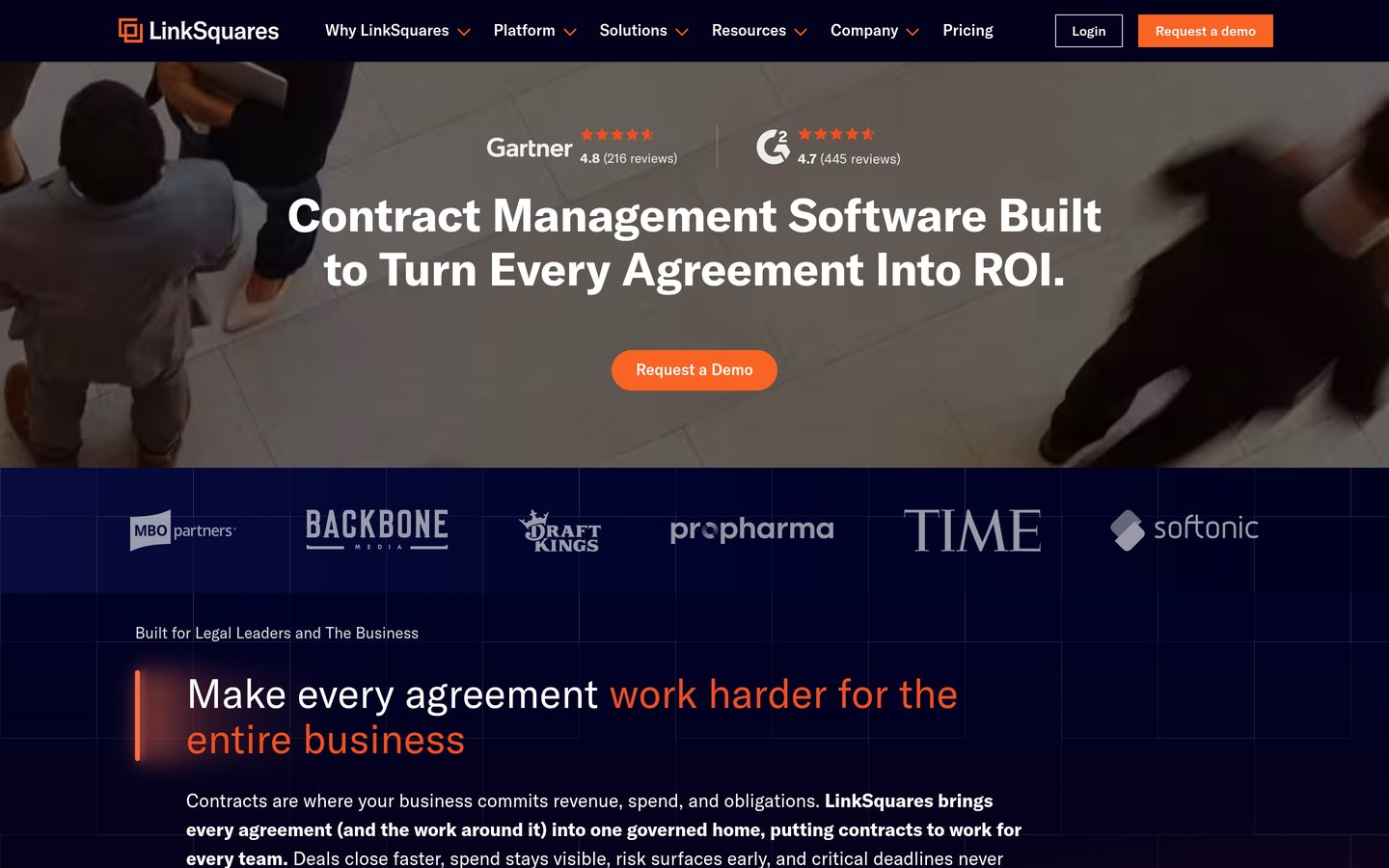
LinkSquares leads on post-signature analysis, with AI extraction across a whole signed-contract library and a 4.7 out of 5 G2 rating from 445 reviews.
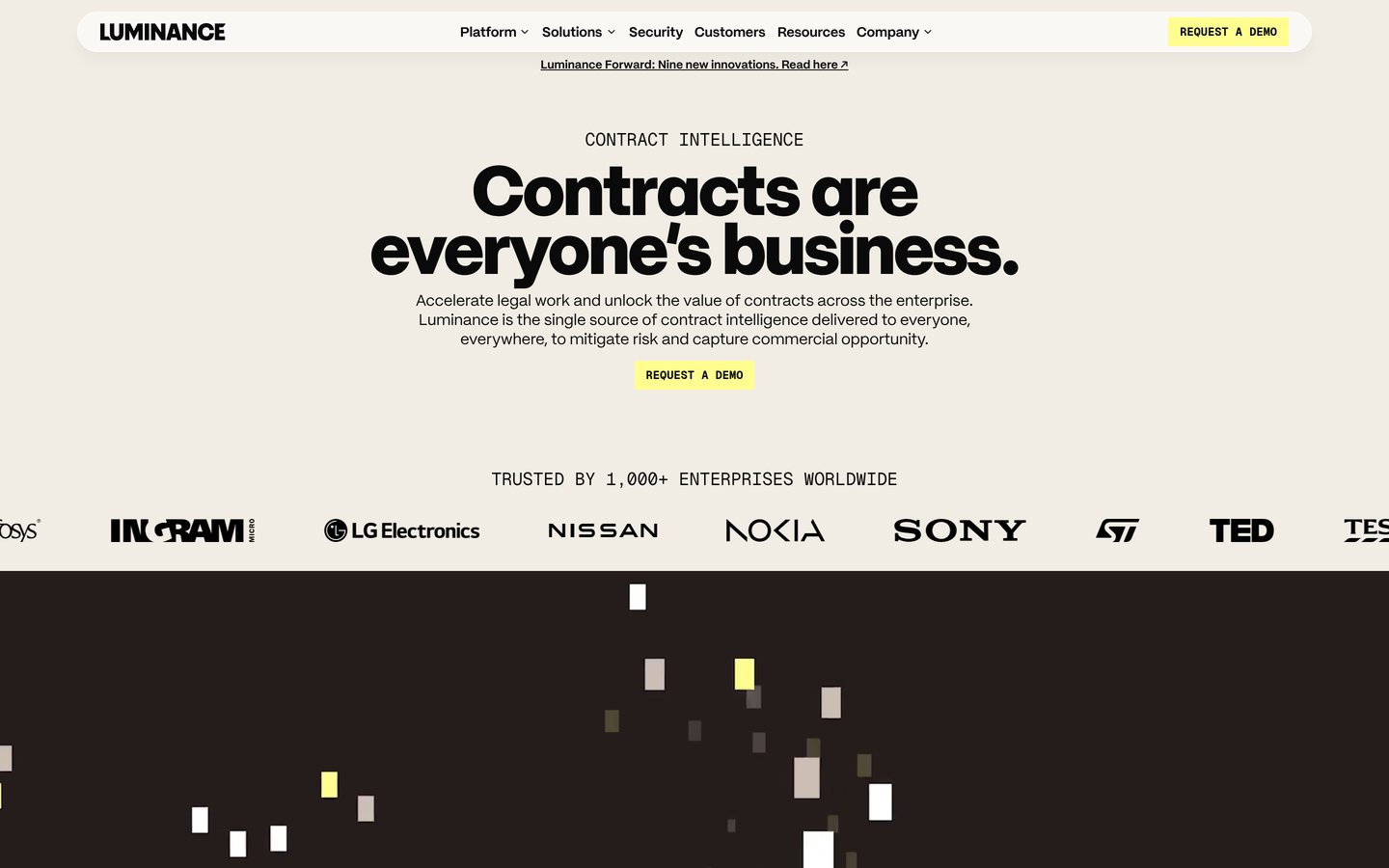
Luminance is the strongest choice for large reviews, with playbook-based redlining in Word and more than 1,000 enterprise customers.
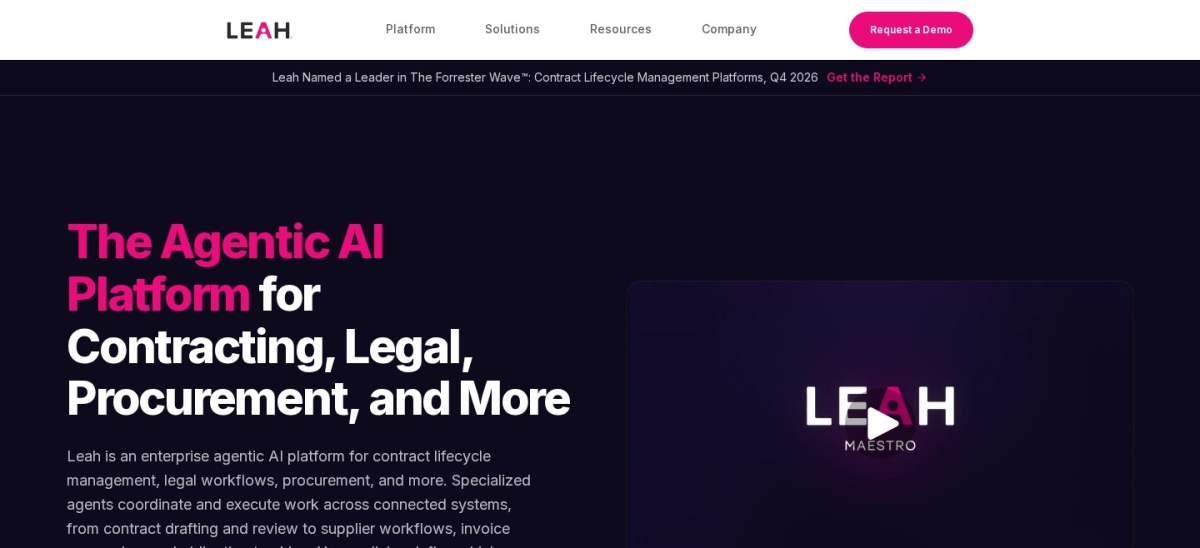
Leah, formerly ContractPodAi, pairs a full contract lifecycle platform with an AI assistant, rated 4.6 out of 5 from 48 G2 reviews.
Only PandaDoc publishes a price in this list: Starter costs $19 per user a month billed yearly, with a free plan for 5 documents a month.
Kira is the most specialised due-diligence tool here, but its G2 rating rests on only 10 reviews, so treat it as a narrow pick.
Eight of the nine tools sell by quote only, so ask for a written quote that covers implementation and user limits before you shortlist.
What contract analysis software should do
Contract analysis software reads agreements and pulls out the parts that matter: parties, dates, renewal terms, payment duties, liability caps and risky clauses. The best tools do that across a whole library, not one document at a time.
There are two kinds of tool here. Pure analysis tools such as Luminance and Kira focus on reading and reviewing large sets of contracts. Full lifecycle platforms such as LinkSquares, Leah and Ironclad add drafting, approvals, signing and a searchable repository.
Accuracy matters more than speed. A tool that misses a renewal date or a liability cap creates work later, so check how the vendor reports extraction accuracy and whether a person can review each flagged clause before it is filed.
Start with the contracts you already hold. A searchable repository turns signed agreements into answers, and our guide on adding a document to WordPress shows the same idea at a smaller scale: files are only useful once you can find them again.
LinkSquares is a contract platform focused on what happens after signature. Its AI reads signed contracts, extracts key terms and obligations, and makes the whole repository searchable, with dashboards for renewals, risk and spend.
The trade off is drafting depth. LinkSquares is stronger on analytics than on template drafting and negotiation, so teams that draft heavily may need a second tool. It suits legal and finance teams with large signed-contract libraries.
What we like
Strongest AI analytics for signed contracts in this list
Luminance is a contract intelligence platform built from Cambridge machine-learning research. It covers drafting, negotiation in Word, analysis, compliance checks and a repository, and it claims more than 1,000 enterprise customers.
The trade off is cost and setup. Luminance publishes no prices and sells by quote, with third-party estimates putting mid-size deployments in six figures a year, and reviewers describe a steep learning curve. It suits large legal teams reviewing high contract volumes.
What we like
Playbook-based review and redlining inside Word
Built for very large contract sets and data rooms
Ask questions across contracts in plain language
Watch out for
Quote-only pricing, estimated in six figures a year
Leah is the AI assistant inside the ContractPodAi contract lifecycle platform, now sold under the Leah name. It drafts contracts, reviews third-party paper against a playbook, flags risky language, and extracts parties, dates and obligations from signed agreements.
The trade off is price and scale. The platform publishes no prices and sells by quote, and G2 lists a Basic plan from $50,000 a year. It suits mid-size and larger legal teams that want AI review inside a full lifecycle platform.
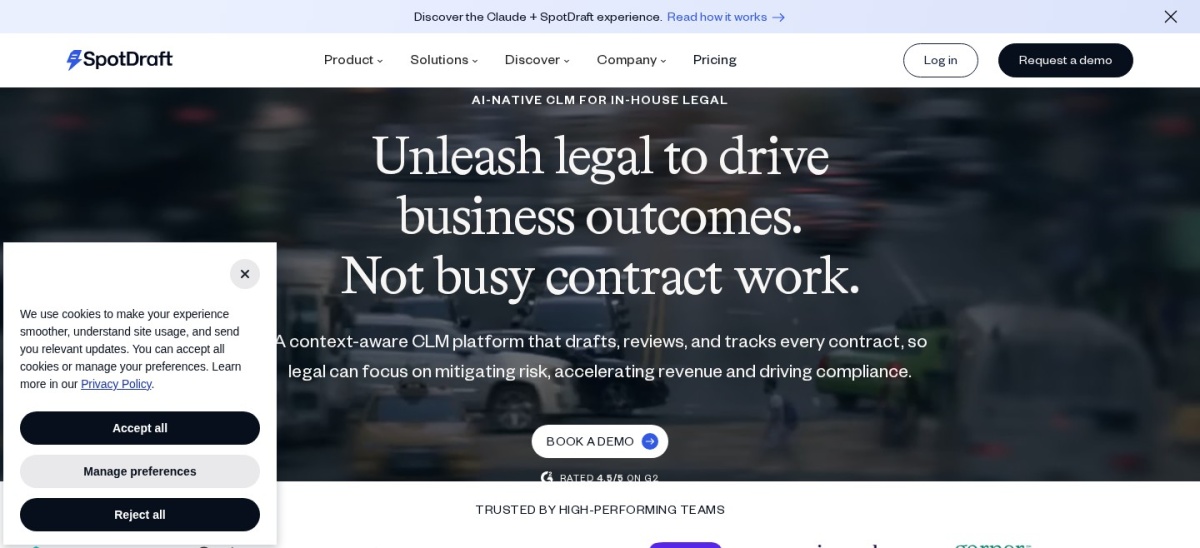
SpotDraft is an AI-native contract platform for in-house legal teams. Its AI drafts, reviews and tracks contracts against the team's playbooks, with redlining in Word or Slack, a searchable repository, renewal tracking and built-in e-signatures.
The trade off is price transparency. SpotDraft publishes no prices and sells by quote, with buyer data putting the median near $25,000 a year. It suits growing legal teams that want AI review without a long enterprise rollout.
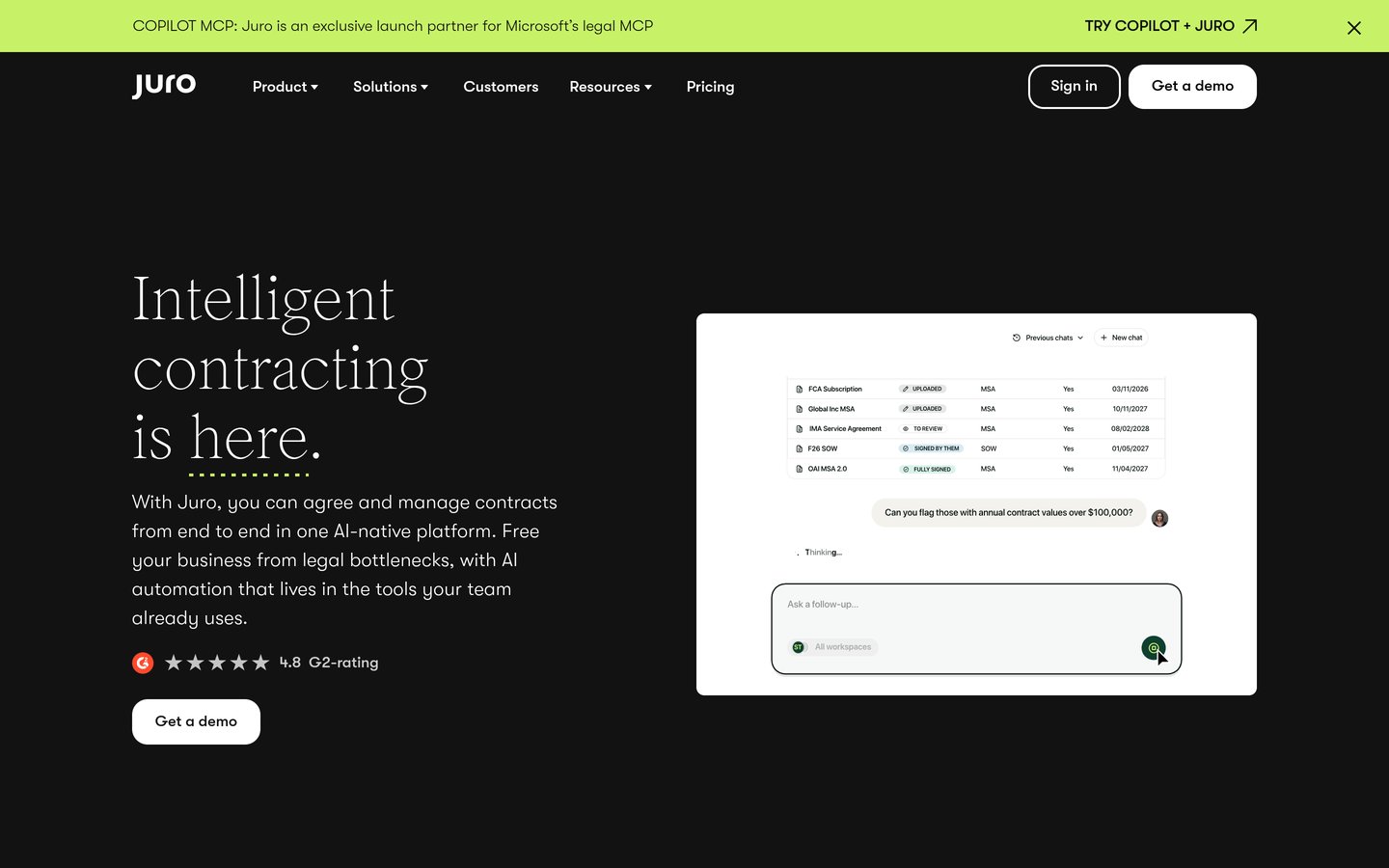
Juro is a browser-native contract workspace where drafting, negotiation and signing happen in one place. Contracts are edited in the browser with no Word round-trips, and all plans include unlimited users, templates and workflows, with AI extraction and review.
The trade off is price transparency. Juro publishes no prices and sells by quote, with buyer data putting the median near $33,000 a year. It suits mid-market legal teams that want modern collaboration without per-seat costs.
What we like
Browser-native editing with live collaboration
Unlimited users on every plan
Fast setup compared with enterprise CLM
Rated 4.6 out of 5 on G2
Watch out for
Quote-only pricing
Complex formatting can struggle in the browser
AI features are priced into higher tiers
Quote only; pricing scales with contract volumeVisit juro.com
06
Agiloft
4.5/5on G2 (112 reviews, checked Nov 2026)
PricingCustom/yr
Best for heavily customised contract workflows
WorkflowsNo-code configuration
AI assistantAstra, with a free plan
Integrations1,000+
Starting priceQuote only
agiloft.com
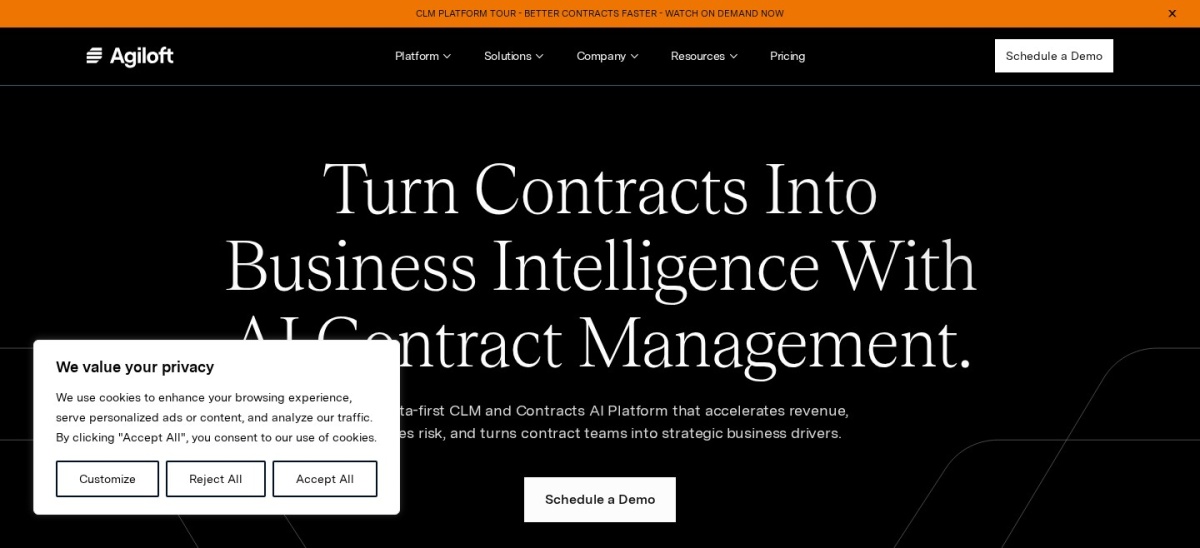
Agiloft homepage, captured Nov 2026.
Agiloft is a no-code contract lifecycle platform for teams with complex approval chains and custom data rules. Its AI extracts contract metadata, and the Astra assistant adds natural-language search and Word redlining, with a free Astra plan separate from the main platform.
The trade off is setup time. Agiloft publishes no prices and sells by quote, with buyer data putting the median near $67,000 a year, and reviewers cite a steep learning curve. It suits legal and procurement teams that need deep customisation.
What we like
Deep no-code customisation of workflows and fields
Free Astra AI plan with Word add-in
Rated 4.5 out of 5 from 112 G2 reviews
Watch out for
Quote-only pricing with no published tiers
Long implementation, about 5 months per G2
Steep learning curve for small teams
Quote only; buyer data puts the median near $67,000 a yearVisit agiloft.com
07
Ironclad
4.4/5on G2 (332 reviews, checked Nov 2026)
PricingCustom/yr
Best for no-code contract workflows at scale
Workflow DesignerNo-code, drag and drop
AI reviewJurist redlining in Word
eSignatureBuilt in
Integrations200+
ironcladapp.com
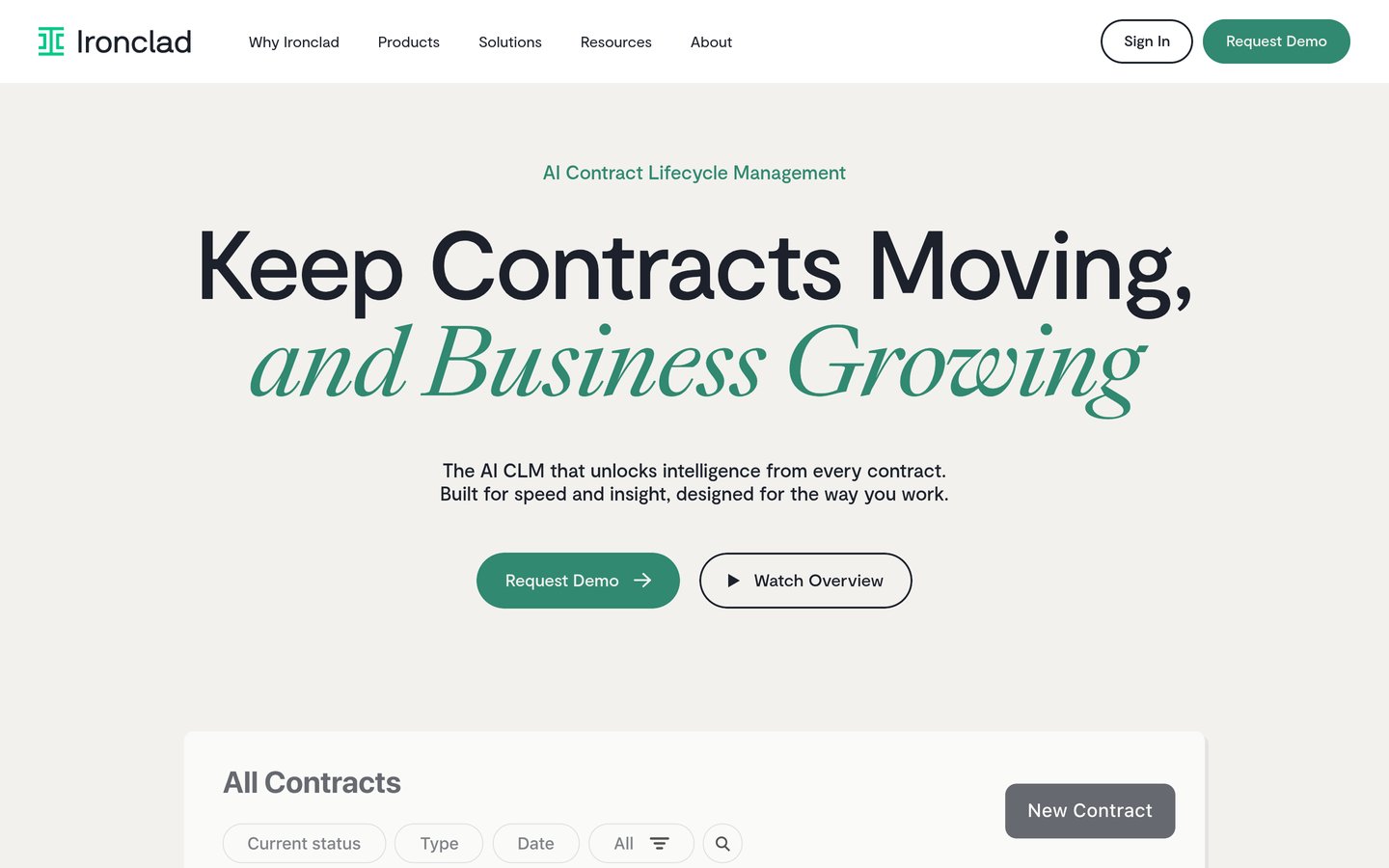
Ironclad homepage, captured Nov 2026.
Ironclad is a contract lifecycle platform built around its no-code Workflow Designer, which lets legal and business teams build approval routes without developer help. It adds AI-assisted drafting and review, a searchable repository and built-in e-signatures, with deep Salesforce integration.
The trade off is price. Ironclad publishes no prices and sells by quote, and buyer data puts the median annual contract near $40,000, with implementation often $10,000 to $40,000 on top. It suits mid-size and larger teams that run high contract volume through legal.
What we like
No-code Workflow Designer for self-service contracts
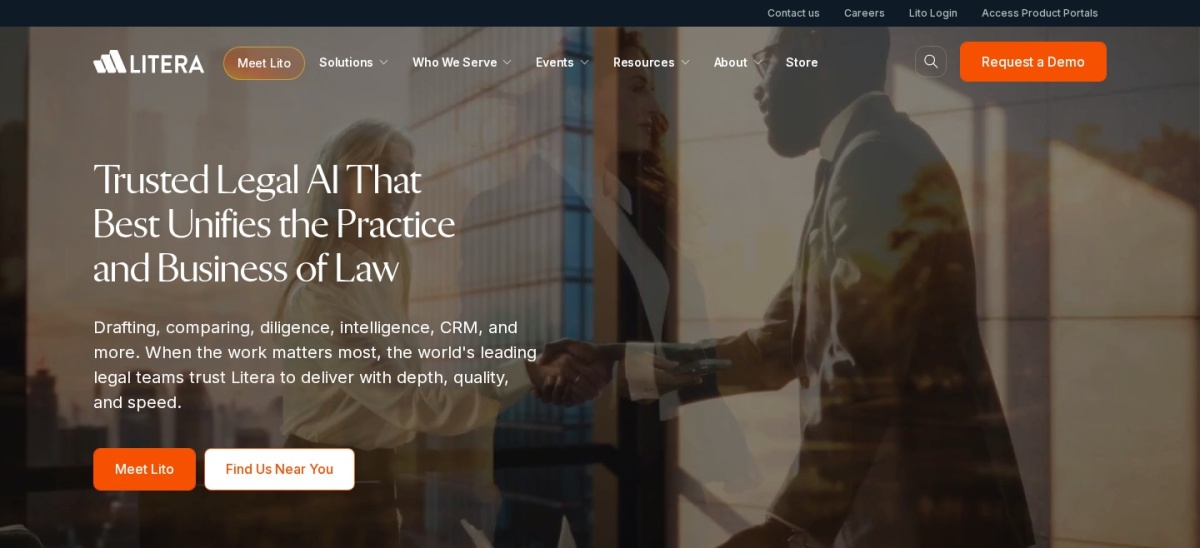
Kira, by Litera, is an AI contract intelligence tool built for high-volume review such as M&A due diligence. It uses more than 1,400 pre-built smart fields to pull key provisions out of large document sets, and Litera says it is used by 70% of the top 50 global law firms.
The trade off is evidence and price. Kira publishes no prices and sells by quote, with buyer reports putting annual deals near $35,000 to $150,000, and its G2 rating rests on only 10 reviews. It suits law firms running regular due diligence.
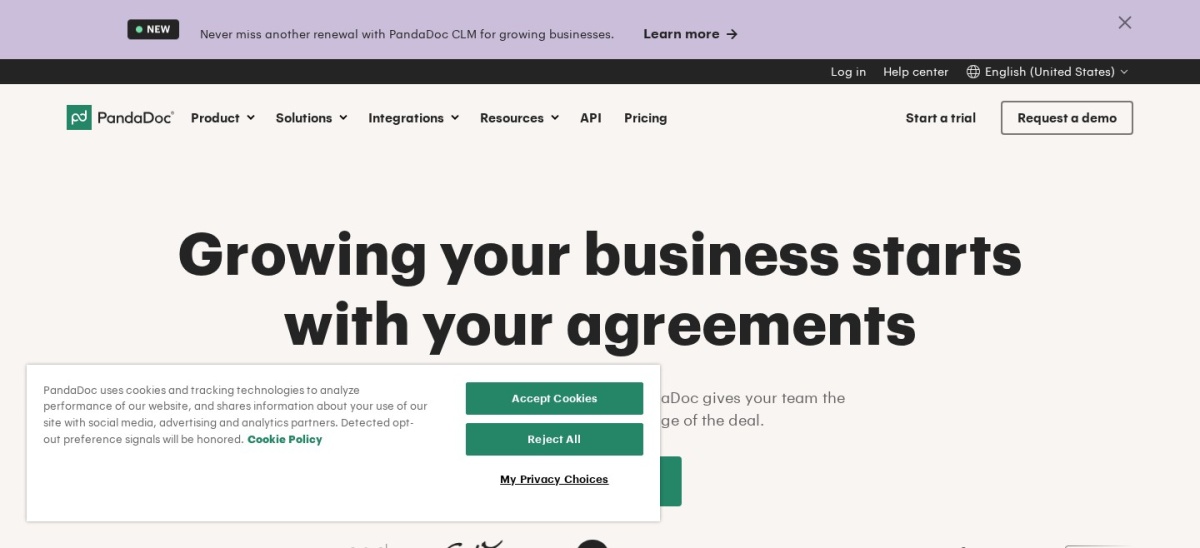
PandaDoc is a document automation tool that covers proposals, quotes and contracts in one flow. The free plan covers 5 documents a month, and Starter at $19 per user a month billed yearly adds templates, document tracking and analytics, with AI features on paid plans.
The trade off is depth. PandaDoc is lighter on contract analysis than the tools above it, with no full clause library or obligation tracking on lower plans. It suits sales and small business teams that need documents out fast.
AI analysis is strongest at finding and sorting. It can pull dates, parties and standard clauses from hundreds of contracts, flag terms that differ from a playbook, and answer plain-language questions about what a contract says.
It is weakest at judgement. A clause can be unusual without being risky, and a standard clause can be wrong for one deal. Every flagged item still needs a person who knows the deal to decide what it means.
Treat accuracy claims with care. Vendors report accuracy on their own document sets, not on yours, so run a pilot on your own contracts and count the misses before you sign.
How we chose
We started from the established contract analysis and lifecycle tools with a public G2 profile, then kept nine that cover pure AI analysis, full lifecycle platforms and one affordable entry point.
Prices come from each vendor's pricing page, checked on 24 November 2026. Eight of the nine publish no price and sell by quote, so the list says so and gives buyer-reported medians only where a source states them. Ratings come from G2 on the same day.
We left out Evisort, which is now sold as Workday CLM after the Workday acquisition, because its homepage now redirects to Workday and there is no standalone product page or price. No vendor paid for a place, and we do not claim hands-on testing for this list.
How to choose contract analysis software
Start with your contract volume and the job you need done, then match the tool to that job.
Count the contracts you already hold. A library of hundreds of signed contracts needs repository search and obligation tracking, while a team that drafts ten contracts a month needs templates and review first.
Decide between analysis-only and a full platform. Pick Luminance or Kira for bulk review and due diligence, and LinkSquares, Leah or Ironclad when drafting, approvals and signing must live in the same tool.
Run a pilot on your own contracts. Upload a real set of agreements, check what the AI extracts and misses, and ask the vendor to show how a flagged clause is reviewed before it is filed.
Get the full quote in writing. Ask for implementation, user limits, contract-volume limits and renewal terms as separate lines, since eight of these nine tools publish no price.
FAQ
What is the best contract analysis software?
LinkSquares is the best pick for most legal teams. Its AI reads signed contracts, extracts key terms and obligations, and is rated 4.7 out of 5 from 445 G2 reviews. Luminance is the stronger choice for large due-diligence reviews.
How much does contract analysis software cost?
Most tools in this list publish no price and sell by quote, with buyer-reported medians from about $25,000 a year for SpotDraft to about $67,000 for Agiloft. The only published price here is PandaDoc Starter at $19 per user a month billed yearly.
Can AI replace a lawyer for contract review?
No. AI can find clauses, flag differences from a playbook and summarise a contract, but it cannot judge risk for a specific deal. A person who knows the deal should still review every flagged item before it is accepted.
What is the difference between contract analysis and contract management?
Contract analysis reads agreements and extracts data such as dates, obligations and risky clauses. Contract management covers the full lifecycle: drafting, approvals, signing and storing contracts, with analysis as one part of it.
Which tool is best for M&A due diligence?
Kira and Luminance are the strongest fits for due diligence. Kira offers more than 1,400 pre-built smart fields for bulk review, while Luminance adds playbook redlining in Word. Both sell by quote, so budget for an enterprise deal.
Is there a free contract analysis tool?
There is no free full contract analysis tool in this list. PandaDoc has a free plan for 5 documents a month with e-signatures, and Agiloft offers a free Astra AI plan, but both are limited versions of paid platforms.
SaaS SEO and WordPress specialist with about 8 years of experience. Rakib compares WordPress plugins, themes, hosting and software using public pricing, documentation and user reviews. See how we rank.