Best Contact Management Software for Small Business in 2026: 7 Tools Compared
WLWPLegible EditorsLast verified 22 Nov 2026How we rank12 min read
★ Short answer
Bigin by Zoho CRM is our top contact management pick for small businesses, with a free single-user plan covering 500 records and paid plans starting at $7 per user per month, billed annually. Choose Less Annoying CRM for unlimited contacts and simpler pricing, or Capsule CRM for relationship management and shared mailboxes.
How we make this list: we compare pricing pages, product documentation and public user reviews, then re-check every price before each update. No product paid for a place. Disclosure.
Bigin by Zoho CRM starts at $7 per user per month billed annually, while its free plan supports 500 records and a single user.
Less Annoying CRM charges a flat $15 per user per month, with unlimited contacts, unlimited pipelines and 25GB of file storage per user.
Capsule CRM supports 250 contacts and 2 users on its free plan, with Starter raising the contact allowance to 30,000 for $18 per user per month billed annually.
Zoho CRM offers a free edition for 3 users and a Standard plan starting at $14 per user per month billed annually.
Freshsales Growth starts at $9 per user per month billed annually, combining contact lifecycle stages with built-in email, phone and chat.
HubSpot Sales Hub has the largest G2 review base in this comparison, with a 4.4/5 rating from 14,407 reviews; its regular Starter price is $20 per seat per month.
What small businesses need from contact management software
A contact management tool should do more than replace a spreadsheet. It should store customer details, record conversations, organize follow-up tasks and make important information available to the people who need it.
Look for contact records with custom fields, notes, activity history and company associations. These make it easier to understand customer relationships without searching through separate inboxes or documents.
Email integration, reminders and shared access become important as the business grows. A simple CRM can prevent missed follow-ups, while a sales-focused platform adds pipelines, deal tracking and reporting.
Check contact limits, user-based pricing and which features are reserved for upgrades. Free plans can be useful for getting started, but annual software costs rise as teams add seats.
The right choice depends on how contacts are used. A consultant may prioritize relationship history and reminders, while a sales team may need deal stages, email tracking and automated follow-up workflows.
The 7 best contact management software tools for small business
01
Bigin by Zoho
4.6/5on G2 (876 reviews, checked Nov 2026)
Paid from$7/mo
Best overall for affordable contact management
Free allowance1 user, 500 records
Free pipelines1
Entry paid planExpress
Paid billing$7/user/mo, annually
bigin.com
Bigin by Zoho homepage, captured Nov 2026.
Bigin by Zoho is a compact CRM for managing contacts, companies and customer-facing processes. Its free edition supports one user, 500 records and a single pipeline, with tasks, notes, built-in calling and appointment scheduling. The platform also includes mobile apps, forms and integrations with other business applications.
The trade off is that the free edition has a combined record allowance, while the Express plan costs $7 per user per month billed annually. It suits small businesses that want structured contact management and a sales pipeline without paying for a larger CRM platform.
What we like
Free plan includes contact and pipeline management
Low $84 annual entry price per user
Built-in phone, forms and activity tracking
Integrates with other Zoho applications
Mobile apps support customer management on the go
Watch out for
Free plan supports only one user
The 500-record allowance covers more than contacts
More advanced features require higher tiers
Express expands the free plan with higher limits and additional CRM capabilities.Visit bigin.com
02
Less Annoying CRM
4.9/5on G2 (674 reviews, checked Nov 2026)
Starts at$15/mo
Best for simple contact management
Contact allowanceUnlimited, fair-use guidance
File storage25GB/user
Free trial30 days
Paid plan$15/user/mo
lessannoyingcrm.com
Less Annoying CRM homepage, captured Nov 2026.
Less Annoying CRM is a straightforward contact management platform designed for small businesses that need customer records, notes, tasks and follow-up reminders. Its single paid plan includes unlimited contacts, unlimited pipelines, unlimited custom fields, email logging and 25GB of file storage per user. Every customer receives the same feature set.
The trade off is that there is no permanently free plan, and the $15 per user monthly fee applies after the 30-day trial. The vendor also recommends staying below approximately 50,000 total contacts and companies. It suits consultants, service providers and small teams that prefer predictable pricing.
What we like
One flat price with no feature-based tiers
Unlimited contacts, pipelines and custom fields
25GB storage allowance per user
Free email and phone support
30-day trial without a credit card
Watch out for
No permanent free edition
Less suitable for complex enterprise sales operations
Capsule CRM is a contact and relationship management platform that organizes people, companies, communication history and sales opportunities. Its free plan supports two users, 250 contacts, five custom fields and one sales pipeline. Starter raises the contact allowance to 30,000 and adds email templates, shared mailboxes and premium integrations.
The trade off is that the free plan's 250-contact allowance can become restrictive, while Starter costs $18 per user per month billed annually. Advanced workflow automation and broader reporting are associated with higher plans. It suits service businesses and relationship-focused teams that need an organized shared customer database.
What we like
Free plan supports two users
Clear contact and company relationship records
Starter includes a shared mailbox
Integrations with accounting and business applications
Contact allowance increases substantially on Starter
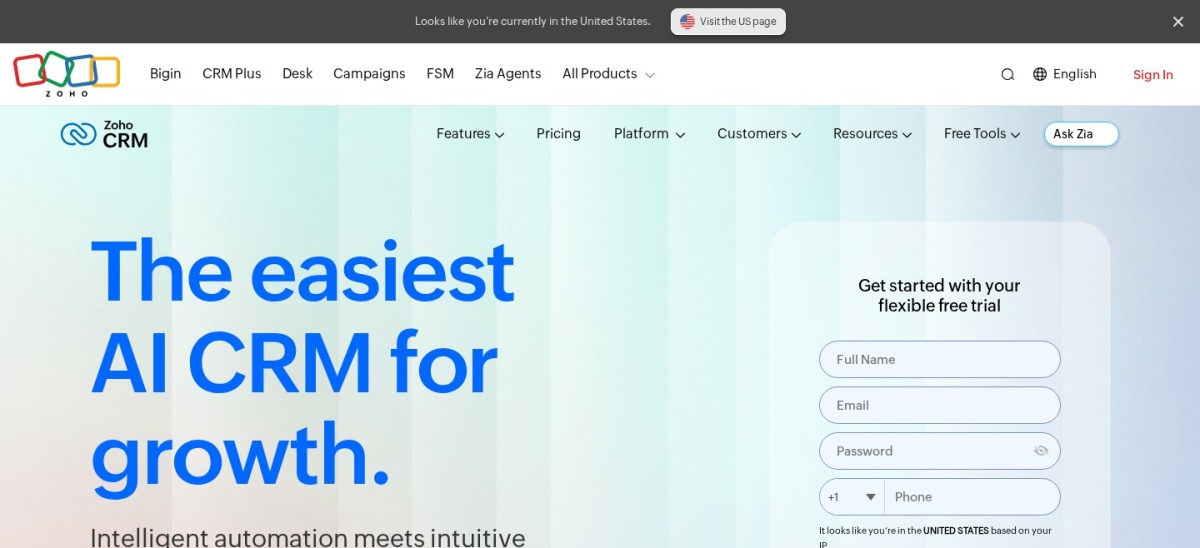
Zoho CRM is a configurable customer relationship management platform covering contacts, accounts, leads, deals and sales activities. Its free edition supports three users, with contact records, tasks, events, call logs and notes. Standard adds features such as sales forecasting, email-related capabilities and expanded sales management tools.
The trade off is that the broader feature set can require more setup than a lightweight contact manager. Standard costs $14 per user per month billed annually, while more advanced process management and intelligence features sit in higher editions. It suits growing companies that expect their CRM requirements to become more complex.
What we like
Free edition accommodates three users
Contacts, leads, accounts and deals in one application
Customizable sales workflows and CRM data
Standard includes sales forecasting
Integrates with a wide range of business applications
Watch out for
More configuration than simpler contact managers
Advanced capabilities are distributed across paid tiers
Feature depth may be unnecessary for basic address-book needs
Standard adds forecasting, expanded email features and additional sales management capabilities.Visit zoho.com
05
HubSpot Sales Hub
4.4/5on G2 (14,407 reviews, checked Nov 2026)
Paid from$20/mo
Best for combined sales and marketing
Free CRMAvailable
Paid editionSales Hub Starter
Regular price$20/seat/mo
Advertised promotion$7/seat/mo
hubspot.com
HubSpot Sales Hub homepage, captured Nov 2026.
HubSpot Sales Hub is a sales platform built on HubSpot Smart CRM, bringing contact information, deal records and communication history together. Free CRM tools provide an entry point for managing relationships, while Sales Hub adds sales-focused features such as email tracking, meeting scheduling, document sharing and communication templates.
The trade off is that advanced sales functionality is divided across subscription levels, and costs can increase as additional paid seats are added. The regular Starter price is $20 per seat per month, although a $7 promotional offer is advertised for eligible new customers. It suits businesses combining contact management with sales and marketing activity.
What we like
Free CRM tools available
Centralized contact and deal information
Sales engagement features support follow-ups
Connects with HubSpot marketing and service products
Extensive public review history
Watch out for
Regular Starter pricing is higher than some competitors
Advanced automation and reporting need higher tiers
Promotional pricing differs from the normal subscription price
Starter expands free tools with additional sales features and higher limits.Visit hubspot.com
06
Freshsales
4.5/5on G2 (1,244 reviews, checked Nov 2026)
Paid from$9/mo
Best for contact engagement across channels
Entry paid planGrowth
Paid price$9/user/mo, annually
CommunicationEmail, phone and chat
AutomationBasic workflows on Growth
freshworks.com
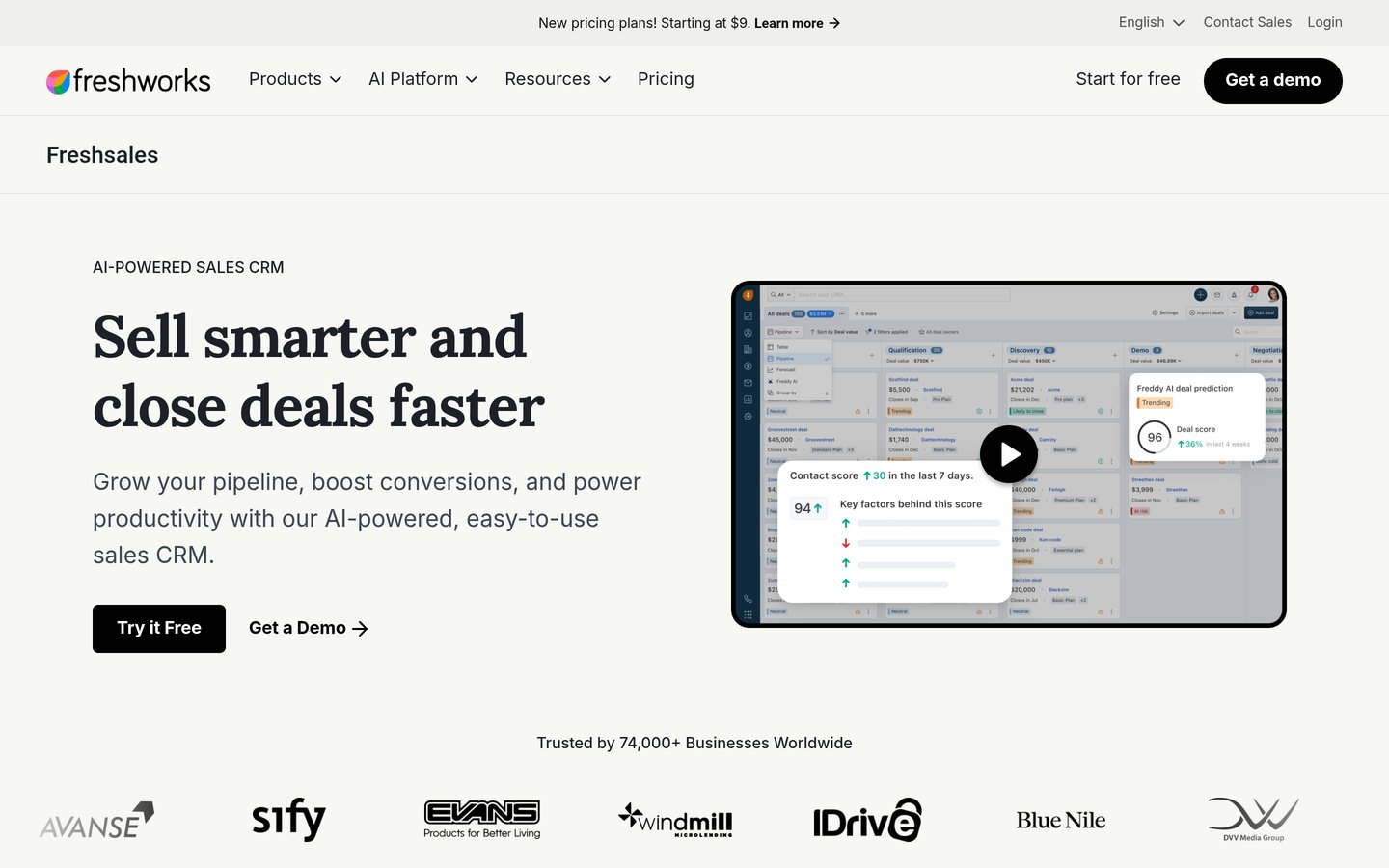
Freshsales homepage, captured Nov 2026.
Freshsales is a sales CRM that connects contact records with communication and deal management. Its Growth plan includes contact lifecycle stages, Kanban views, email templates, custom fields, basic workflows and access to email, chat and phone capabilities. Freshsales also offers a free CRM option for teams starting with basic customer management.
The trade off is that contact scoring, sales sequences and more advanced insights are reserved for higher editions. Growth costs $9 per user per month billed annually, and additional features may involve add-on charges. It suits small sales teams that contact prospects through several channels and need a shared activity history.
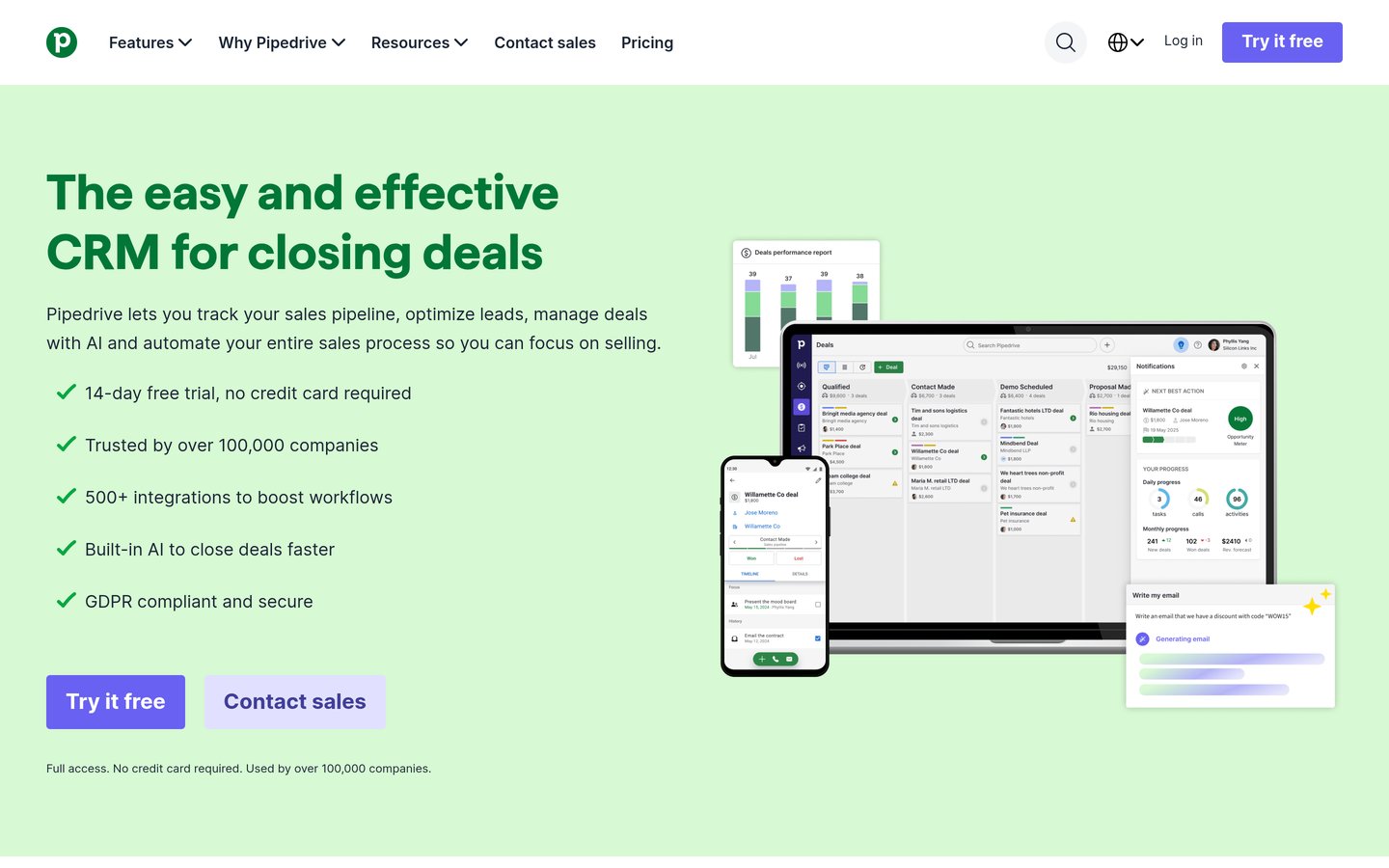
Pipedrive is a sales-focused CRM that connects people and organizations to leads, deals, tasks and calendar events. Its Lite plan provides a central workspace for managing contacts and sales opportunities, with visual pipeline management and activity tracking. A 14-day free trial is available without a credit card.
The trade off is that Pipedrive does not offer a permanent free plan, and some automation, email and lead generation capabilities require higher tiers or add-ons. Lite costs $14 per seat per month billed annually, equivalent to $168 per seat yearly. It suits teams that use customer contacts mainly to advance sales opportunities.
What we like
Contact records connected directly to sales deals
Visual pipeline helps organize opportunities
Centralized calendar and activity management
14-day trial without a credit card
Established platform with extensive user reviews
Watch out for
No permanent free edition
Advanced features can increase subscription costs
More sales-oriented than a basic contact directory
Contact management software vs CRM: what is the difference?
Contact management software primarily stores information about people and organizations. A basic contact manager organizes names, email addresses, phone numbers, notes, tags and previous interactions.
CRM software expands that information into a customer relationship workflow. It connects contacts to sales opportunities, activities, reminders, reports and sometimes marketing or customer support tools.
For many small businesses, a simple CRM provides the most practical balance. It works as a contact database today and can support lead tracking or sales follow-ups as the business develops.
How much does contact management software cost?
The cheapest verified paid plan in this comparison is Bigin Express at $7 per user per month billed annually, or $84 per user per year. Freshsales Growth starts at $9 per user per month billed annually.
Zoho CRM and Pipedrive both start at $14 per user per month on annual billing, while Less Annoying CRM costs $15 per user per month without a separate annual commitment requirement.
Capsule Starter costs $18 per user per month billed annually. HubSpot Sales Hub Starter lists a regular price of $20 per seat per month, with lower promotional pricing advertised for eligible new customers.
Compare total team cost rather than the entry price alone. Contact limits, email features, automation, integrations and paid user seats can determine whether an apparently inexpensive plan remains affordable.
How we chose
We selected established contact management and CRM platforms used by small businesses, focusing on products that organize contacts, communication history, tasks and customer relationships. We prioritized accessible pricing, recognizable vendors, maintained products and independently published customer reviews.
The comparison uses vendor pricing pages and G2 review listings, with the editorial reference date set to 22 Nov 2026 and the web pages reopened on 23 Nov 2026. Prices represent the lowest publicly listed regular paid plans rather than temporary promotional offers, and annual costs are calculated for a single paid seat.
We excluded products without sufficiently verifiable entry pricing, platforms centered on enterprise implementations and tools lacking substantial public review histories. We also avoided treating a free trial as a permanent free plan. No vendor paid for a place, and we do not claim testing for this list.
How to choose contact management software for your small business
Start by identifying how your team stores contacts, communicates with customers and tracks follow-ups. Then compare the features you actually need against contact limits and ongoing subscription costs.
Define what information you need to store. List the contact fields, notes, customer categories and company relationships your business uses. If you only need an organized contact database and reminders, a straightforward CRM such as Less Annoying CRM or Capsule may be sufficient.
Check contact and user limits before choosing a free plan. Free plans can be useful for starting out, but storage allowances vary. Bigin offers 500 combined records for one user, while Capsule supports 250 contacts for two users. Compare those limits against the size of your existing database and expected growth.
Match communication features to your workflow. Decide whether your business needs email logging, shared inboxes, phone calls, chat or appointment scheduling. Freshsales emphasizes multichannel engagement, while HubSpot combines customer information with sales engagement and marketing-related capabilities.
Calculate the annual cost of the full team. Multiply the entry subscription by the number of paid users and check whether annual billing is required. Also review the cost of additional automation, reporting or integrations before choosing a plan based only on its advertised starting price.
FAQ
What is the best contact management software for a small business?
Bigin by Zoho CRM is a strong overall choice for small businesses because it combines contact records, activity tracking and sales pipelines in an affordable package. Its free edition supports one user and 500 records, while Express starts at $7 per user per month billed annually.
Is there free contact management software for small businesses?
Yes. Bigin, Capsule CRM, Zoho CRM, HubSpot and Freshsales offer free CRM options. Their limits and capabilities differ, so compare how many users and records you can maintain and whether the free edition includes the communication or workflow features your business needs.
What is the easiest contact management software to use?
Less Annoying CRM is a suitable option for businesses prioritizing a straightforward contact database, reminders and tasks. Its single $15-per-user monthly subscription includes unlimited contacts and pipelines, avoiding the need to compare several feature-based subscription tiers.
What is the difference between contact management software and CRM?
Contact management software concentrates on organizing people, companies, communication details and notes. CRM software adds workflows around those relationships, such as lead tracking, deal pipelines, reminders, reporting and automation. Many current small-business contact managers are lightweight CRM systems rather than standalone address books.
How much should a small business pay for contact management software?
Several established products have entry plans between $7 and $20 per user per month, depending on the vendor and billing terms. Bigin starts at $7 with annual billing, while Less Annoying CRM charges $15 monthly. The total cost depends on paid users and required features.
Can contact management software track customer emails?
Many contact management platforms support email-related features, but the exact capabilities depend on the subscription. Less Annoying CRM includes email logging, Capsule Starter includes shared mailboxes, and Freshsales Growth provides email features. Check whether automatic synchronization, templates or tracking require a more expensive plan.
Do small businesses need a full CRM system?
Not necessarily. Businesses that only need contact details, notes and reminders may be better served by a simple contact manager. A fuller CRM becomes useful when several employees share customer information, leads move through defined sales stages or managers need reports on follow-up activity.
Which contact management tool is best for sales teams?
Pipedrive is particularly suitable for sales teams because it connects contacts to leads, deals, calendar events and visual pipelines. Its Lite plan starts at $14 per seat per month billed annually. Freshsales and HubSpot are alternatives when communication channels or sales engagement features matter more.
Can I import contacts from a spreadsheet into CRM software?
Established CRM platforms generally provide ways to migrate contact information, although supported formats, field mapping and duplicate handling vary. Before importing, clean your spreadsheet, standardize phone and email fields, remove duplicates and check how the chosen platform handles existing contact records.