WordPress is the best CMS for most logistics companies, because the software is free, plugins cover quote forms, multilingual pages and job listings, and you control every URL and redirect. Pick HubSpot Content Hub if your sales team already runs on HubSpot CRM, and Webflow for a design-led site.
How we make this list: we compare pricing pages, product documentation and public user reviews, then re-check every price before each update. No product paid for a place. Disclosure.
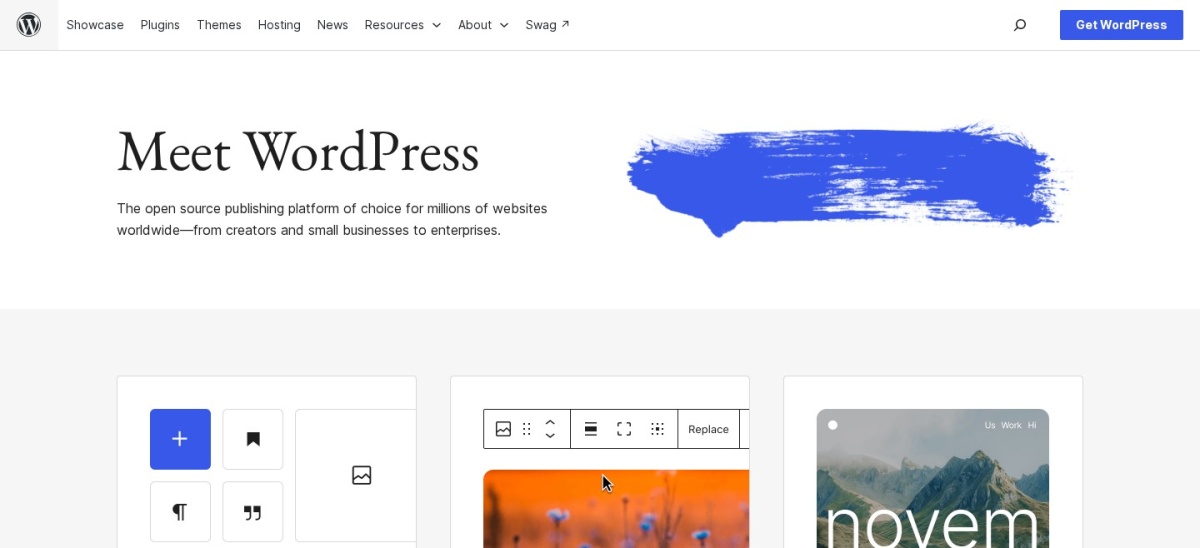
WordPress.org is the default for most logistics firms: free software, the widest plugin choice and full SEO control, used on 30 logistics homepages in one 2026 survey.
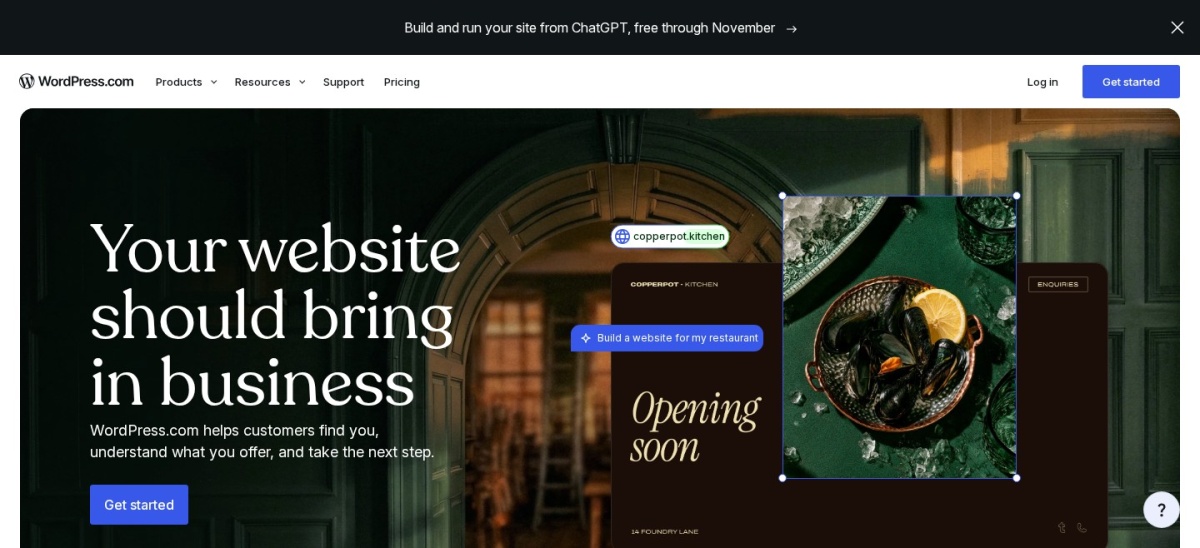
WordPress.com Business costs $25 a month billed annually in year one and renews at $28, with hosting, security and updates handled.
HubSpot Content Hub is the only platform here where the website, blog, CRM and analytics share one database, at $20 a seat a month.
Webflow Premium at $25 a month billed annually is the best design-led option, with 20,000 CMS items and 40 collections.
Storyblok, Strapi, Contentful and Sanity are headless: one content source feeding the website, customer portal and apps, but they need developers.
What a logistics CMS should cover
A logistics website is a sales tool, not a brochure. It needs service pages for every mode, industry pages, location pages for each depot, a quote request form that reaches the right team, and careers pages for drivers and warehouse staff.
Multilingual support matters for cross-border work. A freight forwarder serving several countries needs separate URLs for each language, plus schema for local search so depots show up for searches like "LTL freight Chicago".
The CMS choice also decides who can publish. A marketing team needs visual editing and templates so a new depot page takes minutes, while a developer-led team may prefer a headless CMS with an API feeding the website, portal and driver app.
Cost is mostly the licence plus the build. WordPress and Drupal are free software, so the bill is hosting and plugins, while hosted and headless platforms charge per month, per seat or per project, and editor seats can double the real cost.
WordPress.org is free, open-source software and the default CMS for logistics websites, powering 43% of the web and appearing on 30 logistics homepages in a 93-site survey from October 2026. Plugins cover quote request forms, multilingual pages, driver and warehouse job listings and location pages for each depot.
The trade off is maintenance. You arrange hosting, security, backups and updates yourself or through an agency, and a site loaded with plugins can slow down. Content and data stay fully portable, so you can move hosts without rebuilding.
What we like
Free software with no licence fee
Largest plugin ecosystem of any CMS here
Full control of URLs, redirects, schema and sitemaps
No platform lock-in: move hosts and keep content
Watch out for
You arrange hosting, security and updates
Speed and security depend on host and plugin choices
WordPress.com is the hosted version of WordPress, giving a small courier, haulier or freight broker the WordPress editor and plugin library on managed hosting. Security, updates and a CDN are handled, and Business adds staging, real-time backups, SFTP and GitHub deployments.
The trade off is the renewal price. Business costs $25 a month billed annually in the first year and renews at $28, and each site needs its own plan, so separate brand or country sites multiply the bill. It is the easiest route to a professional WordPress site for a firm without IT staff.
What we like
Lowest-friction way to run a WordPress site
Hosting, security, updates and CDN included
Business adds staging, real-time backups and SFTP
Free plan exists; Personal can now install plugins
HubSpot Content Hub is a CMS built on the HubSpot CRM, so the website, blog, forms and analytics share one database. A quote request from a lane page becomes a contact and a deal the sales team can follow up the same day, with no form-to-CRM sync to break.
The trade off is per-seat pricing. Starter costs $20 a seat a month billed monthly, so a five-person team pays $100 a month at list price, and smart content and A/B testing need Professional at $450 a month. The $7 annual figure is a limited new-customer promotion, not the standard rate.
What we like
Website, blog, CRM and analytics share one database
Genuinely free tier covers basic website tools
AI tools including Content Remix and Breeze built in
Professional adds smart content, A/B testing and HubDB
Watch out for
Per-seat pricing grows with every hire
Smart content and A/B testing need Professional
Expensive as a standalone CMS without HubSpot CRM
Starter is priced per seat; Professional adds smart contentVisit hubspot.com
04
Webflow
4.4/5on G2 (997 reviews, checked Nov 2026)
Paid from$25/mo
Best design-led CMS for logistics brands
Free planYes, Starter
Starting paidPremium, $25/mo
Best forDesign-led logistics brands
HeadlessNo, visual builder with CMS
webflow.com
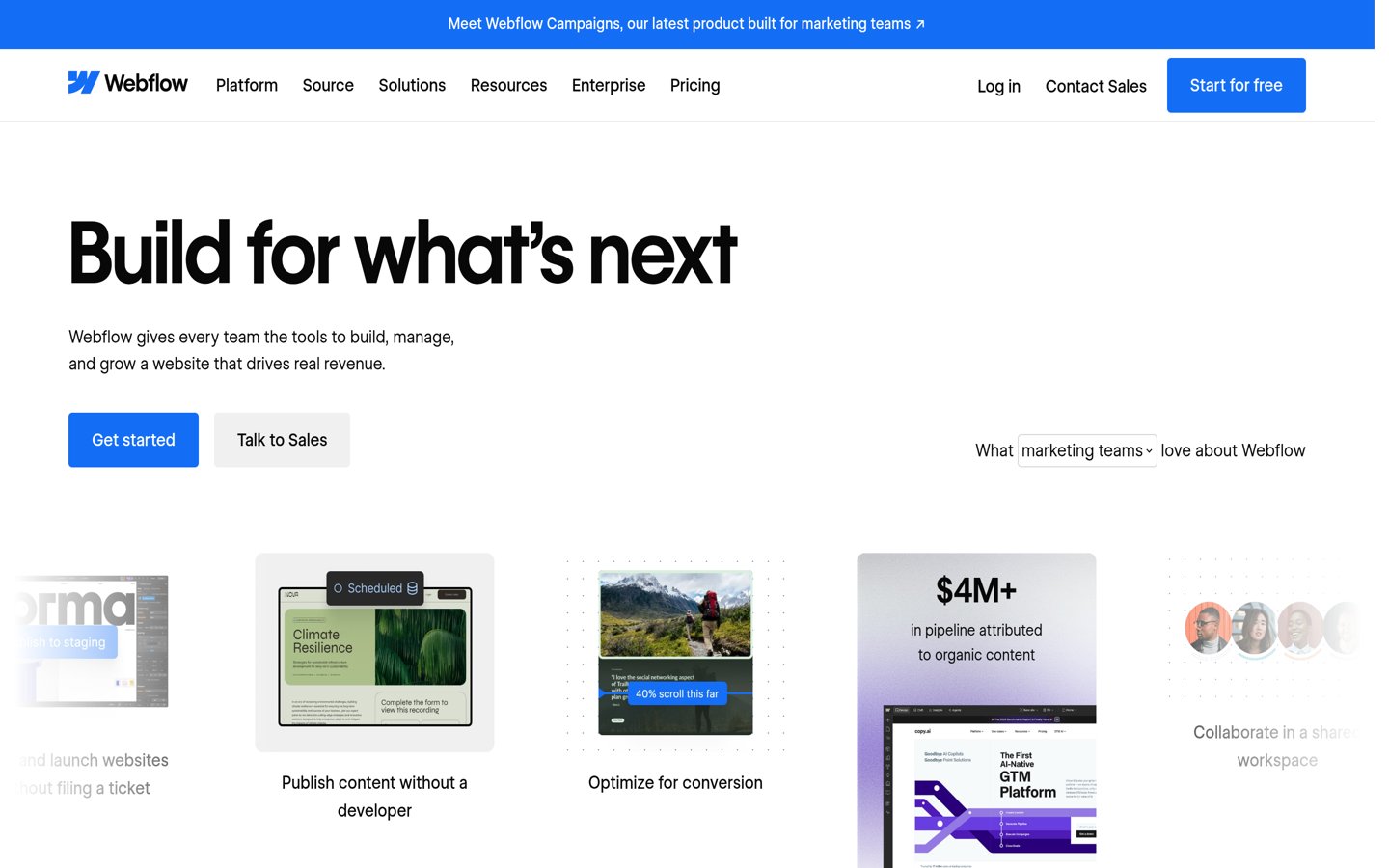
Webflow homepage, captured Nov 2026.
Webflow is a visual website builder with a CMS and hosting built in, so a designer builds service, location and case-study templates on a canvas while editors change text in the CMS. A site with a CMS costs $25 a month billed annually on Premium, with 20,000 CMS items and 40 collections.
The trade off is seats and scope. Basic at $15 a month has no CMS at all, and editor seats are a separate bill at $15 or $39 a seat a month billed yearly. Integrations with a TMS or tracking tools need custom code, and there are no plugins to extend it.
What we like
Visual designer with a real CMS: 20,000 items
Premium includes site search and 50 GB bandwidth
No plugins to update; hosting and security included
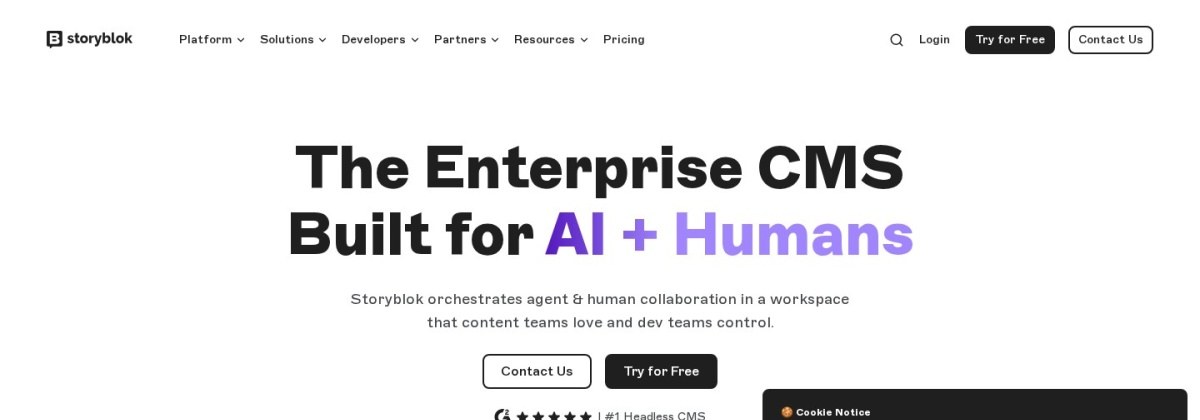
Storyblok is a headless CMS with a visual editor, so marketers build pages from approved blocks while developers deliver the same content to the website, a customer portal and an app. Growth costs $99 a month, or $90.75 billed annually, with 1 million API requests and 400 GB of traffic.
The trade off is governance. Component schemas live in the UI, not in code, so keeping them in sync with the frontend takes manual work, and bandwidth limits can force a plan jump. Reviewers also report slow support ticket resolution when production incidents occur.
What we like
Visual editor lets marketers build pages alone
Highest-rated composable tool here on G2 at 4.5
Growth includes 1M API requests and 400 GB traffic
45-day free trial of Growth Plus, plus a free plan
Strapi is an open-source headless CMS with a free Community Edition to self-host and REST and GraphQL APIs out of the box. Service pages, depot data and news feed the website, a driver app or a customer portal from one place, and pricing is per project, not per seat.
The trade off is upkeep. Strapi Cloud dropped its free plan in August 2026, so managed hosting starts at $35 a project a month, and self-hosting needs a developer for backups and upgrades. Major-version upgrades can be a real project, not a click.
What we like
Community Edition free to self-host, no seat limits
Cloud Starter covers hosting, database, CDN and SSL
REST and GraphQL APIs out of the box
Priced per project, so adding editors never raises the bill
Watch out for
Cloud free plan ended in August 2026
Self-hosting needs a developer for upkeep
Breaking changes between major versions
Cloud Starter covers hosting, database, CDN and SSLVisit strapi.io
07
Contentful
4.3/5on G2 (399 reviews, checked Nov 2026)
Paid from$300/mo
Best headless CMS for multi-channel teams
Free planYes, 10 users
Starting paidLite, $300/mo
Best forMid-size logistics groups
HeadlessYes, API-first
contentful.com
Contentful homepage, captured Nov 2026.
Contentful is the most widely adopted composable content platform here, with structured content entries feeding the website, apps, email and screens through an API. The free plan includes 10 users and 100,000 API calls a month, and Lite costs $300 a month with scheduled publishing and live collaboration.
The trade off is cost and complexity. AI Actions, Personalization and SSO wait for Enterprise, content modeling has a real learning curve, and reviewers warn that pricing climbs fast as usage grows. It needs developers to build the front end.
What we like
Most widely adopted composable platform here
Published prices instead of a sales call
Lite includes scheduled publishing and collaboration
Marketplace apps and a large integration library
Watch out for
AI Actions and Personalization are Enterprise add-ons
Drupal is free, open-source software with the deepest content modeling and access control in this list, which suits a large logistics group, port authority or public-sector transport body with many content types and strict editorial roles. It has a strong security record and API-first publishing for portals and apps.
The trade off is difficulty. It has the steepest learning curve here and needs a developer or agency for build and upkeep, and there is no hosted plan with a published price, so hosting is arranged separately. For a small firm it is overkill.
What we like
Free, open source, with no licensing fees ever
Deepest content modelling and access control here
Powers large publishers and government sites
Strong security record and API-first publishing
Watch out for
Steepest learning curve in this list
No hosted version with a price
Overkill for a small logistics firm
No hosted plan exists; hosting is arranged separatelyVisit drupal.org
09
Sanity
4.7/5on G2 (926 reviews, checked Nov 2026)
Paid from$15/mo
Best headless CMS for developer-led teams
Free planYes, 20 seats
Starting paidGrowth, $15/seat/mo
Best forDeveloper-led custom editorial
HeadlessYes, API-first
sanity.io
Sanity homepage, captured Nov 2026.
Sanity is a headless CMS pairing a flexible content studio with a real-time API, and it holds the highest G2 rating in this list at 4.7 out of 5 from 926 reviews. Developers praise its content modeling and editing experience, and the free plan covers 20 seats with Growth at $15 a seat a month.
The trade off is the developer requirement. Sanity suits teams building custom editorial tools, not marketers who want a ready-made page builder, and Growth is billed monthly only with no annual discount. A logistics firm without developers should pick WordPress or Webflow instead.
What we like
Highest G2 rating in this list at 4.7
Real-time collaborative editing with visible cursors
Free plan covers 20 seats
Flexible content modeling developers praise
Watch out for
Needs developers to build the editing studio
Growth billed monthly only, no annual discount
No ready-made page builder for marketers
Growth is billed monthly only, with no annual discountVisit sanity.io
Traditional vs headless CMS for logistics
A traditional CMS, such as WordPress, Webflow or HubSpot Content Hub, stores content and renders the website in one system. Editors see the page as they build it, themes control the design, and one tool runs the whole site. That suits a logistics company whose main digital asset is a marketing website.
A headless CMS, such as Strapi, Contentful, Storyblok or Sanity, stores content and serves it through an API to any front end: the website, a customer portal, a driver app or digital signage. Developers build each front end separately. It costs more to set up but suits a logistics group with one source of truth for many channels and countries.
How we chose
We compared nine content management systems for freight forwarders, 3PLs, carriers and couriers on page templating, quote forms and CRM links, multilingual support, SEO control and yearly cost. Ratings are G2 scores checked in October and November 2026, and every price comes from the vendor's own pricing page checked in November 2026.
WordPress.org leads because it powers 43% of the web and appeared on 30 logistics homepages in a 93-site survey from October 2026, ahead of Webflow on 22. Headless platforms rank lower for simple marketing sites because they need developers to build the front end.
No vendor paid for a place, and we do not claim hands-on testing for this list. Prices are standard list prices in US dollars, not sale prices, and per-seat plans are quoted for one seat. A logistics firm should trial its top two options before migrating.
How to choose a CMS for a logistics company
Start with the pages your site must publish, then check who will edit them.
List every page type you need. Services, modes, industries, lanes, depots and careers each deserve a template, so new pages take minutes instead of a design project.
Make quote requests count. The form should route to the right team and land in your CRM with the shipment details intact, or leads go cold within hours.
Check multilingual support. Cross-border sites need several languages with separate URLs for each, and Drupal builds this into its core while WordPress uses plugins.
Decide who edits. A marketing team needs visual editing, while a developer-led team may prefer a headless CMS with an API. Trial your top two before migrating.
FAQ
What is the best CMS for logistics companies?
WordPress is the best CMS for most logistics companies. The software is free, plugins cover quote forms, multilingual sites and job listings, and you control every URL, redirect and sitemap. HubSpot Content Hub is the best choice for firms already selling through HubSpot CRM.
What pages should a logistics company website have?
Service pages for every mode, industry pages, location pages for each depot, a quote request form, a tracking or portal login, and careers pages for drivers and warehouse staff. Certifications and case studies help too, and each page type should have its own template.
Do logistics companies need a headless CMS?
Only if the same content must feed a website, customer portal and apps. Strapi, Contentful, Storyblok and Sanity do that well. A single marketing website runs more cheaply on WordPress or Webflow, where editors see the page as they build it.
How much does a CMS for a logistics website cost?
WordPress and Drupal are free software plus hosting. WordPress.com Business costs $25 a month billed annually in year one, Webflow's CMS tier $25 a month billed annually, Strapi Cloud $35 a month, Storyblok Growth $99 and Contentful Lite $300.
Can a CMS connect to a TMS or tracking system?
Usually through an embed, an API integration or a link to the customer portal. Headless platforms make API integrations easier, while on WordPress and Webflow it typically needs a plugin or custom code. Confirm the integration before you commit to a platform.
Which CMS is best for multilingual logistics websites?
WordPress handles multilingual sites through plugins, Drupal has multilingual features in its core, and headless platforms such as Contentful and Storyblok manage locales for every channel. Webflow supports multiple locales on its CMS plans, with editor seats billed separately.
SaaS SEO and WordPress specialist with about 8 years of experience. Rakib compares WordPress plugins, themes, hosting and software using public pricing, documentation and user reviews. See how we rank.