GitHub Actions is the best CI/CD tool for most cloud teams, with a free plan, 2,000 free minutes a month and a 4.7 out of 5 G2 rating from 2,440 reviews. Pick GitLab CI for an all-in-one DevOps platform, CircleCI for fast cloud builds, or Jenkins if you want a free self-hosted server.
How we make this list: we compare pricing pages, product documentation and public user reviews, then re-check every price before each update. No product paid for a place. Disclosure.
GitHub Actions leads with a 4.7/5 G2 rating from 2,440 reviews and a free plan with 2,000 CI/CD minutes a month.
GitLab CI is the only pick here that bundles code hosting, CI/CD, security scans and planning in one product.
Jenkins and Argo CD cost nothing to license, but you pay for the servers and the time to run them.
AWS CodePipeline is the cheapest paid option at $1 per active pipeline a month, with one pipeline free.
Buildkite has the joint-highest rating in the list at 4.7/5, but only 32 G2 reviews, so treat that score with care.
What to look for in a CI/CD tool for cloud infrastructure
Cloud infrastructure changes fast, so the pipeline that ships it has to be boring and repeatable. A good CI/CD tool builds, tests and deploys the same way every time, whether the target is a virtual machine, a container cluster or a serverless function.
Start with where your code already lives. GitHub Actions, GitLab CI and Bitbucket Pipelines run next to the repository, so there is nothing extra to connect. Jenkins, Argo CD and Buildkite work with any repo, which matters if your code is spread across hosts.
Then check how the bill works. Some tools charge per user, some per minute, and some per parallel job, so the cheapest list price is not always the cheapest bill. Our guide on deploying WordPress with GitHub Actions shows what a pipeline looks like in practice.
Finally, decide who runs the runners. Hosted runners need no servers but charge by the minute, while self-hosted runners cost nothing per build and need patching and care.
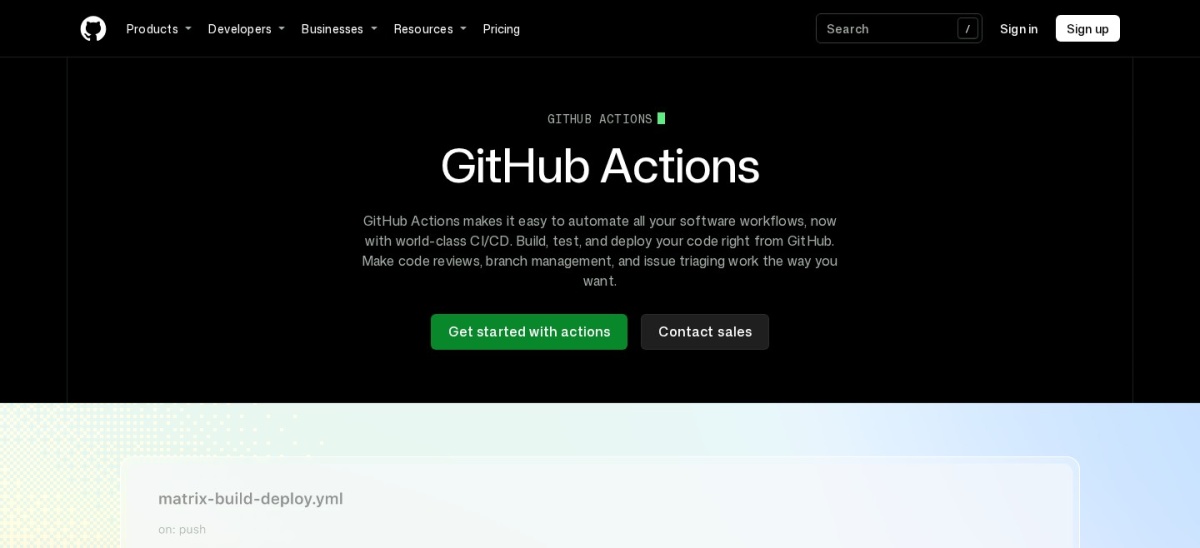
GitHub Actions is the CI/CD tool built into GitHub, so pipelines run next to your code. It offers hosted and self-hosted runners, a marketplace of ready-made actions and matrix builds, with 2,000 free minutes a month for private repos and Team from $4 a user a month.
The trade off is the GitHub lock-in. Actions works best inside GitHub, and its G2 rating of 4.7 from 2,440 reviews covers GitHub as a whole, not Actions alone. It suits teams that already host code on GitHub and want CI/CD with nothing extra to install.
What we like
Runs next to your code, with results in the pull request
Huge marketplace of ready-made actions
Free for public repos, with 2,000 free minutes for private ones
Watch out for
Per-minute billing can climb fast on large matrix builds
Debugging a failed run on a hosted runner can be slow
GitLab CI is the pipeline engine inside GitLab, so code hosting, issues, CI/CD and security scans live in one product. Pipelines are defined in a .gitlab-ci.yml file and run on shared or self-managed runners, with 400 free compute minutes a month and Premium at $29 a user a month.
The trade off is price. Premium costs $29 a user a month billed annually, far above GitHub Team and Bitbucket Standard, and its G2 rating of 4.5 from 905 reviews covers GitLab as a whole. It suits teams that want one platform to govern the whole delivery path.
What we like
One product for code, pipelines, security and planning
Self-managed Community Edition is free
10,000 compute minutes a month on Premium
Watch out for
Premium at $29 a user a month is the priciest seat in this list
CircleCI is a hosted CI/CD platform that runs builds on its own cloud runners, with a free plan that includes 30,000 credits a month for up to 5 users. Pipelines are defined in YAML, with caching, parallelism and a visual config editor, and the Performance plan starts at $15 a month.
The trade off is credit math. Heavy builds burn credits fast, and reviewers say costs can climb once a team outgrows the free plan. It suits teams that want fast hosted builds without managing any servers.
Jenkins is the leading open source automation server, and it costs nothing to license. It runs on your own servers, supports more than 2,300 plugins and works with any code host and any cloud, with pipelines written in Groovy or declared in a Jenkinsfile.
The trade off is upkeep. You patch the server, update plugins and fix broken builds yourself, and the interface looks dated next to hosted tools. It suits teams that want full control and zero license cost.
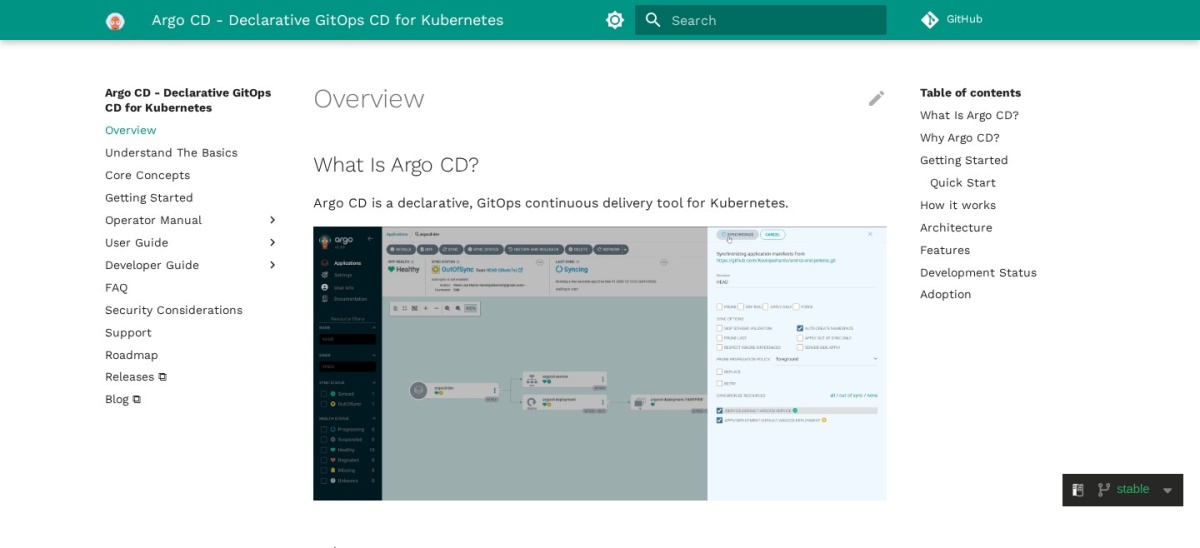
Argo CD is a declarative, GitOps continuous delivery tool for Kubernetes. It watches a Git repo, syncs the cluster to match it, shows drift in a web UI and rolls back with one click, and it costs nothing to license.
The trade off is scope. Argo CD deploys to Kubernetes only, so it is a delivery tool, not a full CI system, and its G2 rating rests on just 39 reviews. It suits teams that already run Kubernetes and want Git as the source of truth.
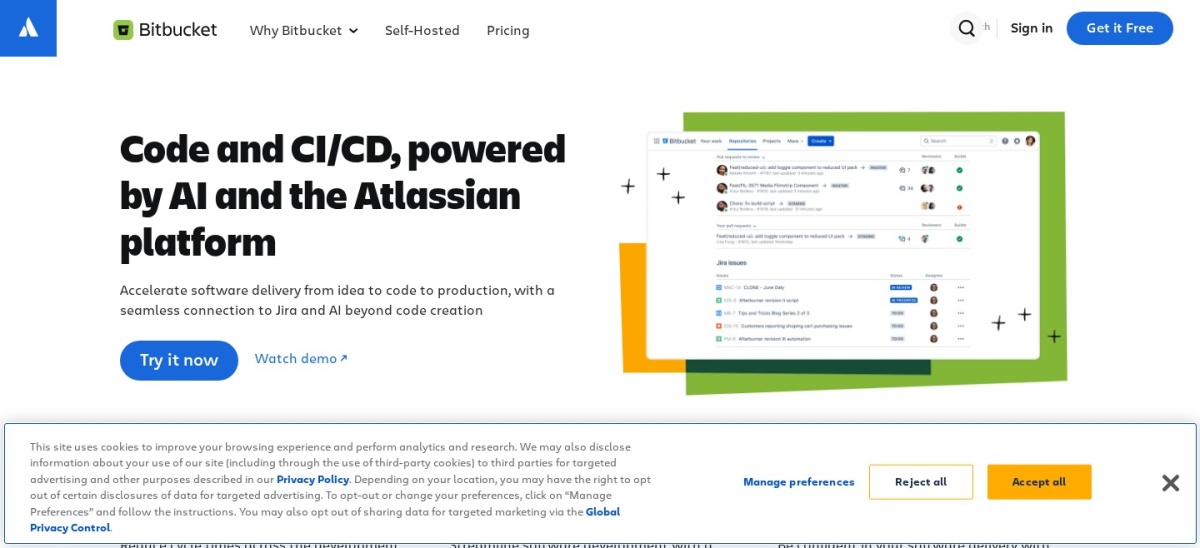
Bitbucket Pipelines is the CI/CD tool built into Bitbucket, so builds run next to the code with no extra setup. Pipelines are defined in a bitbucket-pipelines.yml file, the free plan covers up to 5 users with 50 build minutes a month, and Standard costs $3.65 a user a month.
The trade off is minutes. The free plan's 50 build minutes run out fast, and the G2 rating of 4.4 from 1,017 reviews covers Bitbucket as a whole, not Pipelines alone. It suits teams already on Jira and Confluence.
AWS CodePipeline is a fully managed delivery service that automates build, test and deploy stages inside AWS. V1 pipelines cost $1 per active pipeline a month, with one free, and it plugs straight into CodeBuild, CodeDeploy, Lambda and ECS.
The trade off is the AWS boundary. It works best when the code and the target both live in AWS, and its G2 rating rests on just 69 reviews. It suits teams that already deploy on AWS and want a managed pipeline with almost no setup.
Azure Pipelines is the CI/CD half of Azure DevOps, with Boards, Repos and Artifacts beside it. Every org gets one free Microsoft-hosted parallel job with 1,800 minutes a month, plus a free self-hosted job, and extra hosted jobs cost $40 a month each.
The trade off is the price model. You pay per parallel job, not per minute, so a second lane costs $40 a month even if it sits idle, and the G2 rating of 4.2 from 201 reviews is for Azure DevOps Server. It suits Microsoft shops and Windows-heavy builds.
Buildkite is a hybrid CI platform: the control plane is hosted, but builds run on agents you host yourself. The free plan covers 10 concurrent jobs, and Pro costs $30 per active user a month with 10 self-hosted agents included.
The trade off is a thin rating. Buildkite scores 4.7 out of 5 on G2, the joint highest here, but from only 32 reviews, and you still pay for the machines that run your agents. It suits teams that want control of build hardware without running a CI server.
Hosted runners win on setup. You create a pipeline file and builds start, with no server to patch.
Self-hosted runners win on cost and control. Jenkins, Argo CD and Buildkite agents run on your machines, so heavy builds cost nothing per minute.
Most cloud teams start hosted and add self-hosted runners only where builds need special hardware or private network access.
How we chose
We started from the CI/CD tools most often named for cloud infrastructure work, then kept the nine with a live homepage, a published price and a public rating.
Prices come from each vendor's pricing page, checked on 25 November 2026. Ratings come from G2 on the same day. Where a vendor shows a sale, the list shows the regular price.
GitHub, GitLab, Bitbucket and Azure DevOps have no standalone G2 page for their CI feature alone, so those ratings cover the whole product. No vendor paid for a place, and we do not claim to have used these tools ourselves.
How to choose a CI/CD tool for cloud infrastructure
Start with where your code lives, then match the billing model to your build volume.
Match the tool to your repo. GitHub Actions for GitHub, GitLab CI for GitLab, Bitbucket Pipelines for Bitbucket. Switching repos later is painful, so start here.
Count what you will pay for. Per-user seats, per-minute runners and per-job lanes bill very differently at scale. Price one busy month before you commit.
Decide who runs the runners. Hosted runners need no servers. Self-hosted runners need patching but cost nothing per build. See how to check your hosting uptime if you self-host.
Try the free tier on a real project. Every tool here has a free plan or tier. Run one real pipeline before moving the whole team.
FAQ
What is the best CI/CD tool for cloud infrastructure?
GitHub Actions is the best pick for most cloud teams. It runs next to your code, has a free plan with 2,000 minutes a month, and is rated 4.7 out of 5 on G2 from 2,440 reviews. GitLab CI is the better choice if you want code, CI and security in one product.
Which CI/CD tool is free?
Jenkins and Argo CD are free and open source, with no license cost at all. GitHub Actions, GitLab CI, CircleCI, Bitbucket Pipelines, Buildkite and Azure Pipelines all have free tiers, and AWS CodePipeline gives you one active pipeline free each month.
What is the cheapest CI/CD tool for a small team?
Jenkins and Argo CD cost nothing to license, but you pay for the servers. Of the hosted tools, AWS CodePipeline is cheapest at $1 per active pipeline a month, and Bitbucket Standard is $3.65 per user a month with 2,500 build minutes included.
Do I need a separate CD tool like Argo CD?
Only if you deploy to Kubernetes. Argo CD watches a Git repo and keeps the cluster in sync, which is GitOps delivery. For other targets, the CI tool's own deploy step is usually enough, and adding a second tool adds a second thing to maintain.
Is GitHub Actions enough for cloud deployments?
Yes, for most teams. Actions can build, test and deploy to AWS, Azure, Google Cloud and Kubernetes through marketplace actions and cloud CLIs. Teams with strict GitOps rules or multi-cluster Kubernetes setups often add Argo CD beside it.
How much does CI/CD cost per month?
It depends on the billing model. GitHub Team is $4 per user a month, CircleCI Performance starts at $15 a month, and Azure Pipelines charges $40 per extra parallel job. Self-hosted Jenkins or Argo CD cost nothing in licenses, but you pay for the servers.
SaaS SEO and WordPress specialist with about 8 years of experience. Rakib compares WordPress plugins, themes, hosting and software using public pricing, documentation and user reviews. See how we rank.