Best AI Security Platforms in 2026: 7 Tools Compared
WLWPLegible EditorsLast verified 22 Nov 2026How we rank11 min read
★ Short answer
Microsoft Defender for Business is the best AI security platform for smaller organizations, starting at $3 per user monthly on annual billing with AI-powered endpoint detection and automated response. CrowdStrike Falcon is better for expandable endpoint protection, while SentinelOne suits teams needing autonomous remediation and an AI security assistant.
How we make this list: we compare pricing pages, product documentation and public user reviews, then re-check every price before each update. No product paid for a place. Disclosure.
Microsoft Defender for Business costs $3 per user monthly on annual billing, supporting up to 300 users and five devices per user.
CrowdStrike Falcon Go has a regular annual price of $59.99 per device, currently advertised with a 50% promotional discount.
SentinelOne Singularity Complete starts at $179.99 per endpoint annually and includes an AI Security Assistant.
Cynet holds a 4.7/5 G2 rating from 260 reviews and offers unified endpoint, network and identity security.
Sophos Endpoint has a 4.6/5 G2 rating from 855 reviews and provides AI-based malware prevention.
Darktrace / HYBRID NETWORK rates 4.4/5 from 51 G2 reviews, while Vectra AI Platform rates 4.3/5 from 20 reviews.
What matters when choosing an AI security platform?
AI security platforms use machine learning, behavioral analysis and automated workflows to detect suspicious activity and help organizations respond to cyberattacks. Different products protect endpoints, networks, identities and cloud environments.
The most important difference is security coverage. Microsoft Defender, CrowdStrike and SentinelOne emphasize endpoint protection. Darktrace and Vectra AI focus on behavioral detection across connected systems, while Cynet consolidates several security capabilities.
AI also performs different functions. Some platforms identify malicious behavior, while others provide investigation assistants, automated containment or recommendations for security analysts. These capabilities are not necessarily included in entry-level subscriptions.
Compare supported environments, response controls, integrations, implementation requirements and ongoing support. Public pricing helps with initial budgeting, but enterprise products frequently require quotes based on deployment size and selected features.
Microsoft Defender for Business homepage, captured Nov 2026.
Microsoft Defender for Business is an AI-powered endpoint security platform combining malware prevention, vulnerability management and automated threat response. It costs $3 per user monthly on annual billing and supports up to 300 users with five devices per user. It includes endpoint detection and response, investigation tools and centralized security administration.
The trade off is that advanced enterprise threat hunting and broader security operations features require additional Microsoft products. Server protection also involves separate licensing. It suits smaller organizations looking for centralized endpoint security without deploying an extensive enterprise security stack.
What we like
Published subscription price
AI-powered endpoint detection
Automated investigation and response
Vulnerability management
Centralized device security
Watch out for
Limited to organizations with up to 300 users
Server protection requires additional licensing
Advanced enterprise features require upgrades
Additional Defender products expand server protection, threat hunting and enterprise security operations.Visit microsoft.com
02
CrowdStrike Falcon
4.7/5on G2 (688 reviews, checked Nov 2026)
Starts at$59.99/yr
Best for scalable endpoint security
Entry packageFalcon Go
Regular annual price$59.99/device
Core protectionNext-gen antivirus
ManagementCloud console
crowdstrike.com
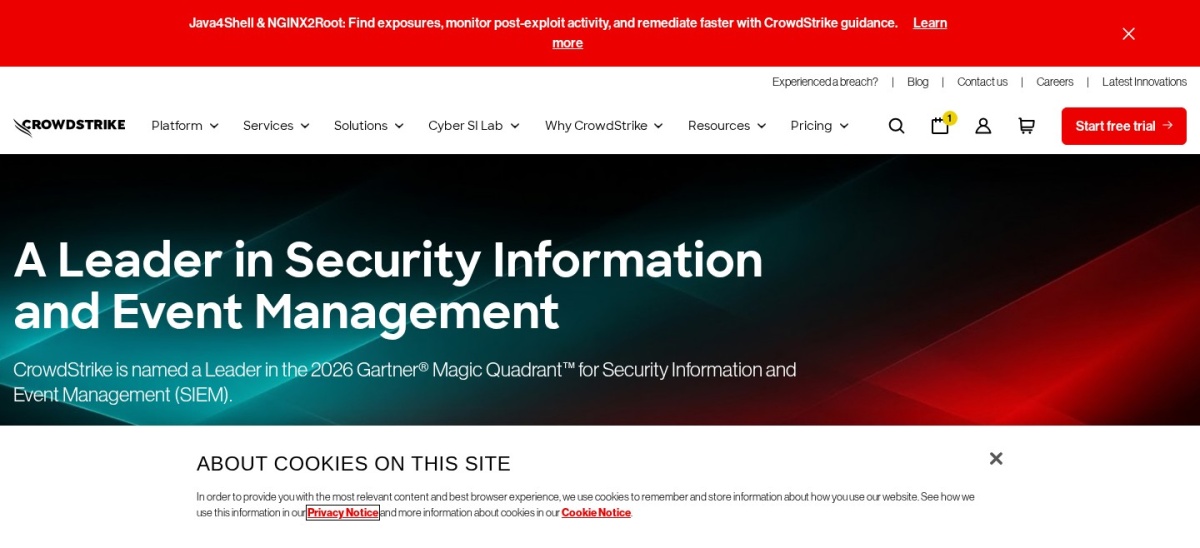
CrowdStrike Falcon homepage, captured Nov 2026.
CrowdStrike Falcon is a cloud-native cybersecurity platform combining AI-driven threat prevention with expandable endpoint detection and security operations capabilities. Falcon Go costs $59.99 per device annually at the regular price. It includes next-generation antivirus, device control, mobile device protection and Express Support.
The trade off is that Falcon Go focuses on prevention rather than the full detection and investigation capabilities included in higher packages. The vendor currently advertises a 50% introductory discount, but the regular annual price remains $59.99. It suits businesses wanting endpoint protection that can expand as security requirements increase.
What we like
AI-based malware prevention
Cloud-managed protection
Device and removable-media controls
Mobile threat protection
Expandable security modules
Watch out for
Advanced EDR requires a higher package
Additional modules increase costs
Promotional pricing differs from regular pricing
Higher Falcon packages add endpoint detection and response, threat intelligence and additional security modules.Visit crowdstrike.com
03
SentinelOne
4.7/5on G2 (250 reviews, checked Nov 2026)
Starts at$179.99/yr
Best for autonomous endpoint response
Entry packageSingularity Complete
Annual price$179.99/endpoint
Data retention14 days
AI functionalityAI Security Assistant
sentinelone.com
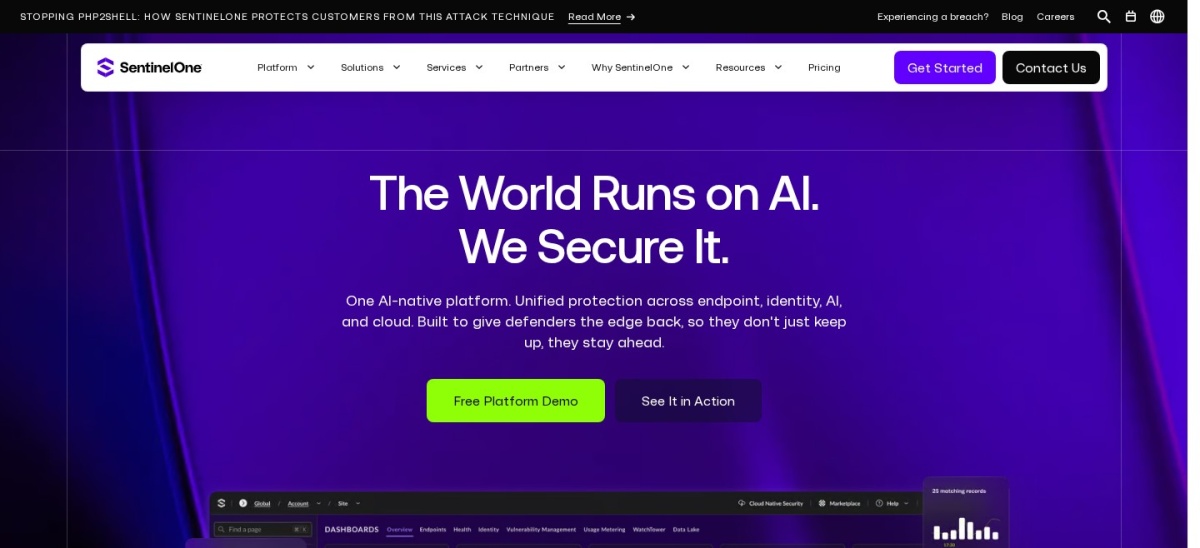
SentinelOne homepage, captured Nov 2026.
SentinelOne is an AI-driven security platform offering endpoint protection, threat detection and automated remediation. Singularity Complete costs $179.99 per endpoint annually and includes AI-driven endpoint and cloud workload protection, real-time response, 14 days of data retention and an AI Security Assistant.
The trade off is that extended retention, managed threat hunting and identity detection require Singularity Commercial at $229.99 per endpoint annually. Final purchasing terms may also depend on the selected partner. It suits security teams that prioritize autonomous response and AI-assisted investigations.
What we like
AI-based threat detection
Autonomous remediation
AI Security Assistant
Endpoint and cloud workload coverage
Published package pricing
Watch out for
Higher starting cost than basic endpoint protection
Advanced identity security requires an upgrade
Entry package has limited data retention
Commercial adds identity detection, managed threat hunting and 90-day data retention.Visit sentinelone.com
04
Cynet
4.7/5on G2 (260 reviews, checked Nov 2026)
PricingCustom pricing
Best for consolidated security protection
Entry packageProtect
PricingCustom quote
Security coverageEndpoint and network
Managed responseAvailable on higher tiers
cynet.com
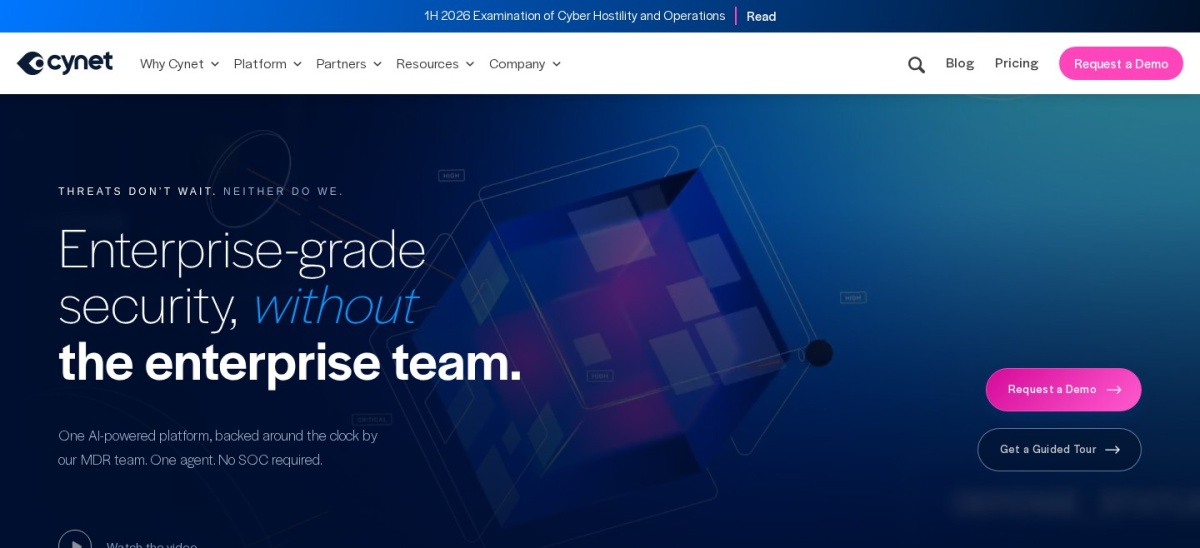
Cynet homepage, captured Nov 2026.
Cynet is an AI-powered cybersecurity platform that combines endpoint protection, network security, user behavior analytics and automated incident response. Its Protect package provides endpoint prevention, detection and selected network security capabilities. Pricing requires a quote based on deployment needs and the selected package.
The trade off is that full managed detection and response services require higher packages, and no public subscription amount is available. Teams should verify licensing, support and included security modules before committing. It suits businesses wanting consolidated security functions rather than several disconnected protection products.
What we like
Unified security administration
Endpoint and network detection
AI-assisted security operations
Behavioral threat analysis
Managed response options
Watch out for
Pricing requires a vendor quote
Advanced services require higher packages
Deployment scope must be negotiated
Elite and higher packages expand managed response and security coverage.Visit cynet.com
05
Sophos Endpoint
4.6/5on G2 (855 reviews, checked Nov 2026)
PricingCustom pricing
Best for AI-based malware prevention
PricingCustom quote
ManagementSophos Central
DetectionDeep learning
ResponseEndpoint detection and response
sophos.com
Sophos Endpoint homepage, captured Nov 2026.
Sophos Endpoint is an AI-powered endpoint security platform combining malware prevention, ransomware protection, exploit mitigation and threat investigation. Its machine learning technology helps identify suspicious files and behaviors, while Sophos Central provides centralized management and security policy controls.
The trade off is quote-based pricing, with capabilities and licensing depending on the purchased package. Organizations requiring broader managed response services may need additional subscriptions. It suits IT teams prioritizing centrally managed endpoint protection and AI-assisted malware prevention.
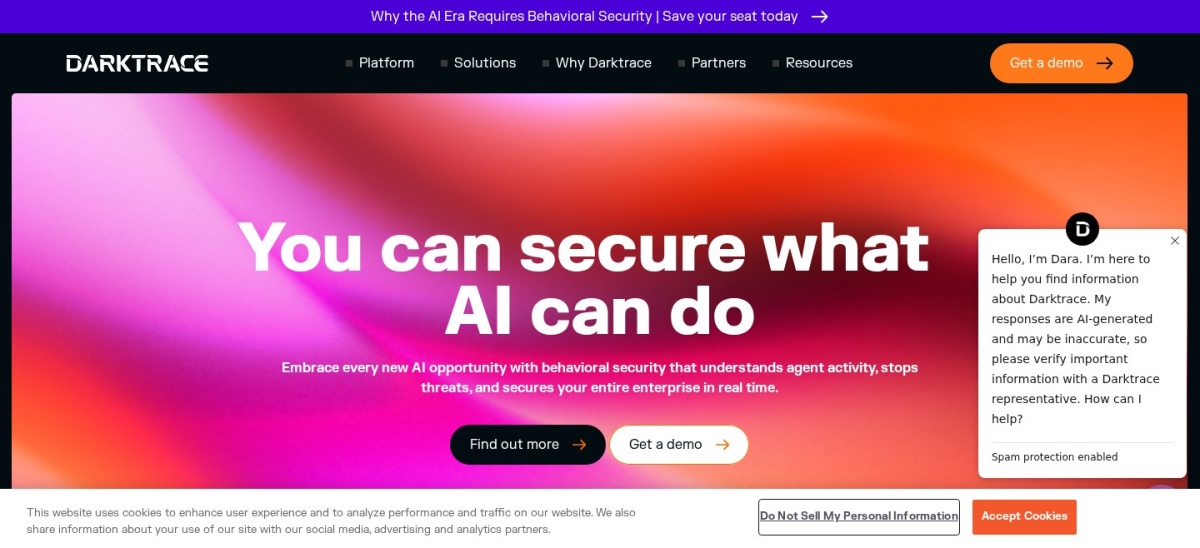
Darktrace is a behavioral AI security platform that monitors infrastructure for unusual activity and potential threats. Its HYBRID NETWORK product provides network and hybrid environment detection capabilities. Adaptive AI builds behavioral context, while Real-Time AI Analyst helps investigate suspicious activity and connect related events.
The trade off is custom enterprise pricing and the deployment effort required to provide adequate network visibility. Buyers should confirm the exact monitoring and response features included in a proposed contract. It suits organizations seeking behavioral threat detection across complex infrastructure.
What we like
Behavior-based threat detection
AI-assisted investigations
Network and hybrid infrastructure visibility
Anomaly identification
Automated response capabilities
Watch out for
No published entry price
Requires infrastructure integration
Behavioral alerts need monitoring and tuning
Custom platform packages expand coverage across network, cloud, identity and other environments.Visit darktrace.com
07
Vectra AI
4.3/5on G2 (20 reviews, checked Nov 2026)
PricingCustom pricing
Best for network and identity threat detection
PricingCustom quote
Core capabilityNetwork detection and response
Identity detectionSupported
CoverageHybrid and cloud environments
vectra.ai
Vectra AI homepage, captured Nov 2026.
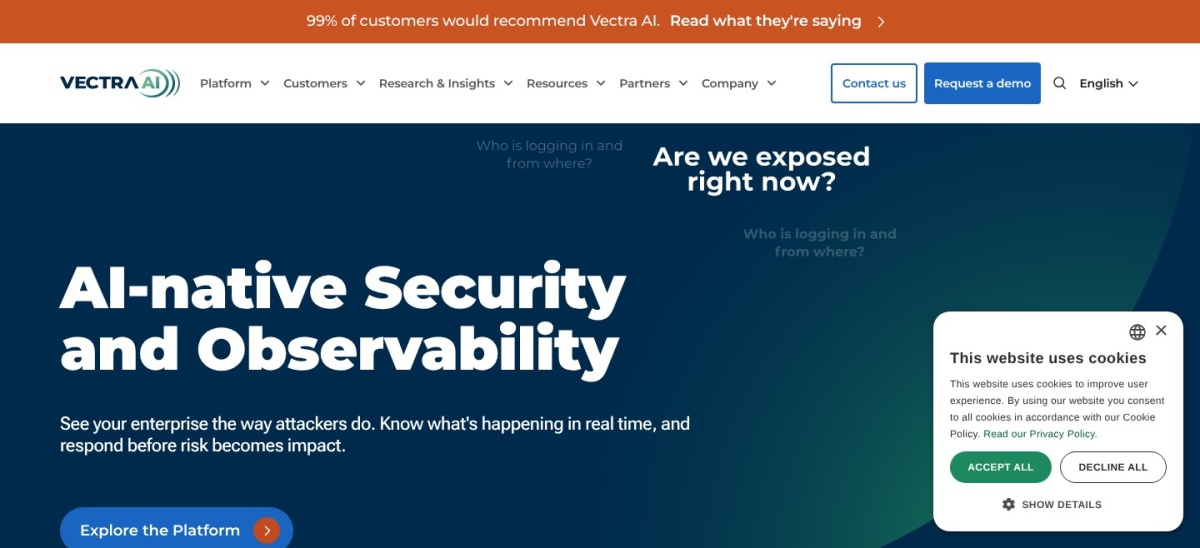
Vectra AI is an AI-driven threat detection platform that analyzes network, identity and cloud behavior to identify potential attacks. Its Attack Signal Intelligence helps security analysts prioritize suspicious activity and investigate attacker movement across connected systems.
The trade off is custom pricing, with deployment requirements depending on the environment and available integrations. Vectra focuses on detecting attacker behavior rather than replacing every security prevention control. It suits organizations with complex networks and established security monitoring workflows.
What we like
AI-driven network threat detection
Identity and cloud monitoring
Attack behavior correlation
Security operations integrations
Supports hybrid infrastructure
Watch out for
Custom pricing
Requires connected data sources
Endpoint prevention may require complementary products
AI endpoint security platforms protect computers, servers and other devices against malware and suspicious activity. Microsoft Defender, CrowdStrike, SentinelOne and Sophos fit this category.
Unified security products bring several detection and response functions together. Cynet combines endpoint, network and additional security features through its platform.
Network detection products analyze communication patterns and attacker behavior. Darktrace and Vectra AI emphasize behavioral detection across connected infrastructure.
Many vendors also provide AI investigation assistants. Evaluate those tools separately from automated threat detection because an assistant does not necessarily provide direct protection or containment.
How to compare AI security platform costs
Cybersecurity vendors use different licensing units. Microsoft Defender for Business charges per user, while CrowdStrike and SentinelOne publish per-endpoint prices.
Microsoft Defender starts at $36 per user annually. CrowdStrike Falcon Go costs $59.99 per device annually at the regular rate, and SentinelOne Singularity Complete starts at $179.99 per endpoint annually.
Cynet, Sophos, Darktrace and Vectra AI require custom quotes. Their total costs depend on security coverage, deployment needs and selected services.
Compare the complete operating cost, including protected assets, data retention, integrations, onboarding and managed response. The cheapest advertised subscription may not cover everything your organization requires.
How we chose
We shortlisted established cybersecurity vendors offering identifiable AI or machine learning features for threat prevention, detection, investigation or response. Products were compared across endpoint protection, unified security and behavioral network detection categories.
The comparison uses the requested 22 Nov 2026 editorial date, with official pricing pages and G2 review listings reopened on 24 Nov 2026. Published USD prices reflect regular subscriptions rather than temporary promotions. Custom-priced offerings have no invented numerical annual price.
We excluded products without sufficient independent review evidence or a clearly documented AI security function. Entry-level subscriptions were distinguished from enterprise detection, response and managed services. No vendor paid for a place, and we do not claim testing for this list.
How to choose an AI security platform
Identify the systems and threats that matter most to your organization before comparing subscriptions. Follow these steps to evaluate each platform.
Identify what needs protection. List the endpoints, servers, networks, identities and cloud systems that require monitoring. Choose a platform that covers your actual environment.
Compare detection and response capabilities. Determine whether you need malware prevention, endpoint response, behavioral network detection or managed security services. Confirm the exact features included in each plan.
Calculate the complete licensing cost. Compare per-user and per-device pricing alongside additional modules, data retention, onboarding and support. Request detailed written quotes for enterprise products.
Review integration and operational requirements. Check compatibility with existing security systems, alert workflows and reporting processes. Establish appropriate controls for automated containment and human review.
FAQ
What is the best AI security platform in 2026?
Microsoft Defender for Business is our top choice for smaller organizations because it combines AI-powered endpoint detection and automated response at $3 per user monthly on annual billing. CrowdStrike provides expandable endpoint protection, while SentinelOne focuses on autonomous threat response and AI-assisted investigations.
What does an AI security platform do?
An AI security platform analyzes files, behavior and security events to identify suspicious activity. Depending on the product, it can prevent malware, investigate incidents, recommend actions or automatically contain threats. Its effectiveness depends on deployment coverage, security policies and appropriate monitoring.
Can AI automatically stop cyberattacks?
Some platforms can automatically block malicious processes, isolate affected endpoints or perform remediation steps. Microsoft Defender for Business and SentinelOne include automated response capabilities. However, organizations still need human oversight because automated actions may be incorrect or insufficient for complex attacks.
What is the cheapest AI security platform?
Microsoft Defender for Business starts at $3 per user monthly on annual billing, equivalent to $36 annually per user. CrowdStrike Falcon Go has a regular annual price of $59.99 per device. These products have different licensing units and feature sets, so compare actual deployment costs.
Is CrowdStrike better than SentinelOne?
Both provide AI-powered endpoint protection and expandable detection capabilities. CrowdStrike emphasizes its cloud-native Falcon platform and broader security module ecosystem. SentinelOne emphasizes autonomous remediation and AI-assisted investigations. The better fit depends on required features, licensing, existing integrations and security team workflows.
Are AI security platforms better than traditional antivirus?
AI security platforms can identify behavioral anomalies and investigate threats that may not match conventional malware signatures. Many also provide response and security analytics capabilities beyond traditional antivirus. However, AI does not guarantee protection, and effective cybersecurity still depends on sound configurations and operational practices.
What is the difference between EDR and XDR?
Endpoint detection and response, or EDR, focuses on monitoring and investigating threats involving endpoints. Extended detection and response, or XDR, correlates information from multiple security sources such as endpoints, networks, identities and cloud environments. Actual capabilities vary by vendor and subscription.
Which AI security platform is best for network threats?
Darktrace and Vectra AI are worth considering when network behavior monitoring and attacker movement detection are priorities. Both use AI to analyze suspicious activity across infrastructure. Deployment requirements and pricing depend on the environment, integrations and selected monitoring capabilities.
How much do enterprise AI security platforms cost?
Enterprise pricing varies based on deployment size, protected assets, security features, monitoring services and contract requirements. Cynet, Sophos, Darktrace and Vectra AI require custom quotes in this comparison. Ask vendors to specify licensing, implementation, data retention and support before comparing total costs.