WLWPLegible EditorsLast verified 22 Nov 2026How we rank12 min read
★ Short answer
Perplexity is the best AI search engine overall, offering cited answers from live web sources and a Pro plan costing $20 monthly or $200 annually. Brave Search is better for private, independent web search, while Google AI Mode suits people who want AI-generated answers alongside conventional search results.
How we make this list: we compare pricing pages, product documentation and public user reviews, then re-check every price before each update. No product paid for a place. Disclosure.
Perplexity Pro costs $20 monthly or $200 annually and adds advanced research models, file analysis and higher search limits.
Brave Search Premium costs $3 monthly or $29.99 annually, while its free search engine includes AI-generated answers.
Google AI Plus costs $7.99 monthly, while Google AI Pro costs $19.99 and provides higher access to Deep Search and advanced AI models.
ChatGPT Search is available on the free plan, with ChatGPT Go starting at $8 monthly for expanded AI usage.
Claude Pro costs $20 monthly or $200 annually and combines web search with extended research and project capabilities.
DuckDuckGo Plus costs $9.99 monthly or $99.99 annually and adds advanced AI models alongside its privacy services.
What makes a good AI search engine?
AI search engines combine web retrieval with language models to answer questions directly. Instead of requiring users to open many search results, they summarize relevant information and often provide citations to the original sources.
The most important feature is source transparency. AI-generated answers can contain inaccurate statements, outdated information or citations that do not support the claims. A useful search engine makes it straightforward to inspect the original material.
Search tools also differ in their strengths. Perplexity emphasizes cited research, Brave focuses on private web search, and Google combines AI answers with its established search experience. ChatGPT and Claude extend AI search into document analysis and longer research workflows.
Before paying, compare free access, research limits, privacy controls, model availability and source quality. A subscription may increase AI capacity without improving the underlying accuracy of every answer.
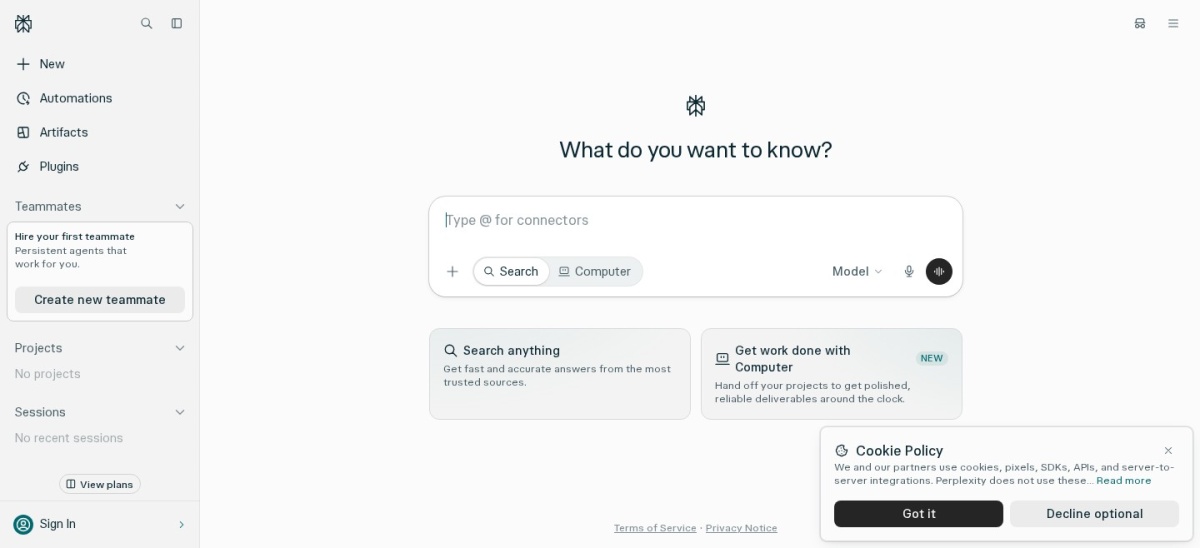
Perplexity is an AI search engine that answers questions using live web information and inline citations. Its free plan includes core search and conversational follow-ups. Pro costs $20 monthly or $200 annually and adds advanced AI models, higher search limits, Projects, file uploads, image generation and expanded research capabilities.
The trade off is that AI-generated summaries can misinterpret sources, and intensive research still depends on subscription limits. Pro also costs more than privacy-focused traditional search upgrades. It suits researchers, students, professionals and everyday users who want concise answers with accessible supporting references.
What we like
Direct answers with inline source citations
Free conversational web search
Advanced research and file analysis
Supports multiple AI models
Projects organize ongoing research
Watch out for
Citations do not guarantee factual accuracy
Advanced features have subscription limits
Research output can overlook important context
Pro adds advanced models, higher search limits, Projects and expanded research tools.Visit perplexity.ai
02
Brave Search
4.6/5on G2 (535 reviews, checked Nov 2026)
Paid from$29.99/yr
Best for private AI-assisted web search
Search engineIndependent web index
AI answersAvailable free
Paid search$3/month or $29.99/year
PrivacyNo search profiling
brave.com
Brave Search homepage, captured Nov 2026.
Brave Search is a privacy-focused search engine that combines an independent web index with AI-generated search summaries. Its free version provides conventional results and AI answers without requiring a paid subscription. Search Premium costs $3 monthly or $29.99 annually and removes advertisements from search results.
The trade off is that Search Premium primarily removes ads rather than increasing AI model access. Brave Leo, the separate browser AI assistant, has its own subscription. It suits users who prioritize private searching, independent indexing and AI answers without paying for a full research assistant.
What we like
Independent search index
AI answers available on the free version
Search Premium costs $29.99 annually
Does not build personal search profiles
Combines traditional links with AI summaries
Watch out for
Search Premium does not upgrade Leo AI
AI answers can omit important sources
Less suited to extended document research
Search Premium removes ads; Leo AI Premium is a separate subscription.Visit brave.com
03
Google AI Mode
4.4/5on G2 (2,701 reviews, checked Nov 2026)
Paid from$7.99/mo
Best for everyday searching and broad web discovery
AI searchAI Mode and AI Overviews
Entry paid planGoogle AI Plus
Plus pricing$7.99/month
Advanced researchHigher limits on AI Pro
google.com
Google AI Mode homepage, captured Nov 2026.
Google AI Mode is an AI-powered search experience that answers complex questions using Google's search infrastructure. AI Mode and AI Overviews provide conversational responses, supporting links and follow-up exploration. Google AI Plus costs $7.99 monthly and includes higher AI access, additional Gemini features and 400 GB of cloud storage.
The trade off is that AI Plus does not include the highest research limits. Google AI Pro costs $19.99 monthly and provides higher access to Deep Search, Gemini models and additional AI features. It suits people who want AI assistance integrated with familiar web search rather than replacing conventional search results entirely.
What we like
Integrates AI answers with conventional web results
Supports conversational follow-up questions
Free AI search access
Google AI Plus starts at $7.99 monthly
AI Pro provides expanded Deep Search access
Watch out for
AI summaries may contain inaccurate claims
Advanced research limits require higher plans
Availability of individual features can vary
Google AI Plus increases AI access; Pro adds higher Deep Search and model limits.Visit google.com
04
ChatGPT Search
4.6/5on G2 (5,459 reviews, checked Nov 2026)
Paid from$8/mo
Best for conversational research and follow-up analysis
Web searchAvailable free
Entry paid planGo
Go pricing$8/month
Advanced researchExpanded on Plus
chatgpt.com
ChatGPT Search homepage, captured Nov 2026.
ChatGPT Search is a web-connected AI search experience that combines online information with conversational answers and source references. Search is available on the free plan alongside limited file uploads and research functionality. ChatGPT Go starts at $8 monthly and expands access to AI conversations, uploads and other features.
The trade off is that Go primarily increases general AI usage rather than providing the advanced research capacity available on Plus. Search-generated responses can also misread sources or combine information incorrectly. It suits users who want to research topics, ask follow-up questions and work with retrieved information in the same conversation.
What we like
Free web-connected AI search
Conversational follow-up questions
Source references for web answers
Supports analysis alongside search
Go provides an affordable paid upgrade
Watch out for
Advanced research access requires higher plans
Sources still need independent verification
Go does not include every premium research feature
Go expands AI usage; Plus adds greater research capacity and advanced capabilities.Visit chatgpt.com
05
Claude
4.7/5on G2 (2,240 reviews, checked Nov 2026)
Paid from$200/yr
Best for researching and analyzing longer material
Free web searchYes
Entry planPro
Annual price$200
Advanced researchResearch on Pro
claude.com
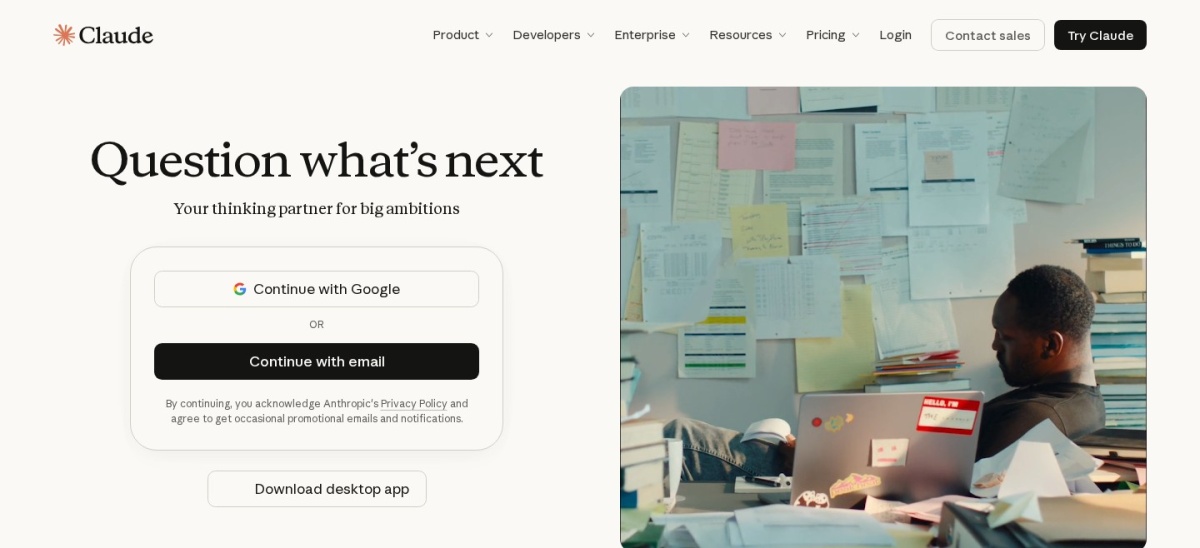
Claude homepage, captured Nov 2026.
Claude is an AI assistant with web search, source-supported answers, document analysis and conversational research. Its free plan includes web search, file creation and limited AI usage. Pro costs $200 annually or $20 monthly and adds Research, Projects, additional models and higher usage allowances.
The trade off is that Claude is a general AI research assistant rather than a dedicated search engine with a conventional results page. Usage limits still apply, and cited answers can require fact-checking. It suits professionals, students and researchers who combine online discovery with detailed reasoning and document analysis.
What we like
Web search available on the free plan
Research capability included in Pro
Supports document and source analysis
Projects organize extended research
Useful for explaining complex information
Watch out for
Not a conventional search engine
Usage limits apply across subscriptions
Generated interpretations require verification
Pro adds Research, Projects, advanced models and higher usage limits.Visit claude.com
06
Microsoft Copilot
4.3/5on G2 (977 reviews, checked Nov 2026)
Paid from$9.99/mo
Best for AI web search and Microsoft productivity
Free searchCopilot web chat
Paid subscriptionMicrosoft 365 Personal
Regular monthly price$9.99
Included storage1 TB
microsoft.com
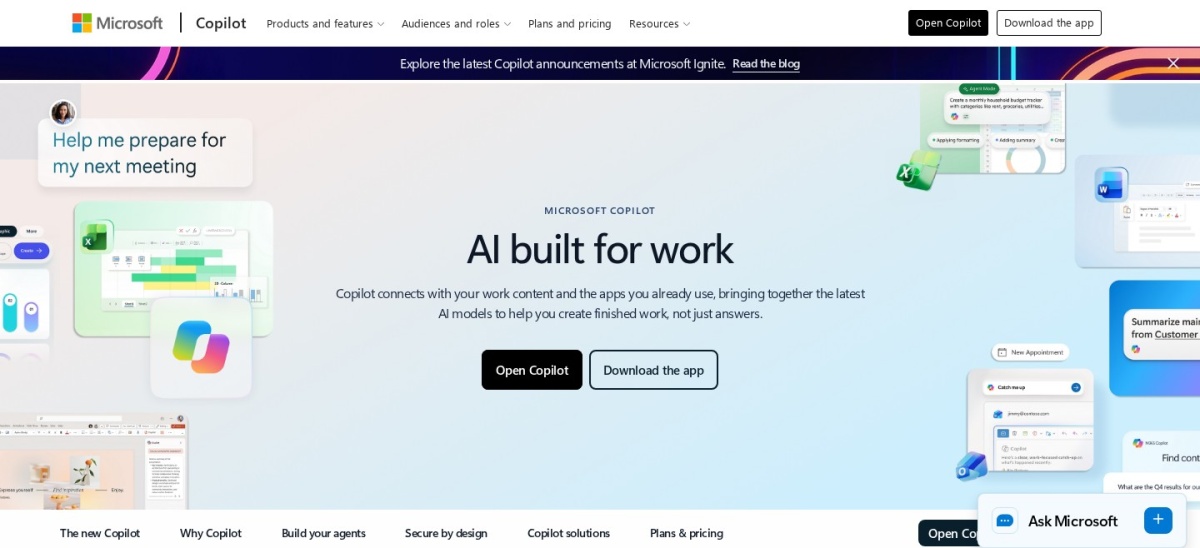
Microsoft Copilot homepage, captured Nov 2026.
Microsoft Copilot is an AI assistant that uses web information to answer questions, summarize topics and support everyday research. Its free experience provides AI conversations and web-connected responses. Microsoft 365 Personal costs $9.99 monthly and adds higher Copilot usage, integration with productivity applications and 1 TB of cloud storage.
The trade off is that paid Copilot benefits are bundled with Microsoft 365 rather than offered as a dedicated search-only upgrade. A temporary first-month promotion is available, but the regular subscription price is $9.99. It suits people who already use Microsoft's productivity applications and want search assistance alongside document and email workflows.
What we like
Free AI chat with web information
Integrates with Microsoft's productivity ecosystem
Paid plan includes 1 TB of storage
Supports research and everyday questions
Higher Copilot usage in Microsoft 365 Personal
Watch out for
Paid search benefits come in a broader software bundle
Web citations still need verification
Some advanced features require other subscriptions
Microsoft 365 Personal increases Copilot usage and adds productivity integrations.Visit microsoft.com
07
DuckDuckGo
2.5/5on Trustpilot (657 reviews, checked Nov 2026)
Paid from$99.99/yr
Best for privacy-focused search with anonymous AI chat
Web searchFree
AI assistantDuck.ai
Paid planPlus
Subscription$9.99/month or $99.99/year
duckduckgo.com
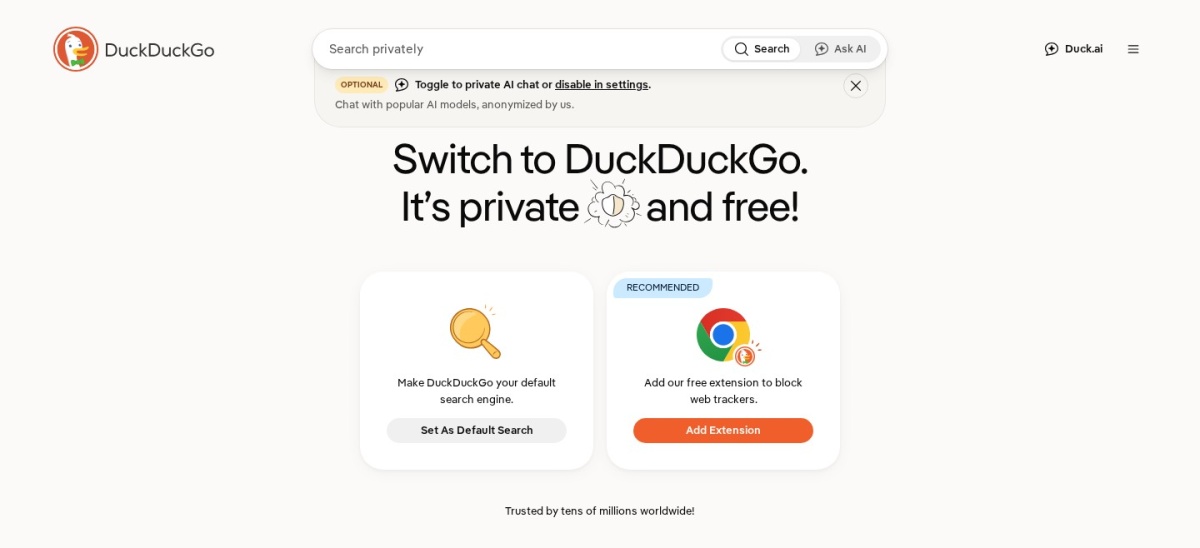
DuckDuckGo homepage, captured Nov 2026.
DuckDuckGo is a privacy-oriented web search engine with an optional AI chat experience called Duck.ai. Regular web search is free, and Duck.ai offers access to supported AI models without requiring a conventional chatbot account. DuckDuckGo Plus costs $9.99 monthly or $99.99 annually and provides access to advanced AI models alongside additional privacy services.
The trade off is that Duck.ai is primarily an anonymous chatbot rather than a specialized citation-driven research engine. Its paid subscription also bundles privacy services that may not matter to search-focused buyers. It suits users who prioritize private browsing and want occasional AI assistance without building a detailed personal AI profile.
What we like
Free privacy-focused web search
Anonymous AI chat through Duck.ai
Paid access to advanced AI models
Subscription includes additional privacy services
Does not require a personal chatbot profile
Watch out for
AI chat is separate from conventional search results
Less specialized for extended source-based research
Trustpilot reviews cover DuckDuckGo overall, not Duck.ai alone
Plus adds advanced AI model access, VPN and additional privacy protection services.Visit duckduckgo.com
AI search engines versus traditional search engines
Traditional search engines primarily return lists of webpages, images, videos and other resources. Users examine those results and decide which sources answer their questions.
AI search engines interpret natural-language questions, retrieve information and generate direct responses. Many also provide source references and let users refine questions conversationally.
Perplexity is built around direct answers with citations. Google and Brave combine AI-generated summaries with conventional search results. ChatGPT and Claude provide web search inside broader AI assistants.
Neither approach guarantees accuracy. AI answers can misrepresent retrieved material, while traditional search rankings can surface outdated or unsuitable pages. For important research, inspect primary sources and compare multiple references.
How to evaluate AI search accuracy and citations
A citation makes an AI-generated answer easier to investigate, but it does not prove the answer is correct. Models can attribute information to unrelated sources or draw conclusions that the linked material does not support.
Look for search products that expose original webpages, distinguish recent information from historical material and support follow-up questions about specific claims.
Also consider the kinds of research you perform. General web discovery, technical troubleshooting, academic research and breaking news place different demands on search retrieval and answer generation.
When accuracy matters, open the cited source and verify the exact statement. Prefer original documentation, official announcements and primary research over summaries that merely repeat information from other websites.
How we chose
We shortlisted established AI search engines and web-connected assistants that answer questions using retrieved online information. The comparison includes dedicated search services alongside broader AI assistants with substantial search functionality. We evaluated source visibility, privacy, research features, free access and the purpose of each paid subscription.
Official pricing information and independent review listings were checked on 24 Nov 2026 for this article carrying the requested 22 Nov 2026 editorial date. We used published regular USD prices rather than introductory promotions. Ratings come from G2 or Trustpilot, and reviews of broader platforms are distinguished from assessments of individual search features.
We excluded products without accessible official pricing, sufficient public reviews or an identifiable web search capability. Products with limited AI chat functionality were evaluated differently from dedicated citation-driven research engines. No vendor paid for a place, and we do not claim testing for this list.
How to choose the best AI search engine
Identify the questions you search for most often and how much verification your work requires. Compare AI search platforms using these practical steps.
Decide whether you need direct answers or conventional results. Choose an answer-focused engine for conversational research or a hybrid search service when you prefer examining webpages yourself. Consider whether you regularly need images, news, technical documentation or detailed explanations.
Check citation quality and source visibility. Look for original references that are easy to open. Ask whether the product distinguishes retrieved facts from generated interpretations and supports checking individual claims.
Compare free access with paid research limits. Review which search functions remain available without paying and what upgrading actually adds. Some subscriptions increase model access, while others primarily remove advertisements or bundle productivity software.
Evaluate privacy and your research workflow. Review account requirements, search history controls, data handling and integrations. Choose a platform that matches how you save sources, organize research and work with documents.
FAQ
What is the best AI search engine in 2026?
Perplexity is our top overall recommendation because it focuses on source-backed answers and conversational web research. Its core search experience is free, while Pro costs $20 monthly or $200 annually. Brave Search is a good alternative for privacy, and Google AI Mode suits everyday searching.
What is the best free AI search engine?
Perplexity, Brave Search and Google AI Mode offer free AI-assisted search. ChatGPT Search and Claude also provide web-connected answers on free plans. The best option depends on whether you prefer cited summaries, traditional search results or a conversational assistant that can analyze retrieved information.
Is Perplexity better than Google AI Mode?
Perplexity emphasizes direct answers, source citations and extended conversational research. Google AI Mode integrates AI responses with Google's established search experience and conventional web discovery. Perplexity may suit focused research, while Google AI Mode can be more convenient for people who regularly switch between AI answers and search results.
Are AI search engines more accurate than Google?
Not necessarily. AI search engines can summarize information efficiently, but their answers may contain incorrect statements or unsupported conclusions. Traditional search engines expose individual sources more directly. Accuracy depends on the question, retrieved material and whether you verify the information against reliable primary references.
Can AI search engines provide sources?
Yes. Perplexity is designed around cited responses, while ChatGPT Search, Google AI Mode and other web-connected assistants can provide supporting references. However, citations do not guarantee accuracy. Open the original source to confirm that it supports the specific statement you intend to use.
Which AI search engine is best for privacy?
Brave Search and DuckDuckGo prioritize private searching and limit personal profiling. Brave maintains an independent search index, while DuckDuckGo also offers anonymous AI conversations through Duck.ai. Consider each service's privacy documentation, account requirements and data handling practices before entering sensitive information.
How much do AI search engines cost?
Many AI search engines offer free access. Brave Search Premium costs $29.99 annually, Google AI Plus costs $7.99 monthly, and Perplexity Pro costs $200 annually. Other subscriptions bundle AI search with storage, document tools or broader AI capabilities. Compare the benefits rather than treating every paid plan as equivalent.
Can AI search engines replace traditional search?
They can handle many informational questions, but traditional search remains useful for finding specific websites, comparing original sources and exploring results independently. AI-generated summaries can omit context. Many users benefit from combining conversational AI research with direct examination of retrieved webpages.
Which AI search engine is best for academic research?
Perplexity and Claude can help discover sources, explain concepts and organize research questions. They should not replace academic databases or original papers, especially for formal citations. Verify publication details, author names, dates and quoted findings against the original research before including them in academic work.