Best AI Healthcare Analytics Software For Payers in 2026: 8 Tools Compared
WLWPLegible EditorsLast verified 24 Nov 2026How we rank10 min read
★ Short answer
Cotiviti is the best AI healthcare analytics software for payers, covering payment integrity, risk adjustment and quality analytics from one vendor. Pick SAS Viya to build custom models, and Power BI when the plan already runs on Microsoft tools.
How we make this list: we compare pricing pages, product documentation and public user reviews, then re-check every price before each update. No product paid for a place. Disclosure.
Cotiviti is the broadest payer pick, covering payment integrity, risk adjustment and quality analytics.
SAS Viya is the build-your-own option, rated 4.3 out of 5 on G2 from 800 reviews.
Tableau and Power BI are the only tools here with published per-user prices, at $75 and $14 a month.
Every payer-native platform is quote-only, so expect a procurement cycle rather than a price page.
Review bases are thin: most payer tools have under 50 G2 reviews.
What payer analytics has to cover
Payer analytics is a different job from hospital analytics. It works on claims, risk, network and payment data, not on clinical workflows, and the questions are about what was paid, what should have been paid and which providers drive cost.
Almost every tool in this category is sold on a custom enterprise contract. There are no list prices to compare, so the shortlist below is ranked on fit, review record and breadth, and every price is shown as Custom except the two general BI tools.
Review bases are thin. Most payer platforms have fewer than 50 G2 reviews, because they sell to a small number of large health plans, so a score from 10 reviews is weaker evidence than a score from 1,000.
General BI tools still matter. Our guide on best AI automation tools covers the wider automation picture, and many payer teams run Tableau or Power BI on top of their claims warehouse.
The 8 best AI healthcare analytics tools for payers
01
Cotiviti
4.2/5on G2 (12 reviews, checked Nov 2026)
PricingCustom/yr
Best AI healthcare analytics for payers overall
Free tierNo
Paid planCustom quote
FocusPayment integrity
Also coversRisk and quality
cotiviti.com
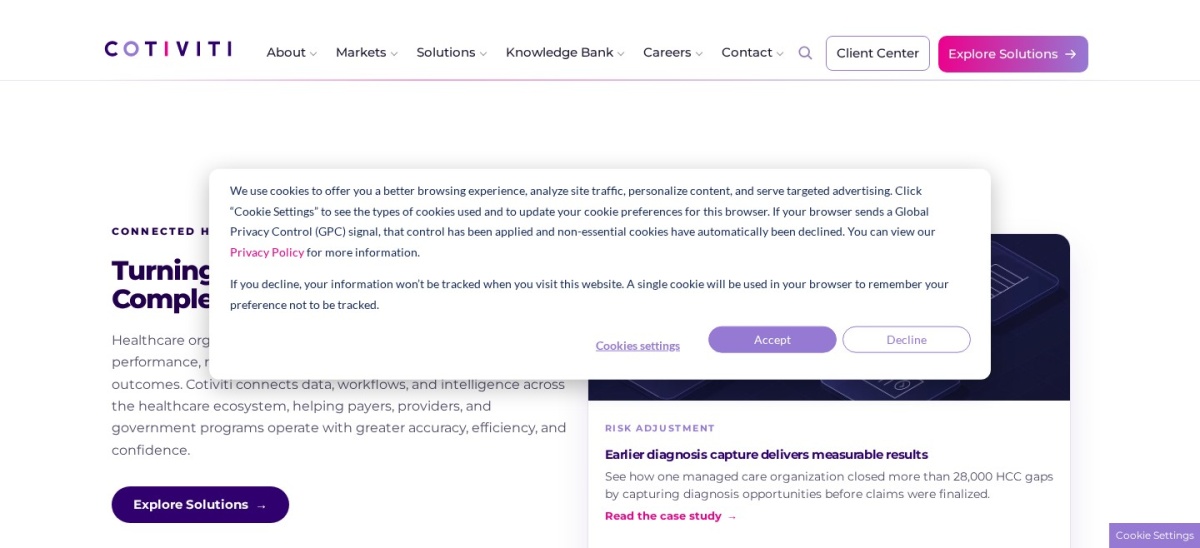
Cotiviti homepage, captured Nov 2026.
Cotiviti is the largest payer analytics name in this guide, and the default choice for plans that want one vendor across payment accuracy, risk adjustment and quality. Its Medical Intelligence product analyses claims data to find billing errors, waste and payment leakage.
The trade off is that everything is sold on custom enterprise contracts, with no published price and no self-serve trial. It suits large health plans that can run a procurement process and want payment integrity, risk and quality analytics from one supplier.
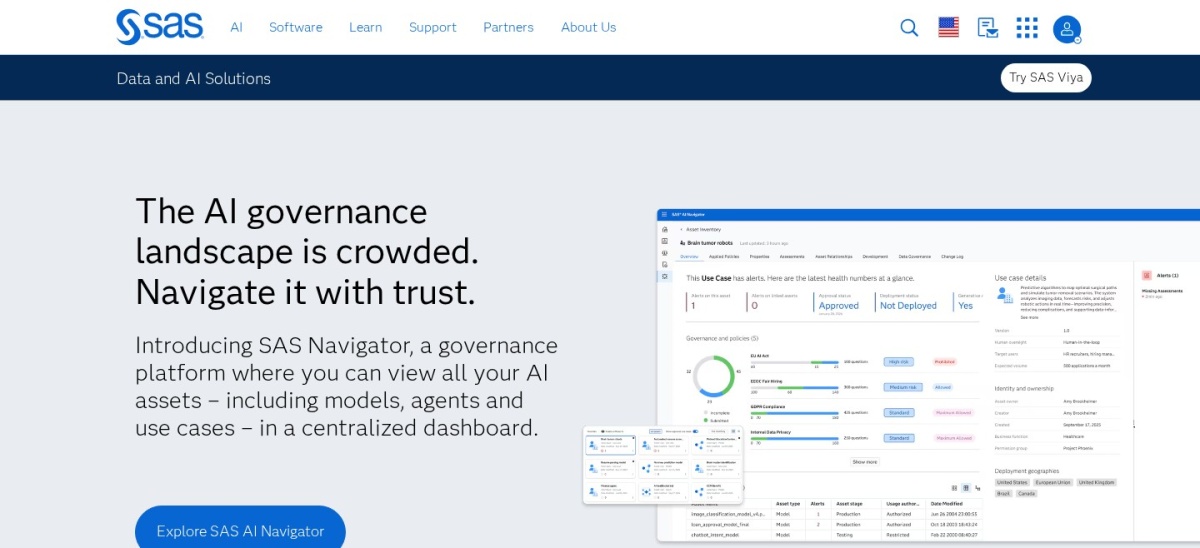
SAS Viya is the cloud-native data and AI platform from SAS Institute, and it covers the full analytics lifecycle from data preparation to model deployment, monitoring and governance. Large payers use it to build and govern their own risk, fraud and forecasting models.
The trade off is scope and cost. Viya is a general analytics platform, not a payer product out of the box, and it is sold on custom quotes with implementations that average about 7 months. It suits large payers with data science teams.
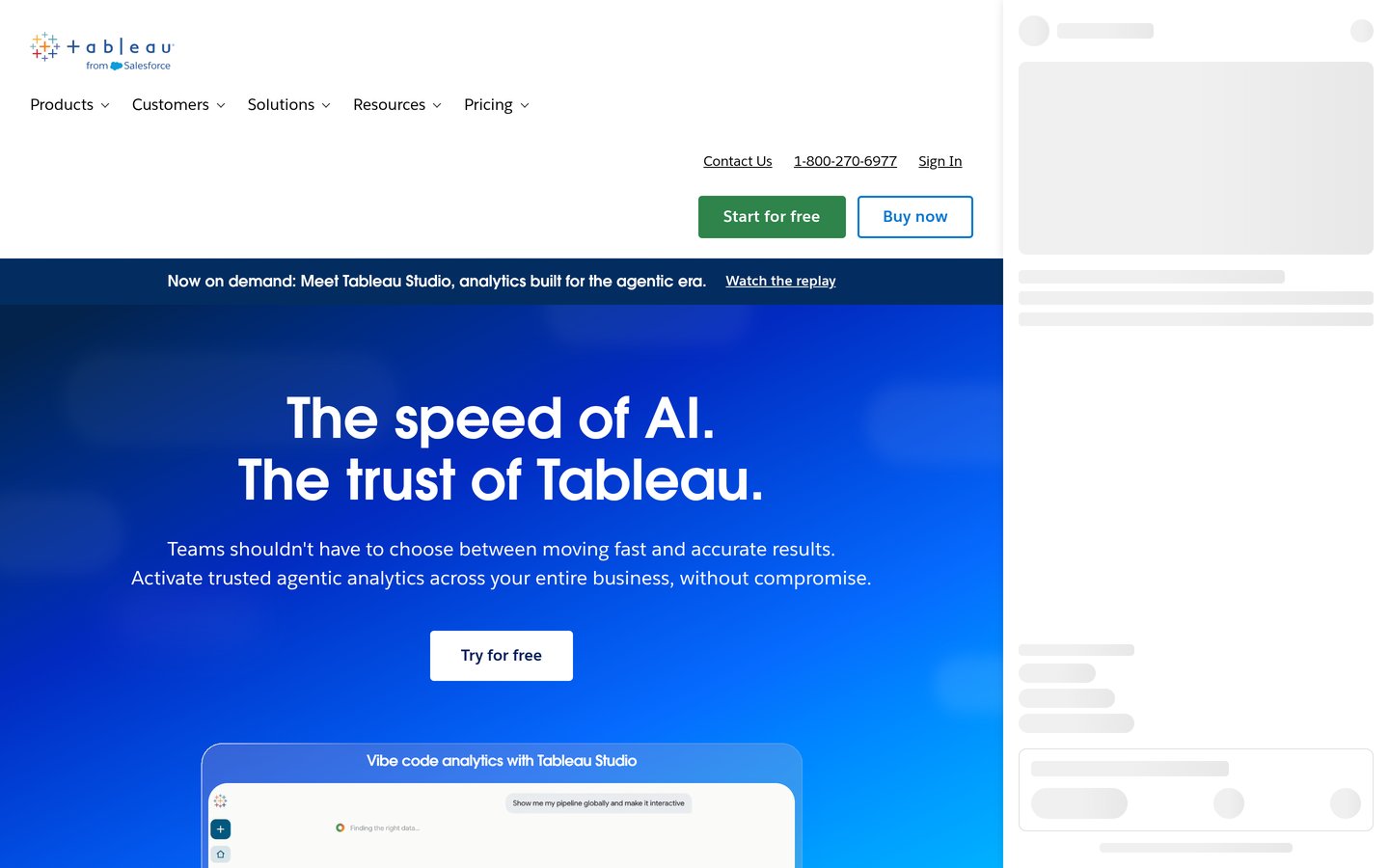
Tableau is the visual analytics platform most payer teams already know, and it connects to claims warehouses, files and databases for dashboards on cost, utilisation and network performance. Analysts can slice a question by diagnosis group, payer and time in minutes.
The trade off is that Tableau is a general BI tool, not a healthcare product. It ships no payer content, risk models or claims logic, so the plan must build those. It suits payer analytics teams that want fast exploration on top of their own data.
4.6/5on Capterra (1,894 reviews, checked Nov 2026)
Paid from$14/mo
Best value for Microsoft-based plans
Free tierFree desktop tool
Paid planPro, $14/user/mo
Premium Per User$24/user/mo
Best forMicrosoft-based plans
microsoft.com
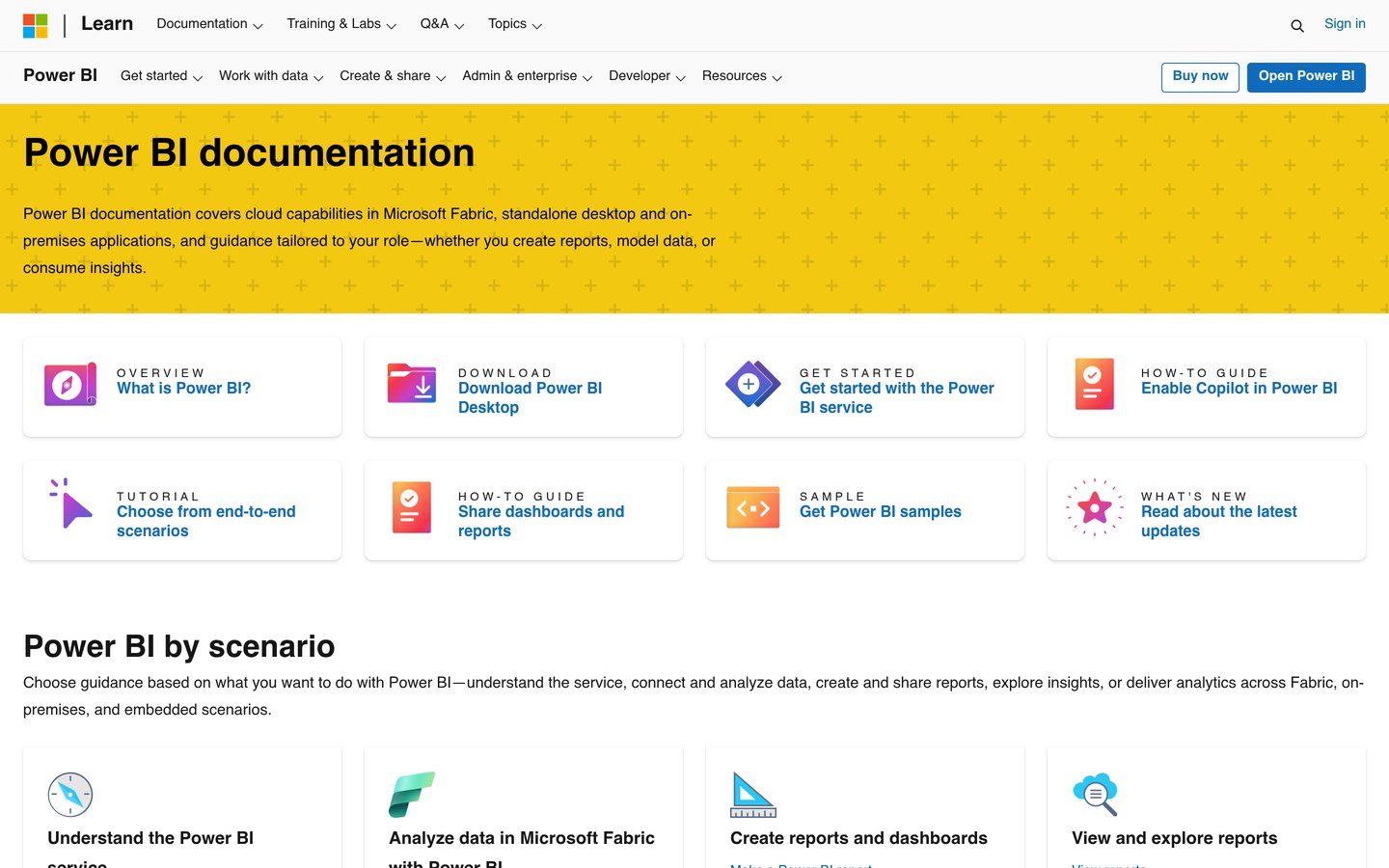
Microsoft Power BI homepage, captured Nov 2026.
Microsoft Power BI is the analytics platform that turns claims, finance and operations data into dashboards, and it is the cheapest way into payer analytics for a plan already on Microsoft 365. Pro costs $14 per user per month billed yearly, with Premium Per User at $24.
The trade off is the same as Tableau: Power BI is a general dashboard tool with no built-in payer analytics. It suits health plans whose analysts already know Excel-style logic and whose data already lives in Microsoft tools.
Definitive Healthcare homepage, captured Nov 2026.
Definitive Healthcare is a provider data and intelligence platform that helps payers size markets, find providers and understand networks. Its data covers hospitals, physicians and other providers, with claims data and technology adoption beside it.
The trade off is focus. Definitive Healthcare is market intelligence, not claims or risk analytics, and it is rated 3.9 out of 5 on G2 from 43 reviews. It suits payer strategy and network teams more than payment integrity work.
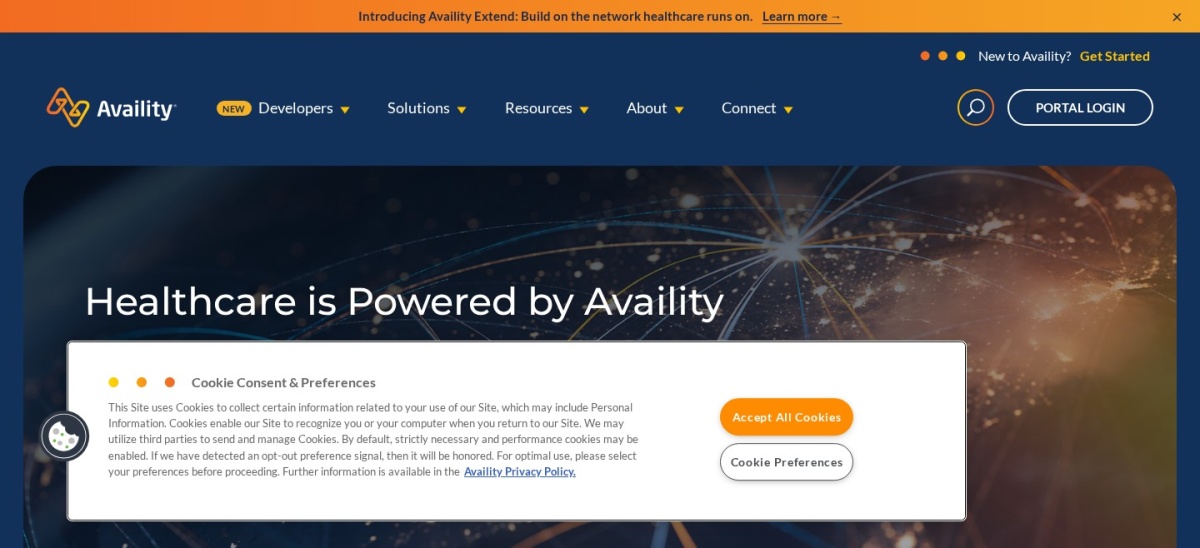
Availity is a payer-facing network that connects health plans with providers for eligibility checks, claims submission and remittances. It is rated 4.1 out of 5 on G2 from about 42 reviews, and its clearinghouse work is widely used across US healthcare.
The trade off is that Availity is a network and clearinghouse first, not an analytics platform. It suits plans that need provider connectivity and claims flow, with analytics as a secondary benefit.
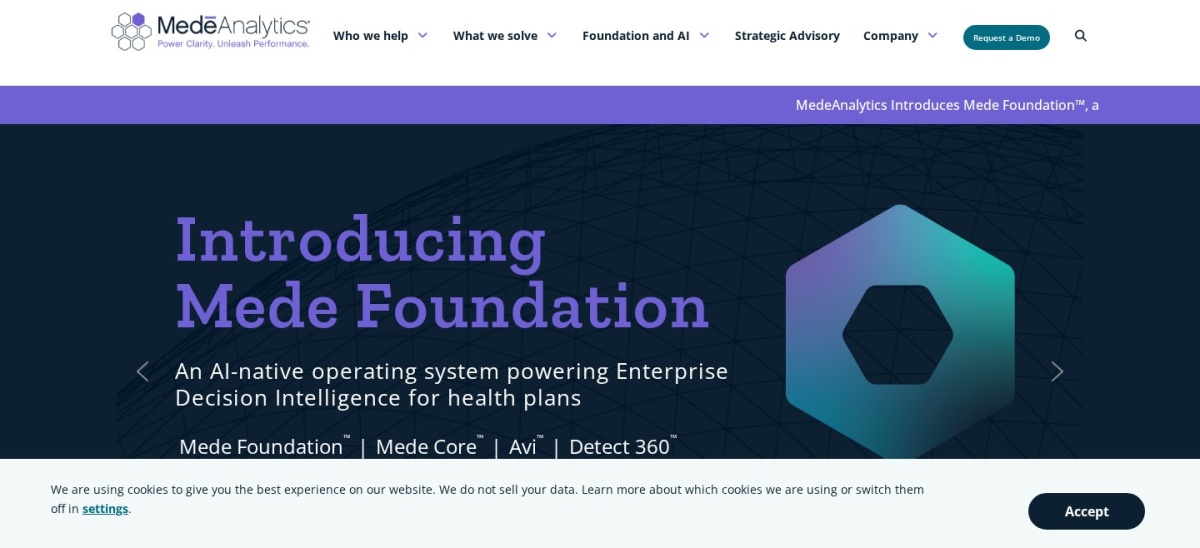
MedeAnalytics is a healthcare analytics platform for payers and providers that covers cost, utilisation, quality and risk in one suite. It is built for health plans that want cross-domain analytics without buying a separate tool for each question.
The trade off is the review record. MedeAnalytics is rated 3.9 out of 5 on G2 from only 10 reviews, and pricing is quote only. It suits mid-size health plans that want one analytics suite across cost, quality and risk.
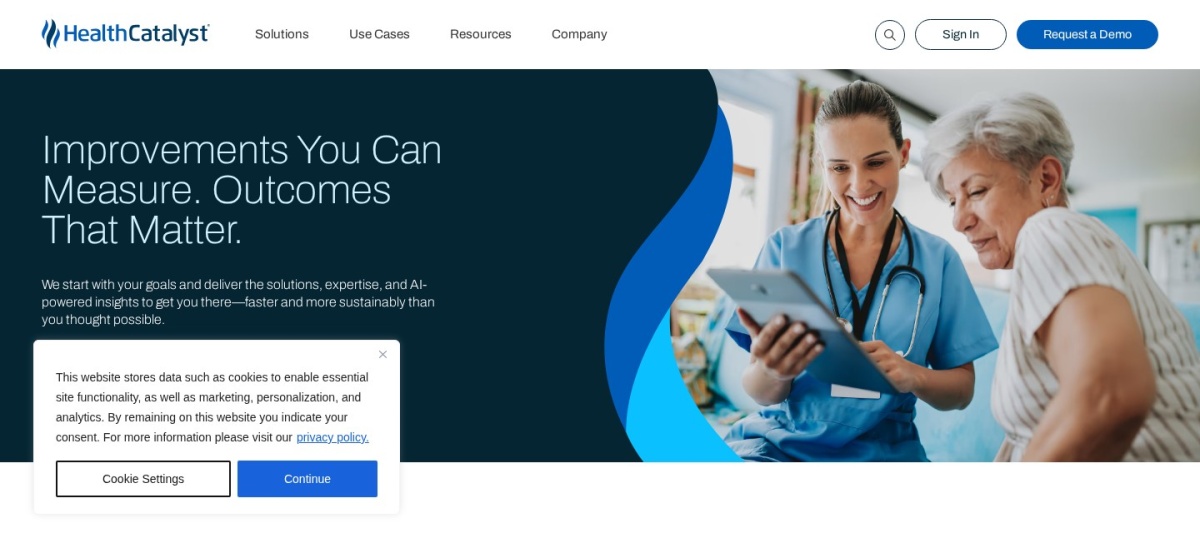
Health Catalyst is a healthcare data platform with analytics applications built for provider organisations, and its governed data model and improvement content also serve payer analytics teams. It pairs the platform with a services team that runs improvement programmes.
The trade off is the thin review base. Health Catalyst is rated 5.0 out of 5 on G2 from only 2 reviews, and subscriptions are reported at $500,000 or more a year. It suits large organisations that want a governed platform plus help from its services team.
Payer platforms price on the size of the plan, the data sources and the modules, so no two contracts look alike.
That makes demos and reference customers more important than a price page. Ask for a plan of your size, in your lines of business, before you sign.
The two exceptions here are Power BI and Tableau, which publish per-user prices and let a small team start without a sales cycle.
How we chose
We started from the payer-first analytics vendors named in G2's healthcare analytics reports and payer buying guides, then kept those with a verifiable G2 or Capterra rating.
Prices come from each vendor's pricing page or published pricing, checked on 24 November 2026. Payer platforms publish no list prices, so they are shown as Custom.
We left out tools with no verifiable rating on G2, Capterra or Trustpilot, including Clarify Health, whose G2 score could not be verified. No vendor paid for a place, and we did not test these tools ourselves.
How to choose AI healthcare analytics software for a payer
Start with the questions the plan must answer every month, then check the data those questions need.
List the monthly questions first. Payment accuracy, risk scores, network cost and quality measures each point at a different tool, so rank the questions before the vendors.
Check the data sources. A tool is only useful if it can read your claims, eligibility and provider data, so confirm connectors before price.
Ask for a reference plan of your size. Payer platforms price on plan size and modules, so a demo for a national plan tells a small plan nothing.
Start with BI if the budget is small. Power BI or Tableau on a claims warehouse answers most reporting questions without an enterprise contract.
FAQ
What is the best AI healthcare analytics software for payers?
Cotiviti is the best pick for large health plans. It covers payment integrity, risk adjustment and quality analytics from one vendor, and is rated 4.2 out of 5 on G2.
Why is payer analytics software so expensive?
It is sold on custom enterprise contracts priced on plan size, data sources and modules. Reported subscriptions for platforms such as Health Catalyst start around $500,000 a year.
Do any payer analytics tools publish prices?
Only the general BI tools here do. Power BI Pro costs $14 per user per month billed yearly, and Tableau Standard is listed at $75 per user per month.
What is the difference between payer and provider analytics?
Payer analytics works on claims, risk, network and payment data. Provider analytics works on clinical and operational data inside hospitals and health systems.
Is Tableau good for payer analytics?
Yes, for exploration. Tableau connects to claims warehouses and builds fast dashboards, but it ships no payer content, risk models or claims logic of its own.
Which tool is best for risk adjustment?
Cotiviti and MedeAnalytics both cover risk adjustment directly. SAS Viya suits plans that want to build and govern their own risk models.
Should a small health plan buy Cotiviti?
Probably not first. A small plan gets more from Power BI or Tableau on its claims warehouse, and should only take an enterprise platform when volume justifies it.