Best AI Contract Review Software in 2026: 9 Tools Compared
WLWPLegible EditorsLast verified 22 Nov 2026How we rank13 min read
★ Short answer
Genie AI is the best AI contract review software for most small teams, with a free plan, Pro at $59 a month billed annually, and clause scoring against your playbook. Pick ContractSafe for a searchable repository with AI extraction, or Concord if you also need unlimited e-signatures.
How we make this list: we compare pricing pages, product documentation and public user reviews, then re-check every price before each update. No product paid for a place. Disclosure.
Genie AI is the only tool here with a free plan and published prices: Pro costs $59 a user a month billed annually.
ContractSafe gives AI extraction and renewal alerts for a flat $450 a month with unlimited users.
Concord bundles AI review with unlimited e-signatures for $499 a month, but every plan starts at five users.
LinkSquares, Luminance and Ironclad are the strongest review engines, but all three sell by quote only.
Spellbook is the best Word-native reviewer, rated 4.7 on G2, yet it publishes no price at all.
What AI contract review software should do
AI contract review software reads a contract, flags risky clauses and redlines it against your own rules. The best tools score each clause, suggest replacement wording and explain why a term is risky, instead of only finding keywords.
The market splits in two. Self-serve tools such as Genie AI and ContractSafe publish prices and start in days, while enterprise platforms such as Luminance and Ironclad sell by quote and take months to set up. Pick the side that matches your volume and budget.
Check where the AI lives before you buy. Word add-ins suit lawyers who draft all day, while browser platforms suit business teams that self-serve routine contracts. AI assistants differ widely in how they plug into daily work; our comparison of the best AI plugins for WordPress shows the same split between add-ins and platforms.
Ratings matter more here than in most categories. Enterprise tools often have few public reviews, so weigh the review count beside the score: a 4.7 from 29 reviews is a thinner signal than a 4.4 from 332.
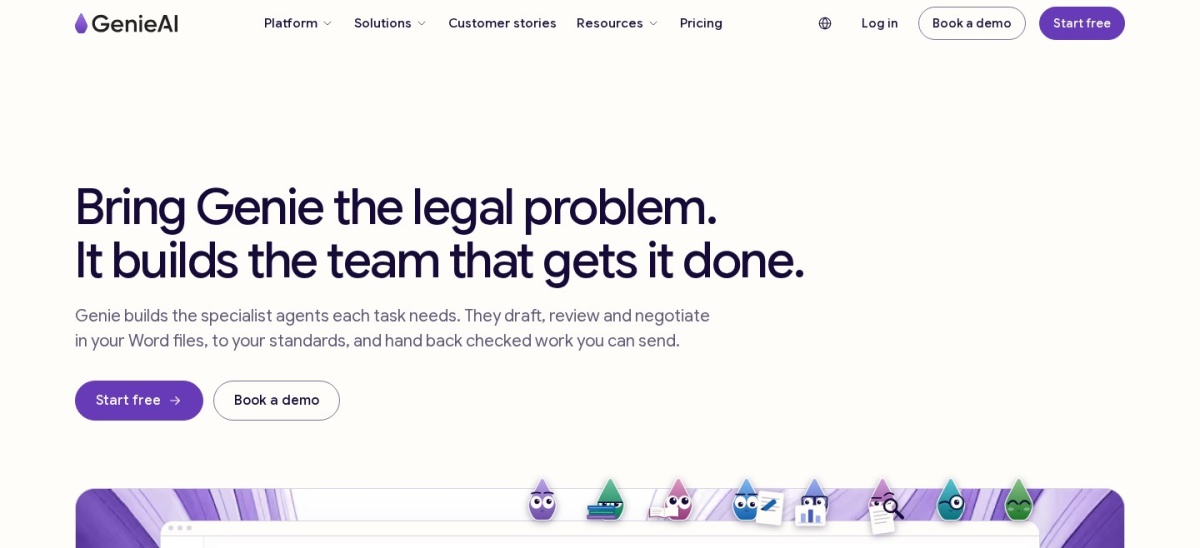
Genie AI is an AI legal assistant that drafts, reviews and redlines contracts in one workspace. The free Trial plan covers one user with limited AI tokens, and Pro at $59 a month billed annually adds 10x the tokens, unlimited exports and scanned PDF uploads. Its review scores each clause red, amber or green against your own playbook and tracks changes.
The trade off is volume. Pro's token allowance covers about five documents a month, so a team reviewing dozens of long contracts will need top-ups or the Business plan at $259 a month. It suits small teams and solo lawyers who want self-serve pricing and no sales call.
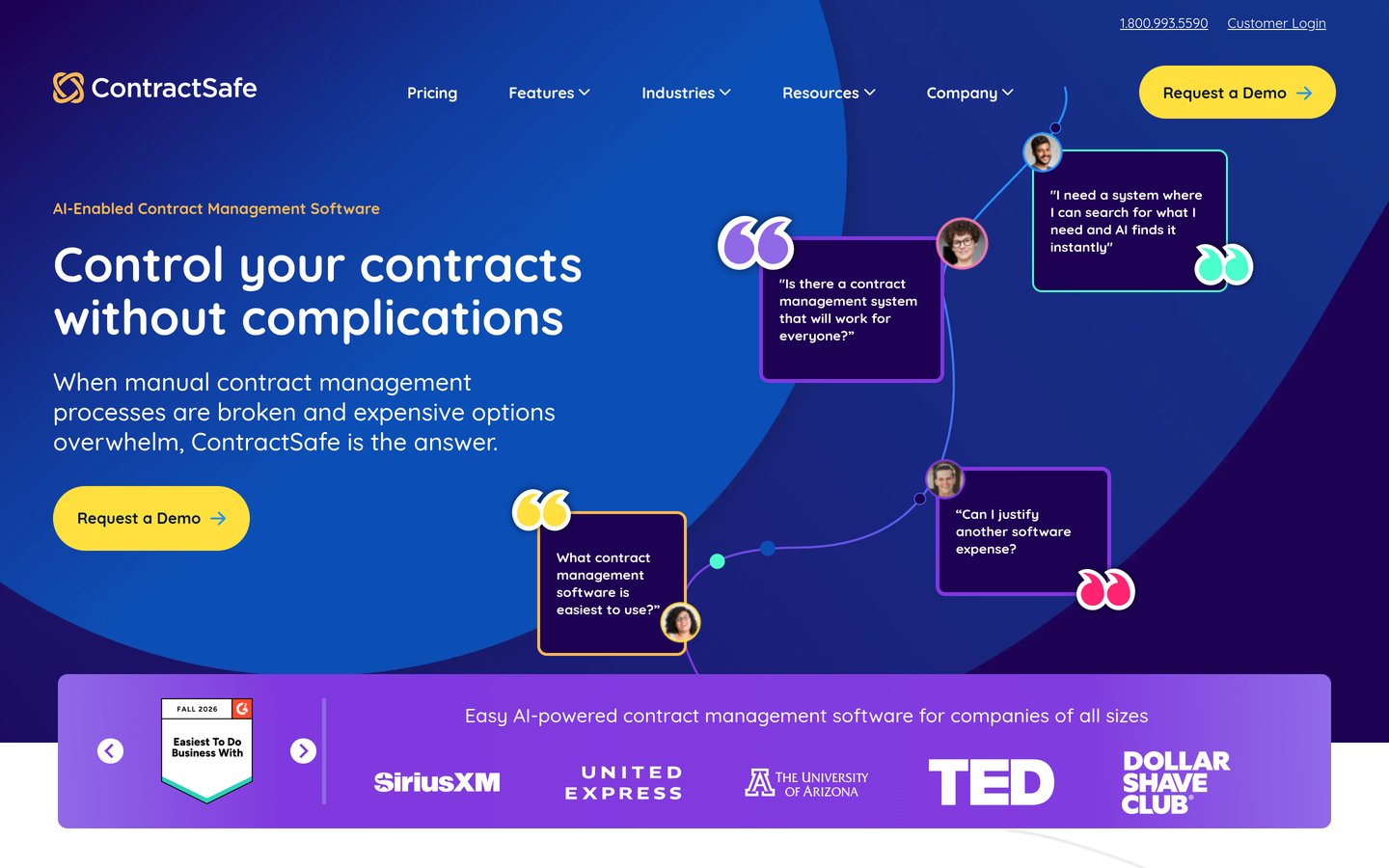
ContractSafe is a searchable contract repository with AI built in. The entry Organize plan at $450 a month billed annually covers up to 100 contracts and includes AI data extraction, AI contract chat, OCR search, unlimited users and automated renewal reminders.
The trade off is scope. ContractSafe stores and analyses signed contracts; it does not draft them or run redlines, and full AI contract review only arrives on the Maximize plan at $815 a month. It suits small teams that need to find dates and obligations fast, not a drafting tool.
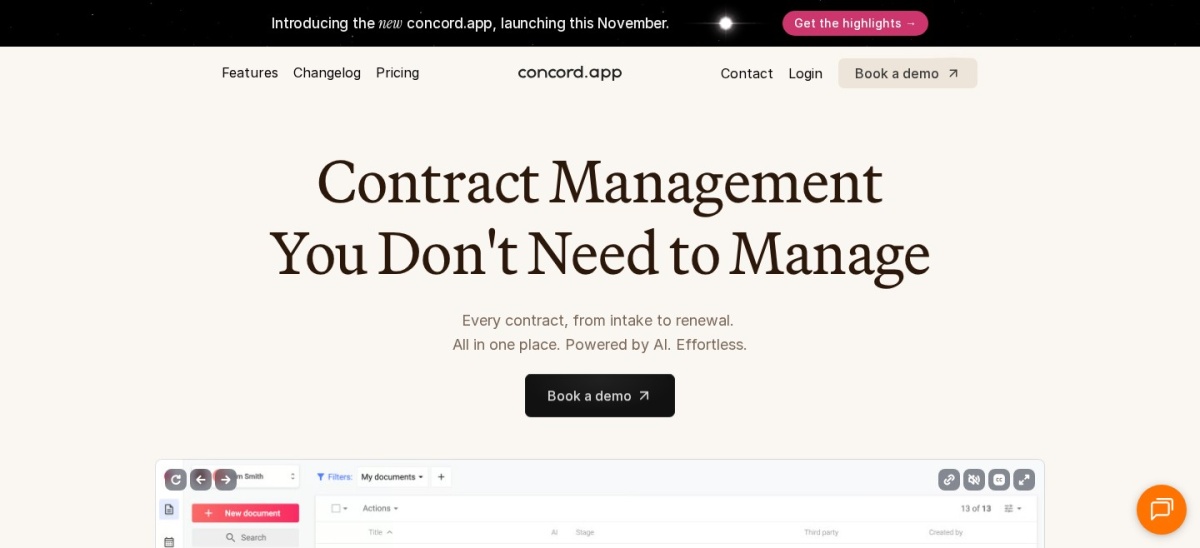
Concord is a contract platform that combines drafting, AI review and e-signature in one place. The Essentials plan at $499 a month billed annually includes five users, AI Copilot and extraction, unlimited documents and e-signatures, deadline reminders and amendment management.
The trade off is the seat floor. Every plan includes five users, so a solo lawyer pays the same $499 a month as a five-person team, and extra users cost $49 a month each. It suits small companies that want signing and review together without a separate e-signature tool.
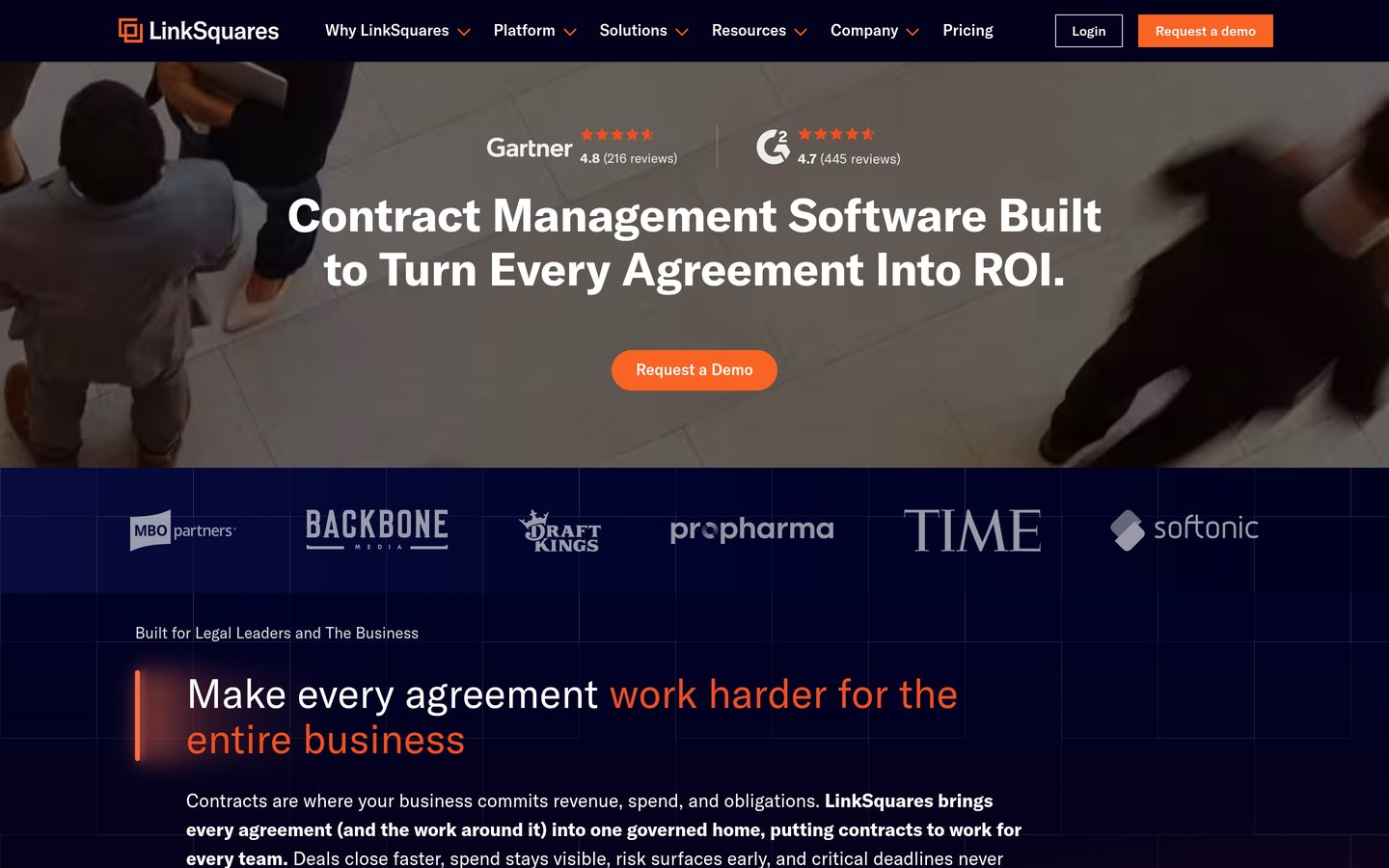
LinkSquares is an agentic contract platform for in-house legal teams. Its Analyze tool reads signed agreements and extracts terms, dates and obligations into a searchable repository, while Finalize handles drafting and approvals and AI agents run intake and review workflows.
The trade off is price. LinkSquares sells by quote only, with third-party data putting the median near $31,000 a year, and implementation takes weeks rather than days. It suits mid-market legal teams that already have a large signed-contract archive to make searchable.
Luminance is an enterprise contract platform built on its own legal AI models. It reads thousands of agreements in minutes, spots clauses that differ from the rest of a set, and redlines in Microsoft Word against your playbook, with a repository, compliance tracking and investigation tools beside it.
The trade off is cost and setup. Pricing is quote only, with third-party estimates putting mid-size rollouts in six figures a year, and reviewers describe a steep learning curve and long onboarding. It suits global firms running diligence across large, multilingual document sets.
Ironclad covers the whole contract lifecycle: intake, templates, approvals, AI-assisted review and redlining, e-signature, a searchable repository and renewal tracking. Its AI agents draft, review and route contracts, and the platform is used by more than 2,000 customers including L'Oréal and OpenAI.
The trade off is size and cost. Ironclad is quote only, with third-party reports putting first-year costs from $75,000, and G2 reviewers cite a four-month average implementation. It suits enterprise legal teams that need workflows and approvals, not just review.
Spellbook is an AI associate that lives inside Microsoft Word and Google Docs. It drafts clauses from a prompt, flags risky language, redlines against your playbook, benchmarks terms against market standards and answers questions about the contract, all without leaving the document.
The trade off is price transparency. Spellbook publishes no price and quotes per seat after a demo, with lawyers reporting single-seat quotes near $299 a month, and the 7-day trial needs a business email. It suits transactional lawyers who live in Word and redline every week.
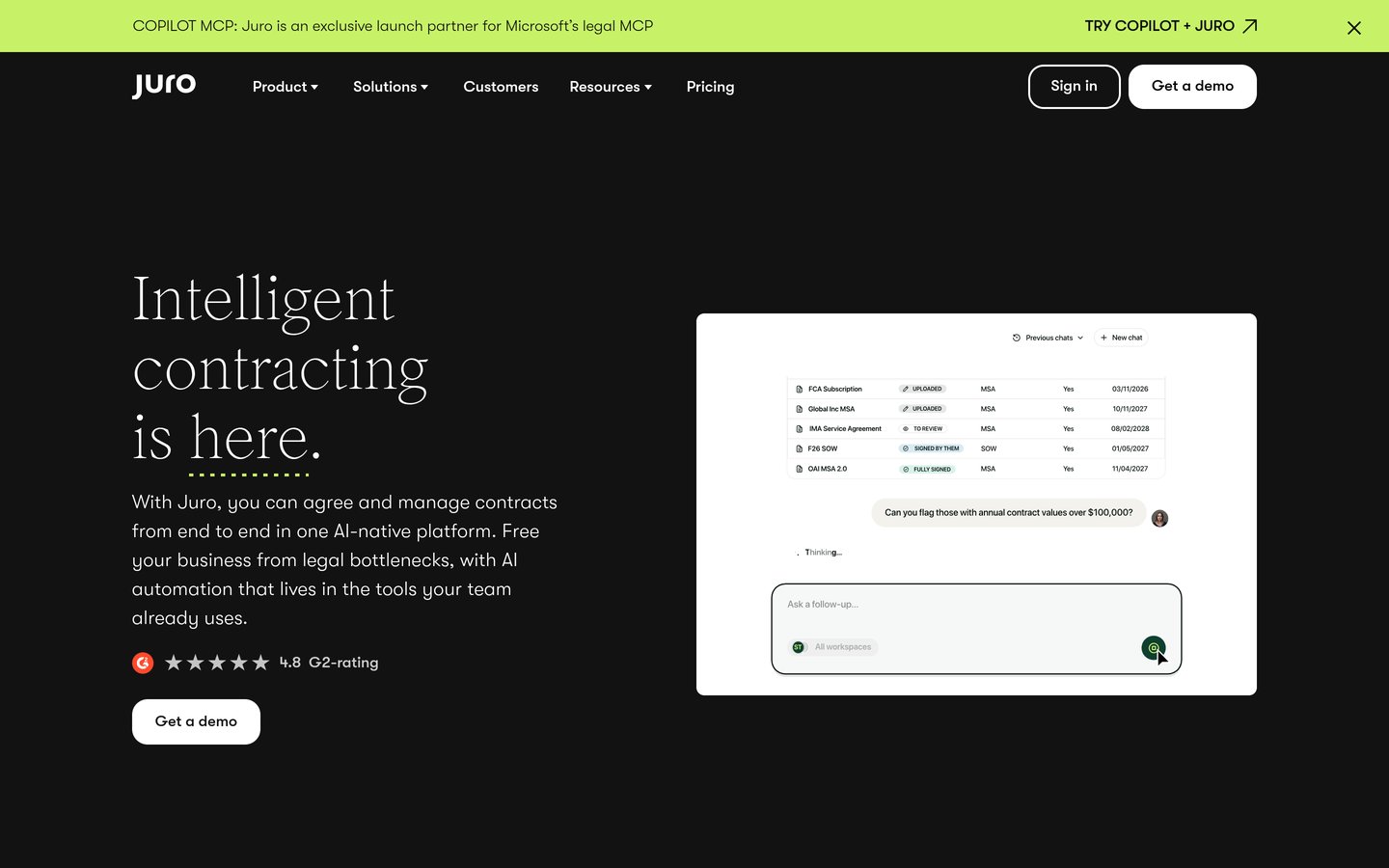
Juro is a browser-native contract workspace where legal, sales, HR and procurement create, review, sign and store contracts in one place. Its Review Agent redlines third-party contracts against your playbook automatically, and AI Extract pulls key terms from PDFs into a searchable repository.
The trade off is price. Juro publishes no price and sells by annual quote, with third-party data putting the median near $31,000 a year, and there is no free trial. It suits fast-growing companies whose business teams should self-serve routine contracts.
Robin AI reviews contracts clause by clause, flags legally onerous terms, suggests amendments and turns long agreements into plain-English summaries for stakeholders. It works in the browser and inside Microsoft Word, and its Reports tool tracks obligations and deadlines across a portfolio.
The trade off is evidence. Robin AI holds a 4.6 G2 rating but only 18 reviews, publishes no price, and G2 reviewers note it can misunderstand complex legal phrasing and needs human oversight. It suits in-house teams that want fast first-pass reviews and summaries.
Six of the nine tools in this list publish no price. LinkSquares, Luminance, Ironclad, Spellbook, Juro and Robin AI all sell by quote, which means your price depends on team size, contract volume and the features you pick.
Third-party reports give a rough shape. LinkSquares and Juro both show medians near $31,000 a year in buyer data, Ironclad first-year costs are reported from $75,000, and Luminance mid-size rollouts are estimated in six figures.
Ask every quote-only vendor for a pilot on your own contracts before you sign. A pilot shows whether the redlines match your playbook, and it gives you a real number to take to budget approval instead of a range.
If you need a firm number today, start with the three tools that publish prices: Genie AI at $59 a user a month, ContractSafe at $450 a month and Concord at $499 a month, all billed annually.
How we chose
We started from every AI contract review tool with a public review profile on G2 or Capterra, then kept the nine with verifiable ratings and a clear contract review feature.
Prices come from each vendor's pricing page or published pricing, checked on 22 November 2026. Ratings and review counts come from G2 and Capterra on the same day. Where a vendor publishes no price, the list says so and the notes give the best third-party estimate.
We left out tools with no verifiable rating, including Kira by Litera and LawGeex, whose public review counts are too thin to check, and Evisort, which is now sold only as part of Workday. No vendor paid for a place, and we do not claim hands-on testing for this list.
How to choose AI contract review software
Start with your monthly contract volume, then match the tool to where your team already works.
Count how many contracts you review each month. A team reviewing five contracts a month needs a different tool from one reviewing fifty. Volume decides whether a token allowance or a flat fee fits.
Check where the AI has to work. Word add-ins suit lawyers who draft all day. Browser platforms suit business teams that self-serve NDAs and vendor agreements.
Ask for a pilot on your own contracts. Quote-only vendors run demos and pilots. Put your own NDAs and MSAs through the pilot before you sign, and compare the redlines with your playbook.
Read the review count beside the rating. A 4.7 from 29 reviews is thinner evidence than a 4.4 from 332. Check what reviewers say about setup time and support, not just the score.
FAQ
What is the best AI contract review software?
Genie AI is the best pick for most small teams. It has a free plan, publishes its prices, and Pro costs $59 a user a month billed annually. It reviews contracts against your playbook with red, amber and green risk scores and tracked-changes redlines.
How much does AI contract review software cost?
Self-serve tools start at $59 a user a month at Genie AI, while ContractSafe costs $450 a month flat and Concord $499 a month. Enterprise tools such as Luminance and Ironclad sell by quote only, with third-party reports putting mid-size deals in five or six figures a year.
Can AI review a contract as well as a lawyer?
No. AI gives a fast first pass: it flags risky clauses, checks terms against a playbook and drafts redlines. A lawyer still needs to review the result, especially for unusual terms, high-value deals and anything outside the playbook.
What is the difference between AI contract review and CLM software?
AI review checks one contract against your rules. CLM software manages the whole lifecycle: drafting, approvals, signing, storage and renewals. Tools such as Ironclad and LinkSquares do both, while Spellbook and Genie AI focus on the review step.
Do I need a playbook to use AI contract review?
Most tools work without one, but they work better with one. A playbook is your list of approved positions on common clauses. Tools such as Spellbook, Genie AI and Juro redline against it, so the AI knows which terms to accept, flag or rewrite.
Which AI contract review tool has a free plan?
Genie AI is the only tool in this list with a free plan. Its Trial plan covers one user with limited AI tokens and no card required. ContractSafe and Spellbook offer trials of 7 days, while the other tools start with a demo.