Best Accounts Receivable Software in 2026: 9 Tools Compared
WLWPLegible EditorsLast verified 22 Nov 2026How we rank14 min read
★ Short answer
BILL is the best accounts receivable software for most teams, rated 4.4 out of 5 from 1,806 G2 reviews, with AR and AP on one subscription from $49 per user a month. Pick Chaser for dedicated collections chasing and Zoho Books for the cheapest full ledger with a free plan.
How we make this list: we compare pricing pages, product documentation and public user reviews, then re-check every price before each update. No product paid for a place. Disclosure.
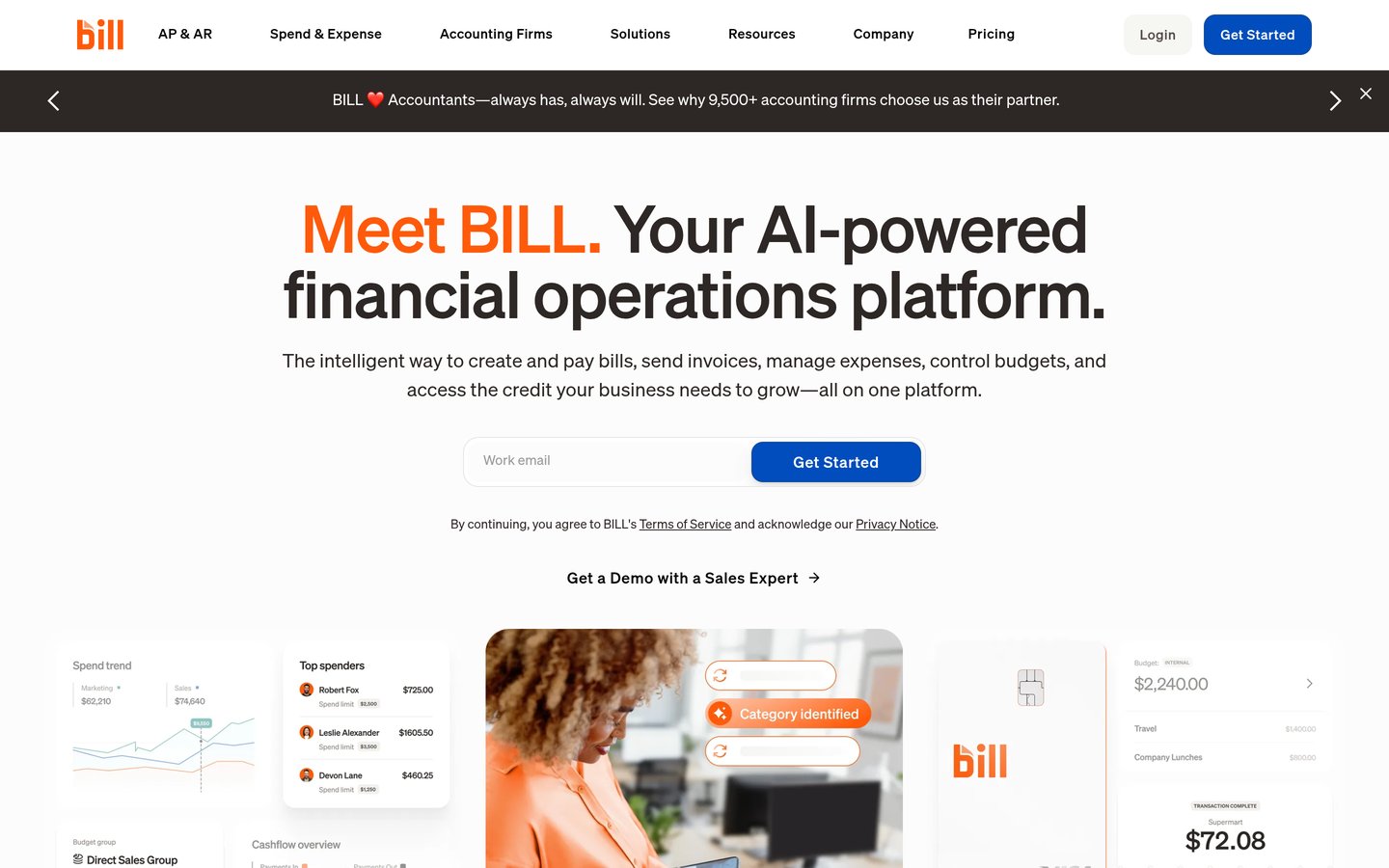
BILL leads the list: 4.4 out of 5 from 1,806 G2 reviews, with invoicing, reminders and payments from $49 per user a month.
Chaser is the strongest dedicated collections tool, with reminder sequences, payer-risk data and a customer portal from $259 a month.
Zoho Books is the cheapest full ledger here at $15 a month, with a free plan for revenue under $50,000 a year.
QuickBooks Online and Xero cover AR inside a full ledger, from $38 and $27 a month, and both sync with BILL, Chaser and Upflow.
Upflow is the only quote-only tool in the list: its paid plans are priced by annual invoiced revenue, but its Discover plan is free.
Melio and Chargezoom both start free: Melio charges $25 a month for its first paid plan, Chargezoom $95.
What accounts receivable software should do
Accounts receivable software sits on top of your ledger and does the chasing: it sends reminder sequences that escalate as invoices age, gives customers a portal to pay, and shows which accounts are drifting late. Your accounting system records the invoice; AR software gets the money in.
The split matters because the tools in this list come in two shapes. Dedicated AR tools such as BILL, Chaser, Upflow and Chargezoom connect to QuickBooks, Xero or NetSuite and manage collections. Full ledgers such as Zoho Books, QuickBooks Online, FreshBooks and Xero handle invoicing and reminders inside the books.
Price is the hardest part to compare. Some tools charge per user, some per month, and the mid-market platforms quote by annual invoiced revenue. The price ladder below shows the cheapest paid plan for each tool, and the notes spell out per-transaction fees, which can cost more than the subscription.
If you sell through a store as well as invoicing clients, our guide to the best WooCommerce plugins covers the checkout side, while this list covers getting B2B invoices paid.
BILL is an accounts payable and receivable platform that puts invoicing, payment collection and bill payment on one subscription. The Essentials plan at $49 per user a month includes custom invoices, automated payment reminders, ACH and card payments, auto-charge and auto-pay, and a network of more than 8 million vendors.
The trade off is the per-user price and the per-transaction fees on top. ACH costs $0.59 a payment and cards 2.9%, so a team of five pays $245 a month before any payment fees, and two-way sync with QuickBooks or Xero needs the $65 Team plan. It suits small and mid-size teams that want payables and receivables in one place.
What we like
AR and AP on one subscription
Automated reminders, ACH and card payments included
Largest review base in this list, 1,806 G2 reviews
Watch out for
Per-user pricing adds up fast for bigger teams
Two-way QuickBooks and Xero sync needs the $65 Team plan
Team adds two-way sync and cash flow forecastingVisit bill.com
02
Chaser
4.3/5on G2 (71 reviews, checked Nov 2026)
Starts at$259/mo
Best for dedicated collections chasing
Cheapest planCompact, $259/mo
Free planNo, 10-day trial
Reminder channelsEmail, SMS, letter, calls
Customer portalYes
chaserhq.com
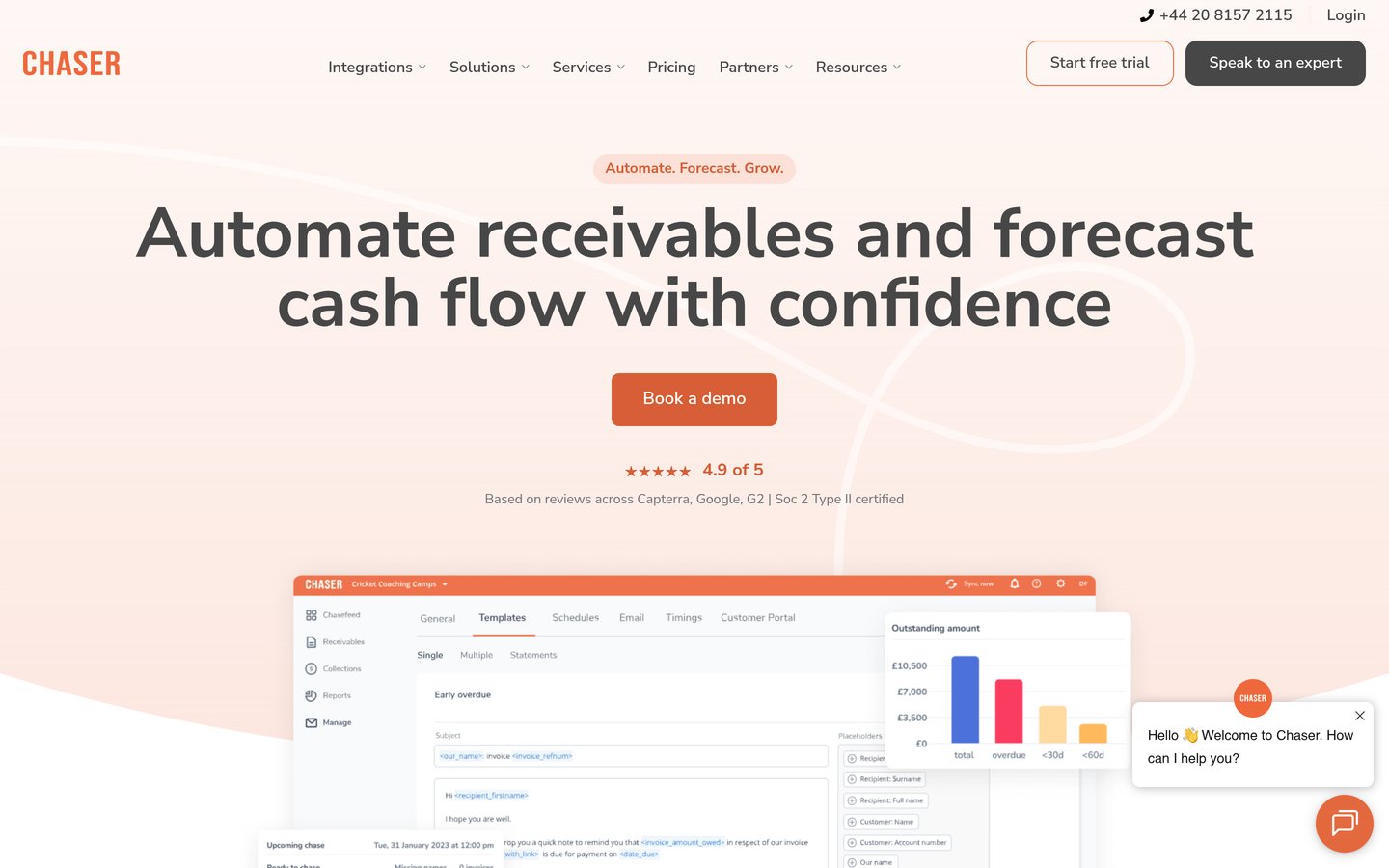
Chaser homepage, captured Nov 2026.
Chaser is a dedicated accounts receivable platform that connects to Xero, QuickBooks, Sage or NetSuite in about five minutes and runs the whole chasing cycle from there. It segments customers by payment behaviour, sends reminders by email, SMS, letter or automated call, and gives every customer a portal to check invoices and pay.
The trade off is price and geography. Compact costs $259 a month billed annually for up to four users, and the plans are set by annual revenue, so a growing business moves up tiers as it grows. Chaser reports a 10-day average cut in days sales outstanding. It suits businesses on Xero or QuickBooks that want chasing handled without hiring.
What we like
Reminder sequences that escalate by payer behaviour
Credit checks flag risky customers before invoices go overdue
Customer portal and payment links in every message
Watch out for
$259 a month is steep for a very small business
Plans are priced by revenue, so costs rise as you grow
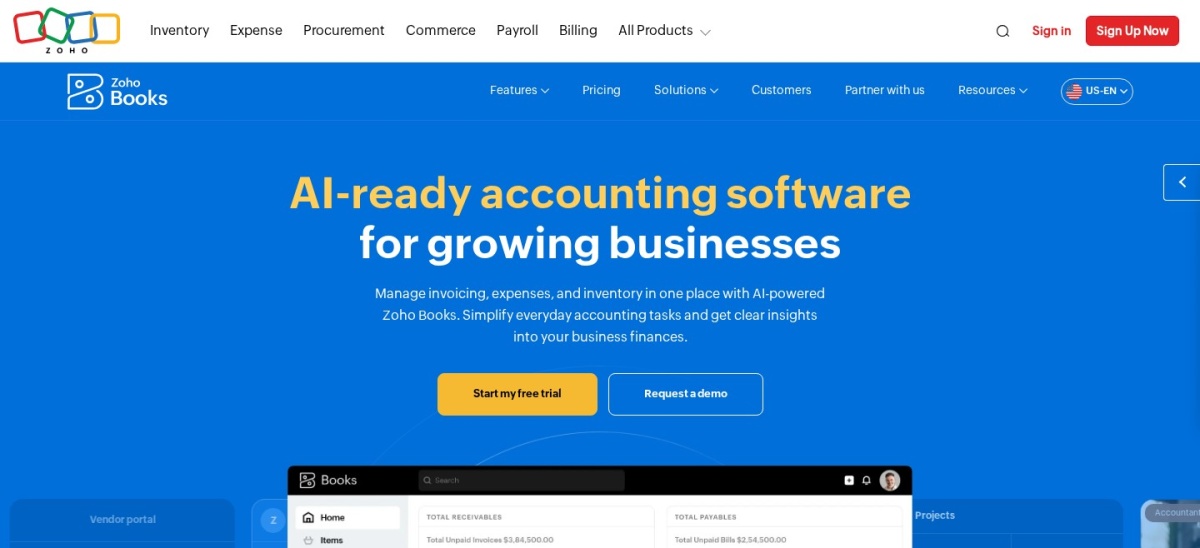
Zoho Books is a full cloud accounting system with invoicing, payment reminders, a customer portal and bank reconciliation built in. The Standard plan costs $15 a month billed annually for three users and up to 5,000 invoices a year, and the free plan covers a business with under $50,000 of annual revenue.
The trade off is that Zoho Books is a ledger first and a collections tool second. Its reminders are solid, but there is no payer-risk scoring or escalation workflow like the dedicated AR tools, and the cheapest paid plan caps invoices at 5,000 a year. It suits small businesses that want one cheap ledger that covers invoicing and reminders.
What we like
Cheapest paid plan in this list at $15 a month
Free plan for revenue under $50,000 a year
Invoicing, reminders and portal included on every plan
Watch out for
No payer-risk scoring or escalation workflows
Standard caps invoices at 5,000 a year
Professional adds inventory and projects at $40/moVisit zoho.com
04
QuickBooks Online
4.3/5on Capterra (8,544 reviews, checked Nov 2026)
Paid from$38/mo
Best for US small businesses with an accountant
Cheapest paid planSimple Start, $38/mo
Free planYes, 1 user, 2 invoices/mo
Users included1 on Simple Start
Accountant accessYes
quickbooks.intuit.com
QuickBooks Online homepage, captured Nov 2026.
QuickBooks Online is the most-used cloud ledger for US small businesses, with more than 7 million subscribers. Simple Start costs $38 a month for one user and covers invoicing, expense tracking, automated bookkeeping and standard reports, with a free plan for one user sending two invoices a month.
The trade off is price per seat and reminder depth. Simple Start allows only one user, so a second person means the $85 Essentials plan, and its reminders are basic next to a dedicated chasing tool such as Chaser. It suits US businesses whose accountant already works in QuickBooks and who want the widest app ecosystem.
What we like
Largest app ecosystem and accountant network
Free plan for a one-person business
Invoicing, expenses and reports in one ledger
Watch out for
One user only on Simple Start
Reminders are basic next to dedicated AR tools
Frequent price rises and heavy first-month discounts
4.5/5on Capterra (4,514 reviews, checked Nov 2026)
Starts at$23/mo
Best for freelancers and service businesses
Cheapest planLite, $23/mo
Free planNo, 30-day trial
Billable clients5 on Lite
Payment remindersYes, automated late fees
freshbooks.com
FreshBooks homepage, captured Nov 2026.
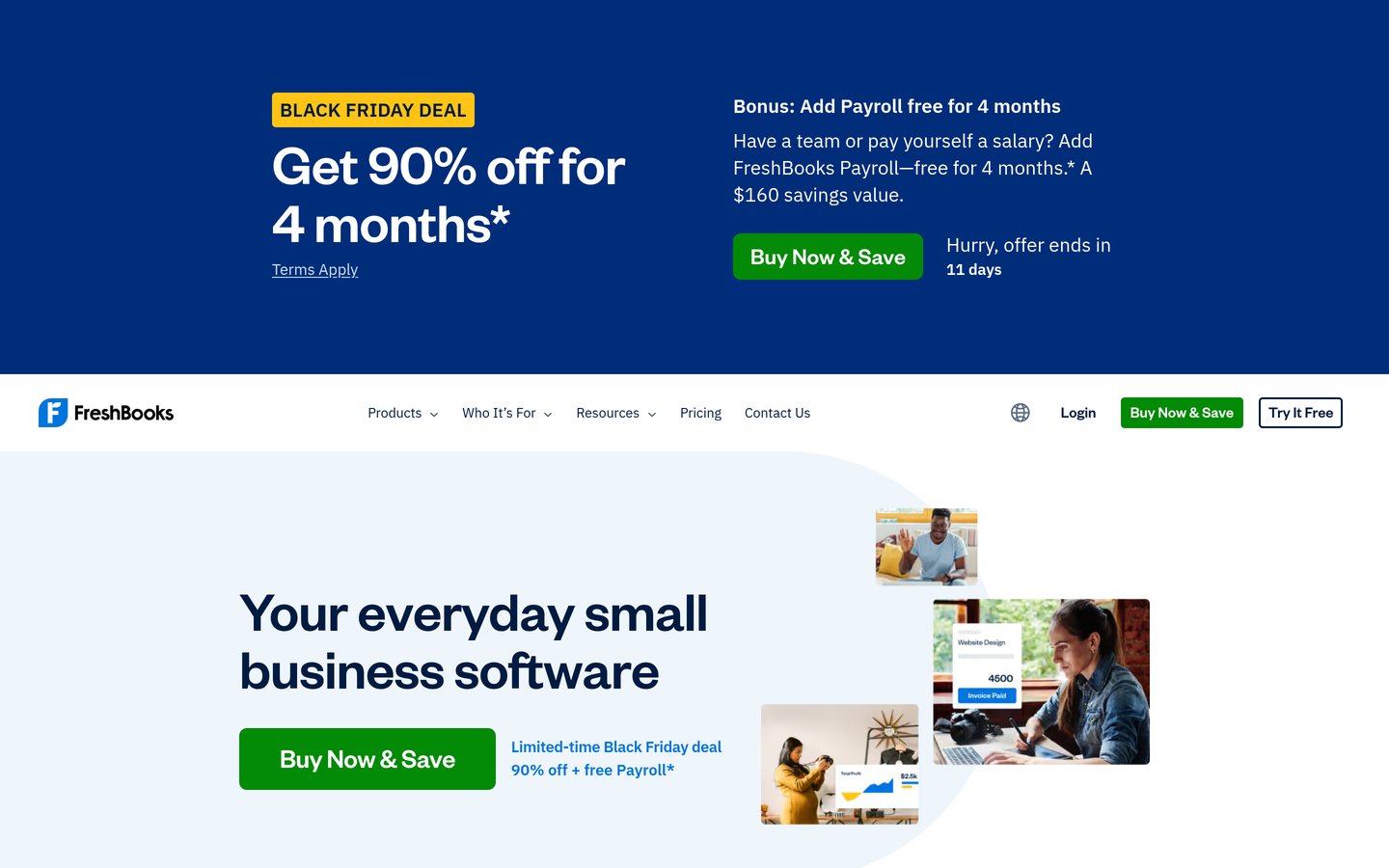
FreshBooks is an invoicing-first accounting tool built for freelancers and service businesses that bill by the client. The Lite plan costs $23 a month and covers unlimited invoices, estimates, expense tracking and time tracking for up to five billable clients, with card, ACH and buy-now-pay-later payment options.
The trade off is the five-client cap on Lite. A sixth billable client forces a move to Plus at $43 a month, and each extra team member costs $11 a month on every plan. The headline price is also cut by 80% for the first four months, so budget for the $23 regular price. It suits solo operators with a short client list.
What we like
Easiest invoicing in this list for service businesses
4.4/5on Capterra (3,325 reviews, checked Nov 2026)
Starts at$27/mo
Best for teams that share one ledger
Cheapest planEarly, $27/mo
Free planNo, free trial
Invoices a month20 on Early
Users includedUnlimited on every plan
xero.com
Xero homepage, captured Nov 2026.
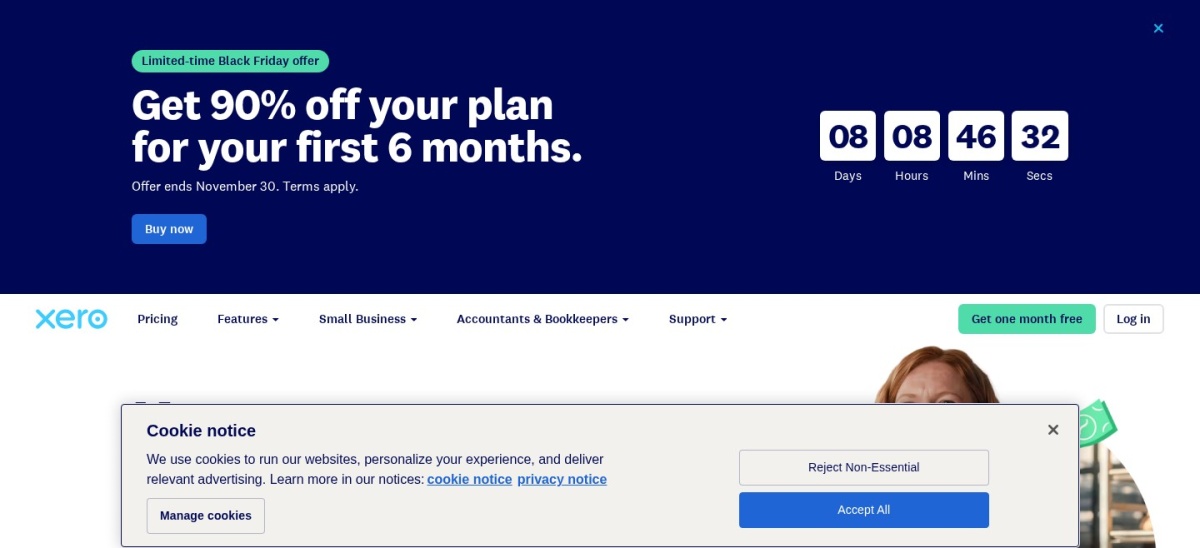
Xero is a cloud ledger with 4.9 million subscribers in more than 180 countries, and the only tool here that puts unlimited users on every plan. Early costs $27 a month and covers bank reconciliation, quotes, invoices and reporting, with automatic bank reconciliation on the higher plans.
The trade off is the invoice cap. Early allows only 20 invoices and five bills a month, so a business sending its 21st invoice moves to Growing at $59 a month, and prices rose on 1 October 2026 from $25. It suits teams that want everyone in the ledger without paying per seat.
What we like
Unlimited users on every plan, no seat fees
Strong bank reconciliation and 1,000+ integrations
Multi-currency support on every plan
Watch out for
Early caps invoices at 20 a month
Automatic reconciliation costs extra on Early
Growing removes the caps and adds auto-reconciliation at $59/moVisit xero.com
07
Chargezoom
4.7/5on G2 (17 reviews, checked Nov 2026)
Paid from$95/mo
Best free AR tool with card payments
Cheapest paid planPlus, $95/mo
Free planYes
Card markup on paid plans0%
ERP integrationsQuickBooks, NetSuite, Sage
chargezoom.com
Chargezoom homepage, captured Nov 2026.
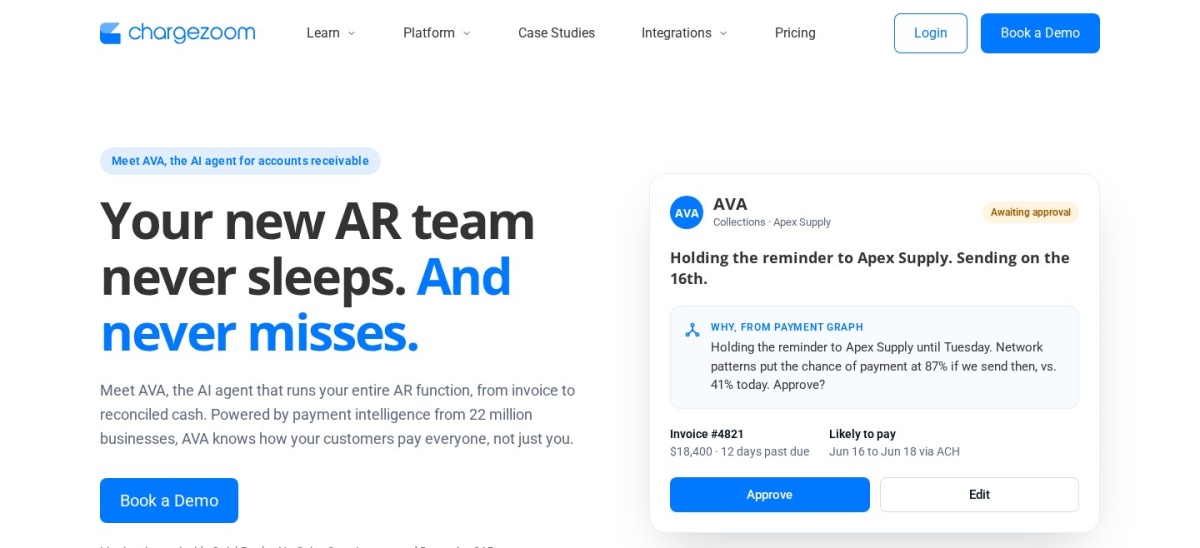
Chargezoom is an AI accounts receivable platform that runs invoicing, payments, recurring billing and collections from one place. The free plan covers invoicing, payment links and two-way QuickBooks sync, while Plus at $95 a month adds 0% markup card processing, dunning management and a customer portal.
The trade off is a thin review base and a price that has moved around. Chargezoom holds 4.7 out of 5 on G2 but from only 17 reviews, and older listings still show $9 to $99 plans that no longer match the vendor's current tiers. It suits card-heavy small businesses that want AR bundled with payment processing.
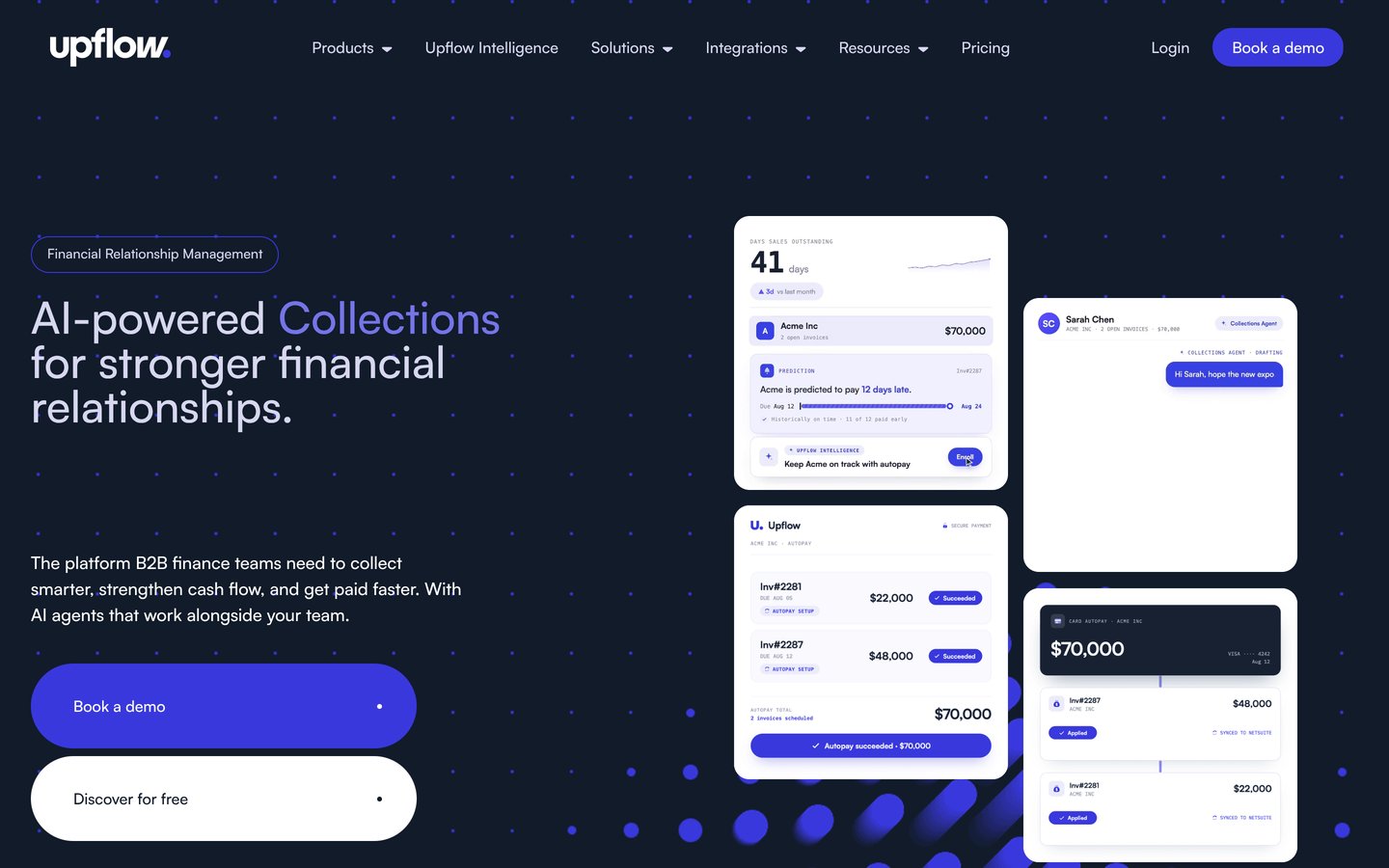
Upflow is an accounts receivable platform for B2B SaaS and services companies that bill through NetSuite, Stripe or Chargebee. Its free Discover plan shows AR health and benchmarks against other B2B companies, and paid plans add collections workflows, a branded payment portal and AI agents for collections and cash application.
The trade off is that no paid plan carries a published price. Every tier from Starter to Enterprise is sold by quote and set by annual invoiced revenue, and the Payments add-on costs $390 a month plus 3.5% and $0.30 per card payment. It suits mid-market teams that want to see their AR health free before talking to sales.
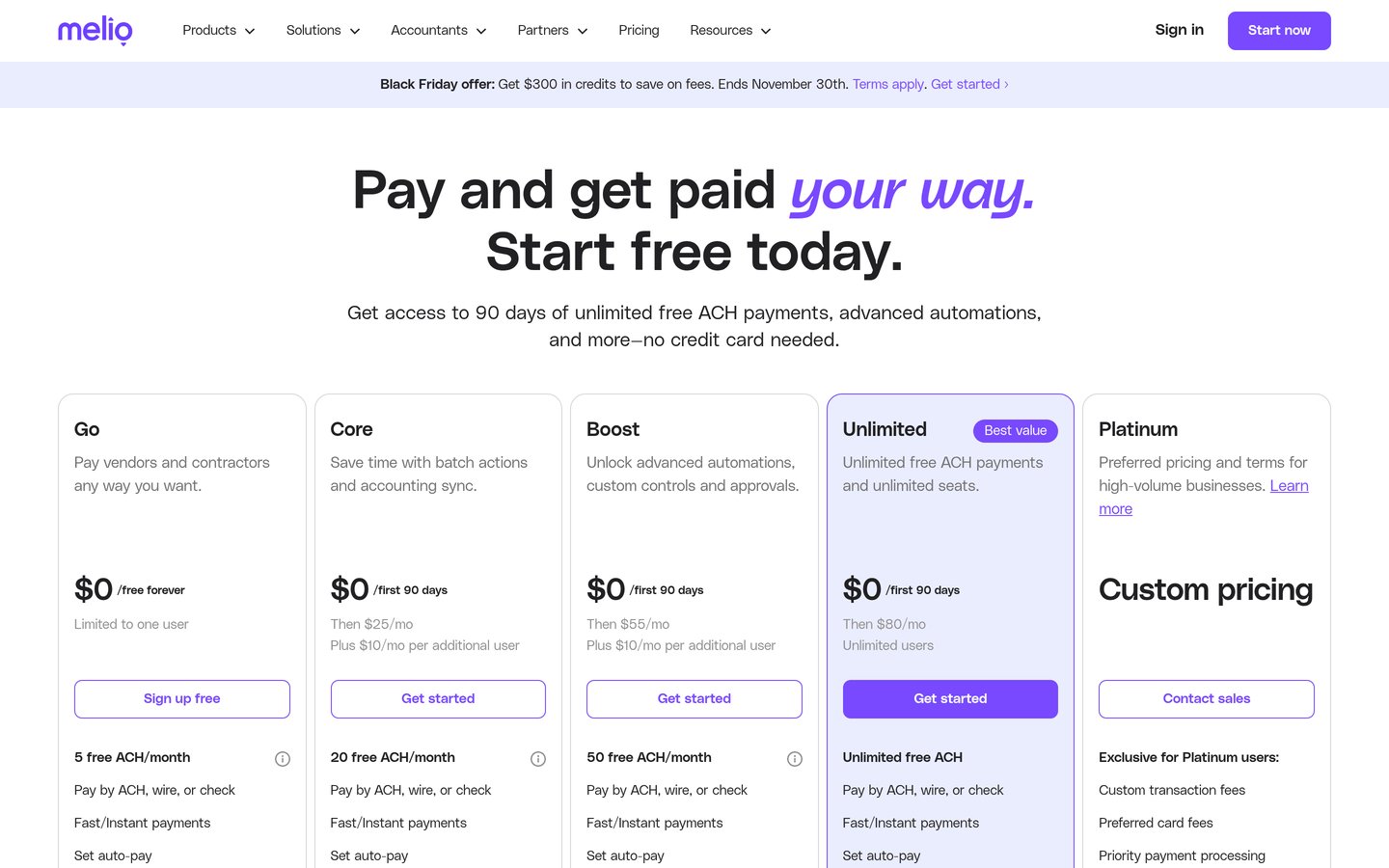
Melio is a B2B payments platform, now owned by Xero, that lets a business pay vendors and get paid by customers by ACH, card, wire or check. The free Go plan covers one user and five free ACH payments a month, and Core at $25 a month adds accounting sync, batch payments, approval workflows and 20 free ACH payments.
The trade off is that the free plan is narrow and the fees stack up. Go allows one user only, extra ACH payments cost $0.50 each once the allowance is used, and paying by card costs 2.9% on every plan. It suits small businesses that want simple invoicing and payments without a per-user subscription.
What we like
Free Go plan with invoicing and payment links
Pay any vendor by card, even if they do not take cards
QuickBooks and Xero sync from the $25 Core plan
Watch out for
Free plan allows one user and five ACH payments a month
Five of the nine tools here have a free plan, and they cover real work: Zoho Books invoices for a business under $50,000 of revenue, Chargezoom invoices free with QuickBooks sync, and Melio's Go plan pays vendors by ACH.
Free plans stop at volume or users. Melio's Go plan allows one user and five ACH payments a month, Zoho Books caps its free plan at 1,000 invoices a year, and QuickBooks Online's free plan allows two invoices a month.
Paid plans mostly buy limits and chasing. You get more invoices, more users and automated reminders that escalate, plus a portal where customers pay themselves.
Quote-only tools are the exception. Upflow publishes no paid price at all, so budget time for a sales call and get the quote in writing before you compare it with the published prices here.
How we chose
We started from the accounts receivable tools with the largest review bases on G2 and Capterra, plus the ledgers small businesses actually run their invoicing on, then kept nine with a verifiable rating and a published or clearly quote-only price.
Prices come from each vendor's pricing page, checked on 22 November 2026. Ratings come from G2 or Capterra on the same day, using the source with the most reviews for each tool. Where a vendor shows a sale, the list shows the regular price. QuickBooks Online and Xero are the exceptions: their pricing pages would not load on the day, so their prices rest on independent reads of the same official pages from November 2026.
We left out enterprise-only platforms that publish no price and no trial, such as HighRadius and Billtrust. No vendor paid for a place, and we do not claim hands-on testing for this list.
How to choose accounts receivable software
Start with the ledger you already run, then add chasing only where the ledger stops.
Check what your ledger already does. QuickBooks Online, Xero and Zoho Books all send invoices and basic reminders. If that covers your volume, you may not need a dedicated AR tool at all.
Count invoices and users before you compare prices. BILL charges per user, Chaser by annual revenue and Upflow by invoiced revenue, so the cheapest list price is not always the cheapest bill. Add per-transaction fees too.
Pick one chasing tool and connect it to your ledger. Chaser, Upflow and Chargezoom all sync with QuickBooks and Xero. Run one alongside the ledger rather than two chasing tools, which will send duplicate reminders.
Try the free plan or trial first. Zoho Books, Chargezoom, Upflow and Melio all have free plans, and BILL and Chaser offer trials. Use one for a billing cycle before you pay, so you see the reminder tone your customers will get.
FAQ
What is the best accounts receivable software?
BILL is the best overall pick for most teams. It combines invoicing, automated reminders and payments with accounts payable on one subscription from $49 per user a month, and it holds a 4.4 out of 5 rating from 1,806 G2 reviews.
What is the cheapest accounts receivable software?
Zoho Books is the cheapest paid option here at $15 a month, with a free plan for revenue under $50,000 a year. Melio's Go plan and Chargezoom's free plan both cost nothing to start, though Melio charges $0.50 per ACH payment after five a month.
Do I need accounts receivable software if I use QuickBooks or Xero?
Not always. Both ledgers send invoices and basic reminders, which is enough for a business with a handful of invoices a month. A dedicated tool such as Chaser or Upflow earns its place when invoices go overdue often, customers need chasing in stages, or you want a portal and payer-risk data.
Why do some accounts receivable tools not publish a price?
Mid-market and enterprise platforms such as Upflow price by annual invoiced revenue and invoice volume, so the price depends on the size of your ledger. Upflow is the only quote-only tool in this list; the other eight publish at least a starting price.
Can accounts receivable software reduce days sales outstanding?
It can help, mainly by sending reminders on time and giving customers a payment link in every message. Chaser reports a 10-day average reduction in days sales outstanding, but that is the vendor's own figure, so measure the change on your own ledger during a trial.
What fees apply on top of the subscription?
Most tools add per-transaction fees for payments. BILL charges $0.59 per ACH payment and 2.9% for cards, Melio charges 2.9% for card payments and $0.50 per ACH payment beyond the plan allowance, and Upflow's Payments add-on costs $390 a month plus card fees.