OutSystems is the best of the Appian alternatives for enterprise teams, rated 4.5 out of 5 from 1,802 G2 reviews, with a free Personal Edition for up to 100 users. Pick Microsoft Power Apps at $20 per user a month if you live in Microsoft 365, or Zoho Creator from $8 per user a month for the lowest start.
How we make this list: we compare pricing pages, product documentation and public user reviews, then re-check every price before each update. No product paid for a place. Disclosure.
OutSystems leads on review volume at 4.5 out of 5 from 1,802 G2 reviews, with a free Personal Edition for up to 100 users.
Mendix Standard starts at $1,090 a month for one app, and cloud hosting costs extra on top.
Microsoft Power Apps Premium is $20 per user a month, or $12 at 2,000 seats, and rises to $22 from January 2027.
Zoho Creator is the cheapest paid start at $8 per user a month, with a free plan for one app.
Five of the nine tools have a free plan, but only Zoho Creator and Joget DX pair a free plan with a paid plan under $200 a year.
How do you choose among Appian alternatives?
Appian is built for complex, governed processes, so the right replacement depends on what you are replacing. A team automating approvals needs a different tool from a team rebuilding a portfolio of enterprise apps.
Start with who builds. Low-code platforms such as OutSystems and Mendix suit professional developers working with IT governance, while no-code tools such as Zoho Creator and Kissflow let business teams build without waiting for developers. Our guide on whether WordPress is no-code explains the no-code idea in plain terms.
Price is the hardest part to compare. Some tools charge per user, some per app and some per month for the whole platform, so compare the same team size on each pricing page before shortlisting.
Free plans matter more than they look. Five tools here offer one, but most cap apps, users or records, so check the free limits against the process you actually run.
OutSystems is a low-code platform for building enterprise web and mobile apps with visual modeling, AI-assisted development and cloud-native deployment on OutSystems Developer Cloud. The free Personal Edition supports up to 100 users, so teams can learn the platform and build prototypes at no cost.
The trade off is price. Paid plans are sold by quote based on app size and users, and G2 reviewers repeatedly flag licensing as expensive and hard to predict. It suits large teams replacing Appian across a portfolio of apps rather than a single workflow.
What we like
Rated 4.5 out of 5 from 1,802 G2 reviews, the largest review base here
Free Personal Edition for up to 100 users
Cloud-native deployment with AI-assisted development
Strongest reviewer scores for ease of use and speed
Watch out for
Pricing by quote only, with no published entry price
Mendix is Siemens' low-code platform for building web and mobile apps with visual models, reusable components and AI assistance in Maia. The free plan covers small apps and prototypes, and Standard adds a 99.5% uptime SLA, up to 4 environments and identity provider integration.
The trade off is price. Standard starts at $1,090 a month for one app, and cloud hosting is an extra cost on top, so a production rollout costs far more than the free tier suggests. It suits enterprises that want Mendix's governance and deployment choice, including SAP BTP and private cloud.
What we like
Free plan for prototypes and small apps
Deployment on Mendix Cloud, Azure, SAP BTP or private cloud
Reusable components speed up repeat builds
Rated 4.4 out of 5 from 417 G2 reviews
Watch out for
Standard starts at $1,090 a month for a single app
Microsoft Power Apps is the low-code app builder inside the Microsoft Power Platform, with canvas and model-driven apps, Dataverse and premium connectors. The free Developer Plan covers one user for learning and non-production apps, and Premium at $20 per user a month unlocks unlimited apps and Power Pages sites.
The trade off is licensing. Premium costs rise fast across a large team, and Microsoft has announced Premium rises to $22 per user a month for terms starting 1 January 2027. It suits teams already on Microsoft 365 that want apps inside Teams, SharePoint and Outlook.
What we like
Deep integration with Microsoft 365, Teams and SharePoint
Free Developer Plan for learning and prototypes
Unlimited apps per user on Premium
Volume price drops to $12 per user a month at 2,000 seats
Watch out for
Licensing is confusing, with per-app and pay-as-you-go options
Premium connectors push costs up
Price rises to $22 per user a month from January 2027
Creatio is a no-code platform for CRM, workflows and AI agents, with a visual studio for building apps without code and AI assistants that draft processes. Growth starts at $40 per user a month and includes Business and AI Studio, with CRM apps for sales, marketing and service added at $15 per user a month each.
The trade off is the entry cost. New customers face a $10,000 minimum annual purchase and a standard 3-year contract term, so small teams pay enterprise money. It suits mid-market teams that want CRM and process automation on one no-code platform.
What we like
Highest G2 rating here at 4.6 out of 5
No-code studio plus AI assistants included
CRM, workflows and AI agents on one platform
Strong reviewer scores for ease of use and support
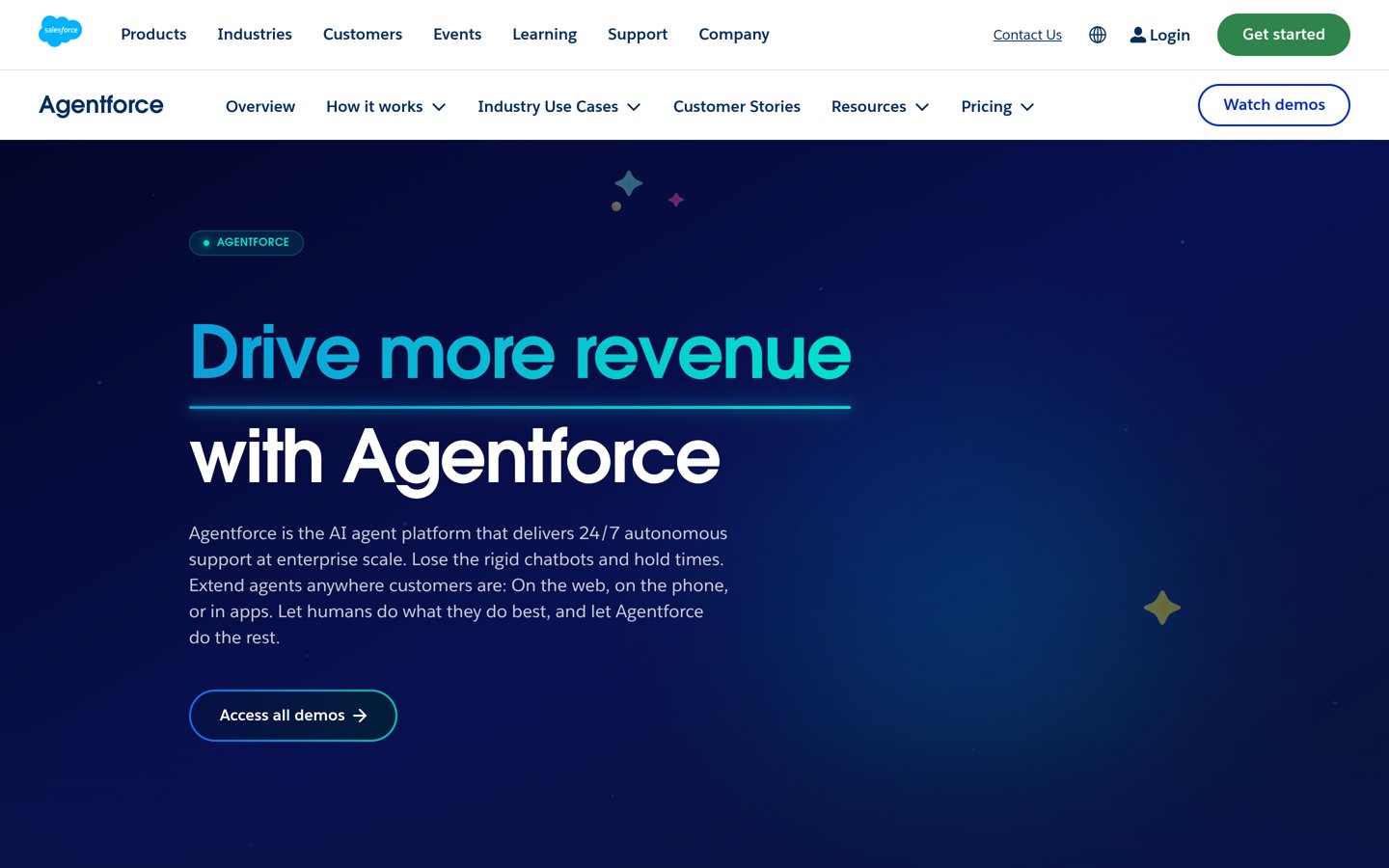
Salesforce Platform is the low-code builder on Salesforce data, now sold as Agentforce 360 Platform, with Lightning App Builder, Flow automation and AppExchange extensions. Platform Starter costs $25 per user a month billed annually and includes 10 custom objects, 200 API calls per user a day and basic automation.
The trade off is cost creep. Add-ons, storage and higher tiers push the bill up fast, and reviewers warn the per-user model gets expensive as teams scale. It suits organisations already running Salesforce that want Appian-style process apps on their CRM data.
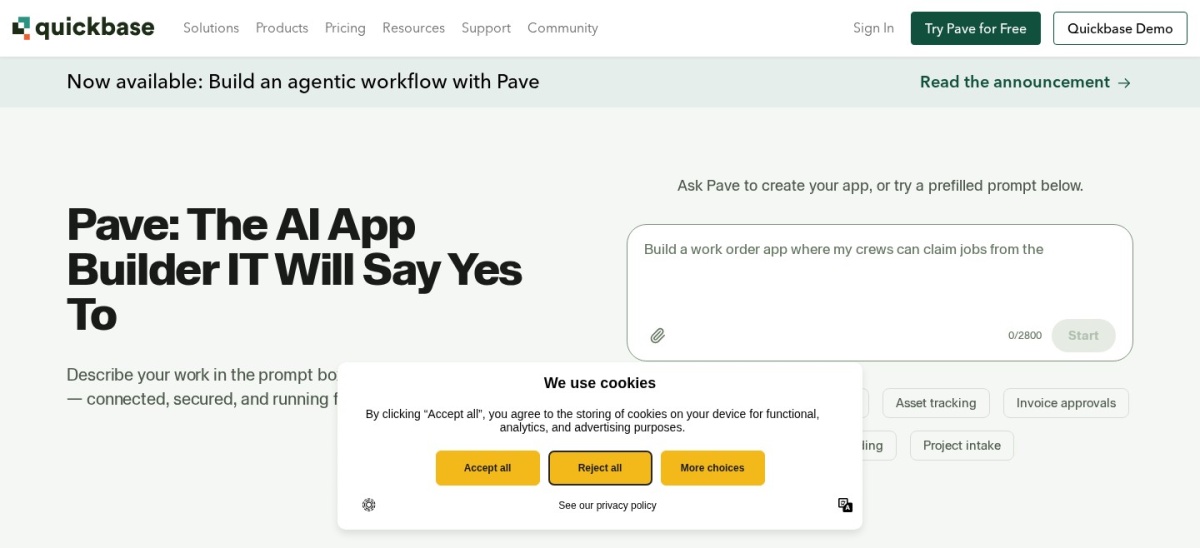
Quickbase is a no-code platform for operations apps, with drag-and-drop builders, workflow automation, dashboards and a new AI app builder called Pave. The Team plan costs $35 per user a month and covers dashboards, workflow automation and data security, with a 30-day free trial of Business features.
The trade off is the minimums. Team needs at least 20 users, and Quickbase adds a platform minimum fee it does not publish, so the per-user rate is not the whole bill. It suits mid-market operations teams in construction, manufacturing and field service.
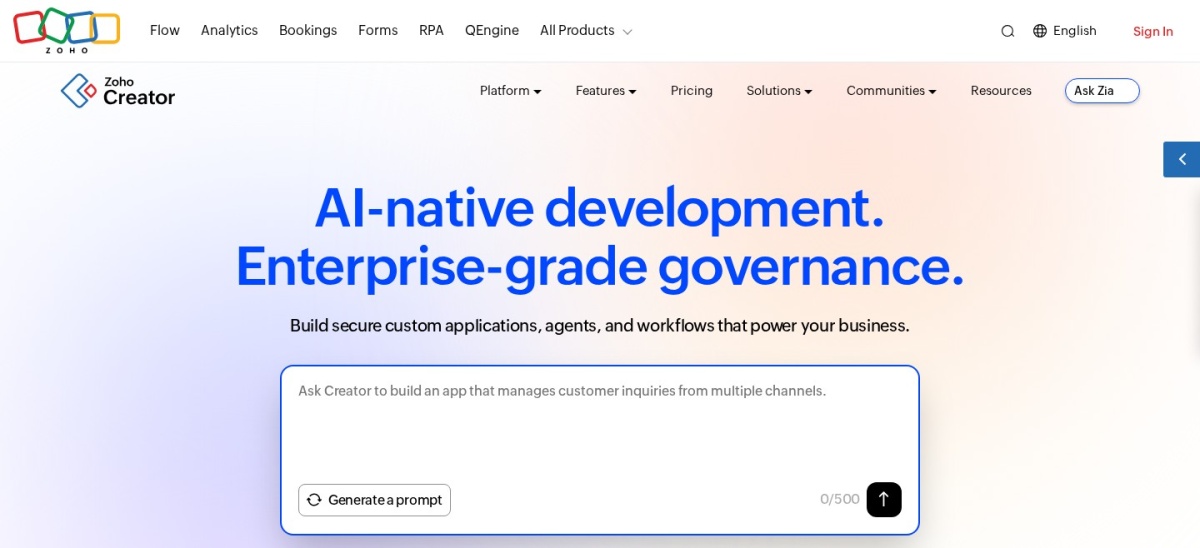
Zoho Creator is a low-code platform for building custom web and mobile apps with drag-and-drop forms, Deluge scripting and workflow automation. The free plan covers one app with 5,000 records, and Standard costs $8 per user a month billed annually, with a 15-day trial of the paid plans first.
The trade off is scope. Free and Standard each allow only one app, so growing teams land on Professional at $20 per user a month for unlimited apps. It suits small teams and Zoho users who want the cheapest way to replace a single Appian process.
What we like
Cheapest paid start in this list at $8 per user a month
Free plan covers one app with 5,000 records
Deep integration with Zoho CRM, Books and Desk
15-day trial of the paid plans, no card needed
Watch out for
Free and Standard allow only one app each
Deluge scripting ties logic to Zoho
Advanced features need Professional or Enterprise
Professional adds unlimited apps and more recordsVisit zoho.com
08
Kissflow
4.3/5on G2 (591 reviews, checked Nov 2026)
Starts at$2,500/mo
Best for approval workflows
Free planNo
Paid planBasic, from $2,500/mo
G2 rating4.3/5 (591 reviews)
AI BuilderIncluded
kissflow.com
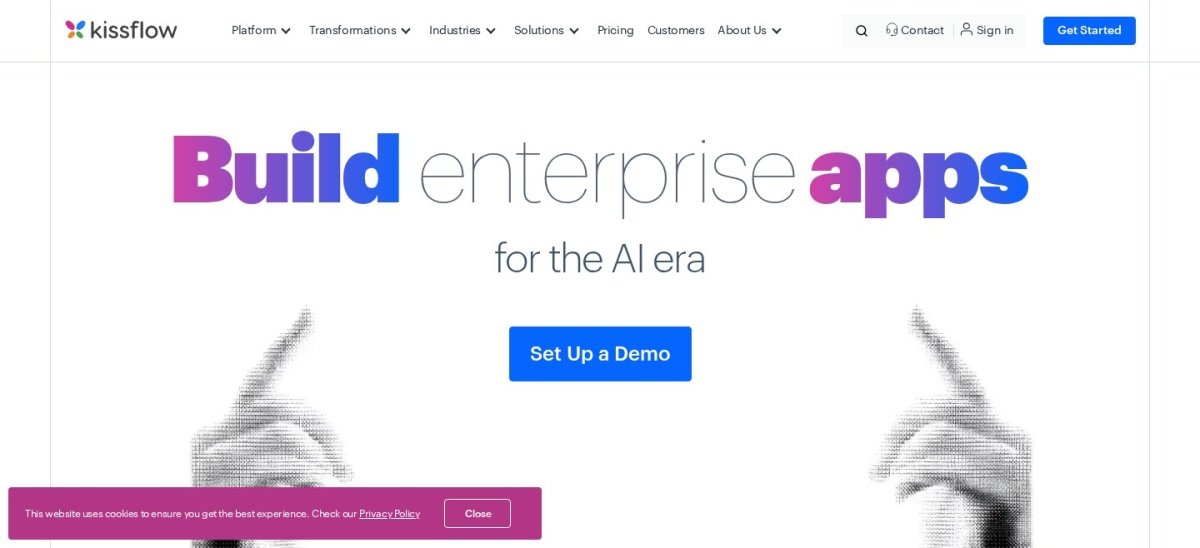
Kissflow homepage, captured Nov 2026.
Kissflow is a no-code platform for internal apps and approval workflows, with an AI Builder that generates a working app from a prompt or requirements document. The Basic plan starts at $2,500 a month with unlimited workflows, and AI features, integrations and APIs are included rather than gated behind add-ons.
The trade off is the entry price. Basic costs $2,500 a month before any per-user math, and older listings showing $10 per user a month no longer match the current pricing page. It suits mid-market teams automating procurement, HR and finance approvals.
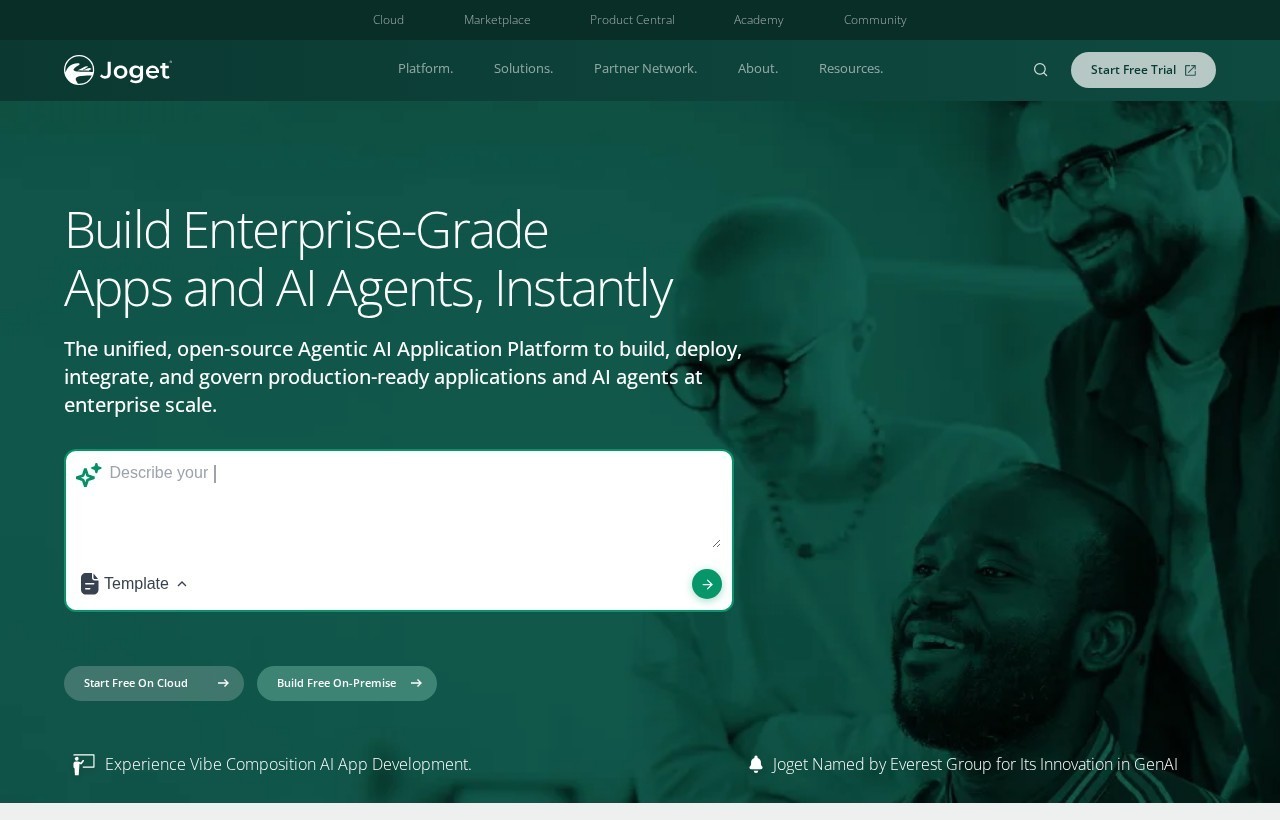
Joget DX is an open-source, low-code platform for building enterprise apps and automating workflows with a drag-and-drop builder and plugin architecture. The free Community Edition covers full app building, and Enterprise starts at $150 per user a year with support, governance and advanced deployment options.
The trade off is polish. Reviewers praise the flexibility but note the interface and documentation feel rougher than the big commercial platforms, and Enterprise pricing is seen as high for what it adds. It suits teams that want open-source control and self-hosting.
Free plans are real here, not just trials. OutSystems, Mendix, Power Apps, Zoho Creator and Joget DX all let you build without paying.
The limits are what differ. Zoho Creator's free plan allows one app with 5,000 records, Power Apps' Developer Plan covers one user for non-production apps, and OutSystems' Personal Edition supports up to 100 users.
Paid plans mostly add production rights. You get uptime SLAs, more environments, SSO and support, plus higher caps on apps, users and records.
If you only need one process, start free and pay only when the free limits bite. For a portfolio of apps, price the paid tier first, because that is the cost you will actually pay.
How we chose
We started from the low-code platforms G2 lists as Appian competitors, then kept nine with published G2 ratings and verifiable pricing.
Prices come from each vendor's pricing page, checked on 29 November 2026. Ratings and review counts come from G2 on the same day. Where a vendor shows a sale, the list shows the regular price.
We left out tools with no published price and no usable free tier. No vendor paid for a place, and we do not claim to have used these tools ourselves.
How to choose an Appian alternative
Start with the process you are replacing, then match the tool to the team that will build and run it.
List the processes Appian runs today. Count the apps, the users and the integrations. A single approval flow and a 20-app portfolio point at different tools.
Decide who builds. Professional developers suit OutSystems or Mendix; business teams suit Zoho Creator, Kissflow or Quickbase.
Price the same team on every shortlisted tool. Per-user, per-app and flat monthly prices hide different totals. Quote the same headcount everywhere before comparing.
Run a pilot on the free plan. Rebuild one real process end to end, including approvals and integrations, before signing a contract.
FAQ
What are the best Appian alternatives in 2026?
OutSystems is the best Appian alternative overall, rated 4.5 out of 5 from 1,802 G2 reviews. Mendix and Microsoft Power Apps follow for governed enterprise apps and Microsoft 365 teams, while Zoho Creator is the cheapest paid start.
What is the cheapest Appian alternative?
Zoho Creator is the cheapest paid option at $8 per user a month billed annually, with a free plan for one app. Joget DX is next, with a free Community Edition and Enterprise from $150 per user a year.
Is there a free alternative to Appian?
Yes. OutSystems, Mendix, Microsoft Power Apps, Zoho Creator and Joget DX all have free plans. OutSystems' Personal Edition is the most generous, supporting up to 100 users, while Zoho Creator's free plan covers one app.
Which Appian alternative is best for small teams?
Zoho Creator suits small teams best, starting at $8 per user a month with a free plan for one app. Microsoft Power Apps also works well for small Microsoft 365 teams, at $20 per user a month for Premium.
OutSystems vs Mendix: which is better?
OutSystems rates higher on G2 at 4.5 out of 5 from 1,802 reviews against Mendix at 4.4 from 417, and reviewers praise its speed of development. Mendix offers more deployment choice, including SAP BTP and private cloud, and a published Standard price from $1,090 a month.
Can I migrate from Appian to another low-code platform?
None of these tools publishes a one-click Appian importer, so plan on rebuilding each process on the new platform. Start with one process as a pilot, map the data model and integrations first, and keep Appian running until the replacement is live.
SaaS SEO and WordPress specialist with about 8 years of experience. Rakib compares WordPress plugins, themes, hosting and software using public pricing, documentation and user reviews. See how we rank.