Terraform is the best of the Ansible alternatives for most teams moving to infrastructure as code. It is rated 4.6/5 on G2 from 153 reviews, and its free tier covers up to 500 managed resources. Pick Pulumi if your team would rather write TypeScript or Python, and Chef if you need policy-as-code with compliance checks.
How we make this list: we compare pricing pages, product documentation and public user reviews, then re-check every price before each update. No product paid for a place. Disclosure.
Terraform leads: rated 4.6/5 on G2 from 153 reviews, with a free tier up to 500 managed resources and paid plans from $0.10 per resource a month.
Pulumi has the joint-highest rating here at 4.8/5 and lets teams write infrastructure in TypeScript, Python, Go, C# or Java.
Chef publishes the clearest per-node price: Business costs $59 per node per year, Enterprise $189.
All 9 tools have a free plan or free edition, but four sell paid plans by quote only: Puppet, SaltStack, Rudder and CFEngine.
Spacelift is the priciest paid start at $399 a month, while Octopus Deploy starts at $2,080 a year for release orchestration.
What should you look for in Ansible alternatives?
Ansible applies changes when a playbook runs, so teams that need continuous enforcement, cloud provisioning or code-first workflows often outgrow it. The right replacement depends on whether you manage running servers, provision cloud resources, or both.
Agentless tools are the fastest switch. Terraform and Pulumi need no agent on managed machines, so a team can automate a fleet in days rather than weeks.
Continuous enforcement is the big split. Puppet, Chef, SaltStack and Rudder keep checking state on a schedule and correct drift, while Ansible-style tools only act when run.
Price models differ more than features here. Some tools charge per node, some per managed resource, and four of the nine in this list sell paid plans only by quote, so model your fleet size before you choose. Our guide on deploying WordPress with GitHub Actions shows the same idea at small scale: define the change in code, then let automation apply it.
Start free wherever you can. Every tool in this list has a free plan or free edition, so run it on a few test machines before you pay for a console, approvals or support.
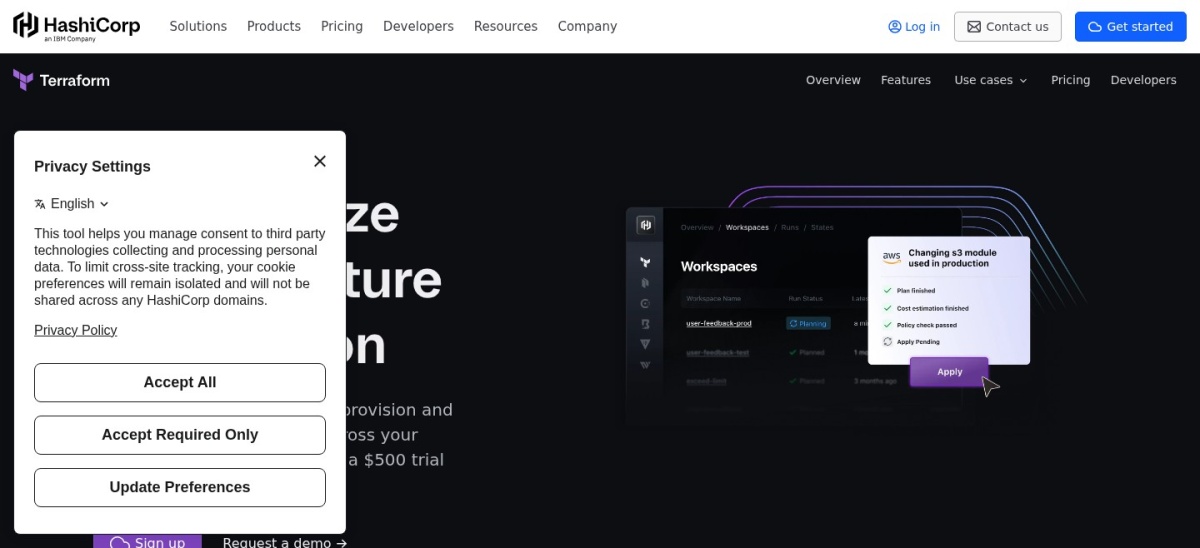
Terraform is an infrastructure-as-code tool that provisions and configures cloud resources from declarative files written in HCL. One codebase can manage AWS, Azure, Google Cloud and on-prem resources, and the CLI is free to run with local state. HCP Terraform adds remote state, team workflows and a private registry, free for up to 500 managed resources.
The trade off is usage-based billing. Paid HCP Terraform starts at $0.10 per managed resource a month, so costs rise with every resource in state, and drift detection and audit logs need the Standard or Premium tiers. It suits cloud teams that provision infrastructure as code and want one workflow across providers.
Managed resources$0.1825/resource/mo on Essentials
pulumi.com
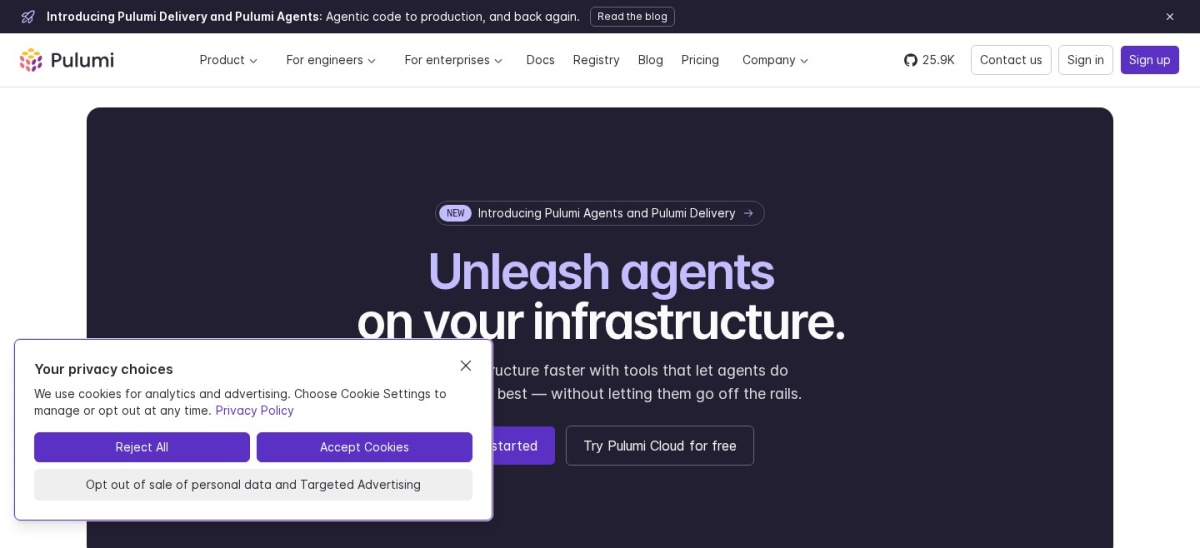
Pulumi homepage, captured Nov 2026.
Pulumi is an infrastructure-as-code platform that lets teams define cloud resources in TypeScript, Python, Go, C#, Java or YAML instead of a config-only language. Loops, functions and unit tests work as they do in normal code, and the engine is open source. Pulumi Cloud adds state management, secrets, policy checks and a console, free for one user.
The trade off is cost and code upkeep. Essentials costs $40 a month with unlimited users, and managed resources beyond the included credits bill per resource, while Pro at $400 a month adds the governance features larger teams need. It suits software-led teams that already write TypeScript or Python every day.
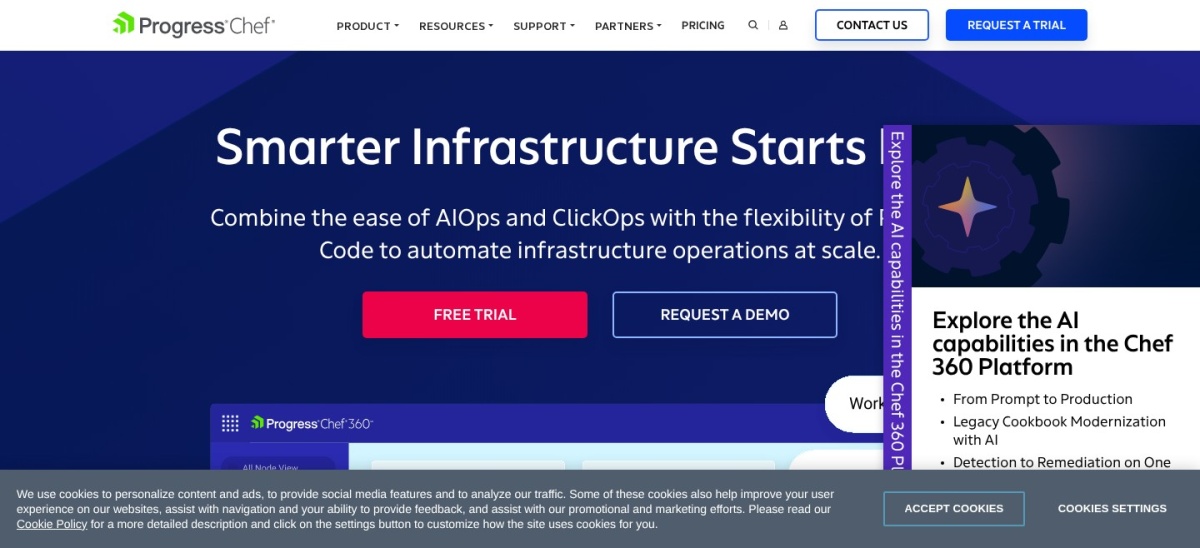
Chef is a configuration management platform that defines infrastructure as policy-as-code, written as recipes and cookbooks in a Ruby-based language. Chef Infra applies the wanted state, detects drift and corrects it across Windows, Linux and macOS, and InSpec checks systems against compliance rules. A free community version covers non-commercial use.
The trade off is per-node cost at scale. Business costs $59 per node per year and Enterprise $189, so large fleets add up fast, and serious cookbook work needs Ruby skills. It suits teams that want testable, code-driven configuration with compliance checks built in.
What we like
Clear published per-node pricing
Drift detection and auto-correction built in
InSpec compliance checks in the same platform
Works across Windows, Linux and macOS
Watch out for
Per-node pricing grows fast at scale
Cookbooks need Ruby skills
Community version is non-commercial only
Enterprise adds auditing at $189 per node a yearVisit chef.io
04
Puppet
4.2/5on G2 (43 reviews, checked Nov 2026)
PricingCustom/yr
Best for enterprise governance and enforcement
EnforcementContinuous, agent-based
Free editionCore, under 25 nodes
Paid planEnterprise, by quote
Modules7,000+ on Puppet Forge
puppet.com
Puppet homepage, captured Nov 2026.
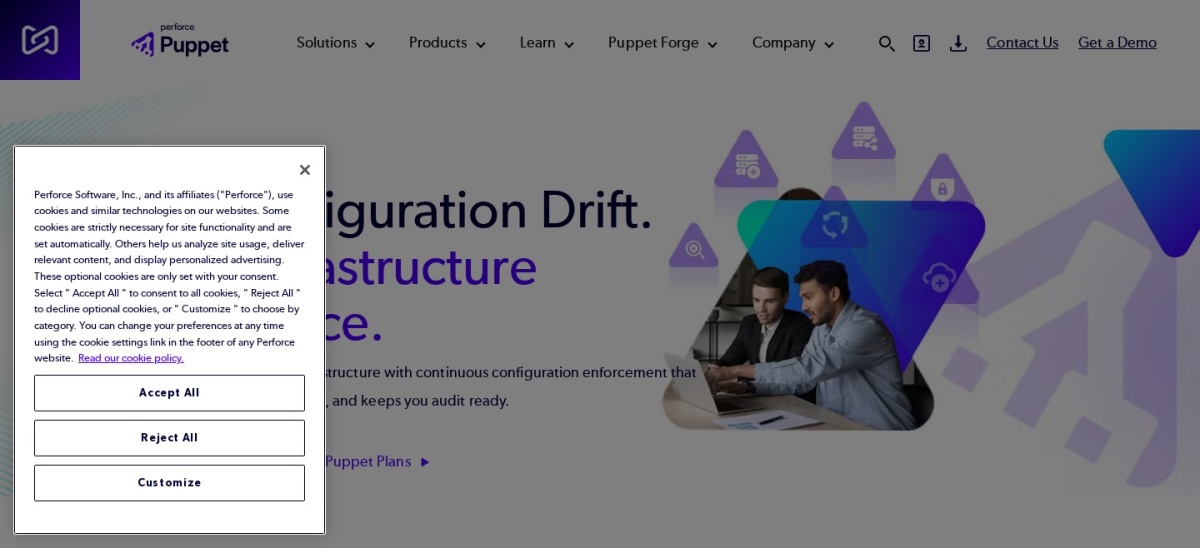
Puppet is a configuration management platform built around continuous enforcement of a wanted state. Agents on each node check in on a schedule, apply the declared configuration and report drift, which suits large fleets that must stay compliant. Puppet Core is free for fewer than 25 nodes, and more than 7,000 ready modules are listed on Puppet Forge.
The trade off is price opacity and agent overhead. Enterprise and Advanced plans are sold by quote only, and every managed node needs an agent installed and kept up to date. It suits large enterprise IT teams that need governance, compliance reporting and enforcement they can prove.
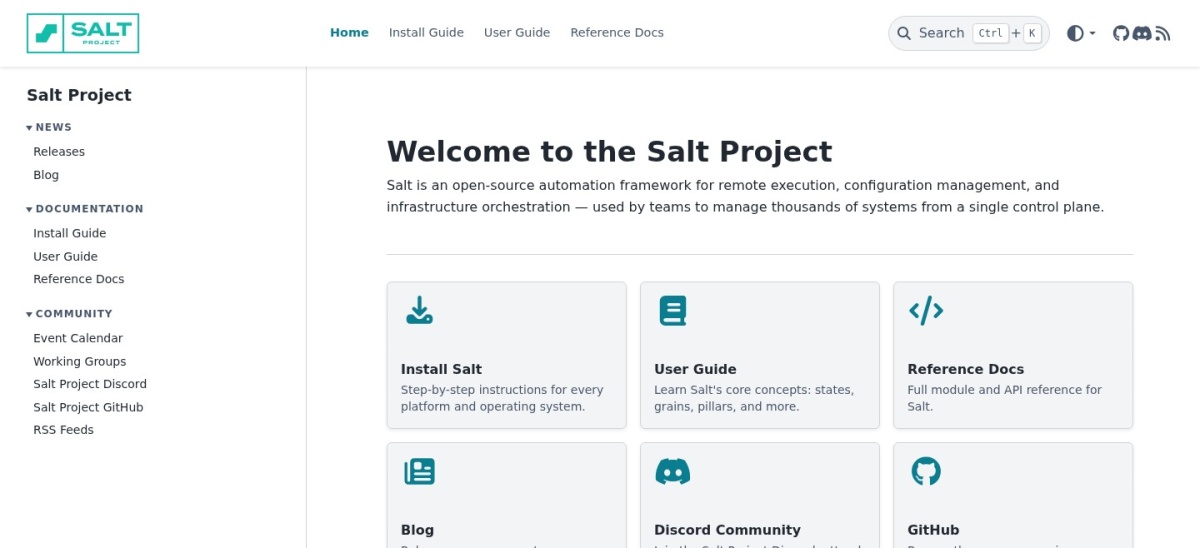
SaltStack, now the Salt Project, is an open-source configuration management tool known for speed and event-driven automation. Its master-minion design reacts to infrastructure events in real time, and it manages Linux, macOS and Windows at large scale. The open-source project is free, with documentation and releases kept up by its community.
The trade off is the enterprise route. VMware Salt is sold only as part of Broadcom's Advanced Cyber Compliance add-on, priced by quote and tied to VMware platform subscriptions, so there is no standalone paid edition to buy. It suits large, distributed teams that need fast, event-driven automation and are happy running open source.
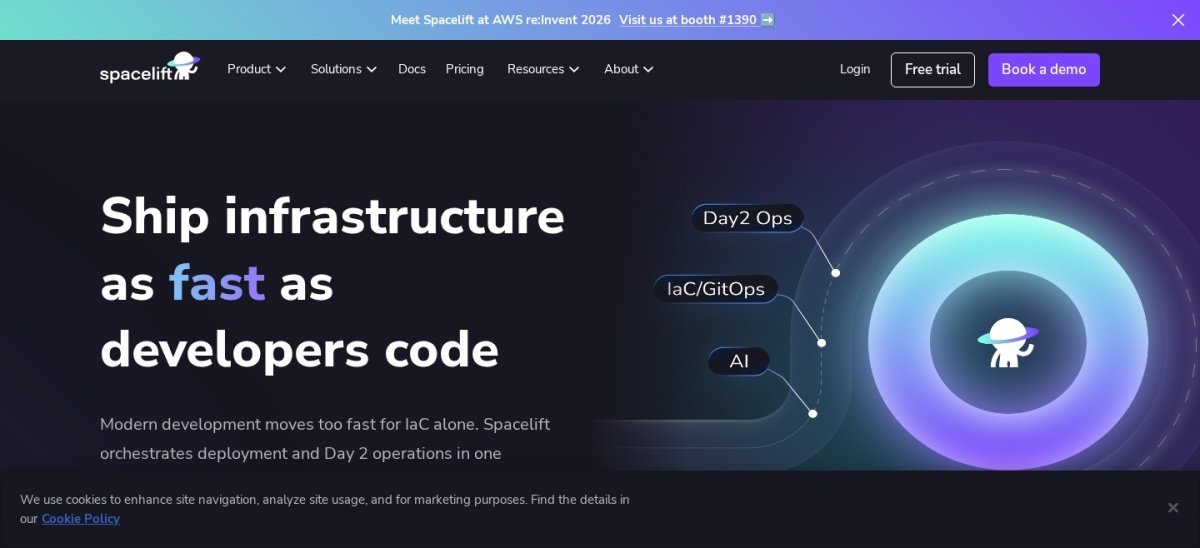
Spacelift is an orchestration platform that runs infrastructure-as-code workflows with policies, approvals, drift detection and audit trails. It supports Terraform, OpenTofu, Pulumi, CloudFormation, Kubernetes and Ansible from one control plane, so teams running several tools can govern them together. The free plan covers 2 users, and Starter adds 10 users, 2 public workers and a policy engine.
The trade off is the jump from free to paid. Starter costs $399 a month on an annual subscription, which is a big step for a small team, and drift detection and audit trails sit in the higher Business and Enterprise tiers. It suits platform teams that run several IaC tools and need approvals and policy checks on every change.
Octopus Deploy is a continuous delivery platform that coordinates application releases across different infrastructure environments. Its free plan covers 10 projects, 10 tenants, 10 machines and 10 users, with deployment variables, approvals and runbooks included. It fits teams that deploy the same app to many servers or clusters and want releases, not just config, in one place.
The trade off is the cost of expanding beyond the free limits, with Professional Server pricing starting at $2,080 per year and Cloud Professional at $4,330 a year. Teams also need to configure deployment steps for their infrastructure. It suits organizations managing releases across cloud services, Kubernetes clusters and traditional servers.
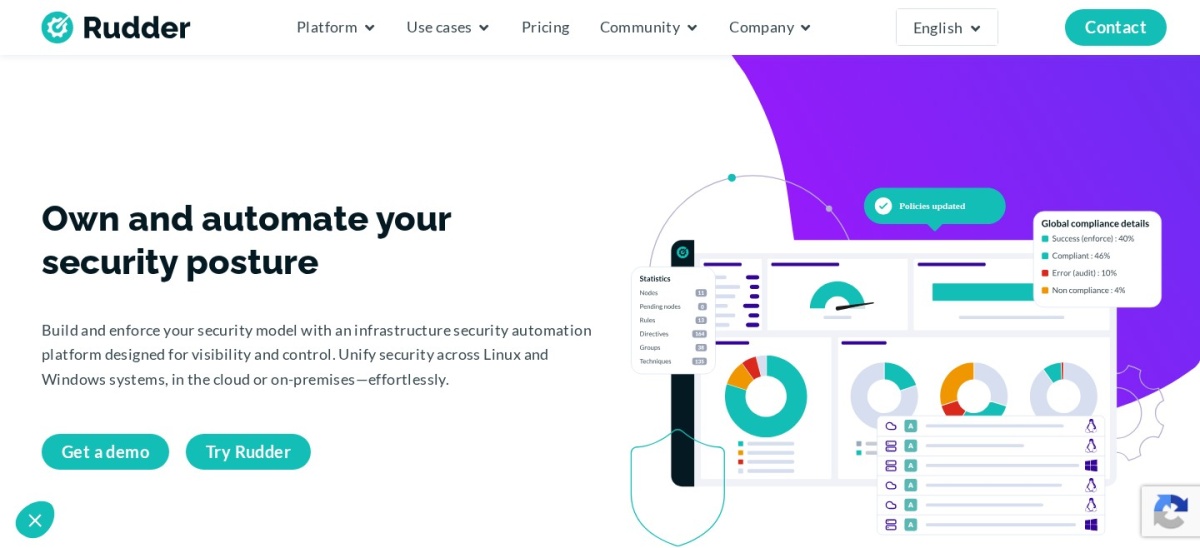
Rudder is an open-source platform for configuration management, patching and continuous compliance. A central web console manages policies, inventory and reports, while a light agent enforces the wanted state and reports back in real time. Rules can run in audit mode or enforce mode per node, which fits teams that must prove compliance, not just set it.
The trade off is a smaller ecosystem. The community and module library are far smaller than Ansible or Puppet, and paid subscriptions with proprietary plugins are priced by quote. It suits regulated teams that want a clear console, audit trails and drift correction without building their own reporting.
What we like
Central console with live compliance reports
Audit and enforce modes per node
Open-source core is free
Light agent footprint on nodes
Watch out for
Smaller community than the big names
Subscription pricing is by quote only
Policy concepts take time to learn
Paid subscriptions add proprietary plugins and supportVisit rudder.io
09
CFEngine
4.8/5on G2 (2 reviews, checked Nov 2026)
PricingCustom/yr
Best for huge fleets on light agents
AgentVery light, promise theory
Free editionCommunity, GPLv3
Paid planEnterprise, by quote
Since1993, the oldest tool here
cfengine.com
CFEngine homepage, captured Nov 2026.
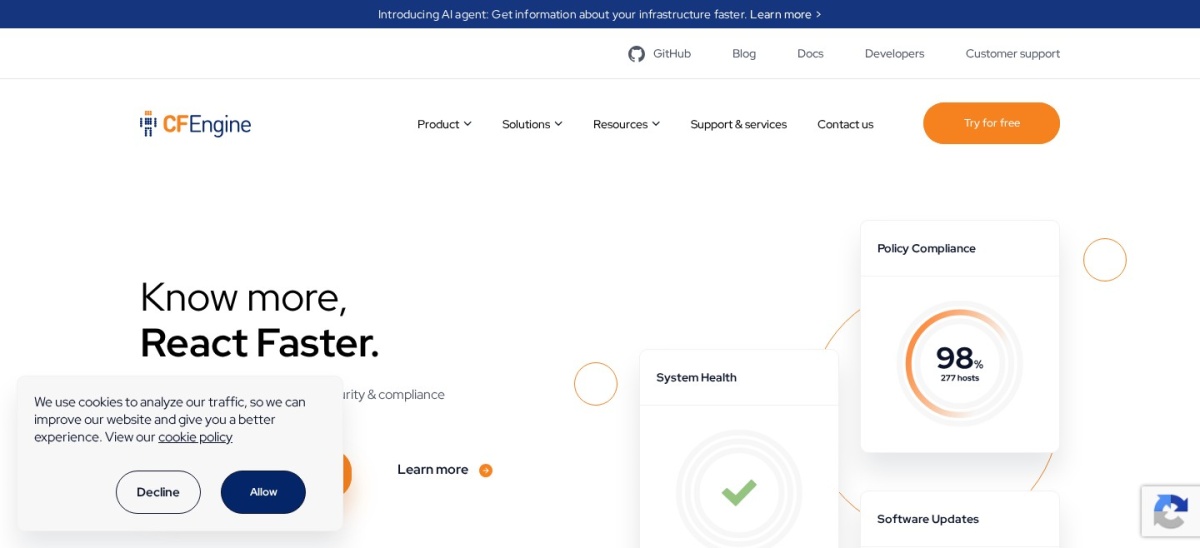
CFEngine is the oldest configuration management tool in this list, created in 1993 and built on promise theory. Its agent is very small, so it runs well on large fleets, embedded systems and edge devices where heavier agents cost resources. The community edition is free under GPLv3, and the Enterprise edition adds support and compliance features.
The trade off is age and reach. The policy language and interface feel older than modern tools, and the community is small, so answers and ready-made content are harder to find. It suits teams running very large or constrained fleets that value a tiny agent over a polished console.
All nine tools have a free plan or free edition. Spacelift limits its free plan to 2 users, while the open-source tools let you run real fleets without paying.
Paid plans mostly add control and proof. You get a web console, role-based access, audit logs, drift detection and support.
Four tools sell paid plans by quote only: Puppet, SaltStack, Rudder and CFEngine. Budget for a sales conversation, and get the quote before you commit to a migration.
If you run fewer than 25 nodes, Puppet Core is free, and Terraform's free tier covers 500 managed resources. Start free, measure your fleet, then price the paid tier against your real node count.
How we chose
We started from the configuration management and infrastructure-as-code tools most often named as Ansible replacements in 2026 comparisons and G2's configuration management category, then kept the nine with a real free edition and a public rating. Ansible itself is not listed, since this list is about replacing it.
Prices come from each vendor's pricing page, checked on 29 November 2026. Ratings and review counts come from G2 on the same day. Where a vendor publishes no price, the list shows Custom and says so in the text.
We left out tools with no public rating, such as niche forks and new entrants. No vendor paid for a place, and we do not claim to have used these tools ourselves.
How to choose an Ansible alternative
Start with your fleet size and your team's skills, then match the tool to the job.
Count your nodes and resources first. Per-node and per-resource pricing punish large fleets. Model your real count before you shortlist, since four tools here need a sales quote.
Pick agentless for a quick start. Terraform and Pulumi need no agent on managed machines, so you can automate a fleet in days rather than weeks.
Match the model to the job. Use Terraform or Pulumi to provision cloud resources, and Puppet, Chef or Salt to keep running servers in a wanted state. See our guide on securing wp-config.php for how config files sit beside automation.
Run the free edition before you pay. Set up the open-source version on a few test nodes first, and check that your team is happy with its language before you migrate playbooks.
FAQ
What are the best Ansible alternatives in 2026?
Terraform is the best Ansible alternative for most teams. It provisions and configures cloud resources from declarative HCL files, is rated 4.6 out of 5 on G2 from 153 reviews, and its free tier covers up to 500 managed resources.
Is there a free alternative to Ansible?
Yes, all nine tools in this list have a free plan or free edition. Terraform's free tier covers 500 managed resources, Puppet Core is free for under 25 nodes, and SaltStack, Rudder and CFEngine all have free open-source editions.
What is the cheapest Ansible alternative?
Terraform is the cheapest to start paying for, at $0.10 per managed resource a month on HCP Essentials, and the CLI is free. Chef is the cheapest per-node paid option at $59 per node a year, while four tools sell paid plans only by quote.
Which Ansible alternative is best for beginners?
Terraform is the easiest starting point for cloud teams, with one declarative language and a plan step that shows changes before they apply. Pulumi suits beginners who already code, since it uses normal programming languages instead of a new config language.
Terraform vs Pulumi: which is the better Ansible alternative?
Terraform wins on ecosystem and multi-cloud coverage, with the largest provider and module library. Pulumi wins for developer teams, since infrastructure is written in TypeScript, Python or Go with loops, functions and unit tests, and it is rated 4.8 out of 5 on G2.
Is Puppet or Chef better than Ansible?
Puppet and Chef suit teams that need continuous enforcement and compliance proof, which Ansible does not do on its own. Puppet enforces state on a schedule across large fleets, while Chef adds InSpec compliance audits, but both need agents and, for Puppet, a sales quote for paid plans.
Can I replace Ansible with Terraform alone?
Partly. Terraform provisions and configures cloud resources well, but it is mainly a provisioning tool. It pairs well with Puppet, Chef or Salt, which keep running servers in a wanted state after Terraform has built them.
SaaS SEO and WordPress specialist with about 8 years of experience. Rakib compares WordPress plugins, themes, hosting and software using public pricing, documentation and user reviews. See how we rank.