HubSpot is the best alternative to Salesforce for SMBs, with a genuinely usable free CRM and more than 14,000 G2 reviews. Pipedrive is the best pick for sales-led teams, while Zoho is the cheapest full CRM for small teams.
How we make this list: we compare pricing pages, product documentation and public user reviews, then re-check every price before each update. No product paid for a place. Disclosure.
HubSpot is free for unlimited users, with Starter at 20 dollars a seat a month when you need more.
Pipedrive Lite costs 14 dollars a seat a month and has the cleanest pipeline view here.
Zoho Standard costs 14 dollars a user a month with a free plan for up to 3 users.
Freshsales Growth costs 9 dollars a user a month, the cheapest full CRM after Bigin.
Bigin costs 7 dollars a user a month and is built for teams moving off spreadsheets.
Which alternatives to Salesforce for SMBs are worth switching to?
Salesforce Starter costs 25 dollars per user a month and caps at 10 users, while its Pro Suite costs 100 dollars a user a month, so small teams often pay enterprise prices for features they never use.
The best alternatives to Salesforce for SMBs cost far less per seat and are easier to set up. HubSpot, Pipedrive and Zoho all cover contacts, deals and pipelines without a consultant.
Free plans matter most for tiny teams. HubSpot and Zoho both offer a free tier that works for a handful of users, while Pipedrive and Close offer trials instead.
Per-seat pricing multiplies fast. A 10-dollar difference per user is 1,200 dollars a year for a 10-person team, so count seats before you compare headline prices.
HubSpot is an all-in-one CRM built around contacts, deals, pipelines and email, with marketing, sales and service tools sharing one database. The free CRM covers unlimited users, contact management, deal pipelines and email tracking, and Starter costs $20 per seat a month when you need automation and branding removal.
The trade off is the upgrade path. Serious automation, forecasting and AI scoring sit on Professional at $100 a seat a month, so growing teams face a steep jump. It suits small businesses that want marketing and sales in one place with a free start.
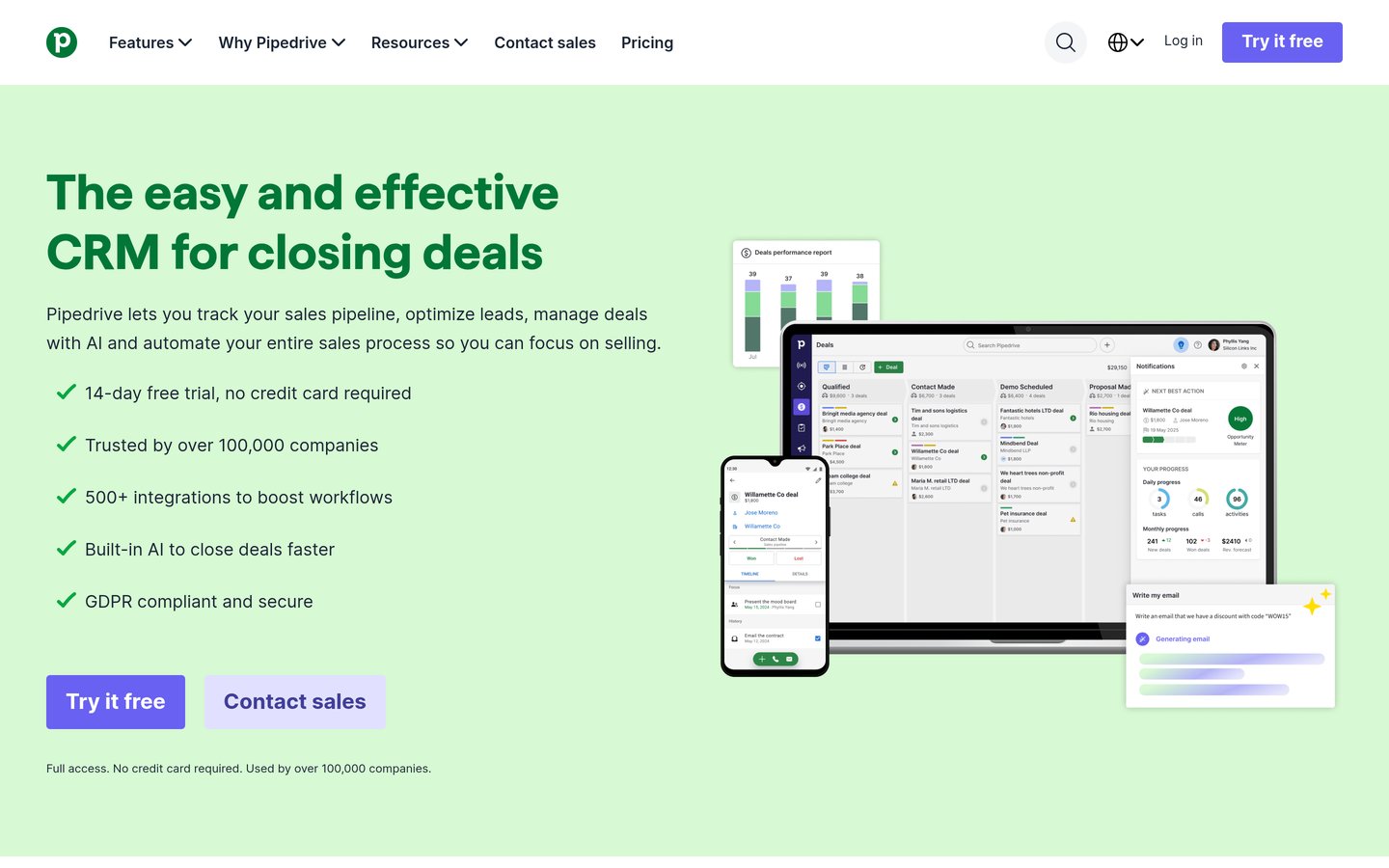
Pipedrive is a CRM built around one thing, a visual sales pipeline that a sales team can learn in an afternoon. The Lite plan costs $14 per seat a month billed annually and covers lead, calendar and pipeline management, AI-powered report creation and 500 integrations, with a 14-day free trial.
The trade off is breadth. Pipedrive has no free plan and no built-in marketing tools, so teams that need email campaigns pay for another tool. It suits sales teams that want the cleanest pipeline view and nothing else.
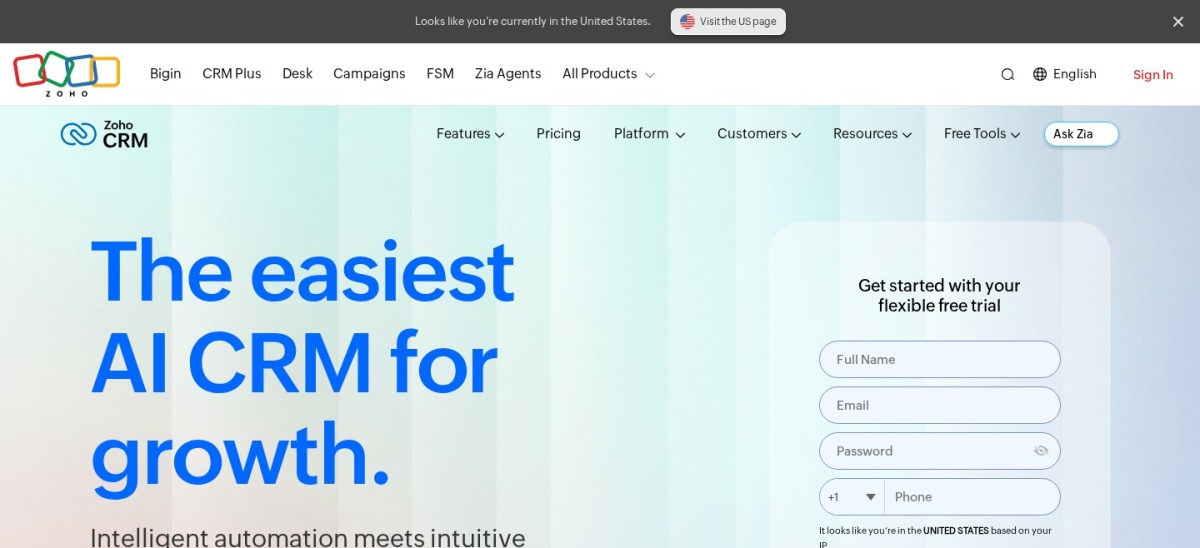
Zoho CRM is a full-featured CRM for small teams, with contacts, deals, pipelines, workflow automation and built-in calling. The free plan covers up to 3 users, and Standard costs $14 per user a month billed annually, with email integration, mass email, multiple pipelines and sales forecasting.
The trade off is setup time. Zoho has more options to configure than Pipedrive or HubSpot, so it takes longer to set up well, and AI features sit on higher plans. It suits cost-sensitive teams that want a full CRM with room to grow into the wider Zoho suite.
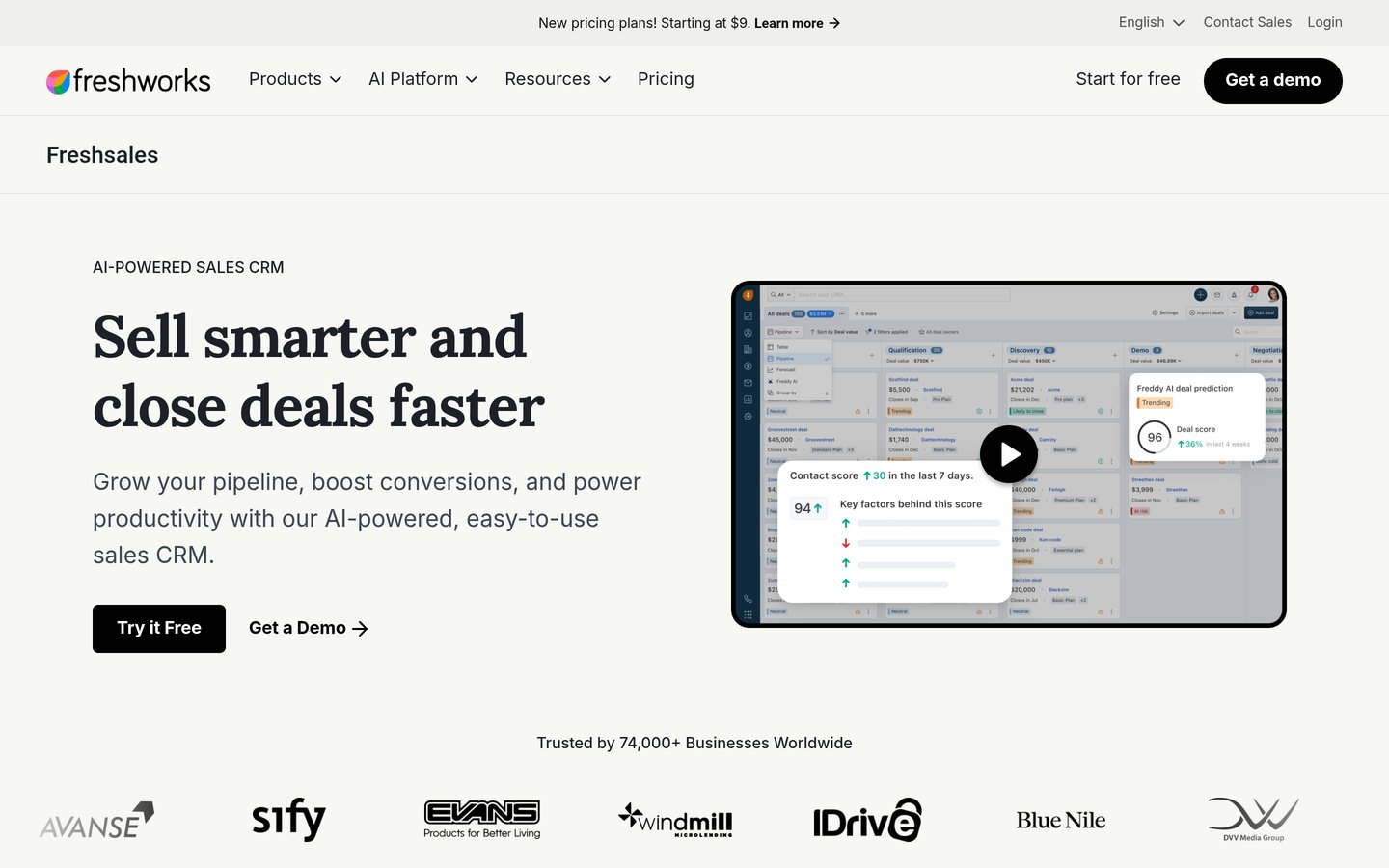
Freshsales is a modern CRM from Freshworks with built-in phone, email and chat, plus AI lead scoring from its Freddy assistant. The Growth plan costs $9 per user a month billed annually and covers web forms, basic workflows, SMS and WhatsApp, with a free plan for up to 3 users.
The trade off is the tier jump. Moving from Growth to Pro raises the price from $9 to $39 a user a month, and branded documents cost extra. It suits growing sales teams that want calling and automation at a low entry price.
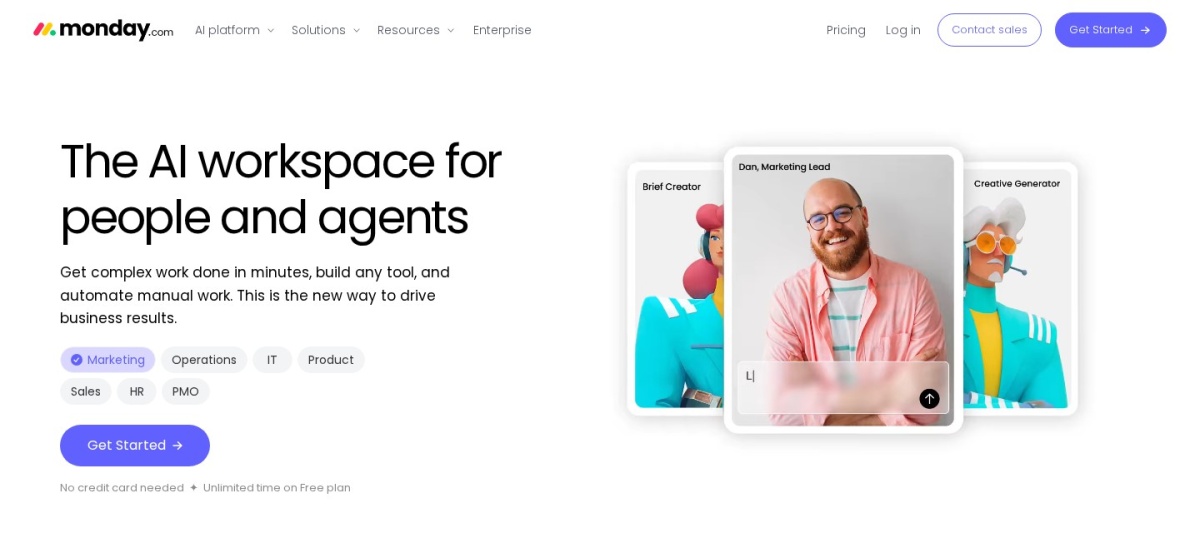
monday CRM is a visual CRM built on monday.com boards, with contacts, deals and pipelines you can shape like a spreadsheet. The Basic plan costs $12 per user a month billed annually and covers unlimited contacts, boards and docs, with a free plan for up to 2 seats.
The trade off is depth. monday CRM is more flexible than Pipedrive but less of a pure sales tool, and automations are limited on Basic. It suits teams that already use monday.com and want their CRM on the same boards.
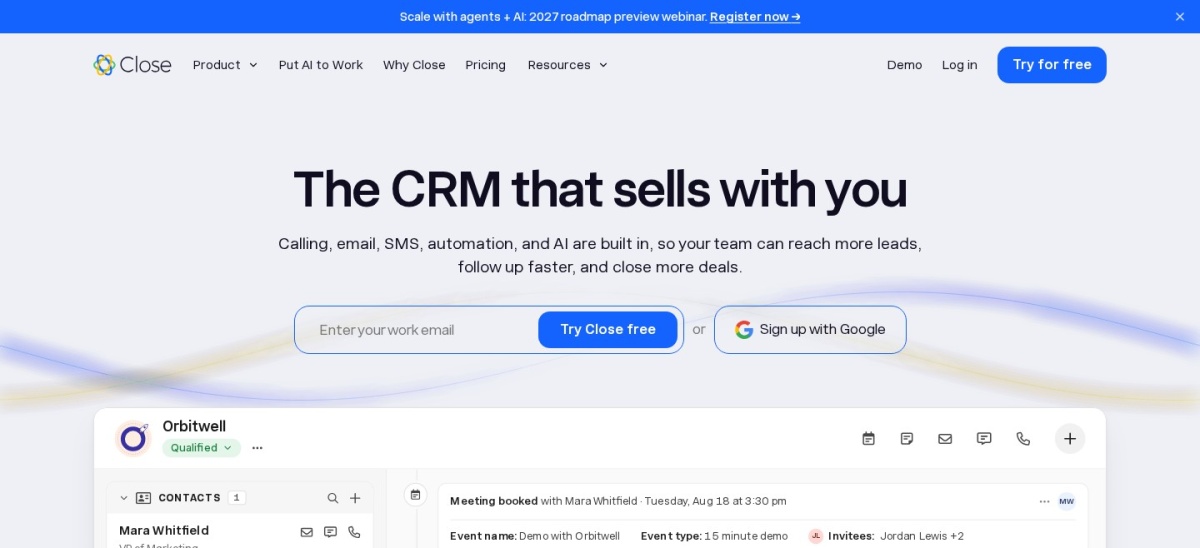
Close is a CRM built for inside sales teams that live on the phone and email, with built-in calling, SMS and email sequences in one inbox. The Startup plan costs $49 per user a month billed annually and covers unlimited contacts, calling and email, with a 14-day free trial.
The trade off is price. At $49 a user a month it is the most expensive entry in this list, and there is no free plan. It suits small sales teams that make dozens of calls a day and want the dialler inside the CRM.
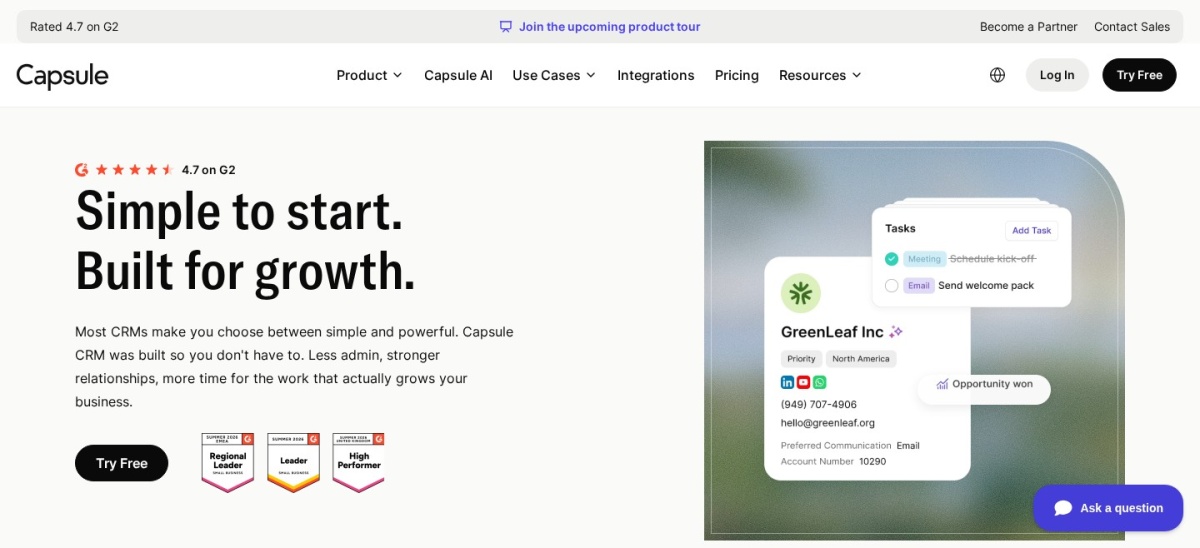
Capsule is a simple CRM for small teams that want contacts, deals and tasks without the weight of a big platform. The free plan covers up to 2 users, and the Starter plan costs $18 per user a month billed annually, with unlimited contacts, sales pipelines and 50,000 contacts per account.
The trade off is scale. Capsule has fewer automations and integrations than HubSpot or Zoho, and its AI features are light. It suits freelancers and tiny teams that want a CRM they can set up in an hour.
Insightly is a CRM that pairs sales pipelines with project management, so a deal can turn into a project without switching tools. The Plus plan costs $29 per user a month billed annually and covers 100,000 records, workflow automation and 25 custom objects, with a 14-day free trial.
The trade off is price and onboarding. Plus costs twice Zoho Standard, and guided onboarding is listed at $1,500 and marked as required. It suits professional services firms that sell a project and then deliver it.
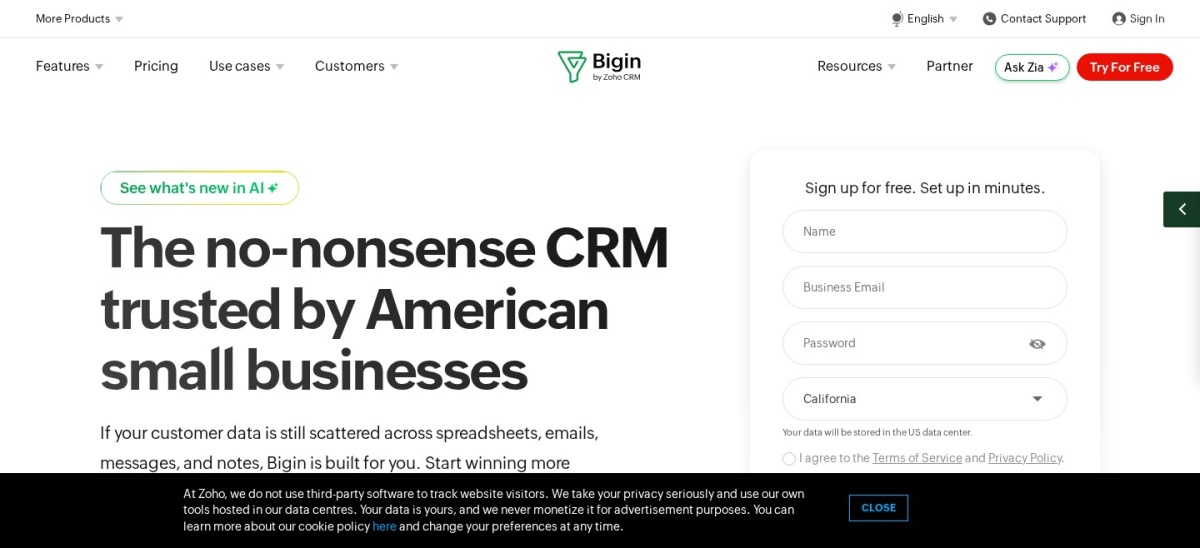
Bigin is Zoho's simple pipeline CRM for small businesses moving from spreadsheets to a real sales tool. The free edition covers a single pipeline and 500 records, and Express costs $7 per user a month billed annually, with 3 team pipelines, 50,000 records and 30 automations.
The trade off is depth. Bigin is deliberately simple, so teams that need inventory, CPQ or advanced reporting will outgrow it and move to Zoho CRM. It suits the smallest teams that want a pipeline, not a platform.
Salesforce Sales Cloud starts with the Starter Suite at 25 dollars per user a month billed annually, capped at 10 users, and Pro Suite costs 100 dollars per user a month.
Every alternative here starts lower. Bigin costs 7 dollars a user a month, Freshsales 9 dollars, and monday, Zoho and Pipedrive 12 to 14 dollars.
The gap widens as teams grow. A 10-user team pays 250 dollars a month on Salesforce Starter, 70 dollars on Bigin and 90 dollars on Freshsales, before add-ons.
How we chose
We started from the CRMs that appear most often in Salesforce alternative searches for small businesses, then kept the nine with a verifiable G2 rating and a published per-user price.
Prices come from each vendor's pricing page, checked on 29 November 2026, with Pipedrive Lite at 14 dollars a seat a month confirmed on its official pricing page today. Ratings and review counts come from G2 on the same day. Where a vendor shows a sale, the list shows the regular price.
We left out tools with no verifiable rating and quote-only tools. No vendor paid for a place, and we do not claim hands-on testing for this list.
How to choose a Salesforce alternative
Start with the size of your team and the way you sell, then match the CRM to that reality.
Count your seats and your contacts. Per-seat pricing multiplies fast, and free tiers cap users. A 10-person team pays very different totals on HubSpot, Zoho and Bigin.
Decide whether you need marketing too. If you do, HubSpot or Zoho cover email and campaigns beside the CRM. If you only sell, Pipedrive or Close keep the tool focused.
Try the free plan with real deals. Import a few real contacts and deals before paying. A trial shows whether the pipeline fits how your team actually sells.
Check what sits on the next tier up. Automations, forecasting and AI scoring often sit one plan higher. Confirm the tier you will need in six months, not just the one you need today.
FAQ
What are the best alternatives to Salesforce for SMBs in 2026?
HubSpot is the best alternative to Salesforce for SMBs, with a free CRM that small teams can use for real work. Pipedrive is the best sales-led pick, and Zoho is the cheapest full CRM at 14 dollars a user a month.
Which Salesforce alternative is cheapest?
Bigin is the cheapest at 7 dollars a user a month, followed by Freshsales at 9 dollars. Both are built for small teams moving off spreadsheets, and Bigin is made by the same company as Zoho CRM.
Is there a free alternative to Salesforce for SMBs?
Yes. HubSpot has a free CRM with unlimited users, and Zoho CRM is free for up to 3 users. Freshsales is free for up to 3 users too, while Pipedrive and Close offer 14-day trials instead.
Is HubSpot or Pipedrive better than Salesforce for a small team?
HubSpot is better for teams that want marketing and sales in one place with a free start. Pipedrive is better for sales teams that live in the pipeline, with the cleanest deal view here.
Can I migrate from Salesforce to HubSpot or Zoho?
Yes. HubSpot and Zoho both offer free import tools for contacts, deals and companies from Salesforce, and HubSpot has a guided migration service on paid plans. Export your data from Salesforce first and check custom fields.
Which Salesforce alternative is easiest to set up?
Pipedrive is the easiest to set up, with a visual pipeline you can use in an afternoon and no consultant needed. HubSpot is nearly as easy, while Zoho takes longer because it has more options to configure.
SaaS SEO and WordPress specialist with about 8 years of experience. Rakib compares WordPress plugins, themes, hosting and software using public pricing, documentation and user reviews. See how we rank.