Pinecone is the best Weaviate alternative for most teams: its Builder plan costs $20 a month, it is rated 4.6 out of 5 on G2, and it runs fully managed with no servers to operate. Choose Qdrant if you want open-source self-hosting, or Milvus for billion-vector scale on Zilliz Cloud.
How we make this list: we compare pricing pages, product documentation and public user reviews, then re-check every price before each update. No product paid for a place. Disclosure.
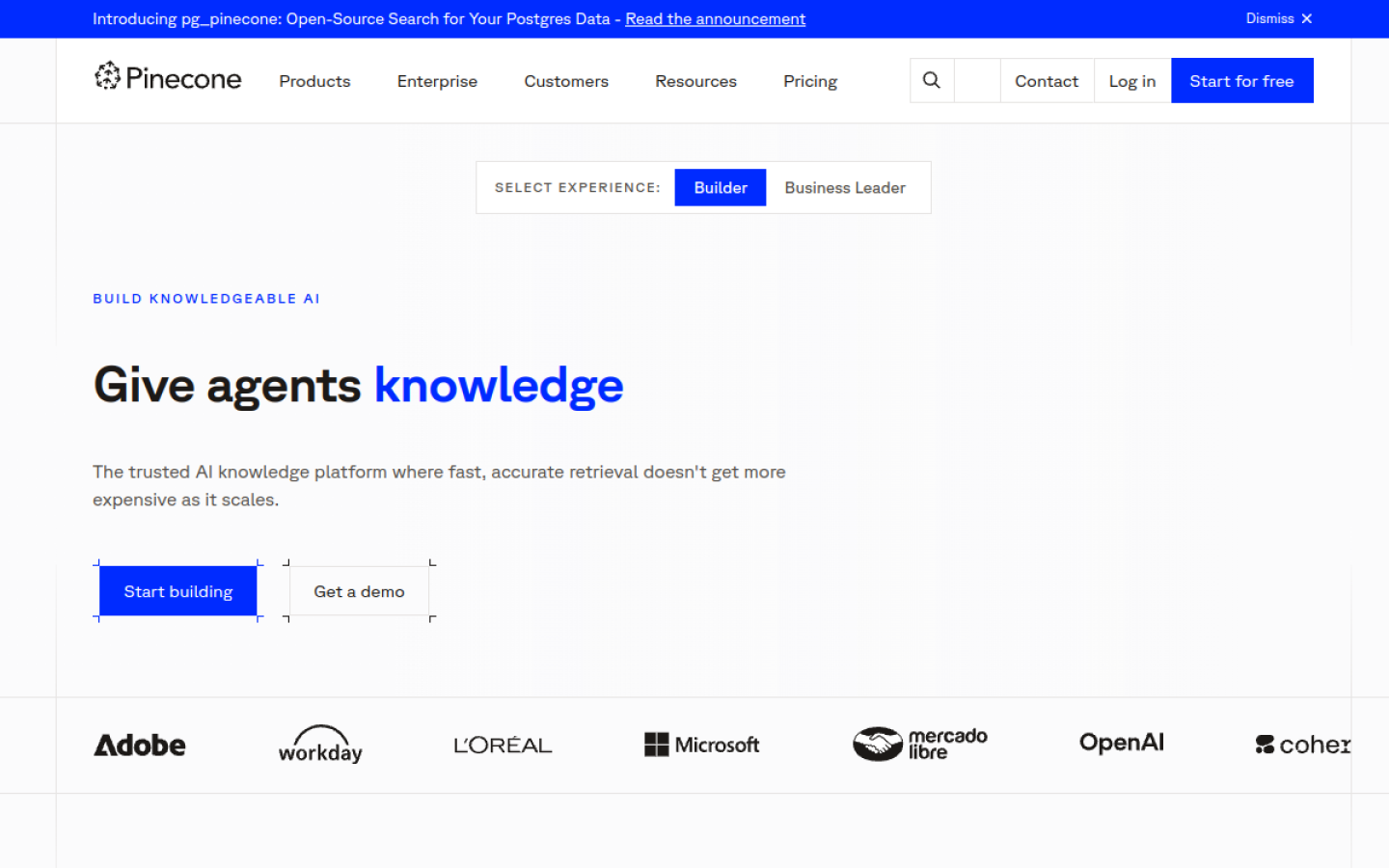
Pinecone is the easiest managed switch: Builder costs $20 a month flat and the free Starter covers prototypes.
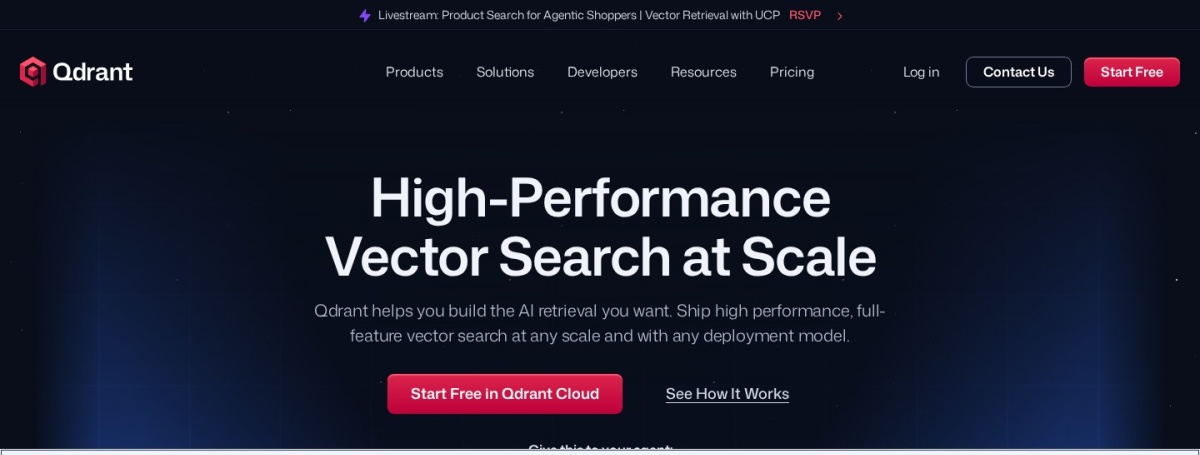
Qdrant is the open-source pick, with a free Cloud tier and self-hosting under Apache 2.0, but paid Cloud has no published flat rate.
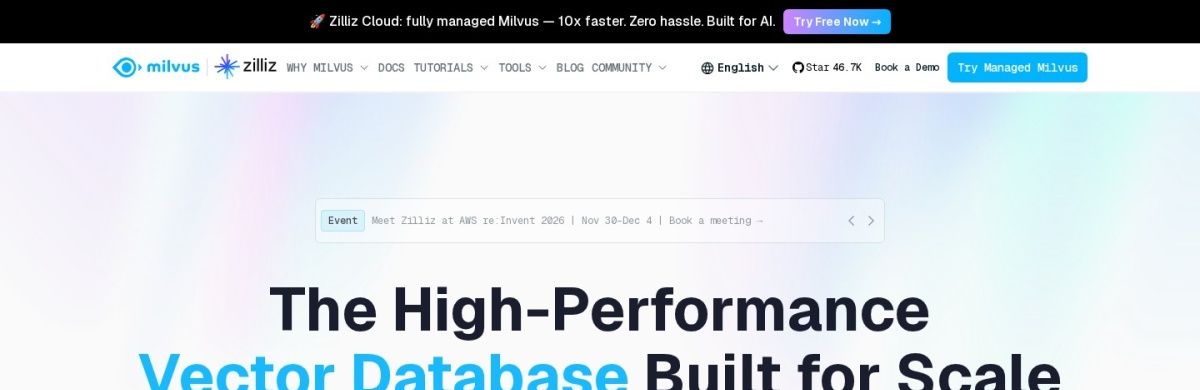
Milvus handles the biggest collections, with a free Zilliz tier of 5 GB and dedicated clusters from $126 a month.
Supabase and pgvector keep vectors inside Postgres; Supabase Pro costs $25 a month and pgvector itself is free.
Chroma is the quickest local start, but its 4.2 G2 rating rests on only 6 reviews and it is joining Replit.
What should you look for in Weaviate alternatives?
Start with how you will run it. A managed service like Pinecone removes operations entirely, while an open-source engine like Qdrant or Milvus gives you control and a self-hosted path, at the cost of your own time.
Price follows the billing model, not the feature list. Flat plans like Pinecone Builder at $20 a month and Supabase Pro at $25 a month are easy to budget, while usage-based plans from Qdrant, Milvus and Chroma need a calculator and a realistic query estimate.
Match the engine to the data you already have. If embeddings belong beside app data, Postgres with pgvector or Supabase keeps one system; if search is the product, Elasticsearch or Azure AI Search pair vectors with keyword and hybrid retrieval. Our guide on adding an AI chatbot to WordPress shows where retrieval fits in a real app.
Check the review base before trusting a rating. Pinecone, Elasticsearch and MongoDB Atlas each have hundreds of G2 reviews, while Qdrant has 12 and Chroma has 6, thin evidence that says more about a young product than a bad one.
Pinecone is a fully managed vector database built for semantic search and retrieval-augmented generation. The free Starter plan includes 5 serverless indexes, 2 GB of storage, 1 million read units and 2 million write units a month, and the Builder plan costs $20 a month flat with higher limits.
The trade off is cost control. Standard starts at a $50 monthly minimum and bills per read unit, write unit and GB stored, so a query-heavy workload can cost more than a fixed-price host. It suits teams that want vector search running with no database operations at all.
Qdrant is an open-source vector search engine written in Rust, with a free self-hosted edition and a managed Qdrant Cloud. The free Cloud tier gives a single-node cluster with 0.5 vCPU, 1 GB of RAM and 4 GB of disk forever, and the engine includes native hybrid search, payload filtering and multivector support.
The trade off is pricing transparency. Qdrant Cloud Standard bills hourly by compute, memory, storage and inference tokens, and the pricing page publishes no flat monthly rate, so budgeting needs the Cloud calculator. It suits teams that want deployment control and are happy to run the engine themselves.
Milvus is an open-source vector database built for billion-vector similarity search, with a managed version called Zilliz Cloud. The free Zilliz tier includes 5 GB of storage, 2.5 million vCUs a month and up to 5 collections, and dedicated Standard clusters start at $126 a month.
The trade off is operational weight. Self-hosted Milvus is a distributed system with several components to run, and Zilliz Cloud bills by compute units, storage and vCUs, so large workloads need modelling. It suits teams with very large vector collections and production RAG workloads.
What we like
Proven at billion-vector scale
Free tier with 5 GB storage
Managed Zilliz Cloud removes the operations
Rated 4.7 out of 5 on G2
Watch out for
Self-hosting is the heaviest setup in this list
Usage-based Cloud bills are hard to forecast
Enterprise Dedicated adds a 99.95% SLA from $197/moVisit milvus.io
04
Supabase
4.6/5on G2 (241 reviews, checked Nov 2026)
Paid from$25/mo
Best for Postgres teams
Free planYes, 2 projects
Cheapest paidPro, $25/mo
Self-hostedYes, open source
Vector searchpgvector, HNSW
supabase.com
Supabase homepage, captured Nov 2026.
Supabase is an open-source Postgres platform with pgvector built in, so embeddings live in the same database as application data. The free plan includes two projects with a 500 MB database, authentication, storage and Edge Functions, and Pro costs $25 a month per organisation.
The trade off is scale and billing. Pro includes $10 of compute credits, and larger instances and extra usage are billed on top, so a busy AI workload costs more than the headline price. It suits teams already building on Postgres that want vector search without a second database.
What we like
Full Postgres with pgvector, no extra vector store
Auth, storage and realtime in one platform
Free plan covers two projects
Rated 4.6 out of 5 on G2
Watch out for
Compute beyond included credits costs extra
Vector scale trails dedicated engines past tens of millions
Chroma is an open-source vector database built for simple RAG prototypes and local development. The engine is free under Apache 2.0, runs embedded or as a server with a small Python API, and Chroma Cloud adds managed hosting with usage-based billing for writes, storage and reads.
The trade off is depth. Chroma has the thinnest review record in this list, with a 4.2 G2 rating from 6 reviews, and its homepage notes Chroma is joining Replit, so the product's future home is changing. It suits developers who want the fastest path from a notebook to a working prototype.
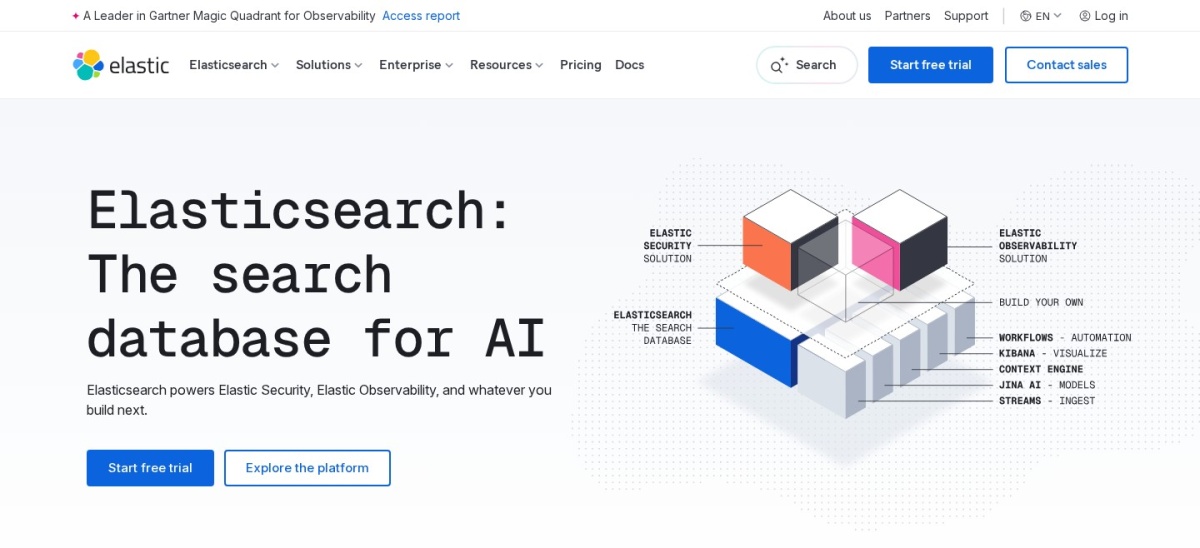
Elasticsearch is a search and analytics engine that now handles vector search beside keyword and hybrid search. The self-managed core is free to run, Elastic Cloud Hosted starts at $99 a month, and a serverless option bills pay as you go for teams with variable workloads.
The trade off is complexity. Elasticsearch is a large platform to operate, and G2 reviewers say costs climb as data volumes grow. It suits teams that already need full-text search, logs or analytics and want vectors in the same engine.
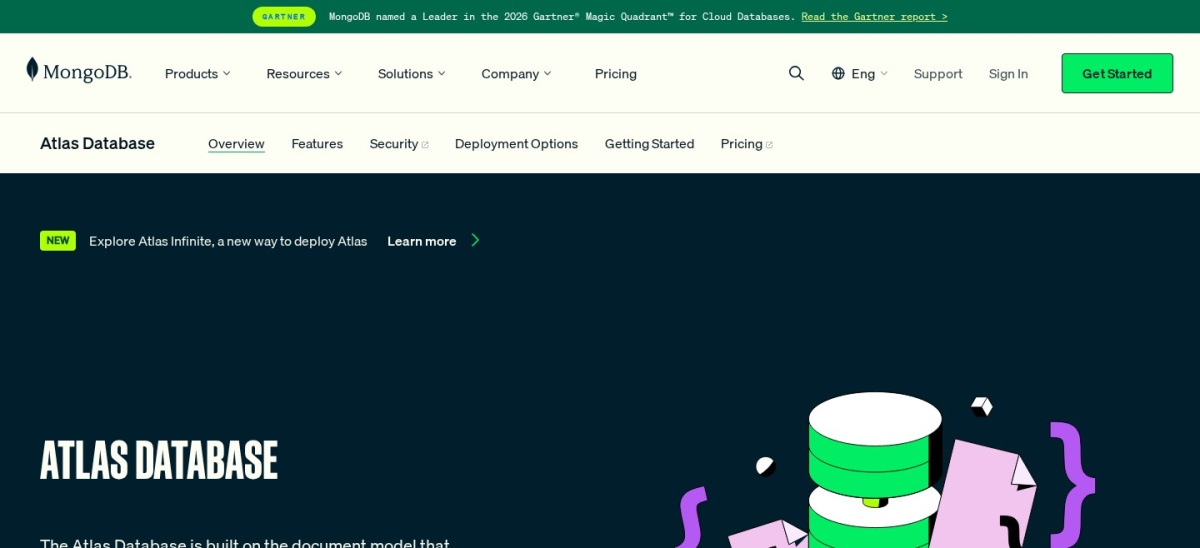
MongoDB Atlas is the managed cloud version of MongoDB, a document database that now includes native vector search. The free M0 tier gives 512 MB of storage, Flex clusters start at about $8 a month, and dedicated M10 clusters start at about $57 a month.
The trade off is that vectors are one feature of a bigger platform. Teams that only need vector search pay for a full document database, and dedicated clusters and backups add to the bill. It suits teams whose app data already lives in MongoDB and want search beside it.
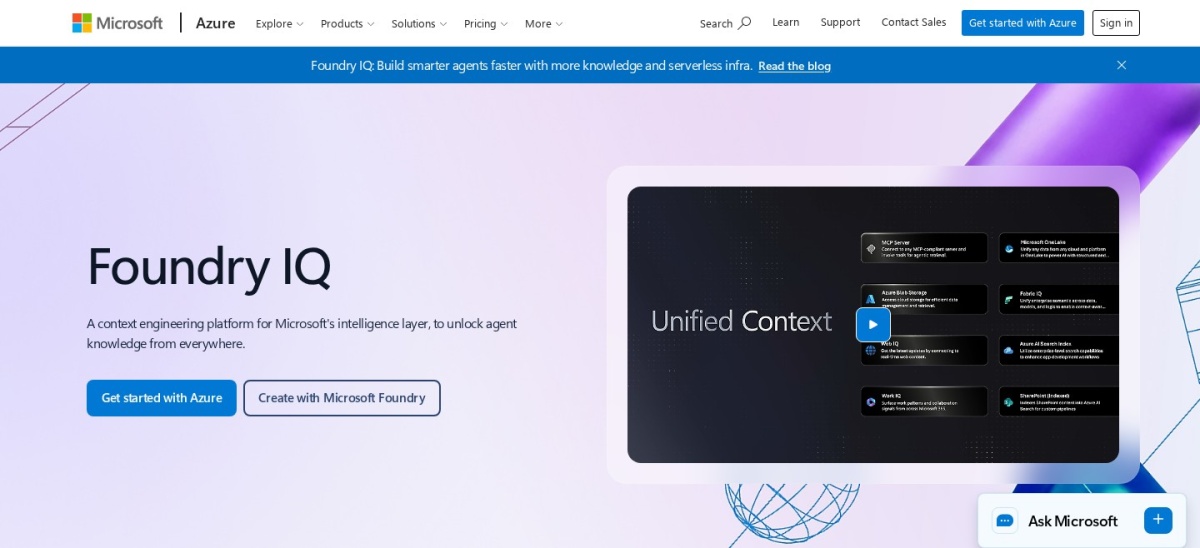
Azure AI Search is Microsoft's managed search service with keyword, vector and hybrid retrieval, plus a semantic ranker and indexers that pull from Azure data sources. The free tier supports 3 indexes and 50 MB of storage, and the Basic tier costs $73.73 a month per search unit.
The trade off is the Azure lock-in and the unit maths. Each replica or partition is a billed search unit, so scaling out multiplies the $73.73, and the semantic ranker bills separately. It suits teams already on Azure that want retrieval close to their data and identity.
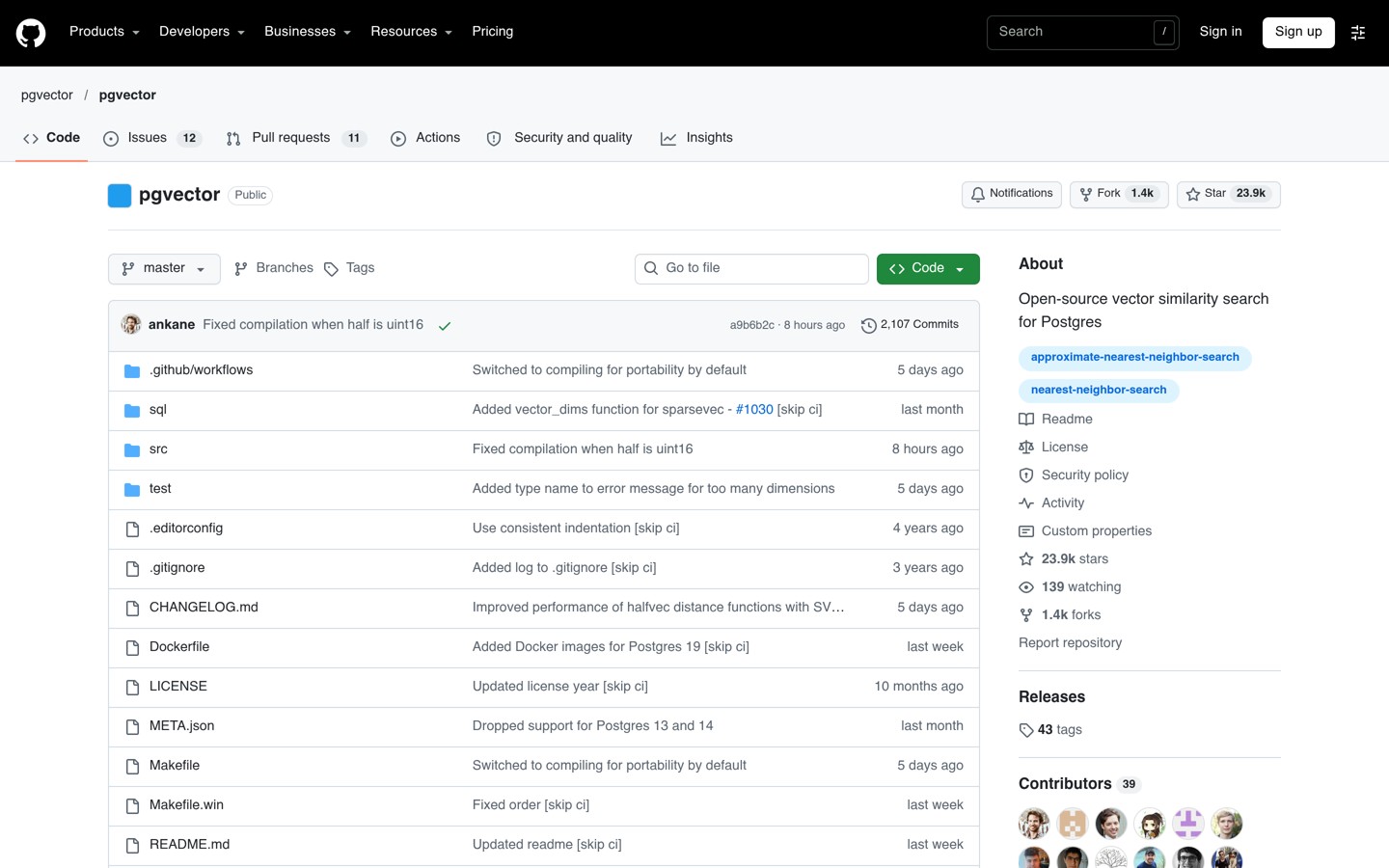
pgvector is a free, open-source Postgres extension that adds vector storage and approximate nearest-neighbour search with HNSW and IVFFlat indexes. Embeddings live in the same database as the rows they describe, so there is no second system to sync, and it ships preinstalled on Supabase, Neon and most managed Postgres services.
The trade off is scale and tuning. HNSW index builds use a lot of memory, plain-vector indexes cap at 2,000 dimensions, and G2 reviewers give it 3.8 out of 5, the lowest rating in this list. It suits teams already running Postgres with up to a few million vectors.
Managed services trade money for time. Pinecone, Zilliz Cloud and Azure AI Search run backups, upgrades and scaling for you, and you pay per month or per unit of use.
Self-hosted engines trade time for control. Qdrant, Milvus, Chroma and pgvector cost nothing to license, run where you choose, and keep your data inside your own infrastructure.
The middle path is managed Postgres. Supabase and other hosted Postgres services give you pgvector without running a server, for $25 a month and up.
Whichever route you take, keep one copy of your vectors exportable. A second engine is only a real alternative if you can move.
How we chose
We started from the vector databases G2 lists as the top options for 2026, plus the Postgres extension teams most often use instead of a dedicated store, then kept the nine with a public rating and a verifiable price or free tier.
Prices come from each vendor's pricing page, checked on 29 November 2026, except where the vendor publishes no flat rate; ratings and review counts come from G2 on the same day. Where a vendor shows a sale, the list shows the regular price.
We left out tools with no public rating and no managed price. No vendor paid for a place, and we do not claim to have used these tools ourselves.
How to choose a Weaviate alternative
Start with how much operations your team wants, then match price and scale to the workload.
Decide managed or self-hosted first. If no one on the team wants to run a database, pick a managed service like Pinecone or Zilliz Cloud. If control matters more, shortlist Qdrant, Milvus or pgvector.
Size the collection honestly. Under a few million vectors, Postgres with pgvector or Supabase is enough. Past tens of millions, a dedicated engine like Milvus or Qdrant earns its keep.
Model the bill on real query volume. Flat plans are predictable; usage-based plans are not. Run your expected reads and writes through the vendor calculator before committing.
Check the exit. Export a sample of vectors and metadata early, and confirm the export path works. Leaving a managed service is harder than joining it.
FAQ
What is the best Weaviate alternative?
Pinecone is the best Weaviate alternative for most teams. Its Builder plan costs $20 a month flat, it is rated 4.6 out of 5 on G2, and it runs fully managed with no servers to operate.
What is the best free alternative to Weaviate?
Qdrant is the best free alternative. Its open-source engine is free to self-host, and Qdrant Cloud has a free tier with 1 GB of RAM and 4 GB of disk. pgvector is also free if you already run Postgres.
How much do Weaviate alternatives cost?
Paid plans start at $8 a month for MongoDB Atlas Flex and $20 a month for Pinecone Builder, and climb to $126 a month for a dedicated Milvus cluster. Qdrant and Chroma Cloud bill by usage with no published flat rate.
Which Weaviate alternative is best for beginners?
Pinecone is the easiest start for beginners, with a free Starter plan and no infrastructure to manage. Supabase is the best pick if you already know Postgres, since pgvector is built in.
Pinecone vs Qdrant: which is better?
Pinecone is better if you want zero operations and a flat $20 a month starting price. Qdrant is better if you want open-source self-hosting, hybrid search and no vendor lock-in, and you can run the engine yourself.
Can I self-host a Weaviate alternative?
Yes. Qdrant, Milvus, Chroma and pgvector are all open source and free to self-host. Pinecone, MongoDB Atlas and Azure AI Search are managed-only, with no self-hosted edition.
SaaS SEO and WordPress specialist with about 8 years of experience. Rakib compares WordPress plugins, themes, hosting and software using public pricing, documentation and user reviews. See how we rank.