Waystar is the top RCM software for most practices, with AI-powered claims, denial prevention and patient payments in one platform. ModMed suits specialty practices, while Tebra is the best fit for small independent practices.
How we make this list: we compare pricing pages, product documentation and public user reviews, then re-check every price before each update. No product paid for a place. Disclosure.
Waystar leads for most practices: full-cycle claims, denials and payments with a 4.4 G2 rating.
ModMed is the best-rated specialist EHR at 4.5 on Capterra, built for dermatology, eye care and orthopedics.
athenaOne replaces EHR, practice management and billing in one cloud system, priced as a share of collections.
Only Tebra at $99 a month and SimplePractice at $49 a month publish a price; the rest sell by quote.
AdvancedMD starts from $429 per provider a month, the highest published price in this list.
How do you choose the top RCM software?
Revenue cycle management covers everything from eligibility checks to the final patient payment. The best RCM software shortens that cycle, so claims go out clean and denials get worked fast.
Claims are the first place money leaks. A good platform scrubs claims before submission, checks eligibility in real time and tracks claim status, which cuts the rework that eats billing staff time.
Denials decide the real return. Our guide to the best hospital management software shows how denial tools and billing rules differ across the same platforms.
Most RCM vendors sell by quote. Only two tools here publish a price, so shortlist by fit first, then budget on a written quote that includes implementation and clearinghouse fees.
Waystar is a cloud platform that sits between your EHR or practice management system and the payer, covering eligibility checks, prior authorization, claim scrubbing and submission, denial management and patient payments in one place. It is rated 4.4 out of 5 on G2 from 119 reviews.
The trade off is that it is a layer, not a full system. You still need a billing or practice management product underneath, and pricing is quote-only. It suits practices and health systems that keep their EHR but want cleaner claims.
What we like
Full-cycle claims, denials and payments in one place
Own clearinghouse with 5,000+ payer connections
AI-powered claims and denial prevention
About two months to implement, quick for this category
Watch out for
Quote-only pricing with no published figure
You still need an EHR or billing system underneath
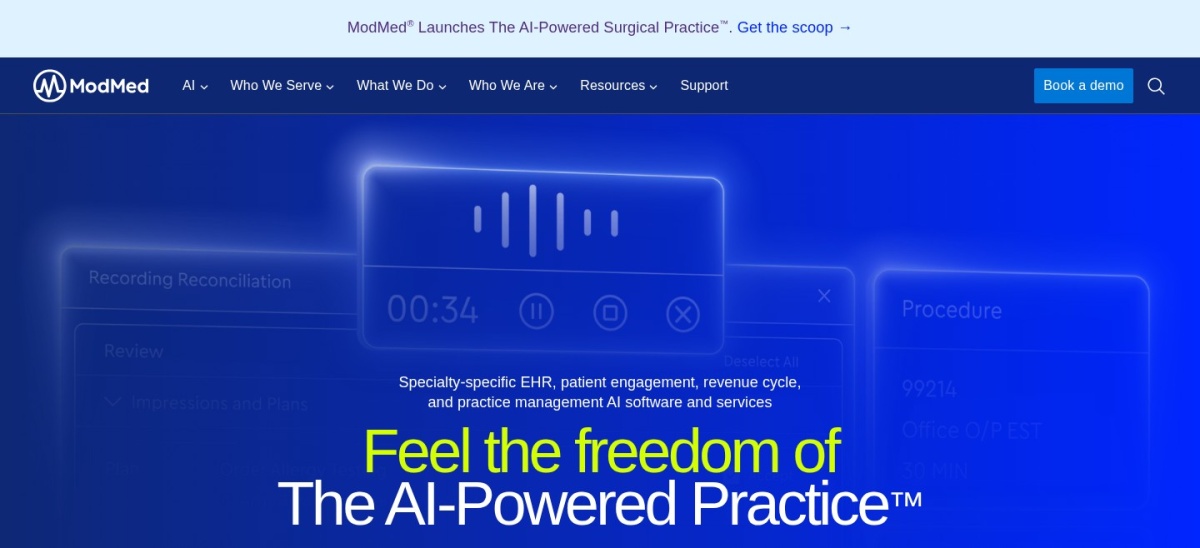
ModMed is a specialty EHR and practice management platform for dermatology, ophthalmology, orthopedics, gastroenterology and urology, with billing and revenue cycle services in the same platform. Its EMA system uses specialty templates so charge capture follows the visit, and it is rated 4.5 out of 5 on Capterra from 570 reviews.
The trade off is cost and scope. ModMed publishes no prices, reviewers report figures near $800 per provider a month, and the specialty focus means it fits only its core specialties. It suits surgical and procedural practices that want billing built into the specialty workflow.
What we like
Highest rating here at 4.5 out of 5 on Capterra
Specialty templates built by physicians
Charge capture follows the visit without retyping
Billing and RCM in the same platform
Watch out for
No published price; quote only
Fits only its core specialties
Billing and RCM services available in the same platformVisit modmed.com
03
athenaOne
3.4/5on G2 (41 reviews, checked Nov 2026)
PricingCustom/yr
Best for all-in-one EHR and billing
Cheapest planShare of collections
EHRYes, built in
Denial follow-upYes, rules engine
APIYes, open API
athenahealth.com
athenaOne homepage, captured Nov 2026.
athenaOne is a cloud platform that combines the patient record, practice management and billing in one system, with a billing rules engine, denial follow-up and an open API. It is rated 3.4 out of 5 on G2 from 41 reviews, the lowest rating here.
The trade off is the price model. athenaOne takes a percentage of the collections you make each month instead of a flat fee, with the rate not published, so the bill rises and falls with revenue. It suits mid-sized groups that want one vendor instead of three.
What we like
EHR, practice management and billing in one login
Billing rules engine with denial follow-up
Open API and a large app marketplace
No separate clearinghouse contract needed
Watch out for
Lowest G2 rating here at 3.4 out of 5
Percentage-of-collections pricing with no published rate
3.9/5on Capterra (1,000 reviews, checked Nov 2026)
Starts at$99/mo
Best for small independent practices
Cheapest plan$99/mo
Practices165,000+
ClearinghouseYes, built in
Free trialDemo on request
tebra.com
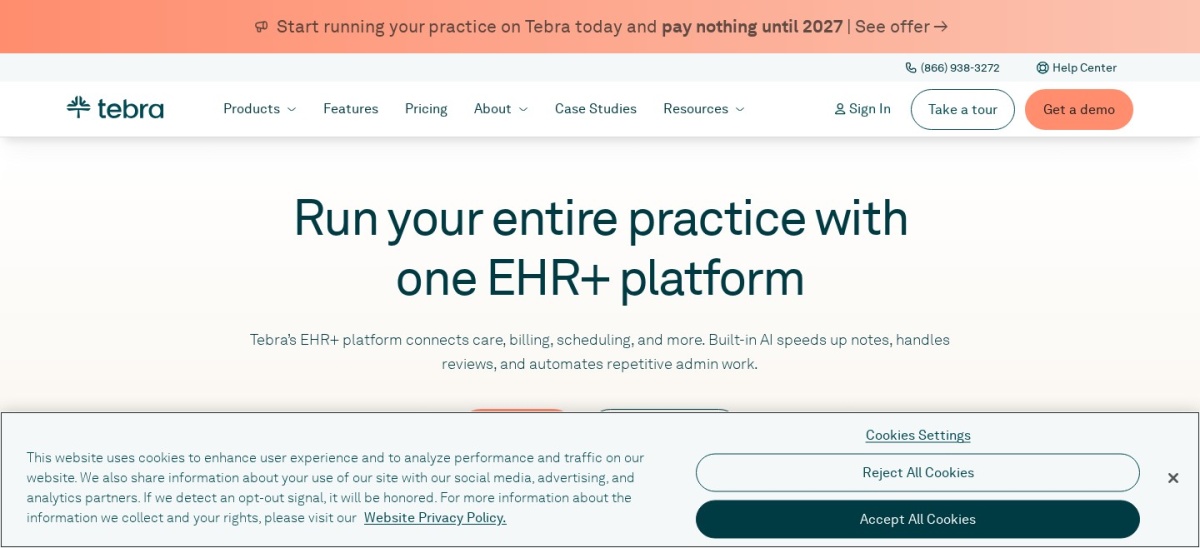
Tebra homepage, captured Nov 2026.
Tebra is an all-in-one platform for independent practices, combining the former Kareo and PatientPop products into one system with an EHR, practice management, medical billing and patient scheduling. It is used by more than 165,000 independent practices and billing companies.
The trade off is depth. With more than a thousand Capterra reviews, the complaints are consistent: support quality varies and the system can feel basic once you add several locations or complex payer rules. It suits solo and small groups that want one login for charting, scheduling and claims.
What we like
EHR, billing and scheduling in one login
Built-in clearinghouse from the Kareo billing history
AdvancedMD is a cloud-based healthcare platform for independent practices that combines practice management, EHR, medical billing and patient engagement, with the option of outsourced billing services later. It is rated 3.6 out of 5 on G2 from 18 reviews.
The trade off is price and evidence. Plans run from $429 per provider a month, and the G2 review base is only 18 reviews, the thinnest here. It suits billing companies and practices that want software now and the option of handing billing to AdvancedMD later.
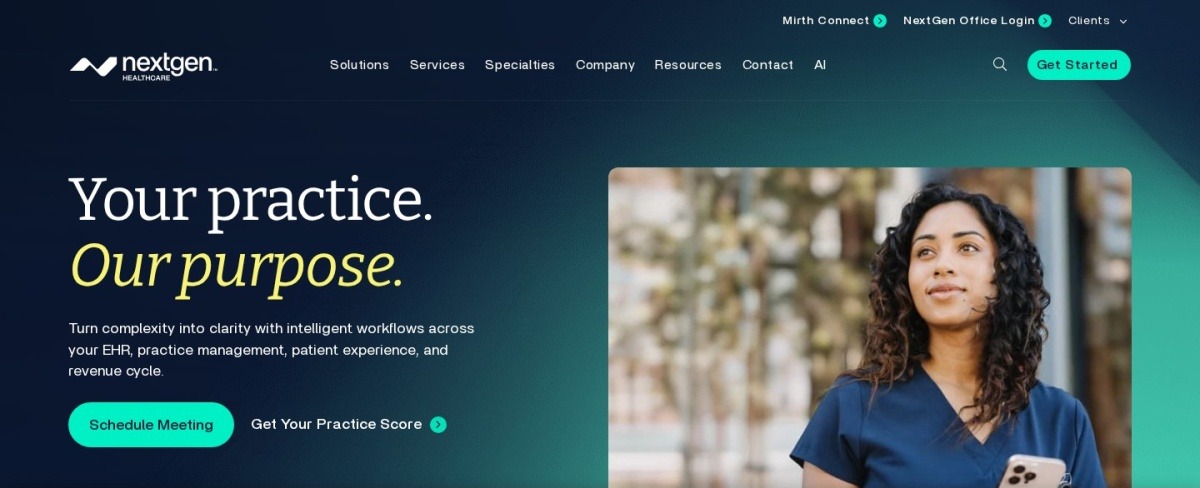
NextGen Healthcare is an enterprise EHR and practice management platform with billing automation, claims management and data analytics for groups with ten or more providers. It is rated 4.1 out of 5 on G2 from 52 reviews.
The trade off is the buying path. NextGen publishes no prices and sells through a sales conversation, and the platform is built for larger groups rather than solo practices. It suits growing multi-specialty groups that want one enterprise system for clinical and financial work.
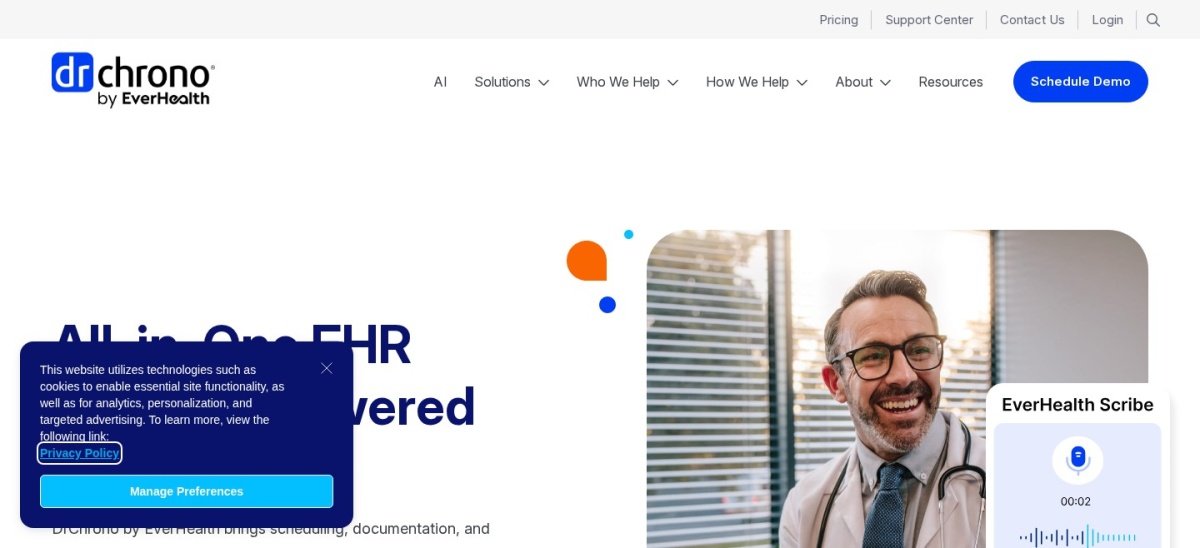
DrChrono is a cloud EHR that runs natively on iPad, covering scheduling, charting, billing, RCM, telehealth and patient intake in one configurable system. It is rated 3.3 out of 5 on G2 from 45 reviews.
The trade off is the rating. At 3.3 out of 5 it is the second-lowest here, and pricing is quote-only with no published figure. It suits independent practices that want an iPad-native workflow and flexible templates across specialties.
4.6/5on Capterra (2,828 reviews, checked Nov 2026)
Starts at$49/mo
Best for small therapy and outpatient teams
Cheapest plan$49/mo
Best forTherapy and outpatient
BillingYes, built in
TelehealthYes, on higher tiers
simplepractice.com
SimplePractice homepage, captured Nov 2026.
SimplePractice is a practice management platform for therapy and outpatient teams that combines scheduling, notes, billing and client messaging in one login. It is rated 4.6 out of 5 on Capterra from 2,828 reviews, the highest rating in this list.
The trade off is scope. SimplePractice fits therapy and outpatient teams, not inpatient wards or large hospitals, and its billing is simpler than a full RCM platform. It suits small teams that want clean billing without enterprise complexity.
What we like
Highest rating here at 4.6 out of 5 on Capterra
Largest review base in this list at 2,828 reviews
Scheduling, notes and billing in one login
Cheapest published price here at $49 a month
Watch out for
Built for therapy and outpatient teams, not hospitals
Only two tools in this list publish a price. Tebra lists tiers from $99 a month and SimplePractice starts at $49 a month, while the rest sell by quote.
The rest sell by quote because the price depends on claim volume, specialties, modules and implementation. Waystar, ModMed, athenaOne, AdvancedMD, NextGen and DrChrono all require a sales conversation before they quote.
Some vendors price as a share of collections instead of a flat fee. athenaOne takes a percentage of what the practice collects, with the rate not published, so the bill rises and falls with revenue.
Budget for implementation as well as the licence. G2 reviewers report about two months to implement Waystar, and specialty platforms can take longer, so start the evaluation a full quarter before you need it live.
How we chose
We started from the best-known revenue cycle platforms on G2 and Capterra, then kept eight established tools that cover claims, denials and patient payments for real practices.
Prices come from each vendor's pricing page and recent pricing checks, read on 29 November 2026. Ratings and review counts come from G2 and Capterra on the same day. Where a vendor sells by quote, the list shows Custom and says so plainly.
We left out tools with no verifiable G2 or Capterra rating and pure outsourcing firms with no software to buy. No vendor paid for a place, and we do not claim hands-on testing for this list.
How to choose RCM software
Start with your denial rate and your claim volume, then match the platform to the size and shape of your practice.
Measure your denial rate first. Pull the last three months of denials by reason. The top reasons decide whether you need scrubbing, eligibility checks or denial follow-up most.
Decide layer or replacement. Waystar sharpens claims on top of your EHR, while athenaOne and Tebra replace it. A layer is faster to adopt; a replacement is a bigger project.
Check the clearinghouse connection. Ask how many payers the clearinghouse reaches and whether claim status comes back in real time. Waystar lists more than 5,000 payer connections.
Price the whole first year. Add implementation, clearinghouse fees and any percentage-of-collections charge to the licence. Most quotes leave at least one of those out.
FAQ
What is the best RCM software in 2026?
Waystar is the best RCM software for most practices. It covers eligibility, claims, denial prevention and patient payments in one platform, holds a 4.4 G2 rating, and sits on top of the EHR you already use.
How much does RCM software cost?
Most vendors sell by quote and publish no prices. The published figures here are SimplePractice at $49 a month, Tebra at $99 a month and AdvancedMD from $429 per provider a month, with the rest quoted per practice.
What is the difference between Waystar and athenaOne?
Waystar is a claims and denials layer that sits on top of your current EHR, while athenaOne replaces the EHR, practice management and billing with one cloud system priced as a share of collections.
Is there a free RCM software?
No full RCM platform in this list has a free plan. The cheapest published starts are SimplePractice at $49 a month and Tebra at $99 a month, and both are built for small practices rather than health systems.
Which RCM software is best for small practices?
Tebra is the best fit for small independent practices, with an EHR, billing and clearinghouse in one login from $99 a month. SimplePractice at $49 a month suits therapy and outpatient teams with simpler billing.
What does RCM software actually do?
RCM software manages the money side of care: eligibility checks, claim scrubbing and submission, denial management, payment posting and patient billing, from the first appointment to the final payment.
SaaS SEO and WordPress specialist with about 8 years of experience. Rakib compares WordPress plugins, themes, hosting and software using public pricing, documentation and user reviews. See how we rank.