Qualys VMDR is the best of the Tenable alternatives for most teams, pairing hybrid scanning with patching from $596 a month for 128 hosts. Rapid7 InsightVM suits remediation tracking, while Intruder is the pick for small teams, with a free plan and a 4.8 out of 5 G2 rating.
How we make this list: we compare pricing pages, product documentation and public user reviews, then re-check every price before each update. No product paid for a place. Disclosure.
Qualys VMDR is the closest like-for-like Tenable swap, with scanning and patching from $596 a month for 128 hosts.
Rapid7 InsightVM starts at $1.62 per asset a month at 500 assets and has the strongest remediation tracking here.
Wiz and Orca are cloud-first and costly: Wiz Essential starts near $24,000 a year, Orca's Small pack at $7,000 a month.
Intruder is the only pick with a free plan and the joint-highest G2 rating here, 4.8 out of 5 from 223 reviews.
Defender's premium add-on costs about $2 per user a month, but only makes sense inside a Microsoft estate.
Only 2 of the 9 tools have a free plan: Intruder and Snyk.
How do you choose the best Tenable alternative?
Coverage decides the shortlist before price does. Tenable scans servers, network gear, cloud workloads and containers, so a replacement that only covers one of those leaves a gap. Map the asset classes you must cover first, then compare tools inside that box.
Prioritization matters more than raw finding counts. Most tools here rank flaws with exploit data, such as EPSS and CISA KEV, rather than CVSS alone, so the queue starts with what attackers can actually use.
Pricing is hard to compare directly, because vendors charge per asset, per workload, per user or per endpoint. Model the bill at your real counts, and check what counts as an asset before you sign. Our guide on checking a plugin for vulnerabilities shows the same idea at WordPress scale: know what you run before you scan it.
Free plans are rare in this niche. Only Intruder and Snyk offer one, and both cap what the free tier scans, so a free plan is a trial of the workflow, not a replacement for a paid scanner.
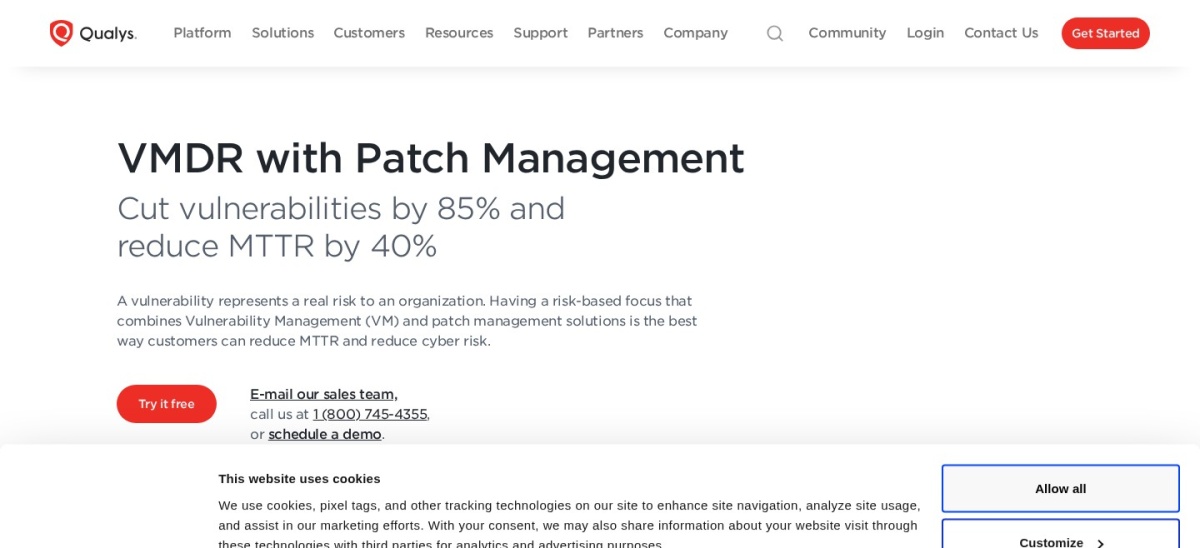
Qualys VMDR is a cloud platform that discovers assets, scans for vulnerabilities and CIS misconfigurations, and ranks each finding with its TruRisk score, which blends CVSS, EPSS and CISA KEV data. Virtual scanners, Cloud Agents and container sensors are unlimited in the license, so coverage scales by asset count.
The trade off is packaging. Patch deployment, cloud security and container assessment sit in add-ons, and the 128-host entry tier lists at $596 a month, so the real bill depends on which modules you buy. It suits hybrid estates that want scanning and patching from one vendor.
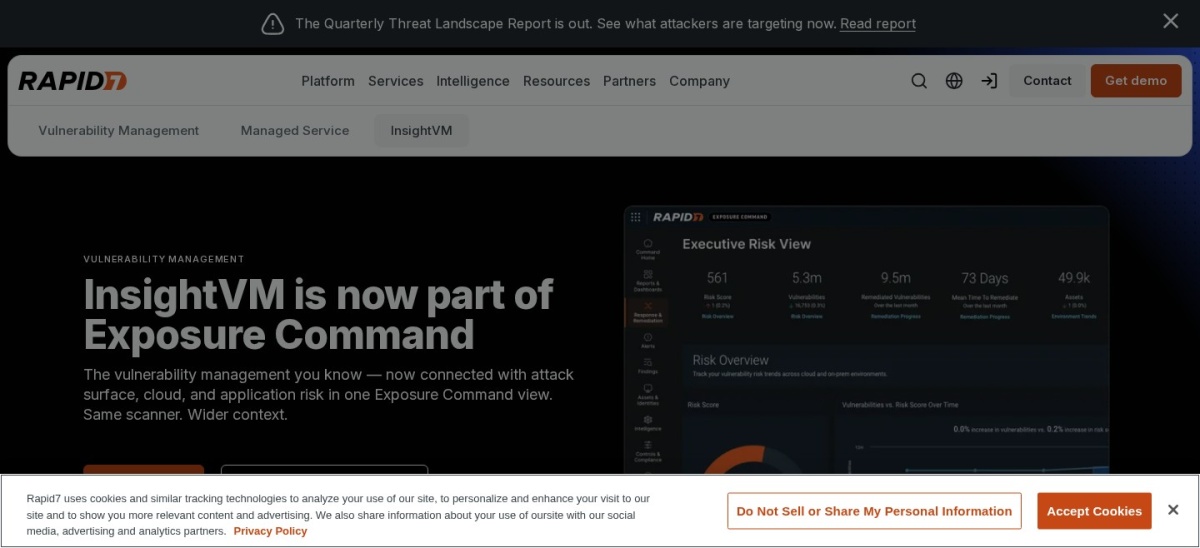
Rapid7 InsightVM is a vulnerability management platform that scans networks and endpoints with scan engines and a lightweight agent, then ranks flaws with its Active Risk score, built from Metasploit exploit data, AttackerKB and CISA KEV. Remediation Projects turn findings into tracked work that syncs with ServiceNow or Jira.
The trade off is packaging and price clarity. InsightVM now sits inside Exposure Command, and the $1.62 per asset per month starting rate applies at 500 assets, with larger volumes quoted. It suits mid-market and enterprise teams that track remediation progress, not just scan coverage.
What we like
Strongest remediation tracking of the enterprise scanners
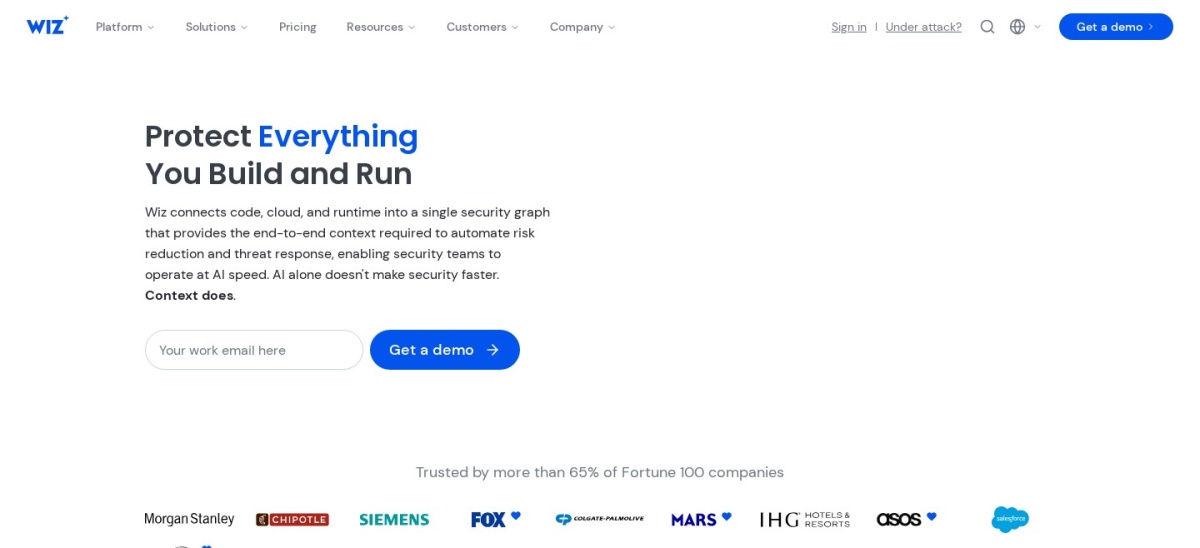
Wiz is an agentless cloud platform that scans workloads, containers and code through cloud APIs, then ties each finding to exposure, identity and data in its Security Graph. Its catalog covers more than 120,000 vulnerabilities across 40-plus operating systems, and it pulls in findings from third-party scanners too.
The trade off is cost and scope. Essential starts at $24,000 a year for 100 workloads, and runtime detection needs the Sensor add-on, so a full setup stacks several priced parts. It suits cloud teams that want attack-path context to decide which flaw to fix first.
What we like
Rated 4.7 out of 5 from 845 G2 reviews
Agentless setup covers cloud in minutes
Attack-path context cuts triage noise
Watch out for
Entry price is far above the other tools
Runtime protection costs extra
Advanced and Sensor add runtime detection and code scanningVisit wiz.io
04
Intruder
4.8/5on G2 (223 reviews, checked Nov 2026)
Paid from$299/mo
Best for small teams switching from Tenable
Continuous scanningYes
Free planYes
Cloud scanningAWS, Azure, GCP
Paid planCloud, $299/mo
intruder.io
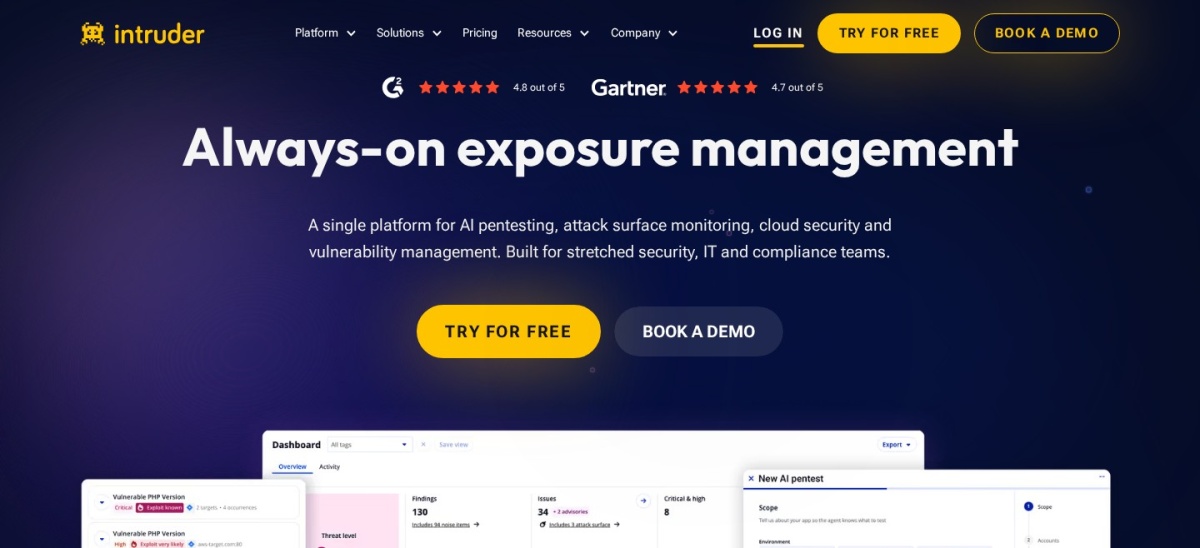
Intruder homepage, captured Nov 2026.
Intruder is a cloud platform for continuous vulnerability scanning across infrastructure, web apps, APIs and cloud accounts. The free plan covers basic scanning, while paid plans add scheduled scans, compliance reporting, integrations with Jira and GitHub, and an AI pentest for web apps.
The trade off is pricing. Cloud and Pro use a base fee plus a small fee per target, so the bill grows as you add targets, and internal scanning needs the Pro plan at $499 a month. It suits lean teams that want set-and-forget scanning without a dedicated security hire.
What we like
Joint-highest G2 rating here, 4.8 out of 5
Free plan and 14-day trial of the Cloud plan
Cloud integrations discover new services automatically
Compliance reports for SOC 2, ISO 27001 and Cyber Essentials
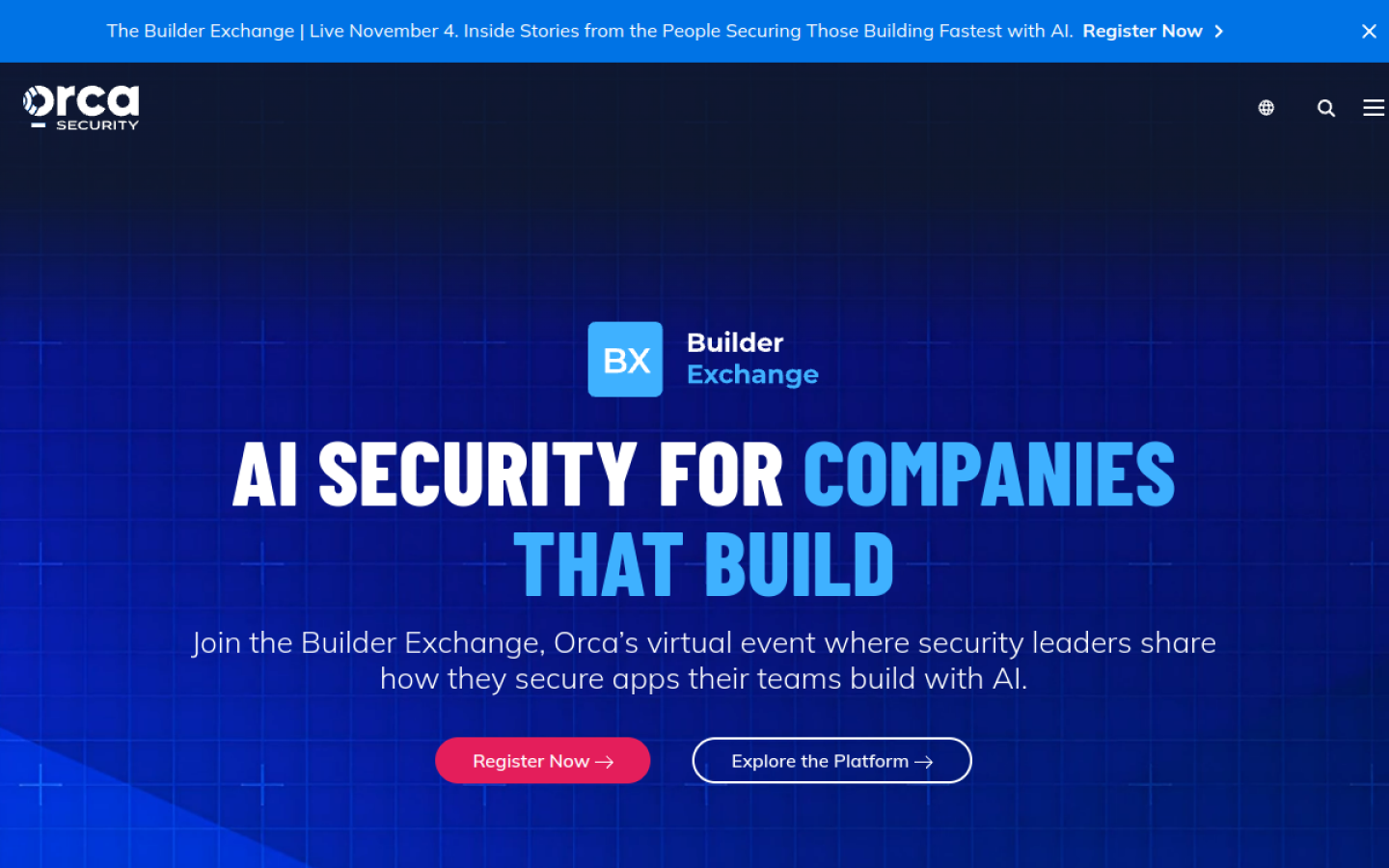
Orca Security is an agentless cloud platform that reads cloud storage and configuration out of band with SideScanning, then builds one risk model from vulnerabilities, misconfigurations, secrets and sensitive data. It is strong at finding shadow data, such as production databases copied into forgotten accounts.
The trade off is price. The Small starter pack lists at $7,000 a month, so Orca sits at the enterprise end even at entry scale, and snapshot-based scans run on a schedule rather than continuously. It suits cloud teams that put data security beside vulnerability risk.
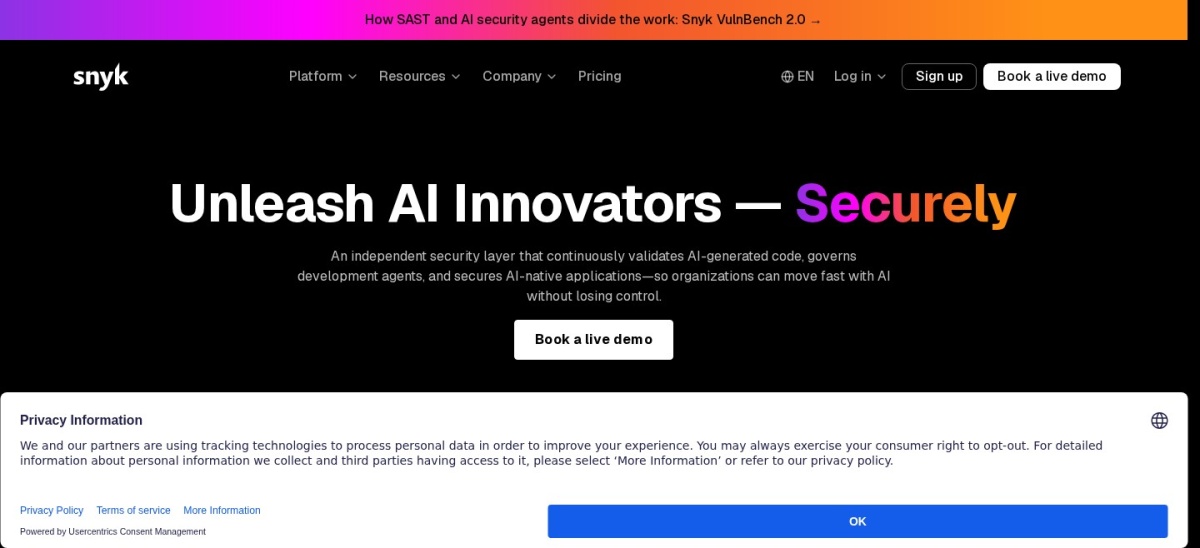
Snyk is a developer platform that scans open-source dependencies, first-party code, container images and infrastructure as code for known vulnerabilities. It maps a flawed dependency to a safe version and opens a fix pull request, so engineers can merge the upgrade where they already work.
The trade off is scope. Snyk secures code and dependencies, not servers or network gear, so most teams run it beside an infrastructure scanner. Team starts at $25 per developer a month, and Enterprise is credit-based. It suits engineering-led teams that fix flaws in the pull request.
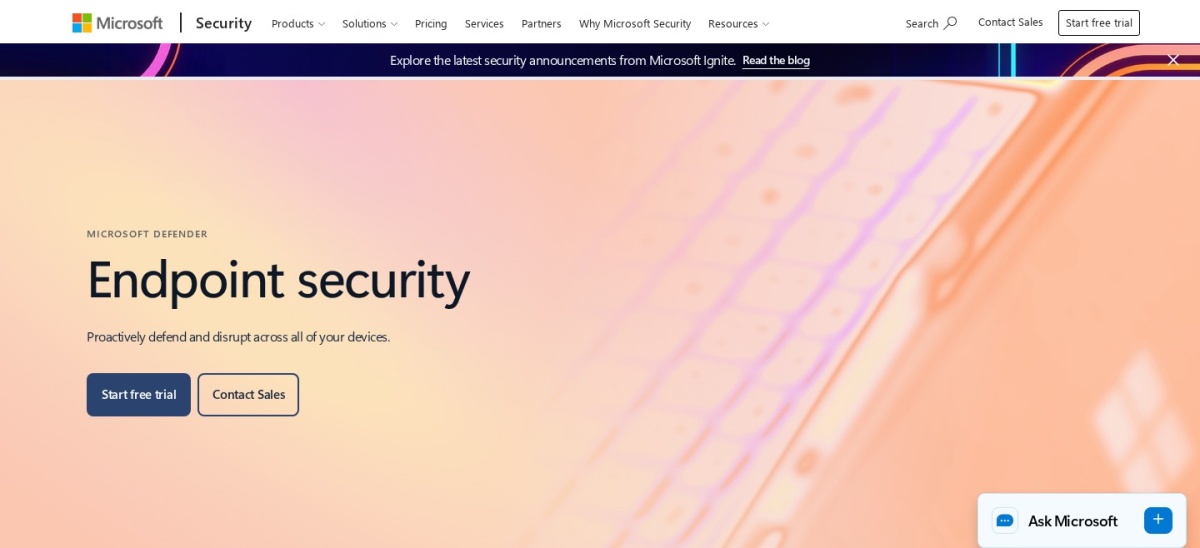
Microsoft Defender Vulnerability Management homepage, captured Nov 2026.
Microsoft Defender Vulnerability Management is the vulnerability layer inside Defender for Endpoint, ranking flaws with an exposure score tied to Secure Score for Devices. Core assessment ships in Defender for Endpoint Plan 2 and Microsoft 365 E5, and remediation requests flow to IT through Intune.
The trade off is depth outside Windows. Linux coverage is weaker, dashboard updates can lag by hours, and premium checks such as baselines and certificate assessment cost about $2 per user a month extra. It suits Microsoft shops that already hold Plan 2 or E5.
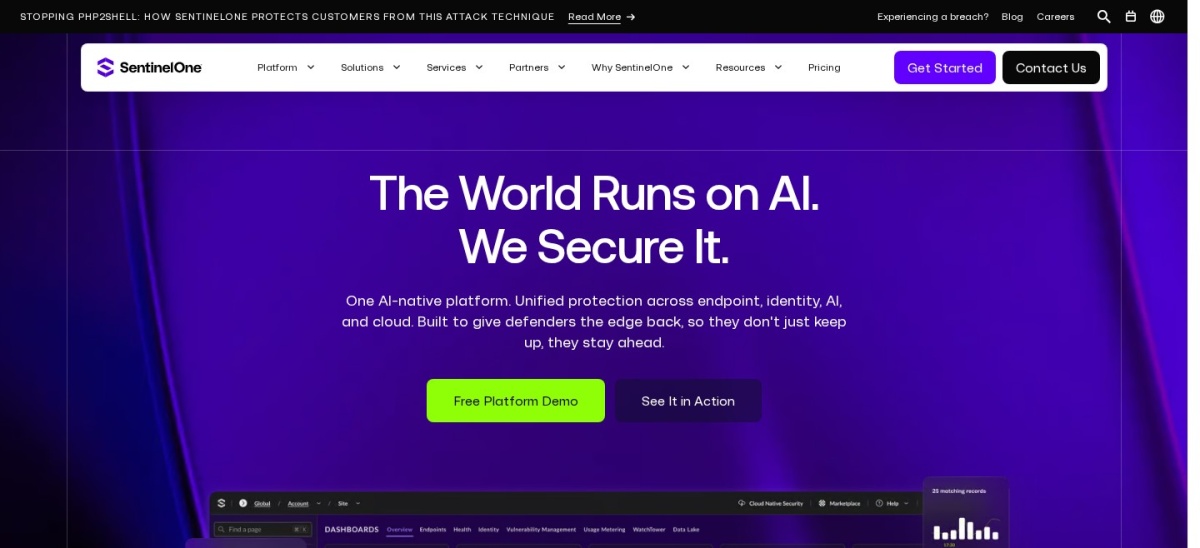
SentinelOne Singularity homepage, captured Nov 2026.
SentinelOne Singularity is a vulnerability management platform that runs on the same agent that handles endpoint protection, scanning Windows, macOS and Linux endpoints for application and OS flaws with no separate scanner to deploy. It ranks findings with a Risk Score built from EPSS and CISA KEV data, and Network Discovery finds unmanaged devices.
The trade off is depth. It gives baseline coverage from the agent rather than a dedicated scanner, and the pricing page does not state which tier includes vulnerability management. Complete lists at $179.99 per endpoint a year. It suits teams that already run SentinelOne for endpoint protection.
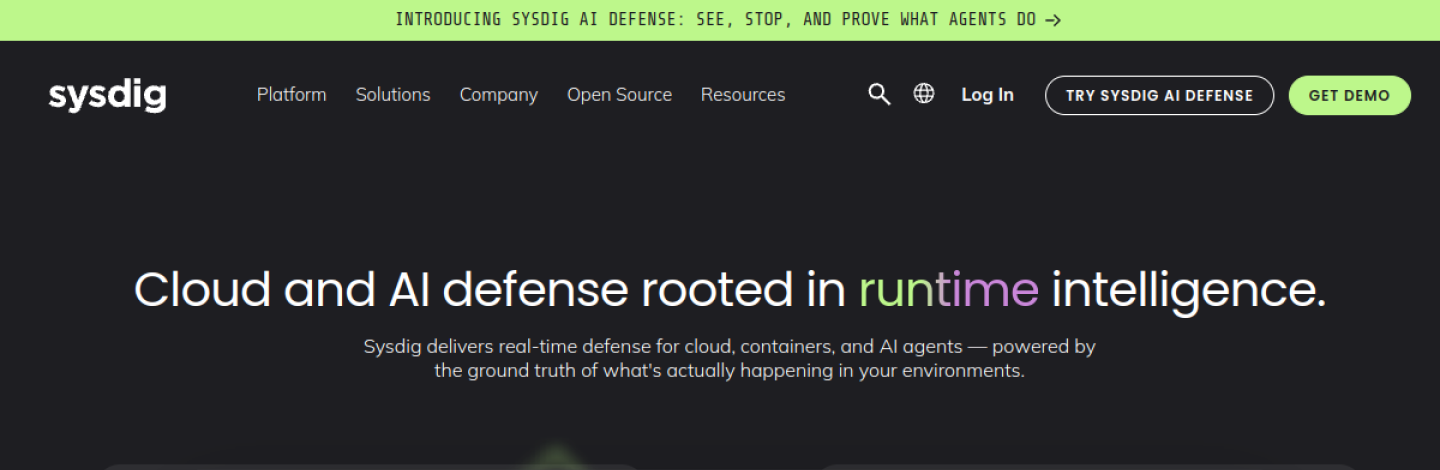
Sysdig is a cloud-native platform that scans container images, registries and running workloads, then uses runtime evidence to mark which vulnerable packages are actually in use. That cuts the queue to flaws that matter, and CVE360 gathers each flaw, its affected resources and its fix in one view.
The trade off is scope and entry cost. In Use tracking covers Java, Go, JavaScript, Python and Ruby, not every language, and the CNAPP entry lists at $72 per unit a month with a 20-unit minimum. It suits Kubernetes teams whose container backlog needs runtime proof before a rebuild.
Tenable Vulnerability Management lists at $3,500 a year for 100 assets. That is the number every alternative here has to beat on coverage, not just on price.
Per-asset tools look cheap until you count the estate. Rapid7 starts at $1.62 per asset a month at 500 assets, which is about $19 a year per asset, while Qualys starts at $596 a month for 128 hosts.
Cloud tools price by workload, not by host. Wiz Essential starts near $24,000 a year for 100 workloads and Orca's Small pack at $7,000 a month, so a small cloud footprint can still mean a large bill.
How we chose
We started from the tools buyers most often weigh against Tenable Vulnerability Management, then kept the nine with a public G2 rating, a published entry price or a documented quote-only model, and coverage of servers, cloud or endpoints.
Prices and ratings were checked on 29 November 2026. Ratings and review counts come from G2 on that day; prices come from vendor pricing pages or public marketplace listings, and the text says which. Where a vendor shows a sale, the list shows the regular price.
We left out Tenable itself, since this list is about replacing it, and its Nessus scanner for the same reason. No vendor paid for a place, and we do not claim to have used these tools ourselves.
How to choose a Tenable alternative
Start with what Tenable covers for you today, then match the replacement to that shape.
List the asset classes you must scan. Servers, network gear, cloud workloads, containers and endpoints need different tools. A cloud-only pick leaves on-premises hosts unscanned.
Decide who fixes the findings. If a small team owns remediation, pick strong tracking and fix guidance over raw scan depth. Rapid7 and Snyk lead here.
Model the bill at your real counts. Per-asset, per-workload and per-user prices diverge fast. Price the shortlist at your asset, workload or user count before the demo.
Run the free plan or trial first. Intruder and Snyk have free plans. Use one to check scan quality on your own estate before signing a yearly contract.
FAQ
What is the best Tenable alternative in 2026?
Qualys VMDR is the best Tenable alternative for most teams. It matches Tenable on hybrid scanning across servers, cloud and containers, adds patching in the same console, and starts at $596 a month for 128 hosts, with a 4.4 out of 5 G2 rating from 168 reviews.
What is the best free alternative to Tenable?
Intruder is the best free alternative to Tenable. Its free plan covers basic external scanning, it holds a 4.8 out of 5 G2 rating from 223 reviews, and paid plans start at $299 a month. Snyk also has a free tier, but it scans code, not servers or network gear.
How much do Tenable alternatives cost?
Entry prices run from about $2 per user a month for the Defender premium add-on to $7,000 a month for Orca's Small pack. Tenable itself lists at $3,500 a year for 100 assets, so most enterprise swaps cost as much or more, while small-team picks start far lower.
Which Tenable alternative is best for small teams?
Intruder is the best Tenable alternative for small teams. It has a free plan, continuous scanning with no scanner to run, and the joint-highest G2 rating in this list at 4.8 out of 5. Cloud plans start at $299 a month, with internal scanning on the $499 Pro plan.
Qualys VMDR vs Rapid7 InsightVM: which is better?
Qualys VMDR is better for hybrid estates that want scanning and patching from one vendor, starting at $596 a month for 128 hosts. Rapid7 InsightVM is better for teams that track remediation, with Remediation Projects that sync to Jira and ServiceNow, from $1.62 per asset a month at 500 assets.
Is Wiz a good Tenable alternative?
Wiz is a good Tenable alternative for cloud-first teams, but a poor one for on-premises estates. It scans cloud workloads, containers and code agentlessly and maps attack paths, yet it does not cover network gear or traditional servers, and Essential starts near $24,000 a year.
SaaS SEO and WordPress specialist with about 8 years of experience. Rakib compares WordPress plugins, themes, hosting and software using public pricing, documentation and user reviews. See how we rank.