Navattic is the best of the Storylane alternatives for marketing teams, with HTML demos, lead capture and a 4.8/5 G2 rating from 1,160 reviews. Supademo is the cheaper pick at $38 a creator a month, while Guideflow starts at $35 a month for small teams.
How we make this list: we compare pricing pages, product documentation and public user reviews, then re-check every price before each update. No product paid for a place. Disclosure.
Navattic is the closest Storylane replacement for marketing teams, with HTML demos and a free Starter plan, but Base is reported at $500 a month.
Supademo and Guideflow are the cheap starts: $38 and $35 a month, both with free plans.
Arcade and HowdyGo suit visual and small-team buyers, but Arcade gates HTML capture behind Enterprise.
Consensus and Walnut are sales-led and cost $575 to $600 a month to start, with no free plan on either.
Saleo and Reprise are enterprise-only, quote-based tools for live demos and product clones.
How do you choose among Storylane alternatives?
Start with the demo format, because it decides the price. Screenshot demos are cheap, HTML demos cost more, and live clones cost the most.
Free plans are real in this list. Navattic, Supademo, Guideflow and Arcade all let you publish at least one demo without paying, so try the format before you buy.
Check where HTML capture starts. Storylane gates HTML behind its $500 Growth plan, and the same pattern repeats here: Supademo charges $199 a month for it, while HowdyGo includes it from $159 and Guideflow only from $499.
Match the tool to the team that will run it. Marketing teams need website embeds and lead capture, while presales teams need sandboxes, personalisation and CRM data. Our guide on creating a landing page in WordPress shows where a website demo usually sits.
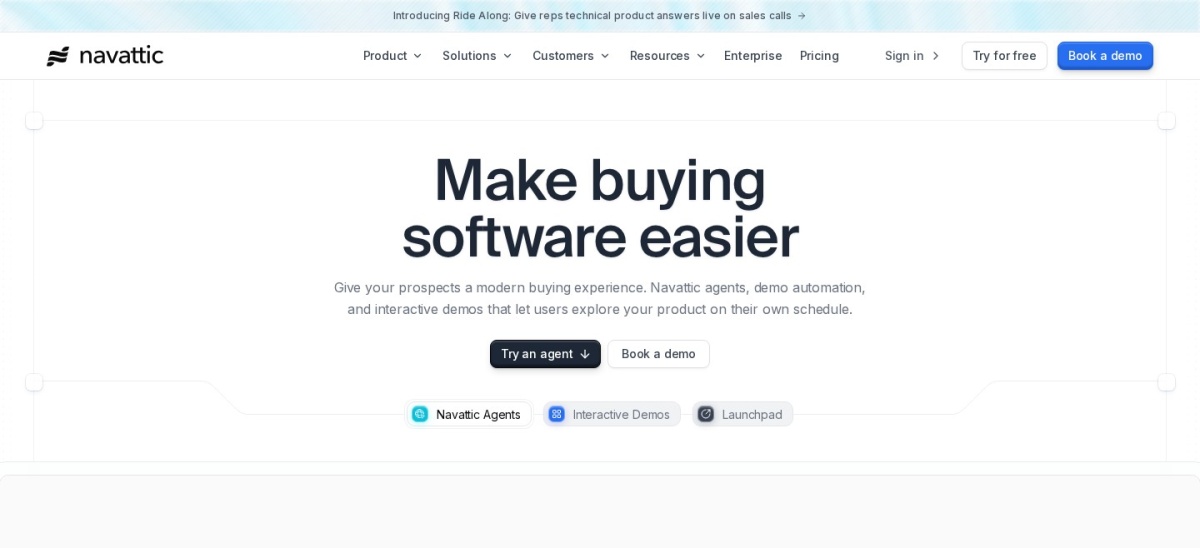
Navattic is an interactive demo platform that turns a capture of your web app into a clickable HTML demo for your website, sales emails and ads. The free Starter plan includes 1 seat, 1 HTML or media demo, unlimited views and basic analytics, with AI Copilot help to build it.
The trade off is price. The official pricing page lists no dollar amounts, and Base is reported at $500 a month billed annually for 5 seats, so small teams pay for features they may not need. It suits marketing teams that publish demos for lead generation and launches.
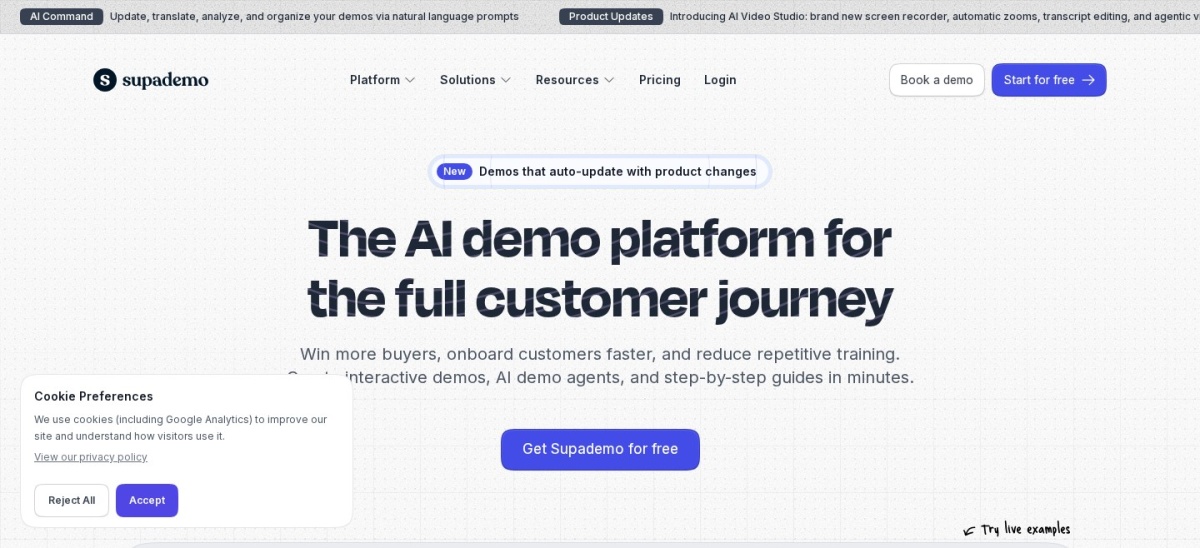
Supademo is a demo builder that turns one screen capture into a clickable guided demo, a video or a step-by-step guide. The free plan covers 1 creator, 5 interactive demos and 50 video recordings, with unlimited views and SOC 2 Type II on every plan.
The trade off is HTML. Screenshot and video demos work on every plan, but HTML demos start on Business at $199 a month billed annually, and sandbox demos need Growth at $350. It suits small teams that want a low-cost start and fast builds.
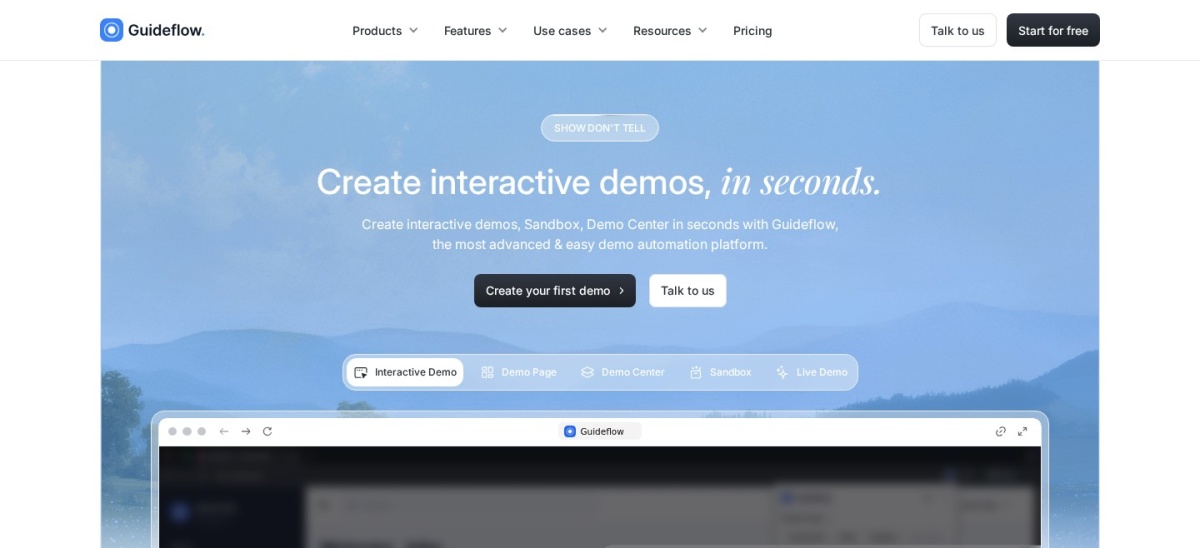
Guideflow is an AI-powered demo platform that runs interactive demos, demo pages, demo centres, sandboxes, live demos and mobile demos from one workspace. The free tier allows up to 5 guideflows, basic capture, unlimited views and 3 team members. Solo at $35 per user a month removes the demo limit and adds advanced analytics and HD export.
The trade off is that HTML capture sits far above the entry price. Solo covers screenshot capture only, while HTML capture and sandbox demos arrive on Growth at $499 a month. It suits revenue teams that need more than one demo format and want one governed library.
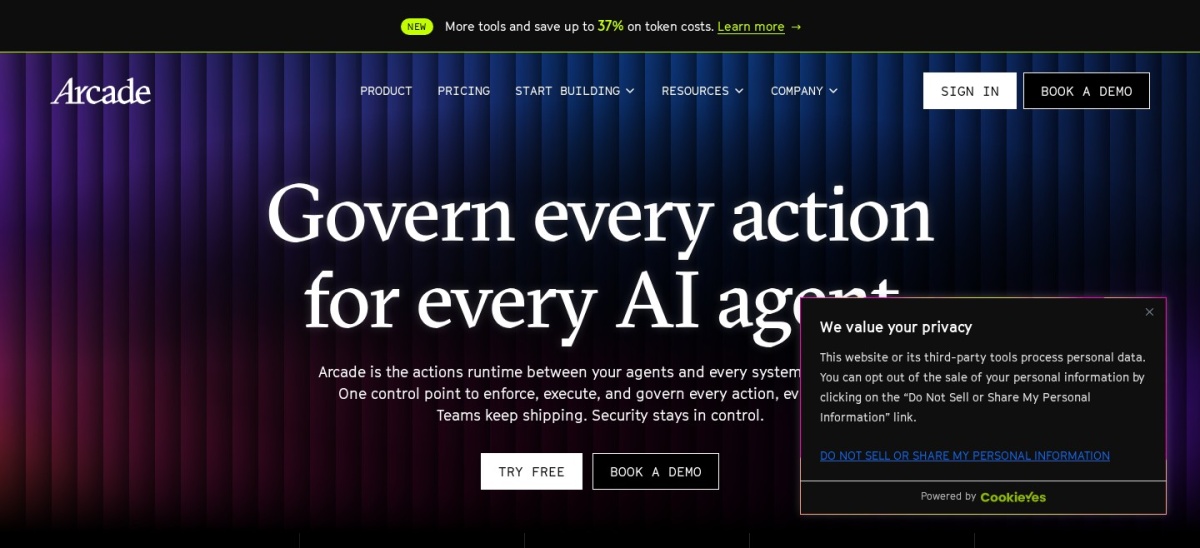
Arcade is a screenshot-and-video-first demo platform that records a product walkthrough with a Chrome extension, desktop app or Figma plugin. The free plan includes 1 published demo, AI content help and lead capture, and paid plans add AI voiceover, branching and custom branding.
The trade off is price churn and HTML. Pro now lists at $59 a month, and interactive HTML demos are an Enterprise feature, so the self-serve plans stay screenshot-first. It suits design-led marketing teams that want polished, visual demos fast.
Consensus is a video-first demo automation platform that turns recorded demos into shareable, trackable experiences for buying committees. Its player shows who watched, what each buyer valued and how they engaged, so reps can follow up on real interest instead of guesses.
The trade off is cost and format. Starter lists at $600 a month for 5 users on G2, and the platform centres on video rather than clickable HTML tours. It suits sales teams that sell to committees and need proof of engagement.
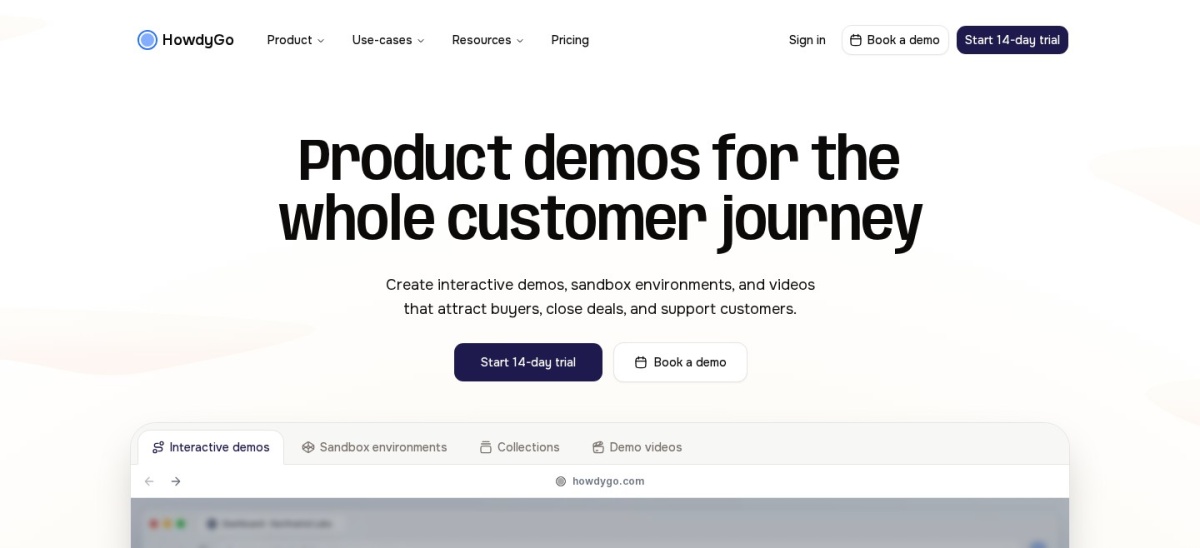
HowdyGo is a web-based demo tool that captures your product interface into a clickable HTML walkthrough in minutes. Starter at $159 a month includes unlimited users, unlimited HTML demos, lead capture and AI voiceovers, with one recording exporting as a demo, a video and a GIF.
The trade off is analytics. Starter has no demo analytics, which arrive on Pro at $399 a month, and there is no permanent free plan, only a 14-day trial. It suits small teams that want HTML demos without per-seat pricing.
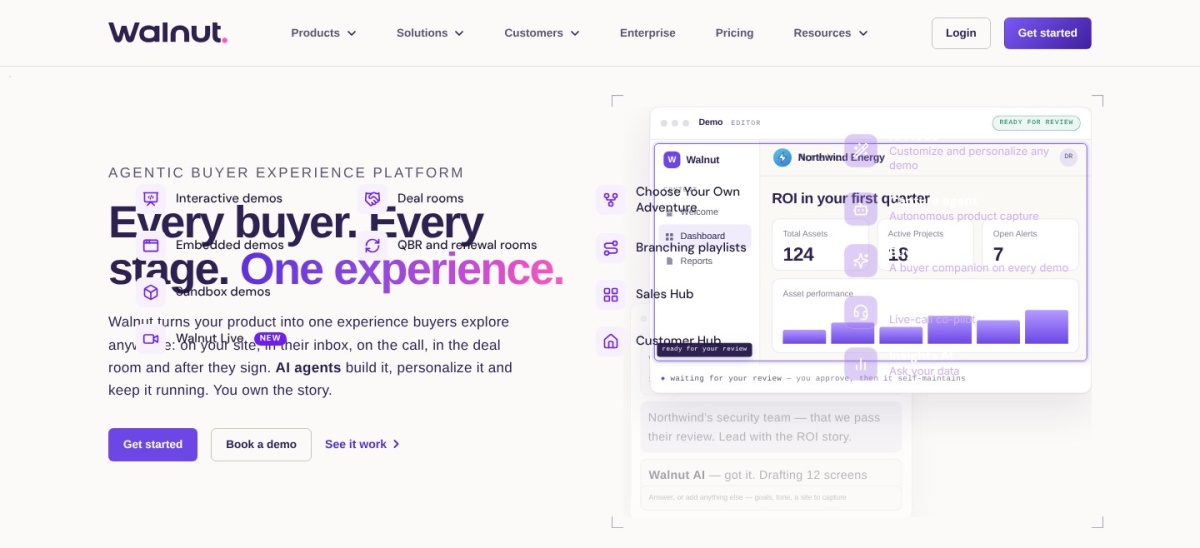
Walnut is an interactive demo platform for sales teams that tailor a demo to each account, with reusable building blocks, personalised variables and stakeholder-level tracking. Ignite at $575 a month billed annually covers 3 editor and 3 presenter seats.
The trade off is the entry price and the learning curve. There is no free plan, and AI usage is metered in credits on top of the plan fee. It suits presales teams selling large deals where each demo must match the account.
Saleo is a live demo platform that overlays realistic, personalised data on your actual product during sales calls, using a Chrome extension instead of a staging environment. Reps show the real product with clean demo data, masked features and prospect-specific values, and it holds ISO 27001 certification.
The trade off is cost and access. Saleo publishes no prices, third-party estimates put entry at about $20,000 a year, and there is no free plan or self-serve trial. It suits enterprise sales engineering teams running many live demos a month where fake data would break trust.
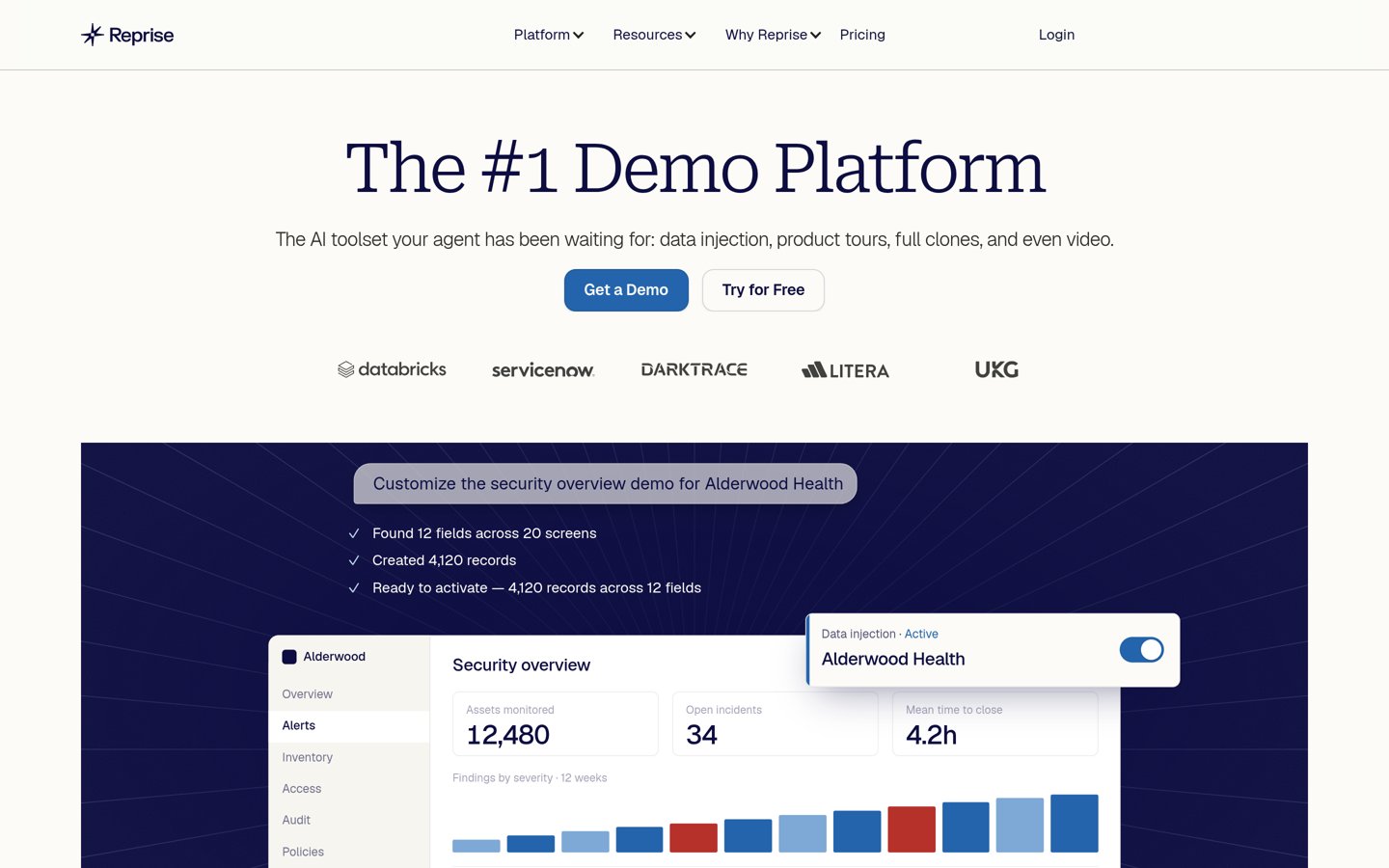
Reprise is an enterprise demo platform that builds guided HTML tours, live data overlays and full code-level clones of your product. Replicate copies the live app onto dedicated infrastructure, so buyers explore a working product instead of following a scripted tour.
The trade off is cost and complexity. Paid plans are quote-only, with third-party reports putting entry near $25,000 a year, and building clones needs engineering time. It suits large presales teams with complex products and long sales cycles.
Free plans cover a first demo well. Five tools in this list let you publish a first demo without paying, and Supademo gives you five demos free.
Paid plans mostly add HTML capture and analytics. The entry price buys screenshot demos, while the format that feels like the real product sits a tier or two higher.
If demos feed your pipeline, the paid tier matters more than the demo itself. CRM links, account identification and engagement reports are usually paid features.
For a team that only needs one website demo, a free plan may be enough. For a team running demos across sales and marketing, budget for the plan with HTML capture included.
How we chose
We started from the demo automation tools most often named as Storylane replacements, then kept nine with public G2 ratings and published or widely reported pricing.
Prices come from each vendor's pricing page or G2 pricing data, checked on 29 November 2026. Ratings and review counts come from G2 on the same day. Where a vendor shows a sale, the list shows the regular price.
We left out tools with no public rating or no verifiable price. No vendor paid for a place, and we do not claim to have used these tools ourselves.
How to choose a Storylane alternative
Start with one demo, then check the price of the plan you will actually need.
Decide the demo format first. Screenshot tours are the cheapest, HTML tours feel most like the product, and live clones suit complex enterprise sales.
Try the free plan. Navattic, Supademo, Guideflow and Arcade all publish at least one free demo, so build one before paying.
Price the plan with HTML capture. HTML is often gated: Supademo charges $199 a month for it, while HowdyGo includes it at $159. Do not budget on the entry price alone.
Check CRM and analytics. If demos must feed Salesforce or HubSpot and show who engaged, confirm those features are on the plan you buy, not a higher tier.
FAQ
What is the best Storylane alternative in 2026?
Navattic is the best Storylane alternative for most marketing teams. It builds clickable HTML demos from your product, includes lead capture and CRM links on paid plans, and holds a 4.8 out of 5 G2 rating from 1,160 reviews.
What is the cheapest Storylane alternative?
Guideflow is the cheapest paid start at $35 a month for Solo, with Supademo close behind at $38 a creator a month on Scale. Both have free plans, and Navattic and Arcade also let you publish a first demo free.
Is there a free alternative to Storylane?
Yes. Navattic, Supademo, Guideflow and Arcade all have free plans that let you publish at least one interactive demo. Supademo's free plan is the most generous, with 5 demos, 50 video recordings and unlimited views.
Which Storylane alternative is best for small teams?
Guideflow suits small teams best, with a free tier for 3 members and Solo at $35 a user a month. HowdyGo is the other strong pick, because every plan includes unlimited users, so a growing team pays a flat $159 a month.
Which is better, Navattic or Supademo?
Navattic wins for marketing-led HTML demos, lead generation and CRM reporting, while Supademo wins on price and speed, starting at $38 a creator a month. Pick Navattic if demos feed your pipeline reports, and Supademo if you need many demos on a small budget.
Do Storylane alternatives include HTML demos?
Most do, but often not on the cheapest plan. Navattic includes HTML on its free plan, HowdyGo from $159 a month, and Guideflow only from Growth at $499 a month. Arcade keeps HTML capture for Enterprise, and Supademo adds it on Business at $199 a month.
SaaS SEO and WordPress specialist with about 8 years of experience. Rakib compares WordPress plugins, themes, hosting and software using public pricing, documentation and user reviews. See how we rank.