Among some alternatives to WordPress, Wix is the best pick for most people, with a free plan and paid plans from $17 a month billed yearly. Pick Squarespace for design-led portfolios and Ghost for blogs and newsletters, or Joomla and Drupal if you want a free open-source CMS.
How we make this list: we compare pricing pages, product documentation and public user reviews, then re-check every price before each update. No product paid for a place. Disclosure.
Wix is the top pick: a free plan, a 4.2/5 G2 rating and paid plans from $17 a month billed yearly.
Squarespace is the design pick at $16 a month, but there is no free plan, only a 14-day trial.
Webflow Basic at $14 a month has no CMS; a blog needs the CMS plan at $23 a month.
Ghost is the cheapest hosted pick at $9 a month, but paid subscriptions need the $25 Creator plan.
Joomla and Drupal cost $0 for the software, but you pay for hosting and need technical help.
How do you pick from some alternatives to WordPress?
WordPress is free software, so the real cost of an alternative is the plan plus what it includes. Our what is WordPress guide explains that WordPress itself costs nothing, while hosting, themes and plugins are separate bills.
The cheapest paid plan is rarely the plan you stay on. Wix Light at $17 a month cannot take payments, Webflow Basic at $14 a month has no CMS, and Ghost Starter at $9 a month cannot take paid subscriptions.
Free plans are for trying, not launching. Wix, Webflow and Framer all publish a real site free, while Squarespace, Shopify and Duda offer a trial only. Joomla and Drupal are free software, but you still pay for hosting. If you outgrow a builder, our guide to migrating from Wix to WordPress shows the way back.
Ratings here come from G2, and the review bases differ a lot. Wix has 1,889 reviews behind its 4.2, while Ghost has only 40 behind its 4.0, so treat the small-base scores as a weaker signal.
Wix is a hosted website builder with a drag-and-drop editor, templates and hosting in one place. The free plan covers a basic site on a wixsite.com address with Wix ads, and the Light plan at $17 a month billed yearly adds a custom domain, a free domain for one year and 2 GB of storage.
The trade off is selling. Light cannot take payments or bookings, so a shop or a booking page needs Core at $29 a month billed yearly. It suits blogs, portfolios and small business sites that want one login for the whole site.
What we like
Free plan to start, with no card required
Custom domain from $17 a month billed yearly
Wide template and app choice
24/7 customer care on paid plans
Watch out for
You cannot move a Wix site to another host
Light plan has no payments or bookings
Only 2 GB of storage on Light
Core adds payments, bookings and more storageVisit wix.com
02
Squarespace
4.4/5on G2 (1,137 reviews, checked Nov 2026)
Starts at$16/mo
Best for design-led portfolios
Free plan14-day trial only
TemplatesAll included
Contributors2 on Personal
Paid planPersonal, $16/mo
squarespace.com
Squarespace homepage, captured Nov 2026.
Squarespace is a hosted builder known for polished templates, with hosting, SSL and a custom domain in every paid plan. The Personal plan at $16 a month billed yearly covers unlimited pages and galleries, a free domain for the first year and basic site analytics.
The trade off is cost as you grow. There is no free plan, only a 14-day trial, and selling online needs a higher plan with its own fees. It suits portfolios, studios and service businesses where the look of the site is the pitch.
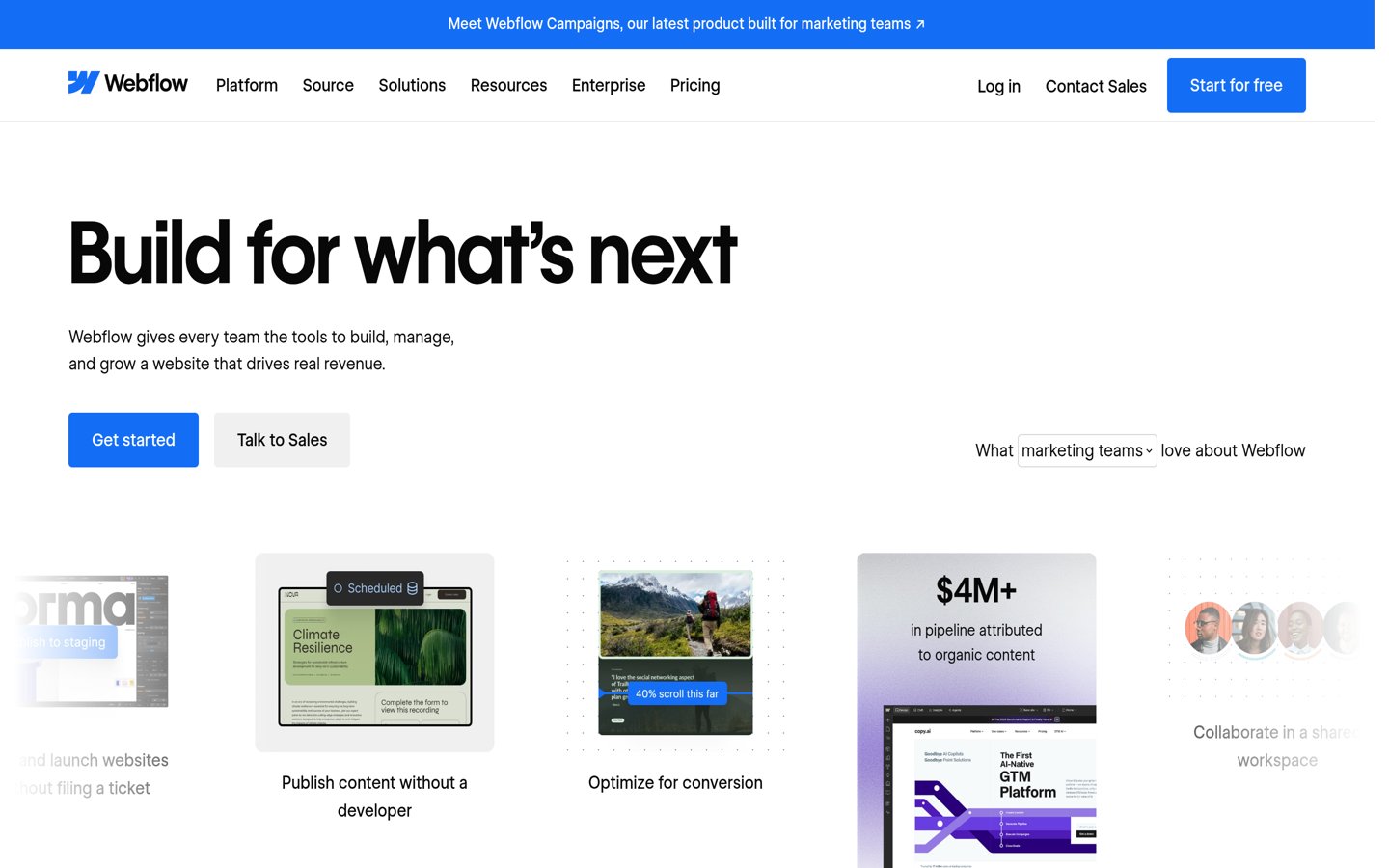
Webflow is a visual builder that turns a design canvas into clean, hosted pages with SSL and a custom domain. The free Starter plan covers two pages on a webflow.io address, and Basic at $14 a month billed yearly adds a custom domain, 150 pages and 10 GB of bandwidth.
The trade off is the CMS. Basic has no CMS, so a blog or a content-heavy site needs the CMS plan at $23 a month billed yearly. It suits designers and marketing teams that want full control over layout without plugins.
Shopify is a hosted store platform with checkout, inventory, shipping and tax tools built in. The Basic plan at $29 a month billed yearly covers unlimited products, discount codes, gift cards and abandoned checkout recovery, after a 3-day free trial.
The trade off is that it is a store first. A simple brochure or blog site pays for inventory and checkout depth it will not use. It suits shops that sell physical products and need shipping and order tools from day one.
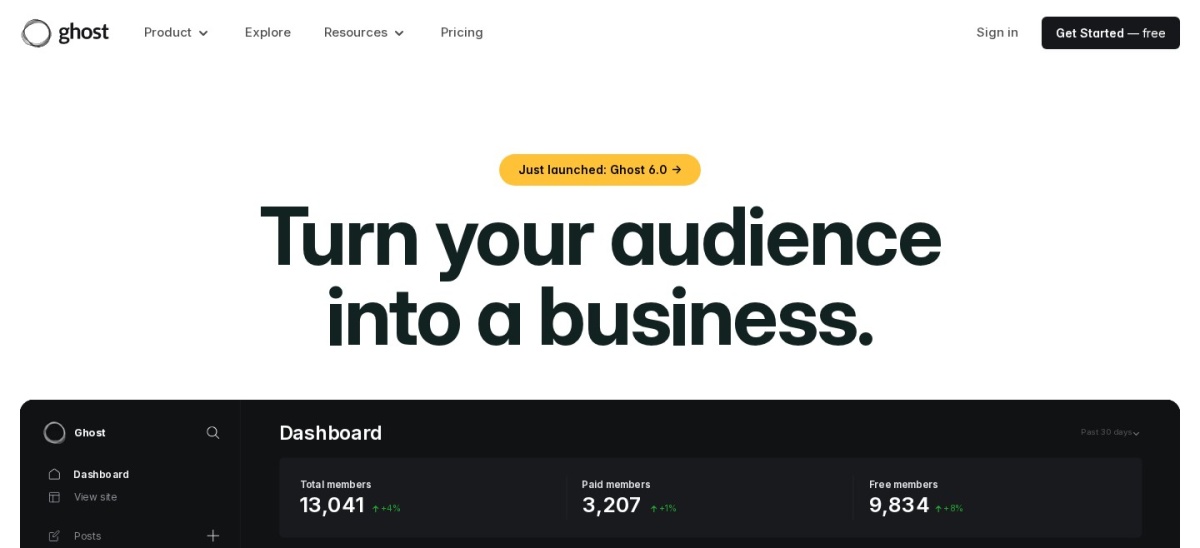
Ghost is an open-source publishing platform built around posts, email newsletters and paid memberships, with no plugins needed for those jobs. The software is free to self-host, and managed Ghost(Pro) hosting starts with Starter at $9 a month billed yearly for up to 500 members.
The trade off is paid subscriptions. Starter cannot connect Stripe, so charging readers needs the Creator plan at $25 a month billed yearly. It suits writers, publishers and newsletters that want fast, clean pages and 0% revenue fees.
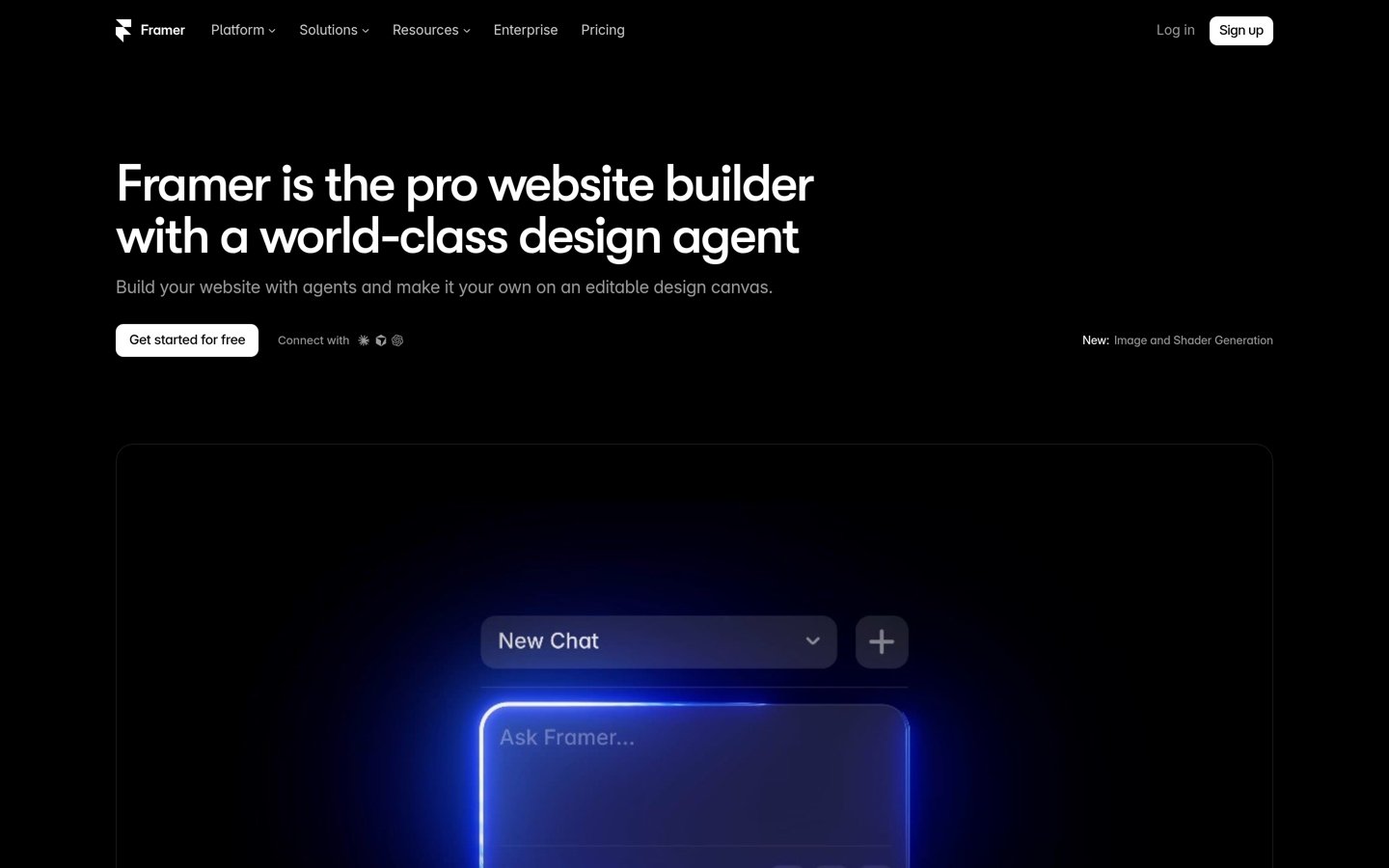
Framer is a design-led builder with an editable canvas, built-in CMS, SEO tools and animation, plus AI drafting. The free plan covers a site on a framer.app address, and Basic at $10 a month billed yearly adds a custom domain, 30 pages and 2 CMS collections.
The trade off is selling. Framer has no built-in store or booking calendar, and each extra editor costs $20 a month on top of the site plan. It suits startups and designers who want a polished marketing site fast.
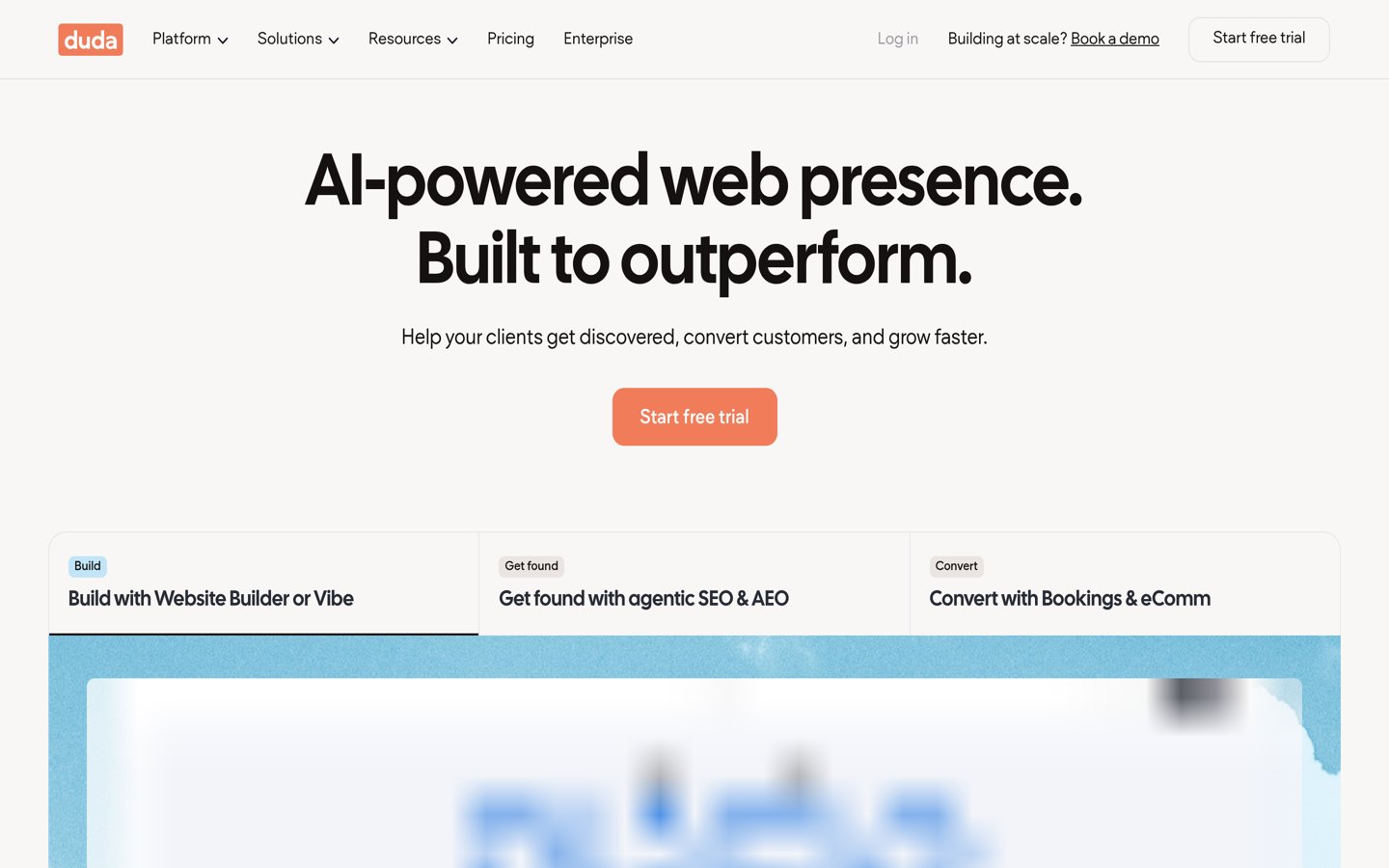
Duda is a builder made for agencies and freelancers, with client permissions, team roles, a multi-site dashboard and white-label options. The Basic plan at $19 a month billed yearly covers one site, three team seats and unmetered storage and bandwidth.
The trade off is the store. Ecommerce is a separate paid add-on per site, and each extra site costs $19 a month on Basic. It suits agencies that build and manage sites for clients and bill the plan on.
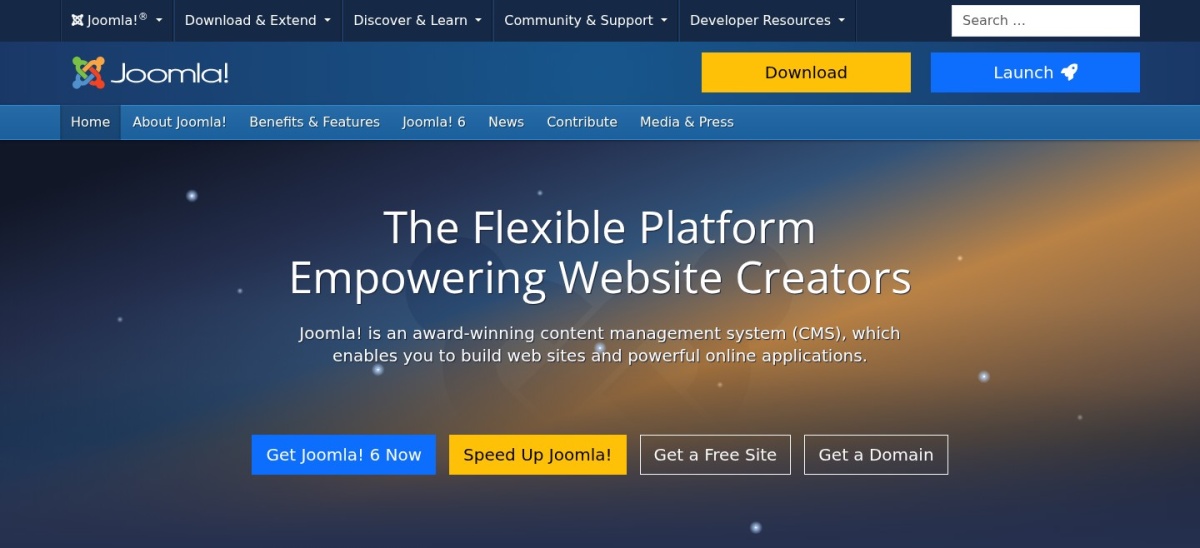
Joomla is a free, open-source CMS with built-in multilingual content and granular user controls. The software costs nothing; you pay only for hosting and a domain, and Joomla 6 is the current release.
The trade off is setup. You arrange hosting, updates and security yourself, and the admin area takes longer to learn than a hosted builder. It suits multilingual and community sites with someone technical on hand.
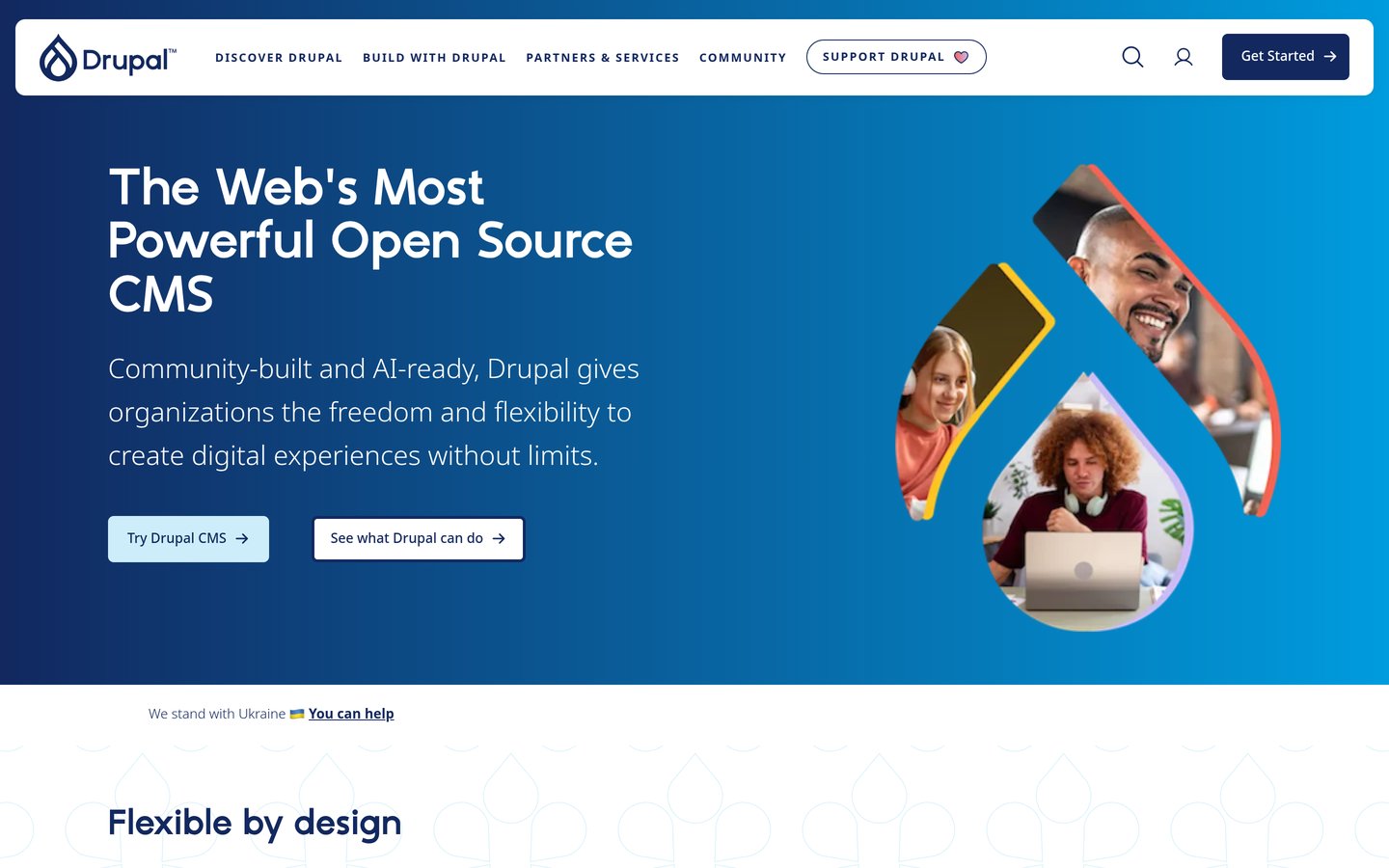
Drupal is a free, open-source CMS built for complex sites with strict permissions, structured content and high traffic. The software costs nothing; you pay only for hosting and a domain, and the Drupal CMS starter adds ready-made recipes for common needs.
The trade off is the learning curve. G2 reviewers note about four months to implement, and most teams need a developer. It suits large organisations, universities and governments that need control more than speed.
Free plans cover the basics well. Wix, Webflow and Framer all publish a real site free, and Joomla and Drupal cost nothing for the software.
Paid plans mostly add a custom domain, more storage and the features that earn money: selling, CMS content and paid memberships.
If the site earns money, the plan that unlocks that income is the honest price. Our WordPress vs Wix cost guide shows how a hosted bill compares with WordPress hosting.
How we chose
We started from the builders and CMS platforms most often named as WordPress replacements, then kept nine with a real free plan or trial, a public pricing page and a public rating.
Prices come from each vendor's pricing page, checked on 29 November 2026. All prices are the regular yearly-billing rate, not a sale price; where a vendor shows a discount, the list shows the regular price. Ratings and review counts come from G2 on the same day.
We left out builders without a public rating or a public price. No vendor paid for a place, and we do not claim to have used these tools ourselves.
How to choose an alternative to WordPress
Start with what the site must do in its first year, then match the plan to that job.
Decide what the site must do. A blog needs a CMS, a shop needs checkout, a portfolio needs strong templates. Pick the job first, then the tool.
Check the plan that unlocks that job. Light, Basic and Starter plans often lack selling, CMS or paid memberships. Price the plan you will actually need, not the cheapest one.
Try the free plan or trial first. Build a few real pages before paying. Wix, Webflow, Framer, Ghost, Joomla and Drupal all let you start free.
Check the exit before you commit. Ask how you export content and whether the site moves to another host. Hosted builders keep the site; Joomla and Drupal let you move it.
FAQ
What are the best alternatives to WordPress?
Wix is the best all-round alternative to WordPress, with a free plan, a 4.2/5 G2 rating and paid plans from $17 a month billed yearly. Squarespace suits design-led sites, Webflow suits designers who want control, and Ghost suits blogs and newsletters.
How much do WordPress alternatives cost?
From $0 to $29 a month on the cheapest paid plans in this list. Ghost starts at $9 a month, Framer at $10 and Webflow at $14, all billed yearly, while Joomla and Drupal cost $0 for the software and only hosting is extra.
Is there a free alternative to WordPress?
Yes. Joomla and Drupal are free, open-source CMS platforms, and Wix, Webflow, Framer and Ghost all have a free way to start. Squarespace, Shopify and Duda have no free plan, only a free trial.
Which WordPress alternative is best for beginners?
Wix is the easiest starting point, with a drag-and-drop editor, a free plan and 24/7 support on paid plans. Squarespace is also simple if design matters most, while Joomla and Drupal need technical help.
Wix or Squarespace: which is better?
Wix wins for most people because it has a free plan and paid plans from $17 a month, plus bookings and payments from $29. Squarespace wins on template polish at $16 a month, but it has no free plan and no store on Personal.
What is the best WordPress alternative for blogging?
Ghost is the best pick for blogging, with newsletters and memberships built in and managed hosting from $9 a month. Webflow with its CMS plan at $23 a month is the stronger choice if the blog sits beside a marketing site.
SaaS SEO and WordPress specialist with about 8 years of experience. Rakib compares WordPress plugins, themes, hosting and software using public pricing, documentation and user reviews. See how we rank.