Sanity is the best of these alternatives to Contentful for most teams, with a free plan for up to 20 seats and Growth at $15 per seat a month. Pick Storyblok if marketers need a visual editor, or Payload if you want a free self-hosted CMS.
How we make this list: we compare pricing pages, product documentation and public user reviews, then re-check every price before each update. No product paid for a place. Disclosure.
Sanity is the top pick: free for up to 20 seats, Growth at $15 per seat a month, and rated 4.7 out of 5 from 970 G2 reviews.
Storyblok is the easiest for marketers, with a visual editor on every plan, but Growth starts at $90.75 a month billed annually.
Payload, Directus and Ghost are free to self-host with no licence cost; Payload Cloud starts at $35 a month.
Hygraph is the only pick built for federating content from several systems, but paid plans start at $199 a month.
Every tool in this list has a free plan or a free self-hosted edition, and paid plans run from $10 to $199 a month.
How do you choose among some alternatives to Contentful?
Contentful's paid Lite plan costs $300 a month, which pushes small teams to look for a cheaper headless CMS with a real free plan.
The cheapest switch is not always the best one. A free self-hosted CMS such as Payload or Directus costs nothing in licences but needs a developer to deploy, update and back up.
Marketing teams should judge the editor first. Our guide on building a headless WordPress site shows how much setup a headless stack can hide, and the same applies here: a visual editor saves more time than a lower monthly price.
Check the API limits before you commit. Free plans in this list cap API calls from 50,000 to 4 million a month, and overage fees can wipe out the saving over Contentful.
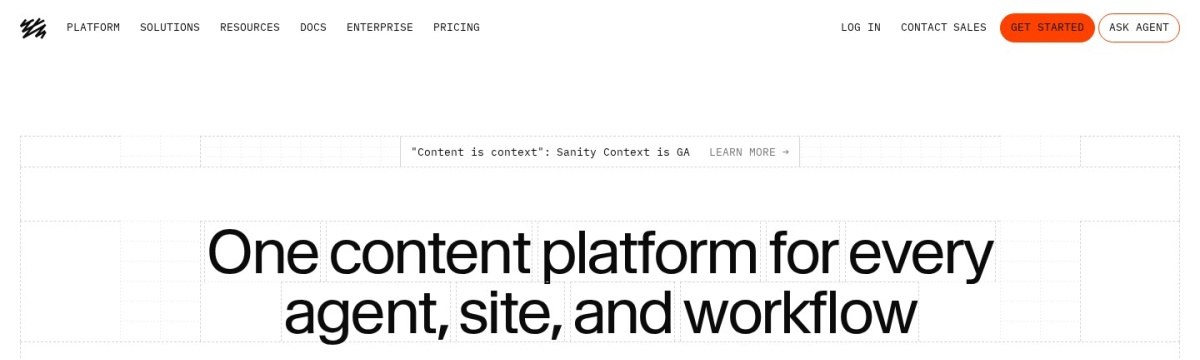
Sanity is a hosted headless CMS where content types are defined as code and editors work in a customizable React Studio. The free plan covers up to 20 seats, 2 public datasets, 10,000 documents and 1 million API CDN requests a month, with live previews and visual editing included.
The trade off is the learning curve. GROQ, Sanity's query language, takes time to learn, and private datasets, scheduled drafts and comments need Growth at $15 per seat a month. It suits developer-led teams that want full control over the editing experience and the content model.
What we like
Most generous free plan in this list, with 20 seats
Fully customizable Studio and content model
Real-time collaboration and live previews
Rated 4.7 out of 5 from 970 G2 reviews
Watch out for
GROQ takes time to learn
Private datasets need the paid Growth plan
Usage overages can add up on busy sites
Growth adds private datasets, scheduled drafts and commentsVisit sanity.io
02
Storyblok
4.5/5on G2 (636 reviews, checked Nov 2026)
Paid from$90.75/mo
Best for marketers and visual editing
Free planYes, 1 space
Paid planGrowth, $90.75/mo
Visual editorYes, component-based
Locales on Growth2, more as add-ons
storyblok.com
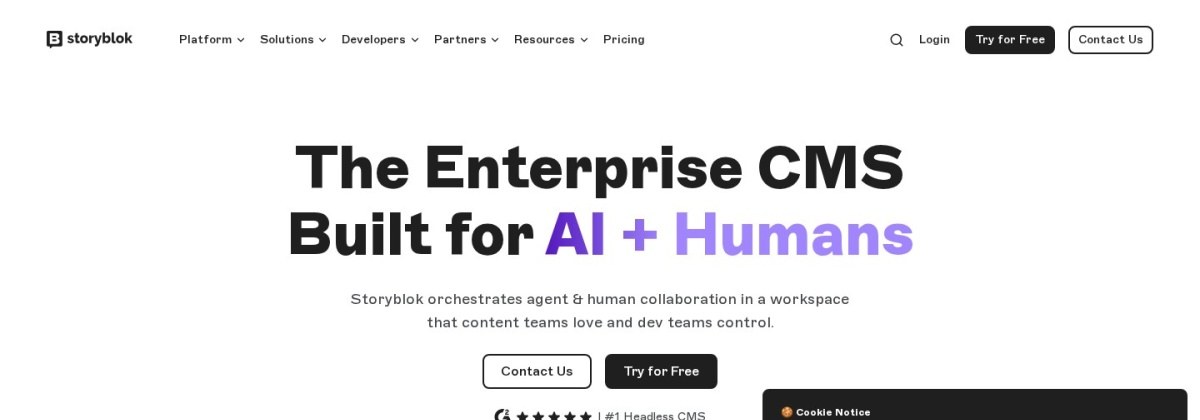
Storyblok homepage, captured Nov 2026.
Storyblok is a headless CMS with a visual editor that lets marketers build pages from developer-made components without touching code. The free Starter plan includes 1 space, 1 seat, 100 GB of traffic, 100,000 API requests a month and 2 locales, plus a 45-day trial of Growth Plus.
The trade off is the price jump. Growth costs $99 a month, or $90.75 a month billed annually, for 5 seats and 1 million API requests, and each plan covers one space, so agencies pay per client site. It suits marketing teams that publish landing pages and campaigns often.
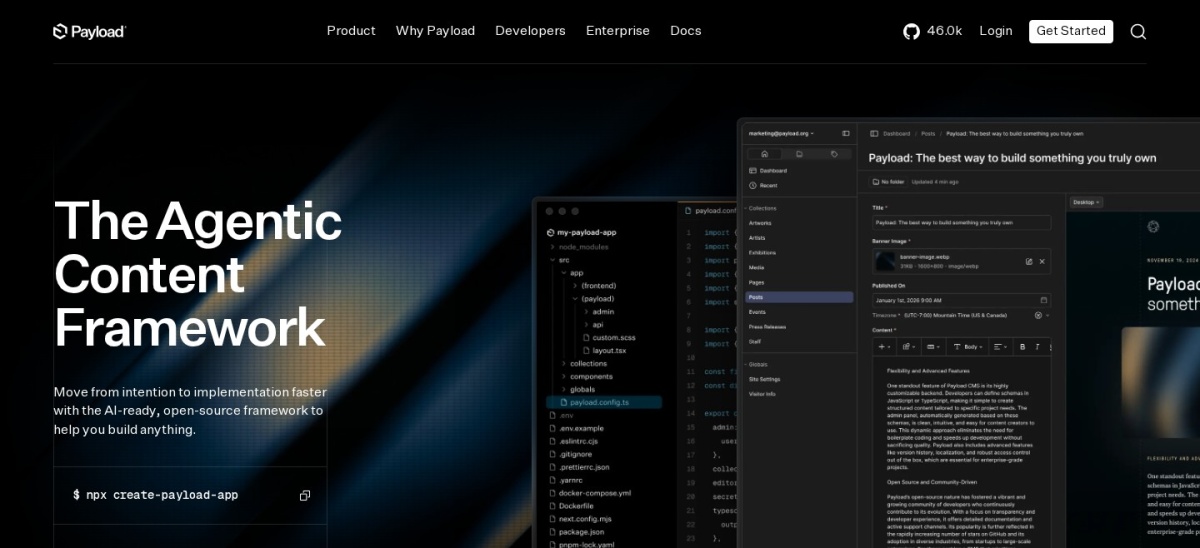
Payload CMS is an open-source, code-first headless CMS built on TypeScript and Next.js, with content models defined in code and a customizable admin panel. Self-hosting is free under the MIT licence with no seat caps, while Payload Cloud Standard adds managed hosting, a database and backups for $35 a month.
The trade off is the developer focus. Payload expects a TypeScript project and a database you manage yourself when self-hosting, and the admin panel is plainer than the visual editors in this list. It suits developer-led teams building content-rich apps inside Next.js.
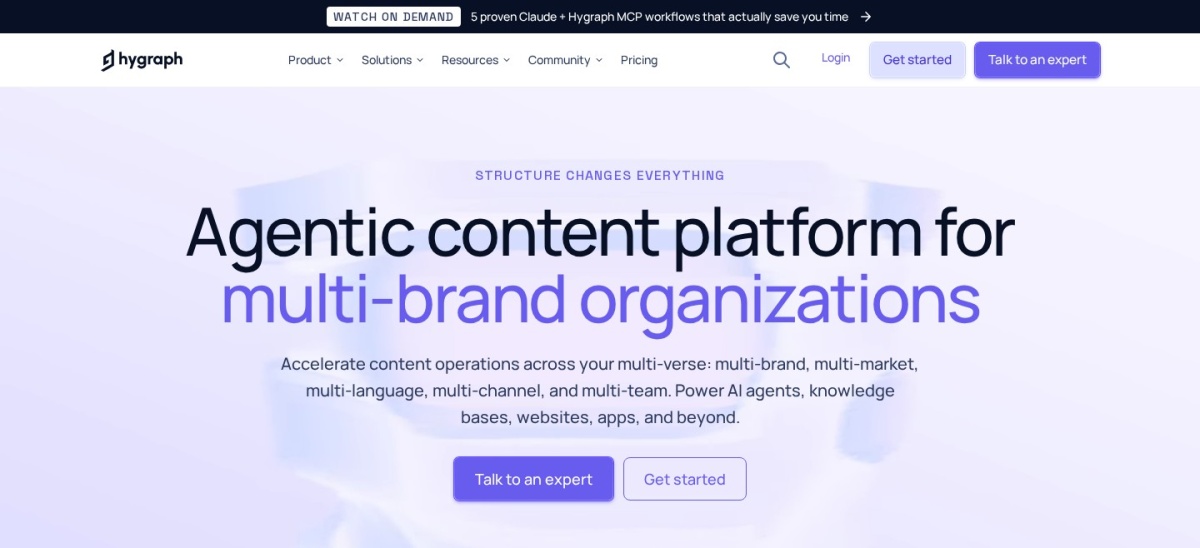
Hygraph is a GraphQL-native headless CMS built to federate content from several sources into one API. The free Hobby plan covers 3 seats, 1,000 entries, 500,000 API calls a month and 100 GB of asset traffic, with live preview and a built-in asset manager.
The trade off is the step to paid. Growth starts at $199 a month for 10 seats, 10,000 entries and 1 million API calls, and features such as SSO, audit logs and content federation stay on Enterprise. It suits teams whose content already lives in more than one system.
What we like
Only pick here that federates outside sources
GraphQL API is native, not an add-on
Free Hobby plan is usable for real projects
Rated 4.4 out of 5 from 734 G2 reviews
Watch out for
No mid-priced plan between free and $199 a month
Federation, SSO and audit logs need Enterprise
Learning curve for content modelling
Growth adds 10 seats, 10,000 entries and 2 environmentsVisit hygraph.com
05
Directus
4.8/5on G2 (53 reviews, checked Nov 2026)
Paid from$89/mo
Best for database-first projects
Free planYes, self-hosted
Paid planCore, $89/mo
APIsREST + GraphQL
Seats on Core3
directus.io
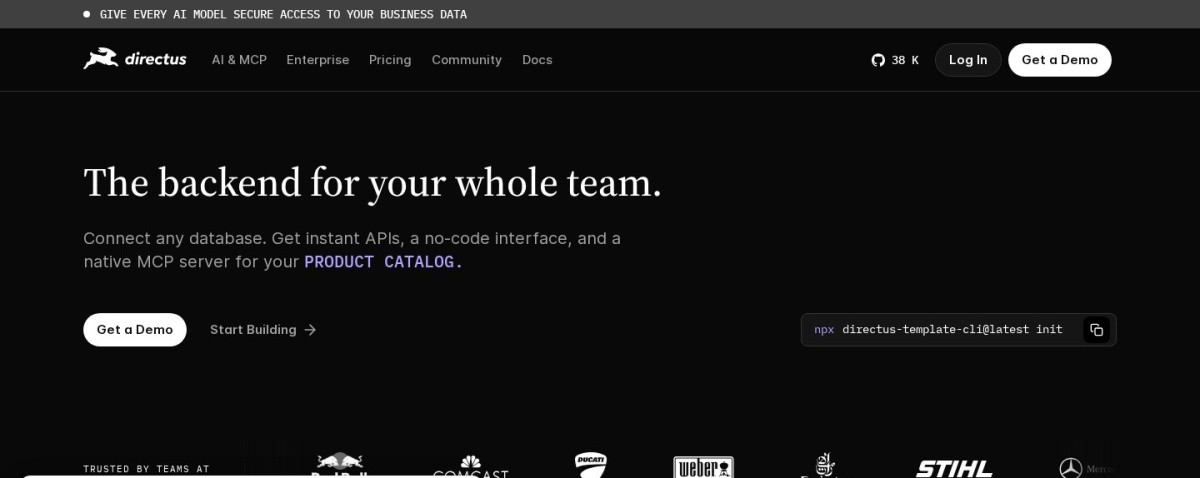
Directus homepage, captured Nov 2026.
Directus is an open-source platform that wraps an existing SQL database with an instant REST and GraphQL API and a no-code admin app. Self-hosting is free, and the Core plan at $89 a month billed annually adds 3 seats, 25 collections, 5 flows and the AI Assistant.
The trade off is the gap between plans. Team jumps to $499 a month billed annually, so small teams that outgrow Core face a steep rise, and SSO is not available on Core at all. It suits teams with a database-first project and developers on staff.
What we like
Turns any SQL database into a CMS instantly
Free to self-host with no feature limits
Rated 4.8 out of 5 from 53 G2 reviews
AI Assistant included on the Core plan
Watch out for
No plan between Core at $89 and Team at $499 a month
SSO is not available on Core
Core caps seats at 3 and collections at 25
Core adds managed hosting support, flows and the AI AssistantVisit directus.io
06
Prismic
4.3/5on G2 (361 reviews, checked Nov 2026)
Paid from$10/mo
Best for simple marketing sites
Free planYes, 1 user
Paid planStarter, $10/mo
Page builderVisual, slice-based
API calls on Free4M/mo
prismic.io
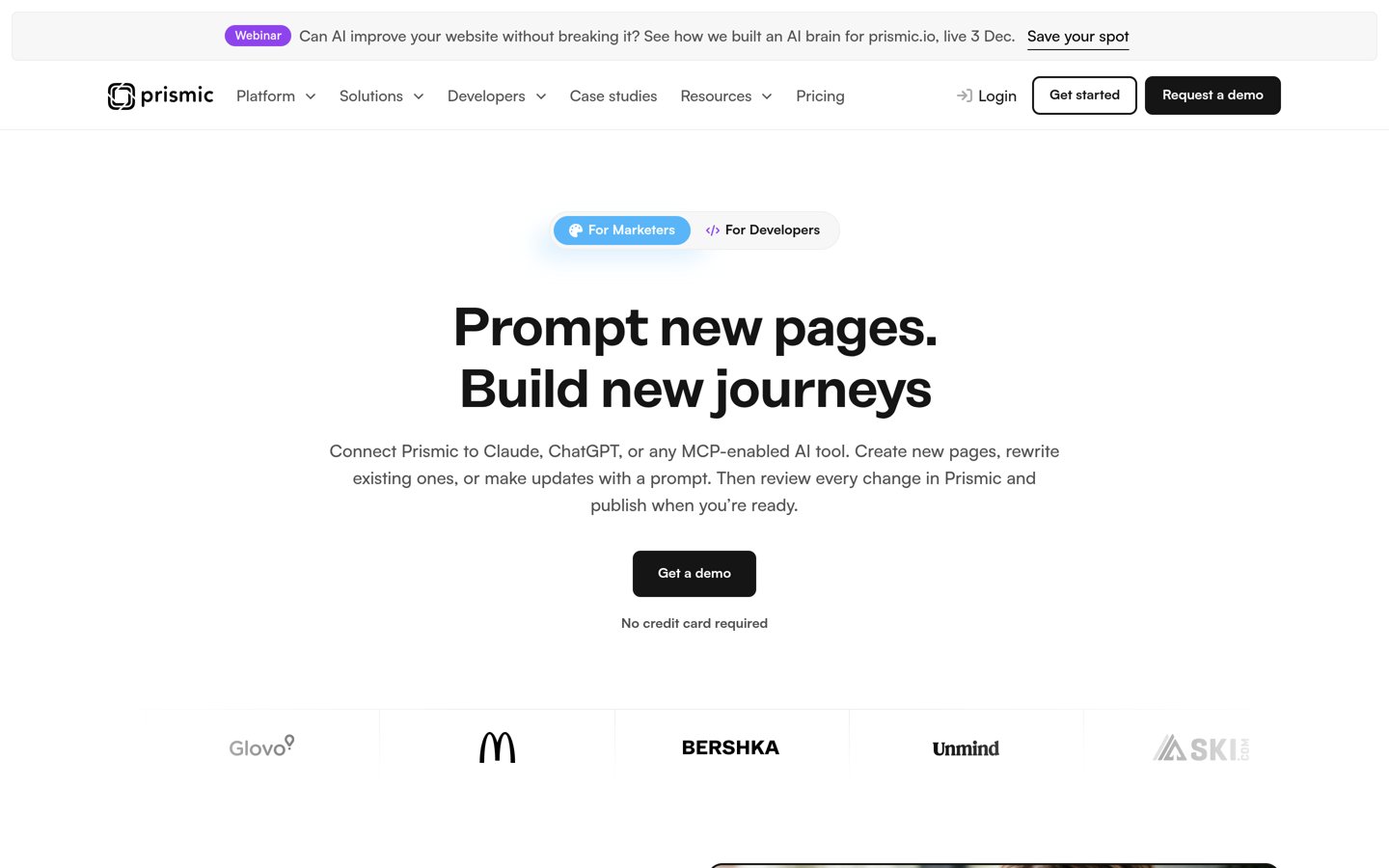
Prismic homepage, captured Nov 2026.
Prismic is a headless page builder for marketing sites, with reusable slices that editors rearrange in a live visual preview. The free plan covers 1 user, 2 locales, 4 million API calls a month and 100 GB of CDN bandwidth, with unlimited documents, types and assets.
The trade off is that new page sections still need a developer. Slices come from a developer-built library, and Starter at $10 a month billed annually adds only 3 users and 3 locales. It suits Next.js teams that want a simple, predictable CMS for a marketing site.
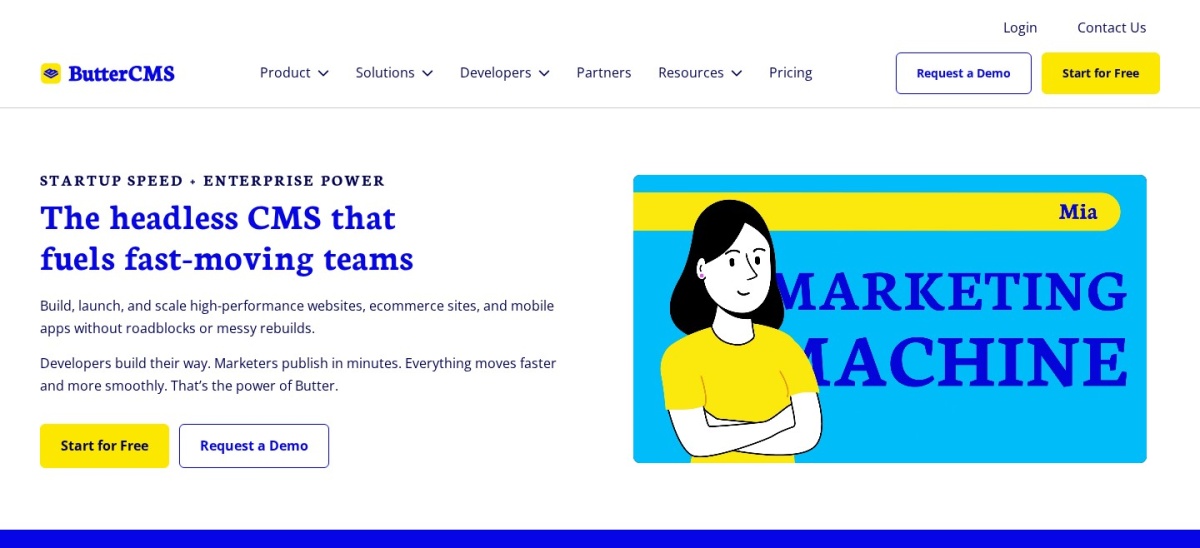
ButterCMS is a hosted headless CMS and blog engine built for teams that want to add content management to an existing site fast. The free plan includes unlimited users and components, 50,000 API calls a month, 5 pages and 50 blog posts, with visual editing and live preview.
The trade off is the usage ceiling. Basic costs $71 a month billed annually for 100,000 API calls and 250 GB of bandwidth, and heavy blogs hit the post and page limits quickly. It suits small teams adding a blog or landing pages to an app.
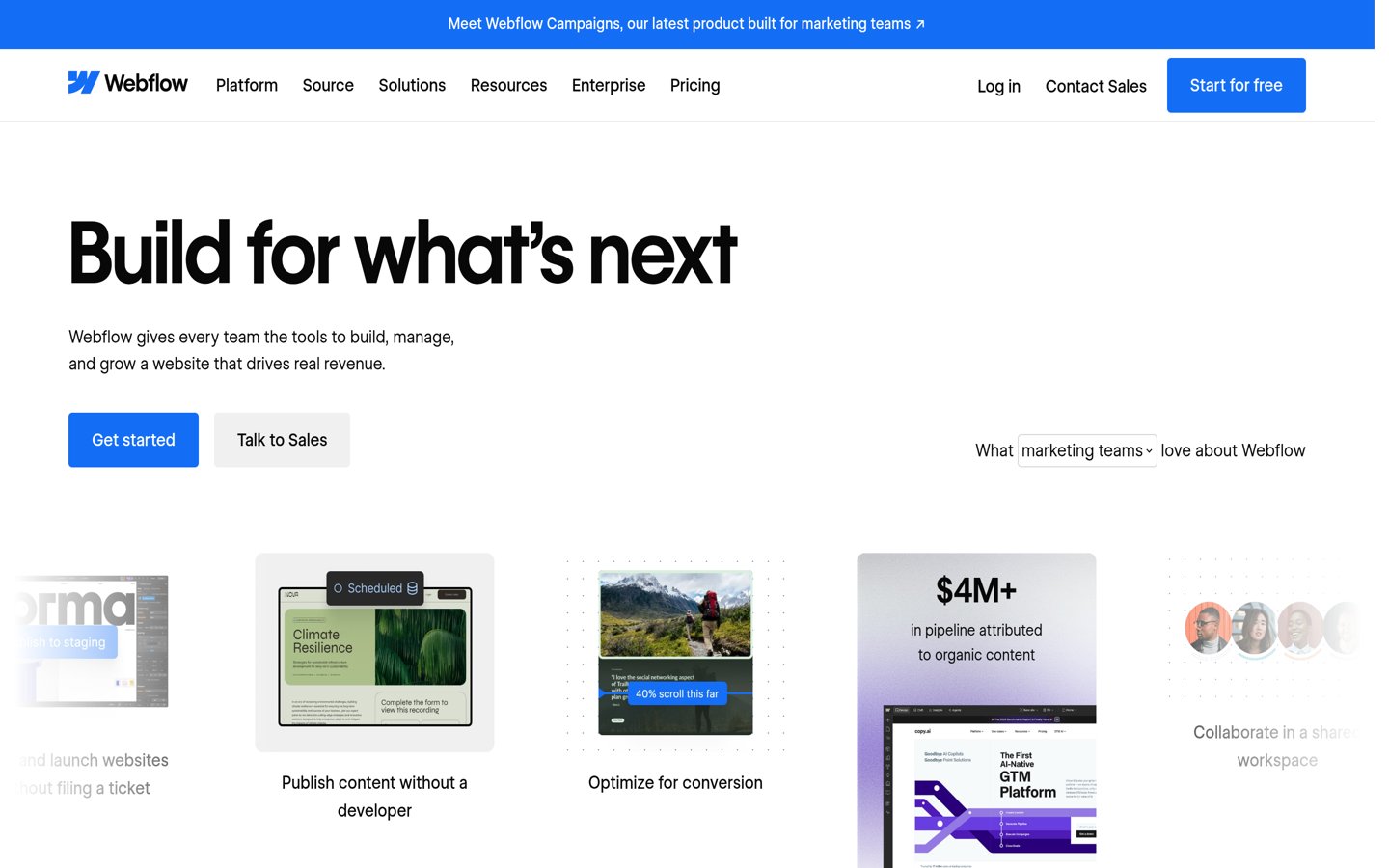
Webflow is a visual website builder with a built-in CMS, hosting and design tools in one place, so marketers can publish without a developer queue. The free Starter plan covers 2 pages and limited CMS, and the Premium plan at $25 a month billed yearly adds the full CMS, site search and more bandwidth.
The trade off is that it is not a pure headless CMS. Content lives inside Webflow's hosting and design system, and the Premium plan caps collections and bandwidth, so costs rise as sites grow. It suits design-led teams that want the site and the CMS together.
What we like
Design, CMS and hosting in one product
Marketers publish without a developer queue
Large template and community ecosystem
Rated 4.4 out of 5 from 997 G2 reviews
Watch out for
Not a pure headless CMS; content stays in Webflow
Costs rise fast as collections and traffic grow
Learning curve for the visual designer
Premium adds the full CMS, site search and more bandwidthVisit webflow.com
09
Ghost
4/5on G2 (40 reviews, checked Nov 2026)
Paid from$15/mo
Best for publishers and newsletters
Free planYes, self-hosted
Paid planStarter, $15/mo
Members on Starter1,000
NewslettersBuilt in
ghost.org
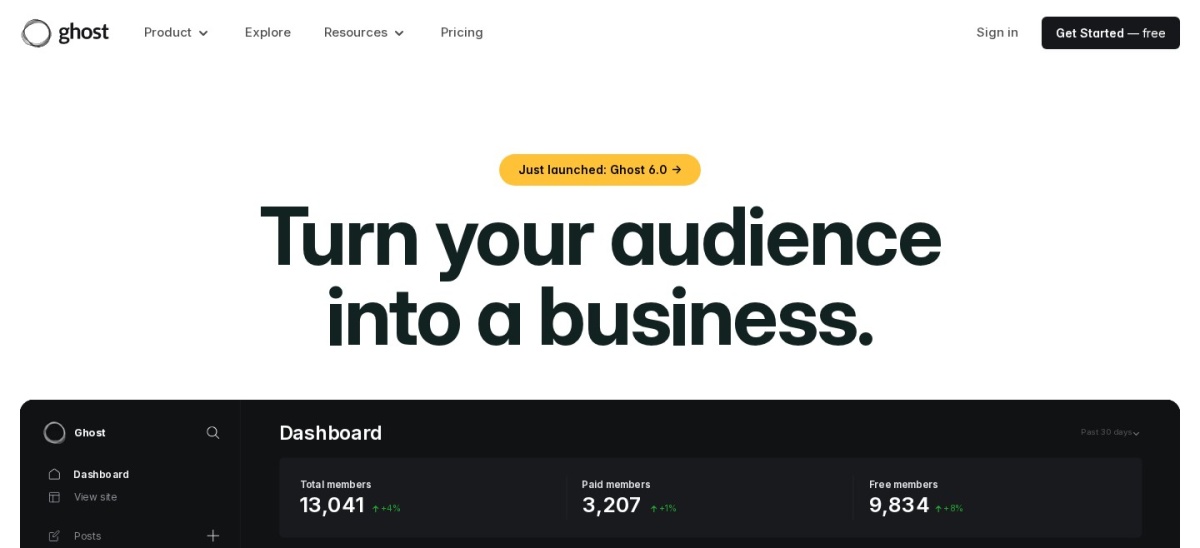
Ghost homepage, captured Nov 2026.
Ghost is an open-source publishing platform for blogs, newsletters and paid memberships, with a clean editor and a full Content API for headless use. Self-hosting is free, and Ghost(Pro) Starter costs $15 a month billed annually for hosted service, 1,000 members and 1 staff user.
The trade off is scope. Ghost is built for publishing, not for complex multi-channel content models, and hosted prices rise steeply with member count. It suits independent publishers and small publications that live on articles and email.
What we like
Built-in memberships, newsletters and paywalls
Free to self-host with no revenue cut
Clean editor that writers pick up fast
Full Content API for headless front ends
Watch out for
Built for publishing, not complex content models
Hosted prices rise steeply with member count
Lowest G2 rating in this list at 4.0 out of 5
Starter adds hosting, a custom domain and email newslettersVisit ghost.org
Self-hosted vs hosted: what changes
Self-hosted tools cost nothing in licences. Payload, Directus and Ghost are all free to run on your own server, which makes them the cheapest alternatives to Contentful on paper.
Hosted tools charge for the work they remove. Sanity, Storyblok, Hygraph, Prismic, ButterCMS and Webflow run the servers, backups and updates, so a small team pays a monthly fee instead of a developer's time.
The break-even point is staff time. If nobody on the team can deploy and patch a server, a hosted plan at $10 to $35 a month is cheaper than the hours self-hosting takes.
How we chose
We started from the headless CMS platforms most often named as Contentful replacements, then kept the nine with a public price and a public rating on G2.
Prices come from each vendor's pricing page, checked on 29 November 2026, and show the cheapest paid plan billed annually where the vendor offers that option. Ratings and review counts come from G2 on the same day. Where a vendor shows a monthly rate as well, the list notes it in the text.
We left out tools with no public price, including Kontent.ai and Contentstack, and DatoCMS, whose prices are published in euros only. No vendor paid for a place, and we do not claim to have used these tools ourselves.
How to choose an alternative to Contentful
Start with who will edit content every day, then match the tool to their skill and your budget.
List who edits content. If marketers edit daily, shortlist Storyblok, Prismic or ButterCMS for their visual editors. If developers own the content model, Sanity, Payload or Directus fit better.
Decide hosted or self-hosted. Self-hosting Payload, Directus or Ghost costs nothing in licences but needs someone to run updates and backups. Hosted tools cost more but remove that work.
Check the free plan limits. Count seats, API calls and locales against your real traffic. Free plans here range from 1 user on Prismic to 20 seats on Sanity.
Price a team of five. Multiply per-seat prices and add overages before you choose. Sanity at $15 a seat and Prismic at $10 a repository stay cheap; Hygraph at $199 a month does not.
FAQ
What are the best alternatives to Contentful in 2026?
Sanity is the best Contentful alternative for most teams, with a free plan for up to 20 seats and Growth at $15 per seat a month. Storyblok suits marketing teams that want a visual editor, and Payload suits developers who want a free self-hosted CMS.
How much does Contentful cost compared with these alternatives?
Contentful's Lite plan costs $300 a month for 20 users, 3 locales and 1 million API calls, with a free plan capped at 10 users and 100,000 calls. Every alternative in this list starts cheaper: Prismic at $10 a month, Sanity at $15 a seat and Payload Cloud at $35 a month.
Is there a free alternative to Contentful?
Yes. Payload, Directus and Ghost are free to self-host, and Sanity, Storyblok, Hygraph, Prismic, ButterCMS and Webflow all offer free hosted plans. The free plans differ most on seats and API calls: Sanity allows 20 seats, while Prismic allows 1 user.
Which Contentful alternative is best for beginners?
Storyblok is the easiest for non-technical editors, because its visual editor shows pages as they are built from components. ButterCMS is also simple for teams adding a blog to an existing site. Both have free plans, so a small team can try the editor before paying.
Which is best for a small team on a budget?
Prismic is the cheapest paid option here at $10 a month billed annually per repository, and Sanity Growth costs $15 per seat a month. Payload and Directus are free if your team can self-host. Avoid Hygraph if the budget is tight, since Growth starts at $199 a month.
Sanity vs Storyblok: which should I choose?
Choose Sanity if developers lead the project and you want a fully customizable editing studio with schema defined as code. Choose Storyblok if marketers lead and need a visual editor to build pages without developer help. Sanity is cheaper per seat; Storyblok charges $99 a month per space.
SaaS SEO and WordPress specialist with about 8 years of experience. Rakib compares WordPress plugins, themes, hosting and software using public pricing, documentation and user reviews. See how we rank.