When you work through the questions to ask before hiring an SEO, start with Ahrefs: its Lite plan costs $129 a month and tracks 750 keywords a week, so you can check a candidate's ranking claims yourself. Semrush suits daily tracking across search engines, and SE Ranking gives 2,000 daily keywords at the same $129 a month.
How we make this list: we compare pricing pages, product documentation and public user reviews, then re-check every price before each update. No product paid for a place. Disclosure.
Ahrefs is the best first check: Lite tracks 750 keywords a week for $129 a month, with the strongest backlink data in this list.
Semrush is the only entry plan with daily tracking across Google, Bing and Baidu, at $139.95 a month on Pro.
SE Ranking tracks 2,000 keywords daily for the same $129 a month as Ahrefs Lite, and holds the highest G2 rating here at 4.8/5.
Moz Pro is the cheapest full suite at $49 a month, and SpyFu is the cheapest paid plan overall at $39 a month.
BrightLocal is the only tool built for local claims, at $41 a month, and Screaming Frog crawls 500 URLs free before its $279-a-year licence.
Which questions to ask before hiring an SEO matter most?
A good SEO hire should welcome independent checks. Ask for the baseline rankings, traffic and technical issues in writing, then check them in a tool you control before you sign.
Ranking claims are the easiest to verify. A candidate who says a client ranks first for a term should be able to name the term, the page and the date, and the ranking should still show in a tracker.
Link claims need a second source. Our guide on how to do SEO on WordPress explains the on-page basics a candidate should cover, but links should be checked in a backlink index, not taken from a screenshot.
Price is a poor guide to quality. The cheapest candidate and the dearest one can both be wrong for a small site, so judge the plan, the reporting and the exit terms, not the monthly fee alone.
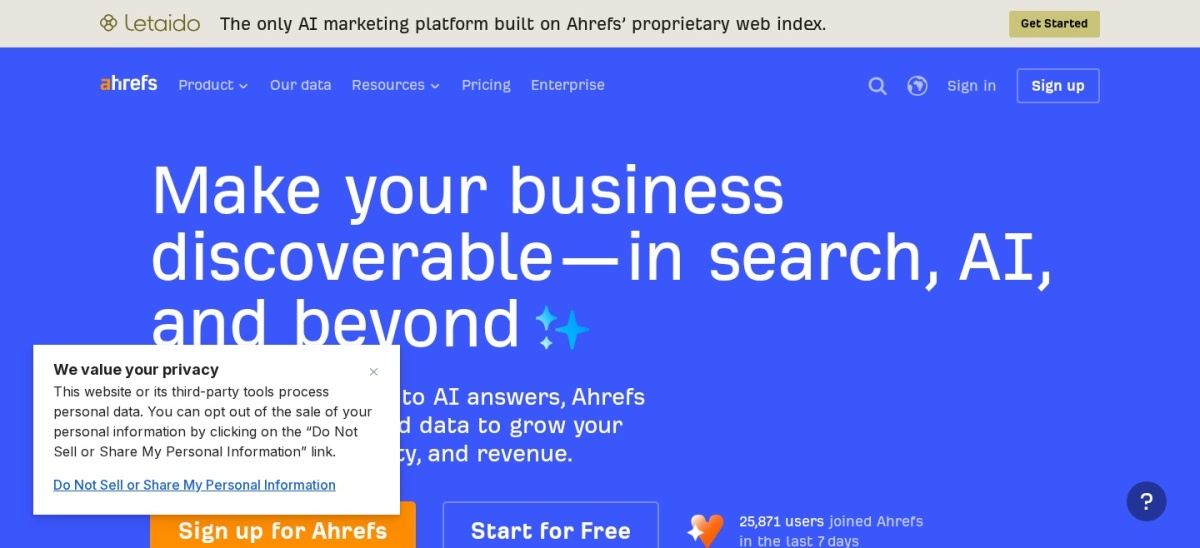
Ahrefs is an SEO suite built around Site Explorer, Keywords Explorer and Site Audit, with a backlink index that working SEOs use to check link claims. Lite costs $129 a month and tracks 750 keywords a week across 5 projects, with 100,000 crawl credits and 6 months of history.
The trade off is price and the lack of a free trial. Lite has no trial, and Standard at $249 a month is the step up when 5 projects are not enough. It suits businesses that want one independent check on rankings, links and technical health before they sign a retainer.
What we like
Strongest backlink data in this list
Rank Tracker on every paid plan
Site Audit included on Lite
Rated 4.5/5 from 725 G2 reviews
Watch out for
No free trial on paid plans
Lite covers only 5 projects
Extra seats cost $40 a month each
Standard at $249 a month adds more projects and creditsVisit ahrefs.com
02
Semrush
4.4/5on G2 (4,310 reviews, checked Nov 2026)
Paid from$139.95/mo
Best for daily tracking across search engines
Tracked keywords500, daily
Search enginesGoogle, Bing, Baidu
Site AuditIncluded
Paid planPro, $139.95/mo
semrush.com
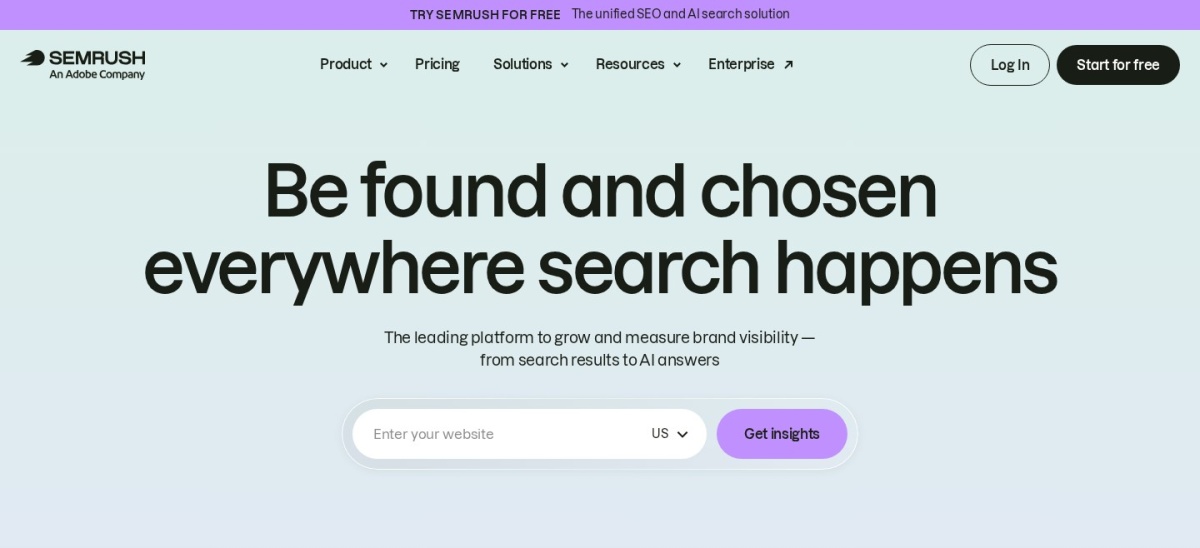
Semrush homepage, captured Nov 2026.
Semrush is an all-in-one SEO and marketing suite with keyword research, site audits, position tracking and backlink tools in one login. Pro costs $139.95 a month and covers 5 projects, 500 tracked keywords and 100,000 crawled pages a month, with a limited free account for basic checks.
The trade off is cost and add-ons. Pro is the dearest entry plan in this list, and several features, such as extra users and AI visibility, cost more. It suits businesses that want daily tracking across Google, Bing and Baidu in one place.
SE Ranking is a cloud SEO suite whose Rank Tracker checks 2,000 keywords daily on the Core plan, across 10 projects. It adds site audits, keyword research, backlink monitoring and AI visibility tracking, with a 14-day free trial.
The trade off is backlink depth. Its link data is thinner than Ahrefs, so a candidate's link claims still need a second check. Core costs $129 a month, or $103.20 a month on annual billing. It suits small teams that want daily tracking at a lower cost than the big suites.
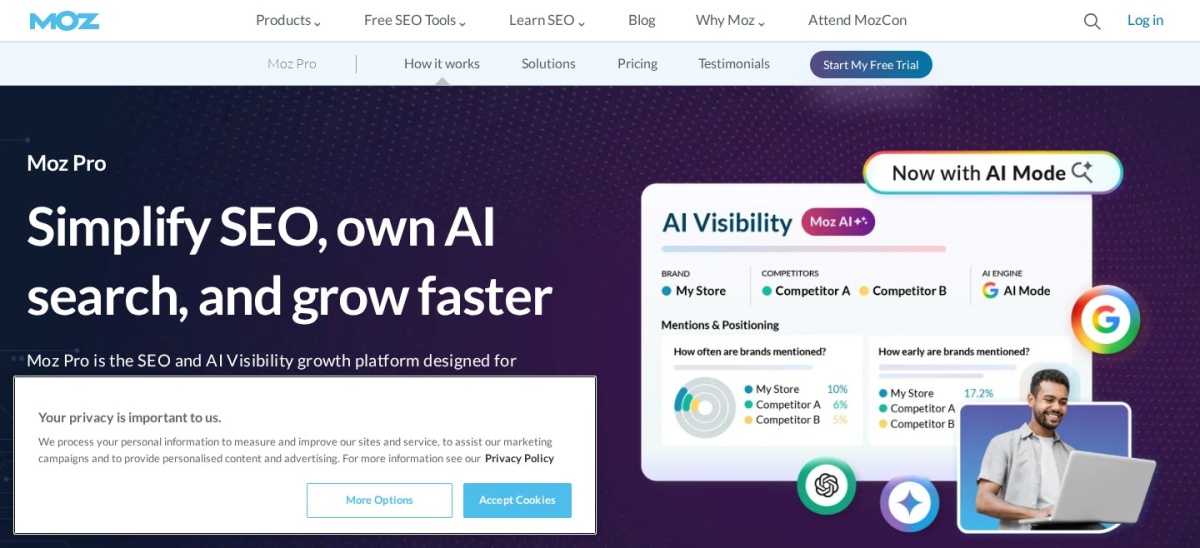
Moz Pro is an all-in-one SEO suite with Keyword Explorer, Link Explorer, Site Crawl and rank tracking, plus Domain Authority, the metric many clients still ask for by name. Starter costs $49 a month for 1 user, 1 campaign and 50 tracked keywords.
The trade off is scale. Starter covers one website only, and its link index is smaller than Ahrefs or Semrush. It suits beginners and small businesses that want a simple, low-cost way to check the basics a candidate promises.
What we like
Cheapest full suite in this list
Domain Authority for client reporting
Beginner-friendly guides and Academy
Rated 4.3/5 from 608 G2 reviews
Watch out for
Starter covers one website only
Smaller link index than the leaders
Rank updates are slower than daily tools
Standard at $99 a month adds 300 tracked keywordsVisit moz.com
05
SpyFu
4.6/5on G2 (518 reviews, checked Nov 2026)
Starts at$39/mo
Best for checking competitor claims
Tracked keywords5,000, weekly
Ad history10+ years
Money-back30 days
Paid planBasic, $39/mo
spyfu.com
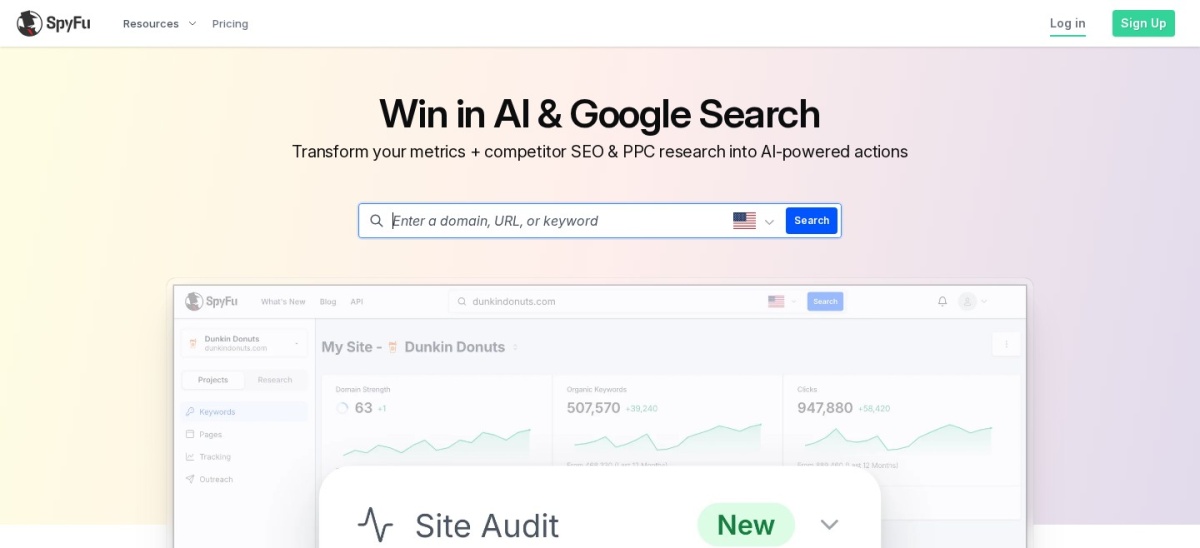
SpyFu homepage, captured Nov 2026.
SpyFu is a competitor research tool that shows the keywords rivals rank for, their ad history and their ranking changes over time. Basic costs $39 a month and tracks 5,000 keywords a week, with more than 10 years of ad history to check against a candidate's claims.
The trade off is breadth. SpyFu is a research tool, not a full suite, so it has no site audit of its own. It suits businesses that want to check whether a candidate's competitor claims and traffic promises match the public record.
What we like
Cheapest paid plan in this list
Deepest ad history here
5,000 weekly keywords on Basic
Rated 4.6/5 from 518 G2 reviews
Watch out for
No site audit included
Weekly tracking, not daily
Smaller keyword database than the suites
Professional at $59 a month adds more keywords and reportsVisit spyfu.com
06
Serpstat
4.6/5on G2 (465 reviews, checked Nov 2026)
Starts at$69/mo
Best budget all-in-one suite
Position checks10,000/mo
Projects5
Update frequencyDaily, weekly or custom
Paid planIndividual, $69/mo
serpstat.com
Serpstat homepage, captured Nov 2026.
Serpstat is an all-in-one SEO suite with rank tracking, site audit, keyword research and backlink analysis. The Individual plan costs $69 a month and includes 10,000 position checks a month across 5 projects, with daily, weekly or custom update schedules.
The trade off is polish. Its interface is busier than the leaders, and some data is thinner for large sites. It suits small teams that want a full suite at a mid-range price and a 7-day trial before they commit.
Majestic is a dedicated backlink tool built on its own Fresh and Historic link indexes, with Trust Flow and Citation Flow scores for link quality. Lite costs $49.99 a month excluding VAT and covers the Fresh Index, while Pro at $99.99 opens the Historic Index.
The trade off is scope, since Majestic covers links only, with no keyword research, audits or rank tracking. It suits businesses that want a pure link check, especially when a candidate leans on link building in the pitch.
BrightLocal is a local SEO platform for rank tracking, review monitoring and citation tracking across Google and other listings. The Single Business plan costs $41 a month and covers local rankings, reviews and citations for one business location.
The trade off is focus. It is built for local search, so it is not the tool for national keyword or backlink checks. It suits local businesses that need to verify a candidate's local ranking and review claims before hiring.
Screaming Frog is a desktop crawler that finds broken links, redirect chains, duplicate pages and missing metadata on a site. The free version crawls up to 500 URLs, and a paid licence costs $279 a year per user and adds unlimited crawling, scheduling and JavaScript rendering.
The trade off is scope. It is a crawler, not a suite, so it has no rank tracking or backlink data, and each team member needs a licence. It suits businesses that want a hard technical check on the audit a candidate presents.
Ask for three recent clients, the keywords they targeted and the results after six months. Then check those keywords in Ahrefs or SE Ranking and the links in Majestic.
Ask what the first 90 days cover, and what is excluded. A technical audit should name crawl errors, and Screaming Frog can confirm whether those errors exist.
Ask how reporting works and who owns the accounts. Reports should come from tools you can open yourself, not only from slides the agency prepares.
Ask what happens if you leave. You should keep the data, the logins and the content, and the contract should say so in plain words.
How we chose
We started from the SEO suites and specialist tools that businesses use to check rankings, links, local visibility and technical health, then kept the nine with a public price and a G2 rating.
Prices come from each vendor's pricing page, checked on 29 November 2026, with the regular monthly price shown, not a sale price. Ratings and review counts come from G2 on the same day.
We left out free-only checkers with no paid plan, and agencies, because their prices are quoted per client and cannot be compared here. No vendor paid for a place, and we do not claim to have used these tools ourselves.
How to choose a tool to vet an SEO hire
Start with the claim you most need to check, then pick the tool that tests it.
Check the rankings first. Ask the candidate for the keywords and pages behind their best result, then track those keywords in Ahrefs or SE Ranking for a month. See how to do keyword research for a WordPress blog before you pick the terms to track.
Check the links second. Use Majestic or Ahrefs to look at the links a candidate cites, and ask how each one was earned. Links from a screenshot alone are not proof.
Check the technical audit. Run Screaming Frog on your own site and compare its findings with the candidate's audit. Large gaps in either direction are a warning sign.
Check local visibility last, if it applies. For a local business, use BrightLocal to track map and local rankings, and ask the candidate which listings and reviews they will manage.
FAQ
What questions should I ask before hiring an SEO?
Ask for three recent clients, the keywords targeted and the results after six months, plus what the first 90 days cover and who owns the data. Then check those claims in Ahrefs, which tracks 750 keywords a week on its $129-a-month Lite plan.
How much should I pay to check an SEO's work?
You can start for $39 a month with SpyFu or $49 with Moz Pro, and a full check with Ahrefs costs $129 a month. Most small businesses need only one suite for a month or two while they vet a hire, not a permanent subscription.
Is there a free way to vet an SEO before hiring?
Yes, in part. Ahrefs and Semrush both offer limited free accounts, and Screaming Frog crawls up to 500 URLs free. Free checks cover the basics, but full ranking history and link data need a paid plan.
Which tool is best for a small business hiring its first SEO?
SE Ranking is the best value pick, with 2,000 keywords tracked daily for $129 a month and a 4.8 out of 5 G2 rating. Moz Pro is cheaper at $49 a month if you only need basic checks on one website.
Ahrefs vs Semrush: which is better for vetting an SEO hire?
Ahrefs is better for backlink checks, with the strongest link data in this list at $129 a month on Lite. Semrush is better for daily tracking across Google, Bing and Baidu, but its Pro plan costs $139.95 a month.
How do I check a local SEO candidate?
Use BrightLocal, which tracks local rankings, reviews and citations for $41 a month on its Single Business plan. Ask the candidate which listings they will manage and check the current listings yourself before you sign.
SaaS SEO and WordPress specialist with about 8 years of experience. Rakib compares WordPress plugins, themes, hosting and software using public pricing, documentation and user reviews. See how we rank.