VMware vSphere is the best Proxmox alternative for most teams moving to a supported enterprise platform, with vMotion and vCenter at about $50 per core per year. Hyper-V suits Windows shops at $1,176 for a 16-core license, while XenServer fits Citrix estates that want a Xen hypervisor without Proxmox.
How we make this list: we compare pricing pages, product documentation and public user reviews, then re-check every price before each update. No product paid for a place. Disclosure.
VMware vSphere is the most complete Proxmox alternative, with vMotion and vCenter at about $50 per core per year.
Hyper-V is the cheapest route for Windows shops: a $1,176 one-time 16-core Standard license covers two VMs per host.
VirtualBox and Oracle VM are the only free picks here; the rest are paid or quote-only.
Nutanix AHV, HyperCore, Sangfor aSV and Azure Local are hyperconverged stacks, so budget for hardware and platform, not just a hypervisor.
XCP-ng, Harvester and oVirt have no public G2 or Capterra rating, so they are not scored in this list.
What should you look for in Proxmox alternatives?
Start with the license model, because that is where Proxmox alternatives split. Some are free, some charge per core or per socket, and three in this list are quote-only, which means you cannot compare them on price without a sales call.
Migration tooling matters more than feature lists. A platform with a working import path from your current VMs saves more time than any single feature, so check what each vendor offers before you shortlist.
Count the real cost per host, not the headline price. Per-core minimums, client access licenses and monthly host fees change the bill, so work out one fully licensed host before you compare two platforms.
Check backup and restore support before you commit. Your backup tool must support the new hypervisor, and a restore drill on a spare host is worth more than a demo. Our 3-2-1 backup rule guide shows what a safe backup setup looks like.
Match the platform to your team, not to a benchmark. A Windows admin team will run Hyper-V better than a KVM platform, while a Linux team will get more from a KVM-based stack.
VMware vSphere is the enterprise virtualization platform most Proxmox users compare against, built on the ESXi hypervisor with vCenter for central management. It covers live migration with vMotion, distributed resource scheduling, high availability and storage policies across clusters, plus the widest third-party backup and monitoring ecosystem of any hypervisor here.
The trade off is price and packaging. Broadcom publishes no public rate card, and partner-reported list prices put vSphere Standard at about $50 per core per year, with a 16-core minimum per processor and a minimum order size. It suits large estates that already run VMware and want the deepest feature set.
What we like
Largest third-party backup and monitoring ecosystem
vMotion and DRS at scale across clusters
vCenter manages many hosts from one console
Proven high availability and storage policies
Watch out for
Subscription-only, with no perpetual licenses
Per-core minimums push up small-cluster costs
Sales pressure toward larger bundles is widely reported
Microsoft Hyper-V is the type-1 hypervisor built into Windows Server, so shops that already license Microsoft get virtualization without a second platform. It supports live migration, failover clustering, replication between hosts and shielded VMs, and it manages Windows guests with the same tools as the rest of the estate.
The trade off is that Hyper-V is not a standalone free product. The $1,176 figure is a one-time Microsoft suggested price for a 16-core Windows Server 2025 Standard license, which covers two VMs per host, and client access licenses cost extra. It suits teams standardized on Windows Server and Azure.
XenServer is the Xen-based type-1 hypervisor behind Citrix virtualization, now at version 9. It runs VMs and GPU workloads on pooled hosts, with live migration, high availability, rolling pool upgrades and central management through XenCenter.
The trade off is that XenServer is a paid product with no free edition. Citrix publishes no list price, so costs come by quote, and a 90-day trial is the only way to run it without paying. It suits Citrix shops and teams with Xen skills that want a supported Xen hypervisor.
Nutanix AHV is the KVM-based hypervisor built into Nutanix Cloud Infrastructure, so compute, storage and networking arrive as one supported stack. Prism manages clusters from a single console, Nutanix Move migrates VMs from ESXi, and one-click upgrades cover the hypervisor and the platform together.
The trade off is that AHV is not sold on its own. Nutanix publishes no list price, pricing comes by quote with the Nutanix stack, and moving to it often means new HCI hardware. It suits enterprises that want one vendor for the whole stack.
SC// HyperCore is Scale Computing's hyperconverged platform, with a KVM-based hypervisor, self-healing storage and virtualization management in one package. Clusters start from a single node, VMs move between nodes without shared storage hardware, and the interface is built for generalist IT staff rather than virtualization specialists.
The trade off is price transparency. The $189 per core per year figure is the list price used in recent comparisons, while other 2026 guides quote $249 per core per year, so confirm the current figure with Scale Computing before budgeting. It suits edge, retail and branch sites that want HCI without a storage specialist.
What we like
Self-healing storage with no SAN hardware
Clusters start from a single node
Simple interface for generalist IT teams
Rated 4.7 out of 5 on G2
Watch out for
Two 2026 sources disagree on the per-core price
Smaller ecosystem than vSphere or Hyper-V
Edge focus means fewer large-enterprise references
Oracle VM VirtualBox is a free type-2 hypervisor that runs VMs on Windows, macOS and Linux desktops. It supports snapshots, shared folders, USB passthrough and a wide range of guest operating systems, and the base package costs nothing with no feature limits.
The trade off is that VirtualBox is a desktop tool, not a server platform. It has no built-in clustering, live migration or central management for many hosts, and commercial use of the Extension Pack needs a paid license. It suits labs, training and testing on a desktop.
What we like
Free on all three major desktop systems
Snapshots and clones for safe testing
Huge library of guides and community answers
Runs older guest systems well
Watch out for
No clustering or live migration
Performance trails type-1 hypervisors
Extension Pack needs a paid license for business use
Sangfor aSV is the KVM-based hypervisor inside Sangfor HCI, which bundles compute, storage, networking and security in one platform. It includes VM migration tooling for VMware exits, built-in firewalling, and backup and disaster recovery features without extra products.
The trade off is pricing and familiarity. Sangfor publishes no list price, so costs come by quote, and its partner and support network is thinner outside Asia-Pacific than the bigger vendors here. It suits teams that want one HCI stack with security built in.
Oracle VM is a free Xen-based server hypervisor from Oracle, managed through Oracle VM Manager. It runs enterprise Linux and Windows guests, supports live migration and templates, and fits estates that already run Oracle databases and applications.
The trade off is that Oracle VM is a quiet product with a narrow focus. Development and community activity are limited next to KVM platforms, and paid support is a separate Oracle contract. It suits Oracle-heavy shops that want a no-cost server hypervisor.
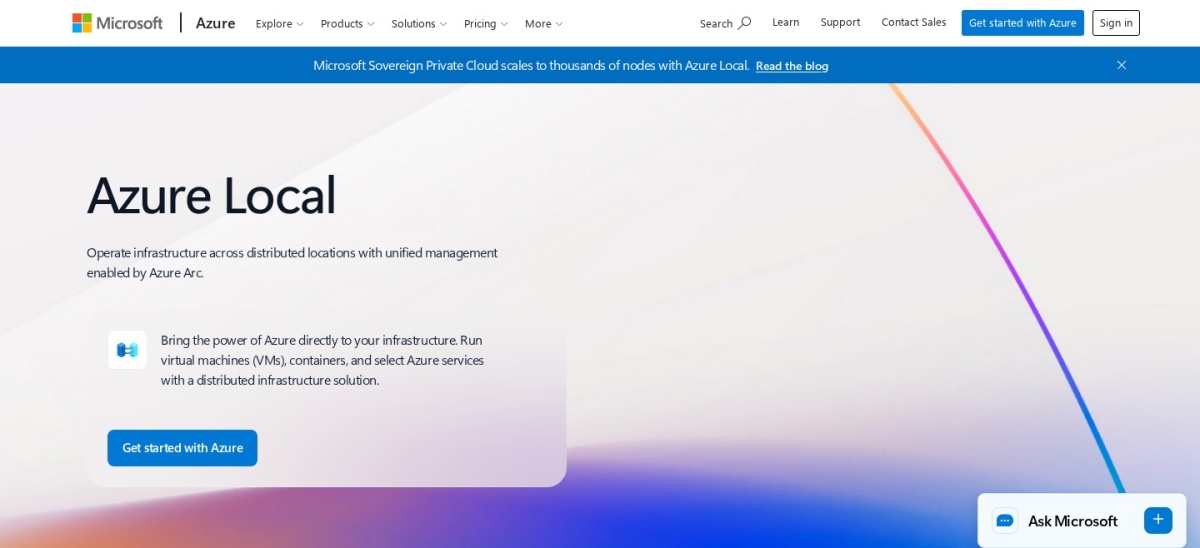
Azure Local is Microsoft's Azure-managed hyperconverged platform, running VMs on validated on-premises hardware with management through the Azure portal. It brings Azure Arc services, Azure Kubernetes Service and Azure Virtual Desktop to your own servers.
The trade off is lock-in and thin review volume. The $10 per core per month host fee adds up on large clusters, and only 12 G2 reviews sit behind its 4.2 rating, so buyer evidence is limited. It suits Azure shops that want one control plane for cloud and on-premises VMs.
XCP-ng, Harvester, KVM with oVirt and Incus are the closest open-source matches to Proxmox, and many homelab users pick them first.
We left them out of the scored list because none of them has a public rating on G2, Capterra or Trustpilot, and this list only ranks tools with a verifiable public rating.
If you run a homelab or a small Linux team, XCP-ng with Xen Orchestra is the closest free match to the Proxmox experience, and Harvester is the Kubernetes-native pick.
Treat them as worth a separate look rather than a scored pick in this list.
How we chose
We started from the platforms users compare against Proxmox VE: vSphere, Hyper-V, XenServer, Nutanix AHV, HyperCore, VirtualBox, Sangfor aSV, Oracle VM and Azure Local.
Prices come from each vendor's pricing page or partner-reported list prices, checked on 29 November 2026. Ratings come from G2 on the same day. Where a vendor publishes no list price, the list shows Quote.
We left out XCP-ng, Harvester, KVM and oVirt because none has a verifiable public rating. No vendor paid for a place, and we do not claim to have used these tools ourselves.
How to choose a Proxmox alternative
Start with what you already license, then match the platform to your team.
Check what you already pay for. If you license Windows Server or run Azure, Hyper-V or Azure Local may cost less than a new platform.
Count the cost per host, not per VM. Per-core minimums, CALs and host fees change the bill. Work out one fully licensed host before comparing.
Confirm backup and migration support. Check that your backup tool supports the hypervisor and that a migration tool covers your current VMs. Our 3-2-1 backup guide shows what a safe backup setup looks like.
Trial it with a real workload. Run a copy of a production VM through a trial or free edition before moving anything live.
FAQ
What is the best alternative to Proxmox in 2026?
VMware vSphere is the best Proxmox alternative for most teams that want a supported enterprise platform, with vMotion and vCenter at about $50 per core per year. Hyper-V is the better pick for Windows shops, and XenServer fits Citrix estates.
How much do Proxmox alternatives cost?
Prices run from $0 for VirtualBox and Oracle VM to about $50 per core per year for vSphere Standard, $189 per core per year for HyperCore, and quote-only pricing for XenServer, Nutanix AHV and Sangfor aSV. Hyper-V costs $1,176 for a one-time 16-core Windows Server license.
Is there a free alternative to Proxmox?
Yes. Oracle VM VirtualBox is free for desktop VMs on Windows, macOS and Linux, and Oracle VM is a free Xen-based server hypervisor. XCP-ng and Harvester are also free and open source, but neither has a public rating, so they are not scored in this list.
Which Proxmox alternative is best for beginners or small teams?
VirtualBox is the easiest starting point for learning and testing, since it is free and runs on a desktop. For a small server, Hyper-V is a good pick if you already license Windows Server, while HyperCore is built for generalist IT staff at edge sites.
VMware vSphere vs Hyper-V: which is better?
VMware vSphere is the stronger platform overall, with deeper features, vMotion at scale and the widest third-party ecosystem. Hyper-V is the better value for Windows shops, since it is included with Windows Server and managed with familiar Microsoft tools.
Can I migrate VMs from Proxmox to another hypervisor?
Yes, in most cases. Nutanix Move, Sangfor migration tooling and XenServer import tools move VMs between platforms, and most hypervisors can import standard disk images. Plan the move per VM, check guest drivers, and keep backups until the new host proves stable.
SaaS SEO and WordPress specialist with about 8 years of experience. Rakib compares WordPress plugins, themes, hosting and software using public pricing, documentation and user reviews. See how we rank.