Cerbos is the best open policy agent alternative for most teams, with a free open-source decision engine and Hub plans from $25 a month. Permit suits teams that want a visual policy editor from $5 a month, while Ory Keto fits shops that need identity and authorization together.
How we make this list: we compare pricing pages, product documentation and public user reviews, then re-check every price before each update. No product paid for a place. Disclosure.
Cerbos tops the list at 4.9/5 on G2, with a free open-source engine and Hub Development from $25 a month.
Permit.io has the cheapest paid start at $5 a month, with a free Community plan for 1,000 monthly active users.
Ory Keto pairs authorization with identity, and its managed Production plan costs $770 a year.
Keycloak is the only fully free option here, with no licence fee, but you run and maintain it yourself.
Immuta is the only quote-only tool in the list, aimed at data-access authorization rather than app permissions.
How do you choose the best open policy agent alternatives?
Policy as code only helps if the engine fits where your app runs. Some tools ship as a sidecar you host, others as a managed cloud service, and the right pick depends on who writes policies and where decisions are enforced.
A free open-source engine is not the same as a free managed service. Cerbos, Keycloak and Ory Keto all have free self-hosted options, while managed plans add hosted policy storage, audit logs and support for a monthly fee.
Ratings in this niche are thin, so read them with care. Our top pick has 6 G2 reviews, and Aserto has just 1, so a high score here means a small group of users, not a broad consensus. Teams that also run WordPress can lock down logins with our guide on limiting login attempts in WordPress.
Start with the decision model, not the dashboard. Decide whether you need role-based access, relationship-based access or attribute rules for data, then shortlist the tools built for that model.
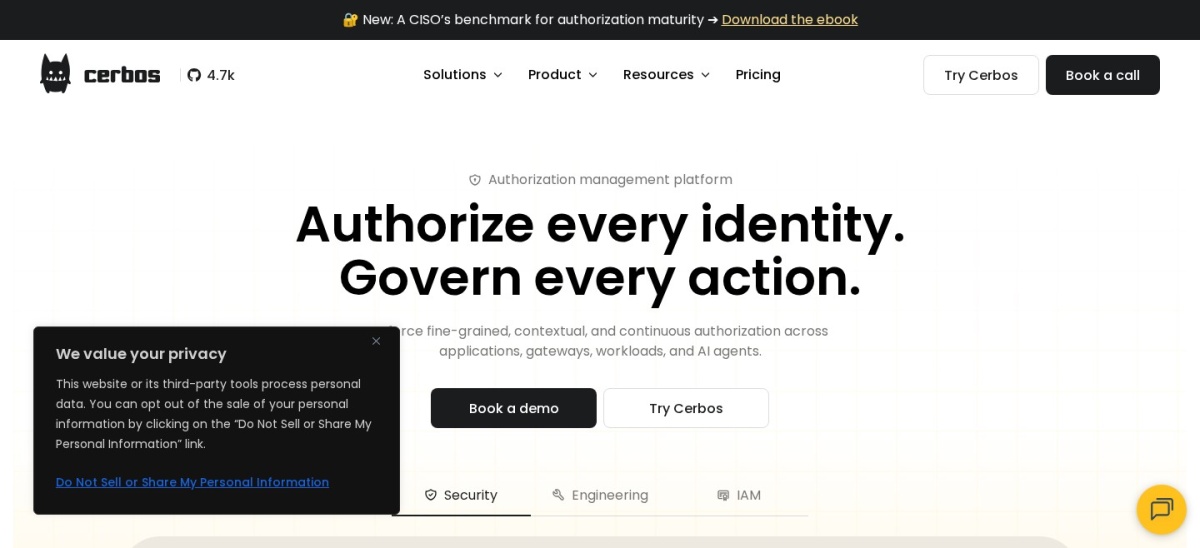
Cerbos is a policy-based authorization engine with a free open-source decision point you run beside your app. Policies live in YAML and Git, and Cerbos Hub adds a hosted control plane for authoring, testing, versioning and audit logs.
The trade off is the jump to Production. Development starts at $25 a month, but Production starts at $933 a month, so small teams may stay on the free engine longer. It suits teams that want OPA-style policy as code with a cleaner authoring experience.
What we like
Free open-source engine you run yourself
YAML policies stored in Git
Hosted Hub with testing and audit logs
No charge per authorization decision
Watch out for
Production plan is a big price jump
Managed features need the paid Hub
Hub Production adds unlimited workspaces and a year of logsVisit cerbos.dev
02
Permit.io
5/5on Product Hunt (6 reviews, checked Nov 2026)
Paid from$5/mo
Best for a visual policy editor
Policy modelsRBAC, ReBAC, ABAC, PBAC
Free planCommunity, 1,000 MAU
Paid planStartup, $5/mo
DeploymentCloud or self-hosted
permit.io
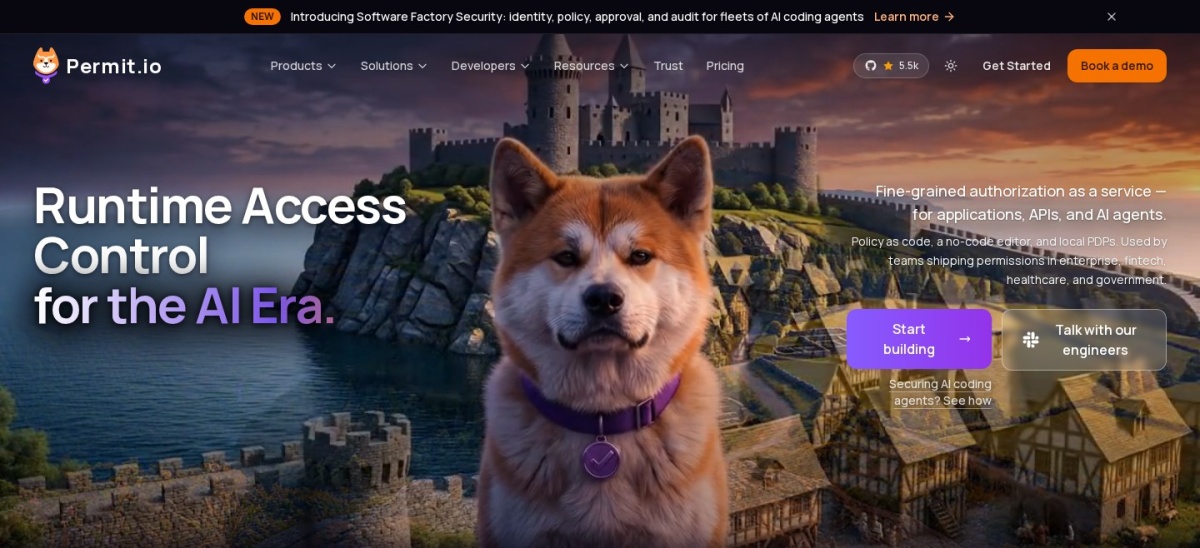
Permit.io homepage, captured Nov 2026.
Permit.io is a full-stack authorization platform with a visual editor for roles, tenants and permissions, built on OPA and OPAL. The free Community plan covers 1,000 monthly active users, 20 tenants and unlimited authorization checks.
The trade off is the MAU meter. Startup starts at $5 a month for 25,000 monthly active users, and costs rise with users and tenants. It suits product teams that want a dashboard and approval workflows instead of writing policy files by hand.
What we like
Visual policy editor, no files to write
Free Community plan for small apps
Supports RBAC, ReBAC, ABAC and PBAC
GitOps sync for policy changes
Watch out for
Pricing scales with users and tenants
Pro plan needed past 25,000 MAU
Pro adds 50,000 MAU and 20,000 tenants from $25 a monthVisit permit.io
03
Ory Keto
4.5/5on G2 (50 reviews, checked Nov 2026)
Paid from$770/yr
Best for identity plus authorization
Authorization modelZanzibar-style ReBAC
Free planOpen source, self-hosted
Paid planNetwork Production, $770/yr
IdentityOry Identities included
ory.sh
Ory Keto homepage, captured Nov 2026.
Ory Keto is the authorization component of the Ory platform, built on Zanzibar-style relationship permissions. The open-source version is free to self-host, and Ory Network adds managed hosting with identity, OAuth2 and login flows in the same platform.
The trade off is scope. You get the best value when you also need Ory's identity stack, and the managed Production plan costs $770 a year. It suits teams replacing a homegrown auth setup with one managed identity and permissions service.
What we like
Free open-source Keto to self-host
Managed identity in one platform
Zanzibar-style relationship permissions
Free Developer tier for testing
Watch out for
G2 rating covers the wider Ory platform
Managed value depends on using Ory identity
Growth adds analytics and B2B SSO at $9,350 a yearVisit ory.sh
04
Auth0 FGA
4.3/5on G2 (280 reviews, checked Nov 2026)
Starts at$35/mo
Best managed ReBAC from Auth0
Authorization modelZanzibar-style ReBAC
Built onOpenFGA
Paid planEssentials, $35/mo
VendorAuth0 by Okta
auth0.com
Auth0 FGA homepage, captured Nov 2026.
Auth0 FGA is a managed fine-grained authorization service built on OpenFGA, the open-source Zanzibar-style engine. It stores relationship tuples and answers check requests through an API, so your app does not run its own decision engine.
The trade off is price and scope. Essentials starts at $35 a month, and the G2 rating of 4.3/5 covers the wider Auth0 platform rather than FGA alone. It suits teams already on Auth0 that want managed relationship-based permissions without self-hosting.
Keycloak is a free open-source identity and access management server with authorization services built in. It handles single sign-on, OAuth2 and OpenID Connect, plus role and policy-based access control, with no licence fee at any scale.
The trade off is operations. You host, patch and scale Keycloak yourself, and its authorization features are one part of a large identity server. It suits teams with the skills to run it that want a free, self-hosted alternative to OPA.
WorkOS is a B2B authentication platform whose roles and permissions travel inside JWTs, so your app can check access without a separate decision call. AuthKit is free for up to 1 million users, and the platform adds SSO, directory sync and audit logs.
The trade off is that it is not a policy engine. WorkOS covers roles and permissions for B2B apps, not the fine-grained policy rules OPA users write, and SSO costs $125 a month per connection. It suits B2B SaaS teams that need enterprise login features fast.
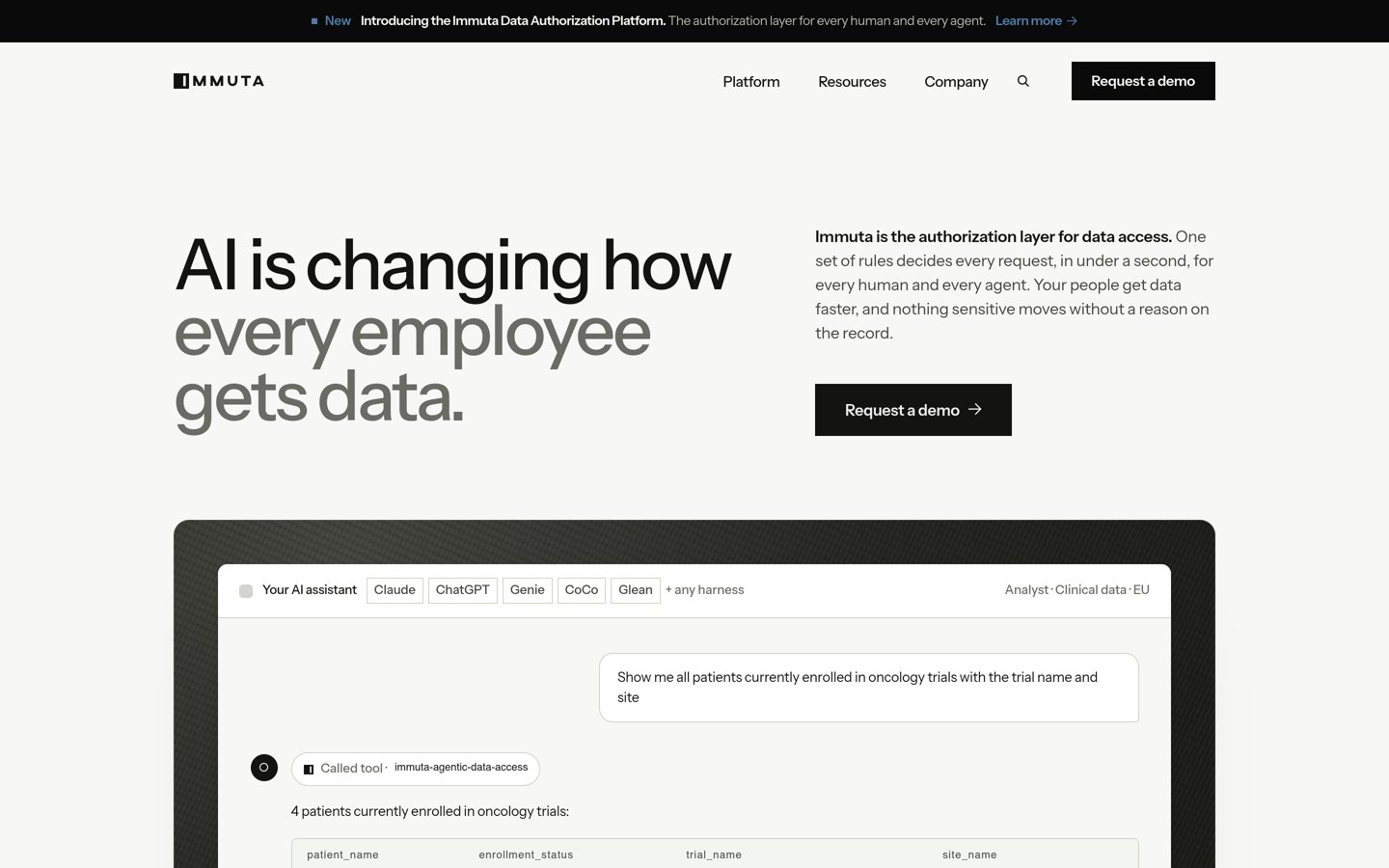
Immuta is a data-access authorization platform that applies policy as code to databases, warehouses and AI workloads. It supports attribute-based access control, masking and purpose-based rules, with audit trails for regulated data.
The trade off is price transparency. Immuta publishes no prices and sells by quote, so small teams cannot budget it from the website. It suits data teams that need to govern access to sensitive data rather than permissions inside an app.
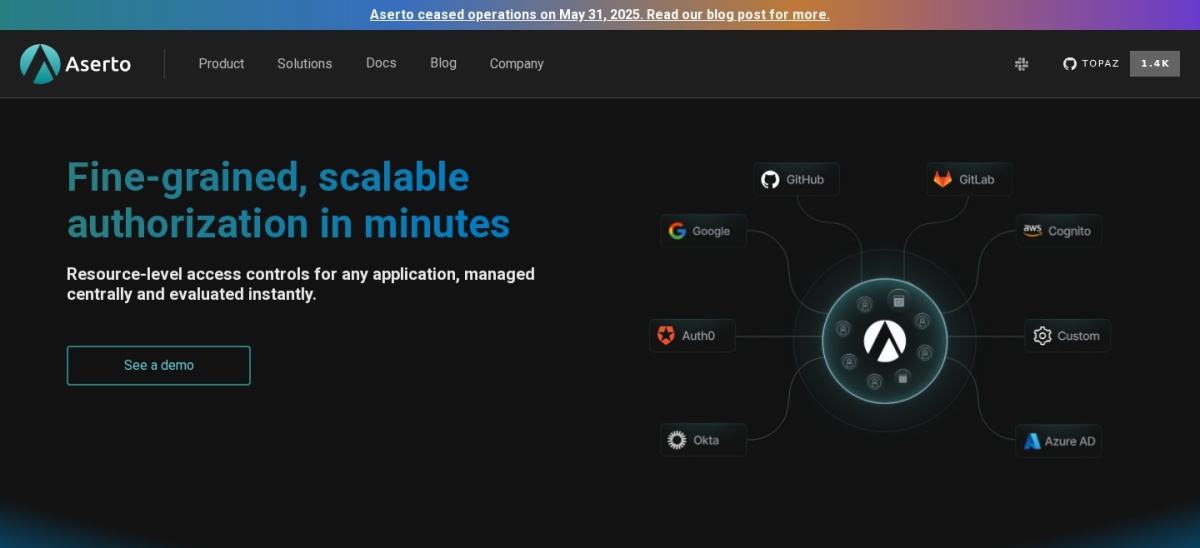
Aserto is an authorization platform built around Topaz, its open-source authorizer, with a directory that syncs users and roles from identity providers. The Starter plan is free forever for 50 policy repos, 100 authorizer instances and 1,000 users.
The trade off is the thin track record. Aserto holds a 4.0/5 rating on G2 from a single review, so treat the score as a weak signal. It suits small teams that want a hosted authorizer with a free start and per-user pricing.
Self-hosted engines cost nothing in licence fees. Cerbos, Ory Keto, Keycloak and Aserto all offer a free open-source or free-tier start, and you pay with your own time instead.
Managed plans buy back that time. Hosted policy storage, audit logs, support and uptime cost from $5 a month at Permit.io to $933 a month for Cerbos Production.
Pick self-hosted when your team can run infrastructure and wants control. Pick managed when authorization is critical path and nobody wants to be paged for it.
How we chose
We started from the authorization tools most often named as OPA replacements, then kept only those with a published user rating and review count on G2 or Product Hunt.
Prices come from each vendor's pricing page, checked on 29 November 2026, with top-three prices read directly from the official pages. Ratings are from G2, except Permit.io, whose 5.0/5 comes from Product Hunt. Where a vendor shows a sale, the list shows the regular price.
We left out Kyverno, OpenFGA, Casbin, Topaz, AuthZed, Cedar and Oso, which have no published user rating, and Styra DAS, which is being retired. No vendor paid for a place, and we do not claim hands-on testing for this list.
How to choose an open policy agent alternative
Start with where decisions must be enforced, then match the tool to your team.
Decide who writes the policies. Developers who like Git and YAML will suit Cerbos or Ory Keto, while product teams may prefer Permit.io's visual editor.
Check where the engine runs. Self-hosted engines need your infrastructure, while managed services such as Auth0 FGA and Permit.io run the decision point for you.
Price the real unit, not the headline. Cerbos charges by monthly active principals, Permit.io by monthly active users and Aserto per user, so model your own user count first.
Test the free tier before paying. Run the free engine or free plan against one real service and check audit logs, then move to a paid plan only when the free limits bite.
FAQ
What are the best open policy agent alternatives in 2026?
Cerbos is the best open policy agent alternative for most teams, with a free open-source engine rated 4.9/5 on G2 and Hub plans from $25 a month. Permit.io is the cheapest paid start at $5 a month, and Ory Keto suits teams that also need managed identity.
Is there a free alternative to Open Policy Agent?
Yes. Cerbos, Ory Keto and Keycloak all have free open-source versions, and Permit.io and Aserto offer free tiers. Keycloak is fully free with no licence fee, though you host and maintain it yourself.
How much do open policy agent alternatives cost?
Paid plans start at $5 a month for Permit.io Startup and $25 a month for Cerbos Hub Development. Ory Network Production costs $770 a year, while Auth0 FGA Essentials starts at $35 a month and Immuta is quote only.
Which open policy agent alternative is best for small teams?
Permit.io is the easiest small-team pick, with a free Community plan for 1,000 monthly active users and a $5-a-month Startup plan. Cerbos is a strong second when you want policy files in Git.
Cerbos vs Permit.io: which is better?
Cerbos fits teams that want policy as code in YAML and Git with a free engine they run themselves. Permit.io fits teams that prefer a visual editor and a hosted dashboard, starting at $5 a month against Cerbos Hub at $25.
Do any open policy agent alternatives work without a policy engine?
Yes. WorkOS puts roles and permissions inside JWTs, so your app checks access without calling a decision engine. It covers B2B roles well but does not replace the fine-grained policy rules that OPA-style engines evaluate.
SaaS SEO and WordPress specialist with about 8 years of experience. Rakib compares WordPress plugins, themes, hosting and software using public pricing, documentation and user reviews. See how we rank.