Amplitude is the best Mixpanel alternative for most product teams, with a free plan covering 2 million events a month and deep funnels, retention and cohort reports. PostHog suits teams that want analytics, session replay and feature flags in one open-source tool, while Google Analytics 4 is the free pick for marketing traffic.
How we make this list: we compare pricing pages, product documentation and public user reviews, then re-check every price before each update. No product paid for a place. Disclosure.
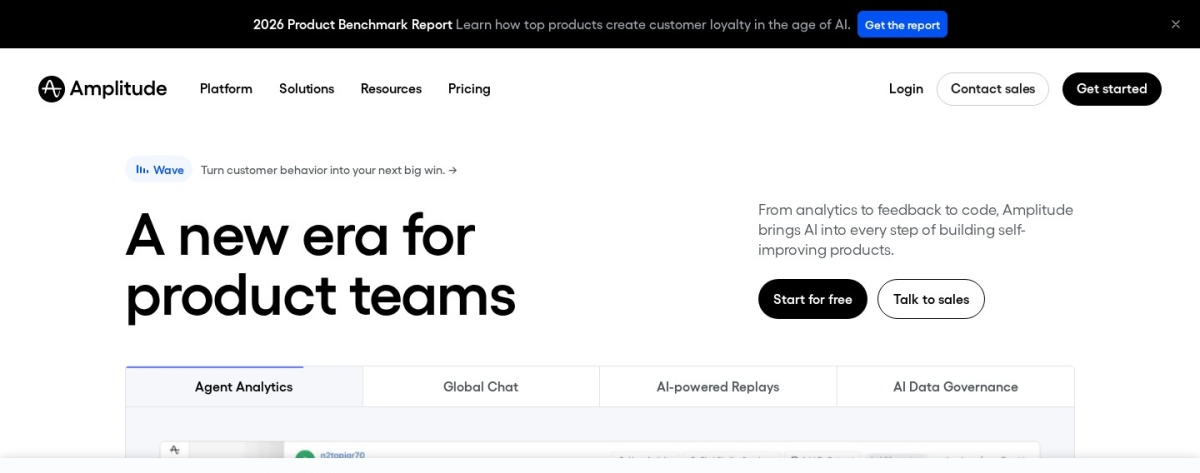
Amplitude leads for product teams switching from Mixpanel: a free plan with 2M events a month, and Plus from $75 a month at 3M events billed yearly.
PostHog is the best all-in-one value: 1M free events a month plus replay, flags and surveys, with pay-as-you-go billing above that.
Heap needs no manual event tagging: autocapture records every click and form submit, and its free plan covers 10,000 sessions a month.
Google Analytics 4 is free at any traffic level, but it is a marketing tool, not a full product analytics replacement.
Eight of the nine tools have a free plan; only Plausible is trial-only, and paid prices run from $9 a month to $24,000 a year.
What should you look for in Mixpanel alternatives?
Most teams leave Mixpanel over price, not features. Growth costs $100 a month billed yearly at 1.5 million events, so the bill rises with every event tracked, and the free plan stops at 1 million events a month.
Event-based pricing is the first thing to compare. Amplitude includes 2 million free events a month, PostHog includes 1 million, and Heap counts sessions instead, so the cheapest tool depends on how people use your product.
Free plans are not all equal. Some cap events, others cap sessions, replays or data history, so check the limit that matches your traffic before you commit to a migration.
Amplitude is a product analytics platform built around funnels, retention and behavioral cohorts, and it is the closest like-for-like Mixpanel replacement here. The free Starter plan covers 2 million events a month with core charts, while Plus adds custom events, formulas, alerts and 2 years of data retention.
The trade off is price at scale. Plus starts at $0 with the first 2 million events free, then costs $75 a month billed yearly at 3 million events and climbs steeply from there. It suits product teams that need deep analysis and can invest time in a proper event taxonomy.
What we like
Deepest funnels, retention and cohort analysis in this list
Generous 2M-event free plan
Session replay and AI features included
Rated 4.5 out of 5 from 3,006 G2 reviews
Watch out for
Costs climb fast above the free allowance
Steep learning curve for new users
Growth and Enterprise plans are quoted, not published
Plus adds custom events, cohorts, alerts and 2-year retentionVisit amplitude.com
02
PostHog
4.5/5on G2 (1,057 reviews, checked Nov 2026)
PriceFree
Best all-in-one value
Free events1M/mo
Paid rateFrom $0.00005/event
Session replay5,000/mo free
Feature flags1M requests/mo free
posthog.com
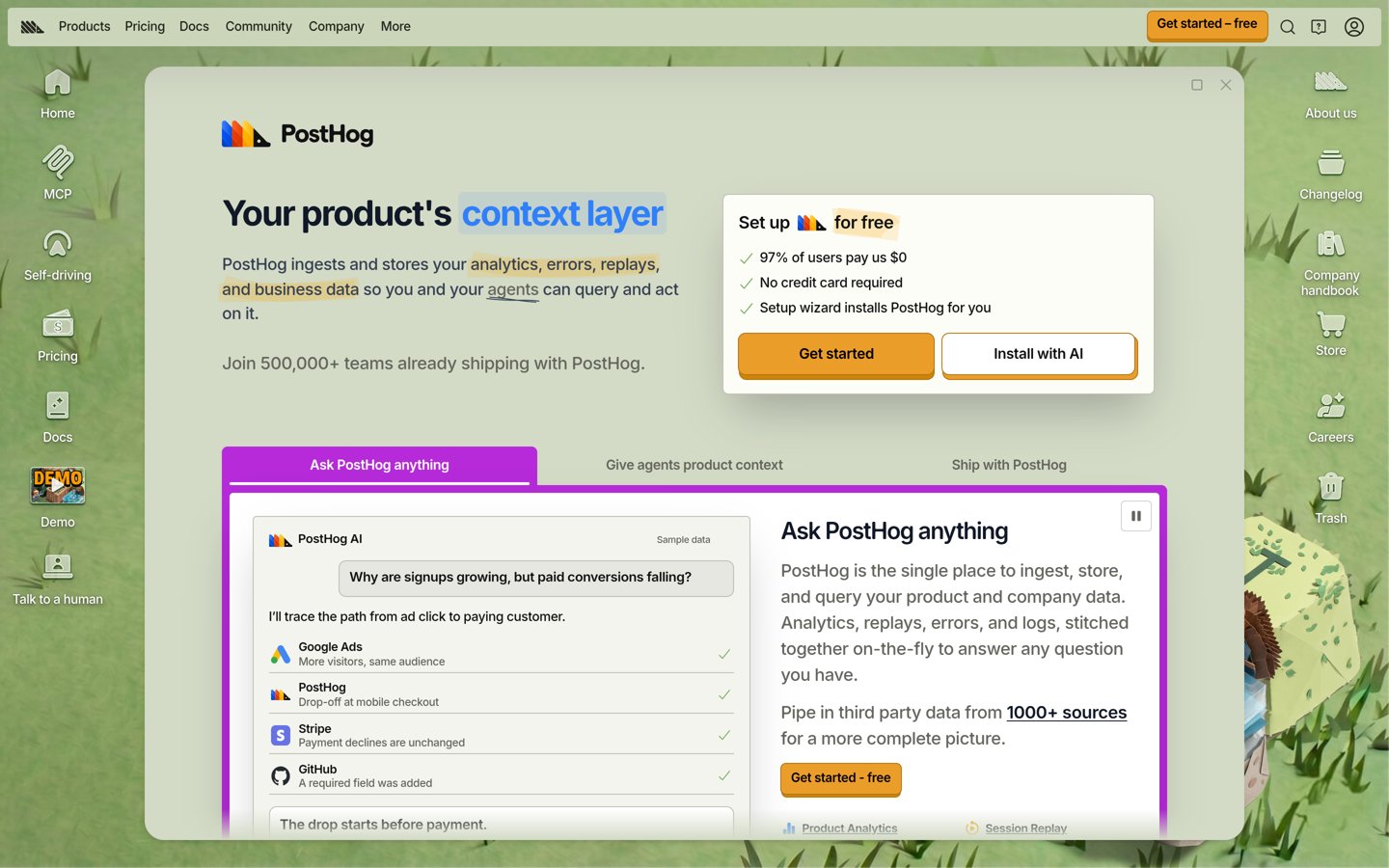
PostHog homepage, captured Nov 2026.
PostHog is an open-source platform that combines product analytics, session replay, feature flags, experiments and surveys in one tool. Every product has a free monthly allowance, including 1 million analytics events, 5,000 session recordings and 1 million feature flag requests, with unlimited team members.
The trade off is usage-based billing. There is no platform fee, but events above the free allowance cost from $0.00005 each, so the bill moves with traffic unless you set billing limits. It suits developer-led teams that want one tool instead of four.
What we like
Analytics, replay, flags and surveys in one place
Open source with a self-host option
Generous free allowances on every product
No seat fees or platform fee
Watch out for
Usage billing can surprise teams that skip limits
Free plan covers 1 project and 1 year of data
Takes time to design events and funnels well
Pay-as-you-go adds more projects, 2-year retention and email supportVisit posthog.com
03
Heap
4.4/5on G2 (1,097 reviews, checked Nov 2026)
Paid from$24,000/yr
Best for autocapture without tagging
Free sessions10,000/mo
Paid plansQuoted by Heap
Data history6 months free
AutocaptureYes, automatic
heap.io
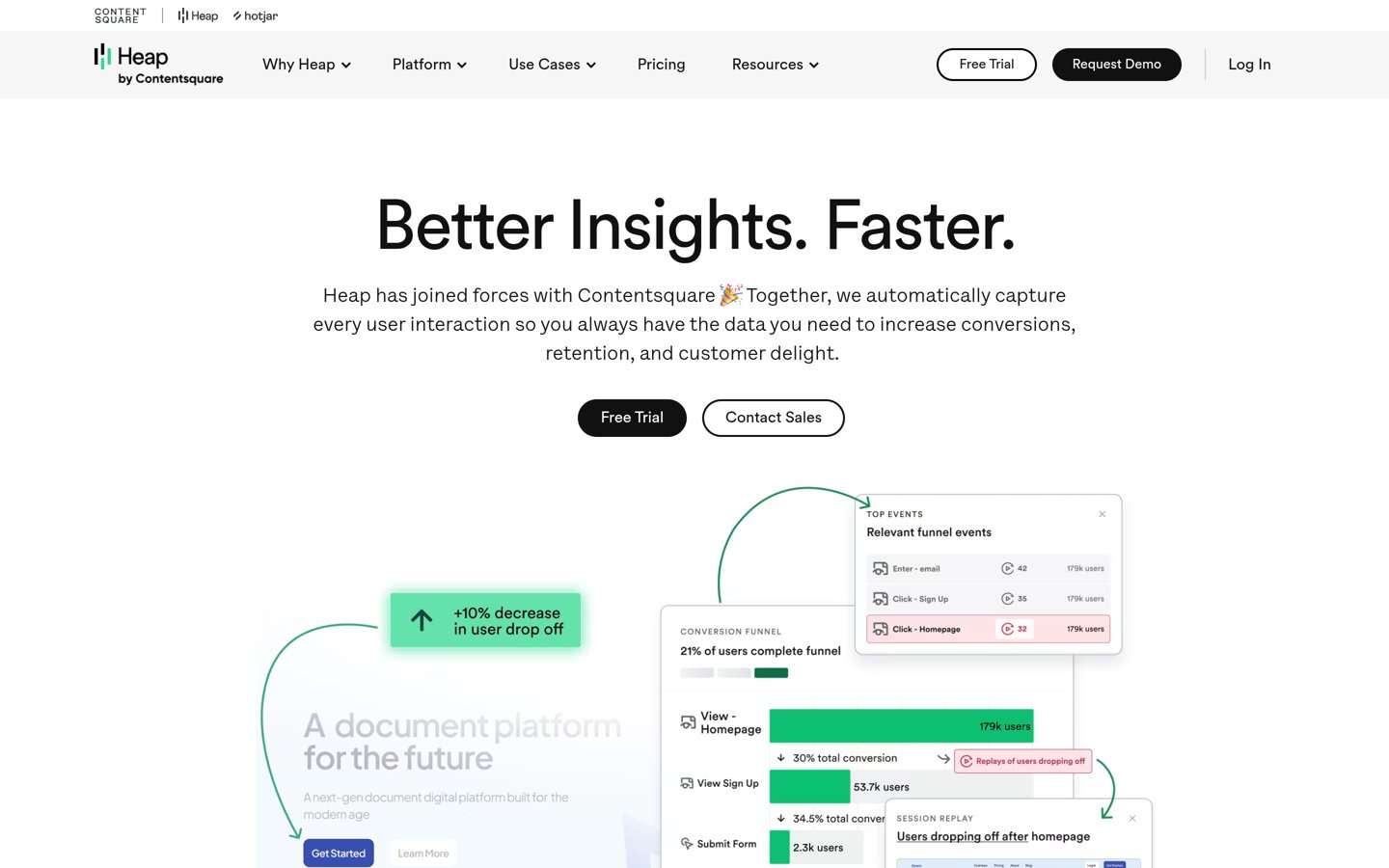
Heap homepage, captured Nov 2026.
Heap is a product analytics tool that captures every click, pageview and form submit automatically, so teams define events after the data arrives instead of tagging everything first. The free plan covers up to 10,000 monthly sessions with core charts, funnels and journey reports, plus single sign-on.
The trade off is price. Paid Growth, Pro and Premier plans are quoted by Heap, and G2 lists paid plans from $24,000 a year, which puts Heap out of reach for small teams. It suits teams that cannot get engineering time to instrument tracking by hand.
What we like
Autocapture means no manual event tagging
Retroactive analysis of events you did not plan to track
Free plan includes SSO and 6 months of history
Strong visual funnel and journey tools
Watch out for
Paid plans are quoted, with no public prices
Free plan is capped at 10,000 sessions a month
No session replay or heatmaps on the free plan
Paid plans add unlimited reports, exports and 12-month historyVisit heap.io
04
Google Analytics 4
4.5/5on G2 (6,863 reviews, checked Nov 2026)
PriceFree
Best free marketing analytics
Free propertyYes, standard
Paid planAnalytics 360, quoted
Event capNone on standard
Google AdsBuilt-in link
marketingplatform.google.com
Google Analytics 4 homepage, captured Nov 2026.
Google Analytics 4 is Google's free web and app analytics tool, and it costs nothing at any traffic level on the standard property. It covers traffic sources, pages, key events and conversions, and connects directly to Google Ads, Search Console and Looker Studio.
The trade off is depth. GA4 tracks page and event data well but lacks the person-level funnels, retention cohorts and product flows that Mixpanel users rely on, and its reports take time to learn. It suits marketing teams and site owners who mainly need traffic and campaign answers.
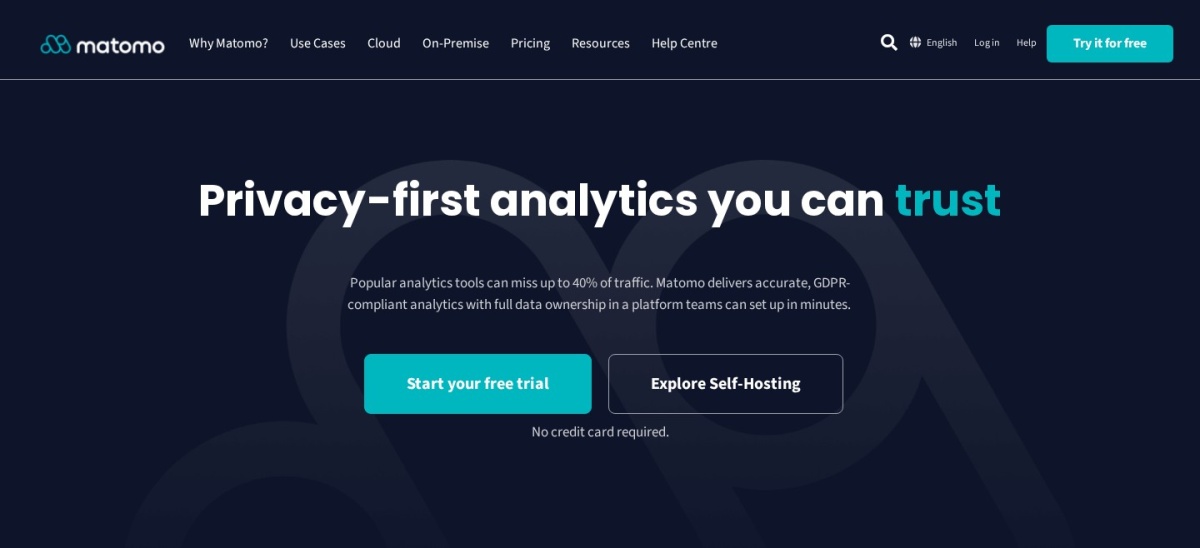
Matomo is an open-source analytics platform you can self-host for free or run as a hosted Cloud service. Cloud Business starts at $26 a month for 50,000 hits and includes funnels, heatmaps, session recordings, A/B testing and a tag manager, with no data sampling.
The trade off is that it prices by hits, not pageviews. A hit is any tracked action, so events, downloads and site searches all count toward the limit. It suits privacy-conscious teams that want full data ownership without giving up a complete feature set.
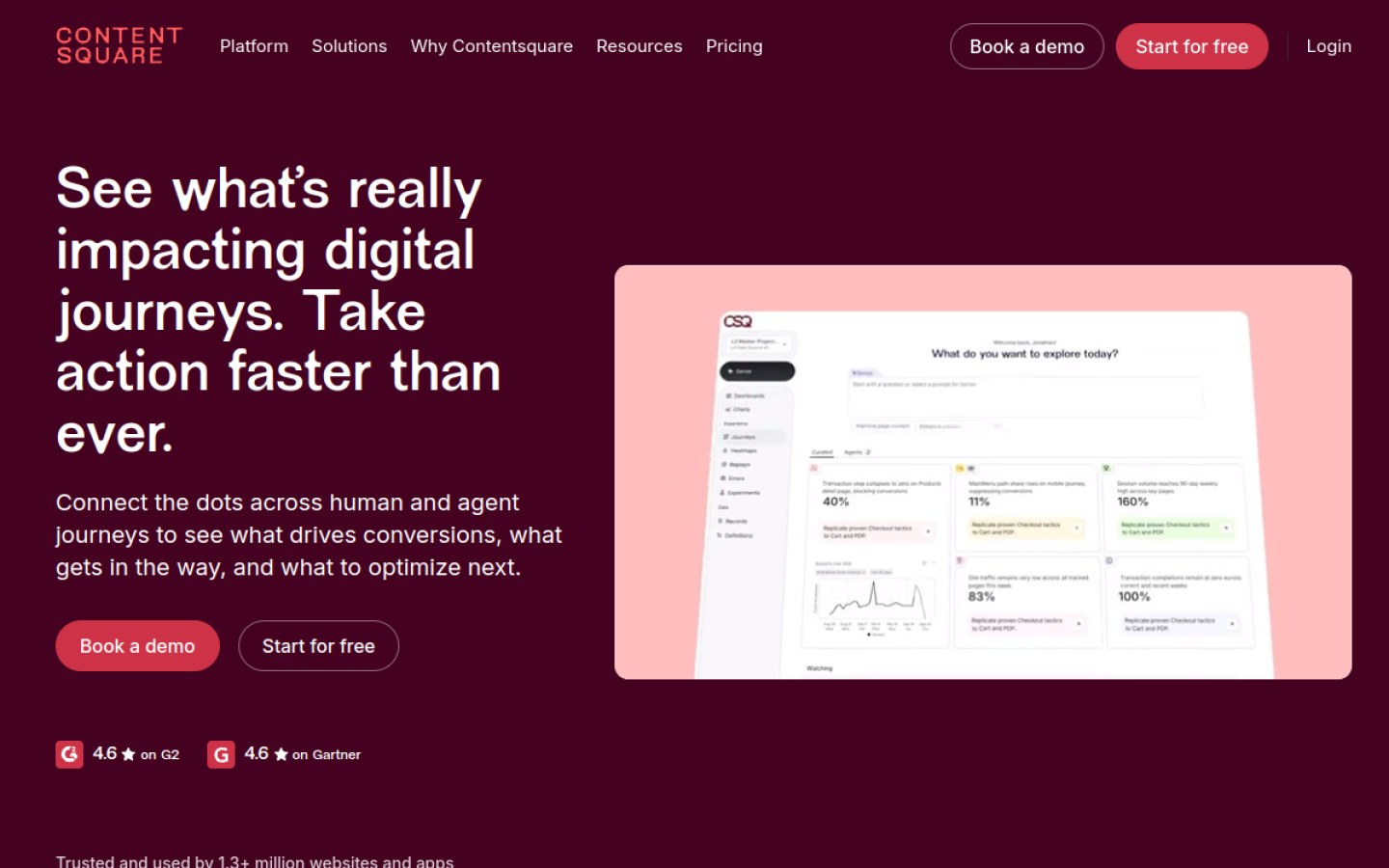
Contentsquare is an experience analytics platform with heatmaps, session replay, journey analysis and surveys, and it is where Hotjar now lives after the 2025 merger. The free Experience Analytics plan covers up to 200,000 monthly sessions with replays, heatmaps and funnels.
The trade off is that the free plan records only 5% of sessions as replays, up to 10,000 a month, and keeps data for 1 month. Growth starts at $39 a month billed yearly. It suits ecommerce and marketing teams that want to see why visitors drop off.
FullStory is a digital experience platform built around session replay, with funnels, heatmaps, journeys and debugging tools on top. The free FullstoryFree plan covers 30,000 sessions a month with 12 months of retention, core replay and basic analytics for up to 10 users.
The trade off is that paid plans are quoted, so there is no public price to compare before a sales call, and deeper analytics sit on paid tiers. It suits product and UX teams that debug real user sessions every day.
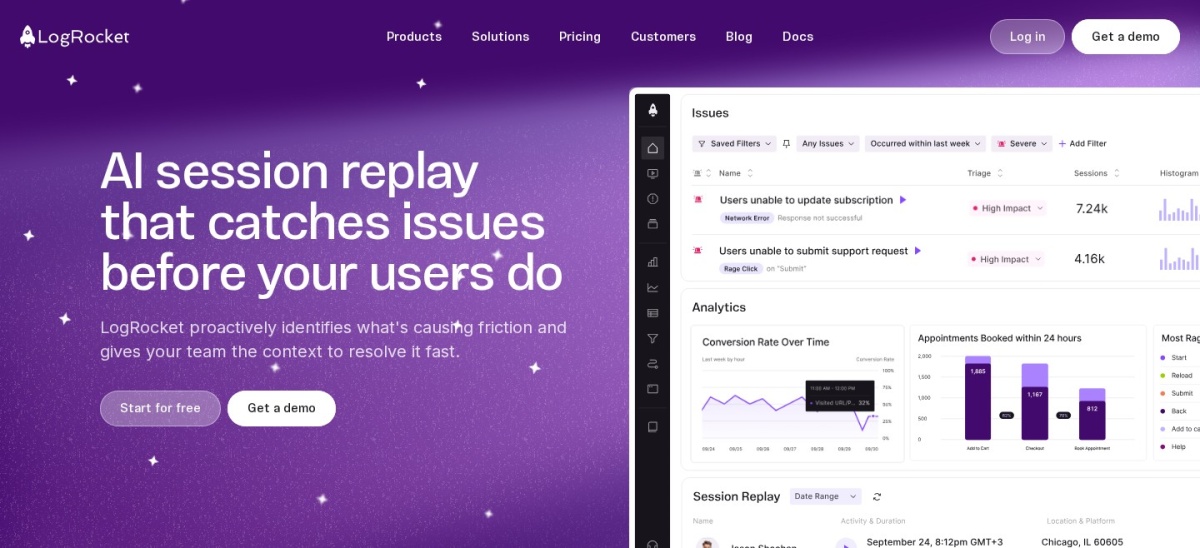
LogRocket is a session replay and product analytics platform that pairs every replay with console logs, network requests and errors. The free plan covers 1,000 sessions a month, and Core starts at $83 a month billed yearly for 10,000 sessions with unlimited analytics events.
The trade off is that it is built for debugging first. Its analytics cover funnels, paths and heatmaps, but it is not as deep a product analytics suite as Amplitude or PostHog. It suits engineering-led teams that need to reproduce bugs from real sessions.
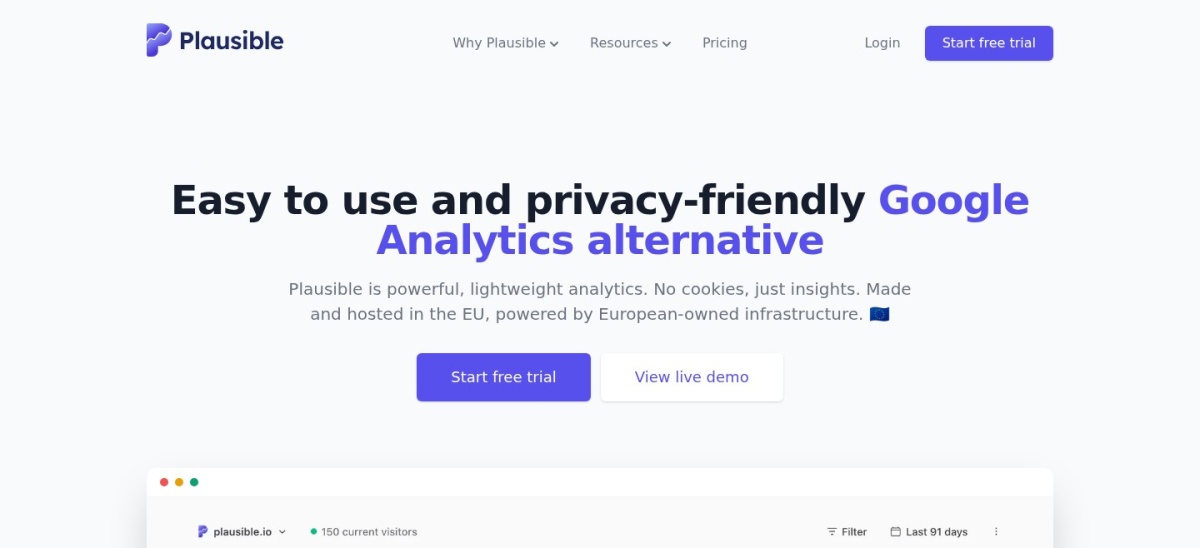
Plausible is a privacy-focused web analytics tool that tracks pageviews, referrers and goals without cookies. Its Starter plan costs $9 a month for 1 site and up to 10,000 monthly pageviews, with a 30-day free trial and 2 months free on yearly billing.
The trade off is depth. Plausible shows traffic clearly but has no product funnels, retention cohorts or session replay, and funnels and revenue tracking need the $19-a-month Business plan. It suits small sites and blogs that want a simple, fast dashboard.
Free plans cover the basics well. Most include funnels, retention reports and some session replay, which is enough to judge whether a tool fits.
Paid plans mostly add volume and history. You get more events or sessions, longer data retention and exports, plus features such as heatmaps, alerts and single sign-on.
If your product already sends more than 1 million events a month, budget for a paid plan from the start. Moving tools twice costs more in engineering time than the first year of any plan here.
How we chose
We started from the tools most often named as Mixpanel replacements in product analytics comparisons, then kept the nine with a live free plan or trial, published pricing and a public G2 rating.
Prices come from each vendor's pricing page, checked on 29 November 2026. Ratings and review counts come from G2 on the same day. Where a vendor shows a sale, the list shows the regular price.
We left out tools that no longer sell to new customers and tools whose homepages now redirect to a parent product. No vendor paid for a place, and we do not claim to have used these tools ourselves.
How to choose a Mixpanel alternative
Start with your monthly event volume, then match the tool to the questions you need answered.
Count your monthly events first. Check how many events your product sends in a typical month. That number decides whether a free plan covers you or which paid tier you land in.
List the reports you cannot lose. Funnels, retention and cohorts are standard in most tools here, but session replay, heatmaps and feature flags are not. Keep only tools that cover your must-haves.
Try the free plan with real data. Connect the tool to a staging or low-traffic product first and build one funnel and one retention report. If you run WordPress, our guide to using Google Analytics with WordPress shows the free setup in full.
Check the price at twice your volume. Event bills grow fast. Price each shortlisted tool at double your current volume so a traffic spike does not force a second migration.
FAQ
What is the best Mixpanel alternative in 2026?
Amplitude is the best Mixpanel alternative for most product teams. Its free plan covers 2 million events a month, and its funnels, retention and cohort reports match Mixpanel most closely, with Plus from $75 a month at 3 million events billed yearly.
How much does Mixpanel cost?
Mixpanel Growth costs $100 a month billed yearly at 1.5 million events, with the first 1 million events free. Monthly billing costs $140 at the same volume, and the price rises with event volume to $1,635 a month at 20 million events.
Is there a free alternative to Mixpanel?
Yes. Amplitude, PostHog, Heap, Google Analytics 4, Matomo, Contentsquare, FullStory and LogRocket all have free plans, with limits from 1,000 sessions a month to 2 million events a month. Plausible is the only tool here with no free plan, only a 30-day trial.
Which Mixpanel alternative is best for small teams?
PostHog is the best pick for small teams. Its free plan covers 1 million events, 5,000 session recordings and 1 million feature flag requests a month, and pay-as-you-go billing means a small product often pays nothing at all.
Amplitude vs PostHog: which is better?
Amplitude is better for deep product analysis, with stronger funnels, retention and cohort tools and a 2 million-event free plan. PostHog is better for teams that want analytics, session replay, feature flags and surveys in one open-source tool with usage-based billing.
Which Mixpanel alternative is best for privacy?
Matomo is the best pick for privacy. Its open-source edition is free to self-host, so data stays on your own servers, and its Cloud plan starts at $26 a month. Plausible is the simpler hosted option, with cookieless tracking from $9 a month.
SaaS SEO and WordPress specialist with about 8 years of experience. Rakib compares WordPress plugins, themes, hosting and software using public pricing, documentation and user reviews. See how we rank.