MySQL is the best MariaDB alternative for most teams, because it is the closest drop-in replacement, rated 4.4/5 on G2 from 1,686 reviews, with a free Community Edition. Choose PostgreSQL for advanced features at no licence cost, or Supabase from $25 a month for managed Postgres with auth and storage.
How we make this list: we compare pricing pages, product documentation and public user reviews, then re-check every price before each update. No product paid for a place. Disclosure.
MySQL is the closest drop-in MariaDB alternative, with a free Community Edition and paid support from $2,000 a year.
PostgreSQL costs $0 in licence fees and adds advanced SQL, JSONB and extensions such as pgvector.
Supabase is the easiest managed Postgres option, at $25 a month for Pro with auth, storage and realtime.
TiDB, YugabyteDB and CockroachDB are distributed SQL options for teams that outgrow a single server.
SQLite is free and needs no server at all, but it fits one app at a time, not shared production traffic.
Paid plans on this list run from $25 a month to about $400 a month, before usage charges on the distributed options.
How do you choose the best MariaDB alternative?
Compatibility comes first. MariaDB started as a fork of MySQL, so MySQL and MySQL-compatible services need the least rework, while PostgreSQL needs SQL and schema changes.
Licence cost is not the whole bill. Free engines such as PostgreSQL, MySQL Community and SQLite charge $0 for the software, but hosting, backups and support still cost money.
Managed services trade control for time. Supabase, PlanetScale and Amazon Aurora run backups, patching and scaling for you, while self-hosted MySQL or PostgreSQL leaves that work with your team.
Scale decides the shortlist. A single server covers most apps, so distributed options such as TiDB, YugabyteDB and CockroachDB only pay off once one server stops being enough. Our guide on what MySQL is explains the engine MariaDB forked from.
Ratings help, but the bases are small for some tools. PlanetScale has only 5 G2 reviews, and CockroachDB has 29, so treat those scores as a weak signal beside MySQL at 1,686 reviews.
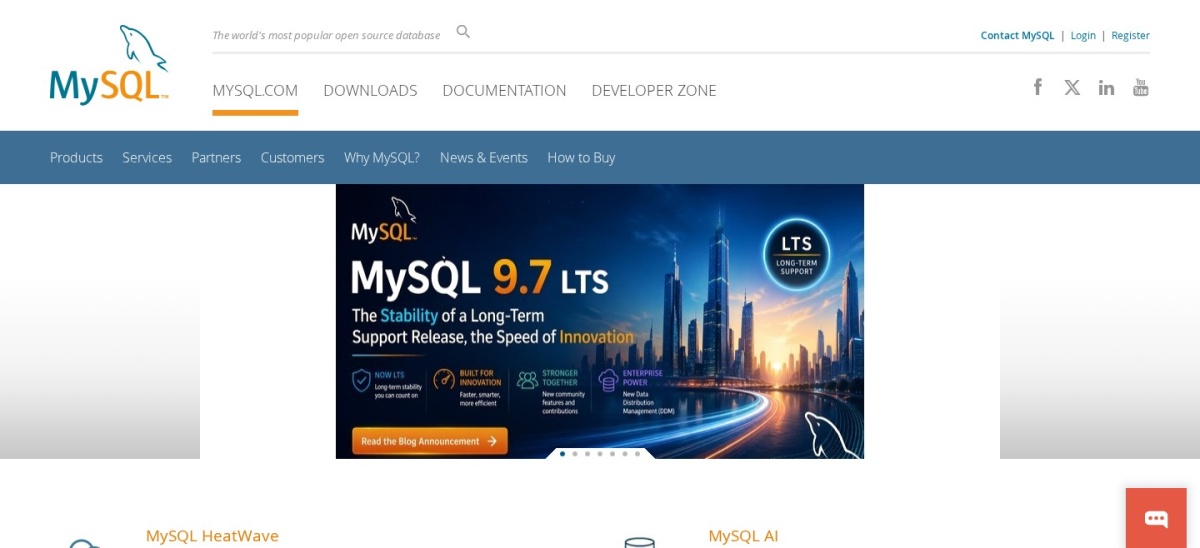
MySQL is the closest drop-in replacement for MariaDB, because MariaDB began as a fork of MySQL and the two still share most SQL, storage engines and tooling. The free Community Edition covers the full server, and MySQL 9.7 LTS is the current long-term support release, with HeatWave adding analytics on the cloud service.
The trade off is price. Paid support starts at $2,000 a year for MySQL Enterprise Edition, so a team that wants vendor support pays far more than the free download suggests. It suits teams migrating from MariaDB that want the smallest code change and the largest pool of MySQL knowledge.
What we like
Closest SQL and tooling match to MariaDB
Free Community Edition with no licence fee
Largest review base on this list, 1,686 G2 reviews
Runs almost everywhere, self-hosted or managed
Watch out for
Paid support starts at $2,000 a year
Fewer advanced features than PostgreSQL
Enterprise extras need the paid edition
Enterprise adds support, monitoring and security extrasVisit mysql.com
02
PostgreSQL
4.4/5on G2 (682 reviews, checked Nov 2026)
PriceFree
Best free alternative with advanced features
Licence cost$0, open source
ExtensionsJSONB, PostGIS, pgvector
Paid supportVia vendors, varies
DeploymentSelf-hosted or managed
postgresql.org
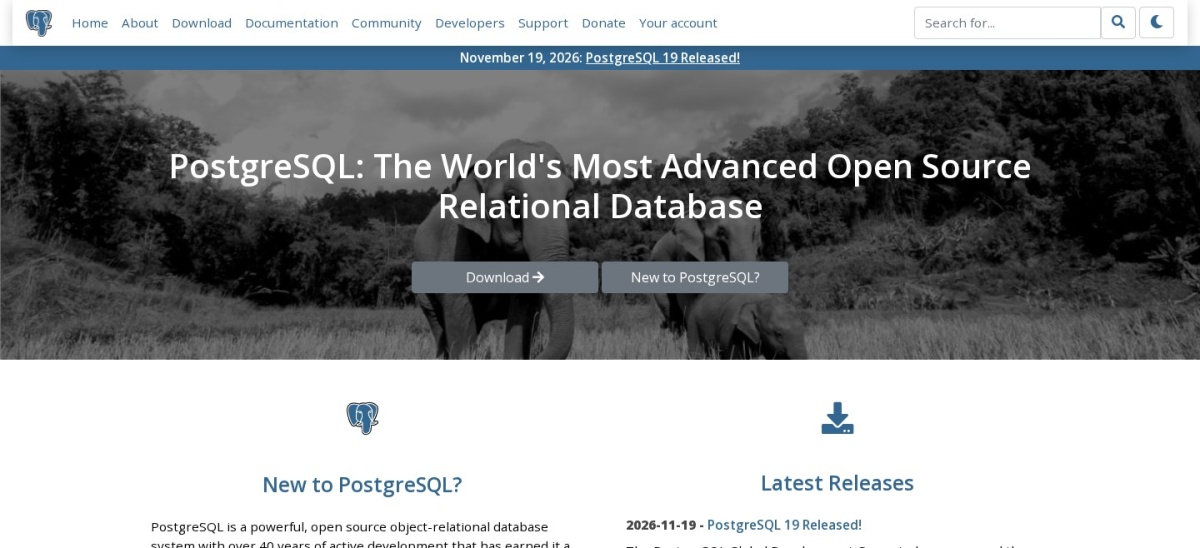
PostgreSQL homepage, captured Nov 2026.
PostgreSQL is a free, open-source relational database known for strict data integrity, advanced SQL and a large extension library. It handles JSONB documents, full-text search, PostGIS mapping and pgvector search in the same database, and PostgreSQL 19 arrived in November 2026.
The trade off is migration work. Its SQL dialect, functions and storage differ from MariaDB, so moving an app takes schema and query changes. It suits teams that want the strongest free engine and are willing to rewrite the MariaDB-specific parts.
What we like
No licence fee, with a very large community
Advanced SQL, JSONB and many extensions
Strong reputation for reliability and data integrity
Supabase is a managed PostgreSQL platform that adds authentication, file storage, realtime subscriptions and auto-generated APIs around the database. Its free plan includes 500 MB of database storage, unlimited API requests and 50,000 monthly active users, which covers early apps well.
The trade off is that free projects pause after 7 days of inactivity, and Pro at $25 a month can add usage charges for compute and storage beyond the included amounts. It suits small teams that want a managed Postgres database plus backend services without running a server.
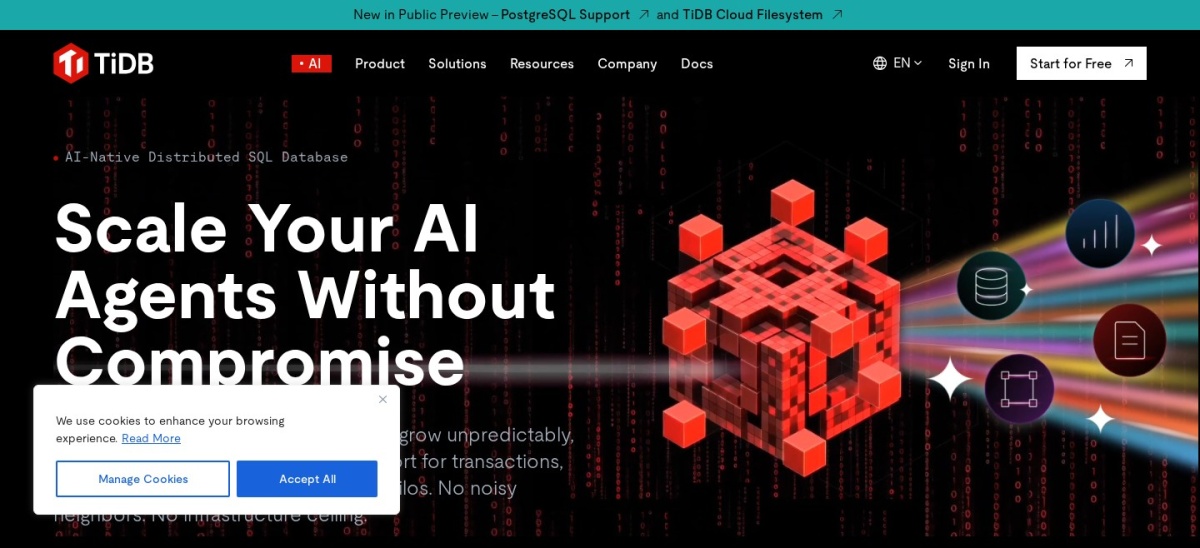
TiDB is a distributed SQL database from PingCAP that speaks the MySQL protocol, so many MySQL apps connect with little change. It scales out across servers, keeps strong consistency, and adds built-in analytics through TiFlash, which runs analytical queries beside transactions.
The trade off is price. The free Starter tier covers 25 GiB of row storage and 250 million Request Units a month, but Essential starts at about $400 a month and Dedicated clusters cost far more. It suits teams outgrowing one MySQL server that still want MySQL compatibility.
What we like
MySQL-compatible, so migration is lighter
Scales out across servers with strong consistency
Built-in analytics without a second database
Generous free Starter tier for trying it out
Watch out for
Paid plans start at about $400 a month
Overkill for small, low-traffic apps
Only 67 G2 reviews, a small rating base
Essential and Dedicated add compliance and larger clustersVisit pingcap.com
05
YugabyteDB
4.5/5on G2 (65 reviews, checked Nov 2026)
Paid from$125/vCPU/mo
Best distributed SQL for global apps
Free editionOpen source, $0 licence
Managed fromAeon Standard, $125/vCPU/mo
APIsYSQL (Postgres) and YCQL
DeploymentSelf-hosted, Aeon or BYOC
yugabyte.com
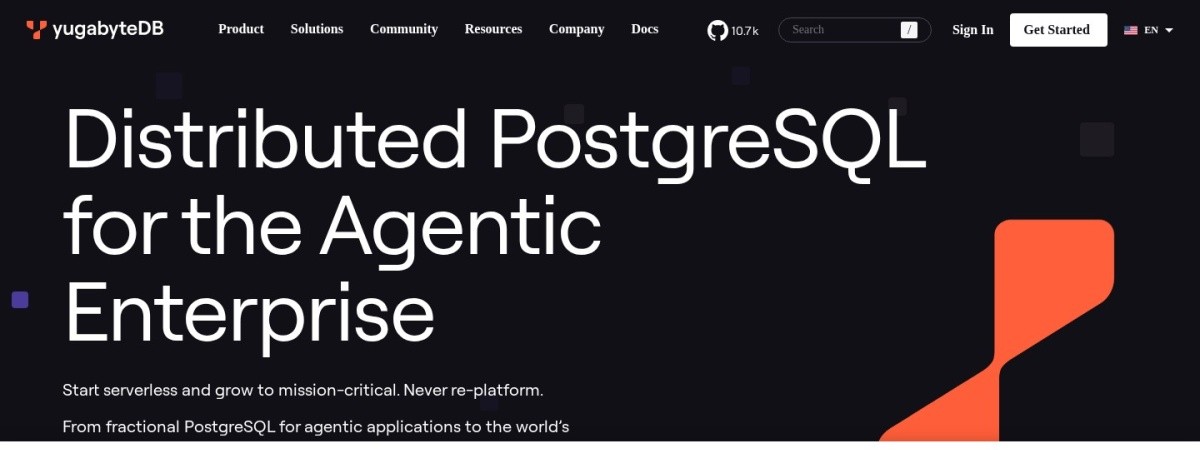
YugabyteDB homepage, captured Nov 2026.
YugabyteDB is a distributed SQL database that offers a PostgreSQL-compatible API called YSQL alongside a Cassandra-style API. It spreads data across regions with strong consistency, so an app can stay up when one region fails, and the open-source database is free to download and run.
The trade off is cost and complexity. Managed Aeon Standard starts at $125 per vCPU a month, plus storage and transfer, and running a distributed cluster takes more operations skill than one server. It suits global apps that need multi-region writes and survival of a region outage.
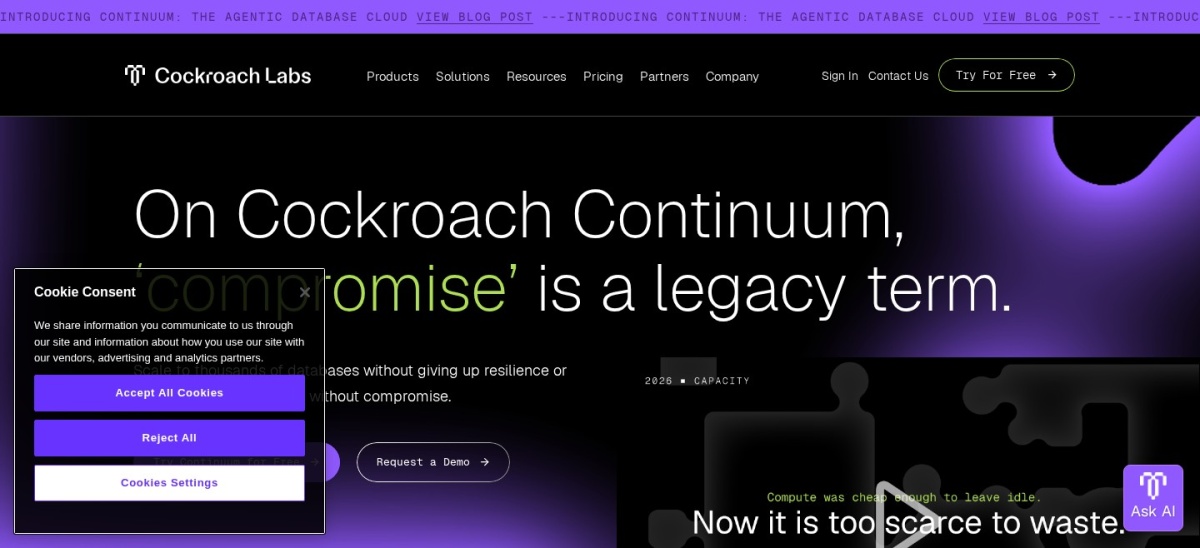
CockroachDB is a distributed SQL database built for multi-region apps, with a largely PostgreSQL-compatible SQL layer. Its free Basic tier on CockroachDB Cloud covers 50 million Request Units and 10 GiB of storage a month, and the database keeps working when a node or region fails.
The trade off is cost at scale. Standard dedicated clusters start at about $0.18 per vCPU-hour, around $131 a month for one vCPU run continuously, before storage, backups and transfer. It suits teams that need Postgres-style SQL across regions with very high availability.
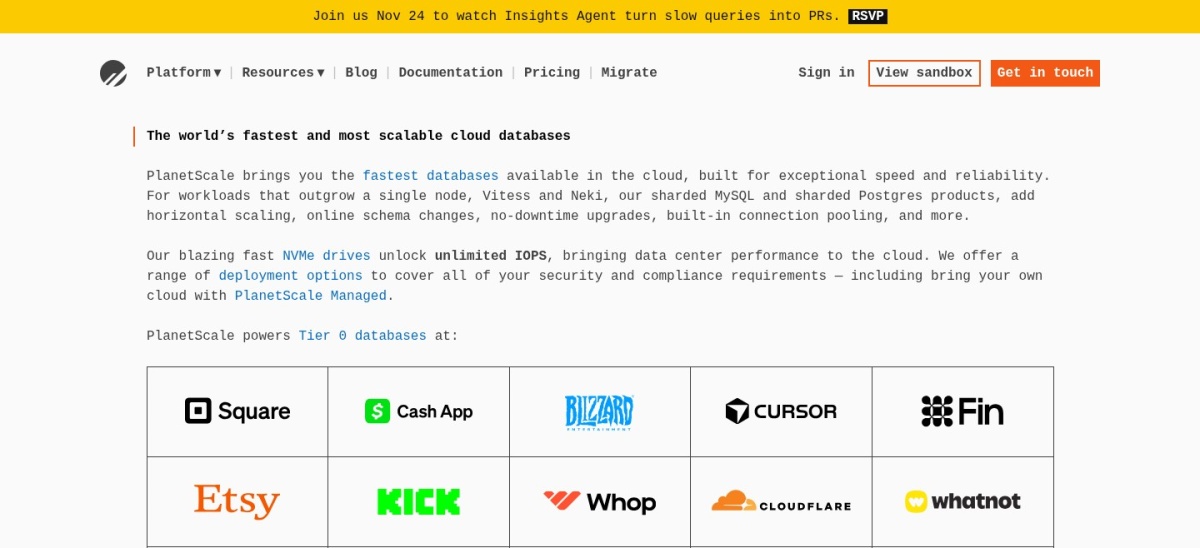
PlanetScale is a serverless MySQL platform built on Vitess, the sharding layer first built to scale MySQL at YouTube. Its standout feature is database branching: you copy production data into a branch, change the schema safely, then merge it back with a deploy request, much like a code pull request.
The trade off is that there is no free tier, so the cheapest plan is Scaler Pro at $39 a month, and storage, backups and transfer bill on top of the plan. It suits MySQL teams that want safe schema changes and serverless scaling without managing servers.
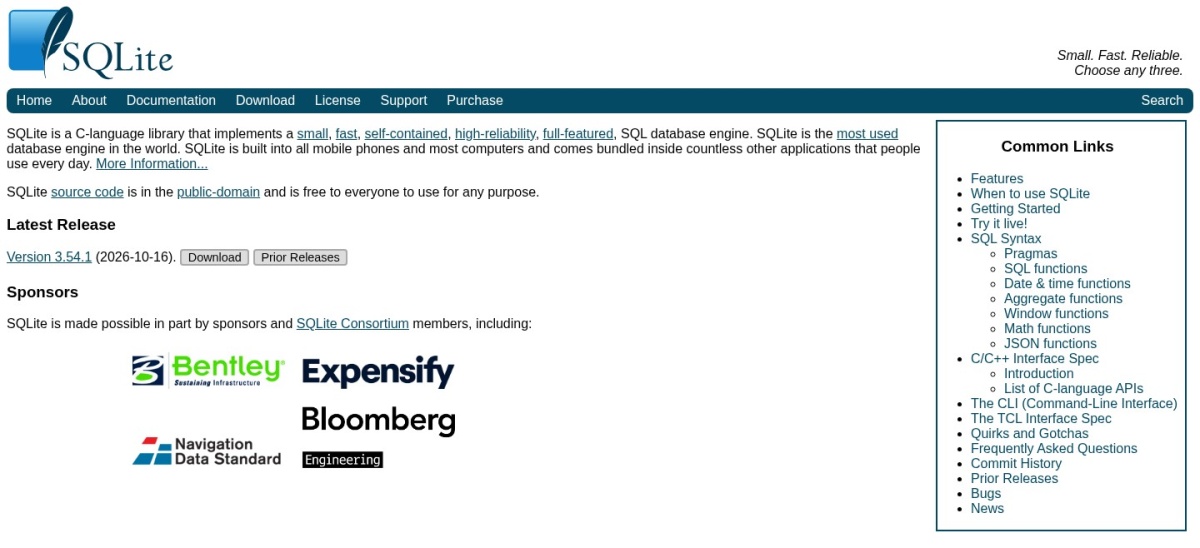
SQLite is a small, fast, self-contained SQL database engine in a C library, and its source code is in the public domain and free for any purpose. The whole database lives in one file, so there is no server to install or run, and it is built into most phones, browsers and apps.
The trade off is scale. SQLite allows only one writer at a time and fits one app, not many users sharing a database server, so it is a poor fit for busy multi-user production apps. It suits local apps, mobile apps, prototypes and tests that need real SQL without a server.
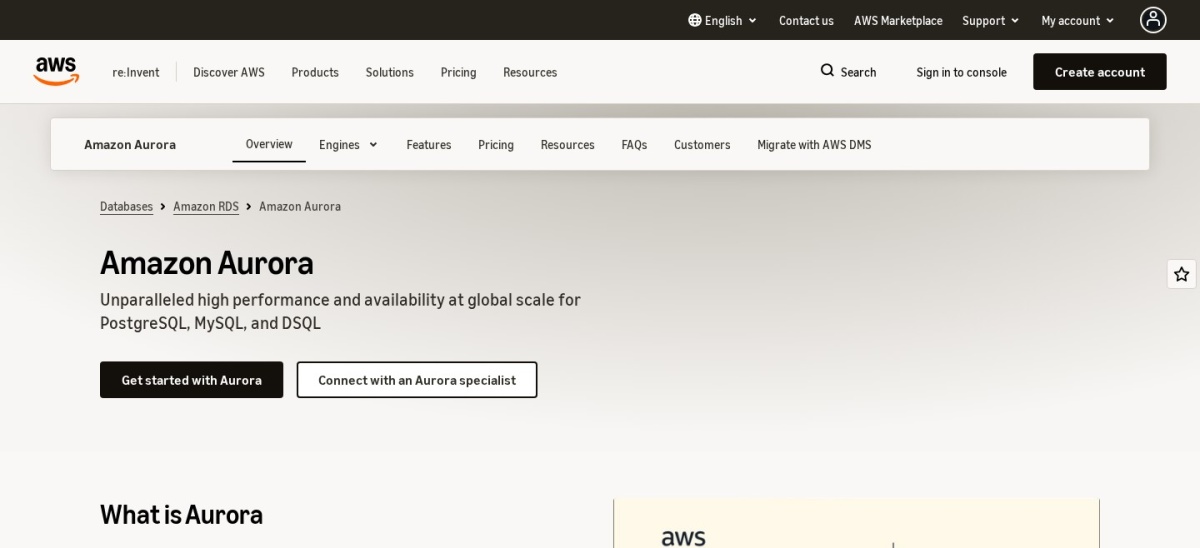
Amazon Aurora is a managed relational database on AWS with MySQL-compatible and PostgreSQL-compatible engines, so MariaDB apps can move to the MySQL engine with little change. Storage scales from 10 GB to 128 TB without downtime, and six copies of the data sit across three zones.
The trade off is that billing is usage-based. Serverless capacity starts at $0.06 per ACU-hour, about $44 a month for one ACU run continuously, before storage, I/O and transfer, so costs rise with traffic. It suits teams already on AWS that want a managed database with high availability.
Four tools on this list have no flat monthly plan, so the ladder uses a flat equivalent: TiDB Essential from about $400 a month, YugabyteDB Aeon Standard at $125 per vCPU a month, CockroachDB Standard at about $131 a month for one vCPU, and Amazon Aurora at about $44 a month for one ACU run continuously.
That does not mean the bill stays at that number. Storage, backups, transfer and extra capacity all add to it, and a busy app can pass the cost of a flat plan quickly.
Budget these tools from a usage estimate, not from the headline rate. Run a realistic workload on the free tier or trial first, then size the plan from what it actually burned.
How we chose
We started from the relational databases most often named as MariaDB replacements, then kept those with a public rating, a clear pricing page and a real production record.
Prices come from each vendor's pricing page or public rate card, checked on 29 November 2026. Ratings and review counts come from G2 on the same day. Where a vendor shows a sale, the list shows the regular price.
We left out tools with no public rating and NoSQL-only databases, because they are not direct MariaDB replacements. No vendor paid for a place, and we do not claim to have used these tools ourselves.
How to choose a MariaDB alternative
Start with how much of your MariaDB code you can keep, then check price and scale.
Check MySQL compatibility first. If your app uses MariaDB-specific functions, MySQL, TiDB, PlanetScale or Aurora MySQL need the least rework. PostgreSQL options need more changes.
Decide who runs the database. Pick a managed service such as Supabase or Aurora if your team has no database admin. Self-host MySQL or PostgreSQL if you want full control.
Size it for your real traffic. A single server covers most apps. Only pick TiDB, YugabyteDB or CockroachDB once one server stops being enough. See how to back up a WordPress database before any move.
Test the migration on a copy. Move a copy of the data first, run your app against it, and check the slow queries before you switch production over.
FAQ
What is the best alternative to MariaDB in 2026?
MySQL is the best MariaDB alternative for most teams in 2026. It is the closest drop-in replacement, rated 4.4/5 on G2 from 1,686 reviews, and its Community Edition is free. PostgreSQL is the strongest free option if you can rewrite MariaDB-specific SQL.
Is MySQL a good replacement for MariaDB?
Yes. MariaDB began as a fork of MySQL, so the two share most SQL, storage engines and tooling, and many MariaDB apps run on MySQL with little change. Check MariaDB-specific functions first, because a few differ, and test the move on a copy of the data.
What is the cheapest MariaDB alternative?
PostgreSQL, MySQL Community and SQLite all cost $0 in licence fees, so they are the cheapest options. Supabase is the cheapest managed option on this list at $25 a month for Pro. Hosting, backups and support still cost money on top of the $0 licence.
Is there a free alternative to MariaDB?
Yes. MySQL Community Edition, PostgreSQL and SQLite are all free, and Supabase, TiDB, YugabyteDB and CockroachDB all have free tiers or free editions. PlanetScale is the only tool on this list with no free tier, since April 2024.
Which MariaDB alternative is best for beginners or small teams?
Supabase is the easiest pick for beginners and small teams, because it is managed Postgres with auth, storage and a free plan, from $25 a month for Pro. MySQL Community is also simple to start, but your team runs backups, patching and scaling itself.
MySQL vs PostgreSQL: which is the better MariaDB alternative?
MySQL is better if you want the smallest migration, because it is the closest match to MariaDB SQL and tooling. PostgreSQL is better if you want advanced SQL, JSONB and extensions such as pgvector, and you can accept rewriting MariaDB-specific code. Both are free and rated 4.4/5 on G2.
Can I migrate from MariaDB to PostgreSQL easily?
Not as easily as to MySQL. PostgreSQL uses a different SQL dialect, functions and data types, so the schema and queries need changes. Tools such as pgLoader help with the data move, but plan time for testing, and run the app against a copy before switching production.
SaaS SEO and WordPress specialist with about 8 years of experience. Rakib compares WordPress plugins, themes, hosting and software using public pricing, documentation and user reviews. See how we rank.