Clio is the best of the Litify alternatives for most firms, starting at $49 per user a month with a 4.6 out of 5 G2 rating from 996 reviews. Smokeball suits document-heavy firms that want automatic time capture, while Filevine fits high-volume litigation teams.
How we make this list: we compare pricing pages, product documentation and public user reviews, then re-check every price before each update. No product paid for a place. Disclosure.
Clio leads at $49 per user a month with the largest review base here: 4.6 out of 5 on G2 from 996 reviews.
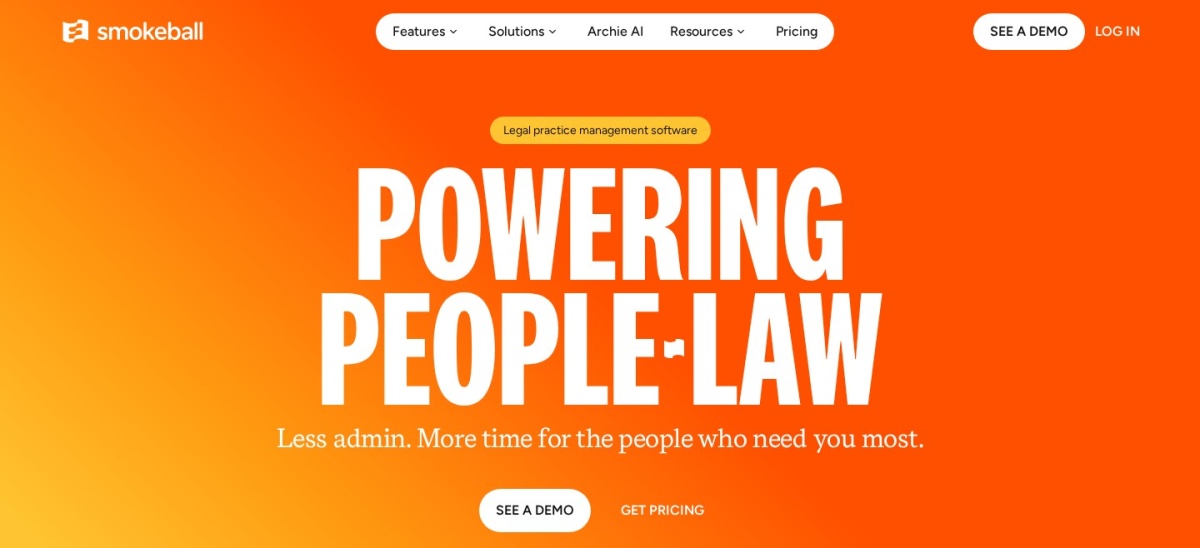
Smokeball has the highest G2 rating in this list at 4.7 out of 5, but it publishes no prices and sells on quote.
Filevine is the closest match for high-volume litigation work, rated 4.7 out of 5 on G2 from 287 reviews.
MyCase and PracticePanther publish every tier price, from $50 and $49 per user a month respectively.
Three of the nine tools are quote-only, so budget for a sales call with Smokeball, Filevine and LEAP.
What should you look for in Litify alternatives?
Litify runs on Salesforce, so the first question is whether you want to keep that foundation. None of the nine alternatives here is built on Salesforce, which means a simpler setup and no Salesforce licence cost, but also a fresh migration of matters, documents and client records.
Price transparency splits this market in two. Clio, MyCase, PracticePanther, CosmoLex and CARET Legal publish entry prices from $49 to $79 per user a month, while Smokeball, Filevine and LEAP sell on quote, so a firm that needs a budget number today should start with the published-price group.
Trust accounting is the feature most likely to force a second tool. Clio, MyCase and CosmoLex include it on every plan, while PracticePanther holds full trust accounting for its Business Pro plan at $114 per user a month, so check the tier, not just the headline price.
Billing and payments decide the monthly total as much as the licence does. Our guide on what a payment gateway is explains the processing side, and every tool here takes online payments, though rates and payout timing vary by vendor.
Intake matters more than most firms expect when leaving Litify. Clio bundles intake in its top tier, MyCase includes intake forms from its Pro plan, and Filevine runs intake through Lead Docket, so map your intake flow before you compare feature lists.
Clio Manage is the leading cloud practice management platform for law firms, covering matters, documents, time, billing and payments in one system. The Starter plan starts at $49 per user a month and includes legal accounting, unlimited document storage, time and expense tracking, and a 7-day free trial.
The trade off is that the interesting parts cost more. AI features start on the Core plan, and the higher tiers that add workflows, custom reports and intake are quoted rather than priced on the page. It suits firms of any size that want the widest integrations and a proven platform.
What we like
Largest review base here: 996 G2 reviews
Accounting and trust reconciliation on every plan
Unlimited document storage on every plan
7-day free trial with no credit card
Watch out for
Only Starter has a published price; higher tiers are quoted
Smokeball is a legal practice management platform built around documents, with automatic time capture and a deep library of legal forms. Its four plans run from Bill, a billing-only option, up to Prosper+, which adds firm reporting, lead management and custom workflows.
The trade off is price. Smokeball publishes no prices on its own site and sells every plan on quote, so a firm cannot finish a budget from the website. It suits document-heavy firms that lose billable hours to manual time entry and form drafting.
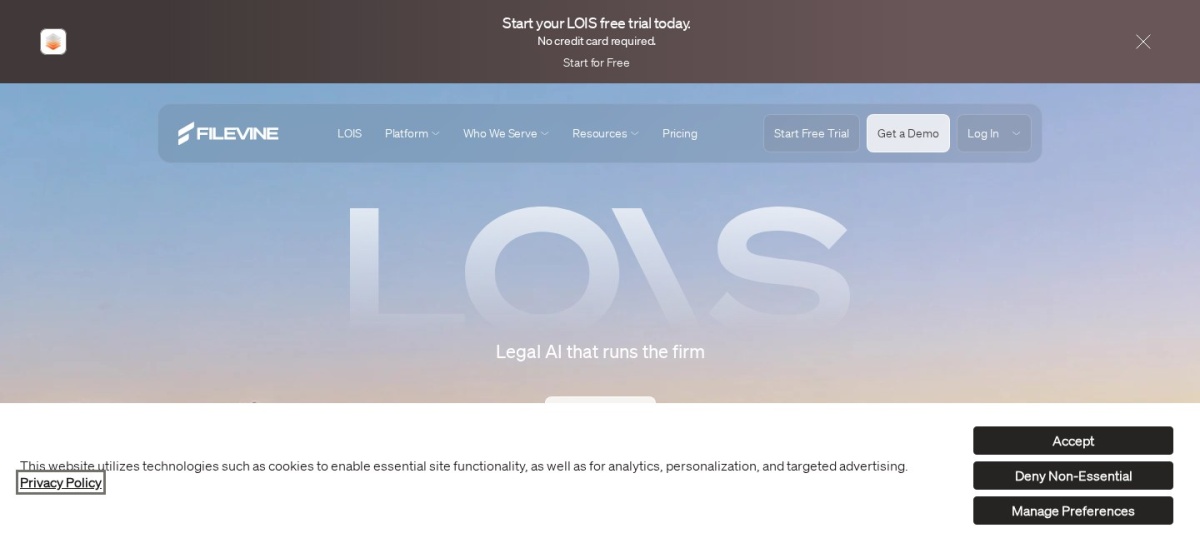
Filevine is a configurable case management platform for high-volume litigation and personal injury work. It ties documents, deadlines, tasks and reporting to each matter in a project-style case file, and its LOIS AI drafts, summarises depositions and answers questions from the file.
The trade off is that pricing is entirely quote-based, and the only free trial covers LOIS, not the core case management platform. It suits litigation teams running many matters at once that need deadline chains, settlement tools and intake through Lead Docket.
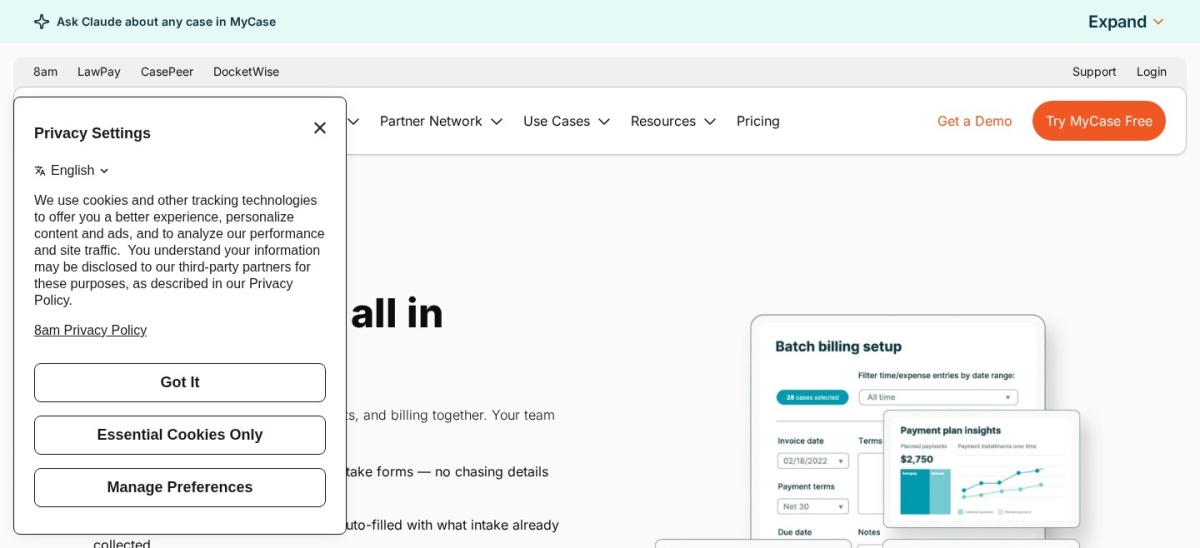
8am MyCase is practice management software known for client communication: a client portal, messaging, online payments and case updates in one place. Basic costs $50 per user a month billed annually, with Pro at $100 and Advanced at $130, and a 10-day free trial needs no credit card.
The trade off is that the fuller platform sits on the higher tiers. Automated workflows, intake forms and unlimited e-signature start on Pro, while the open API needs Advanced, and accounting is a $39 per user a month add-on. It suits small firms that want one clear bill.
What we like
Every tier price published on its own page
Strong client portal, texting and payments
Trust accounting included on every tier
10-day free trial with no credit card
Watch out for
Prices rose in August 2026, from $39 to $50 at entry
Accounting is a $39 per user a month add-on
Open API only on the Advanced plan
Pro adds workflows, intake and unlimited e-signatureVisit mycase.com
05
Assembly Neos
4.5/5on G2 (296 reviews, checked Nov 2026)
Starts at$99/mo
Best for personal injury firms
Starting price$99/user/mo, third-party listing
G2 rating4.5/5, 296 reviews
FocusPersonal injury
AINeosAI, award-winning
assemblysoftware.com
Assembly Neos homepage, captured Nov 2026.
Assembly Neos is case management software for personal injury firms, built on the Needles and Trialworks legacy and now adding AI through NeosAI. It runs cases from intake to settlement, with medical chronologies and demands built for injury work.
The trade off is specialisation. Neos is tuned for personal injury, so general practice firms get less from it, and its $99 per user a month starting price rests on a third-party listing rather than a published vendor price. It suits injury firms that live in medical records and demands.
PracticePanther is cloud practice management software that leans on automation: workflow templates, document automation, intake forms and payment processing. Solo costs $49 per user a month billed annually, with Essential at $69, Business at $89 and Business Pro at $114, and a 7-day free trial.
The trade off is that full accounting sits at the top. Trust accounting and operating accounting arrive only on Business Pro, while lower tiers cover billing and payments. It suits small firms that want tasks, events and invoices to run on rails.
What we like
Every tier price published on its own page
Strong workflow and document automation
Native two-way texting from the Business plan
7-day free trial with no credit card
Watch out for
Full trust accounting only on Business Pro
Lowest G2 review count among the priced tools here
CosmoLex is cloud-based law practice management software that includes billing, trust accounting, calendaring and task management. Launch costs $49 per user a month billed annually, with Core at $99 and Pro at $129, and annual billing saves $120 per user a year.
The trade off is that the fuller accounting sits higher up. Launch covers time, billing and trust work, while the general ledger, payables and bank feeds arrive on Core. It suits firms that want one system for matters and money, without a separate bookkeeping tool.
What we like
Built-in accounting with trust ledgers on every plan
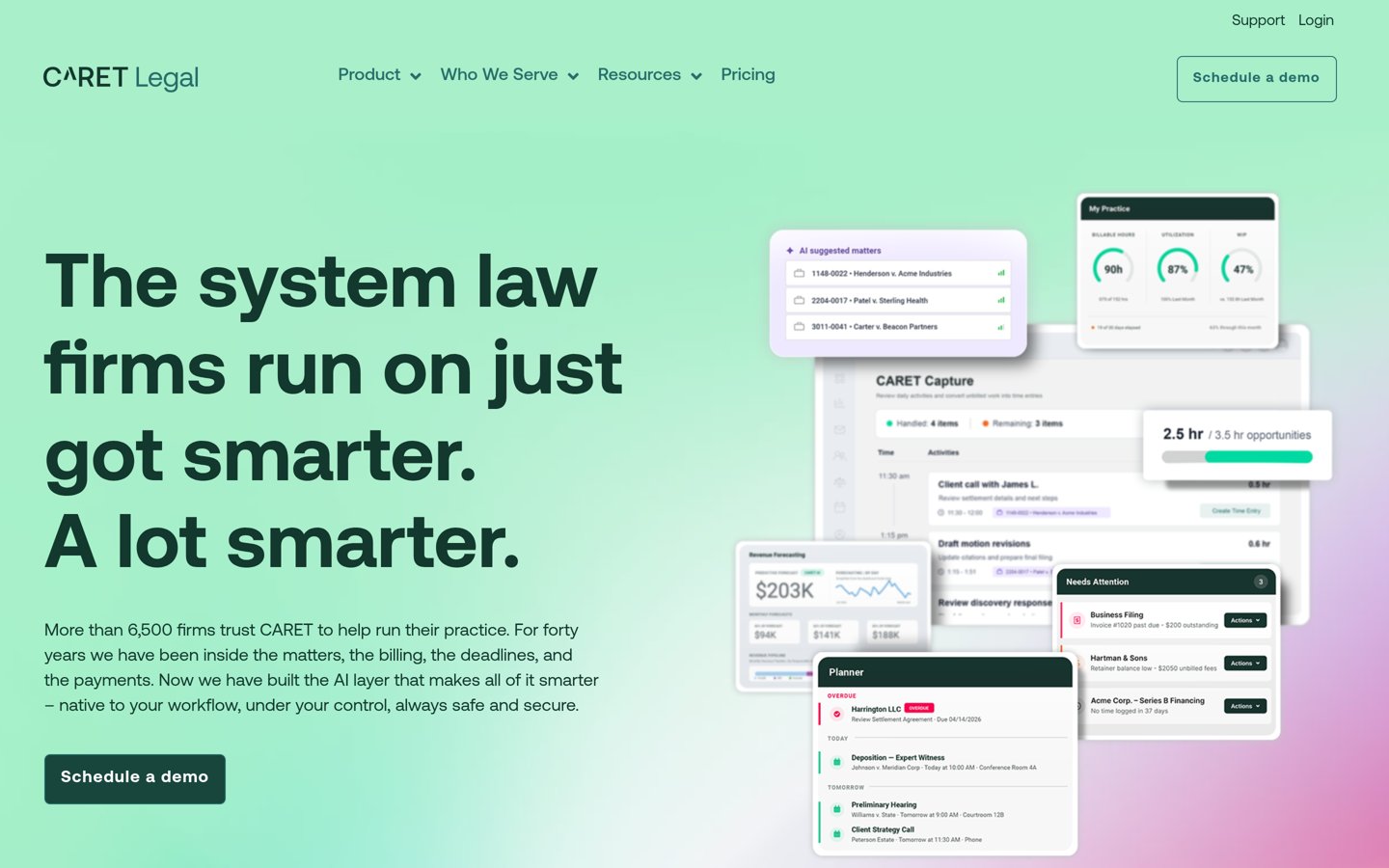
CARET Legal is cloud legal practice management software with case management, billing, trust accounting, document automation, payments and client communication in one system. Enterprise costs $79 per user a month billed annually, with Enterprise Plus at $99 and Enterprise Insights at $119.
The trade off is the setup cost. CARET Legal charges one-time implementation fees on top of the subscription, and reviewers note a learning curve before the deeper automation pays off. It suits mid-size firms that want one system instead of several tools.
What we like
All-in-one design cuts tool switching
Rated 4.4 out of 5 on G2 from 210 reviews
Trust accounting and payments built in
Every tier price published
Watch out for
One-time implementation fees on top of the licence
Reviewers note a learning curve for advanced features
Some reviewers report billing and accounting glitches
LEAP is a legal practice management platform with built-in legal content, covering matters, documents, billing and accounting in one system. Its forms library and real-time updates suit firms that draft heavily from templates, and a 14-day free trial is available.
The trade off is evidence. LEAP holds the lowest G2 rating here at 3.6 from only 40 reviews, and its $129 per user a month starting price rests on a third-party listing because the vendor sells on quote. It suits firms that value the forms library above all else.
What we like
Largest built-in library of legal forms here
Matters, billing and trust accounting in one system
Quote-only vs published pricing: what it means for your budget
Five tools in this list publish an entry price, so a firm can budget a per-user cost before talking to sales. Clio, MyCase, PracticePanther, CosmoLex and CARET Legal all list their cheapest tier on their own pricing pages.
Smokeball, Filevine and LEAP publish no per-user price at all. Their pricing pages ask for a demo or a quote, and the final figure depends on firm size, plan and contract term.
For those three, treat third-party price listings as estimates, not vendor prices. The $99 figure for Assembly Neos and the $129 figure for LEAP both come from third-party listings, so confirm them with the vendor before you budget.
A quote-only shortlist is still workable if you ask for the same things from each vendor: per-user price, implementation fees, payment processing rates and the cost of the tier that holds the features you need.
How we chose
We started from the tools G2 lists as the most reviewed alternatives to Litify, then kept the nine with a public G2 rating, an established user base and a clear fit for firms leaving a Salesforce-based platform.
Prices come from each vendor's pricing page, checked on 29 November 2026, except for Assembly Neos and LEAP, whose starting prices rest on third-party listings because the vendors do not publish them. Ratings and review counts come from G2 on the same day. Where a vendor shows a sale, the list shows the regular price.
We left out tools with no public rating and tools built for a single practice area outside personal injury. No vendor paid for a place, and we do not claim to have used these tools ourselves.
How to choose a Litify alternative
Start with what Litify does for your firm today, then match that job before you compare prices.
List what you actually use in Litify. Write down the matters, documents, billing and reporting you rely on, plus any Salesforce workflows, so you compare real needs instead of feature lists.
Decide whether you need Salesforce at all. If your firm runs other work on Salesforce, a native platform may matter more than price. If not, the tools here remove a licence cost and a layer of setup.
Check trust accounting on the tier you would buy. Some tools include it everywhere and some hold it for the top tier. Confirm it in writing before you sign, because it is hard to add later.
Trial the top two with real matters. Use the free trials on Clio, MyCase, PracticePanther and CosmoLex with a few live matters, and ask the quote-only vendors for a demo on your own case types.
FAQ
What is the best alternative to Litify?
Clio is the best Litify alternative for most firms. It starts at $49 per user a month, covers matters, documents, billing and accounting in one system, and holds a 4.6 out of 5 G2 rating from 996 reviews, the largest review base in this list.
What is the cheapest Litify alternative?
Clio, PracticePanther and CosmoLex all start at $49 per user a month billed annually. PracticePanther Solo and CosmoLex Launch are the cheapest published entry points, while Smokeball, Filevine and LEAP are quote-only, so their entry cost is unknown until you ask.
Is there a free Litify alternative?
None of the nine tools here has a free plan. Clio and PracticePanther offer 7-day free trials, MyCase and CosmoLex offer 10-day trials, and LEAP offers a 14-day trial, so you can test the leading options before paying.
Which Litify alternative is best for a small law firm?
MyCase is the best fit for a small firm that wants one clear bill, starting at $50 per user a month with intake, client messaging and payments included. PracticePanther at $49 is the closest rival, with stronger workflow automation but trust accounting only on its top tier.
Clio vs Smokeball: which is better as a Litify alternative?
Clio is better for most firms because it publishes its prices from $49 per user a month, includes accounting on every plan and has 996 G2 reviews. Smokeball wins for document-heavy firms, with a higher 4.7 G2 rating and automatic time capture, but it is quote-only.
Can I migrate from Litify to one of these alternatives?
Yes. Clio includes training and data migration on its plans, and PracticePanther assigns a dedicated account manager for migration. Ask each vendor what migrates cleanly, especially matters, documents, time entries and trust balances, before you sign.
SaaS SEO and WordPress specialist with about 8 years of experience. Rakib compares WordPress plugins, themes, hosting and software using public pricing, documentation and user reviews. See how we rank.