TalentLMS is the best learning management system for most teams, with a free plan and paid plans from one hundred nineteen dollars a month. Docebo suits large multi-audience programmes, while 360Learning fits teams where experts write the courses.
How we make this list: we compare pricing pages, product documentation and public user reviews, then re-check every price before each update. No product paid for a place. Disclosure.
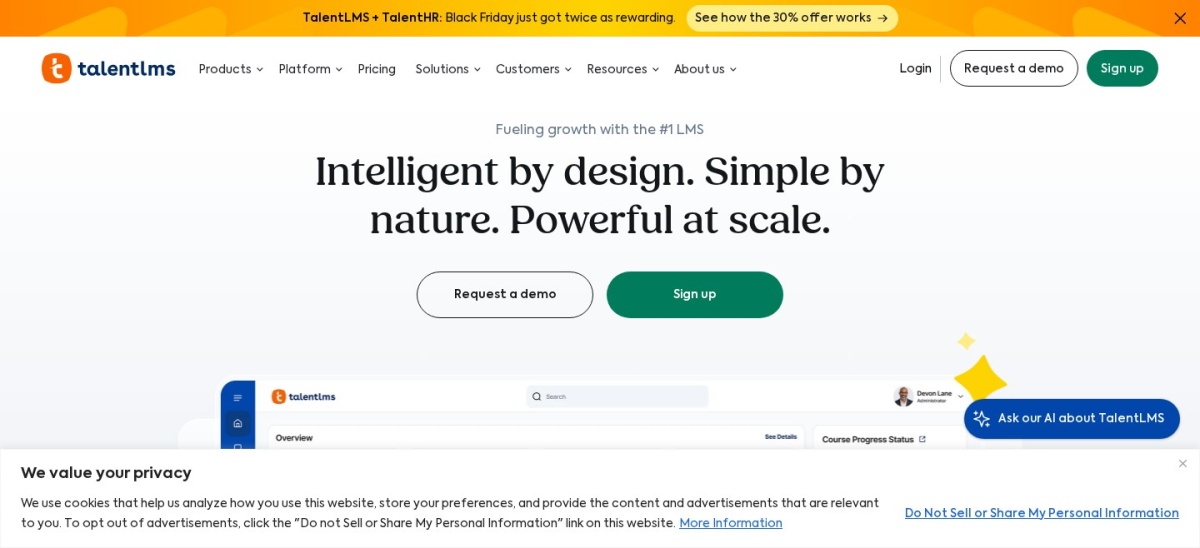
TalentLMS is the only tool here with a free plan, and Core costs $119 a month for up to 40 users.
Docebo is the only enterprise pick with a published starting price, at $9 per user a month with a 250-user minimum.
iSpring LMS is cheapest per active user at $6.91 a month for 100 users, and idle seats cost nothing.
Absorb, LearnUpon and Skilljar are quote-only, so budget for a sales conversation before you shortlist them.
Litmos starts at $8,000 a year and Tovuti at $7,500 a year, so both suit larger teams with a set budget.
How do you choose between learning management systems?
A learning management system is only as good as its adoption. If admins dread the setup and learners ignore the courses, the platform fails no matter how long its feature list runs.
Pricing models differ more than features do. Some tools charge a flat monthly rate, others charge per active user, and enterprise platforms quote per team, so compare the same team size on every quote.
Ratings show the gap between promise and daily use. Every tool here holds at least 4.3 out of 5 on G2, but review counts range from under 200 to over 1,000, so a high score on a small base means less.
Content decides the shortlist. Teams that need ready-made compliance courses should start with Litmos or Docebo, while teams that build their own should look at iSpring LMS or 360Learning first.
TalentLMS is a cloud platform that gets a training programme running without an implementation project. The free plan covers 5 users and 10 courses, Core costs $119 a month billed yearly for up to 40 users, and every plan includes unlimited courses and single sign-on.
The trade off is the bracket system. Each plan stops at a user ceiling, and the next bracket costs more, so a growing team should price the next step up before committing. It suits small and midsize teams that want a fast start.
Docebo is an enterprise platform that trains employees, customers and partners from one account. Its main tier is priced at $9 per user a month with a 250-user minimum, and it pairs AI content tools with a large course marketplace.
The trade off is complexity. Implementation typically takes weeks, and the platform needs a dedicated admin at scale. It suits large organisations that train more than one audience.
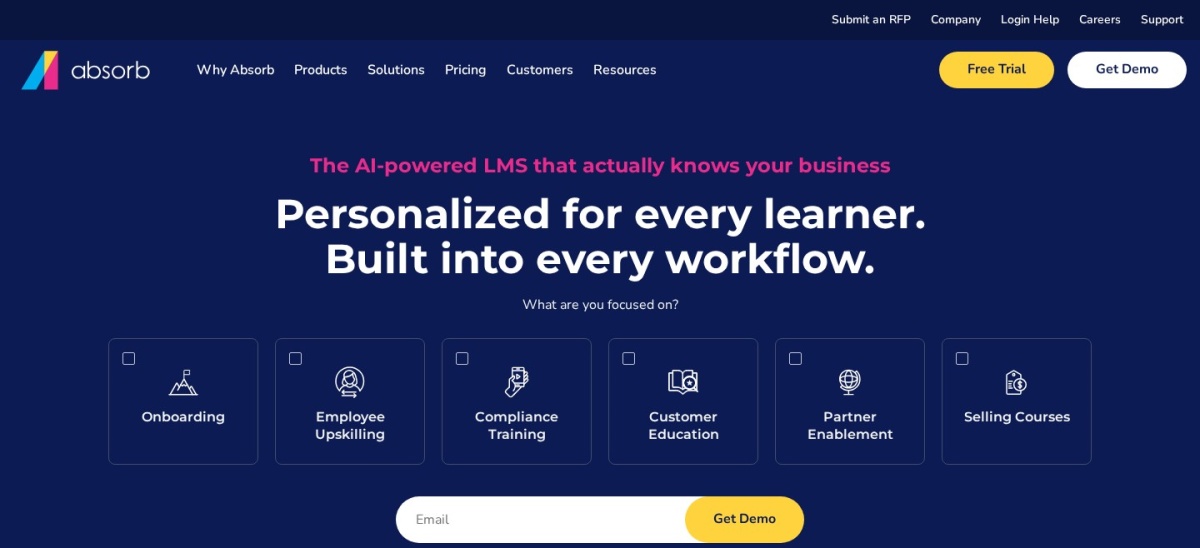
Absorb LMS is a corporate platform for employee and extended-enterprise training, with AI authoring, analytics and integrations with Workday and Salesforce. It holds a 4.6 out of 5 G2 rating from more than 1,000 reviews.
The trade off is the sales process. Every deal is quoted, contracts run 12 months, and learner counts cannot drop mid-term. It suits midsize and large firms with steady headcount.
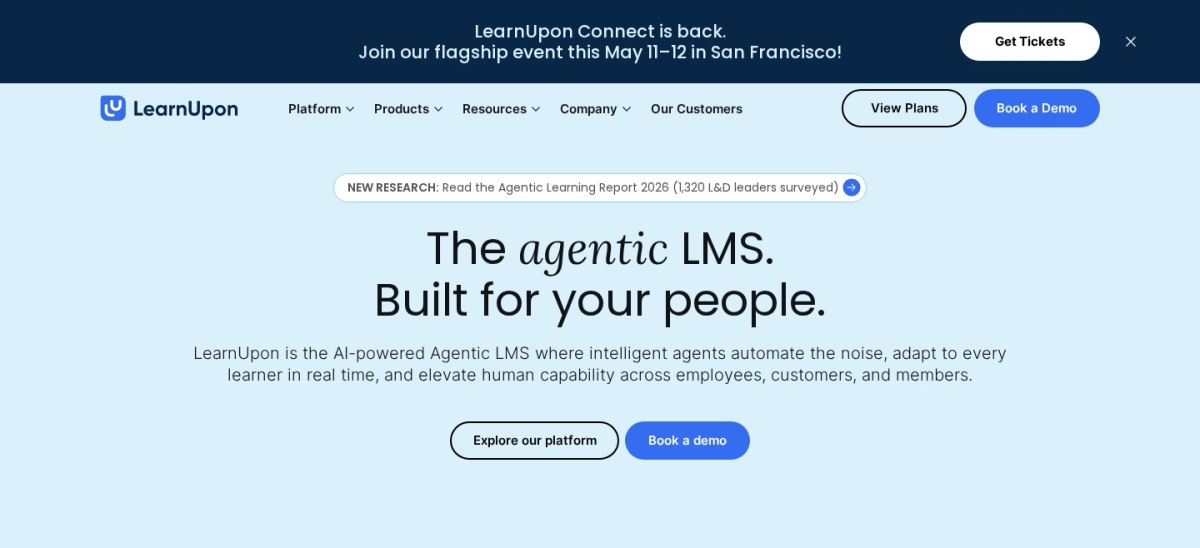
LearnUpon is a platform that runs separate branded portals for employees, customers and partners. Plans are quoted per team and include implementation, and reviewers rate it highly for ease of setup.
The trade off is transparency. No prices are published, and customer education starts at 300 users, so small teams should look elsewhere first. It suits firms that keep audiences apart.
360Learning is a collaborative platform where in-house experts record and publish courses with the learning team. The Team plan is $8 per user a month for up to 100 users, billed monthly, with no annual commitment.
The trade off is structure. It works best when experts keep contributing, and formal compliance reporting is lighter than on classic LMS platforms. It suits teams that learn from each other.
iSpring LMS is a cloud platform for onboarding, compliance and ongoing employee development, built on fast PowerPoint conversion. Business costs $6.91 per active user a month for 100 users billed annually, and only logged-in users count.
The trade off is the floor. The published plan starts at 100 users, so smaller teams need a custom arrangement. It suits companies that already own slide-based training.
Litmos is an AI-powered platform for training employees, customers and partners, with a ready-made library and certification tracking. Foundation starts at $8,000 a year, with a ready-made library that covers compliance, safety and workplace skills.
The trade off is price. The entry tier is dear for a small team, and the value sits in the library rather than the authoring tools. It suits firms that want courses ready to assign.
Tovuti is a learning platform that packs authoring, virtual classrooms and e-commerce into one price. Plans start at $7,500 a year for 100 learners, with gamification and branded portals included.
The trade off is the entry price. Small teams pay for features they may never use, and the quote covers a fixed learner count. It suits midsize teams that want most features in one contract.
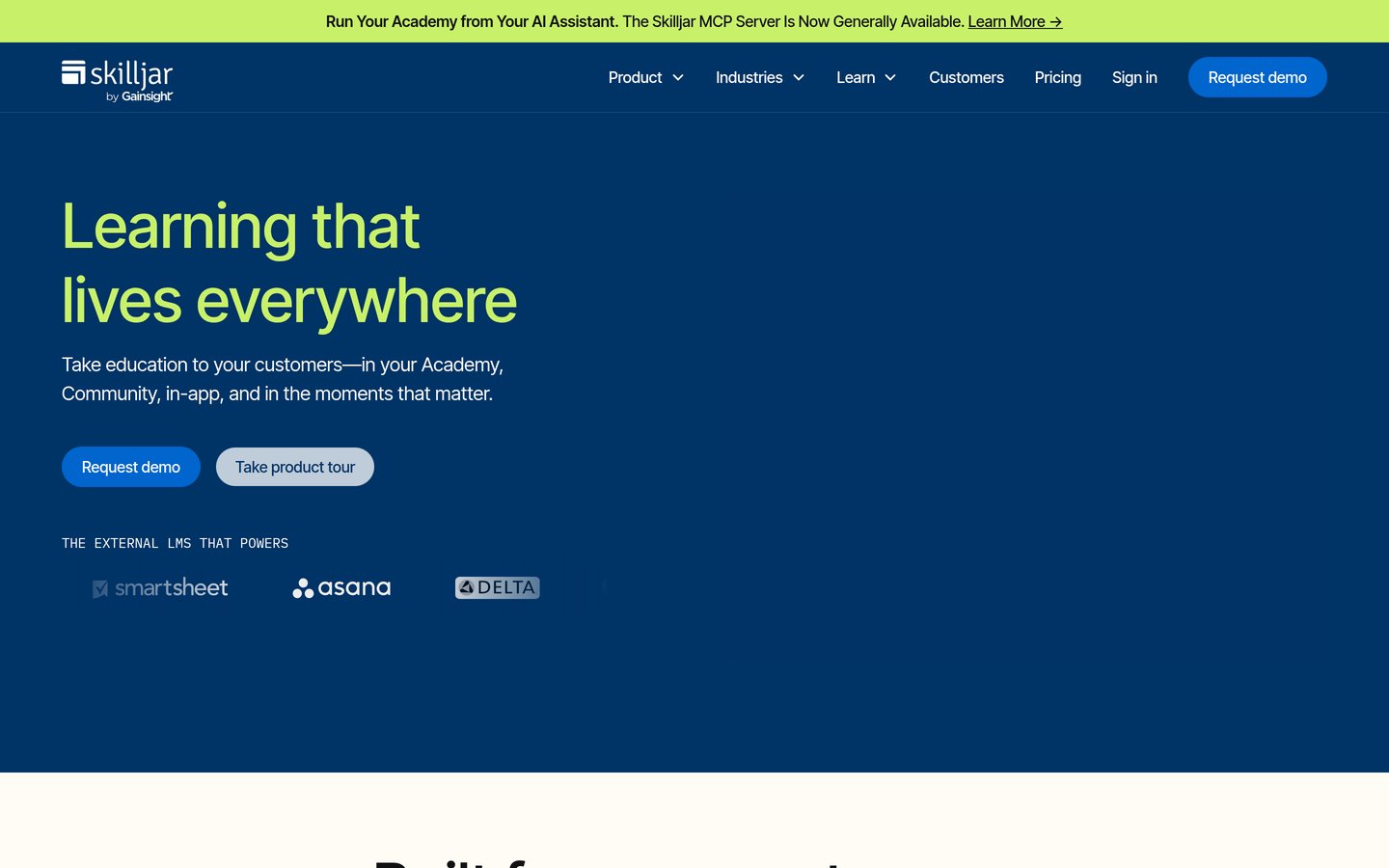
Skilljar is a customer education platform for branded academies, certifications and paid courses. It is built for external audiences rather than staff, with monetisation and analytics at its core.
The trade off is fit. It is weaker for internal compliance training, and pricing is by quote with no published tiers. It suits software companies that train customers and partners at scale.
Only TalentLMS offers a free plan here, for 5 users and 10 courses. Every other tool starts with a trial or a demo, so factor the first paid month into the decision.
Paid plans mostly add scale and proof. You get more users, branded portals, single sign-on and deeper reports as the price rises.
Quote-only tools hide the real cost longest. Ask for the renewal price and the per-user rate above your plan limit before you sign.
How we chose
We started from the learning platforms with the largest G2 review bases, then kept the nine with a public rating and a published price or a clear quote path.
Prices come from each vendor pricing page or vendor-supplied listing, checked on 30 November 2026. Ratings come from G2 on the same day. Tovuti pricing rests on a November roundup, which we flag in our notes.
We left out tools with no G2 rating and tools sold only as custom enterprise contracts with no trial. No vendor paid for a place, and we do not claim hands-on testing for this list.
How to choose a learning management system
Start with who learns and who builds the courses, then check the price for that team size.
Count learners and authors separately. A tool priced per active user suits a large team with few logins, while a flat rate suits a small team where everyone trains.
Check the course source first. Decide whether you need ready-made courses, PowerPoint conversion or collaborative authoring before you compare feature lists.
Test the admin side, not just the learner side. Ask who builds courses, assigns them and reads the reports. If that work needs a consultant, the tool is too heavy.
Ask for the renewal price in writing. Intro rates and first-year discounts hide the second-year bill. Get the renewal figure and the overage rate before signing.
FAQ
What is the best learning management system?
TalentLMS is the best pick for most teams. It offers a free plan for 5 users, Core costs $119 a month for up to 40 users, and it holds a 4.6 out of 5 rating on G2 from more than 800 reviews.
How much does a learning management system cost?
Prices run from $6.91 per active user a month on iSpring LMS to $8,000 a year for Litmos Foundation. TalentLMS Core costs $119 a month, 360Learning costs $8 per user a month, and Absorb and LearnUpon are quoted per team.
Is there a free learning management system?
TalentLMS is the only tool in this list with a free plan, covering 5 users and 10 courses with no time limit. The other tools offer free trials or demos, and open-source options such as Moodle exist for teams that can host them.
Which learning management system is best for small business?
TalentLMS suits small teams best, with a free plan and published prices. 360Learning is the next best self-serve option at $8 per user a month, while iSpring LMS fits teams that train from PowerPoint decks.
Docebo or TalentLMS: which is better?
TalentLMS suits small and midsize teams that want fast setup and published prices. Docebo suits large organisations training several audiences, with AI course generation and a 250-user minimum on its main tier.
What is the difference between an LMS and an LXP?
An LMS manages assigned courses, completions and certificates, while an LXP adds discovery, recommendations and social learning. Docebo and 360Learning blend both, while TalentLMS and iSpring LMS stay closer to the classic LMS model.
SaaS SEO and WordPress specialist with about 8 years of experience. Rakib compares WordPress plugins, themes, hosting and software using public pricing, documentation and user reviews. See how we rank.