Snitcher is the best Leadinfo alternative for most teams, with the highest G2 rating in this list at 4.8 out of 5 and entry pricing of $49 a month. Leadfeeder is the best free starting point with 100 identified companies a month, while RB2B is the pick for naming individual US visitors.
How we make this list: we compare pricing pages, product documentation and public user reviews, then re-check every price before each update. No product paid for a place. Disclosure.
Snitcher has the highest G2 rating here at 4.8 out of 5, and every feature is included on every paid plan from $49 a month.
Leadfeeder is the only direct replacement with a free plan that keeps working: 100 identified companies a month at $0.
RB2B is the cheapest way to name individual visitors, with a free plan and Starter at $79 a month for US traffic.
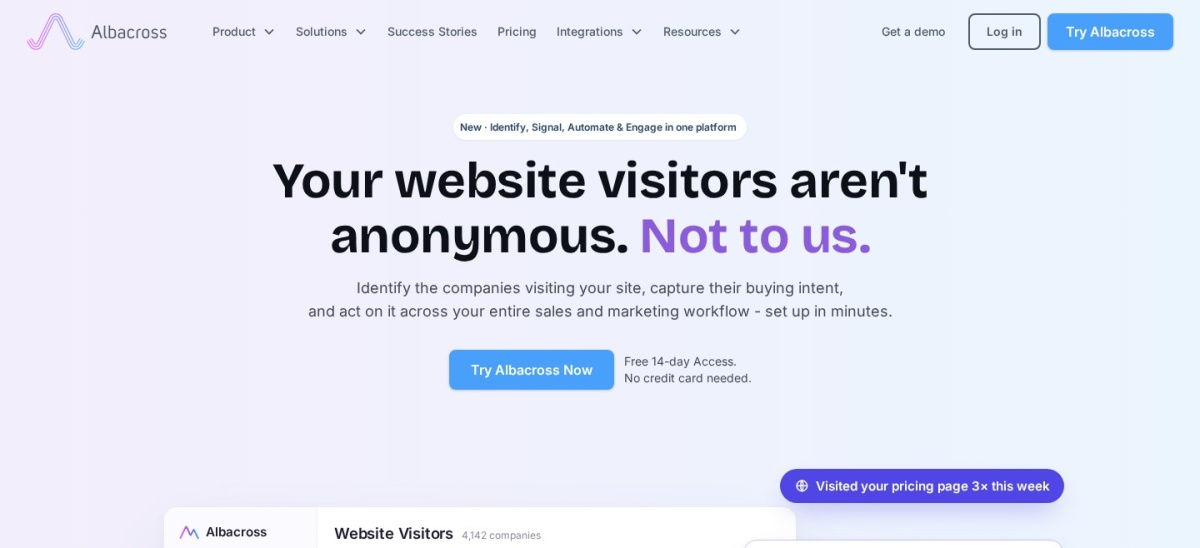
Albacross starts at about $66 a month and adds verified email and phone credits on every plan.
Prices run from $37.45 a month for Lusha Starter to $10,000 a year for Warmly, so match the tool to your traffic, not the headline price.
What should you look for in Leadinfo alternatives?
Leadinfo identifies the companies behind anonymous website visits, and every alternative here does the same job with a different trade-off. Some name companies only, while RB2B, Warmly and Happierleads can also name the person behind the visit. The right pick depends on whether your sales team needs a company name or a person to call.
Price follows volume, not seats. Most of these tools charge by how many companies or visitors they identify each month, so a small site pays the entry price while a busy site can pay several times more. Check what each plan counts before you compare monthly prices.
Free plans are real but narrow. Leadfeeder shows 100 companies a month free, RB2B resolves 150 visitors free, and Apollo and Lusha give free credits for contact data. Use the trial to check identification rates on your own traffic before paying.
Identification rates are the number that matters most. Vendors quote match rates from 60% to 80%, but the rate on your own traffic depends on how many visitors browse from company networks. A 14-day trial on your live site tells you more than any published rate, and our guide on creating a landing page in WordPress shows how to turn those visits into meetings.
Privacy rules shape the choice. Company-level identification is the safer default for European traffic, while person-level identification of US visitors raises consent questions. Pick a vendor that documents its data sources and offers a data processing agreement.
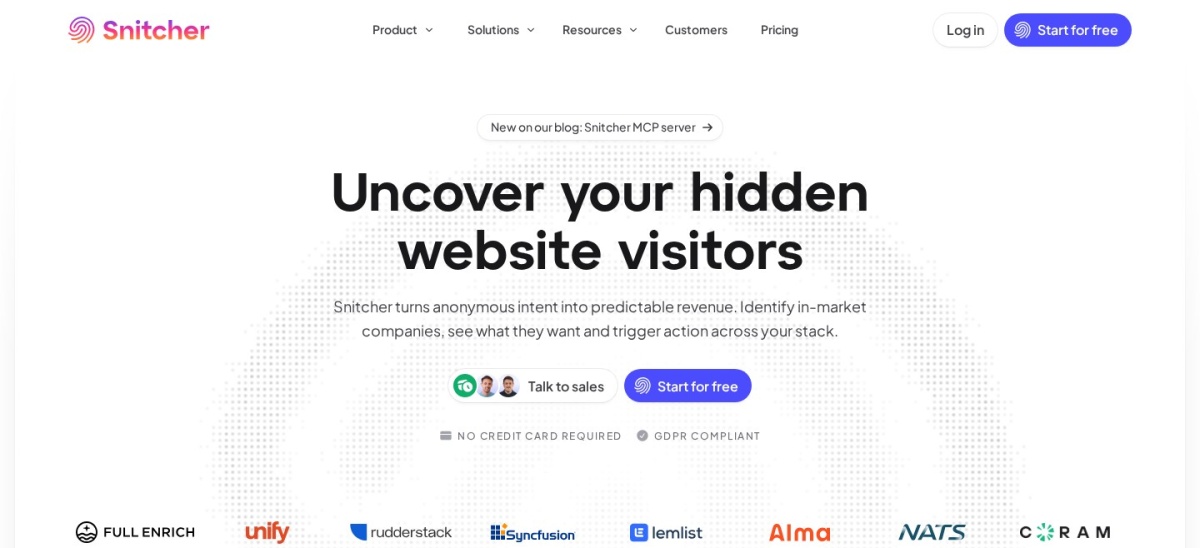
Snitcher is a Dutch visitor identification tool that names the companies behind anonymous website visits. Starter costs $49 a month for up to 50 identified companies, and every feature, including the API and Slack alerts, is included on every paid plan.
The trade off is that the bill follows volume. The price climbs with the number of companies identified each month, reaching $529 a month for up to 5,000. It suits small B2B teams that want the best-rated tool in this list without per-seat fees.
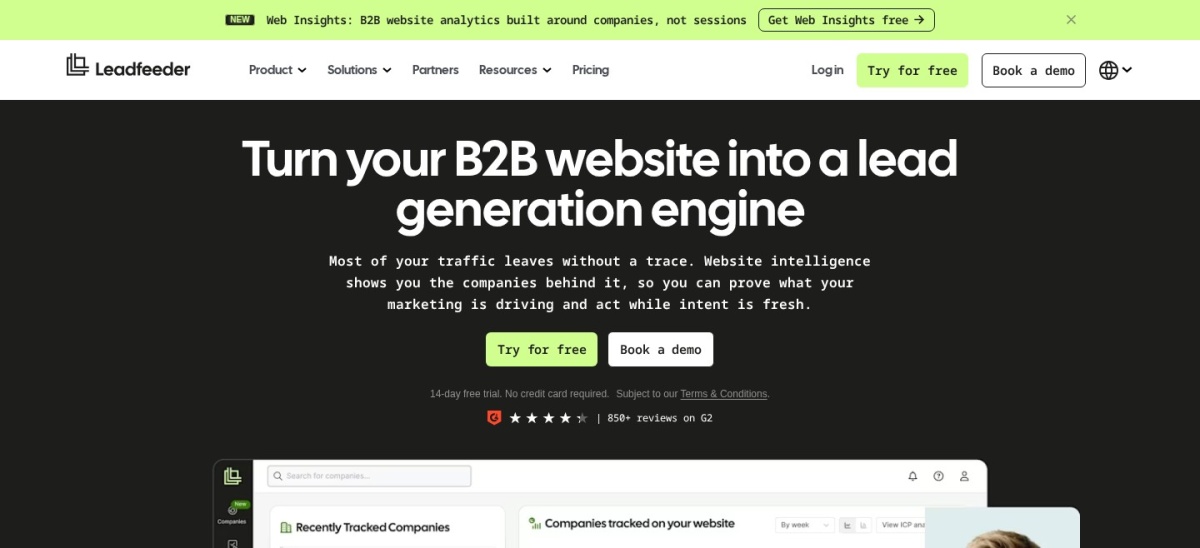
Leadfeeder is a B2B website intent platform that reveals which companies visit your site, even when they never fill in a form. The free Lite plan shows up to 100 companies a month with 7 days of history, and paid plans add lead scoring, CRM sync and Slack alerts.
The trade off is that contact data costs more. Discover starts at €79 a month billed yearly, about $87, and contact details only arrive on Activate from €369 a month. It suits teams that want to start free and pay only as identified volume grows.
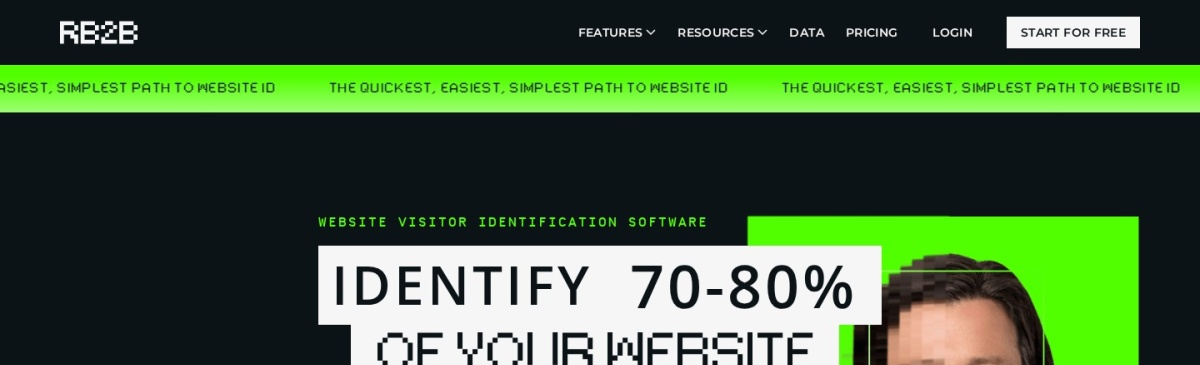
RB2B is a website visitor identification tool that matches visits to named people and sends their LinkedIn profile to Slack. The free plan covers 150 company-level resolutions a month, and Starter at $79 a month adds person-level identification for US visitors.
The trade off is coverage. Person-level matching covers US traffic and runs about 15-20% on Starter, and business emails need Pro from $149 a month. It suits small US-focused B2B teams that want names in Slack the same day.
Albacross is a Swedish visitor identification platform that matches website visits to companies and scores them by fit and buying intent. Starter costs €59 a month billed yearly, about $66, for up to 50 identified companies, with 10 verified email and 5 phone credits included.
The trade off is the credit meter. Contact credits are bundled in small amounts, so heavy outreach needs extra credits on top of the subscription. It suits European B2B teams that want identification plus AI email and LinkedIn follow-up in one tool.
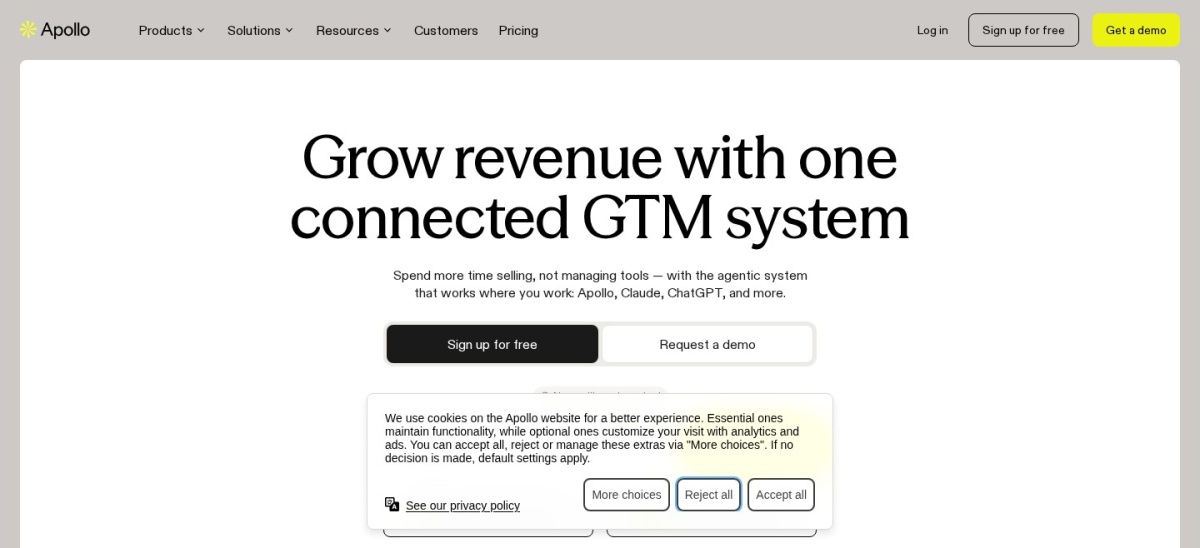
Apollo.io is a sales intelligence platform with a database of more than 210 million contacts and 35 million companies. Basic costs $49 per user a month billed yearly and adds email sequences, a dialer and enrichment, with website visitor identification for 20 to 100 companies a month.
The trade off is that visitor identification is a side feature. Apollo is built for outbound prospecting first, so teams that only need visitor ID pay for tools they may not use. It suits small sales teams that want prospecting data and outreach in one subscription.
What we like
Largest contact database in this list
Outreach sequences and dialer included
9,843 G2 reviews, the most here
Free plan to start
Watch out for
Visitor ID is limited to 20-100 companies a month
Credit limits can bite as volume grows
Per-seat pricing adds up for teams
Professional adds more credits and advanced filtersVisit apollo.io
06
Salespanel
4.6/5on G2 (38 reviews, checked Nov 2026)
Starts at$99/mo
Best for lead scoring on identified visitors
Visitor IDUp to 60% de-anonymized
Visitors included2,000/mo on Reveal
Free trial14 days
Paid planAccount Reveal, $99/mo
salespanel.io
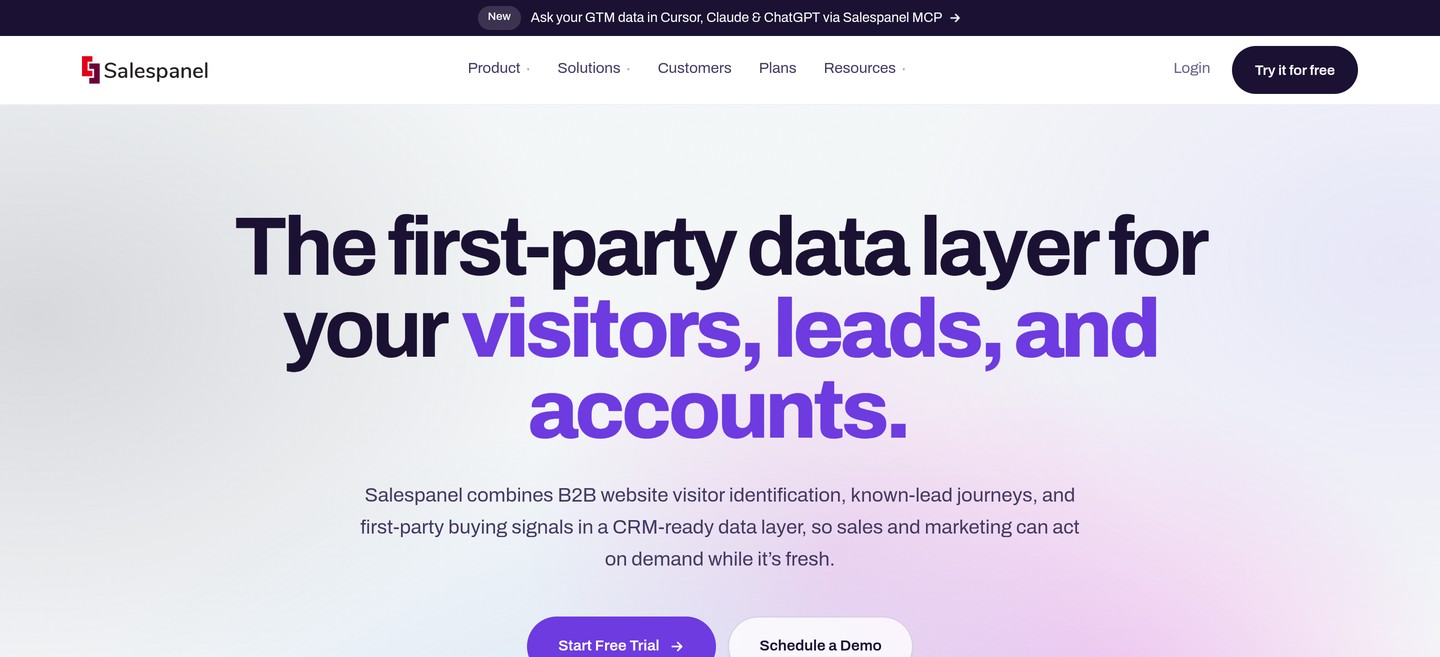
Salespanel homepage, captured Nov 2026.
Salespanel is a visitor intelligence platform that combines B2B visitor identification with lead scoring and full journey tracking. Account Reveal starts at $99 a month billed yearly for 2,000 visitors a month, with up to 60% of traffic de-anonymized.
The trade off is usage-based pricing. Overage costs $40 per 1,000 extra visitors on Account Reveal, so a busy site can pay several times the entry price. It suits B2B teams that want scoring and journey data, not just a list of company names.
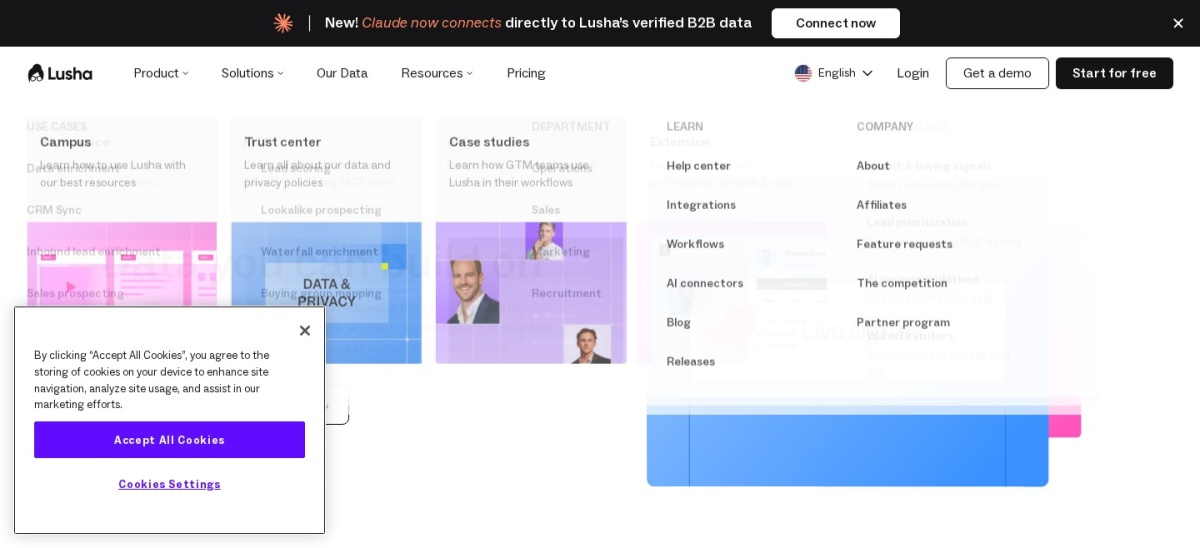
Lusha is a B2B contact data platform that finds verified emails and phone numbers for people at the companies visiting your site. The free plan includes 40 credits a month, and Starter costs $37.45 a month billed yearly for one seat and 4,800 credits a year.
The trade off is the credit model. Credits run out fast on busy prospecting lists, and extra seats cost more on top of the plan. It suits small teams that need accurate direct dials and emails for a short list of target accounts.
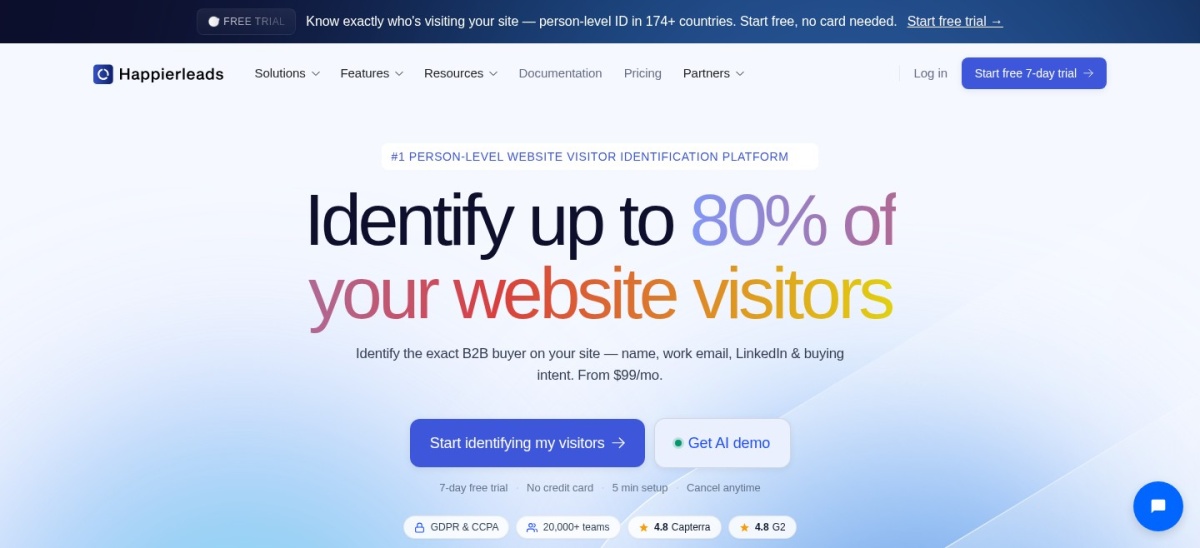
Happierleads is a person-level visitor identification platform that names the exact B2B buyer behind a visit, with work email, LinkedIn and buying intent. Starter costs $69 a month billed yearly for 300 identified leads, and every feature is included at every volume.
The trade off is the per-lead meter. You pay for each identified lead, so the bill follows volume and unused leads do not roll over. It suits teams that sell globally and want named contacts rather than company names alone.
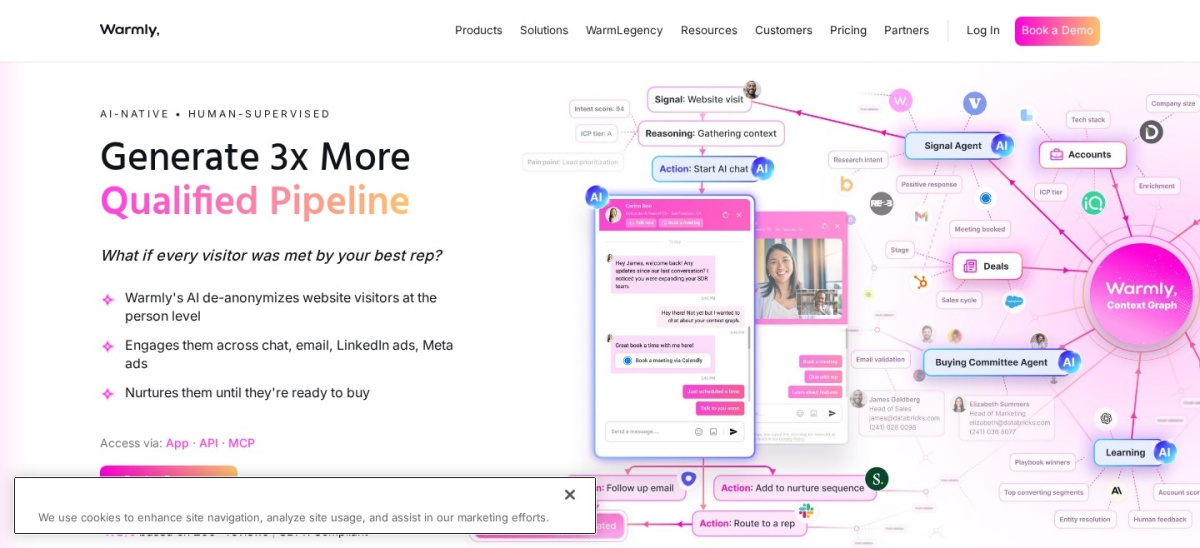
Warmly is an AI go-to-market platform that identifies website visitors at person level and follows up with chat, email and ads. The free plan covers 500 de-anonymized visitors a month, and paid plans start at $10,000 a year for AI Web-Deanonymization.
The trade off is the price jump. Person-level identification is strong, but match rates run about 5-20% at person level, and the paid floor is far above the visitor-ID tools. It suits mid-market teams with real traffic and a HubSpot or Salesforce stack.
What we like
Person-level visitor identification
AI chat and orchestration built in
Bombora intent signals included
Real-time Slack alerts for sales
Watch out for
$10,000 a year entry price
Person-level match rates vary
HubSpot announced plans to acquire Warmly in June 2026
Inbound adds AI chat and lead routing at $20,000/yrVisit warmly.ai
Company-level vs person-level identification
Company-level tools name the business behind a visit, such as the employer network the visitor browsed from. Snitcher, Leadfeeder and Albacross work this way, and it is the default for most B2B teams.
Person-level tools go further and name the individual, with a work email or LinkedIn profile. RB2B does this for eligible US visitors, Warmly for visitors it can match, and Happierleads in more than 170 countries.
Person-level data converts faster but carries more risk. Match rates run lower, often 15-20% of visitors, and consent rules differ by region. Start with company-level identification unless your sales team already works named contacts.
Most teams need both at different stages. Use company-level identification to spot target accounts, then enrich the people inside them with Apollo or Lusha.
How we chose
We started from the visitor-identification tools G2 lists as Leadinfo alternatives, then kept the nine with a published G2 rating and a public entry price.
Prices come from each vendor's pricing page, checked on 29 November 2026. Ratings and review counts come from G2 on the same day. Where a vendor prices in euros, the list shows the US dollar equivalent and notes the euro price.
We left out tools with no public price, including Lead Forensics and ZoomInfo, and Visitor Queue, which Leadinfo acquired and folded into its own product. No vendor paid for a place, and we do not claim to have used these tools ourselves.
How to choose a Leadinfo alternative
Start with the visitor data your sales team can actually act on, then check the price at your traffic level.
Decide company-level or person-level. If reps need a person to call, shortlist RB2B, Warmly or Happierleads. If account names are enough, the cheaper company-level tools cover it.
Run the free plan or trial on live traffic. Identification rates vary by audience, so measure matches on your own site for two weeks before judging any vendor claim.
Price it at your volume, not the headline. Entry prices cover 50 to 300 identified companies a month. Check the next tier up, since costs climb fast as traffic grows.
Check the CRM connection before you pay. Confirm the tool pushes identified companies into your CRM and Slack, since a list you have to export by hand rarely gets used.
FAQ
What is the best Leadinfo alternative in 2026?
Snitcher is the best Leadinfo alternative for most teams. It holds the highest G2 rating in this list at 4.8 out of 5 from 260 reviews, includes every feature on every paid plan, and starts at $49 a month.
Is there a free alternative to Leadinfo?
Yes. Leadfeeder has a free Lite plan that identifies up to 100 companies a month, and RB2B has a free plan with 150 resolutions a month. Apollo and Lusha also offer free plans with limited contact credits.
How much do Leadinfo alternatives cost?
Entry prices run from $37.45 a month for Lusha Starter to $10,000 a year for Warmly. Most direct replacements start between $49 and $99 a month, and the bill rises with the number of companies identified each month.
Which Leadinfo alternative is best for small teams?
Snitcher is the best fit for small teams, with all features included from $49 a month and no per-seat fees. Leadfeeder is the best free start, and RB2B suits small teams that sell mainly to US buyers.
Which is better, Snitcher or Leadfeeder?
Snitcher rates higher on G2 at 4.8 out of 5 against 4.3 for Leadfeeder, and it includes its API on every plan. Leadfeeder wins on its free plan and larger review base, so pick Leadfeeder to start free and Snitcher for the best-rated paid tool.
Can Leadinfo alternatives identify individual visitors?
Yes, some can. RB2B names individual US visitors from $79 a month, Warmly identifies visitors at person level from $10,000 a year, and Happierleads names visitors in more than 170 countries. Company-level tools such as Snitcher and Leadfeeder name the company only.
SaaS SEO and WordPress specialist with about 8 years of experience. Rakib compares WordPress plugins, themes, hosting and software using public pricing, documentation and user reviews. See how we rank.