Workvivo is the best of the Happeo alternatives for most teams, rated 4.8/5 on G2 from 2,685 reviews for its social feed and recognition tools. Pick Simpplr for AI search across company knowledge, or Blink from $3.75 per user a month when frontline staff are the priority.
How we make this list: we compare pricing pages, product documentation and public user reviews, then re-check every price before each update. No product paid for a place. Disclosure.
Workvivo leads on reviewer satisfaction: 4.8/5 on G2 from 2,685 reviews, the largest review base in this list.
Five of the nine tools publish no price at all: Simpplr, Staffbase, LumApps and Unily are quote-only, and Workvivo's $20,000 starting figure comes from a third-party summary, not an official price list.
Jostle is the cheapest published price at $2.77 per user a month for Bronze at 500 users, followed by Blink Core at $3.75.
Confluence and Notion are the only tools here with a free plan, and both work best as knowledge hubs rather than full intranets.
Staffbase is the strongest pick when deskless staff matter most, with an intranet, a branded employee app and email in one platform.
How do you pick the right Happeo alternative?
Happeo is built around Google Workspace, so the best replacement depends on what your team already runs. A company on Microsoft 365 will get more from LumApps or Unily than from another Google-first tool.
Culture is the deciding factor for most buyers. Workvivo and Staffbase lead with feeds, recognition and mobile apps, while Simpplr and LumApps lead with AI search and governed knowledge.
Price is the hardest part of this market to compare. Only four of the nine tools publish a price, and per-user rates change with headcount, so ask every quote-only vendor for the same headcount and the same modules before you compare totals.
Small teams should start with the priced options. Confluence is free for up to 10 users, Notion has a free plan, and Jostle and Blink publish per-user prices, while the enterprise intranets are built for rollouts of hundreds of people.
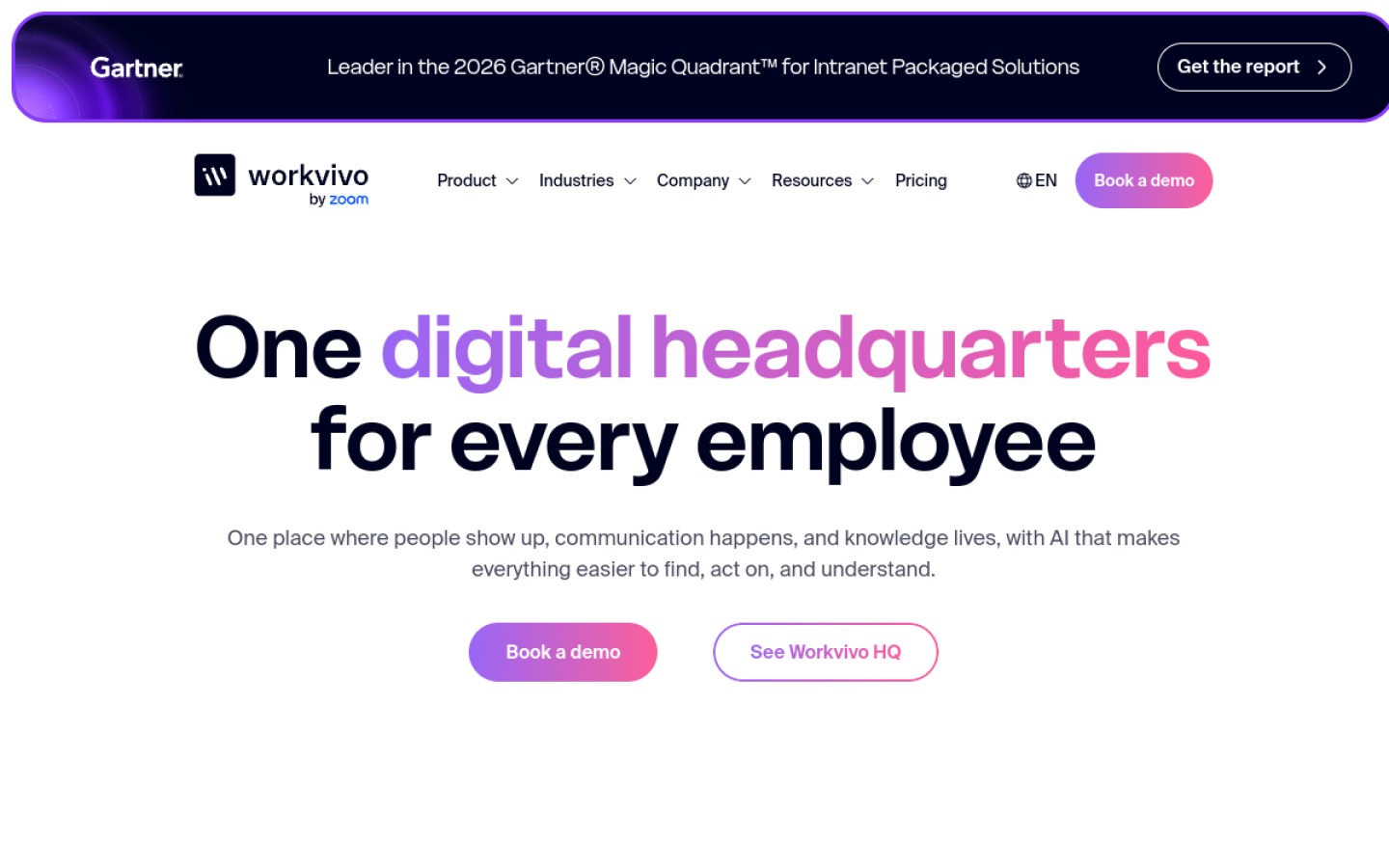
Workvivo is a social-style employee experience platform from Zoom that combines a company feed, recognition, spaces, podcasts and broadcast alerts in one app. It is rated 4.8/5 on G2 from 2,685 reviews, the highest score and the largest review base in this list.
The trade off is price and scale. Workvivo publishes no price list, and third-party summaries put a typical starting point near $20,000 a year for about 250 users, which rules it out for small teams. It suits mid-size and large companies that want culture and engagement first.
What we like
Highest G2 rating in this list at 4.8/5
Social feed feels familiar, so adoption is fast
Recognition, shoutouts and spaces in one place
Native mobile apps for deskless staff
Watch out for
No published price; every deal is a custom quote
Typical starting cost is high for small teams
Chat is an add-on and lacks some advanced features
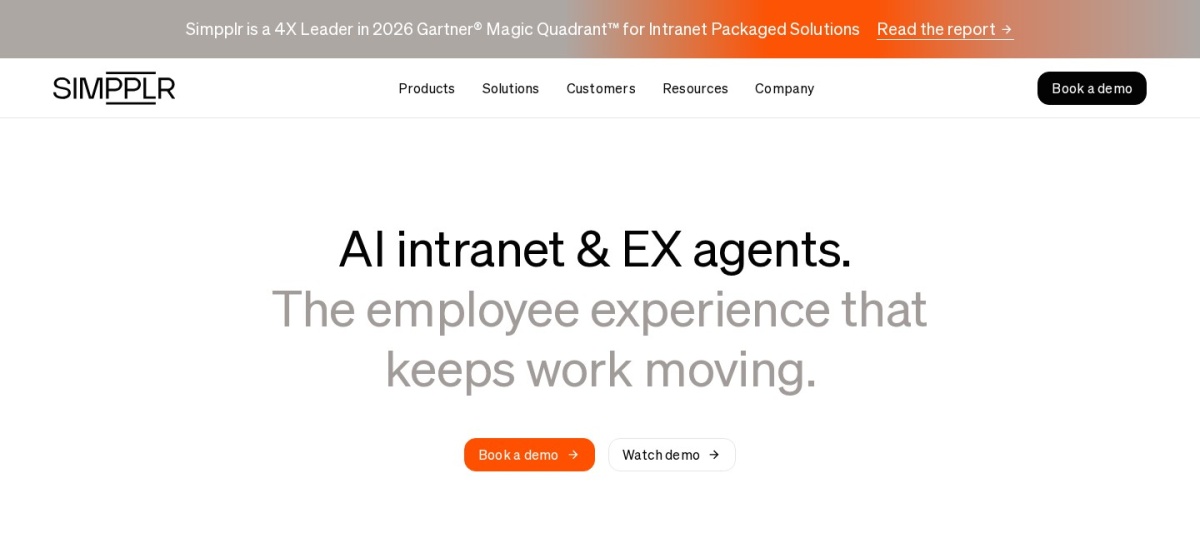
Simpplr is an AI-powered intranet that puts search and personalised content first, with agents that answer HR, IT and finance questions from company knowledge. It is rated 4.6/5 on G2 from 376 reviews, with ease of use the most cited strength.
The trade off is that it is built for larger organisations. Pricing is by quote with no published rates, and some features are paid add-ons, so small teams pay for scale they do not need. It suits mid-market and enterprise teams replacing a scattered wiki.
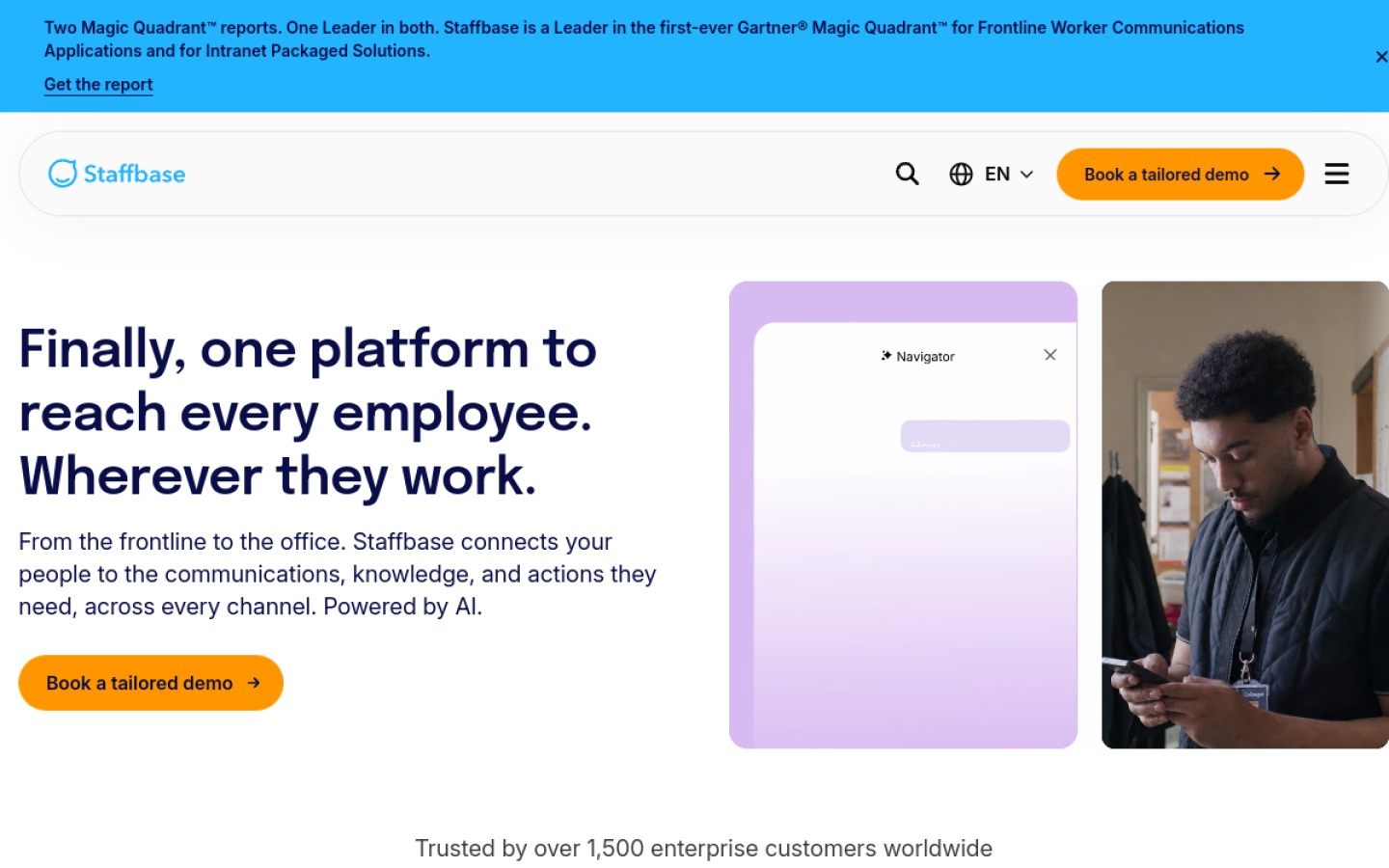
Staffbase is an internal communication platform that combines an intranet, a branded employee app and an email tool, aimed at reaching staff who never sit at a desk. It is rated 4.6/5 on G2 from 251 reviews.
The trade off is cost and scope. Pricing is by quote and reviewers describe it as expensive, with extra packages adding to the total. It suits large employers with big frontline workforces that need one governed channel for every employee.
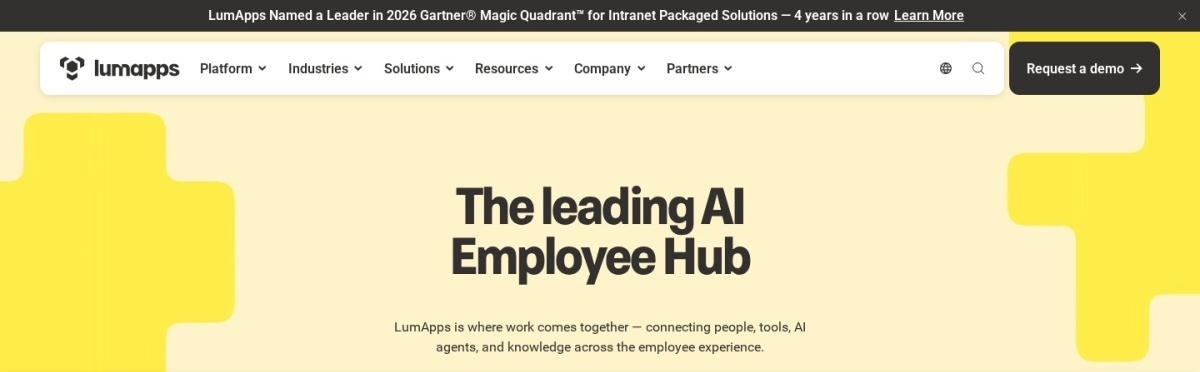
LumApps is an employee experience platform that connects Microsoft 365, Google Workspace, ServiceNow, Workday and more than 50 other systems into one hub. It is rated 4.4/5 on G2 from 165 reviews and ranked first in its category in a Gartner Critical Capabilities report.
The trade off is time and cost. Pricing is by quote, reviewers call it relatively expensive, and G2 puts typical implementation at about 4 months. It suits large global organisations with the IT capacity to configure and maintain it.
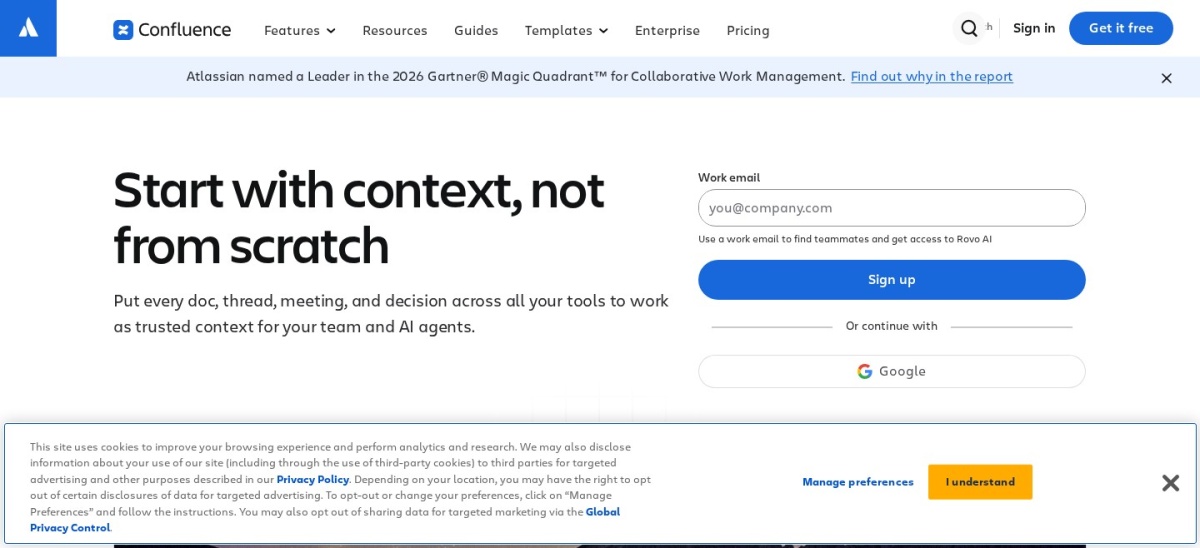
Confluence is Atlassian's team wiki, where pages, spaces and whiteboards hold company knowledge in one searchable place. The free plan covers up to 10 users, and Standard costs $7.15 per user a month for the first 100 users on monthly billing.
The trade off is that it is a wiki, not a full intranet. There is no social feed or recognition, and the page headline of $5.78 per user a month is a blended rate for a 300-user team, not what a small team pays. It suits teams that mainly need organised documentation.
Notion is a connected workspace where teams write docs, build a wiki, track tasks and organise work in linked databases. It is rated 4.6/5 on G2 from 13,767 reviews, the largest review base here, and Plus costs $10 per user a month billed yearly.
The trade off is structure. Notion is flexible to a fault, so a team wiki needs someone to design it, and full AI only comes with the $20 Business plan. It suits small teams that want one flexible workspace instead of a governed intranet.
What we like
Generous free plan for individuals
Huge review base: 13,767 G2 reviews
Databases link docs, tasks and projects
Plus is $10 per user a month billed yearly
Watch out for
No built-in intranet newsfeed or recognition
Learning curve while the workspace takes shape
Costs climb as the team grows and AI is added
Business adds full AI and single sign-on at $20/user/moVisit notion.com
07
Blink
4.6/5on G2 (404 reviews, checked Nov 2026)
Starts at$3.75/mo
Best budget pick for frontline teams
Free planNo, free trial
Mobile appYes, mobile-first
ChatYes
Paid planCore, $3.75/user/mo
joinblink.com
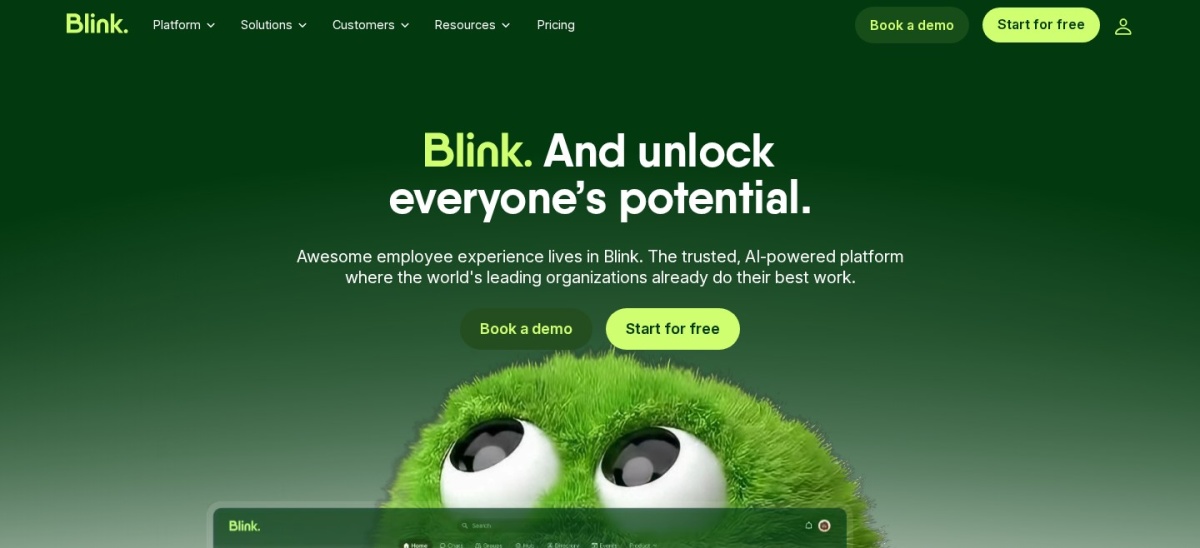
Blink homepage, captured Nov 2026.
Blink is a mobile-first employee experience platform that puts news, chat, documents and recognition in one branded app for frontline staff. Core starts at $3.75 per user a month billed annually, and it is rated 4.6/5 on G2 from 404 reviews.
The trade off is depth. Blink is lighter than the enterprise intranets, so complex governance and deep analytics sit on higher plans. It suits multi-site employers that need fast adoption without a long rollout.
What we like
Cheapest frontline option with a published price
Mobile-first design staff actually open
Fast time to value versus legacy intranets
Chat, hub and recognition in one app
Watch out for
No free plan, only a free trial
Lighter governance than enterprise intranets
G2 lists a $4.50 Business plan, not the $3.75 Core rate
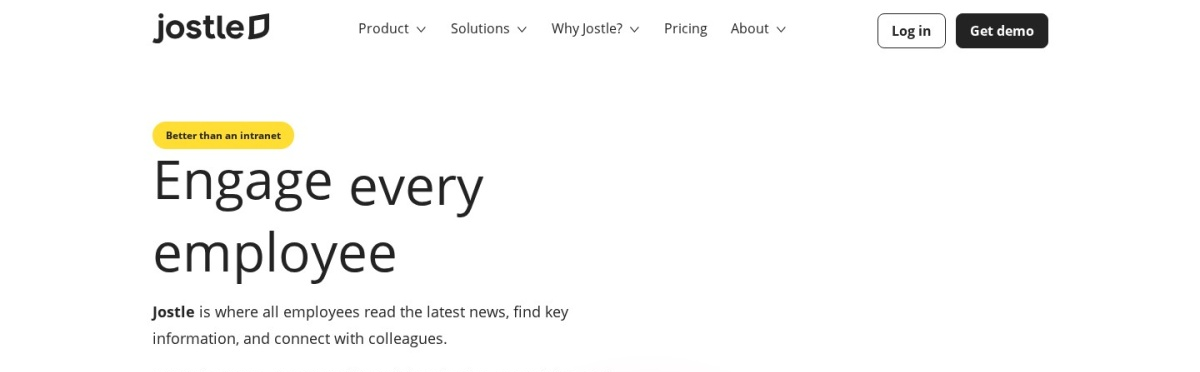
Jostle is a simple intranet that gives teams one place for company news, shout-outs, discussions, a people directory and key resources. Bronze costs $2.77 per user a month at 500 users, the lowest published price in this list, and it is rated 4.5/5 on G2 from 217 reviews.
The trade off is scale. Jostle is built for clarity rather than depth, so large enterprises may outgrow its analytics and governance. It suits mid-size teams that want an intranet staff can use in a week.
Unily is an enterprise employee experience platform for global organisations that need a polished, branded intranet with targeting, personalisation and governance controls. It is rated 4.5/5 on G2 from 38 reviews.
The trade off is that the review base is small and the price is entirely by quote, with modules chosen per rollout. It suits large enterprises with complex governance needs and the budget to match.
Five of the nine tools in this list publish no price. That is normal for enterprise intranets, where the total depends on headcount, modules and services.
Ask every vendor for the same headcount, the same modules and the same contract length, then compare the yearly totals side by side. A per-user quote at 100 people will not match one at 1,000.
Budget for the first year, not just the licence. Implementation, migration and training are often quoted separately, and G2 puts typical implementation at 2 to 4 months for these tools.
How we chose
We started from G2's Happeo alternatives list and intranet roundups, then kept nine established tools that cover the main jobs: social engagement, AI search, frontline reach, knowledge and budget.
Prices come from each vendor's pricing page or G2 pricing data, checked on 29 November 2026. Ratings and review counts come from G2 on the same day. Where a vendor shows no price, the list says so instead of guessing.
We left out tools with no public rating and niche point tools that cover only one job, such as standalone recognition apps. No vendor paid for a place, and we do not claim to have used these tools ourselves.
How to choose a Happeo alternative
Start with the stack your team already pays for, then match the tool to the job that matters most.
Check what your team already runs. Google Workspace teams should shortlist Simpplr and LumApps; Microsoft 365 teams should look at LumApps and Unily first.
Name the main job. Pick Workvivo or Staffbase for culture and frontline reach, Simpplr for AI search, or Confluence and Notion for organised knowledge.
Get like-for-like quotes. Ask every quote-only vendor for the same headcount, modules and contract length, and add implementation costs to the first-year total.
Trial it with real staff. Run a short trial with desk and frontline staff together, and check adoption after two weeks before signing a yearly deal.
FAQ
What is the best alternative to Happeo?
Workvivo is the best Happeo alternative for most teams. It is rated 4.8/5 on G2 from 2,685 reviews for its social feed, recognition and spaces, though pricing is by quote and typical starting costs are high for small teams.
How much do Happeo alternatives cost?
Published prices run from $2.77 per user a month for Jostle Bronze at 500 users to $10 for Notion Plus, while five of the nine tools are quote-only. Workvivo's typical starting point is near $20,000 a year for about 250 users, according to third-party summaries.
Is there a free alternative to Happeo?
Yes. Confluence is free for up to 10 users and Notion has a free plan for individuals. Both work best as knowledge hubs rather than full intranets, since neither has a social feed or employee recognition built in.
Which Happeo alternative is best for small teams?
Notion or Confluence are the best picks for small teams. Notion Plus costs $10 per user a month billed yearly and Confluence Standard costs $7.15, while Jostle Bronze at $2.77 per user a month is the cheapest published intranet price in this list.
Which Happeo alternative is best for frontline workers?
Staffbase is the strongest pick for frontline workers, with an intranet, a branded employee app and email in one platform. Blink is the budget option at $3.75 per user a month billed annually, with a mobile-first app staff actually open.
Workvivo vs Simpplr: which is better?
Workvivo is better for culture and engagement, with a 4.8/5 G2 rating from 2,685 reviews against Simpplr's 4.6/5 from 376. Simpplr is better for AI search and governed knowledge, with agents that answer HR and IT questions from company content.
SaaS SEO and WordPress specialist with about 8 years of experience. Rakib compares WordPress plugins, themes, hosting and software using public pricing, documentation and user reviews. See how we rank.