Azuga is the best fleet safety software for small carriers because its SafeFleet plan publishes its price and bundles driver scoring with speed and distraction alerts. Samsara is the strongest all-round safety platform, while Motive is the pick when safety must sit beside trucking compliance.
How we make this list: we compare pricing pages, product documentation and public user reviews, then re-check every price before each update. No product paid for a place. Disclosure.
Azuga SafeFleet costs $30 a vehicle a month with driver scoring, speed alerts and distraction alerts included.
Samsara, Motive, Netradyne, Lytx and Geotab all sell by quote, so small carriers must get a written price.
Netradyne is the only platform here that pairs risk alerts with praise for good driving.
One Step GPS is the cheapest safety start at just under $14 a vehicle a month, with a dash cam add-on.
Fleetio costs $4 a vehicle a month and covers safety inspections, not live driver behaviour.
What makes fleet safety software work for a small carrier?
Small carriers buy safety software for two reasons: fewer crashes and cheaper insurance. Cameras prove what happened, while driver scores and coaching stop the next crash before it happens.
Start with the camera, then the coaching. An AI dash cam that flags distraction and tailgating in the cab changes behaviour faster than a monthly scorecard ever will.
Published prices are rare in this category. Azuga is the only safety-first platform here that publishes every plan price, while Samsara, Motive, Netradyne, Lytx and Geotab all sell by quote.
Coaching tone matters for driver retention. Netradyne pairs risk alerts with praise for good driving, while other platforms only flag mistakes, and that difference shows up in driver turnover. Our fleet management software guide covers the wider category.
The 9 best fleet safety software for small carriers
01
Azuga
4.7/5on G2 (198 reviews, checked Nov 2026)
Starts at$30/vehicle/mo
Best fleet safety software for small carriers overall
Cheapest safety planSafeFleet, $30/vehicle/mo
SpeedSafe alertsYes
Distracted driving alertsYes
SafetyCam AI add-on$41.99/vehicle/mo
azuga.com
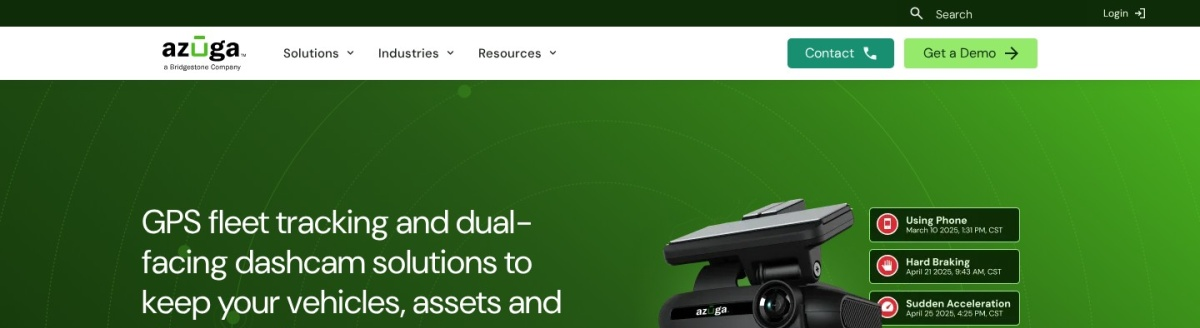
Azuga homepage, captured Nov 2026.
Azuga is a GPS fleet tracking platform with safety built into every plan, and SafeFleet is its safety tier. SafeFleet costs $30 a vehicle a month and adds SpeedSafe, distracted driving alerts and panic alerts to the GPS tracking, driver scores and rewards of the $25 BasicFleet plan.
The trade off is the contract and the camera. Every Azuga plan carries a three-year minimum, and the AI SafetyCam costs $41.99 more per vehicle a month. It suits small carriers that want a published safety price without a long sales process.
What we like
Only safety-first platform here with published prices
Samsara is a connected operations platform that pairs AI dash cams with GPS tracking, ELD compliance, maintenance and fuel reporting in one dashboard. Its cameras flag distracted driving, tailgating and lane departure, then coach the driver in the cab, and footage has exonerated drivers in disputed claims.
The trade off is price and commitment. Samsara publishes no prices, quotes run well above the published-price tools here, and contracts typically run three years with hardware costs on top. It suits carriers that want the deepest safety platform in one contract.
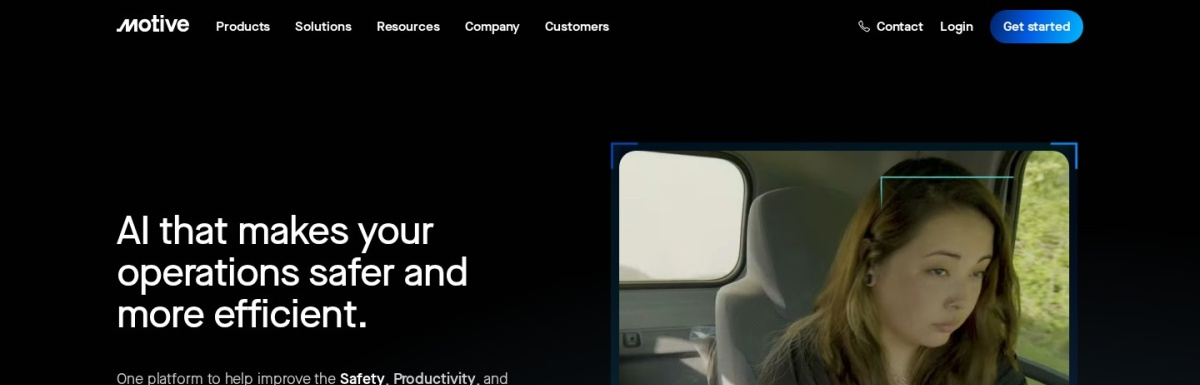
Motive is a trucking-first fleet platform that combines AI dash cams with ELD, hours of service, dispatch and a fleet card. Its cameras detect risky driving and feed coaching to drivers, while hours of service, DVIR inspections and IFTA reporting run automatically for regulated carriers.
The trade off is that safety is bundled with trucking. A local carrier pays for compliance depth it may never open, and there is no published price. It suits carriers that need safety and DOT compliance in one system.
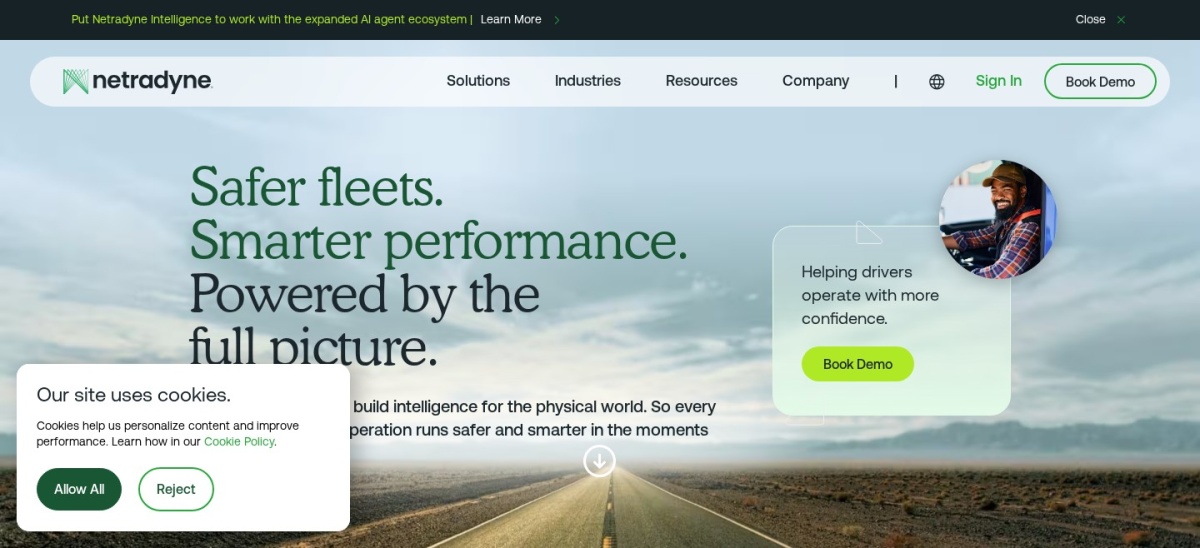
Netradyne is an AI dash cam platform built around its Driveri cameras, which run AI on the camera itself so alerts reach the driver faster. Its GreenZone score pairs risk detection with positive recognition, praising good driving instead of only flagging mistakes.
The trade off is price transparency and proof. Netradyne publishes no prices, and its G2 profile has only seventy-eight reviews, so the rating is thin next to Samsara and Motive. It suits carriers where coaching tone matters and driver retention is a real cost.
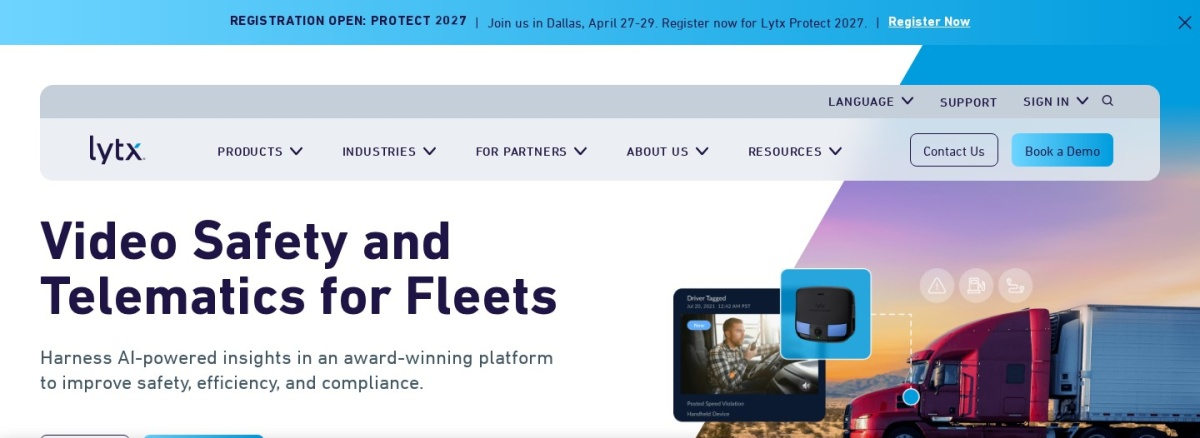
Lytx is the longest-running AI fleet safety platform, built around its DriveCam event recorder. Its cameras detect over one hundred risk indicators, and its optional managed service has safety analysts watch flagged clips, score them and send coaching notes to the manager.
The trade off is cost and control. Lytx publishes no prices, its managed review service adds to the bill, and its G2 rating is the lowest of the camera-first tools here. It suits carriers with no full-time safety person that want analysts doing the review work.
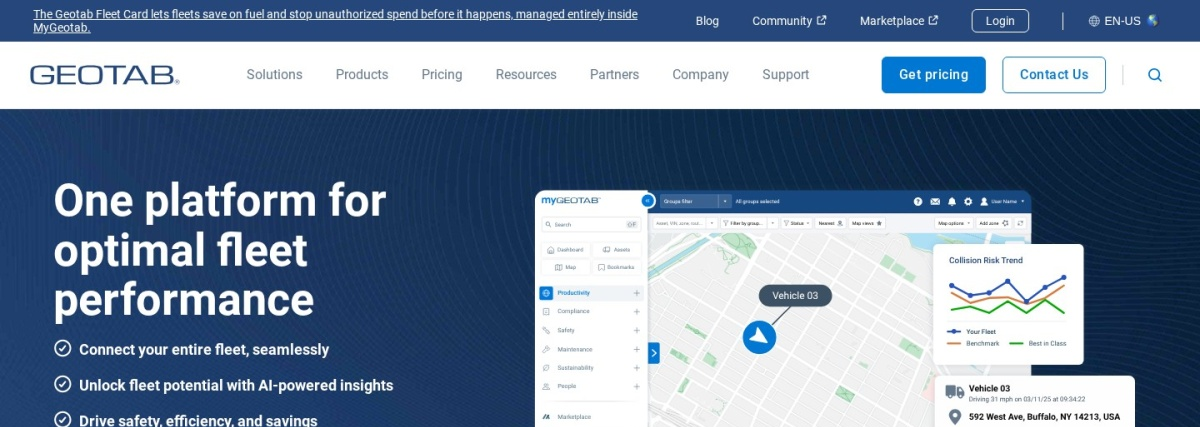
Geotab is an open telematics platform with safety rules, driver scorecards and its GO Focus in-cab feedback tool. It collects engine and trip data through its own devices and sells dash cam and safety add-ons through a marketplace, with EV tools alongside.
The trade off is buying and learning it. Geotab sells only through authorised resellers, who set the price, and safety cameras come from partners rather than Geotab itself. It suits technical carriers that want safety data they can plug into their own analytics.
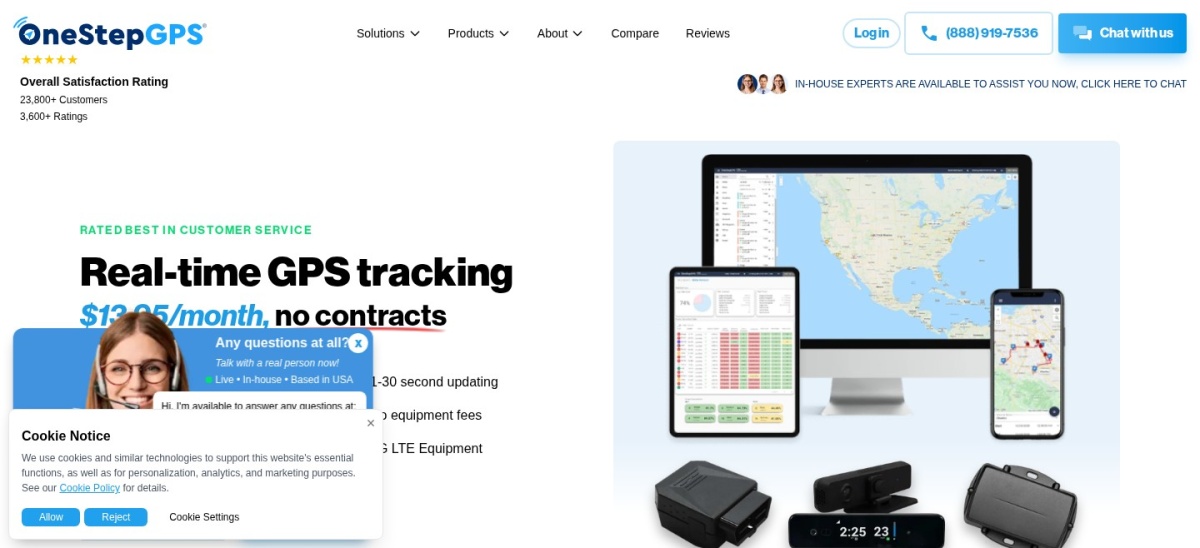
One Step GPS is a flat-rate GPS tracker with driver behaviour alerts built in, and it is the cheapest safety start in this list. The single plan costs just under $14 a vehicle a month and covers speeding, harsh braking, fast acceleration and after-hours use alerts, with no contract.
The trade off is that the camera costs extra. The AI dash cam is just under $30 a vehicle a month on top, and ELD is just under $21, so a regulated carrier pays more than the headline. It suits small carriers that want safety alerts now and cameras later.
Fleetio is fleet management software that covers the inspection side of safety: DVIR inspections, fault alerts, service reminders and maintenance records. Essential costs $4 a vehicle a month billed annually and includes inspections with FMCSA-approved templates and unlimited users.
The trade off is live behaviour. Fleetio has no camera and no live driver scoring of its own, so it records safety rather than coaching it in real time. It suits carriers that need clean inspection and maintenance records beside a separate tracker or camera.
Verizon Connect is the Reveal telematics platform from the national carrier, with AI cameras, driver scorecards, ELD and route tools in one system. It fits carriers that already run on Verizon and want one account manager and carrier-backed installation support.
The trade off is value and reputation. It has the lowest G2 rating in this list at 3.8 out of 5, reviewers cite higher cost and billing issues, and pricing is quote only on multi-year terms. It suits larger carriers that want a negotiated contract, not a small carrier on a budget.
Buy the camera first if crashes and claims are the problem. Video exonerates drivers in disputed claims, and most carriers see the payback in the first year through fewer claims and lower insurance.
Buy scoring first if behaviour is the problem. Driver scores, rewards and coaching cut speeding and harsh braking across the fleet, and Azuga and One Step GPS both offer scoring without a camera.
How we chose
We started from the safety platforms most often recommended for carriers under fifty vehicles, then kept the ones with a live G2 rating and a real small-carrier plan.
Prices come from each vendor's pricing page, checked on 30 November 2026. Azuga, One Step GPS and Fleetio publish their prices; Samsara, Motive, Netradyne, Lytx, Geotab and Verizon Connect sell by quote, so they are listed as Custom.
We left out tools with no review profile on G2, Capterra or Trustpilot. No vendor paid for a place, and we do not claim hands-on testing for this list.
How to choose fleet safety software for a small carrier
Start with your crash and claims history, then decide whether cameras or driver scoring will move the numbers first.
Check your crash and claims history. Frequent claims point to cameras first, while speeding and harsh braking point to scoring and coaching.
Compare published prices first. Azuga, One Step GPS and Fleetio show their prices online, so you can shortlist before any sales call.
Ask about the camera and the contract. Some vendors bundle cameras with a three-year term, while others sell the camera as an add-on with no contract.
Trial the coaching workflow with drivers. Drivers live with the alerts every day, so check how coaching lands before you roll it out to the whole fleet.
FAQ
What is the best fleet safety software for small carriers in 2026?
Azuga is the best fleet safety software for small carriers because its SafeFleet plan costs $30 a vehicle a month with driver scoring and speed alerts included. Samsara is the strongest all-round safety platform, while Motive fits carriers that also need trucking compliance.
How much does fleet safety software cost for a small carrier?
Azuga SafeFleet costs $30 a vehicle a month with a published price, while One Step GPS starts at $14 a vehicle a month with a dash cam add-on. Samsara, Motive, Netradyne, Lytx and Geotab all sell by quote, so get a written price before you compare.
Do small carriers need AI dash cams?
They help when crashes and claims are frequent. AI dash cams flag distraction, tailgating and collisions in the cab and record video that exonerates drivers in disputed claims. A carrier with a clean record can start with driver scoring and add cameras later.
Azuga or Samsara: which is better for fleet safety?
Azuga is better for a small carrier that wants a published price and a safety plan without a long sales process. Samsara is better for a carrier that wants the deepest safety platform with AI dash cams, ELD and maintenance in one contract.
Can fleet safety software lower insurance costs?
It can, but the saving depends on your insurer and your claims history. Dash cam footage settles disputed claims faster, and driver scoring programmes show insurers a real safety record. Ask your insurer what discount a safety programme earns before you buy.
Does fleet safety software work without cameras?
Yes, up to a point. GPS-based scoring tracks speeding, harsh braking and idling, and coaching improves those numbers without any camera. Cameras add distraction detection and crash video, which scoring alone cannot see.
SaaS SEO and WordPress specialist with about 8 years of experience. Rakib compares WordPress plugins, themes, hosting and software using public pricing, documentation and user reviews. See how we rank.