MailerLite is the best Brevo alternative for most senders, with the cleanest editor and real automation from twelve dollars a month. Mailchimp suits teams that want templates and integrations, while Moosend is the cheapest paid start at nine dollars a month.
How we make this list: we compare pricing pages, product documentation and public user reviews, then re-check every price before each update. No product paid for a place. Disclosure.
MailerLite leads for most senders, with the cleanest editor and Comfort at $12 a month.
Moosend is the cheapest paid start at $9 a month with unlimited emails.
Mailchimp has the biggest templates and integrations, but Essentials at $13 is a first-year offer.
ActiveCampaign has the deepest automation at $15 a month, with a built-in CRM.
Kit is the creator pick, free to 10,000 subscribers, but Creator costs $33 a month billed annually.
How do you choose the best Brevo alternative?
Brevo charges for the emails you send, however large your list is, while most rivals charge for the contacts you store. Work out which side of that split your list falls on before you compare prices, because a big quiet list is cheap on Brevo and dear elsewhere.
Free plans differ more than the headline suggests. Kit covers up to 10,000 subscribers free, MailerLite covers 250 subscribers with 2,500 emails, and Mailchimp covers 250 contacts with 500 emails, so match the free limits to your list size.
Automation is where the tools split. ActiveCampaign and GetResponse automate whole journeys, MailerLite covers the basics well, and Constant Contact and AWeber stay simple, so pick the depth you will actually use.
Prices in this list are for the smallest paid tier, usually 500 to 1,000 contacts. Every tool here gets dearer as your list grows, so check the price at your real list size, not just the entry price.
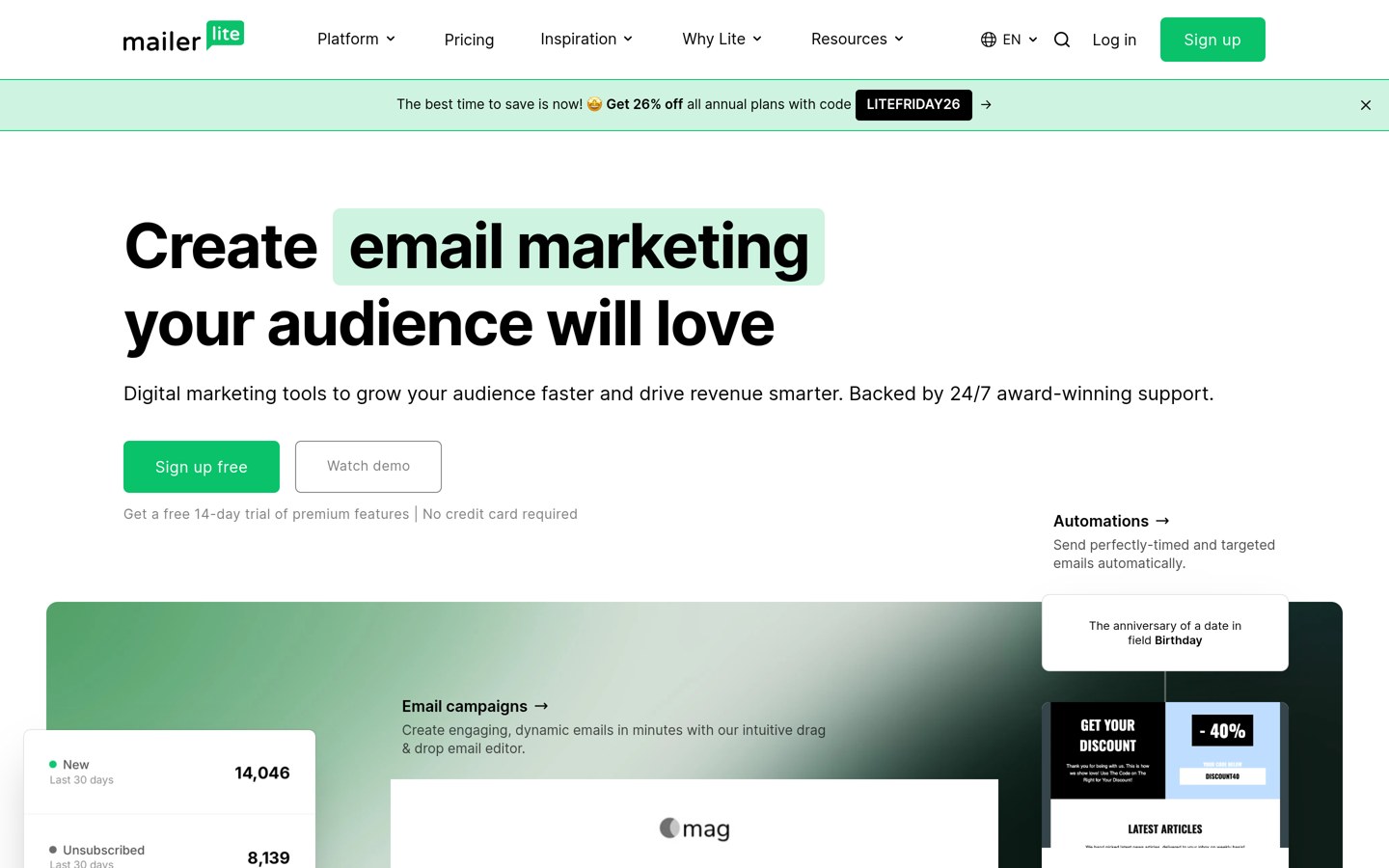
MailerLite is the cleanest editor in this list, with real automation, landing pages and a website builder on every paid plan. Comfort starts at $12 a month for 500 subscribers, and the free plan covers 250 subscribers with 2,500 emails a month.
The trade off is scale. Prices rise with every subscriber tier, and the template library is smaller than Mailchimp. It suits beginners and small teams that want a clean editor and honest pricing.
Mailchimp is the default pick for a reason, with the biggest template library, the most integrations and an editor that needs no training. Essentials costs $13 a month for 500 contacts with 5,000 sends, and the free plan covers 250 contacts.
The trade off is the price curve. Mailchimp charges for contacts you store whether or not you email them, and the $13 Essentials price is a first-12-months offer. It suits small teams that want templates and integrations.
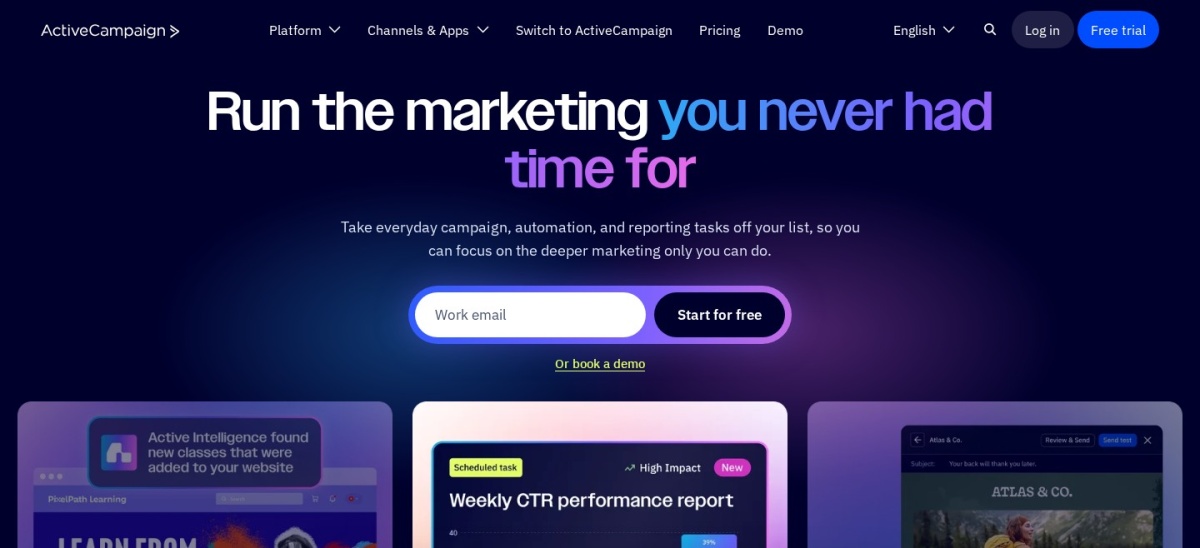
ActiveCampaign is the deepest automation tool in this list, with a visual workflow builder, conditional branching and a built-in CRM. Starter costs $15 a month for 1,000 contacts and includes more than 750 automation recipes.
The trade off is learning time. The builder is powerful but takes longer to master than MailerLite, and there is no free plan, only a 14-day trial. It suits teams that automate follow-ups and sales.
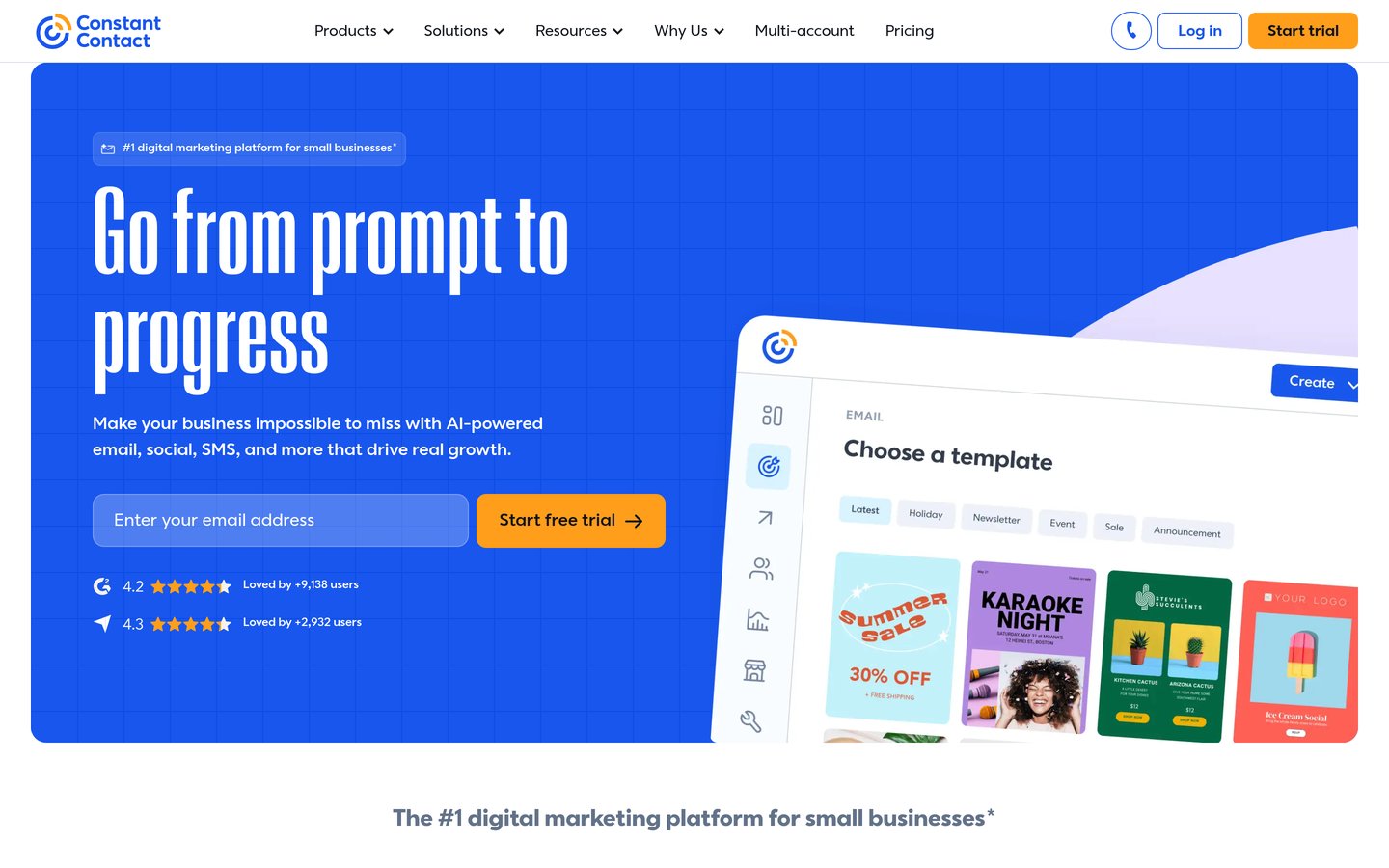
Constant Contact is the simple email platform for small businesses and nonprofits, with live phone and chat support on every plan. Lite starts at $12 a month for 500 contacts with 10x sends, templates, social posting and AI writing help.
The trade off is depth. Automation is lighter than ActiveCampaign or GetResponse, and there is no free plan, only a 30-day trial. It suits local businesses that want a human on the phone.
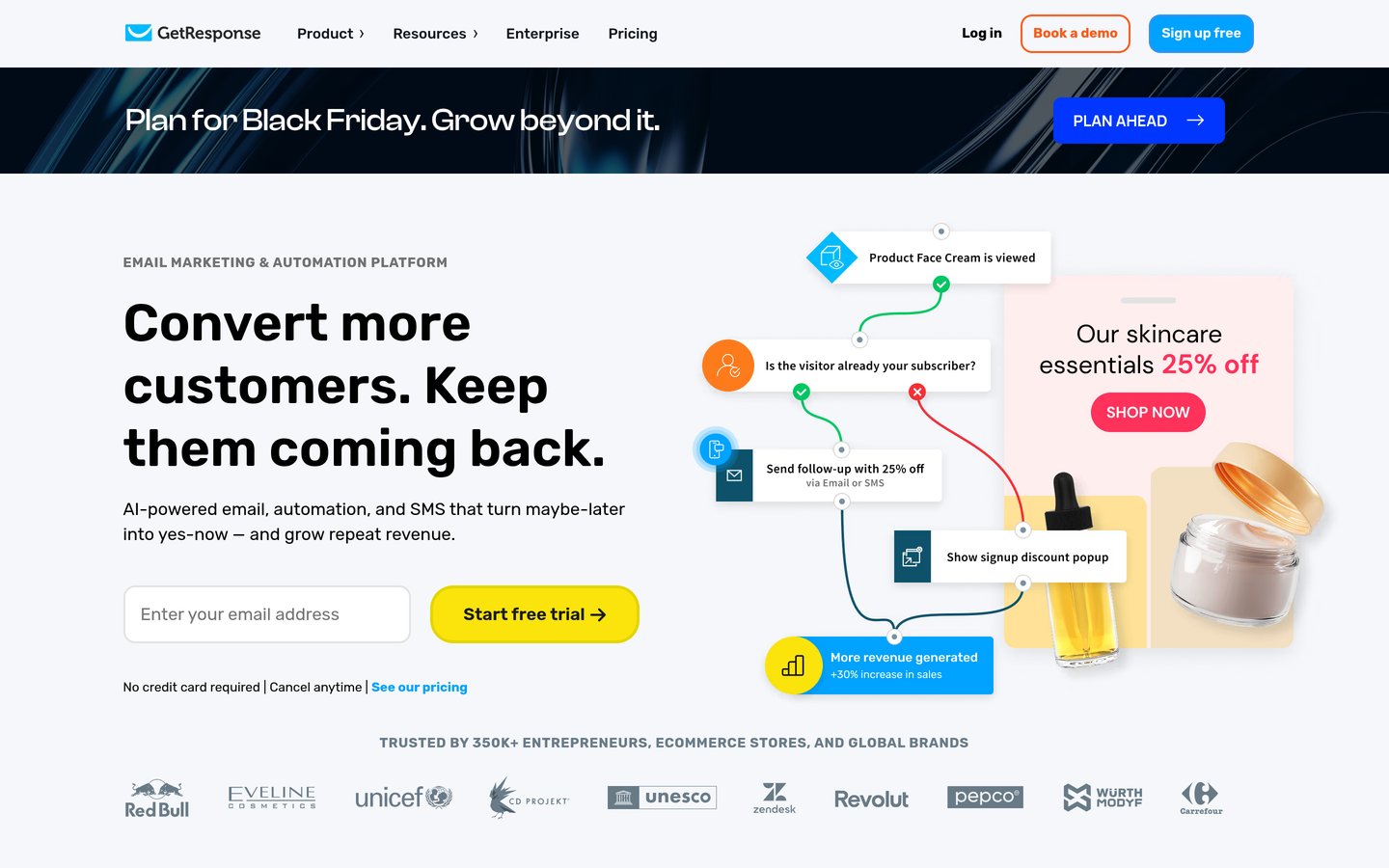
GetResponse is the all-in-one pick here, combining email with webinars, funnels, landing pages and a course builder. Starter costs $19 a month for 1,000 contacts, and the free plan covers 500 contacts with 2,500 messages a month.
The trade off is price. It costs more than MailerLite or Constant Contact for plain email, and the interface packs in a lot. It suits course sellers and teams that run webinars.
Kit is the email platform built for creators, with newsletters, paid subscriptions and digital product sales in one place. The free Newsletter plan covers up to 10,000 subscribers, and Creator costs $33 a month billed annually.
The trade off is price. Creator costs $39 a month on monthly billing, which is the highest entry price here, and the editor is plainer than Mailchimp. It suits writers and course makers who sell to their list.
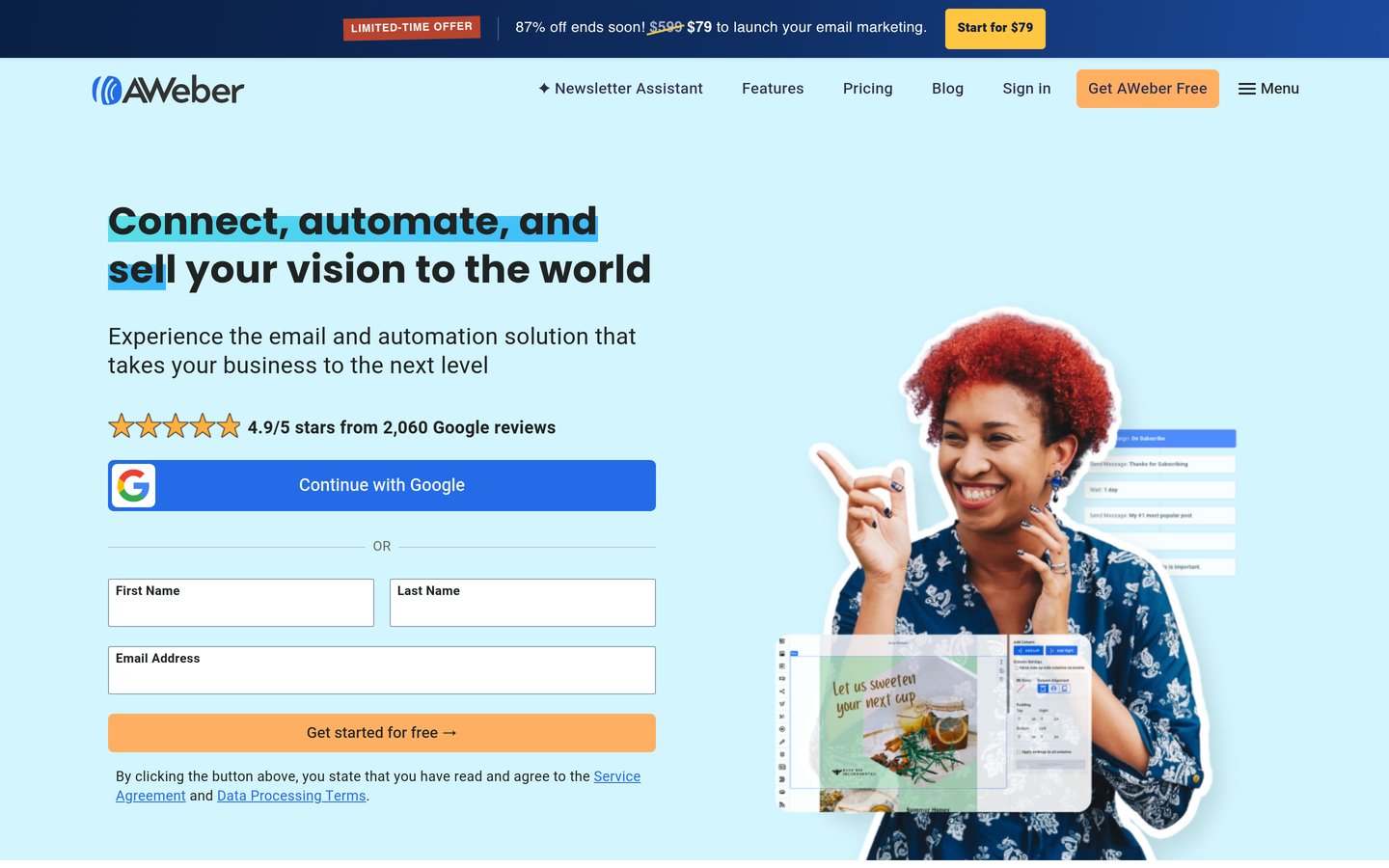
AWeber is the straightforward autoresponder for small businesses, with a drag-and-drop editor, landing pages and 24/7 support. Lite costs $12.49 a month billed annually, and the free plan covers 500 contacts with 3,000 emails a month.
The trade off is automation depth. Lite includes only 3 email automations, and the template library is smaller than Mailchimp. It suits bloggers and small teams that want simple autoresponders.
Moosend is the budget pick in this list, with unlimited emails, automation workflows and custom reporting from $9 a month for 500 contacts. It covers landing pages, forms and ecommerce triggers without charging per send.
The trade off is the review base. Its 4.7 G2 score rests on 740 reviews, and there is no free plan, only a 30-day trial. It suits budget senders that email often.
Omnisend is the ecommerce pick here, combining email, SMS and web push notifications with pre-built flows for abandoned carts and welcome series. Standard costs $16 a month for 500 contacts, and the free plan covers 250 contacts.
The trade off is focus. It is built for stores, so non-ecommerce teams pay for flows they will never use, and SMS costs extra. It suits online stores that sell on email and SMS together.
Brevo charges by email volume, not list size. Starter costs $9 a month for 5,000 emails, and you can store as many contacts as you like, which suits big lists that send rarely.
Most tools in this list charge by contacts. Mailchimp charges $13 a month for 500 contacts, MailerLite $12 for 500 subscribers, and ActiveCampaign $15 for 1,000 contacts, whether you email them or not.
If you send often to a small list, a contact-priced tool can be cheaper. If you hold a large list and send rarely, Brevo's volume pricing usually wins.
Watch the send caps too. Mailchimp Essentials allows 5,000 sends a month for 500 contacts, while Moosend includes unlimited emails from $9 a month.
How we chose
We started from the email platforms most often named as Brevo replacements in 2026 comparisons, then kept 9 established products with a public G2 rating and a published price.
Prices come from each vendor's pricing page, checked on 29 November 2026, with the top three confirmed on the vendor's own pricing page today. Ratings and review counts come from G2 on the same day.
We left out tools with no verifiable rating and niche senders with too few reviews to judge. No vendor paid for a place, and we do not claim hands-on testing for this list.
How to choose a Brevo alternative
Start with your list size and how often you send, then match the pricing model to that habit.
Work out whether you pay for contacts or sends. Brevo charges per send, rivals charge per contact, so a big quiet list is cheaper on Brevo.
Check the free plan against your list size. Kit covers 10,000 subscribers free, while Mailchimp and MailerLite stop at 250.
Decide how much automation you need. ActiveCampaign automates whole journeys, MailerLite covers the basics, and Constant Contact stays simple.
Price the plan at your real list size. Every tool here gets dearer as your list grows, so check the tier you will actually sit in.
FAQ
What is the best Brevo alternative in 2026?
MailerLite is the best Brevo alternative for most senders. It has the cleanest editor, real automation and a free plan for 250 subscribers, with Comfort at $12 a month, and it holds a 4.6 G2 rating from 1,123 reviews.
What is the cheapest Brevo alternative?
Moosend is the cheapest Brevo alternative at $9 a month for 500 contacts with unlimited emails. MailerLite and Constant Contact are next at $12 a month, and Kit is free for up to 10,000 subscribers.
Is there a free Brevo alternative?
Yes. Kit, MailerLite, Mailchimp, GetResponse, AWeber and Omnisend all have free plans. Kit is the most generous at up to 10,000 subscribers, while Mailchimp stops at 250 contacts.
Is Mailchimp better than Brevo?
Mailchimp is better for templates and integrations, with the biggest library and the most apps. Brevo is better for large lists that send rarely, because it charges per email sent rather than per contact stored.
Which Brevo alternative is best for ecommerce?
Omnisend is the best Brevo alternative for ecommerce, with email, SMS and push flows for abandoned carts. Klaviyo is the other ecommerce specialist, but it starts at $20 a month and is not in this list.
Which Brevo alternative has the best automation?
ActiveCampaign has the best automation in this list, with a visual builder, conditional branching and more than 750 recipes. Starter costs $15 a month for 1,000 contacts and includes a built-in CRM.
SaaS SEO and WordPress specialist with about 8 years of experience. Rakib compares WordPress plugins, themes, hosting and software using public pricing, documentation and user reviews. See how we rank.