Best Website Traffic Analysis Tools in 2026: 9 Tools Compared
WLWPLegible EditorsLast verified 24 Nov 2026How we rank13 min read
★ Short answer
Google Analytics is the best website traffic analysis tool for most sites, free and rated 4.5 out of 5 on G2 from 6,863 reviews. Pick Similarweb to estimate a competitor's traffic and Plausible for a simple privacy-first dashboard.
How we make this list: we compare pricing pages, product documentation and public user reviews, then re-check every price before each update. No product paid for a place. Disclosure.
Google Analytics is free and covers traffic sources, pages and key events for most sites.
Similarweb is the only tool here that estimates any site's traffic, starting at $199 a month.
Semrush and Ahrefs pair traffic data with keyword and backlink research, from $139.95 and $129 a month.
Plausible at $9 a month and Fathom at $15 a month are the simplest paid picks for small sites.
Matomo is the only full analytics suite you can self-host for free and keep all data on your own server.
What a website traffic analysis tool should show
A traffic analysis tool should answer three questions: where visitors come from, what they do on your site, and which pages or campaigns lead to sign-ups or sales.
Own-site tools such as Google Analytics measure your own visitors with a tracking script. Competitor tools such as Similarweb estimate other sites' traffic from panels and public data, so treat those figures as estimates, not exact counts.
Privacy matters more than it used to. Cookieless tools such as Plausible and Fathom collect no personal data, which can remove the need for a consent banner in many setups. Our guide on measuring blog traffic in WordPress shows which numbers to watch first.
Price scales with traffic in most of these tools. Check what the entry plan covers at your current pageviews, and what it costs at twice that volume, before you commit.
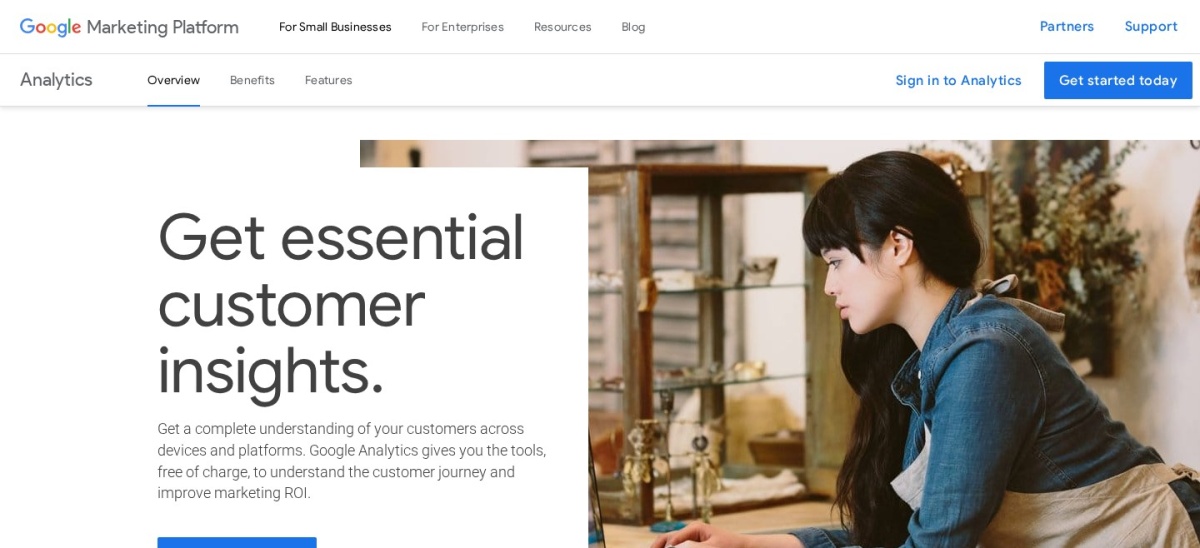
Google Analytics is the free standard for website traffic analysis, built on GA4's event-based model. The standard version costs nothing and covers traffic sources, pages, engagement, audiences and up to 30 key events, with links to Google Ads and Search Console.
The trade off is complexity and limits. Reports need setup to make sense, exploration data is kept for 2 or 14 months, and sampling starts above 10 million events per query. It suits almost any site that wants full traffic data without paying for it.
Similarweb is the best-known tool for estimating another website's traffic. Its free traffic checker shows a high-level sample for any site, while the paid Competitive Intelligence plan adds traffic sources, engagement, demographics and benchmarking for up to 10 competitors.
The trade off is price and accuracy. The entry plan costs $199 a month, or $125 a month billed yearly, and its figures are modelled estimates that lose accuracy on smaller sites. It suits marketers who need to size up competitors before they spend.
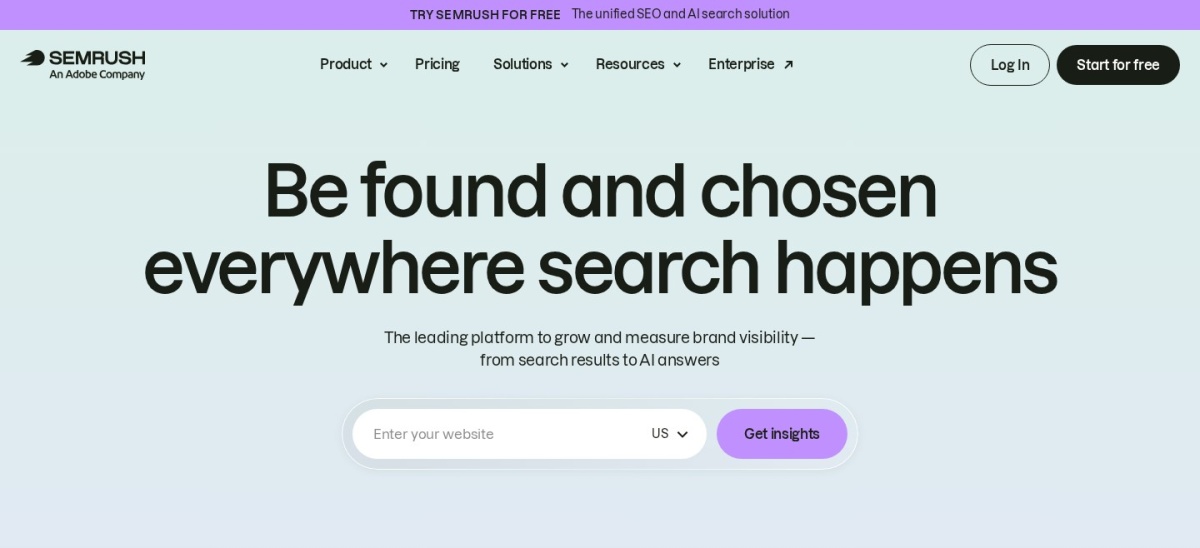
Semrush is a marketing suite that pairs traffic analysis with keyword research, rank tracking, backlink data and site audits. Its Traffic Analytics tool estimates a competitor's visits, sources and top pages, while your own site data comes from its analytics and audit tools.
The trade off is cost and scope. Pro starts at $139.95 a month, and many features sit behind add-ons, so it is more than a traffic tool. It suits teams that want traffic, SEO and content research in one subscription.
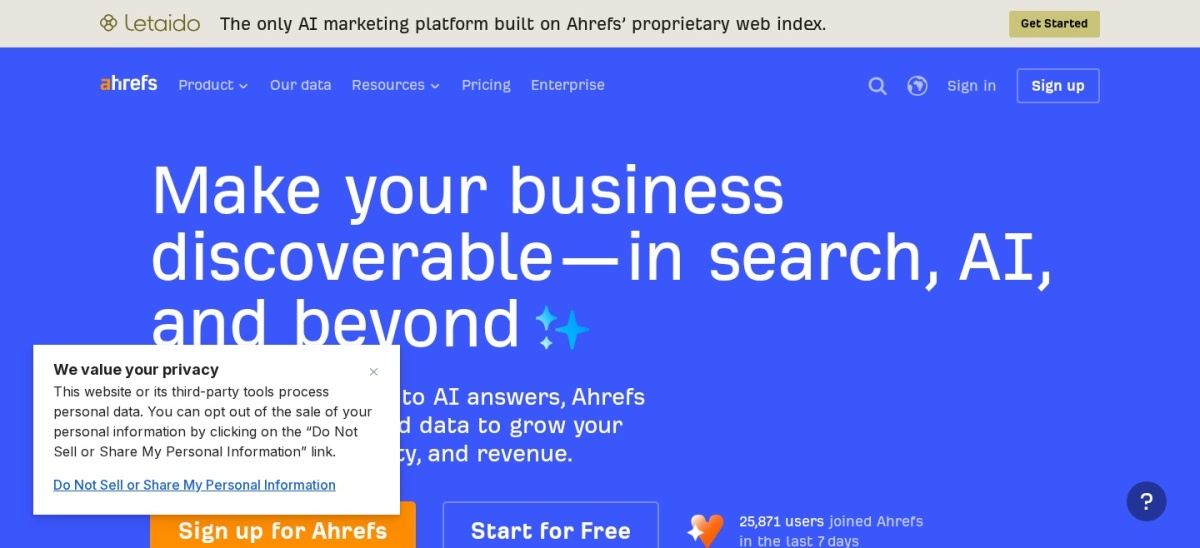
Ahrefs is an SEO platform whose Site Explorer estimates a site's organic traffic, top pages and keywords from its backlink and keyword data. Its free Webmaster Tools cover your own verified sites, while Lite adds 5 projects, 750 tracked keywords and 6 months of history.
The trade off is that traffic is estimated from search data, not measured directly, and Lite's 1,000 credits per user run out fast on heavy use. A $29 Starter credit plan also exists for light use. It suits SEO-led teams that want traffic and link data together.
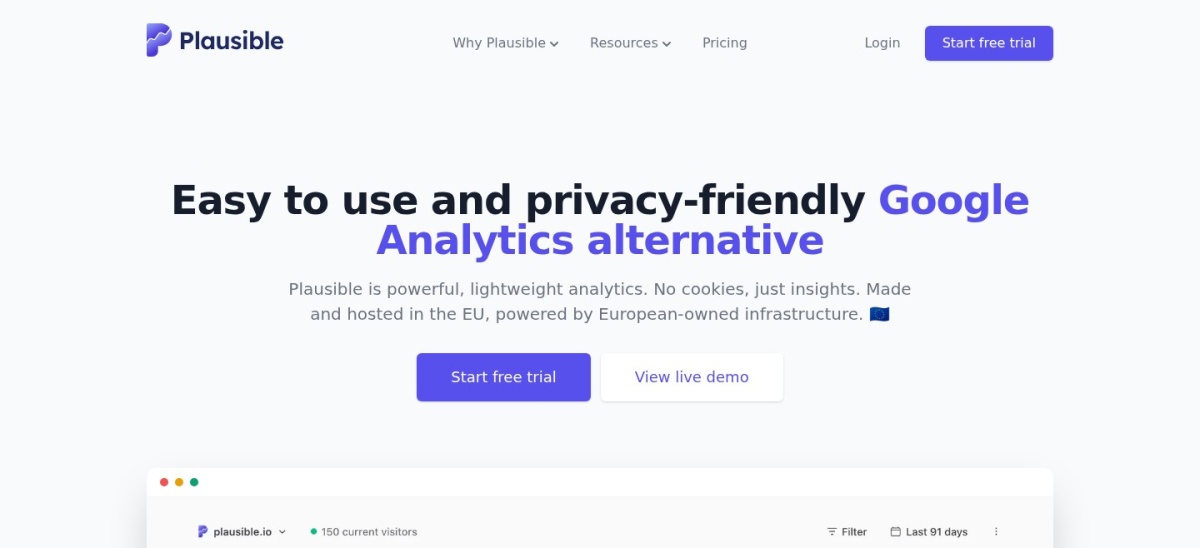
Plausible Analytics is a lightweight, privacy-first alternative to Google Analytics. Its script is under 1 KB, it uses no cookies and stores no personal data, and its one-screen dashboard shows sources, pages, goals and custom events without a consent banner in most setups.
The trade off is depth. There are no heatmaps or session recordings, and funnels and ecommerce tracking need the $19 a month Business plan. Starter costs $9 a month for 10,000 pageviews on one site. It suits small sites that want clear traffic numbers fast.
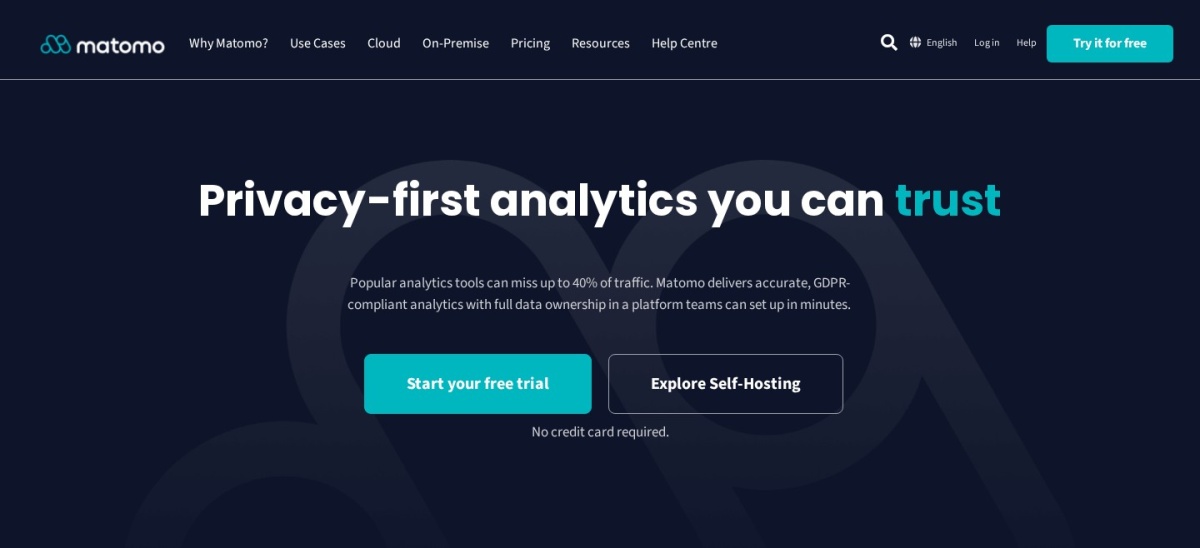
Matomo is the only full analytics suite in this list you can self-host for free. The open-source On-Premise edition runs on your own server with no hit or user limits, and you own all the data, while Matomo Cloud starts from $23 a month for 50,000 hits with hosting included.
The trade off is upkeep. Self-hosting means you handle updates, backups and server costs, and the interface feels dated next to Plausible or Fathom. It suits organisations that will not send visitor data to a third party.
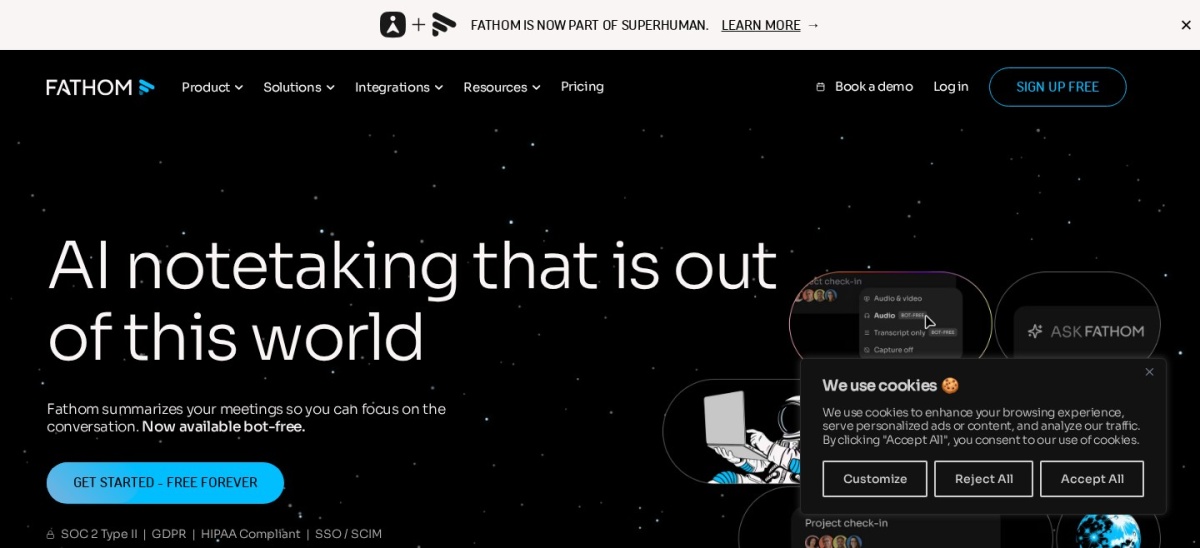
Fathom Analytics is a simple, cookieless traffic tool with a single clear dashboard. The entry plan covers 100,000 pageviews a month and shows sources, pages, goals, events and uptime, with no cookies and no personal data stored.
The trade off is depth and price per pageview. It has no funnels or session recordings, and the bill rises as traffic grows past each tier. It suits small businesses that want readable traffic numbers without a consent banner.
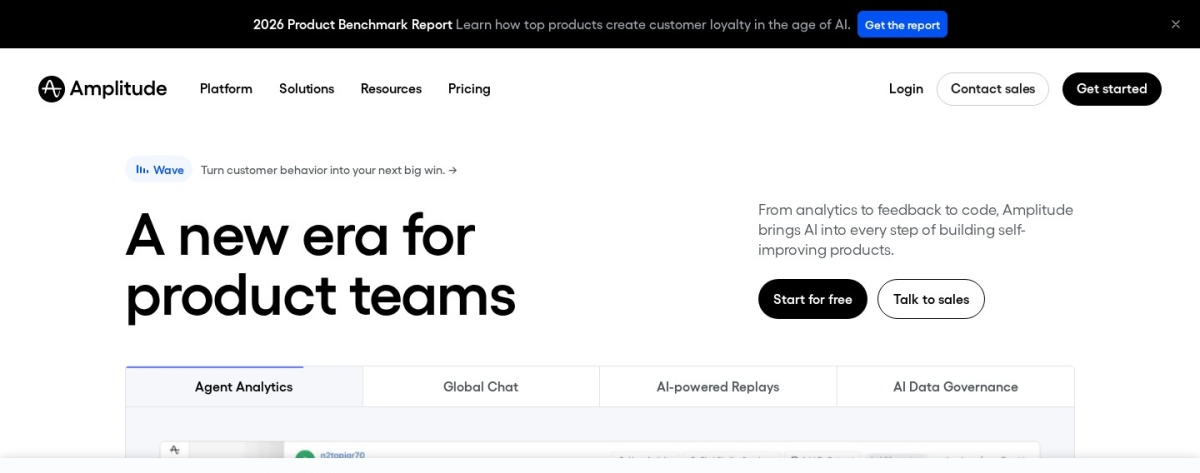
Amplitude is a product analytics platform that goes deeper than pageviews, with funnels, retention curves, behavioural cohorts and user journeys. Its free Starter plan covers 2 million events a month, and Plus starts at $49 a month billed yearly.
The trade off is effort. Events need careful setup before the reports pay off, and usage-based pricing makes the bill hard to forecast as volume grows. It suits product teams that need to know what users do after they arrive.
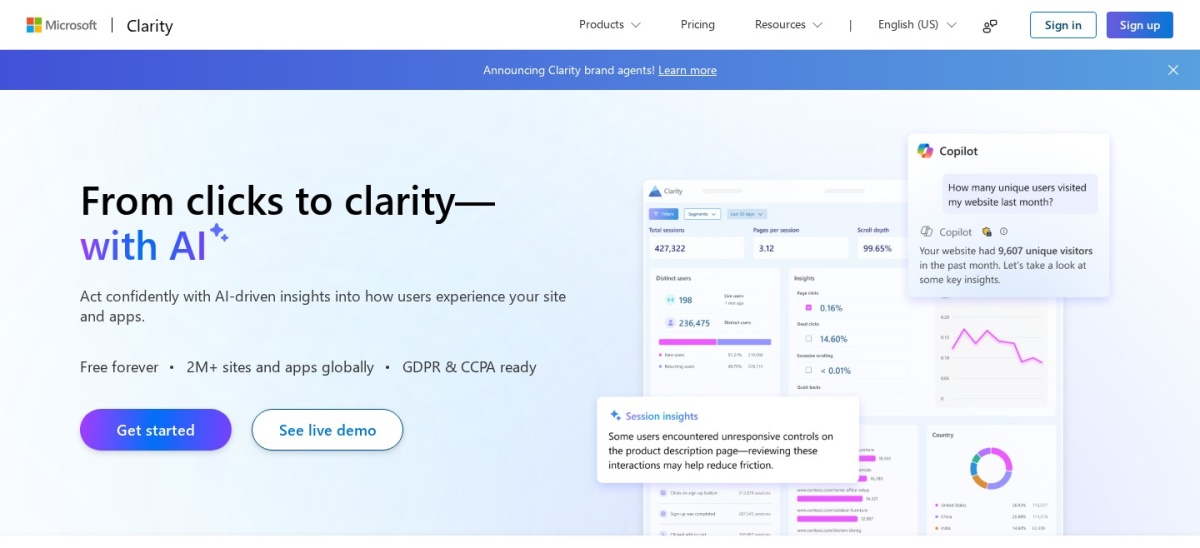
Microsoft Clarity is a free behaviour analytics tool from Microsoft. It adds heatmaps, session recordings and click data to your traffic numbers, with no traffic limits and no paid plan, and it links to Google Analytics for combined reporting.
The trade off is that it is not a full traffic tool on its own. It shows what visitors do on a page, not where they came from in the depth GA4 does, so it works best beside a main analytics tool. It suits any site that wants to see why visitors leave a page.
Free tools cover the basics well. Google Analytics measures your own traffic in depth, and Clarity adds heatmaps and recordings for nothing.
Paid tools mostly add competitor data and simplicity. Similarweb estimates other sites' traffic, while Plausible and Fathom trade depth for a dashboard you can read in seconds.
If you only need your own numbers, start free and add a paid tool only when a specific question stays unanswered.
How we chose
We started from the best-known traffic analysis tools, then kept those with a clear traffic focus, a public pricing page and a G2 rating.
Prices come from vendor pricing pages as reported in dated November 2026 checks, checked on 24 November 2026. Ratings come from G2 on the same day. Where a vendor shows a sale, the list shows the regular price.
We left out tools with quote-only pricing and tools that only measure ads. No vendor paid for a place, and we do not claim hands-on testing for this list.
How to choose a website traffic analysis tool
Start with the question you need answered, then pick the tool that answers it at the lowest cost.
Decide own-site or competitor data. Google Analytics, Plausible and Matomo measure your own visitors. Similarweb, Semrush and Ahrefs estimate competitors.
Check the privacy trade-off. Cookieless tools such as Plausible and Fathom store no personal data. GA4 uses cookies and needs consent in many setups.
Match the plan to your traffic. Entry plans are priced by pageviews, hits or events, so check the cost at twice your current volume.
Add behaviour data if pages underperform. Clarity is free and shows where visitors click and scroll. See how to measure blog traffic in WordPress for the numbers to watch.
FAQ
What is the best website traffic analysis tool?
Google Analytics is the best pick for most sites. GA4 is free, covers traffic sources, pages and key events, and is rated 4.5 out of 5 on G2 from 6,863 reviews.
Can I see how much traffic a competitor's website gets?
Yes, with an estimate. Similarweb estimates any site's visits, sources and audience, starting at $199 a month. Semrush and Ahrefs also estimate competitor traffic from search and link data.
Is Google Analytics really free?
Yes. The standard GA4 version is free of charge, with no fee per visitor or event. The paid Analytics 360 edition is quote-only and aimed at large organisations.
What is the best privacy-friendly traffic tool?
Plausible is the simplest privacy-first pick at $9 a month, with a script under 1 KB and no cookies. Fathom at $15 a month and self-hosted Matomo are close alternatives.
Do I need a paid tool if I use Google Analytics?
Not usually. GA4 covers your own traffic well, so pay only if you need competitor estimates, a simpler dashboard, or behaviour data such as heatmaps.
How accurate are competitor traffic estimates?
They are estimates, not exact counts. They are most useful for large sites and for comparing trends, and they lose accuracy on small sites with little traffic.