Climate FieldView is the best weather tracking tool for most farmers, with per-field rain and temperature data plus a free Basic plan. Pick CropX if you want readings from your own soil sensors, or Meteoblue for multi-model forecasts before spraying.
How we make this list: we compare pricing pages, product documentation and public user reviews, then re-check every price before each update. No product paid for a place. Disclosure.
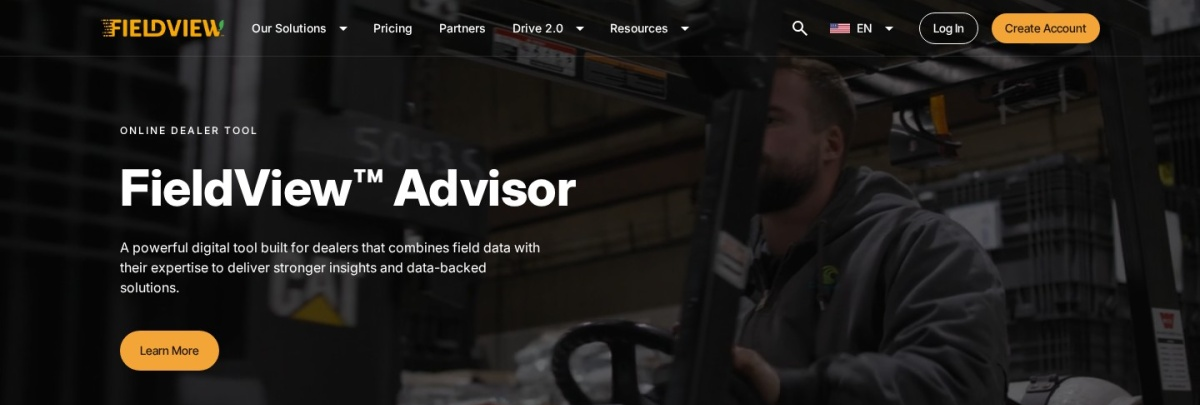
FieldView ties rain, temperature and growth-stage data to each field, and its free Basic plan covers the data inbox.
CropX pairs in-field soil sensors with weather data, but the subscription starts at $300 per sensor per year plus $695 hardware.
Tomorrow.io has the strongest G2 record here at 4.5 from 36 reviews, with a free tier of 500 API calls a day.
Weather Underground and The Weather Channel are free to start, but their Trustpilot scores are 1.6 and 1.3, mostly over ads.
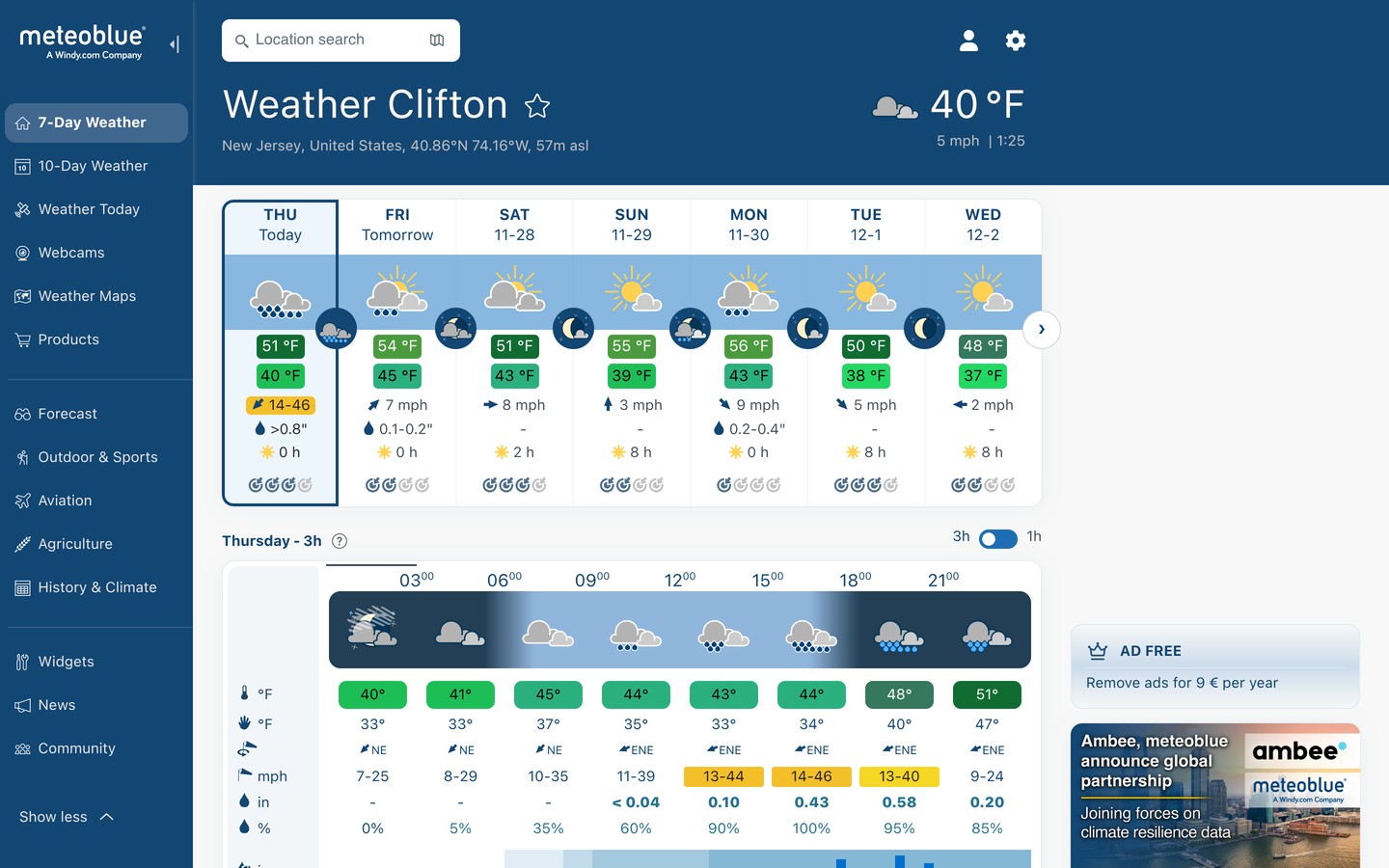
Meteoblue's AGRO meteogram was built with farmers for sowing and spraying calls, and ad-free use costs €9 a year.
What farm weather tracking should cover
A farm forecast has to answer field questions: when will rain start and stop, how strong is the wind for spraying, and how cold will tonight get. A town forecast hides those details.
Tools in this list fall into three groups: forecast apps, field platforms that tie weather to each field, and sensor systems that measure rain and soil on your own land.
Free tiers are generous here. Five of the seven tools start free, so test two or three against your own rain gauge for a season before paying. If you keep farm records in WordPress, our guide on embedding a Tableau dashboard in WordPress shows one way to put charts beside them.
Ratings in this list come from G2, Capterra or Trustpilot only. Popular apps such as Windy, AccuWeather and WeatherBug publish ratings only in app stores, so they are not in this list.
List prices in each vendor's currency, checked Nov 2026
Tomorrow.ioFREECustom
CropioCustom
WUFREE$2
MeteoblueFREE€9
TWCFREE$10
CropX$300
FieldViewFREE$649
The 7 best weather tracking tools for farmers
01
Climate FieldView
4.5/5on G2 (3 reviews, checked Nov 2026)
Paid from$649/yr
Best weather tracking for row-crop farms
Free planBasic, $0/yr
Field weatherRain + temp per field
Paid planPlus, $649/yr
Machine dataDrive logger
climate.com
Climate FieldView homepage, captured Nov 2026.
Climate FieldView is Bayer's digital farming platform for row-crop growers. The free Basic plan gives a data inbox, field maps, weather data and account sharing, and the Drive logger pulls planting and harvest data from most equipment brands into the cab app.
The trade off is the thin review record. FieldView is rated 4.5 out of 5 on G2 from only 3 reviews, and the $649 a year Plus plan needs a $299 Drive starter kit in year one. It suits row-crop farms running mixed-brand equipment that want weather tied to field records.
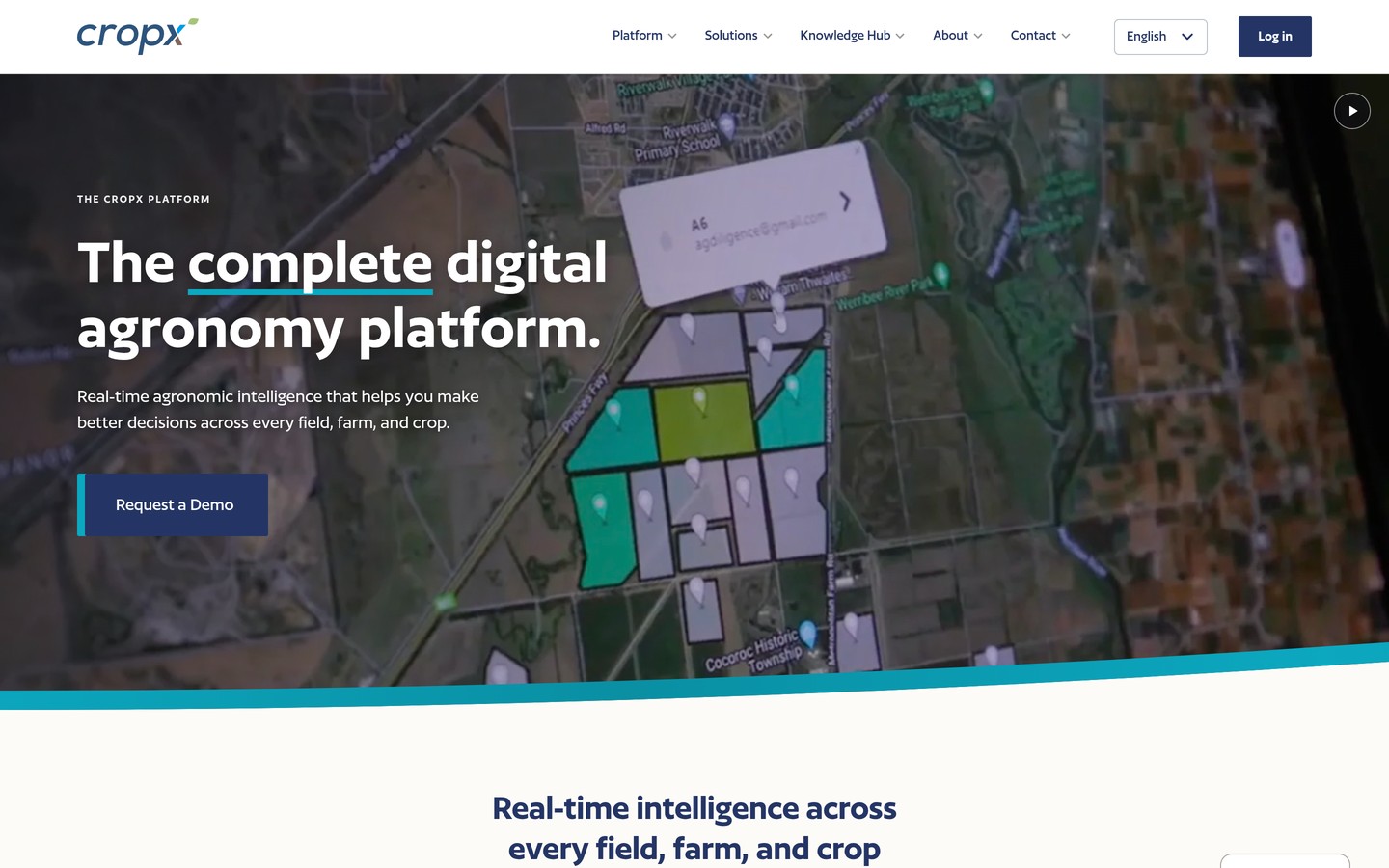
CropX is a digital agronomy platform built around wireless soil sensors in the field. The sensors measure moisture and temperature at several depths, and the platform combines those readings with weather data, satellite imagery and evapotranspiration to recommend irrigation and nutrition.
The trade off is cost and setup. The Vertex V4 sensor costs $695 each plus a $300 subscription per sensor per year, and one sensor covers roughly 25 to 30 acres, so a large farm needs several. It suits irrigated farms that want watering decisions based on their own soil.
What we like
Real soil and rain data from your own fields
Irrigation advice based on sensor readings
Rated 4.8 out of 5 on Capterra from 20 reviews
Watch out for
Hardware plus subscription adds up fast
Needs sensors installed in each area
Rain-fed farms may see less value
Subscription covers the platform; sensors cost extraVisit cropx.com
03
Tomorrow.io
4.5/5on G2 (36 reviews, checked Nov 2026)
PricingCustom/yr
Best hyperlocal forecasts and alerts
Free tier500 calls/day
Data layers60+
ForecastUp to 14 days
Paid planCustom quote
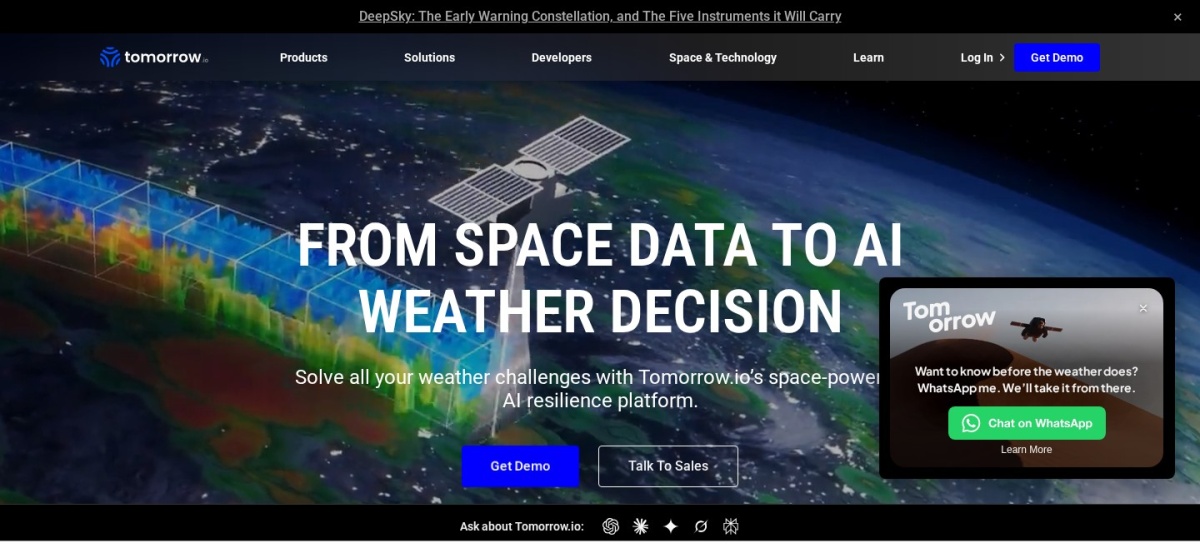
tomorrow.io
Tomorrow.io homepage, captured Nov 2026.
Tomorrow.io is a weather intelligence platform that turns satellite and model data into hyperlocal forecasts and alerts. Its Weather API covers more than 60 data layers, from rain and wind to pollen, lightning and soil, and a free developer tier allows 500 calls a day.
The trade off is that it is built for teams, not a single farmer. Paid platform pricing is quoted by sales, and the most useful features sit behind the API or a business plan. It suits larger operations that feed forecasts into their own dashboards and alert routines.
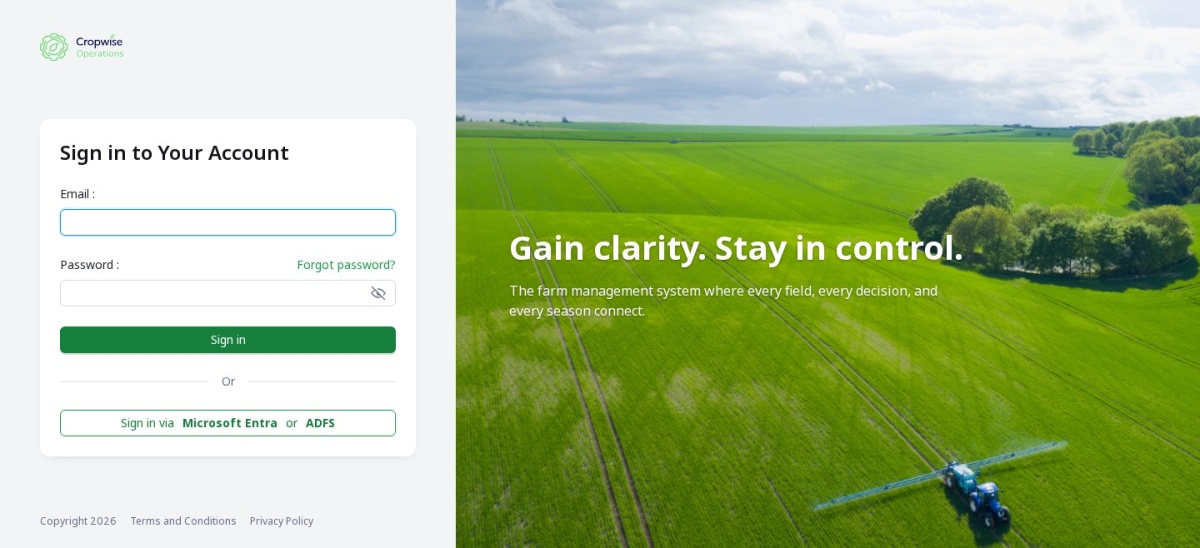
Cropio is a satellite-powered farm management system that watches fields from above. Its dashboard shows vegetation maps, field history and a weather forecast for each field, so a grower can spot problem areas early and plan work around coming rain.
The trade off is price and proof. Cropio publishes no prices, so every deal is quoted, and its G2 rating of 4.8 out of 5 comes from only 7 reviews. It suits larger growers who already manage many fields and want satellite checks beside forecasts.
Meteoblue is a Swiss weather service that compares several forecast models for one place and shows the spread, not just one number. Its AGRO meteogram was designed with farmers for sowing and spraying decisions, and the free tier covers 7-day forecasts and maps.
The trade off is the thin review record and the euro pricing. Meteoblue is rated 3.4 out of 5 on Trustpilot from only 5 reviews, and the fuller point+ plan costs €120 a year at regular price, currently €50 on sale. It suits growers who read maps and want model comparison.
1.6/5on Trustpilot (107 reviews, checked Nov 2026)
Paid from$1.99/yr
Best hyperlocal station data
Stations270,000+
Free forecast10-day
Premium$19.99/yr
Ad-free$1.99/yr
wunderground.com
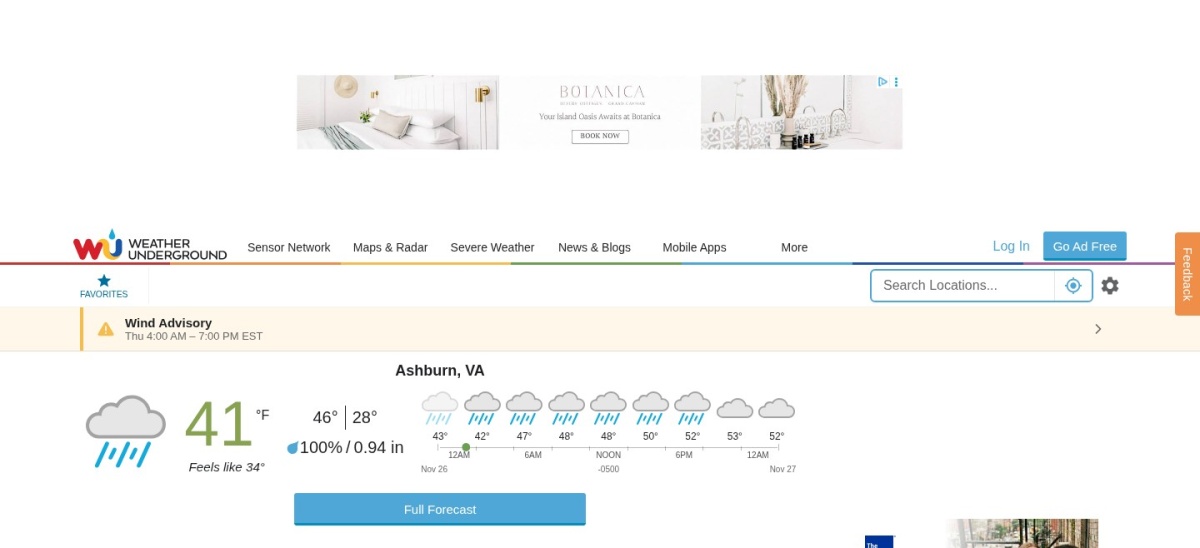
Weather Underground homepage, captured Nov 2026.
Weather Underground is a forecast service built on one of the largest networks of personal weather stations, with more than 270,000 stations run by owners. A farmer can often find a station within a few miles of the farm, which sharpens temperature, wind and rainfall readings.
The trade off is trust in the numbers. Station quality varies by owner care and placement, and the service is rated 1.6 out of 5 on Trustpilot from 107 reviews, mostly over ads and support. It suits farmers who want the most local readings without buying hardware.
1.3/5on Trustpilot (1,034 reviews, checked Nov 2026)
Paid from$9.99/yr
Best daily forecasts and radar
Free planYes, with ads
Ad Free$9.99/yr
Premium$29.99/yr
Free trial7 days
weather.com
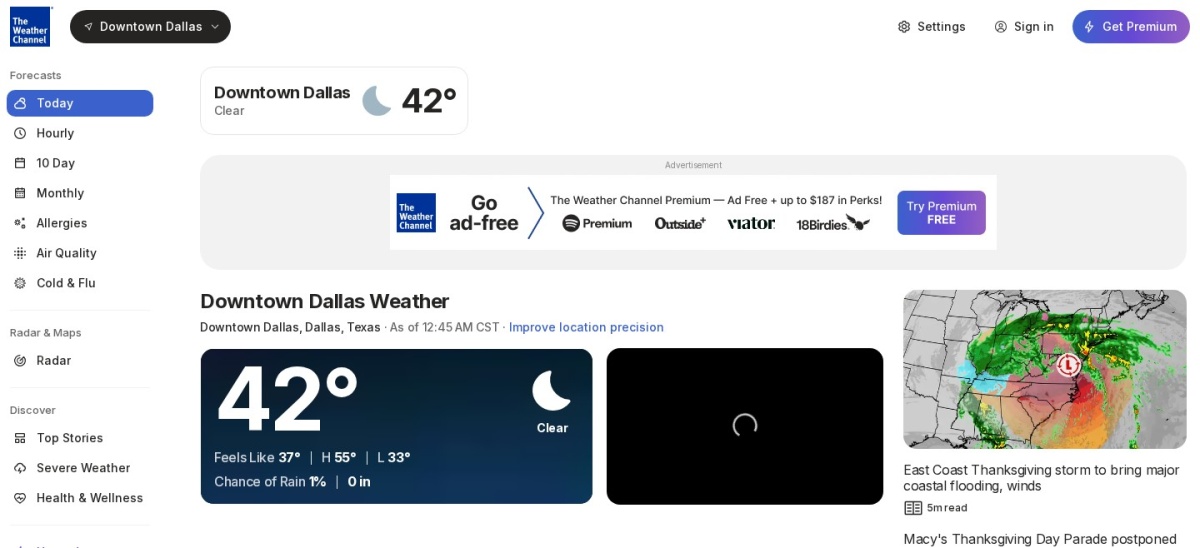
The Weather Channel homepage, captured Nov 2026.
The Weather Channel is the long-running US forecast service, with hourly and 10-day forecasts, radar maps and severe weather alerts for any place. Its app covers routine farm planning well, and the free tier includes the daily forecast, radar and alert notifications.
The trade off is the ad load and the review score. The Weather Channel is rated 1.3 out of 5 on Trustpilot from 1,034 reviews, with most complaints about ads and navigation, and the fuller Premium plan costs $29.99 a year. It suits farmers who want a familiar daily forecast and radar.
Why Windy, AccuWeather and WeatherBug are not in this list
Windy, AccuWeather, WeatherBug and Davis WeatherLink are strong farm weather apps, and readers may expect them here.
We could not include them because this list only uses ratings from G2, Capterra or Trustpilot, and those apps publish ratings only in the Apple App Store or Google Play.
If that rule changes, they belong near the top: WeatherBug is rated 4.8 out of 5 from 2.2 million App Store ratings, and AccuWeather 4.6 out of 5 from about 1.5 million.
Until then, treat this list as the rated half of the market, and test a free app beside one of these tools for a season.
How we chose
We started from every weather tool aimed at farmers with a public rating on G2, Capterra or Trustpilot, then kept the seven that fit farm decisions such as spraying, frost and irrigation.
Prices come from each vendor's pricing page or app store listing, checked on 26 November 2026. Ratings and review counts come from G2, Capterra or Trustpilot on the same day. Where a vendor shows a sale, the list shows the regular price.
We left out popular apps that publish ratings only in app stores, including Windy, AccuWeather, WeatherBug and Davis WeatherLink. No vendor paid for a place, and we do not claim to have used these tools ourselves.
How to choose a weather tracking tool for your farm
Start with the decisions the weather must support, then match the tool to them.
List your top three weather decisions. Spraying needs wind and rain timing, frost protection needs overnight lows, and irrigation needs rainfall totals. A tool that excels at one may be weak at another.
Test accuracy against your own rain gauge. Run two or three free apps for a season and compare their forecasts with what actually fell on your land before you pay for one.
Decide whether you need your own sensors. Apps are free to start, but only a station or soil sensor gives readings from your own fields. Budget for hardware and a yearly subscription if you go that way.
Check what the paid plan really adds. Most paid tiers remove ads or add longer forecasts. Pay only if the extra days, radar or field data change a decision you make.
FAQ
What is the best weather tracking tool for farmers?
Climate FieldView is the best pick for most farmers because it ties rain, temperature and growth-stage data to each field, and its Basic plan is free. CropX fits farms that want sensor readings, and Tomorrow.io fits teams that need hyperlocal alerts.
What is the best free weather app for farmers?
Weather Underground is the strongest free option for local readings, with more than 270,000 personal stations, while Meteoblue is the best free option for comparing forecast models. Both start free, and ad-free upgrades cost $1.99 and €9 a year.
Do I need my own weather station?
No, but a station gives the most accurate farm data and a lasting climate record. Many farmers start with free apps and add a station once they know which data they use most. CropX and FieldView both build on farm-owned sensors.
How accurate are farm weather apps?
Short-term forecasts for temperature and rain timing are usually reliable, while long-range outlooks are broad. Accuracy varies by region and terrain, so test apps against your own rain gauge for a season before trusting one source alone.
What weather matters most for spraying?
Wind speed and gusts, rain timing and temperature drive spraying decisions. Meteoblue shows wind by the hour across several models, while Tomorrow.io gives hyperlocal alerts when conditions change.
Can weather tools help with frost protection?
Yes. Hyperlocal overnight low forecasts from Weather Underground or Meteoblue, plus your own station data from CropX or FieldView, help a farmer judge frost risk and act before a cold night.
Why are Windy and AccuWeather missing?
Both are strong apps, but they publish ratings only in app stores, and this list only uses G2, Capterra or Trustpilot ratings. WeatherBug is rated 4.8 out of 5 from 2.2 million App Store ratings, and AccuWeather 4.6 out of 5 from about 1.5 million.
SaaS SEO and WordPress specialist with about 8 years of experience. Rakib compares WordPress plugins, themes, hosting and software using public pricing, documentation and user reviews. See how we rank.