SE Ranking is the best visibility tracking software for most teams. Its Core plan tracks 2,000 keywords daily across 10 projects for $129 a month, with AI visibility tracking included. Pick AccuRanker for the fastest dedicated rank data, or Keyword.com if you only need cheap daily tracking.
How we make this list: we compare pricing pages, product documentation and public user reviews, then re-check every price before each update. No product paid for a place. Disclosure.
SE Ranking Core tracks 2,000 keywords daily for $129 a month, the most daily keywords per dollar in this list.
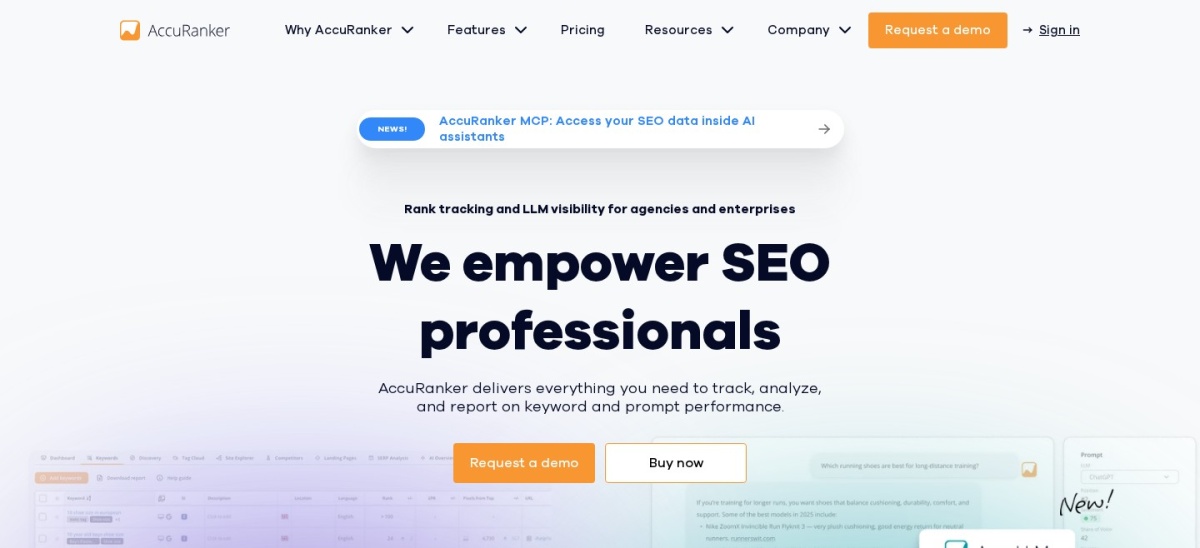
AccuRanker holds the highest G2 rating here at 4.8 out of 5, but Professional starts at $269 a month.
Keyword.com is the cheapest paid plan at $4 a month, with unlimited domains and a 4.7 out of 5 G2 rating.
Ahrefs Lite and Semrush SEO both cost over $129 a month, and each adds backlink and competitor data beside rank tracking.
Ranktracker is the weakest pick on public feedback, rated 3.0 out of 5 on G2 from 183 reviews.
What visibility tracking software should measure
Visibility tracking software watches where your pages rank on Google for the keywords that matter, then shows how those positions move over time.
The best tools update daily, split mobile and desktop, track local results and SERP features, and show competitors beside your own site.
Dedicated trackers such as Wincher and AccuRanker do one job well and cost less than a full suite. Suites such as Semrush and Ahrefs cost more but join rank data to keyword research, audits and backlinks. Our guide on adding SEO keywords in WordPress covers picking the keywords worth tracking.
Watch the update frequency. Some budget plans check weekly, which is fine for a small blog but too slow for a site that changes often.
AI visibility is a separate measure. Several tools in this list now track AI Overviews and AI assistant citations as well, but keep those numbers apart from classic ranking positions.
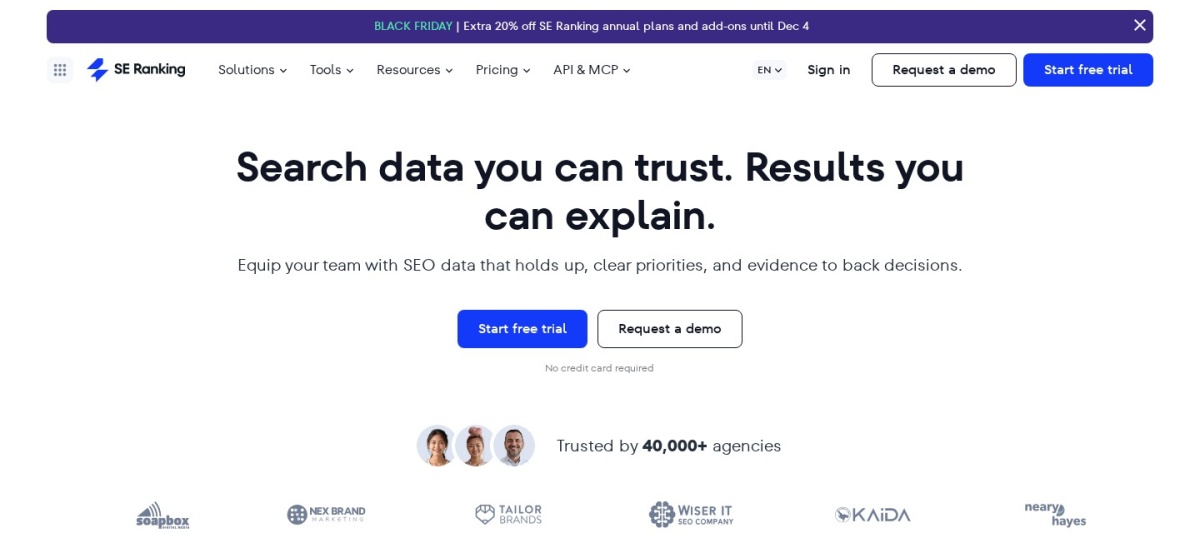
SE Ranking is a cloud SEO suite whose Rank Tracker checks 2,000 keywords daily on the Core plan, across 10 projects. It splits mobile and desktop, tracks SERP features and AI Overviews, and includes AI visibility tracking with 25 prompts a day.
The trade off is the plan change. The old $65 Essential plan is gone, so Core at $129 a month, or $1,548 a year, is now the entry point, and white-label reporting is a paid Agency Pack add-on. It suits small teams that want daily rank tracking, audits and client reports in one plan.
What we like
2,000 keywords tracked daily on Core
AI visibility tracking included
SERP feature and AI Overview tracking
Google Analytics and Search Console integrations
Watch out for
Entry price doubled after the Essential plan ended
AccuRanker is a dedicated rank tracker built for teams that track keywords at scale. Professional covers 2,000 keywords with daily updates, keyword research, search intent, tagging, and Google Search Console and Analytics integrations, with unlimited users.
The trade off is price. Professional costs $269 a month, or $3,228 a year, and API access, Looker Studio and AI metrics only unlock on the $929 Expert tier. It suits agencies and in-house teams where rank data speed and accuracy are the priority.
What we like
Highest G2 rating in this list at 4.8 out of 5
On-demand updates beat daily crawls on volatile keywords
Unlimited users on every plan
Search Console and Analytics integrations included
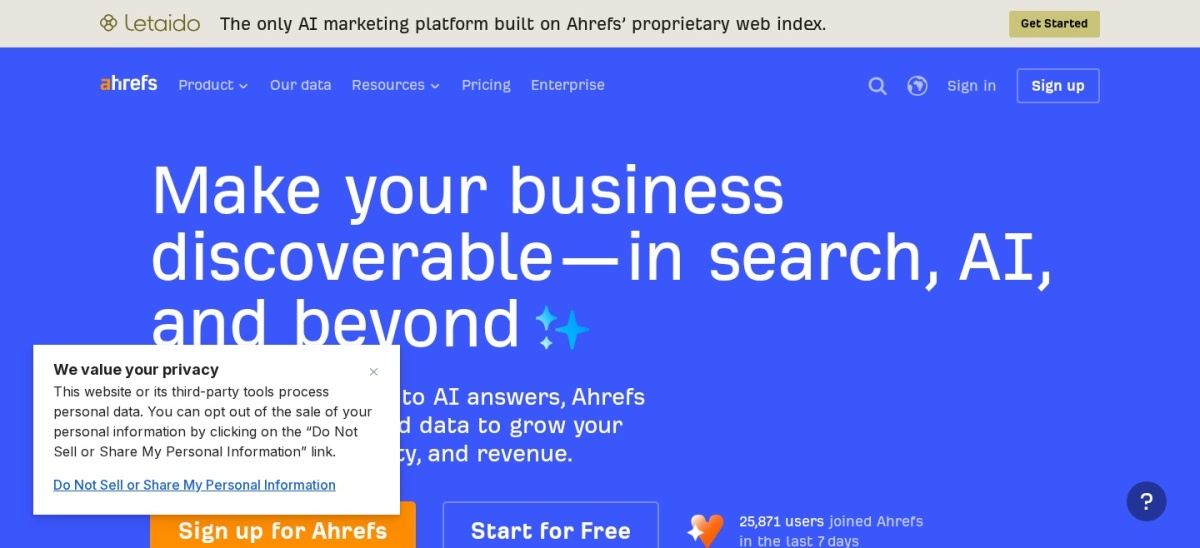
Ahrefs is a full SEO suite built on one of the largest live backlink indexes, and its Rank Tracker checks 750 keywords on Lite. It shows position history, SERP feature ownership and share of voice, with snapshots of the results page for each keyword.
The trade off is the credit system. Lite costs $129 a month, or $1,548 a year, and heavy reporting can eat through the 1,000 monthly credits. It suits SEOs who want rank data joined to backlink and keyword research.
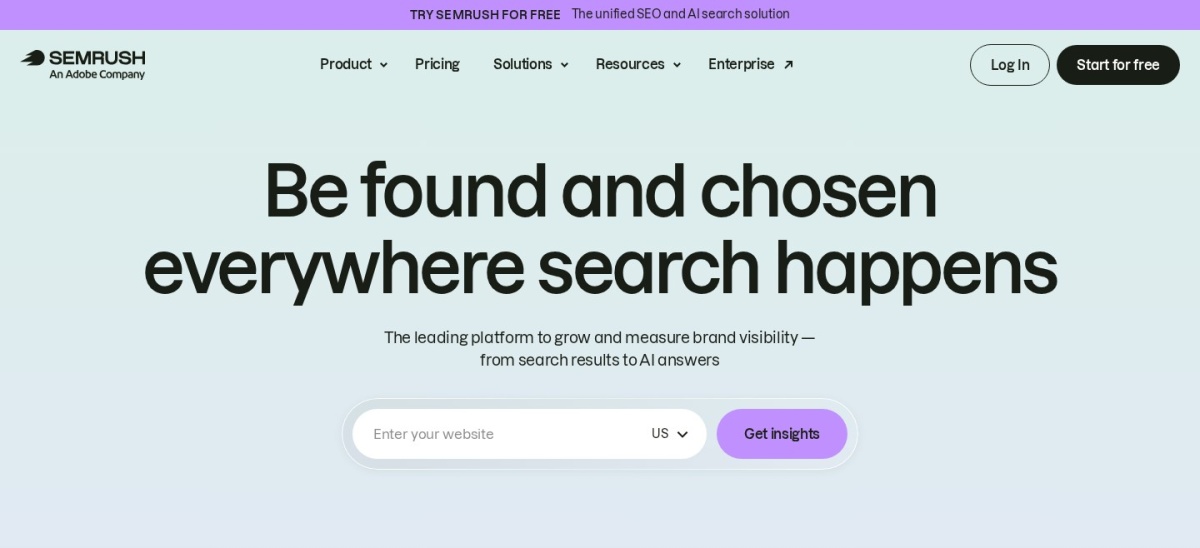
Semrush is the widest SEO suite in this list, and its Position Tracking checks 500 keywords daily on the SEO plan. It tracks local results, SERP features and AI visibility, and the data sits beside keyword research, audits and backlink tools.
The trade off is price. The SEO plan costs $139.95 a month, or $1,679.40 a year, which is steep if you only need rank tracking. It suits teams that already use Semrush and want positions inside the same subscription.
Wincher is a dedicated rank tracker that keeps daily tracking simple: add a site, add keywords, and see positions with movement arrows every day. Basic tracks 500 keywords daily across up to 10 websites, with share of voice and competitor tracking.
The trade off is scope. Basic costs $49 a month, or $588 a year, and Wincher does no audits or backlink research. It suits small teams and site owners who want daily positions without learning a full suite.
Serpstat is an all-in-one SEO platform with rank tracking, keyword research, site audits and backlink analysis in one plan. Individual includes 10,000 keyword position checks a month with daily updates, plus 5 projects.
The trade off is the position-check model. Individual costs $69 a month, or $828 a year, and 10,000 checks a month covers about 328 keywords tracked daily. It suits freelancers who want a low-cost suite that covers tracking, research and audits.
Advanced Web Ranking is a mature rank tracker built for agencies that watch thousands of keywords across many client sites. Pro tracks 7,000 keywords across 4,000+ search engines in 170+ countries, with local, YouTube and AI visibility tracking.
The trade off is the thin review base and dated feel. Pro costs $139 a month, or $1,668 a year, and only 22 G2 reviews back its 4.3 score. It suits agencies tracking large keyword sets in many locations.
Keyword.com is a dedicated search ranking tracker for agencies and SEO professionals, with Google SERP monitoring, share-of-voice reporting and an API. Search Visibility starts at $4 per month at the regular monthly rate, or $36 a year with annual billing.
The trade off is that keyword allowances, refresh schedules and tracking depth depend on the selected package, while AI visibility and white-label reporting can require additional purchases. It suits teams seeking focused rank tracking without paying for a broad SEO suite.
Ranktracker is an SEO platform combining rank monitoring, keyword discovery, SERP analysis and website auditing. Launch costs $39 per month and supports 500 daily Top 100 keywords or 3,500 weekly keywords, plus 500 monthly instant checks and unlimited projects and users.
The trade off is its mixed public feedback and limits on instant checks, data rows and competitive analysis. Annual billing reduces the regular monthly price to $31.20, while a Black Friday sale is currently advertised on annual plans. It suits teams that want to vary tracking frequency according to campaign needs.
Daily tracking catches a ranking drop the day it happens, so you can react before traffic falls far.
Weekly tracking costs less and is fine for small sites that change slowly. Every tool in this list updates daily on its entry plan.
If your site earns money from search every day, pay for daily updates. For a hobby blog, a cheaper weekly check is enough.
Keyword volume matters as much as speed. A plan that tracks 500 keywords daily covers a small site, but an agency needs thousands.
How we chose
We started from every dedicated rank tracker and SEO suite with a published visibility tracking feature and a public G2 rating, then kept the nine that cover daily tracking, local results and competitor views.
Prices come from each vendor's pricing page, checked on 26 November 2026. Ratings and review counts come from G2 on the same day. Where a vendor shows a sale, the list shows the regular price.
We left out tools with no published price and trackers with fewer than 20 G2 reviews. No vendor paid for a place, and we do not claim to have used these tools ourselves.
How to choose visibility tracking software
Start with how many keywords you track every day, then match the plan to that number.
Count your daily keywords. Add up the keywords across every site and location you track. A 500-keyword plan is plenty for one site but not for an agency.
Decide between a tracker and a suite. Pick a dedicated tracker such as Wincher or AccuRanker if you only need positions. Pick a suite if you also need audits, backlinks and keyword research.
Check the update frequency and locations. Daily updates with mobile, desktop and local splits matter for active campaigns. See how to connect Google Search Console to WordPress to check positions against real search data.
Trial the reporting before you pay yearly. Run the trial on your real keywords and export a report. Annual billing saves 15 to 20 percent, but only after the reports look right.
FAQ
What is the best visibility tracking software?
SE Ranking is the best pick for most teams. Its Core plan tracks 2,000 keywords daily across 10 projects for $129 a month, with AI visibility tracking included, and it holds a 4.7 out of 5 G2 rating from 1,567 reviews.
What is the cheapest visibility tracking software?
Keyword.com starts at $4 a month for its Search Visibility plan, with unlimited domains and API access. Wincher is the cheapest simple daily tracker with a free plan, at $49 a month for 500 keywords a day.
How is visibility tracking different from rank tracking?
Rank tracking records positions for specific keywords. Visibility tracking adds share of voice, SERP feature ownership, local results and competitor movement, so it shows how visible a whole site is rather than one keyword at a time.
Do these tools track AI search visibility too?
Several do. SE Ranking, Semrush and Advanced Web Ranking include AI Overview or AI citation tracking, and AccuRanker tracks prompts. AI visibility is a separate measure from classic rankings, so keep the two apart when you report.
How many keywords do I need to track?
A small site usually needs 100 to 500 keywords. An agency with several clients needs thousands. Count keywords across every site, location and device you track, because each combination can consume allowance.
Is daily tracking worth paying extra for?
Yes for sites that earn money from search every day, because daily tracking catches a ranking drop the day it happens. Weekly tracking is fine for small sites that change slowly and costs less.
Can I track visibility without a paid tool?
Google Search Console shows average positions and clicks for free, but it does not track competitors, update daily per keyword or show SERP features. Paid tools add those views and scheduled reports.
SaaS SEO and WordPress specialist with about 8 years of experience. Rakib compares WordPress plugins, themes, hosting and software using public pricing, documentation and user reviews. See how we rank.