Google Forms is the best SurveyMonkey alternative for most people: it is free, with unlimited forms and up to 500,000 responses per form. Pick Jotform for templates and payments, or Typeform when polished, conversational surveys matter most.
How we make this list: we compare pricing pages, product documentation and public user reviews, then re-check every price before each update. No product paid for a place. Disclosure.
Google Forms is free, with unlimited forms and up to 500,000 responses per form.
Jotform Bronze costs $34 a month billed annually and adds 1,000 submissions a month.
Typeform Basic costs $28 a month billed annually but caps responses at 100 a month.
Zoho Survey Basic is the cheapest paid plan here, at about $7.42 a month billed annually.
Qualtrics is the enterprise pick; its only public price is $420 a month billed annually.
Why switch from SurveyMonkey, and what to check
SurveyMonkey is a capable survey tool, but its team plans are priced per user, so the bill climbs as teams grow, and its free plan is tightly capped. Many teams switch to cut cost, to get unlimited responses, or to find a builder that fits a specific job such as payments or conversational forms.
Response caps decide the plan more than any other number. Check how many responses each tier allows per month, and whether unused responses roll over. A tool that looks cheap can get dear fast once a survey goes out to a large list.
Logic and reporting come next. Skip logic, branching, piping and cross-tab reports are free in some tools and locked behind paid tiers in others. If you run NPS or CSAT tracking, check that the tool reports those scores without an add-on.
WordPress users have a native option too: form plugins such as WPForms run surveys inside WordPress itself. Our guide on how much WPForms costs shows what that route runs per year.
Google Forms is a free form and survey builder included with any Google account, with unlimited forms and up to 500,000 responses per form. Answers land straight in Google Sheets, and several people can edit one form at the same time. It also covers quizzes with automatic grading and file uploads at no cost.
The trade off is depth. Google Forms has no payment collection, no calculations and only section-level logic, so it cannot hide a single question or work out a total. It suits schools, clubs and small teams that need simple data collection at scale and already live in Google Workspace.
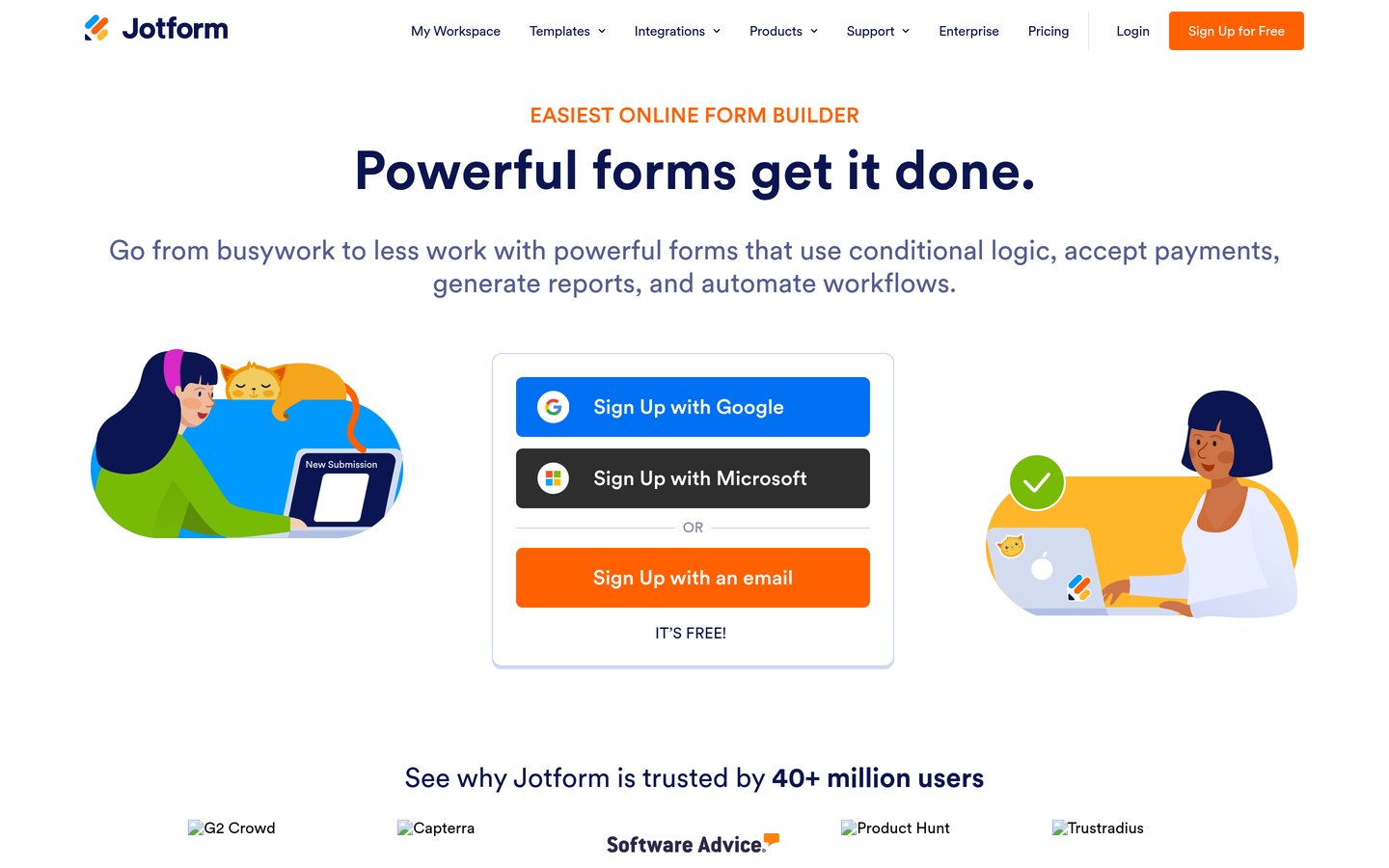
Jotform is an online form builder with thousands of templates for surveys, registrations and order forms. The free Starter plan includes 5 forms, 100 monthly submissions and 100 MB of storage. Bronze at $34 a month billed annually raises that to 25 forms, 1,000 submissions a month and 1 GB, and removes Jotform branding.
The trade off is the submission meter. Heavy surveys burn through the monthly allowance fast, and Silver at $39 a month billed annually is the next step up. It suits small businesses that want templates, payment collection and integrations without building forms from scratch.
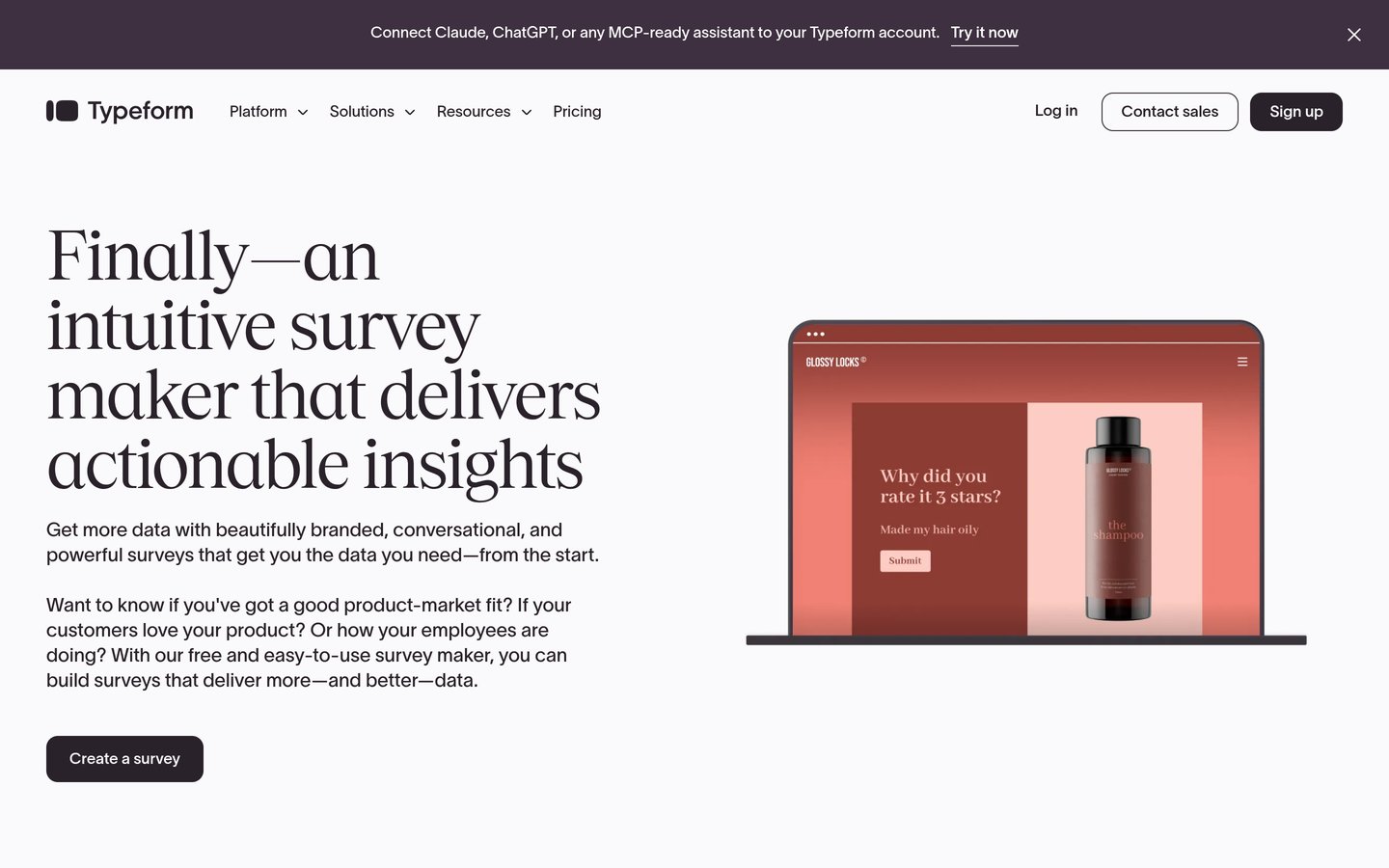
Typeform is a conversational form builder that shows one question at a time, with branching logic, media backgrounds and AI form creation. The free plan allows 10 responses a month. Basic at $28 a month billed annually allows 100 responses a month, unlimited typeforms and one user, with webhooks and integrations included.
The trade off is the response cap. Basic costs $28 a month for just 100 responses, and Plus at $56 a month billed annually is needed for 1,000 responses and branding removal. It suits marketing teams that want polished, high-completion forms and can live with a tight response budget.
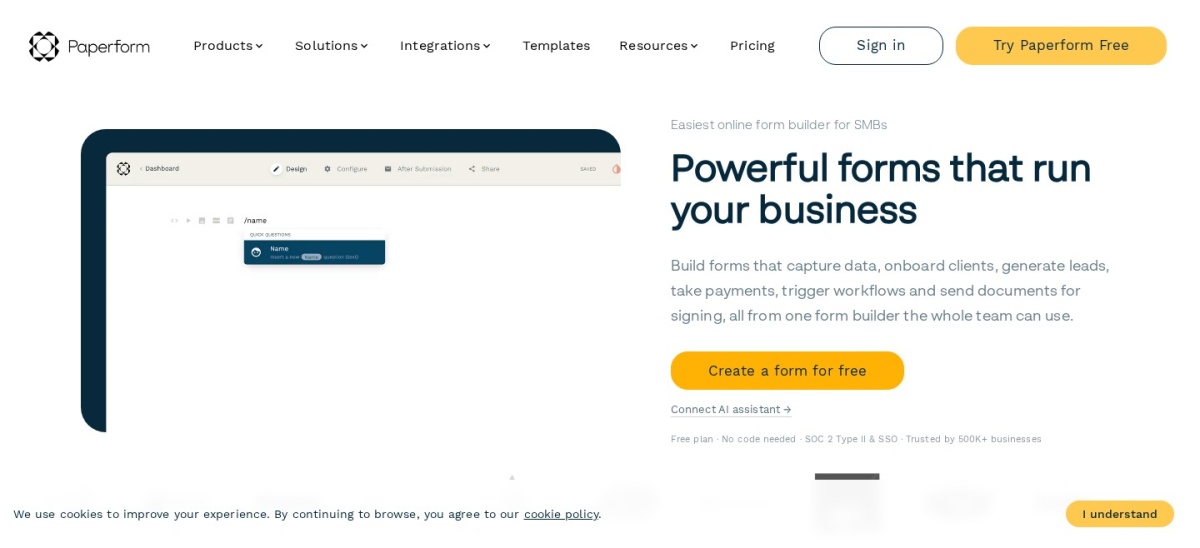
Paperform is a form builder that mixes prose, images and video with fields, so a form can read like a landing page. The free plan covers 30 submissions a month. Pro at $49 a month billed annually adds unlimited submissions under a fair-use policy, unlimited seats, payments through Stripe and PayPal, and calculations.
The trade off is price. Pro is the dearest entry price among the free-leaning tools here, and a custom domain costs $20 a month extra. Paperform ran a Black Friday offer halving Pro for new sign-ups in late November 2026, but the regular price is $49 a month. It suits consultants and clinics that want branded booking and payment pages.
What we like
Forms read like landing pages
Unlimited seats and submissions on Pro
eSignatures and workflows included
Watch out for
Pro at $49 a month is dear for light use
Custom domain costs $20 a month extra
Only 87 G2 reviews, a thin rating base
Pro adds unlimited submissions, payments and branding removalVisit paperform.co
05
Zoho Survey
4.6/5on Capterra (457 reviews, checked Nov 2026)
Paid from$7.42/mo
Best budget paid plan
Free plan3 surveys, 100 responses each
Paid planBasic, $7.42/mo billed annually
Responses on Basic12,000 per year
Question types30+
zoho.com
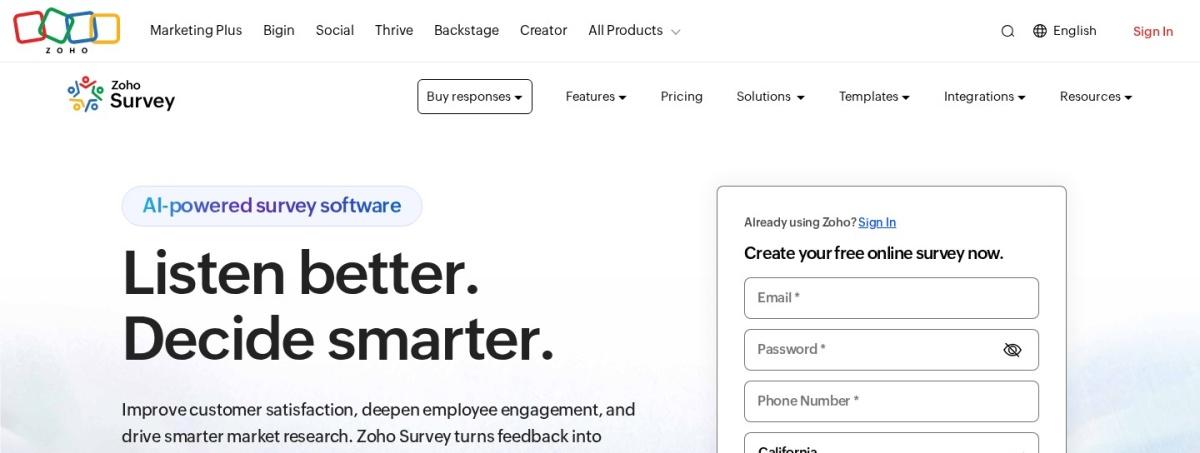
Zoho Survey homepage, captured Nov 2026.
Zoho Survey is a survey builder with 30-plus question types, skip logic and NPS and CSAT reporting, and it syncs responses with Zoho CRM. The free plan covers 3 active surveys with 10 questions and 100 responses each. Basic at $7.42 a month billed annually adds unlimited questions and 12,000 responses a year.
The trade off is the ecosystem. Zoho Survey makes most sense for teams already using Zoho apps, and its cheapest paid tier is a single-user plan. It suits solo researchers and small teams that want a low yearly bill and solid reporting without per-seat pricing.
What we like
Cheapest paid plan in this list
12,000 responses a year on Basic
Native Zoho CRM sync
Watch out for
Basic is a single-user plan
Design control is limited on lower tiers
Best features sit on Plus and Pro
Plus adds unlimited surveys and SMS distributionVisit zoho.com
06
Qualtrics
4.4/5on G2 (4,079 reviews, checked Nov 2026)
Paid from$420/mo
Best for enterprise research
Free plan1 user, 3 surveys, 500 responses
Paid planStrategic Research, $420/mo annual
Responses on that plan1,000
Other productsPriced by quote
qualtrics.com
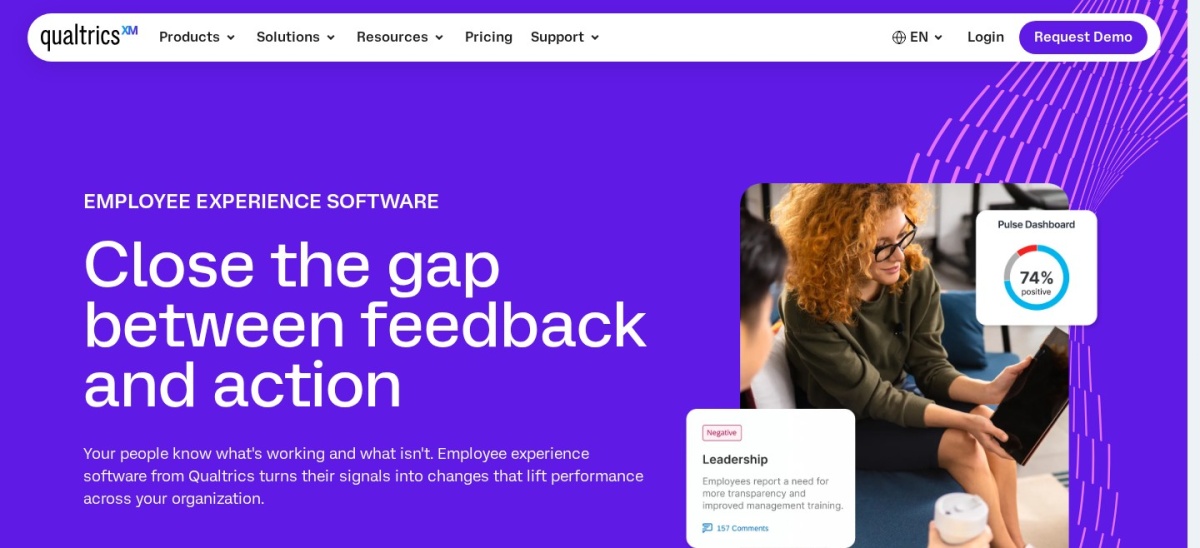
Qualtrics homepage, captured Nov 2026.
Qualtrics is an enterprise experience-management platform for customer, employee and market research, with deep survey logic and analytics. A free Surveys account covers 1 user, 3 active surveys and 500 responses. The only public paid price is Strategic Research at $420 a month billed annually for 1,000 responses.
The trade off is price and complexity. Every other Qualtrics product is priced by quote, and contracts commonly run into five figures a year, so small teams cannot budget from the pricing page. It suits large teams running global research programs with a real budget and a long implementation runway.
Survey styleConversational, one question at a time
surveysparrow.com
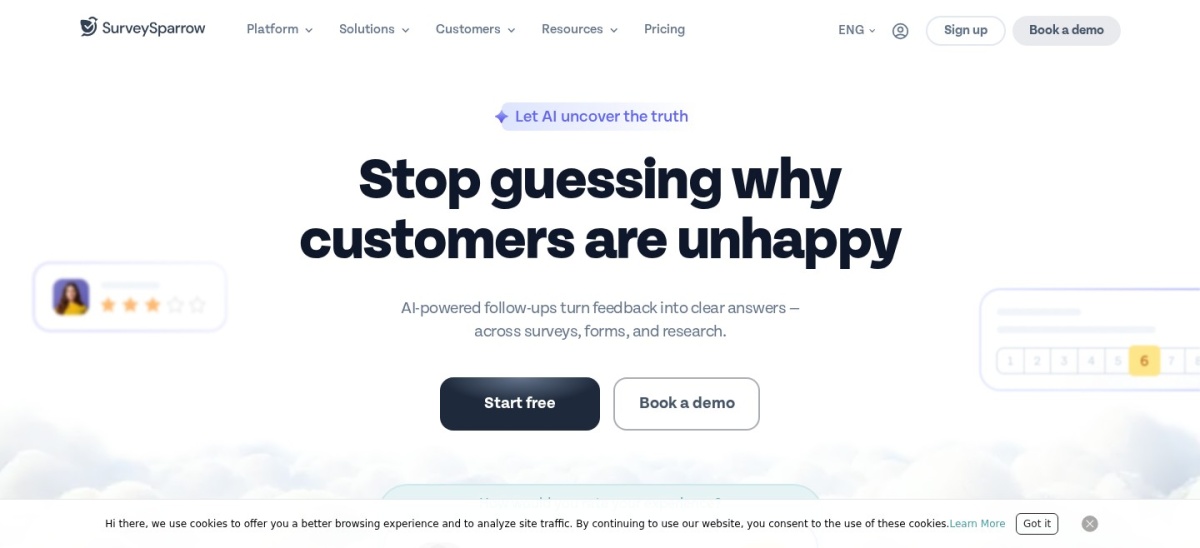
SurveySparrow homepage, captured Nov 2026.
SurveySparrow runs surveys in a conversational format that shows one question at a time, like a chat, and it covers NPS, CSAT and CES surveys out of the box. The free plan includes 1 user, 3 active surveys and 75 responses a quarter. Basic at $19 a month billed annually adds 2,500 responses and more question types.
The trade off is the response meter. Basic caps responses, and teams need the $79-a-month Business plan for collaboration features. It suits customer-experience teams that want chat-style surveys and recurring NPS or CSAT tracking without enterprise pricing.
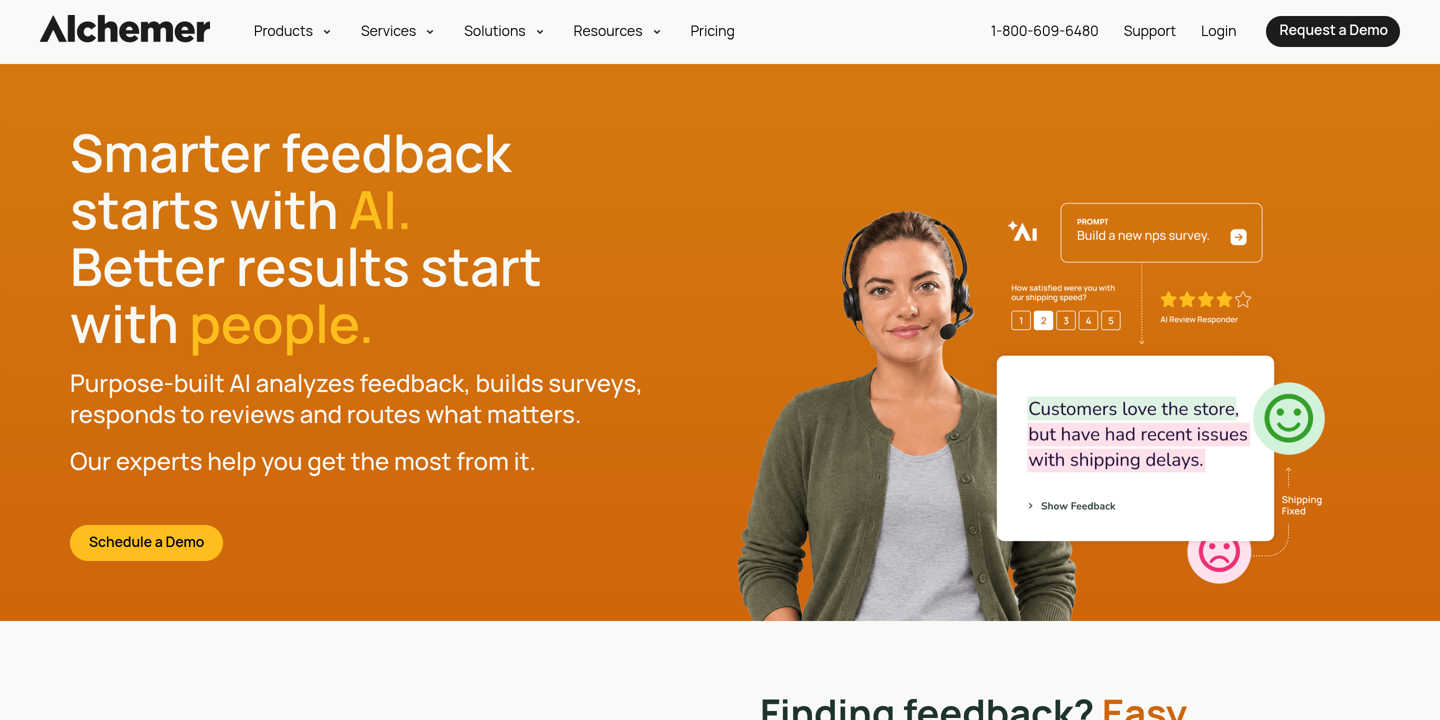
Alchemer is a survey and feedback platform built for advanced logic, conjoint analysis and statistical reporting. There is no permanent free plan, only a free trial. Collaborator costs $55 a user a month, or $315 a user a year billed annually, and includes unlimited surveys and 75,000 responses a year.
The trade off is the learning curve and the user cap. Self-serve plans stop at 3 users, so larger teams move to a custom-quoted Business Platform. It suits researchers and small agencies that want Qualtrics-style depth without an enterprise contract.
Free plans cover small surveys well. Google Forms is free without a real cap, and Jotform, Typeform, Paperform, Zoho Survey and SurveySparrow all offer a free tier for light use.
Paid plans mostly add volume, logic and branding. Response caps rise, skip logic and piping unlock, and your own branding replaces the vendor logo. Alchemer is the only tool here with no permanent free plan.
Enterprise tools are a different purchase. Qualtrics and Alchemer sell research depth and compliance, and most of their pricing needs a sales conversation, so budget for implementation time as well as the licence.
How we chose
We started from the survey tools most often named as SurveyMonkey replacements on G2 and Capterra, then kept eight with a public rating and a published price or free plan.
Prices come from each vendor's pricing page, checked on 26 November 2026. Ratings come from G2 or Capterra on the same day. Where a vendor shows a sale, the list shows the regular price.
We left out tools with no public rating. No vendor paid for a place, and we do not claim to have used these tools ourselves.
How to choose a SurveyMonkey alternative
Start with how many responses you need each month, then check the logic and reporting each plan unlocks.
Count your monthly responses. Response caps decide the plan. Google Forms has no cap, while Typeform Basic stops at 100 responses a month.
List the logic you need. Skip logic and branching come free in some tools and need a paid plan in others. Check before you build a long survey.
Check where answers must go. Sheets, CRM and email integrations differ by plan. Zoho Survey syncs with Zoho CRM; Jotform connects to Sheets and payment tools.
Price the plan you will actually use. Compare yearly totals, not monthly headlines. A $19 plan billed annually costs $228 a year, and per-user pricing multiplies with every seat.
FAQ
What is the best SurveyMonkey alternative?
Google Forms is the best free option for most people, with unlimited forms and up to 500,000 responses per form. Jotform is the strongest all-round paid alternative, and Typeform wins when polished, conversational surveys matter most.
Is there a free SurveyMonkey alternative?
Yes. Google Forms is free with almost no limits. Jotform, Typeform, Paperform, Zoho Survey and SurveySparrow also offer free plans, though each caps responses, forms or features, so check the limits before you commit.
Which SurveyMonkey alternative is cheapest?
Zoho Survey Basic is the cheapest paid plan in this list, at about $7.42 a month billed annually, or $89 a year. Google Forms costs nothing at all, and SurveySparrow Basic is the next cheapest paid tier at $19 a month billed annually.
Which alternative is best for market research?
Qualtrics is the strongest choice for large research programs, with deep logic and analytics, but it is priced by quote. Alchemer offers similar research depth for small teams, with self-serve plans starting at $315 a user a year.
Do these tools work with WordPress?
Yes. Most of these tools give you an embed code you can paste into any page, and several connect to WordPress through a plugin or Zapier. If you want forms that live inside WordPress itself, a form plugin is the simpler route.
What is the catch with free plans?
Response caps are the usual catch: Typeform stops at 10 responses a month and Paperform at 30 submissions. Free plans also keep vendor branding on your forms and hold back logic, reporting and integrations until you pay.
SaaS SEO and WordPress specialist with about 8 years of experience. Rakib compares WordPress plugins, themes, hosting and software using public pricing, documentation and user reviews. See how we rank.