Resilinc is the best supply chain risk management software for most large teams, with multi-tier mapping across 450,000+ suppliers and a 4.4 out of 5 Gartner Peer Insights rating. Pick Everstream for predictive disruption alerts and UpGuard if you want published pricing and cyber risk scores.
How we make this list: we compare pricing pages, product documentation and public user reviews, then re-check every price before each update. No product paid for a place. Disclosure.
Resilinc maps more than 450,000 suppliers across 200 countries, the deepest multi-tier coverage in this list.
Everstream ranked first in 3 of 4 use cases in the 2026 Gartner Critical Capabilities for supplier risk management.
UpGuard is the only tool here with published pricing: Vendor Risk Standard at $1,750 a month, billed annually.
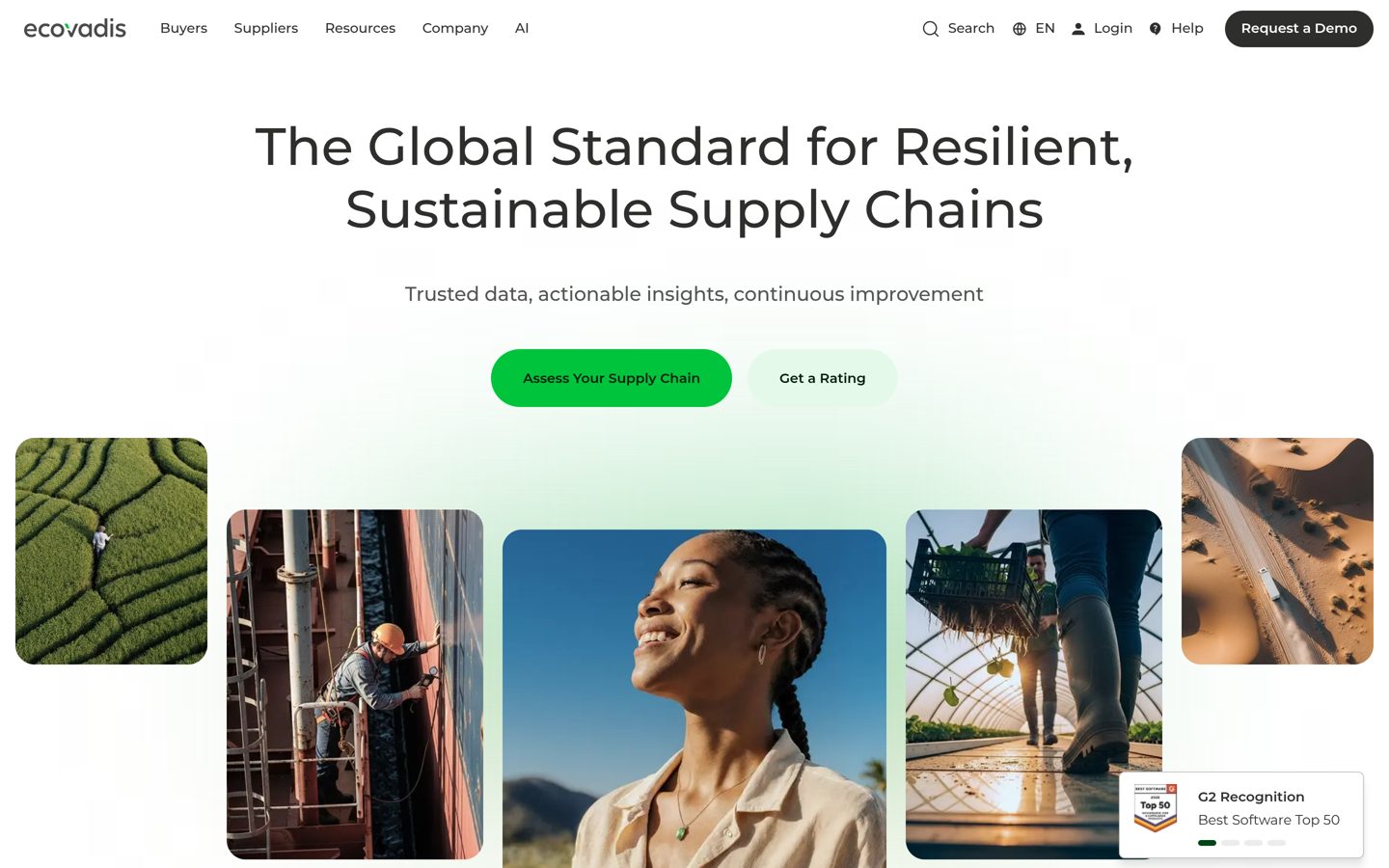
EcoVadis and Sedex lead on ESG and audit evidence; EcoVadis rates suppliers on 4 themes and 21 criteria.
Eight of the nine tools sell on quote only, so budget for a sales process and a demo before you compare costs.
What supply chain risk management software should cover
Supply chain risk management software watches your suppliers and the events around them, then turns that watch into alerts, scores and action plans. The best tools combine incident monitoring with supplier mapping, so you can see which parts and orders a disruption touches.
Look for multi-tier mapping first. A tool that only knows your direct suppliers misses the sub-tier factory or port where most disruptions start. Our guide on what a supply chain attack is shows how a weak link deep in a chain causes the damage.
Risk scoring matters next. Scores should blend financial health, location, compliance and cyber signals, and update as new events land. A score that only refreshes once a quarter is little use during a live disruption.
Finally, check what happens after an alert. Some tools stop at monitoring, while others add assessments, corrective actions and audit trails. Teams that must prove due diligence to a regulator need the second kind.
The 9 best supply chain risk management software tools
01
Resilinc
4.4/5on Gartner Peer Insights (22 reviews, checked Nov 2026)
PricingCustom/yr
Best for deep multi-tier supplier mapping
Supplier mapping450,000+ suppliers, 200 countries
MonitoringEventWatchAI alerts
Risk scoringSupplier and site scores
Entry priceQuote only
resilinc.com
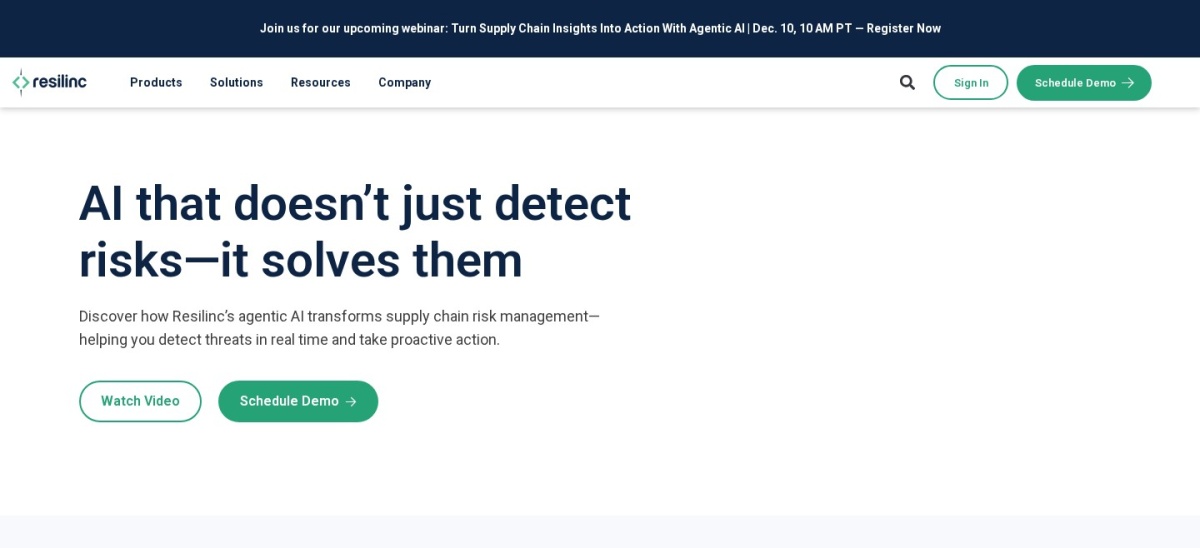
Resilinc homepage, captured Nov 2026.
Resilinc is a dedicated supply chain risk platform built around multi-tier mapping, with more than 450,000 suppliers mapped across 200 countries. Its EventWatchAI monitors disruptions and links each event to the parts, sites and orders it touches, so teams see exposure instead of just headlines.
The trade off is price and setup. Resilinc publishes no prices and sells on quote, and deep mapping takes time to build for a complex bill of materials. It suits large manufacturers that need to find single points of failure below tier one.
What we like
Deepest multi-tier mapping in this list
Event alerts tied to parts and orders
Rated 4.4 out of 5 on Gartner Peer Insights
Maps up to 10 supplier tiers deep
Watch out for
No published pricing
Mapping setup takes time for complex supply chains
4.4/5on Gartner Peer Insights (32 reviews, checked Nov 2026)
PricingCustom/yr
Best for predictive disruption alerts
Incident categories100+ monitored types
Risk scoringPredictive supplier scores
MappingSub-tier network mapping
Entry priceQuote only
everstream.ai
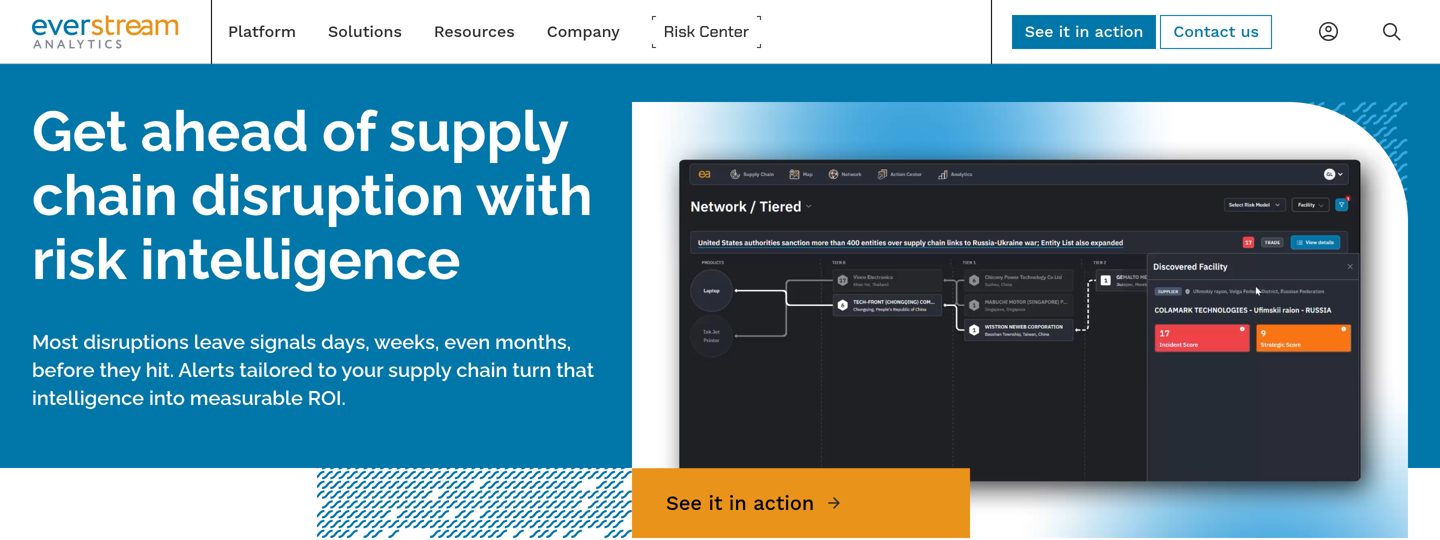
Everstream Analytics homepage, captured Nov 2026.
Everstream Analytics is a predictive risk platform that watches more than 100 incident categories, from weather and strikes to supplier financial trouble, and flags them before they hit operations. It maps sub-tier suppliers and scores risk across facilities, lanes and materials, so alerts arrive with context.
The trade off is alert tuning. Its single G2 review warns that alerts need tuning to cut noise, and pricing is quote only with no published figure. It suits large shippers and manufacturers that want early warning across a global network.
What we like
Ranked first in 3 of 4 use cases in 2026 Gartner Critical Capabilities
apexanalytix is a supplier management platform that pairs onboarding and master-data controls with continuous risk monitoring. It holds more than 360 million golden records from 1,200-plus data sources and protects over $10 trillion in annual spend, so risk flags sit beside clean supplier data.
The trade off is scope and setup. It is a broad supplier lifecycle suite rather than a pure risk monitor, and G2 reviewers note implementation takes about 7 months on average. It suits procurement teams that want onboarding, data quality and risk in one hub.
EcoVadis is a sustainability ratings platform that scores suppliers across four themes, environment, labor and human rights, ethics and sustainable procurement, using 21 criteria. Its IQ Plus tool adds real-time ESG risk intelligence, and corrective action plans help suppliers improve after assessment.
The trade off is effort. Assessments are thorough and take time, with long questionnaires and heavy documentation, and pricing is quote only. It suits buyers that must prove responsible sourcing and meet disclosure rules.
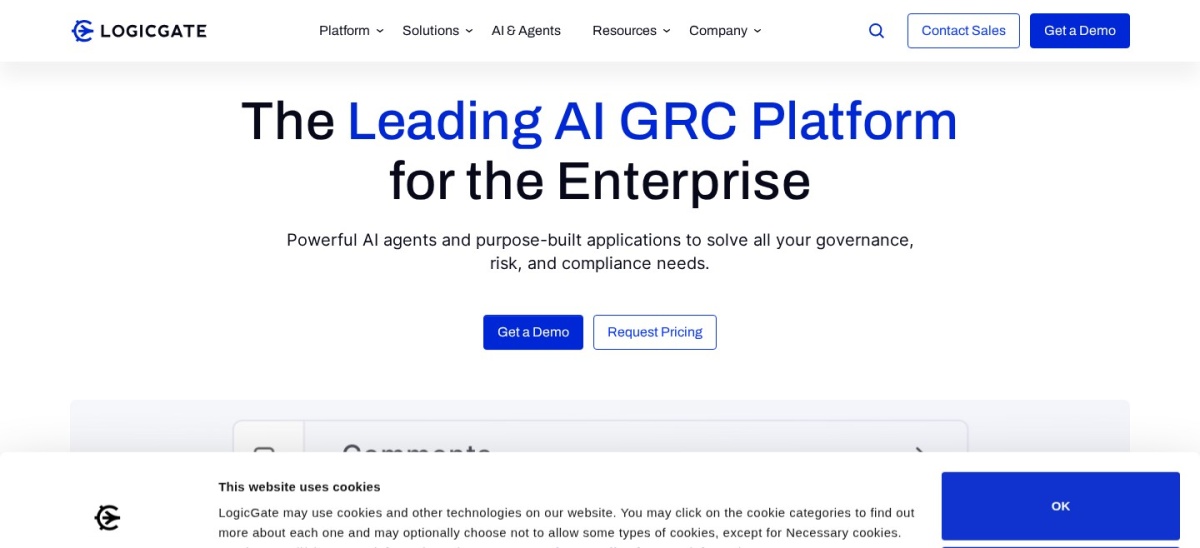
LogicGate Risk Cloud is a no-code governance, risk and compliance platform with more than 30 purpose-built applications, including a third-party risk management app. Teams build supplier assessments, workflows and reports without code, and AI agents handle intake and control checks.
The trade off is that it is a general GRC platform, not a dedicated supply chain monitor. It has no native incident feed of its own, and pricing is quote only. It suits risk teams that want supplier risk inside a wider GRC program.
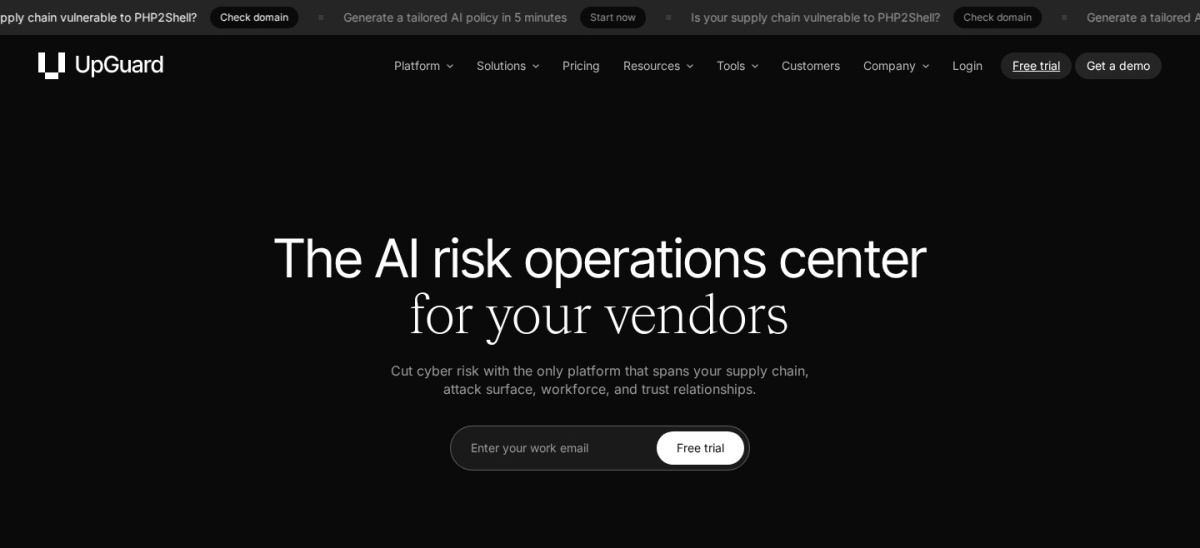
UpGuard is a vendor risk platform that scores suppliers on their external security posture and rescans them daily. Vendor Risk Standard costs $1,750 a month billed annually for 50 vendors, and a free Trust Exchange plan covers 5 vendors with security questionnaires and remediation workflows.
The trade off is focus. UpGuard watches cyber risk, not delivery, financial or ESG risk, so it complements rather than replaces a full supply chain monitor. It suits teams whose main supplier worry is a vendor data breach.
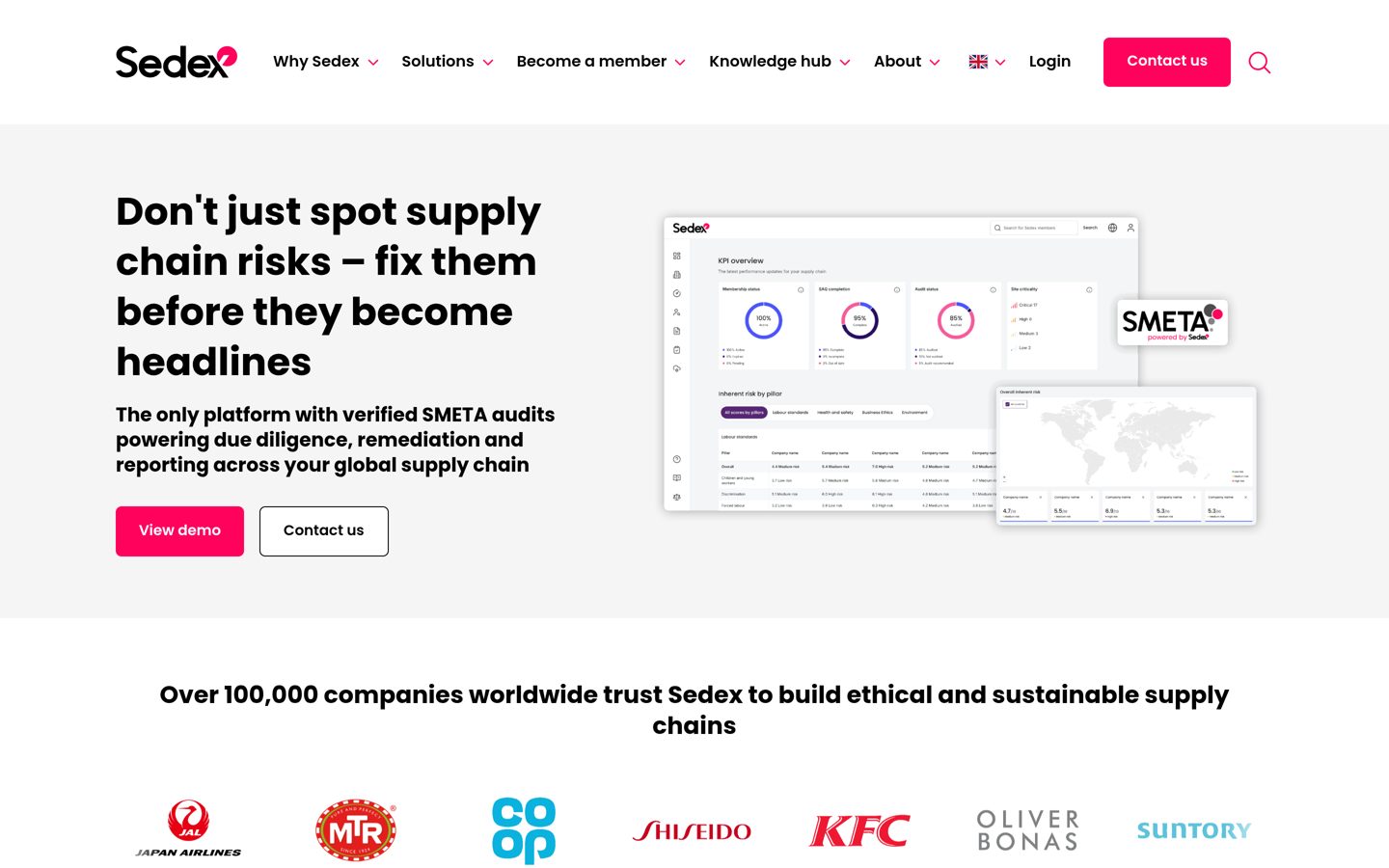
Sedex is a responsible sourcing platform that combines verified SMETA audits with supplier self-assessment questionnaires and risk scores. More than 100,000 companies use it to map supply chains, track corrective actions and share audit evidence instead of repeating audits.
The trade off is price clarity. Sedex does not publish prices on its own site, and G2 lists a starting price of £6,471 a year, so budgeting needs a quote. It suits retail, food and manufacturing buyers that need audit evidence for due diligence.
Best for supply chain risk inside a broad ESG suite
CoverageRisk, safety, sustainability
AssessmentsSupplier questionnaires
MonitoringOngoing risk signals
Entry priceQuote only
sphera.com
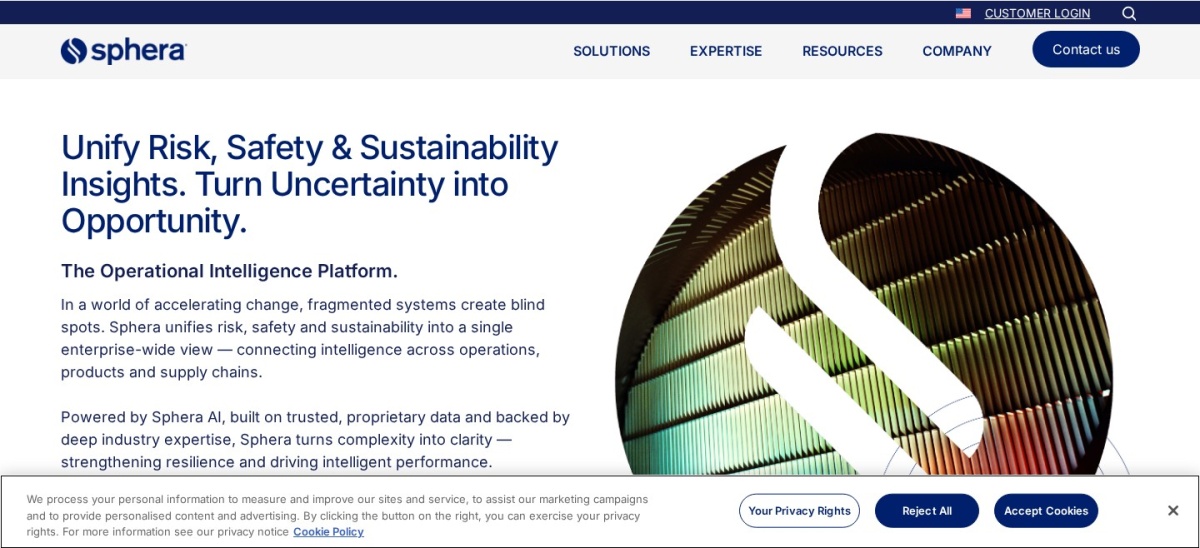
Sphera homepage, captured Nov 2026.
Sphera is a broad risk, safety and sustainability platform whose supply chain risk management module tracks supplier risk alongside ESG and operational data. It combines assessments, monitoring and compliance workflows, so supply chain risk sits in the same system as wider enterprise risk.
The trade off is breadth over depth. It is a wide suite rather than a dedicated supply chain monitor, and its G2 record is only 11 reviews. It suits large enterprises that already run Sphera for ESG or safety.
Prewave is an AI platform that reads about 4.5 million public data points a day across more than 400 languages and turns them into supplier risk alerts across 200-plus categories. It monitors 1.6 million registered suppliers and ranks risk against a buyer's own parts and exposure data.
The trade off is evidence. Prewave has only one G2 review, rated 3.5 out of 5, so public buyer feedback is almost non-existent, and pricing is quote only. It suits manufacturers that need early, multilingual warning of supplier events.
Eight of the nine tools in this list do not publish prices. Expect a quote based on supplier count, modules and contract length.
UpGuard is the exception, with Vendor Risk Standard at $1,750 a month billed annually for 50 vendors. Use that figure as a rough yardstick when you ask others for quotes.
Ask every vendor the same questions: how many suppliers the price covers, whether monitoring and mapping are separate modules, and what onboarding costs. Get the answers in writing before you shortlist.
How we chose
We started from the Gartner Magic Quadrant for Supplier Risk Management Solutions and the G2 grids for third-party and supplier risk management, then kept tools with a dedicated supply chain risk product.
Prices come from each vendor's pricing page, checked on 26 November 2026. Ratings come from G2 and Gartner Peer Insights on the same day. Where a vendor shows no price, the list shows Custom and says so in the text.
We left out tools with no public rating anywhere, including Interos and Sourcemap. No vendor paid for a place, and we do not claim to have used these tools ourselves.
How to choose supply chain risk management software
Start with the suppliers that would hurt most if they stopped, then match the tool to that risk.
List your critical suppliers and single points of failure. Rank suppliers by revenue impact and by how hard they are to replace. A tool earns its price by covering that short list first.
Ask whether you need mapping or monitoring most. Resilinc and Everstream map deep into sub-tiers, while EcoVadis and Sedex focus on assessments and audit evidence. See how to run a security audit for a checklist mindset you can reuse for supplier reviews.
Check the data behind the scores. Ask which sources feed each risk score, how often scores refresh, and whether you can see the evidence behind a flag.
Run a pilot on one product line. Give the vendor one bill of materials and a few weeks of events, then judge the alerts on false positives before you sign a company-wide deal.
FAQ
What is the best supply chain risk management software?
Resilinc is the best pick for most large teams. It maps more than 450,000 suppliers across 200 countries with multi-tier visibility, and it is rated 4.4 out of 5 on Gartner Peer Insights from 22 reviews.
How much does supply chain risk management software cost?
Most tools in this list sell on quote only, with no published price. UpGuard is the exception at $1,750 a month billed annually for its Vendor Risk Standard plan. Expect enterprise pricing that scales with supplier count and modules.
What is the difference between supply chain risk management and supply chain visibility?
Risk management scores suppliers and predicts disruption, while visibility tracks where shipments and inventory are right now. Resilinc and Everstream cover both, which is why they also appear in visibility shortlists.
Do I need multi-tier mapping?
Yes, if you buy complex assemblies or rely on a few critical parts. Most disruptions start below tier one, at a sub-tier factory, a port or a raw material source your direct suppliers do not control.
Can small businesses use these tools?
Most are priced for large enterprises, so small teams should start with the free options. UpGuard has a free Trust Exchange plan for 5 vendors, and EcoVadis and Sedex also serve mid-market teams.
How do these tools find supplier risk?
They combine external signals such as news, sanctions lists, financial data, weather and cyber feeds with questionnaires and audit evidence. Scores update as new events land, and alerts link each event to the suppliers and orders it touches.
SaaS SEO and WordPress specialist with about 8 years of experience. Rakib compares WordPress plugins, themes, hosting and software using public pricing, documentation and user reviews. See how we rank.