Slate is the best software to increase student enrollment for colleges that run admissions in-house, with a purpose-built CRM from $30,000 a year. Smaller teams should start with HubSpot's free CRM, or pick Element451 for AI-led outreach from $20,000 a year.
How we make this list: we compare pricing pages, product documentation and public user reviews, then re-check every price before each update. No product paid for a place. Disclosure.
Slate is the only tool here built solely for higher education admissions, with published licenses from $30,000 a year.
Element451 runs AI agents that answer applicants and book visits, from $20,000 a year.
LeadSquared publishes education pricing: Pro from $15,000 a year for up to 10 users.
HubSpot and Zoho CRM both offer free plans, with paid seats from $20 and $14 a month.
Salesforce Education Cloud starts at $87 per user a month, but setup and admin time are the real costs.
Per-seat tools like Pipedrive, Freshsales and Nutshell fit small teams, with paid plans from $9 to $14 a user a month.
What enrollment software should do
Enrollment software turns inquiries into enrolled students. It captures leads from web forms, events and school visits, then routes each one to a counselor with reminders to follow up.
The best tools track every applicant through one funnel, from first inquiry to application, decision and deposit. Look for application tracking, automated email and text follow-up, event management and reports that show where applicants drop off.
Pricing splits two ways. Higher-ed platforms such as Slate and Element451 charge annual licenses by volume, while general CRMs charge per seat. Our guide on creating a landing page in WordPress shows how inquiry forms feed the top of that funnel.
Do not buy on features alone. Ask who owns the system day to day, how long setup takes, and what happens when the one person who knows it leaves.
The 9 best software to increase student enrollment
01
Slate by Technolutions
4.4/5on G2 (74 reviews, checked Nov 2026)
Starts at$30,000/yr
Best enrollment CRM overall
Cheapest license$30,000/yr, under 1,500 apps
Pricing basisApplication volume
Free planNo, demo only
G2 rating4.4/5, 74 reviews
technolutions.com
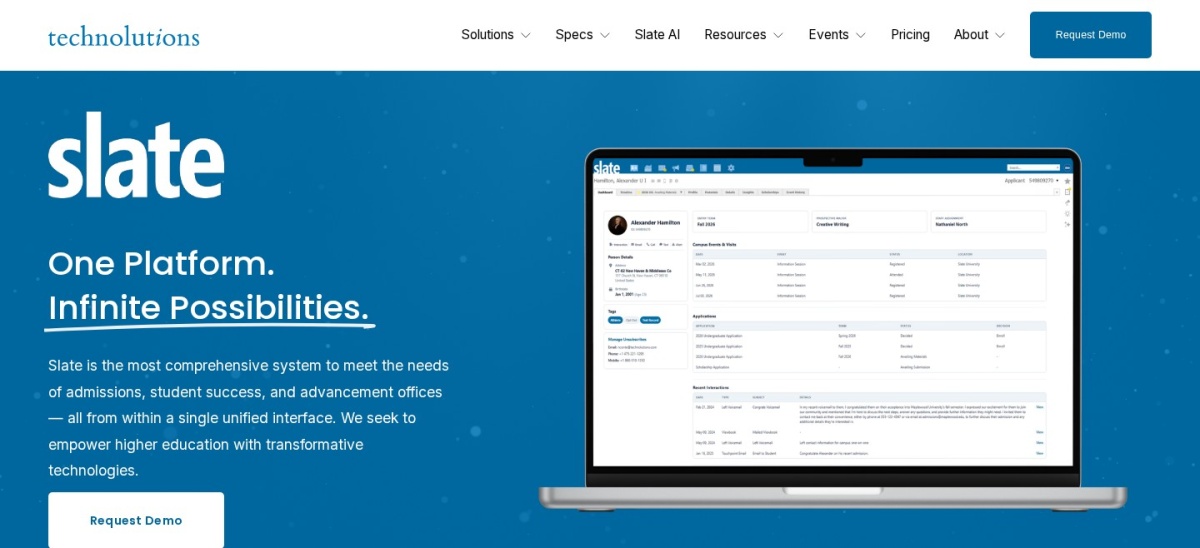
Slate by Technolutions homepage, captured Nov 2026.
Slate by Technolutions is a CRM built only for higher education, covering recruitment, applications, events and student communications in one system. Every license includes all features and support, with admissions licenses from $30,000 a year for under 1,500 applications and most clients paying about $50,000.
The trade off is price and setup time. The $30,000 floor is high for a small college, and G2 reviewers report an average implementation of about 5 months with a learning curve around queries. It suits degree-granting colleges that want one system for the full admissions funnel.
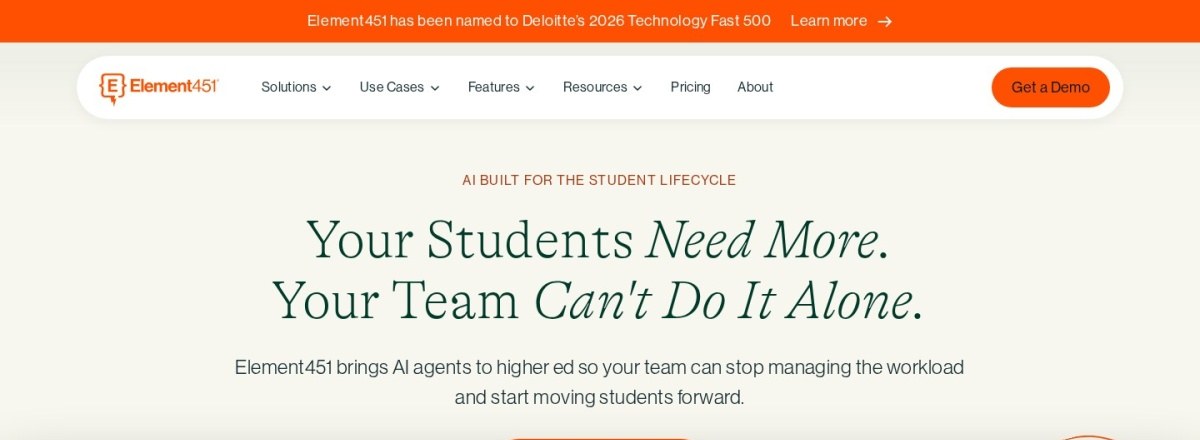
Element451 is an AI-first engagement and enrollment platform built for higher education. Its Bolt agents answer applicant questions, run campaigns, read applications and book campus visits, and the vendor says it serves more than 400 institutions.
The trade off is price opacity beyond the floor. Plans start at $20,000 a year, but the final price depends on enrolled students and support tier, so budgeting needs a formal quote. It suits lean admissions teams that want AI to cover a large inquiry pool without hiring.
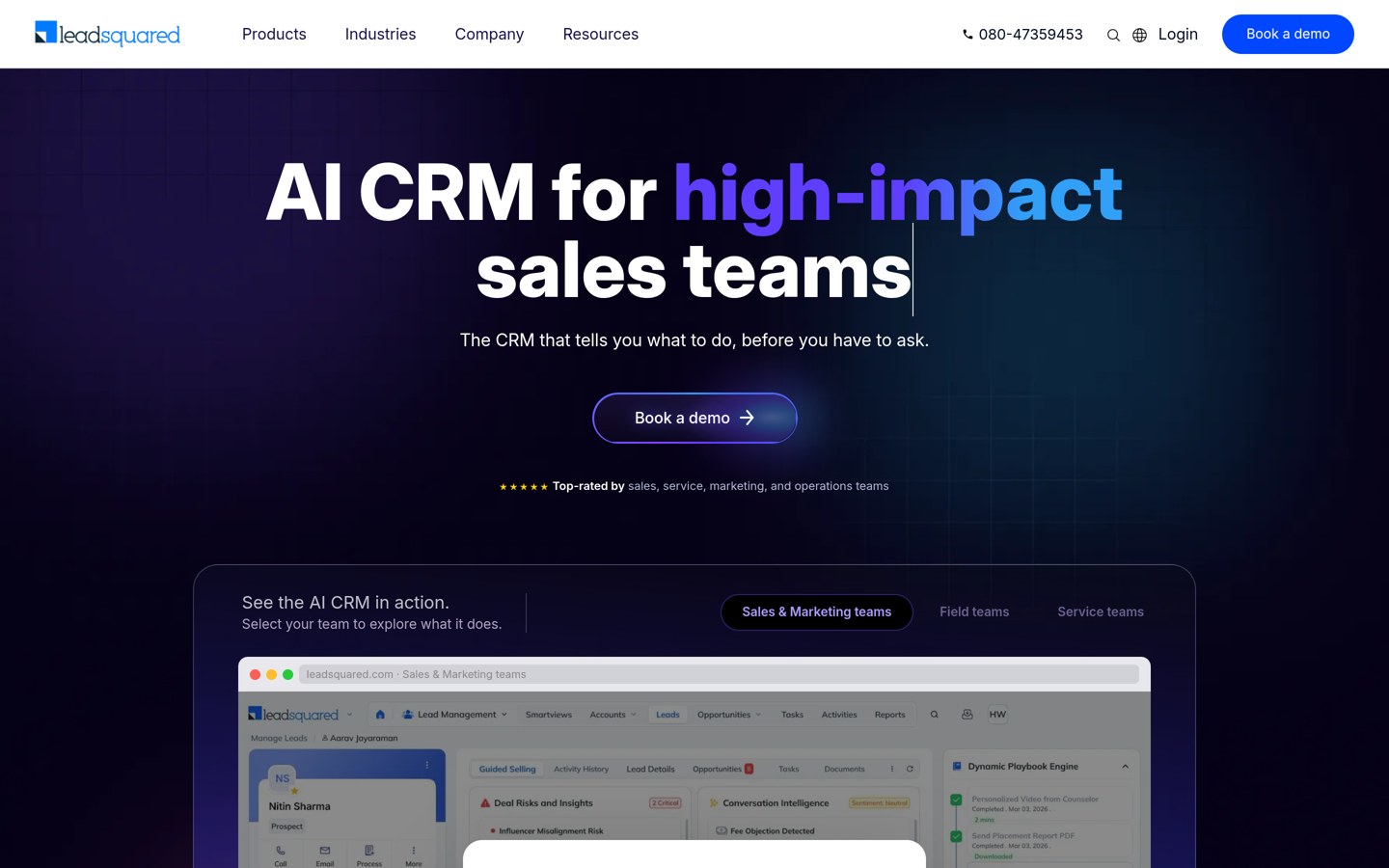
LeadSquared is a lead management CRM with dedicated higher education plans that track inquiries, score leads and automate counselor follow-ups. Pro starts at $15,000 a year for up to 10 users, and the vendor says 847 higher education institutions use the platform.
The trade off is the 10-user cap on published plans. Larger admissions teams move into custom pricing, and message volumes can add cost. It suits institutions with high inquiry volume that want structured lead routing before talking to sales.
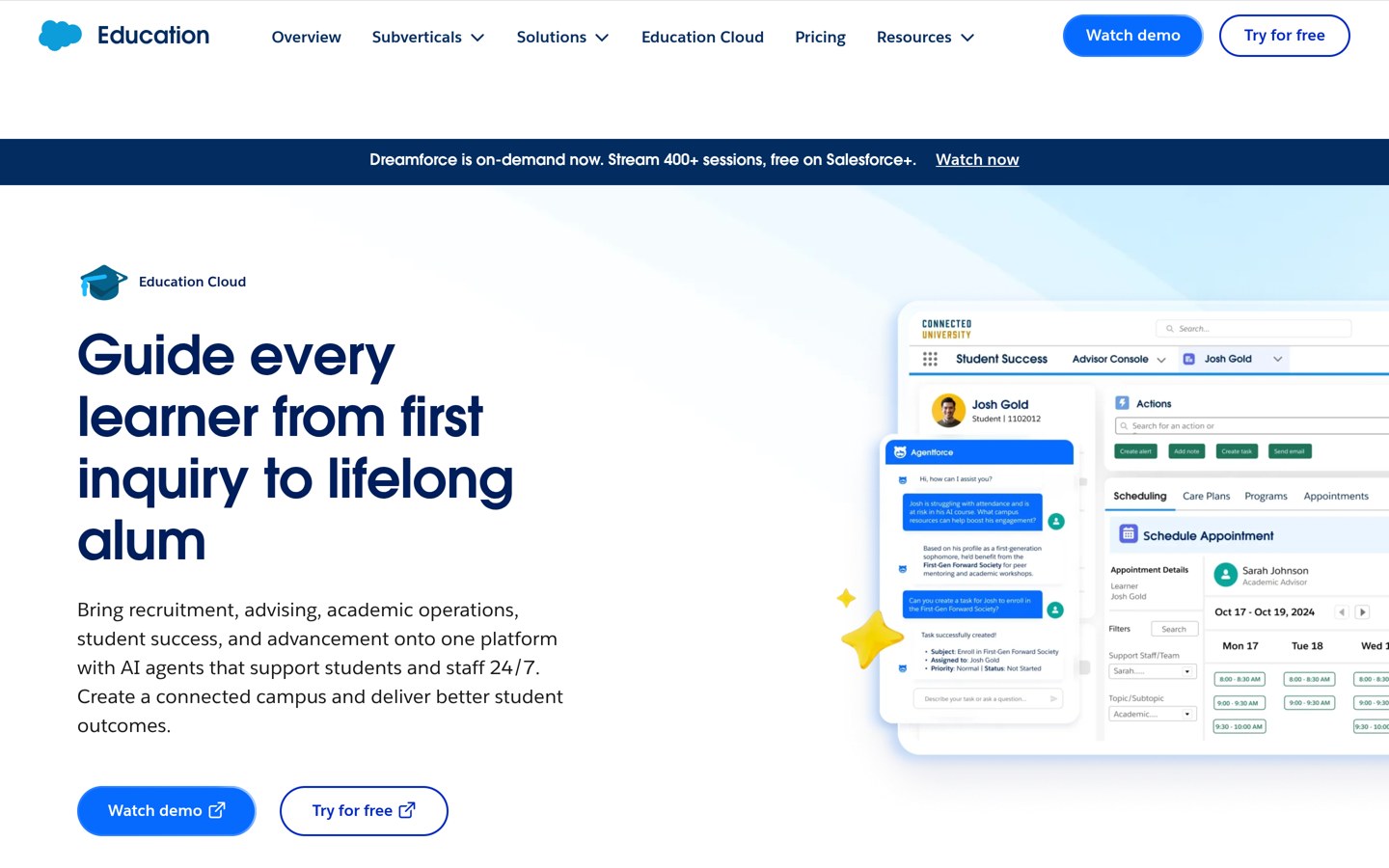
Salesforce Education Cloud homepage, captured Nov 2026.
Salesforce Education Cloud is an enterprise CRM for recruitment, admissions, student success and advancement on one Salesforce platform. Core starts at $87 per user a month billed annually at nonprofit pricing, with modules for the full learner lifecycle and AI agents.
The trade off is effort. Reviewers call it powerful but slow to set up and learn, and implementation often costs more than the licenses. It suits large universities that already run Salesforce elsewhere on campus.
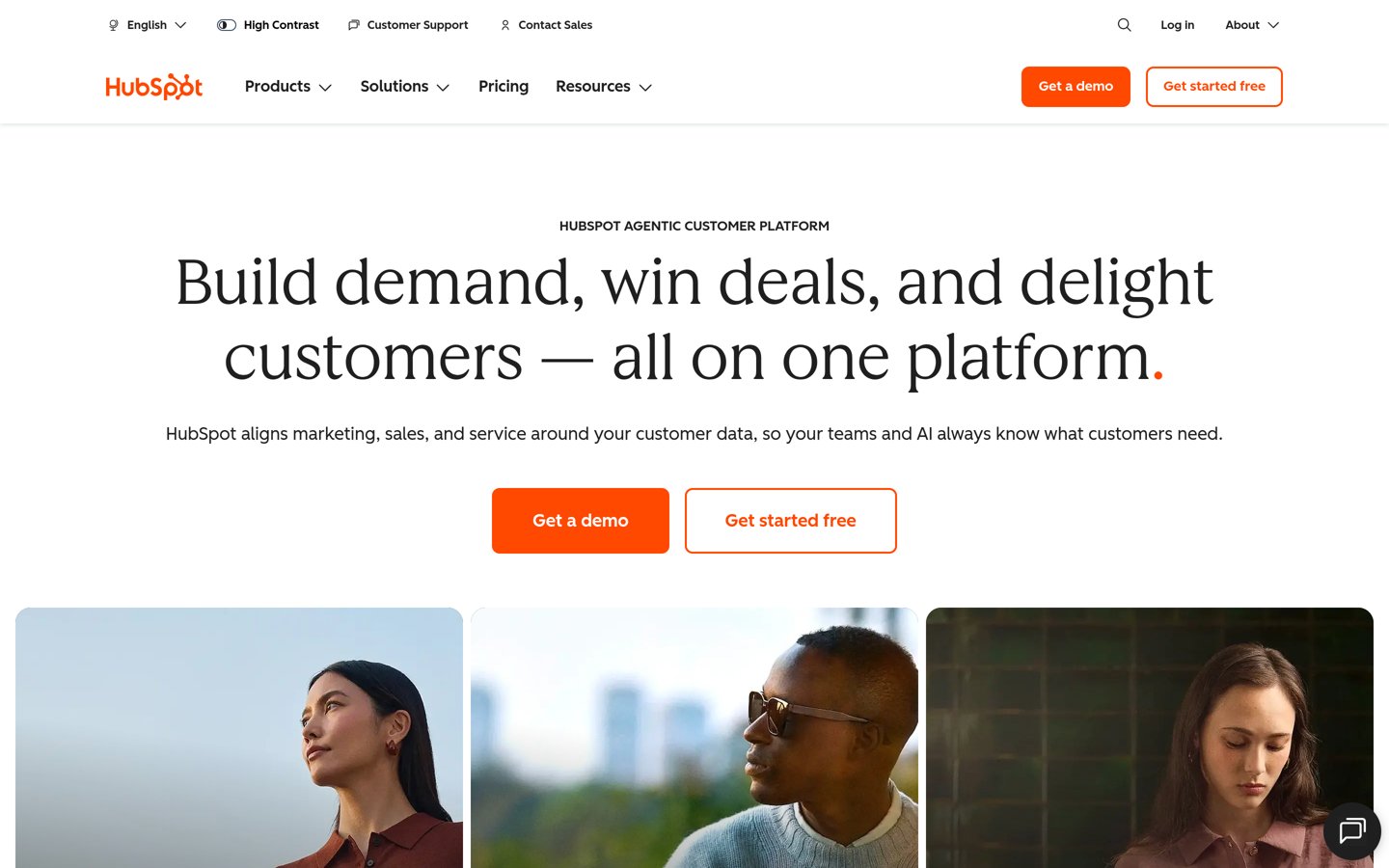
HubSpot is a general CRM that schools use to capture web inquiries, log emails and run automated follow-up sequences. The free CRM covers contacts, forms and meeting links, and Starter costs $20 per seat a month at the regular price.
The trade off is fit. HubSpot has no native admissions workflows, so application tracking needs custom setup, and costs climb fast as contact lists grow. It suits small colleges and continuing-education programs that want a free start and strong marketing tools.
What we like
Free CRM with no time limit
Regular Starter price is a clear $20 a seat
Largest review base in this list
Watch out for
No native admissions workflows
Costs rise fast with contacts and automation
Professional adds sequences and forecasting at $90 a seatVisit hubspot.com
06
Zoho CRM
4.1/5on G2 (2,947 reviews, checked Nov 2026)
Paid from$14/mo
Best budget CRM for small admissions teams
Cheapest paid planStandard, $14/user/mo
Free planYes, up to 3 users
AI assistantZia on higher tiers
G2 rating4.1/5, 2,947 reviews
zoho.com
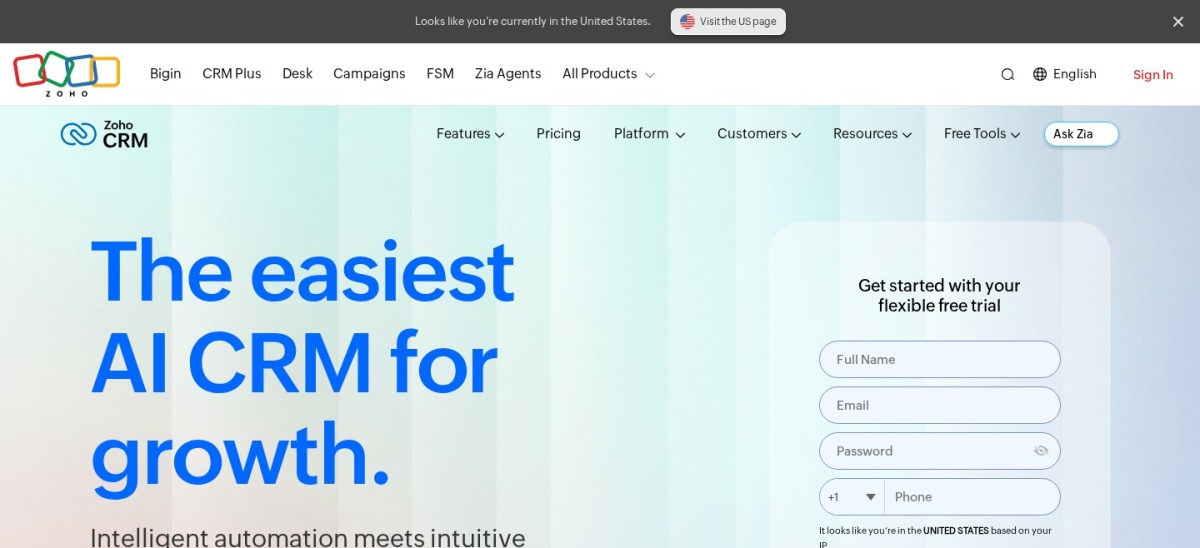
Zoho CRM homepage, captured Nov 2026.
Zoho CRM is a low-cost sales CRM with custom modules, workflow automation and email tracking that small admissions teams adapt for inquiry follow-up. The free edition covers up to 3 users, and Standard costs $14 per user a month billed yearly.
The trade off is admissions fit. It has no built-in application or enrollment workflows, and Zia AI and higher record limits sit on pricier tiers. It suits budget-conscious schools that want customizable pipelines without a five-figure contract.
What we like
Free edition for up to 3 users
Low $14 entry with custom modules
Large review base of 2,947 G2 ratings
Watch out for
No native admissions workflows
AI tools need higher editions
Professional at $23 adds AI agents and more reportsVisit zoho.com
07
Pipedrive
4.3/5on G2 (5,034 reviews, checked Nov 2026)
Starts at$14/mo
Best visual pipeline for applicant tracking
Cheapest paid planLite, $14/seat/mo
Free planNo, 14-day trial
PipelinesVisual drag-and-drop boards
G2 rating4.3/5, 5,034 reviews
pipedrive.com
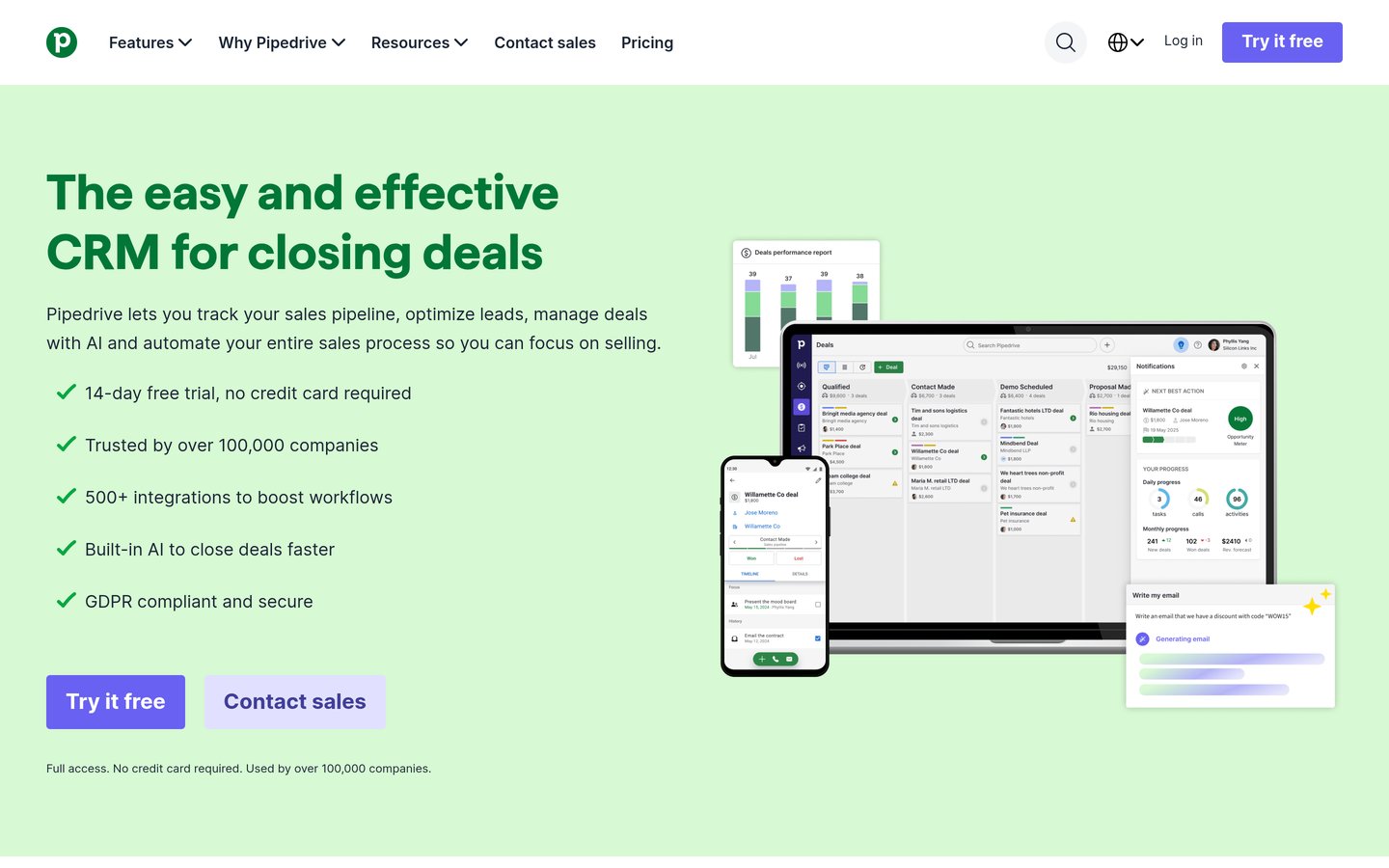
Pipedrive homepage, captured Nov 2026.
Pipedrive is a pipeline CRM whose Lite plan starts at $14 per seat a month billed annually. Teams use its visual boards and activity reminders to move prospects, partners or applicants through clear stages without complex setup.
The trade off is depth. Email marketing and visitor tracking need paid add-ons, and there is no free tier beyond a 14-day trial. It suits small admissions or partnership teams that prefer simple stage tracking over a full campus suite.
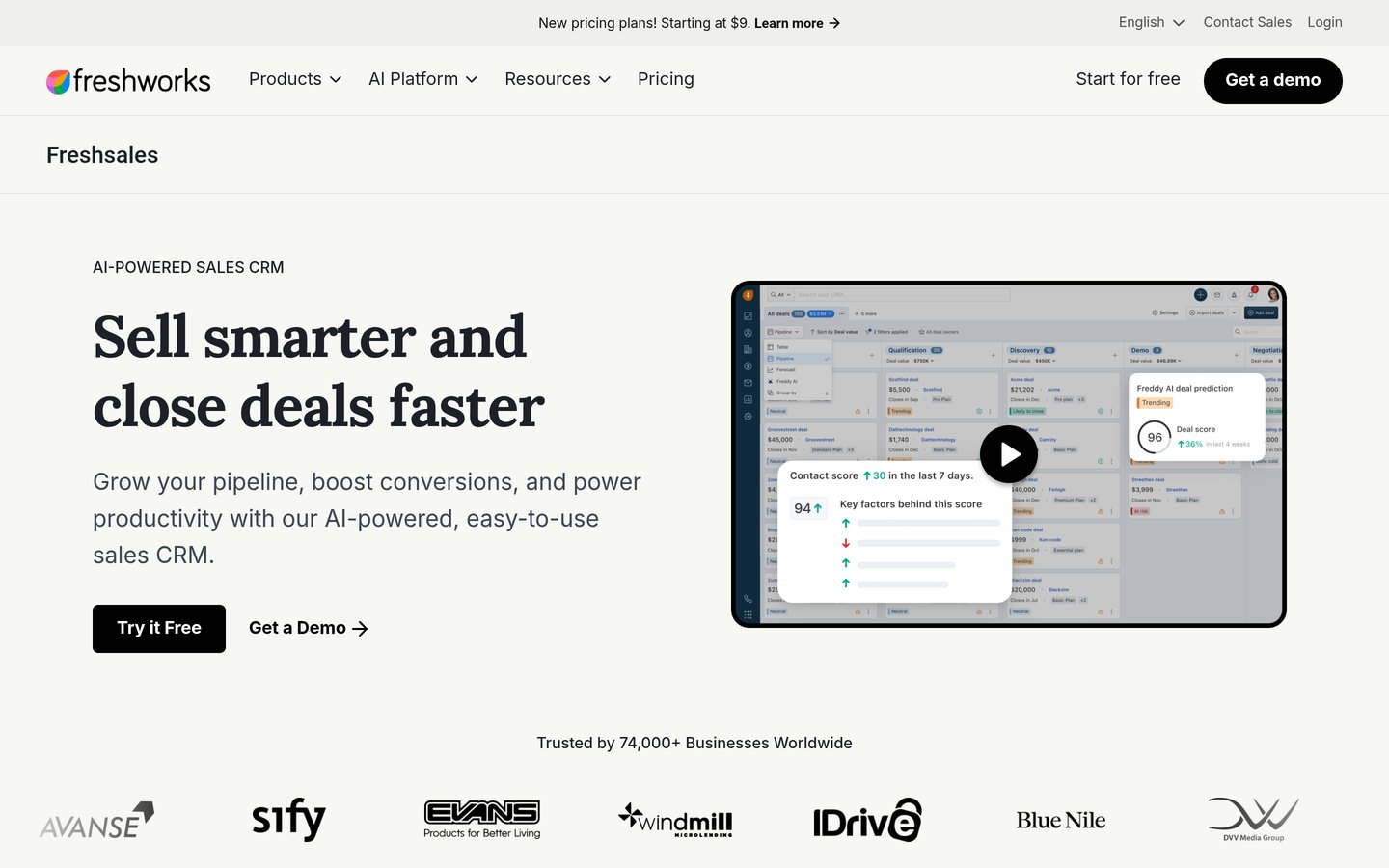
Freshsales is a sales CRM from Freshworks with pipelines, email tracking and built-in calling for admissions teams that phone prospects. The free plan covers up to 3 users, and Growth costs $9 per user a month billed annually.
The trade off is the tier jump. Growth covers the basics, but AI insights and advanced automation need Pro at $39 a user a month. It suits small teams that call applicants often and want phone, email and pipeline in one place.
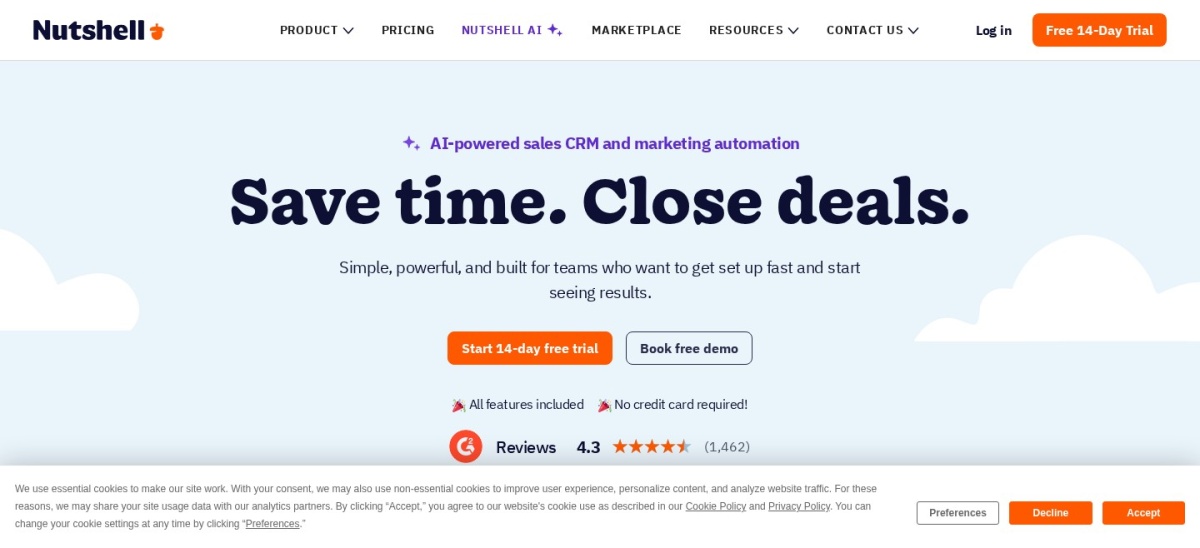
Nutshell is a straightforward CRM whose Foundation plan starts at $13 per user a month billed annually. It includes unlimited contacts, email and calendar sync, web forms and landing pages for capturing inquiries.
The trade off is reporting depth. Custom pipelines and sales automation sit on higher tiers, and reviewers call the reporting thin for analysis. It suits small education programs that want simple contact tracking without steep setup.
Ask for the full first-year cost in writing, including setup, training, message usage and any per-student or per-application fees.
Check who owns the system after launch. Enterprise tools need a trained admin, while per-seat CRMs can run with one admissions officer.
Trial the funnel with real data. Import last year's inquiries and see whether the reports show where applicants dropped off.
How we chose
We started from the enrollment and higher education CRMs most often named in 2026 comparisons, then kept 9 established products with published prices and a public review footprint.
Prices come from each vendor's pricing page, checked on 26 November 2026, with the top 3 read on their official pages. Ratings come from G2 or Capterra on the same day. Where a vendor shows a sale, the list shows the regular price.
We left out tools with no published price, including TargetX and Ellucian CRM Recruit, and niche tools with too few reviews to judge. No vendor paid for a place, and we do not claim to have used these tools ourselves.
How to choose enrollment software
Start with your funnel, not the feature list, then match the tool to your team size.
Count your inquiries and applications. Volume decides the price model. A school with 1,000 applications fits Slate's $30,000 tier, while a small program may pay less per seat on a general CRM.
List the jobs the tool must do. Application tracking, automated follow-up, events and reporting cover most enrollment work. Anything else is a nice extra, not a reason to pay more.
Check who will run it. Slate and Salesforce need trained admins and months of setup. HubSpot, Zoho CRM and Nutshell can run with one admissions officer.
Get the first-year cost in writing. Ask for setup, training, message usage and renewal pricing before you sign, and compare the total across tools. See how to grow an email list with WordPress to feed the funnel once the tool is live.
FAQ
What is the best software to increase student enrollment?
Slate is the best pick for colleges that run admissions in-house. It is built only for higher education, starts at $30,000 a year for under 1,500 applications, and holds a 4.4 out of 5 G2 rating from 74 reviews.
What is the cheapest enrollment software?
Freshsales is the cheapest paid option here at $9 per user a month billed annually, with a free plan for up to 3 users. Nutshell follows at $13 and Zoho CRM at $14 per user a month, both billed annually.
Is there free enrollment software?
Yes. HubSpot, Zoho CRM and Freshsales all offer free plans for small teams. They cover contacts, forms and basic follow-up, but none includes native application tracking, so larger admissions offices still need a paid higher-ed platform.
How much does Slate cost?
Slate admissions licenses start at $30,000 a year for under 1,500 submitted applications, rising to $175,000 for 80,000 to 100,000 applications. Technolutions says most clients pay about $50,000 a year, and every license includes all features and support.
Does HubSpot work for student enrollment?
Yes, for small teams. HubSpot captures web inquiries, logs emails and automates follow-up from a free CRM, with Starter at $20 per seat a month. It has no native admissions workflows, so application tracking needs custom setup.
What is Element451?
Element451 is an AI-first enrollment platform for higher education. Its Bolt agents answer applicant questions, run campaigns and book campus visits, with plans from $20,000 a year based on enrolled students and support tier.
SaaS SEO and WordPress specialist with about 8 years of experience. Rakib compares WordPress plugins, themes, hosting and software using public pricing, documentation and user reviews. See how we rank.