Adobe Photoshop is the best software for image editing for most serious editors, with layered retouching, RAW support and AI tools at $22.99 a month. Pick Affinity if you want a full pro editor for free, or Canva if you want fast templates and one-click edits.
How we make this list: we compare pricing pages, product documentation and public user reviews, then re-check every price before each update. No product paid for a place. Disclosure.
Adobe Photoshop leads at 4.6 out of 5 from 13,449 G2 reviews, at $22.99 a month for the single-app plan.
Affinity is a full professional editor for $0, with layers, masks and RAW editing free with a Canva account.
Canva has the highest rating here at 4.7 out of 5, and Pro costs $18 a month, or $144 a year.
GIMP is free and open source, rated 4.3 out of 5 from 1,484 G2 reviews, but it has no built-in RAW editor.
Photopea, Pixlr and Picsart all have free plans and paid upgrades from $4.90 to $5 a month.
Capture One Pro and DxO PhotoLab are the pro RAW picks, at $18 a month and $159.99 once.
What to look for in image editing software
Image editing covers a wide range, from quick crops and filters on a phone to layered retouching and RAW processing on a desktop. The right tool depends on the files you edit and how much control you need.
Layers and masks matter most for serious work. They let you change one part of an image without touching the rest, and they are the main gap between a pro editor and a quick filter app.
RAW support matters if you shoot with a camera. A RAW editor reads the full sensor data, so you can recover shadows and highlights that a JPEG has already thrown away.
Price models vary more than features do. Some tools charge every month, some sell a one-time licence, and six of the tools here are free at the core. Our guide on optimizing images for WordPress covers what to do with the files once they are edited.
Free plans are real here, but they have limits. Expect ads, watermarks on some exports, or AI tools kept behind a paid plan.
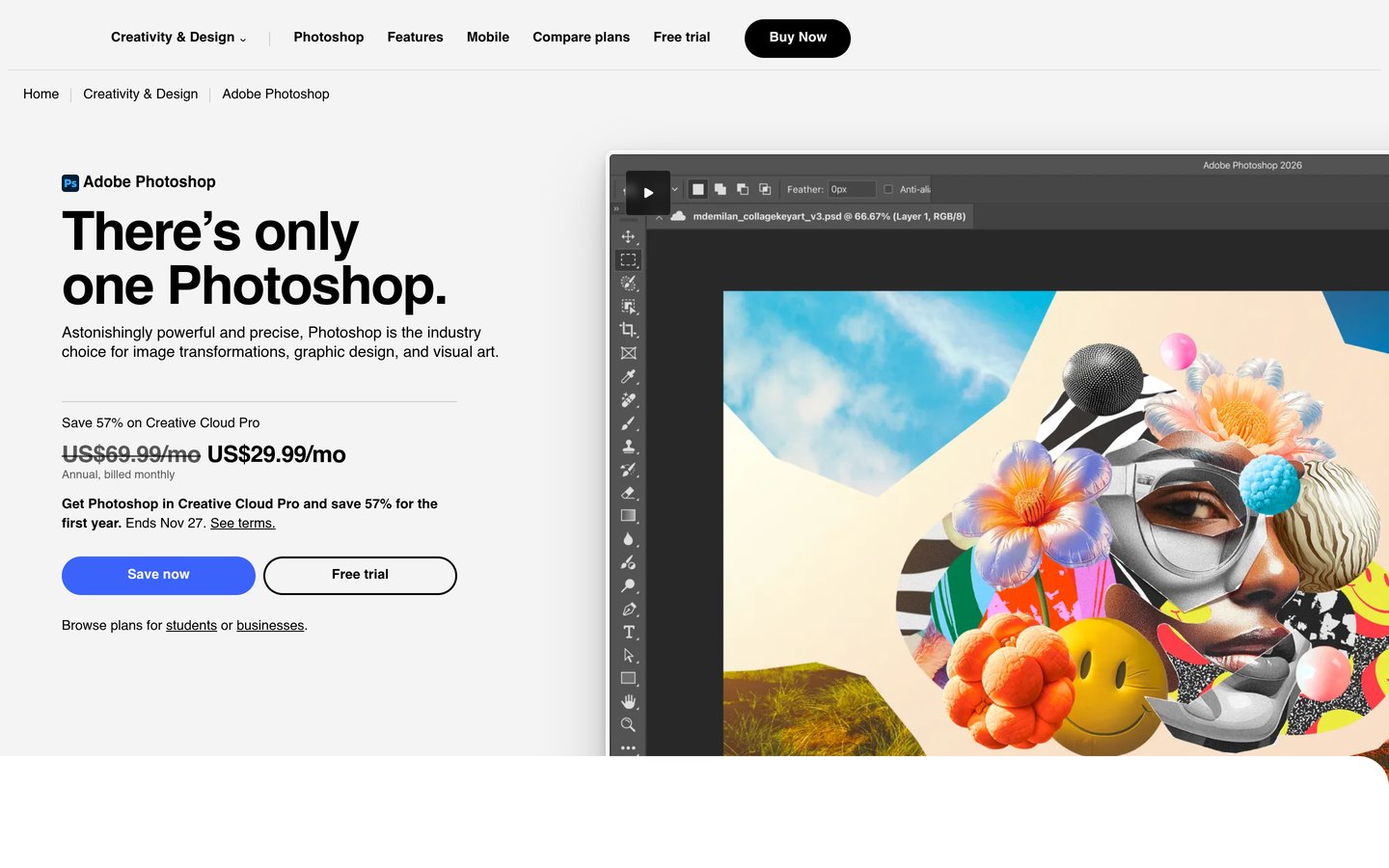
Adobe Photoshop is the standard for layered retouching, compositing and photo manipulation, on desktop, web and mobile. The single-app plan costs $22.99 a month and includes Adobe Express Premium, 100GB of cloud storage and generative AI tools such as Generative Fill.
The trade off is the subscription. There is no free plan and no way to buy Photoshop outright, so the cost never stops. It suits photographers, retouchers and designers who edit images every day and need the deepest toolset.
What we like
Deepest layered editing and retouching tools
Generative Fill and other AI tools included
Largest review base in this list, 13,449 G2 reviews
Runs on desktop, web and mobile
Watch out for
Subscription only, with no free plan
Steep learning curve for beginners
Most expensive monthly plan here
The Photography plan adds Lightroom for $19.99 a monthVisit adobe.com
02
Affinity
4.5/5on G2 (234 reviews, checked Nov 2026)
PriceFree
Best free professional editor
PriceFree
PlatformsMac, Windows, iPad
RAW editingYes, Develop Persona
Layers and masksYes
affinity.serif.com
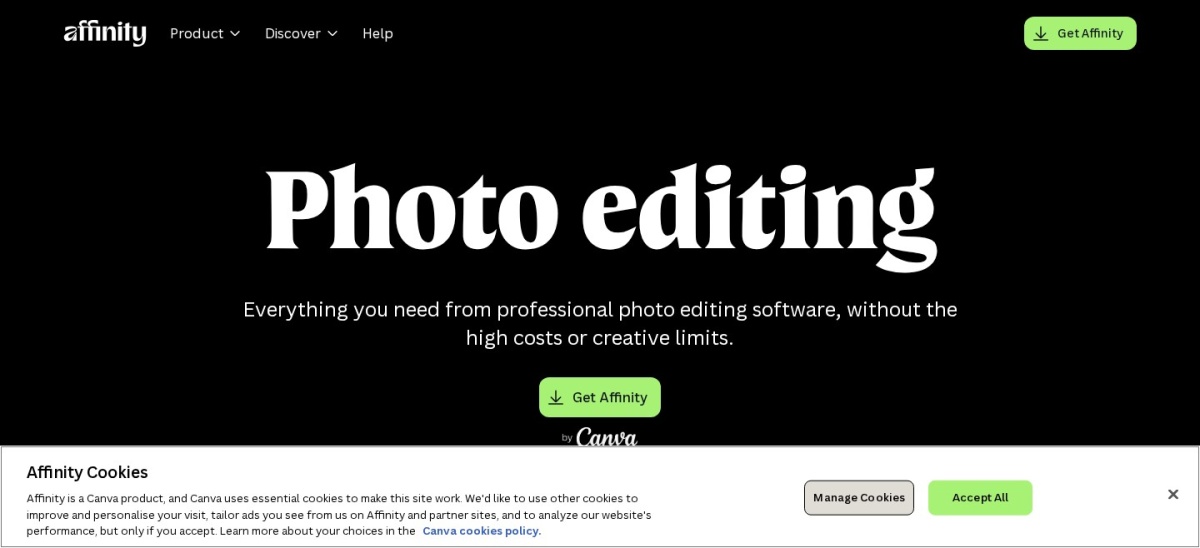
Affinity homepage, captured Nov 2026.
Affinity is the unified photo, vector and layout app from Canva, and its core tools are now free with a free Canva account. It covers layers, masks, live filters, RAW developing, panorama stitching, HDR merge and focus stacking, which is the full Photoshop-style toolkit at $0.
The trade off is the AI tools. Generative Fill, Expand and Remove Background need a paid Canva plan, and the old $69.99 Photo 2 licence is no longer sold. It suits anyone who wants a professional pixel editor and never wants another monthly bill.
Canva is a design platform with a photo editor built in, aimed at fast social graphics, marketing images and presentations. The free plan includes 1.6 million-plus templates, and Pro costs $18 a month, or $144 a year, adding 3.6 million-plus templates, 141 million-plus elements, 5 Brand Kits and 100GB of storage.
The trade off is editing depth. Canva has no layers in the Photoshop sense and no full RAW workflow, so it cannot replace a pixel editor for retouching. It suits marketers and small businesses who need polished images fast.
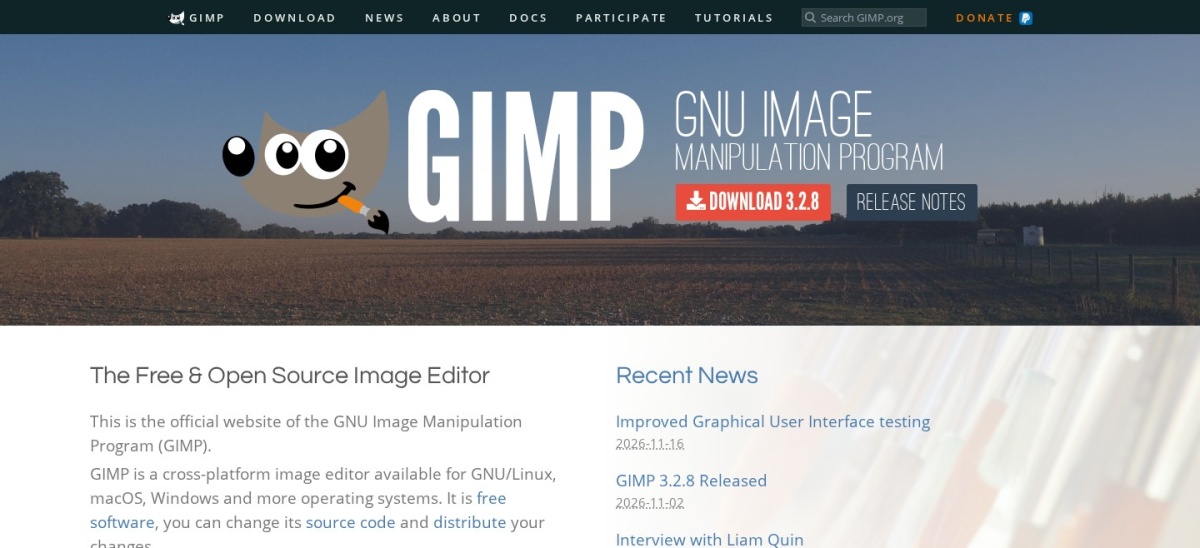
GIMP is a free, open-source image editor for Windows, macOS and Linux, now on version 3.2. It covers layers, masks, scripted edits and a wide range of file formats, including PSD, with no account and no cost.
The trade off is polish. The interface is less friendly than paid rivals, there is no built-in RAW editor, and support comes from the community and documentation. It suits users who want a free desktop editor and are willing to learn it.
What we like
Free forever, with no account needed
Layers, masks and plug-ins included
Runs on Windows, macOS and Linux
Large review base for a free tool
Watch out for
No built-in RAW editor
Interface feels dated next to paid rivals
No official support line
Free with no paid plan; donations support developmentVisit gimp.org
05
Capture One Pro
4.5/5on G2 (79 reviews, checked Nov 2026)
Starts at$18/mo
Best for studio RAW and tethered shooting
Tethered captureYes
RAW editingYes
CatalogSessions and Catalogs
Paid planPro, $18/mo
captureone.com
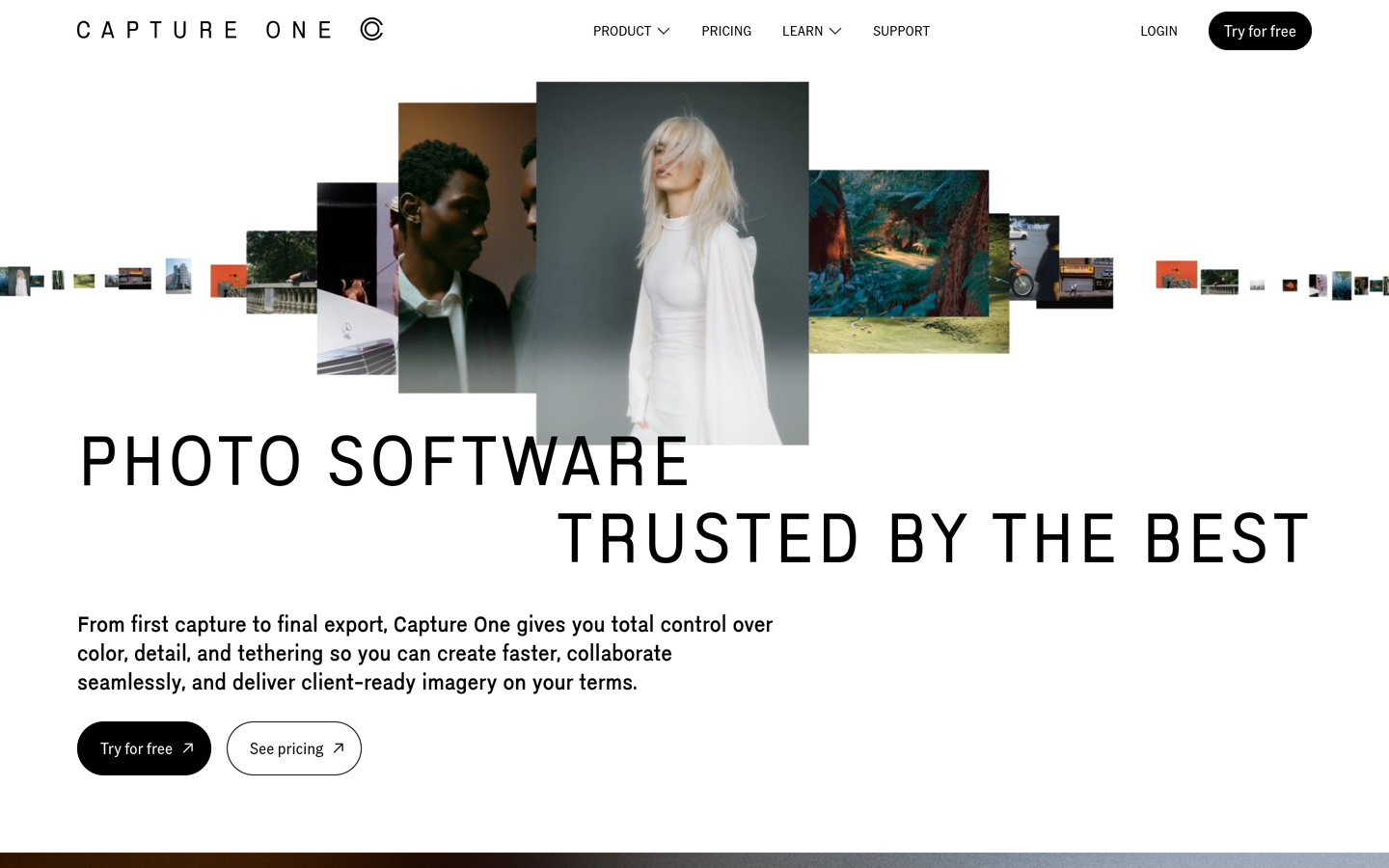
Capture One Pro homepage, captured Nov 2026.
Capture One Pro is a RAW-first photo editor built for studio work. Tethered capture drops files straight into a session, and its color tools and masking are among the best in any editor, with support for more than 550 cameras.
The trade off is price and depth. Pro costs $18 a month billed annually, with a $349 perpetual licence as an alternative, and casual photographers will find it deep. It suits studio and fashion photographers who need exact color.
DxO PhotoLab is a RAW editor built around image quality, with lab-measured lens correction modules and local adjustments. The current version is PhotoLab 10, sold as a one-time purchase: Essential costs $159.99 and Elite costs $249.99.
The trade off is that the best noise reduction costs more. DeepPRIME denoise is in the $249.99 Elite edition, not Essential, and there are no layers or tethering. It suits photographers shooting at high ISO who want the cleanest RAW files.
What we like
Lab-measured lens and camera corrections
One-time licence, no subscription
Strong local adjustments and masking
30-day free trial
Watch out for
DeepPRIME needs the $249.99 Elite edition
Only 14 Capterra reviews, a very small sample
No layers or tethered shooting
Elite adds DeepPRIME denoise for $249.99 onceVisit dxo.com
07
Photopea
4.6/5on G2 (21 reviews, checked Nov 2026)
Paid from$5/mo
Best free browser editor for PSD files
PriceFree with ads
FormatsPSD, AI, SVG, PDF
Install neededNo, browser
Paid planPremium, $5/mo
photopea.com
Photopea homepage, captured Nov 2026.
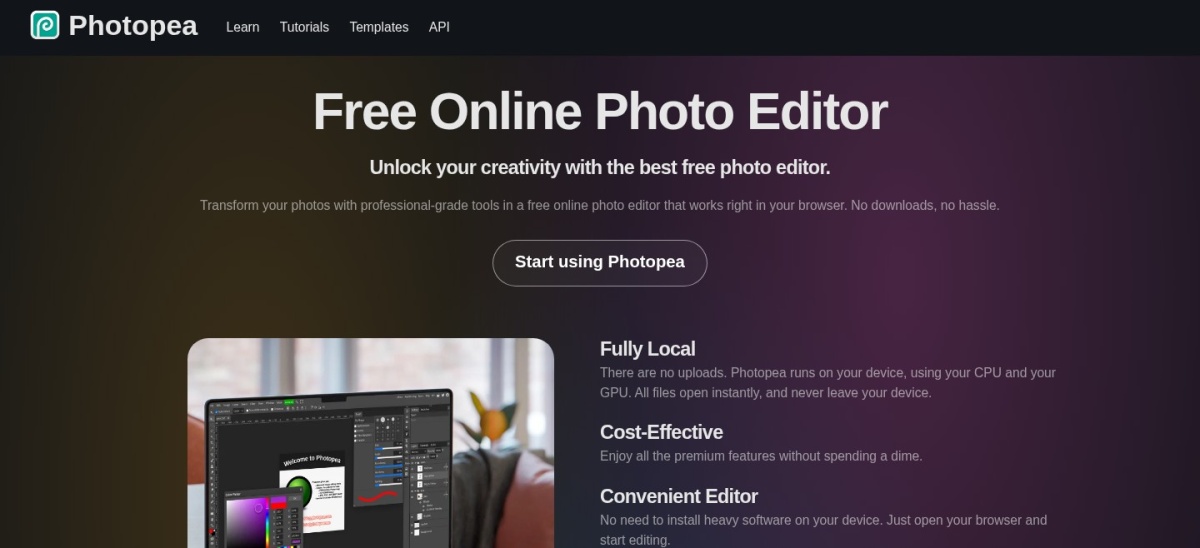
Photopea is a browser-based editor that opens and edits layered PSD, AI, SVG and PDF files with no install. The core editor is free with ads, and Premium costs $5 a month, or $50 a year, for ad-free editing and extra storage.
The trade off is the free tier. Ads sit beside the canvas and can slow older machines, and there is no desktop app or cloud catalog. It suits anyone who needs to edit a PSD on a machine where nothing can be installed.
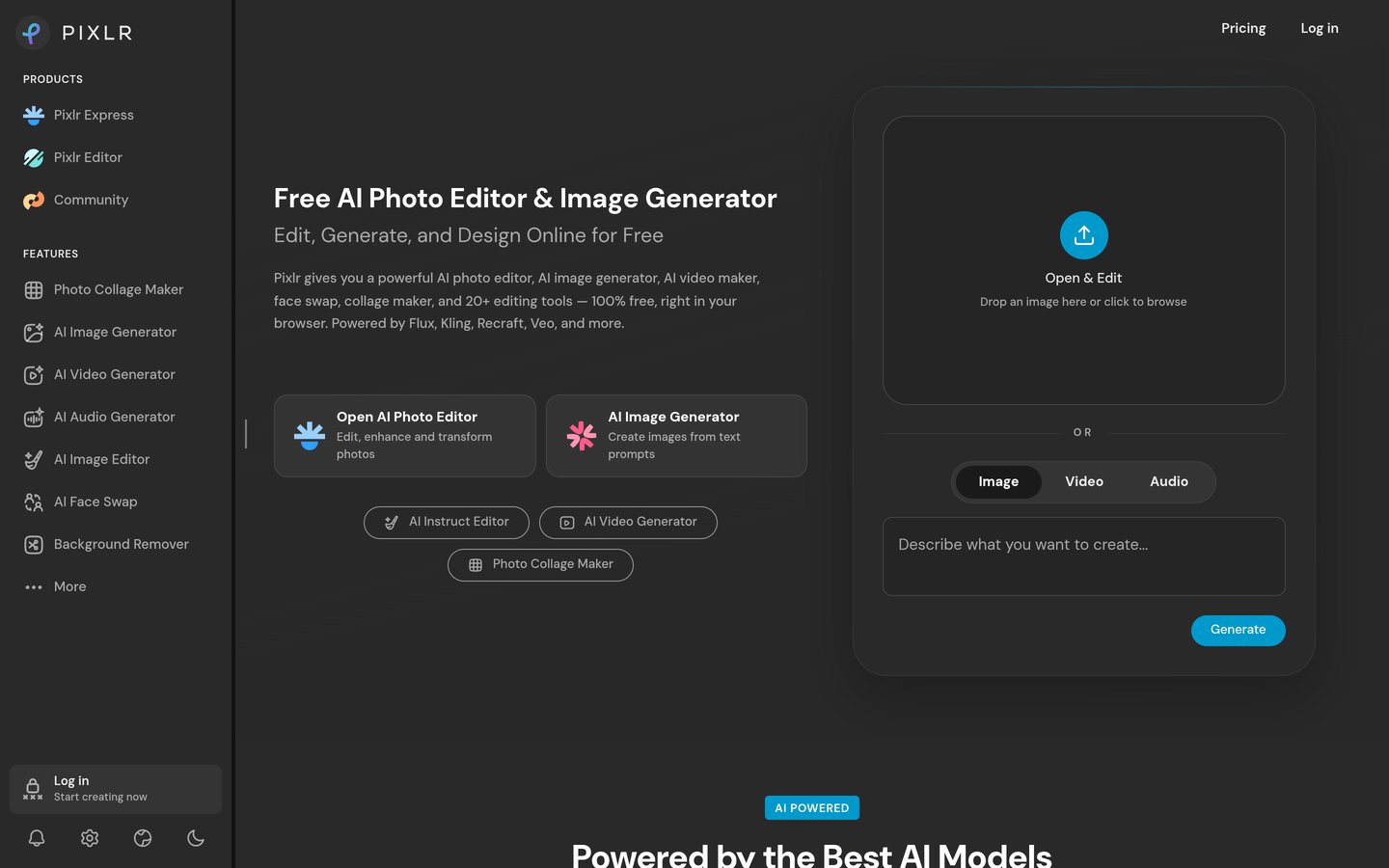
Pixlr is a browser-based editor with two modes: Pixlr X for quick edits and Pixlr E for layered work. The free plan covers basic editing with ads, and Premium costs $4.90 a month, removing ads and unlocking AI CutOut and extra overlays, icons and texts.
The trade off is the free tier. The daily download cap and ad-filled workspace push regular users toward Premium, and large files can slow the editor down. It suits small businesses and students who need quick edits without installing software.
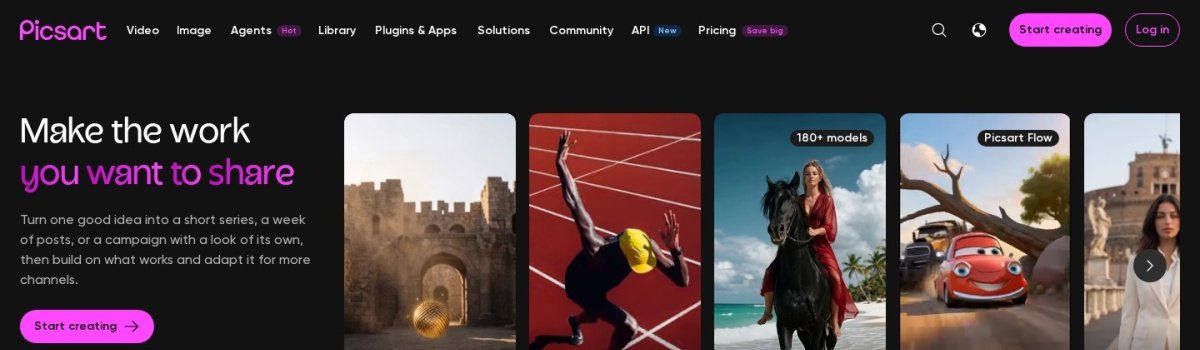
Picsart is a mobile-first photo and video editor with AI tools, filters, stickers and templates for social content. The free tier covers basic editing with ads, and Gold costs $5 a month, removing ads and unlocking the full tool library.
The trade off is the paywall. Many useful tools need Gold, the free tier is heavy with ads, and some exports carry watermarks. It suits creators who edit mainly on a phone and want fast AI edits.
Free plans cover quick edits well. Affinity and GIMP give away a full desktop editor, while Photopea, Pixlr, Picsart and Canva give away a useful browser or mobile editor.
Paid plans mostly add depth and convenience. You get AI tools, ad-free editing, more storage and the full template library.
One-time licences still exist for RAW editors such as DxO PhotoLab and Capture One Pro, but the best noise reduction or the newest features may sit in a higher edition.
If you edit images every day for clients, a paid plan usually pays for itself in saved time. If you edit once a week, start free and upgrade only when a limit blocks you.
How we chose
We started from the image editors photographers and designers actually recommend, then kept nine with a public rating on G2 or Capterra and a clear price on the vendor site or a review page quoting it.
Prices come from each vendor's pricing page or a comparison that read it, checked on 26 November 2026. Ratings and review counts come from G2 or Capterra on the same day. Where a vendor shows a sale, the list shows the regular price.
We left out tools with no public rating on G2, Capterra or Trustpilot. No vendor paid for a place, and we do not claim to have used these tools ourselves.
How to choose image editing software
Start with where you edit and what files you open, then pick the cheapest tool that covers both.
Decide desktop, browser or mobile. Desktop editors handle large RAW files best. Browser editors suit shared machines, and mobile editors suit quick social edits.
Check layers and RAW support. If you retouch portraits or composite images, you need layers and masks. If you shoot RAW, you need a RAW editor or a plug-in.
Try the free plan first. Affinity, GIMP, Photopea, Pixlr, Picsart and Canva all have free plans. Use one for a real edit before paying.
Compare the yearly cost, not the monthly price. A $5 monthly plan costs $60 a year, while a $159.99 one-time licence can be cheaper over three years if you keep the version.
FAQ
What is the best software for image editing?
Adobe Photoshop is the best overall pick for serious editors, with layered retouching, RAW support and AI tools at $22.99 a month. Affinity is the best free alternative, and Canva is the easiest choice for fast templates and social graphics.
What is the best free image editing software?
Affinity is the strongest free option, with layers, masks and RAW editing at $0. GIMP is the best free open-source choice, and Photopea is the best free browser editor for PSD files.
Is Affinity really free?
Yes, the core Affinity app is free for individuals with a free Canva account. The AI tools, including Generative Fill and Remove Background, need a paid Canva plan such as Pro at $18 a month.
Can I edit PSD files without Photoshop?
Yes. Photopea opens and edits layered PSD files in a browser for free, with ads. Affinity and GIMP also open PSD files on the desktop, though some Photoshop-only features may not carry over.
Do I need a RAW editor?
Only if you shoot RAW files from a camera. A RAW editor such as Capture One Pro or DxO PhotoLab reads the full sensor data. If you only edit JPEGs from a phone, a general editor such as Canva or Picsart is enough.
Is Canva good for photo editing?
Canva is good for quick edits, filters, background removal and social graphics, and Pro costs $18 a month. It is not a replacement for Photoshop for layered retouching or full RAW editing.
Which image editor is best for beginners?
Canva is the easiest to start with, thanks to templates and one-click tools. Pixlr and Picsart are also friendly for quick edits, while Photoshop and Capture One Pro suit users ready to learn a deeper tool.
SaaS SEO and WordPress specialist with about 8 years of experience. Rakib compares WordPress plugins, themes, hosting and software using public pricing, documentation and user reviews. See how we rank.