Best Software for Financial Modeling in 2026: 9 Tools Compared
WLWPLegible EditorsLast verified 24 Nov 2026How we rank13 min read
★ Short answer
Cube is the best financial modeling software for most teams: it keeps models in Excel and Google Sheets, adds live governed data underneath, and is rated 4.5 out of 5 on G2. Pick Datarails for Excel-native consolidation, Jirav for published pricing from $10,000 a year, or Anaplan for enterprise-scale connected planning.
How we make this list: we compare pricing pages, product documentation and public user reviews, then re-check every price before each update. No product paid for a place. Disclosure.
Cube is the top pick: spreadsheet-native modeling with live data and AI, rated 4.5 out of 5 on G2.
Only Jirav and Centage publish prices: Jirav Starter is $10,000 a year, Centage Core is $1,750 a month.
Datarails, Vena and Cube keep Excel as the front end; Pigment and Anaplan move modeling to a visual or connected canvas.
Seven of the nine tools are quote-only, so budget for a sales call and implementation on top of the license.
Anaplan is the enterprise pick, with median yearly deals reported around $110,000 to $120,000.
What financial modeling software should do
A financial model turns drivers into a forecast. Headcount, pricing, churn and hiring plans feed the profit and loss, balance sheet and cash flow, and scenarios show what happens when an assumption changes.
The best tools keep the model live. Actuals should flow in from the ledger, payroll and CRM without a monthly rebuild, so the forecast always reflects the latest numbers.
Spreadsheet links matter more than feature lists. If your team builds in Excel, a tool that keeps Excel as the front end will be adopted faster than one that forces a new canvas.
Price transparency is rare in this market. Most vendors price by quote, so the honest comparison is between the two tools that publish prices and the reported deal ranges of the rest.
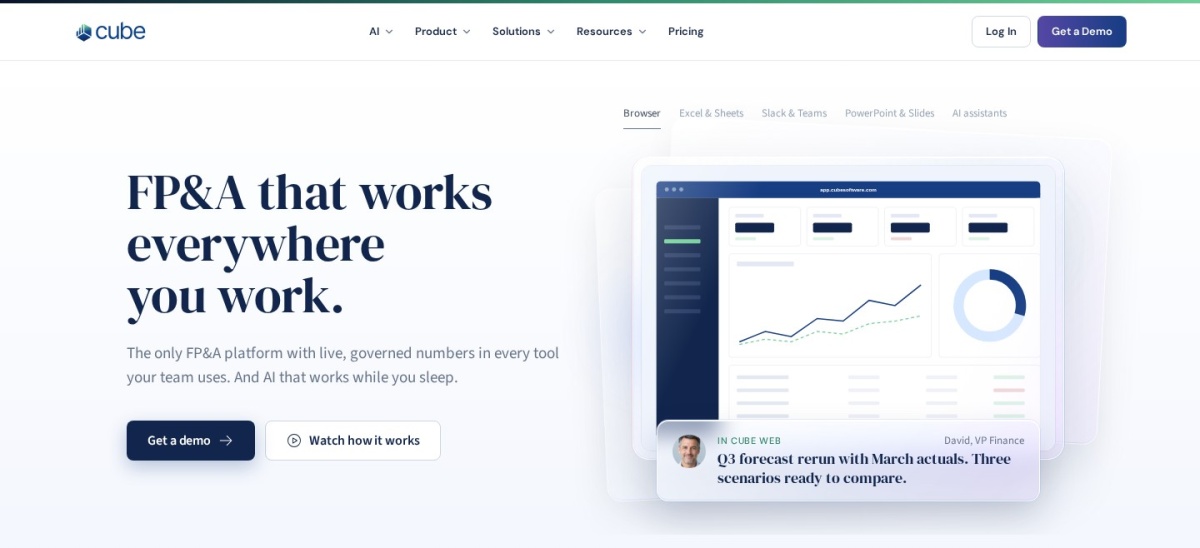
Cube is a spreadsheet-native FP&A platform that keeps models in Excel and Google Sheets while adding a governed data layer underneath. Actuals flow in from the ERP, CRM and HRIS, so the numbers in the sheet stay live, and the FP&Agent suite answers questions, runs variance checks and drafts forecasts.
The trade off is price. Cube no longer publishes plan prices, so small teams need a sales call before they can budget for it. It suits lean finance teams that refuse to leave spreadsheets but need one shared source of truth.
Datarails is an Excel-native FP&A platform that automates consolidation, reporting and planning without moving models out of spreadsheets. It connects to more than 600 systems, pulls actuals into a central database and feeds Excel and PowerPoint report packs from it. Its FP&A Genius assistant answers questions over the consolidated data.
The trade off is cost and setup. Pricing is quote-only, with typical annual deals reported around $24,000 to $60,000, and implementation commonly takes 4 to 8 weeks. It suits Excel-first finance teams that spend too much time consolidating spreadsheets by hand.
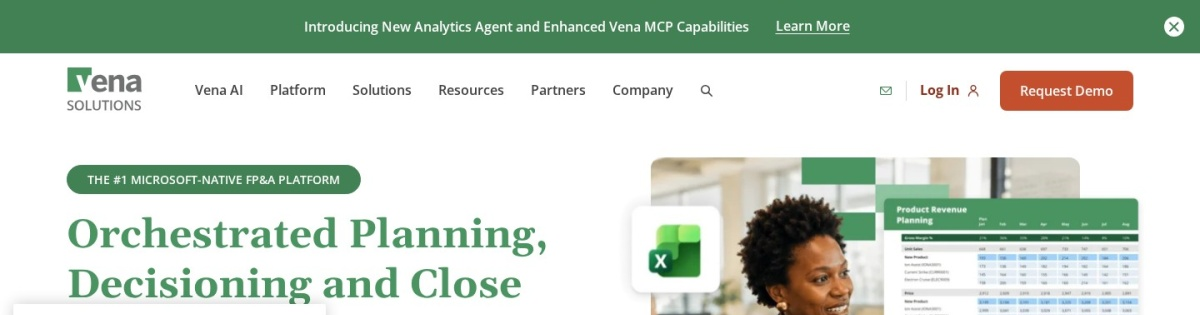
Vena is an Excel-native planning platform built for Microsoft-centered finance teams. Models stay in Excel while a central database adds version control, workflows and audit trails, and Vena AI works inside Excel, PowerPoint and Teams. It covers budgeting, forecasting, reporting and the month-end close.
The trade off is the sales process. Pricing is quote-only, with mid-market first-year costs often reported between $75,000 and $250,000 once implementation is included. It suits mid-market teams that live in Microsoft 365 and need governance around Excel.
Jirav is a driver-based planning platform for small and midsize companies and the accounting firms that advise them. It connects the general ledger, payroll and CRM, then builds budgets, rolling forecasts and headcount plans from drivers such as hiring, churn and pricing. Starter costs $10,000 a year and includes implementation and support.
The trade off is scope. Starter plans at company level only, with up to 24 months of data and 2 admins, and departmental planning needs Pro at $15,000 a year. It suits small finance teams and fractional CFOs who want published prices and no long implementation.
What we like
Only major platform with a public rate card
Implementation and support included
Strong fit for accounting and CFO firms
Driver-based forecasting and headcount planning
Watch out for
Starter is company-level planning only
Web-native, with no Excel surface
Single-currency accounting sync
Pro adds departmental planning and 48 months of dataVisit jirav.com
05
Pigment
4.6/5on G2 (112 reviews, checked Nov 2026)
PricingCustom/yr
Best visual planning for scale-ups
ModelingVisual canvas
AI agentsAnalyst and Modeler
Free trialYes
Entry priceCustom quote
pigment.com
Pigment homepage, captured Nov 2026.
Pigment is a visual planning platform for scale-ups that have outgrown spreadsheets. Teams build models on a canvas, connect finance, sales and operations data, and run scenarios in real time. Its Analyst and Modeler agents draft analysis and build models from plain-language prompts, and a free trial is available.
The trade off is price and maturity. Pricing is quote-only, with median yearly deals reported around $74,000, and some of its AI agents were still in preview during 2026. It suits growing companies that want modern visual planning without enterprise-suite complexity.
Planful is a financial performance management platform for mid-market companies that need planning, consolidation and close in one place. It handles multi-entity consolidation, rolling forecasts and board reporting, and its Predict suite adds anomaly alerts and smarter forecasts. An Excel add-in keeps model work in spreadsheets.
The trade off is cost and effort. Pricing is quote-only, implementation commonly takes 8 to 12 weeks, and the Predict AI features are a separate paid module. It suits upper mid-market teams that want close, consolidation and planning together.
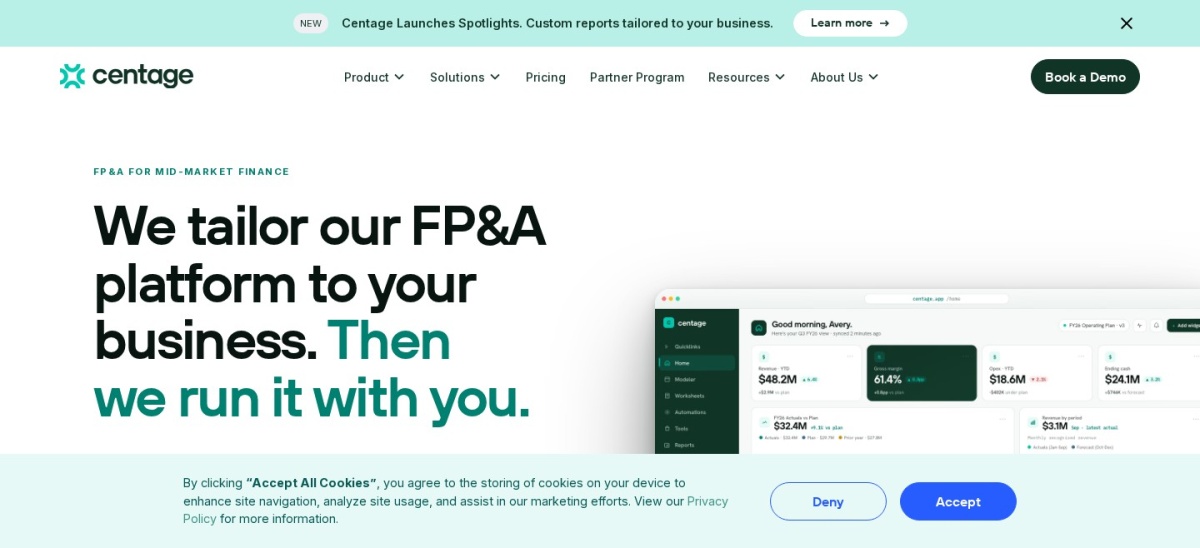
Centage Planning Maestro is a budgeting and forecasting platform for small and mid-market teams that have outgrown Excel. Built-in financial logic builds budgets and forecasts without formulas, and the profit and loss, balance sheet and cash flow statements stay synchronised. Core starts at $1,750 a month billed annually.
The trade off is depth. Reporting can be fiddly to set up, according to reviewers, and the higher tiers climb to $2,500 and $3,500 a month. It suits mid-market finance teams that want synchronised statements and published prices.
What we like
Published prices from $1,750 a month
Profit and loss, balance sheet and cash flow stay in sync
Prophix One is a financial performance platform that combines planning, budgeting, reporting, close management and consolidation. Finance teams automate budgeting and reporting workflows, build scenarios and produce board-ready packs from one model. It is aimed squarely at the mid-market.
The trade off is price. Prophix does not publish plan prices, and reviewers note that pricing can be a barrier for smaller organizations. Implementation averages around 4 months, according to G2. It suits mid-market teams that want close and planning in one platform.
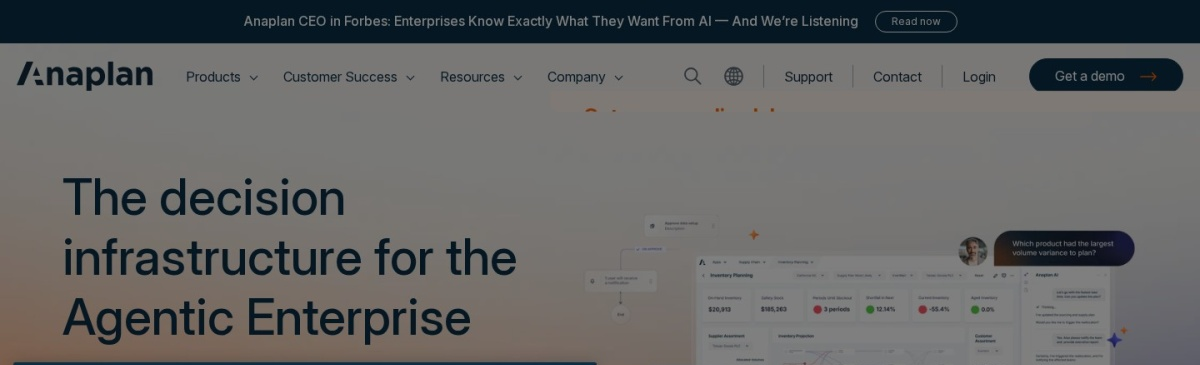
Anaplan is a connected planning platform for large enterprises that plan across finance, sales, supply chain and operations. One calculation engine runs scenarios over large data volumes, and its AI suite includes CoModeler, Forecaster and an Analyst agent. It is the most scalable modeler in this list.
The trade off is cost and complexity. Pricing is quote-only, with median yearly deals reported around $110,000 to $120,000, and large rollouts can take months and need trained administrators. It suits enterprises planning at real scale across departments.
Seven of the nine tools in this list do not publish prices. That is normal in this market: vendors price by users, entities and integrations.
Ask for the full first-year cost, including implementation and support, before you compare two quotes. Implementation commonly runs 4 to 16 weeks across these tools, and Prophix averages around 4 months.
If you need a number before a sales call, Jirav and Centage are the only two here with published prices, at $10,000 a year and $1,750 a month.
How we chose
We started from the FP&A and financial modeling platforms most often named in 2026 buyer guides, then kept nine established tools that cover spreadsheet-native modeling, visual planning and enterprise connected planning.
Prices come from vendor pricing pages and published rate cards checked on 24 November 2026. Jirav and Centage publish prices; the other seven are quote-only, so this list shows Custom and notes reported deal ranges where buyer data exists. Ratings come from G2 on the same date.
We left out tools with no current standalone product page and tools aimed only at consumers. No vendor paid for a place, and we do not claim hands-on testing for this list.
How to choose financial modeling software
Start with where your team already models, then check the price and the close before you buy.
Decide where the model lives. If your team will not leave Excel, pick Cube, Datarails or Vena. If you want a visual canvas, look at Pigment instead.
List your drivers before you demo. Headcount, pricing, churn and hiring plans are the inputs that matter. A tool that cannot model your drivers will not help, whatever its feature list says.
Get the full first-year cost in writing. License, implementation and support are often quoted separately. Quote-only tools need a written breakdown before you can compare them fairly.
Check the close, not just the forecast. A model is only useful if actuals flow in. Ask how the tool pulls ledger data and how long the monthly close takes once it is live.
FAQ
What is the best financial modeling software?
Cube is the best pick for most teams. It keeps models in Excel and Google Sheets, adds a governed data layer with live actuals, and is rated 4.5 out of 5 on G2 from 133 reviews.
How much does financial modeling software cost?
It varies widely. Jirav publishes Starter at $10,000 a year and Centage Core at $1,750 a month. The other tools here are quote-only, with reported yearly deals ranging from about $24,000 for Datarails to about $110,000 or more for Anaplan.
Do I need to leave Excel to use these tools?
No. Cube, Datarails and Vena keep Excel, and Google Sheets for Cube, as the modeling surface and add governance underneath. Pigment and Anaplan replace the spreadsheet with a visual or connected planning canvas.
Which tool is best for a small finance team?
Jirav fits small teams best: published pricing from $10,000 a year, driver-based planning and implementation included. Cube is the other strong small-team pick if you want to stay in spreadsheets.
What is the difference between FP&A software and financial modeling software?
Financial modeling is the core job: building forecasts and scenarios from drivers. FP&A software adds the surrounding workflow, such as consolidation, close management and board reporting, around the same models.
Can these tools replace a spreadsheet model entirely?
They can, but most teams keep spreadsheets for ad-hoc work. The value of these tools is governance: one shared model, live actuals, version control and an audit trail that a folder of spreadsheet files cannot give you.