Fivetran is the best software for data extraction and integration for most teams, with 700+ managed connectors, a free plan up to 500,000 monthly active rows, and a 4.3/5 G2 rating from 828 reviews. Choose Skyvia for low-cost no-code syncs or Apify when the data lives on websites.
How we make this list: we compare pricing pages, product documentation and public user reviews, then re-check every price before each update. No product paid for a place. Disclosure.
Fivetran leads with 700+ managed connectors and a free plan up to 500,000 monthly active rows.
Skyvia and Coupler.io are the cheapest paid starts here at $79 and $24 a month billed annually.
Airbyte is the only open-source pick: Core is free to self-host and Cloud starts at $20 a month.
Apify and Octoparse extract data from websites; both start at $19 a month and both have free plans.
Hevo Data is the priciest entry here at $265 a month, and ParseHub's 4.3/5 rating rests on only 10 G2 reviews.
What data extraction and integration software does
Data extraction and integration covers two jobs at once: pulling data out of apps, databases and websites, then loading it somewhere it can be used. Some tools do both, while others specialise in one side.
Warehouse pipelines such as Fivetran, Airbyte and Hevo move data from SaaS apps and databases into Snowflake, BigQuery or Postgres on a schedule. Web extractors such as Apify, Octoparse and ParseHub pull structured data from pages instead, then send it to a sheet, file or API.
Prices are hard to compare because every vendor meters something different: Fivetran bills by monthly active rows, Airbyte by credits, Hevo by events and the scrapers by runs or queries. Our guide on exporting WooCommerce orders to CSV shows the same idea at small scale: pick the export shape first, then the tool.
Ratings in this list come from G2, checked on 26 November 2026. Two scores rest on thin bases: Octoparse has 52 reviews and ParseHub only 10, so read their recent reviews before paying.
The 9 best software for data extraction and integration
01
Fivetran
4.3/5on G2 (828 reviews, checked Nov 2026)
Paid from$5/mo
Best data integration tool overall
Connectors700+ managed
Free plan500,000 MAR/mo
Fastest sync15 minutes
Paid planUsage-based, $5 base
fivetran.com
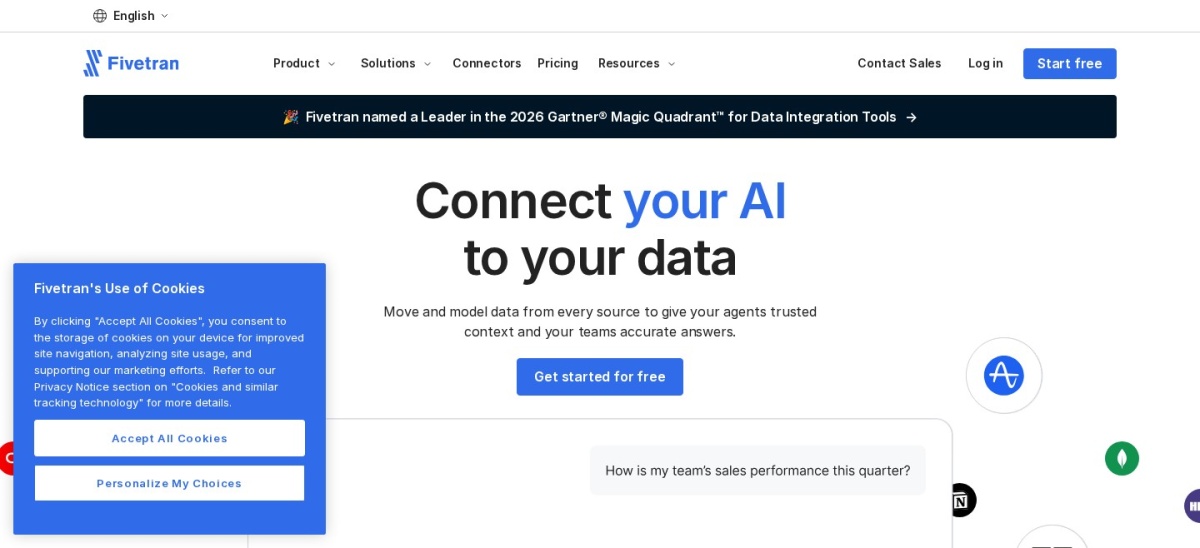
Fivetran homepage, captured Nov 2026.
Fivetran is a fully managed data integration service that moves data from more than 700 sources into a warehouse with little upkeep. The free plan covers 500,000 monthly active rows a month, and the Standard plan adds 15-minute syncs, unlimited users and dbt Core integration.
The trade off is the meter. Fivetran bills by monthly active rows per connection, with a $5 base charge on Standard connections, so high-change sources can cost more than a flat fee. It suits teams that want managed pipelines and are happy to pay for what they move.
What we like
700+ fully managed connectors
Free plan up to 500,000 MAR a month
15-minute syncs and dbt Core integration on Standard
Watch out for
Usage billing is hard to forecast at scale
Real-time syncs need Enterprise plans
Standard adds unlimited users, 15-minute syncs and dbt CoreVisit fivetran.com
02
Skyvia
4.8/5on G2 (324 reviews, checked Nov 2026)
Paid from$79/mo
Best value no-code syncs
Connectors200+
Free plan10,000 records/mo
Sync frequencyDaily on Basic
Paid planBasic, $79/mo
skyvia.com
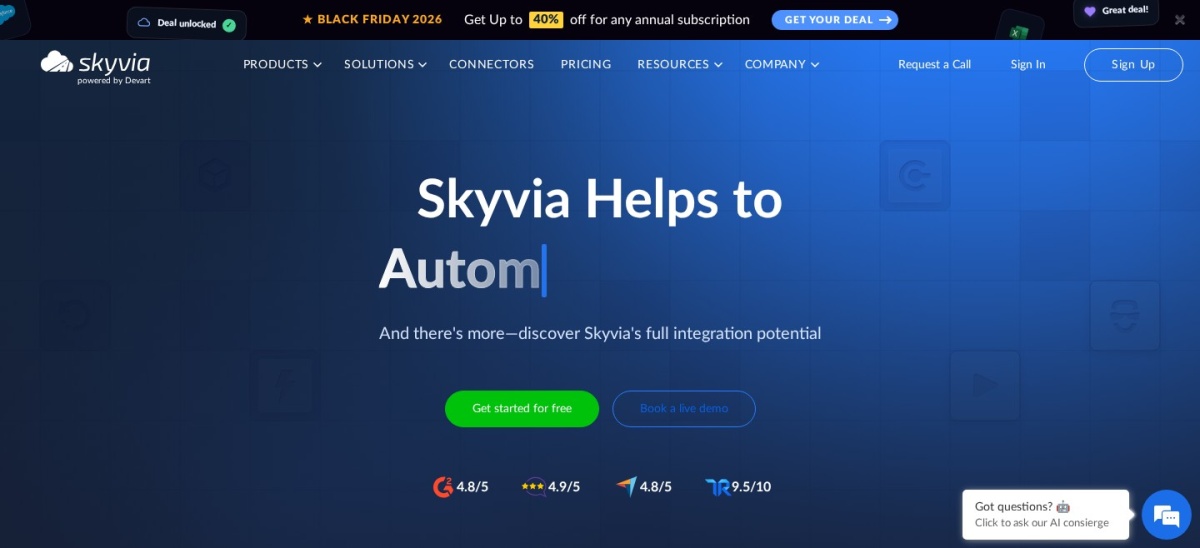
Skyvia homepage, captured Nov 2026.
Skyvia is a no-code cloud platform that moves data between CRMs, databases, files and warehouses without scripts. Its free plan covers 10,000 records a month with daily syncs, and the Basic plan raises that to 5 million records a month with 5 scheduled integrations.
The trade off is speed. Basic syncs only once a day, so hourly runs need the Standard plan at $159 a month billed annually, and 1-minute runs need Professional at $399. It suits small teams that want simple, visual syncs and can live with daily refreshes.
What we like
Highest G2 rating here at 4.8/5
Free plan with 10,000 records a month
No-code visual mapping, no scripts
Watch out for
Daily syncs only on Basic
Record overage fees apply on paid plans
Basic raises volume to 5M records a month and 5 scheduled jobsVisit skyvia.com
03
Airbyte
4.4/5on G2 (78 reviews, checked Nov 2026)
Paid from$20/mo
Best open-source data integration
Connectors700+
Free optionCore, self-hosted
Max syncHourly on Standard
Paid planStandard, $20/mo
airbyte.com
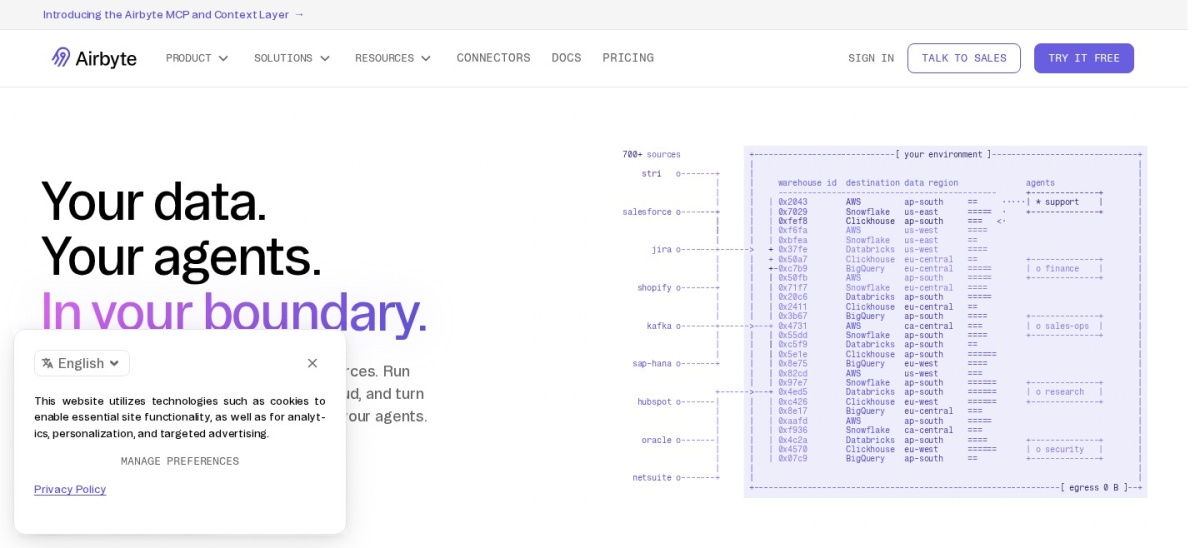
Airbyte homepage, captured Nov 2026.
Airbyte is an open-source data integration platform with 700+ connectors for moving data into warehouses, lakes and vector stores. Airbyte Core is free to self-host, while Airbyte Cloud starts at $20 a month for 5 credits and syncs at most once an hour on Standard.
The trade off is the credit meter. API sources burn 6 credits per million rows, so heavy SaaS stacks can use credits fast, and 15-minute syncs need the Plus plan. It suits data teams that want open-source control with a low-cost managed start.
What we like
Open-source Core is free to self-host
700+ connectors with CDC support
Lowest managed start at $20 a month
Watch out for
Hourly syncs at most on Standard
Credit use on API sources grows fast
Plus adds 15-minute syncs, SSO and a 24-hour support SLAVisit airbyte.com
04
Coupler.io
4.8/5on G2 (104 reviews, checked Nov 2026)
Paid from$24/mo
Best for spreadsheet reporting
Sources400+
Free plan1 account, manual
RefreshDaily on Starter
Paid planStarter, $24/mo
coupler.io
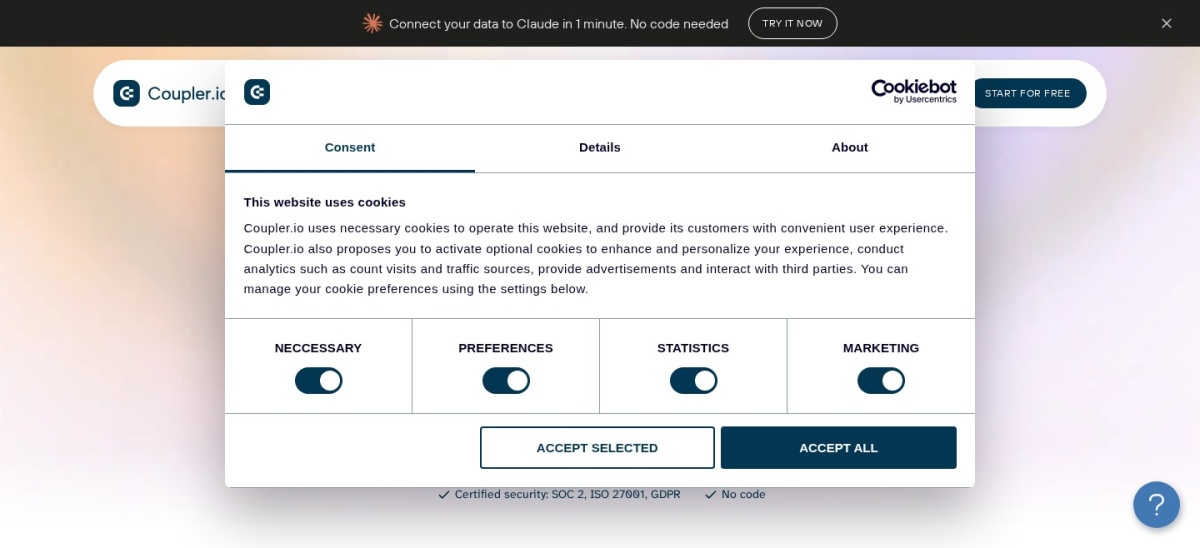
Coupler.io homepage, captured Nov 2026.
Coupler.io is a no-code tool that pulls data from 400+ apps into spreadsheets, BI tools, warehouses and AI assistants. The free plan covers 1 account with manual refresh, and Starter at $24 a month billed annually adds 3 accounts, daily refresh and 5,000 rows per run.
The trade off is scale. Starter allows only 1 user and 1 destination, so teams that need more accounts or hourly refreshes must move to Active at $99 a month or Pro at $199. It suits analysts and small teams that report from spreadsheets and dashboards.
What we like
Cheapest paid start here at $24 a month
400+ sources with spreadsheet destinations
Rated 4.8/5 on G2 from 104 reviews
Watch out for
Starter allows only 1 user and 1 destination
Hourly refresh needs the $199 Pro plan
Starter adds daily refresh, 3 accounts and 5,000 rows per runVisit coupler.io
05
Hevo Data
4.4/5on G2 (292 reviews, checked Nov 2026)
Paid from$265/mo
Best for fast warehouse pipelines
Sources150+
Free plan1M events/mo
SchedulingHourly on Starter
Paid planStarter, $265/mo
hevodata.com
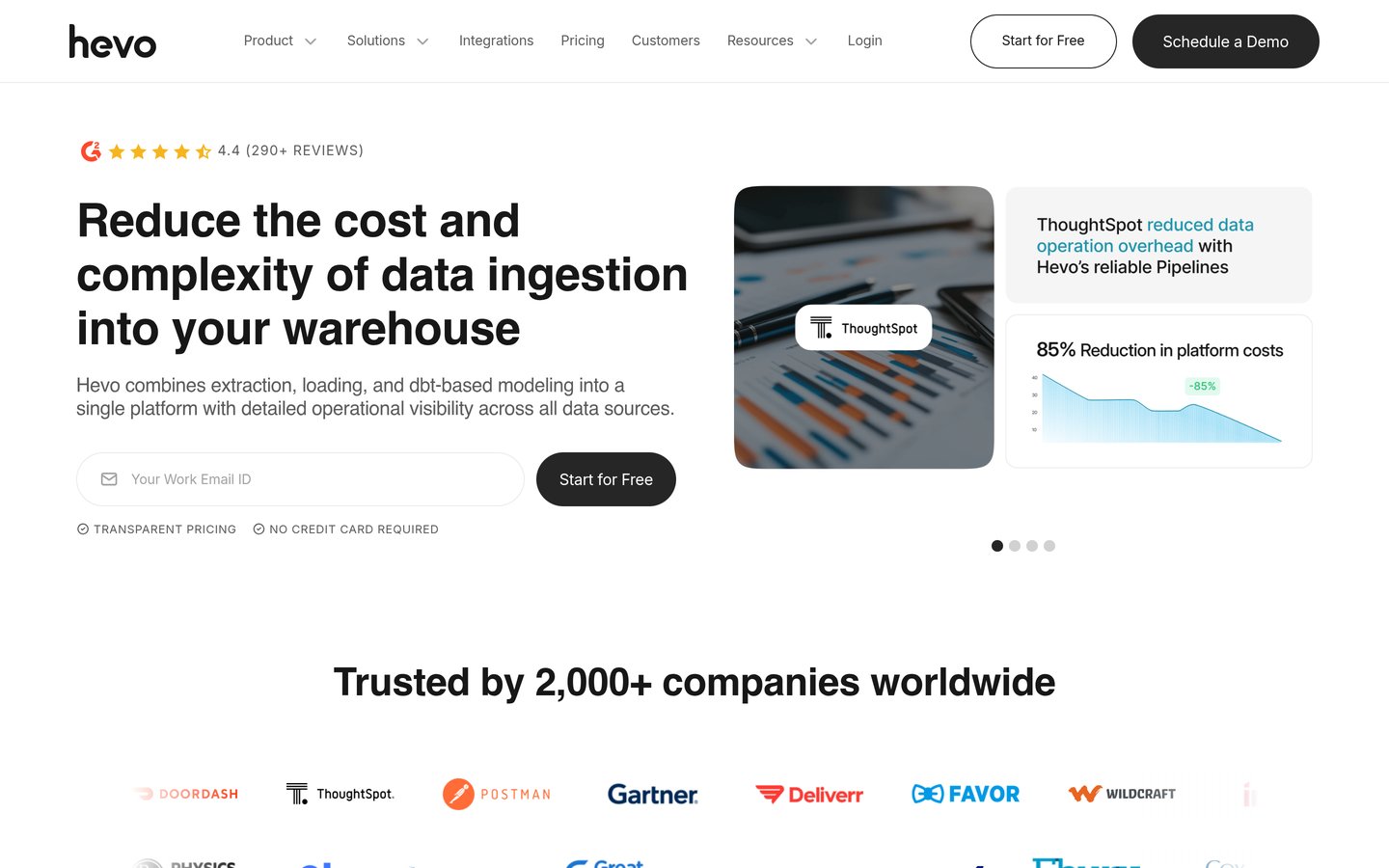
Hevo Data homepage, captured Nov 2026.
Hevo Data is a no-code pipeline service that loads data from 150+ sources into a warehouse with automatic schema handling. Its free tier covers 1 million events a month, and Starter at $265 a month billed annually adds hourly scheduling, up to 10 users and dbt integration.
The trade off is the event meter. Every insert, update and delete counts as an event, so busy databases can push the bill up fast, and streaming pipelines need the custom Enterprise plan. It suits small data teams that want quick setup and strong support.
What we like
Fast setup with 150+ connectors
Rated 4.4/5 with strong support scores
Free tier covers 1 million events a month
Watch out for
Starter is the priciest entry here at $265 a month
Streaming pipelines need the custom Enterprise plan
Starter adds hourly scheduling, 10 users and dbt integrationVisit hevodata.com
06
Apify
4.7/5on G2 (727 reviews, checked Nov 2026)
Paid from$19/mo
Best web extraction marketplace
Ready-made ActorsThousands
Free plan$5 credit/mo
Paid planStarter, $19/mo
BillingPay per compute unit
apify.com
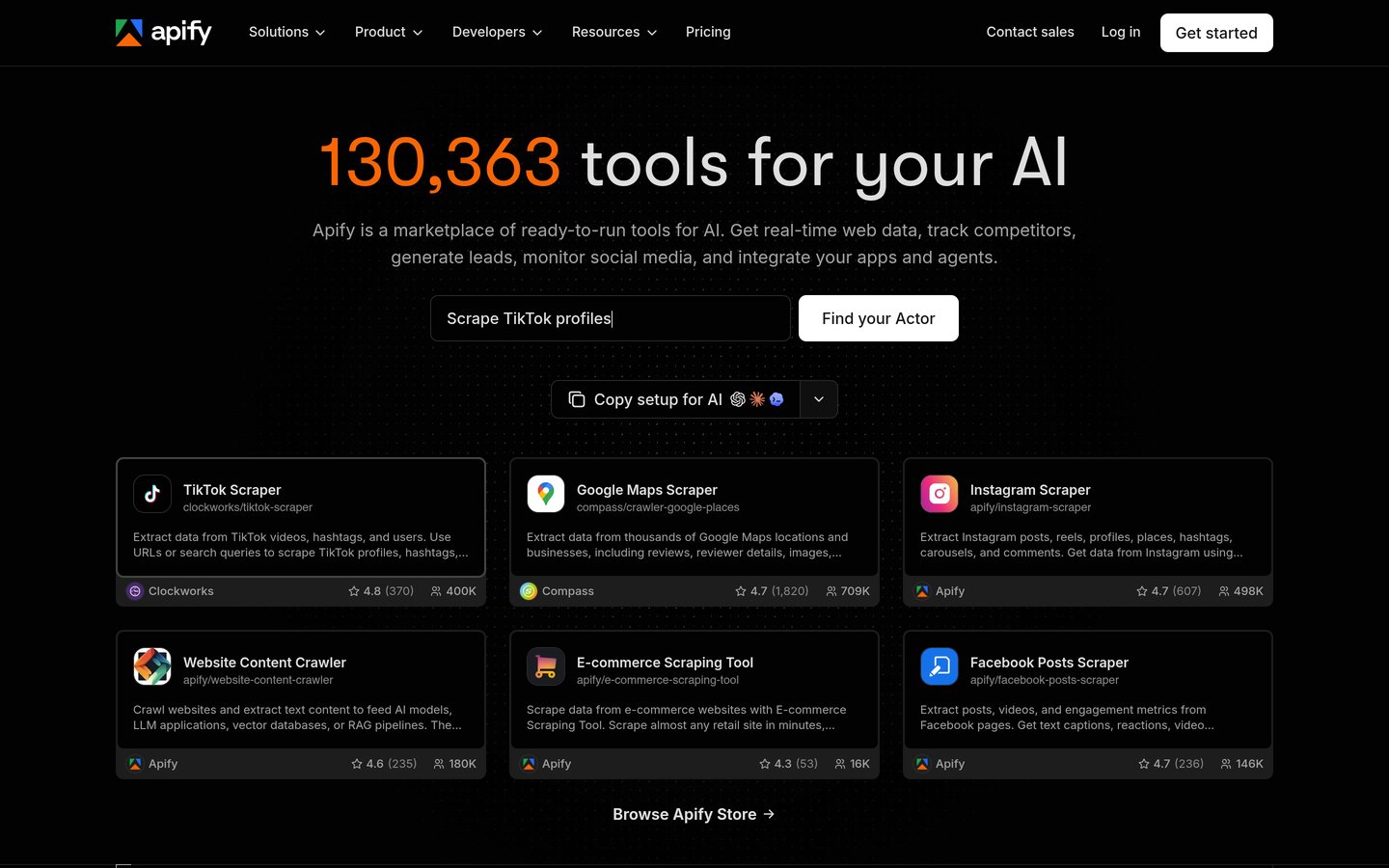
Apify homepage, captured Nov 2026.
Apify is a cloud platform for web data extraction, with a marketplace of ready-made scrapers called Actors. The free plan includes $5 of platform credit a month, and Starter at $19 a month adds more credit, 30 datacenter proxy IPs and chat support.
The trade off is billing. Runs draw down credit by compute units, proxies and storage, so large or frequent jobs are hard to forecast, and the 20% annual discount comes through G2 Deals. It suits developers and small teams that scrape websites at scale.
What we like
Large marketplace of ready-made Actors
Rated 4.7/5 from 727 G2 reviews
Free $5 monthly credit to start
Watch out for
Compute-unit billing is hard to forecast
Costs climb fast on large or frequent runs
Starter adds more credit, 30 proxy IPs and chat supportVisit apify.com
07
Octoparse
4.8/5on G2 (52 reviews, checked Nov 2026)
Paid from$19/mo
Best no-code web scraper
Templates500+
Free plan10 tasks, local
Cloud runsStandard plan
Paid planBasic, $19/mo
octoparse.com
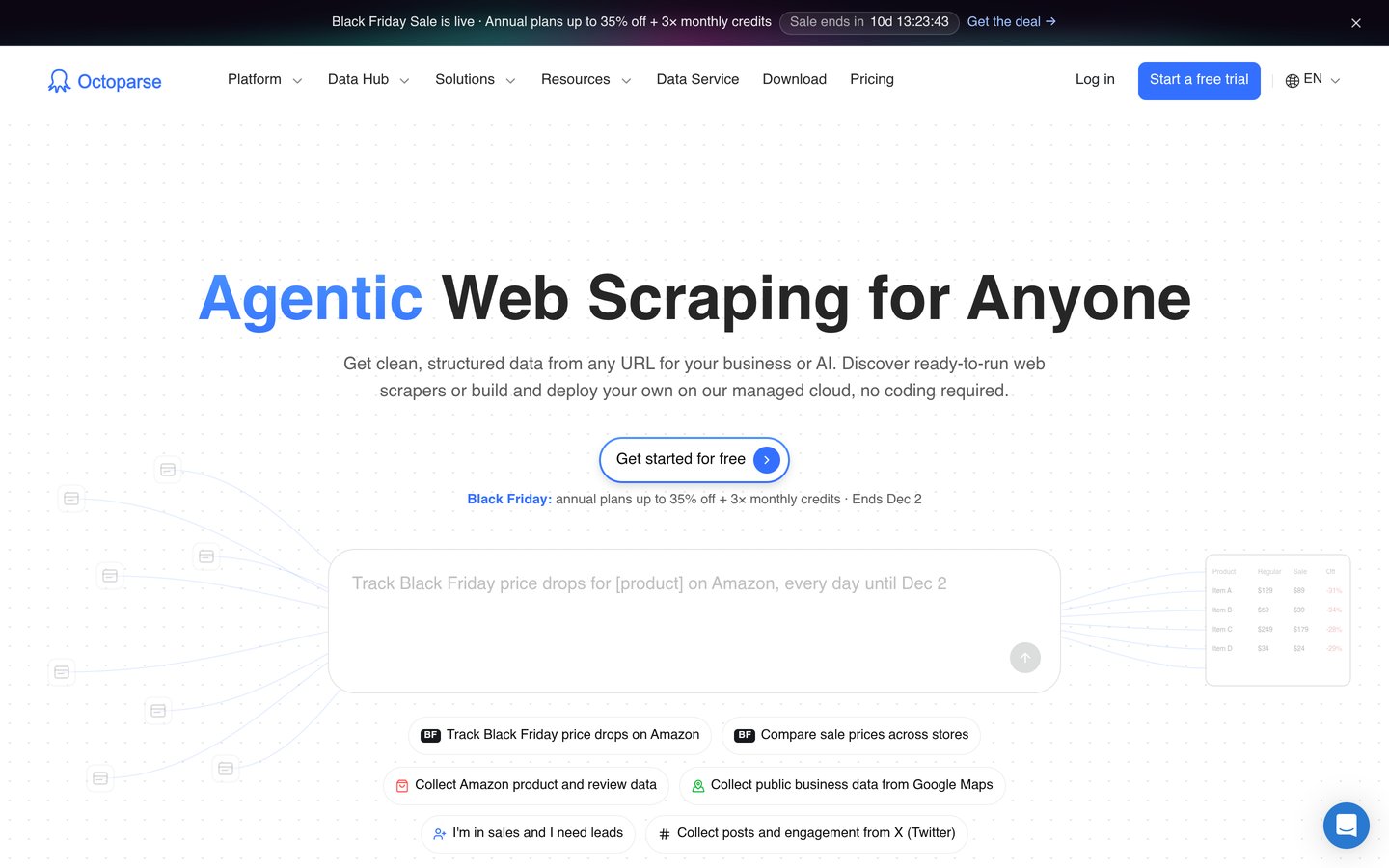
Octoparse homepage, captured Nov 2026.
Octoparse is a no-code web scraper with a desktop app and optional cloud runs for pulling structured data from websites. The free plan covers 10 tasks and 50,000 exported rows a month on your own computer, and Basic at $19 a month removes the export cap.
The trade off is the cloud paywall. Cloud extraction, scheduling, IP rotation and CAPTCHA solving need Standard at $69 a month billed annually, and proxy use and CAPTCHA solves bill on top. It suits non-developers who scrape sites by pointing and clicking.
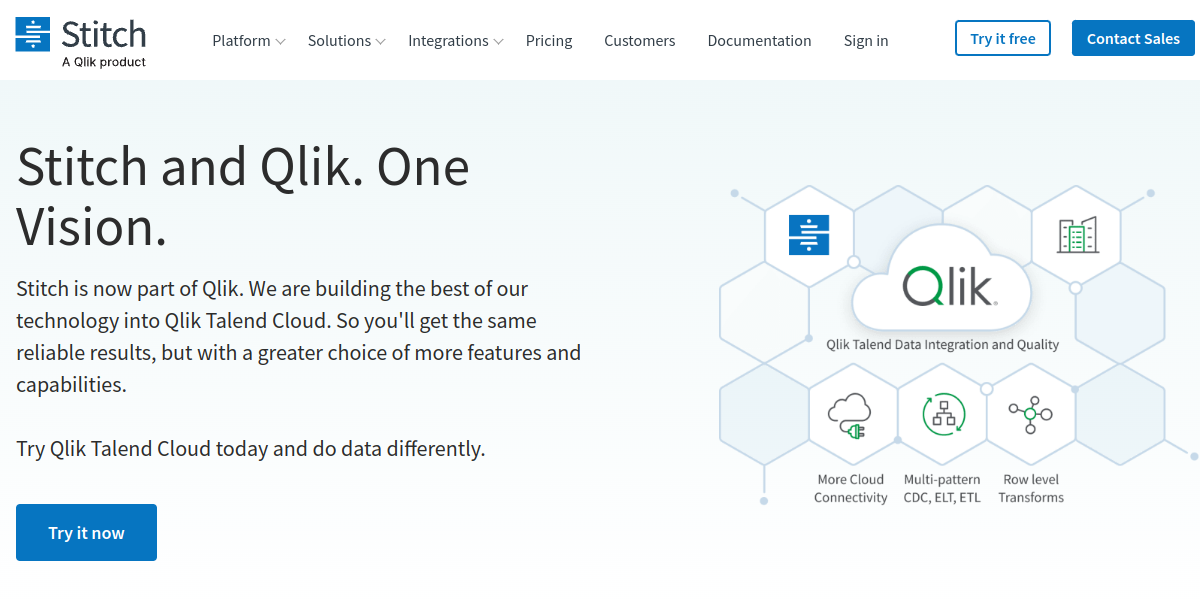
Stitch is a managed ELT service from Talend that replicates data from 140+ sources into a warehouse with little setup. Standard starts at $100 a month for 5 million rows, 1 destination and 5 users, with a 14-day free trial and no permanent free plan.
The trade off is the roadmap. Stitch has seen little new development since the Talend and Qlik deals, and the jump to Advanced at $1,500 a month is steep. It suits small teams that want simple, reliable warehouse loads and few frills.
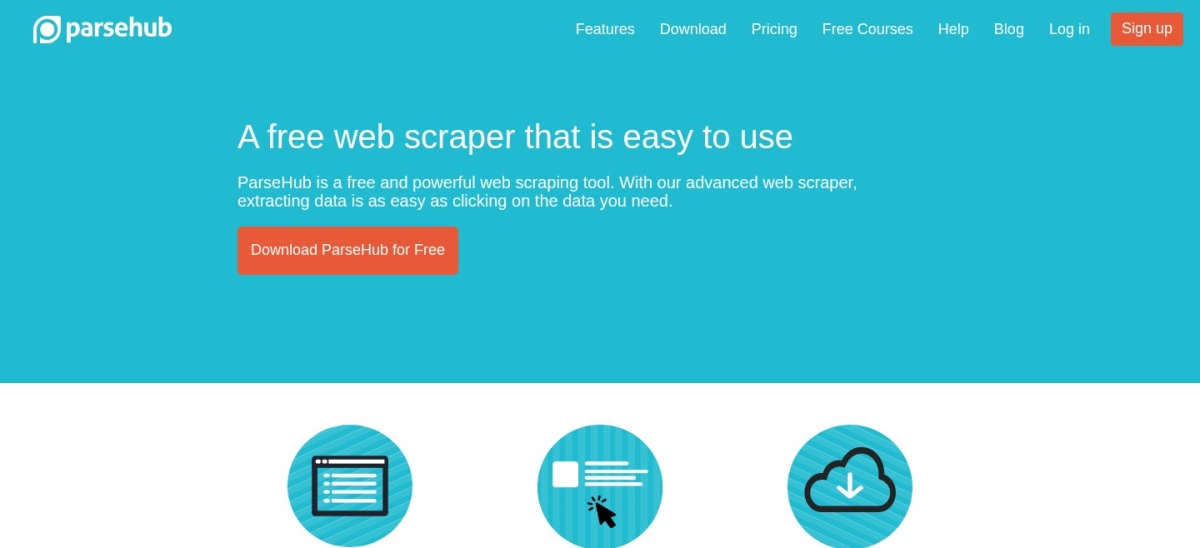
ParseHub is a visual desktop scraper that extracts data from complex, JavaScript-heavy pages by point and click. The free plan covers 5 public projects at 200 pages per run, and Standard at $189 a month adds 20 private projects, 10,000 pages per run and scheduling.
The trade off is price and proof. There is no plan between free and $189 a month, and its 4.3/5 G2 rating rests on only 10 reviews, the thinnest base in this list. It suits analysts who need visual scraping of awkward pages for one-off jobs.
What we like
Handles JavaScript-heavy pages visually
Free plan for small tests
Scheduling and IP rotation on paid plans
Watch out for
No plan between free and $189 a month
Only 10 G2 reviews
Desktop-first, not pure cloud
Standard adds scheduling, IP rotation and 20 private projectsVisit parsehub.com
Web extraction vs warehouse pipelines
Web extractors start from a URL. They are the right pick when the data you need lives only on a public page, such as prices, listings or reviews.
Warehouse pipelines start from an app or a database. They are the right pick when the data already sits in a system with an API, such as a CRM, an ad platform or Postgres.
Many teams need both. A common setup is Apify or Octoparse for web data, plus Fivetran or Airbyte for app and database data, landing in the same warehouse.
How we chose
We started from the established extraction and integration tools listed on G2, then kept the nine with a public rating and a published entry price.
Prices come from each vendor's pricing page, checked on 26 November 2026. Ratings and review counts come from G2 on the same day. Where a vendor shows a sale, the list shows the regular price.
We left out quote-only enterprise platforms such as Informatica, Talend Data Integration and Workato, because no buyer can compare them on a published price. No vendor paid for a place, and we do not claim to have used these tools ourselves.
How to choose data extraction and integration software
Start with where your data lives, then match the tool to that source.
Name the source first. If the data is in an app or database, shortlist pipeline tools. If it is only on a website, shortlist web extractors.
Check the meter, not just the headline price. A $5 base or a $19 plan means little until you know what rows, events, credits or queries your workload uses each month.
Use the free plan for a real job. Load one real source and one real destination, then check the output row counts and the refresh timing before you pay.
Plan for the second year. Entry prices rise with volume, and the jump between tiers can be steep, so price the workload at twice its current size.
FAQ
What is the best software for data extraction and integration?
Fivetran is the best pick for most teams. It offers 700+ managed connectors, a free plan up to 500,000 monthly active rows and a 4.3/5 G2 rating from 828 reviews. Skyvia is the cheaper no-code option, and Apify is the best pick when the data lives on websites.
What is the cheapest data extraction and integration tool?
Coupler.io has the cheapest paid plan for app data at $24 a month billed annually, while Apify and Octoparse both start at $19 a month for web extraction. Fivetran and Airbyte both have free options, but their paid costs depend on how much data you move.
Is there a free data extraction and integration tool?
Yes. Fivetran, Skyvia, Airbyte Core, Coupler.io, Hevo Data, Apify, Octoparse and ParseHub all have a free plan or free tier, with limits on rows, events, credits or pages. Only Stitch has no permanent free plan, offering a 14-day trial instead.
What is the difference between ETL and web scraping?
ETL tools move data from apps and databases that already expose it through an API or a connector. Web scrapers pull structured data from pages that have no API. This list covers both, because many teams need app data and web data in the same warehouse.
Do I need code to extract and integrate data?
No, not for most tools here. Skyvia, Coupler.io, Hevo Data, Octoparse and ParseHub are no-code, and Fivetran and Stitch need no code for standard connectors. Airbyte and Apify are friendlier to developers, but both offer ready-made connectors and scrapers.
Which tool is best for extracting data from websites?
Apify is the best pick for website extraction at scale, with a marketplace of ready-made scrapers and a 4.7/5 G2 rating from 727 reviews. Octoparse is the best no-code option for point-and-click scraping, and ParseHub suits complex JavaScript-heavy pages.
Why do prices vary so much between these tools?
Each vendor meters a different thing: rows, events, credits, queries or pages. A tool that looks cheap at $19 a month can cost more than a $100 plan once your volume grows, so estimate your monthly usage first and compare the same workload on each tool.
SaaS SEO and WordPress specialist with about 8 years of experience. Rakib compares WordPress plugins, themes, hosting and software using public pricing, documentation and user reviews. See how we rank.