Best Social Media Influencer Platforms in 2026: 7 Tools Compared
WLWPLegible EditorsLast verified 22 Nov 2026How we rank12 min read
★ Short answer
Modash is the best social media influencer platform for brands scaling creator partnerships, with access to 380M+ creator profiles and Essentials starting at $199 per month billed annually. Heepsy is a more affordable discovery option with a free plan, while GRIN suits teams managing creator gifting, campaigns and payments.
How we make this list: we compare pricing pages, product documentation and public user reviews, then re-check every price before each update. No product paid for a place. Disclosure.
Modash provides access to 380M+ creator profiles, with Essentials at $199/mo billed annually and 150 creator email unlocks monthly.
Heepsy offers a free plan with 500 monthly search results; Starter costs $89/mo on monthly billing or $69/mo billed annually.
GRIN starts at $200/mo for Starter, with unlimited campaigns, 100 monthly gifts and an additional 10% fee on wallet deposits.
Collabstr lets brands search 1.3M+ creators for free with a 10% hiring fee; Pro costs $249/mo billed annually.
Afluencer's Marketplace plan costs $49/mo with 60 invitation credits, while Creator.co Self Serve costs $299/mo with 100 contact credits.
Trend sells creator content packages rather than subscriptions, starting at $550 for up to 6 videos or 15 photos.
What to look for in an influencer marketing platform
Social media influencer platforms help brands discover creators, assess audience relevance, organize outreach and manage paid collaborations. Some provide searchable creator databases, while others operate marketplaces where creators apply for campaigns.
Start with audience fit rather than follower count. Look for filters covering content niche, engagement, audience demographics and suspicious follower activity. A creator with a smaller but relevant audience may be a better partnership than an account with broad reach.
Campaign management becomes important when you work with many creators. Shared pipelines, messaging, contracts, product gifting and content approval features can replace disconnected spreadsheets and email threads.
Pricing deserves careful attention. Subscription plans may limit creator searches, contact exports, tracked profiles or campaign volume. Marketplaces can instead charge booking fees, wallet management fees or prepaid content credits.
Finally, distinguish influencer distribution from UGC production. Influencer partnerships usually involve publishing to the creator's audience, while UGC services primarily produce reusable content for a brand's own channels and advertisements.
Best overall for influencer discovery and management
Entry planEssentials, billed annually
Creator database380M+ profiles
Opened profiles300/mo
Email unlocks150/mo
modash.io
Modash homepage, captured Nov 2026.
Modash is an influencer marketing platform combining creator discovery, audience analysis, outreach, campaign management and performance tracking. Essentials costs $199 per month billed annually and includes 2 team members, 300 opened profiles, 150 email unlocks and tracking for 100 creators' content.
The trade off is its annual commitment and limited monthly profile and contact allowances. Essentials costs $2,388 annually, while higher plans expand campaign capabilities and creator payments. It suits growing brands that regularly recruit creators and need reliable discovery, relationship management and campaign reporting.
Heepsy is an influencer discovery and outreach platform with creator search filters, CRM tools and campaign tracking. Its free plan includes 500 search results, 10 advanced profiles and 1 project monthly. Starter expands access to 5,000 results, 100 advanced profiles and 300 outreach emails each month.
The trade off is limited creator tracking and restricted advanced reporting on Starter. The regular monthly price is $89, while annual billing reduces it to $69 per month. It suits smaller brands and marketers who want to evaluate creators before investing in a larger influencer management platform.
What we like
Useful free discovery allowance
Advanced creator search filters
Email outreach and CRM features
Ecommerce platform integrations
Lower annual-billing entry price than many competitors
Watch out for
Starter tracks only a small creator roster
Advanced authenticity filters require Plus
Campaign reporting and creator payments require higher tiers
Monthly billing costs more than annual billing
Plus adds audience quality filters, creator payments and campaign reporting.Visit heepsy.com
03
GRIN
4.5/5on G2 (483 reviews, checked Nov 2026)
Paid from$200/mo
Best for creator relationship and gifting programs
Entry planStarter
Creator searches12,000/mo
Product gifts100/mo
Wallet fee10%
grin.co
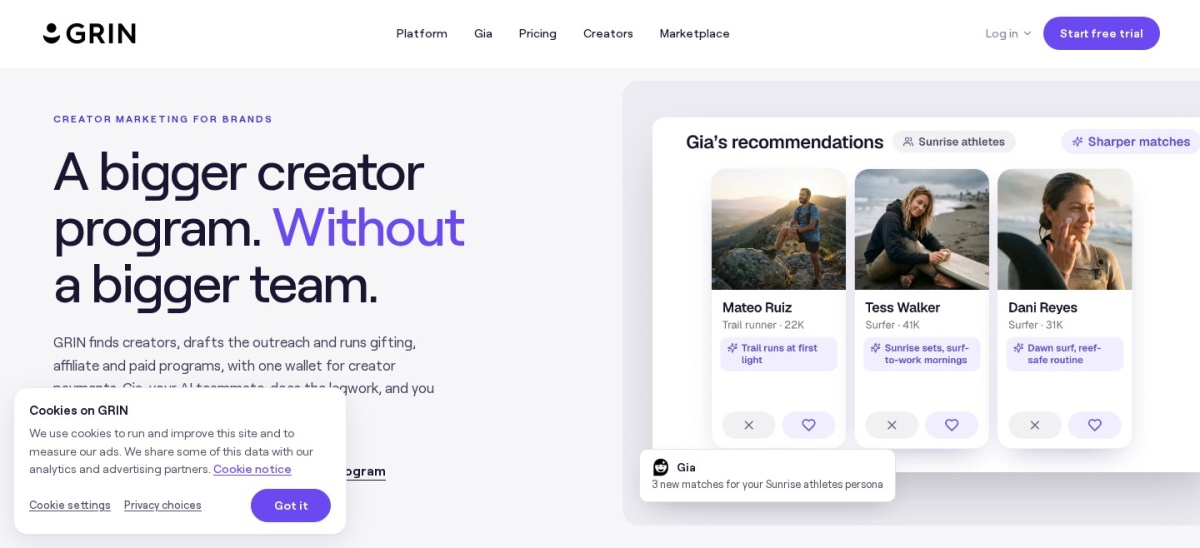
GRIN homepage, captured Nov 2026.
GRIN is a creator management platform covering discovery, outreach, gifting, contracts and payouts. Its free tier supports 2 live campaigns, while Starter costs $200 monthly and includes unlimited live campaigns, 100 monthly gifts, 12,000 creator searches and contact exports.
The trade off is the additional 10% management fee on wallet deposits, which increases campaign costs beyond the subscription. The free tier carries a higher 20% fee. It suits ecommerce brands building ongoing creator relationships rather than arranging occasional sponsored posts.
What we like
Free entry option
Unlimited live campaigns on Starter
Product gifting and creator relationship tools
Creator search and contact export features
Integrated campaign and payment workflow
Watch out for
Additional wallet management fees
Free plan has campaign and gifting limits
Larger programs require higher subscriptions
Budgeting must include creator compensation
Growth increases gifting and search capacity while reducing the wallet management fee.Visit grin.co
04
Collabstr
4.5/5on Trustpilot (514 reviews, checked Nov 2026)
Paid from$249/mo
Best for hiring individual influencers
Creator marketplace1.3M+ creators
Free hiring fee10%
Pro campaigns1/mo
Pro audience reports20
collabstr.com
Collabstr homepage, captured Nov 2026.
Collabstr is an influencer marketplace where brands can search creator profiles, purchase content and manage collaborations through secure payments. Free access includes searching 1.3M+ creators, direct hiring, escrow payments, live post analytics and audience reports, with a 10% hiring fee.
The trade off is that subscription plans and booking fees can increase overall campaign spending. Pro costs $249 monthly billed annually and adds campaign applications, pre-purchase creator messaging and enhanced analytics. It suits brands that prefer choosing specific creators and negotiating defined deliverables.
What we like
Large searchable creator marketplace
Free access before purchasing collaborations
Secure escrow-based payments
Direct hiring and campaign applications
Creator performance and audience reports
Watch out for
Free bookings carry a 10% hiring fee
Pro requires annual billing
Subscription does not include creator compensation
Pro limits simultaneous analytics tracking
Pro adds campaign posting, creator messaging and expanded reporting.Visit collabstr.com
05
Afluencer
4.6/5on G2 (737 reviews, checked Nov 2026)
Starts at$49/mo
Best budget marketplace for brand collaborations
Entry planMarketplace
Invitations60 credits/mo
Creator filtersPremium
Full managementStandard plan
afluencer.com
Afluencer homepage, captured Nov 2026.
Afluencer is a marketplace connecting brands with influencers interested in collaborations and ambassador opportunities. Its Marketplace plan costs $49 monthly and includes 60 invitation credits, premium creator filters and support through phone, email and live chat. Creators can also register through separate membership options.
The trade off is that Marketplace emphasizes creator discovery and invitations rather than complete campaign operations. The Standard plan costs $649 monthly and introduces broader outreach, product sending and creator payments. It suits small brands seeking affordable creator introductions without purchasing a full enterprise system.
What we like
Affordable brand entry plan
Creator invitation and application workflows
Premium influencer filtering
Multiple support channels
Large volume of public G2 feedback
Watch out for
Marketplace invitations are credit-limited
Full campaign management costs substantially more
Creator availability depends on marketplace participation
Not as research-focused as large discovery databases
Standard adds product sending, creator payments and broader outreach capacity.Visit afluencer.com
06
Creator.co
4.6/5on G2 (124 reviews, checked Nov 2026)
Starts at$299/mo
Best for AI-assisted creator recruitment
Entry planSelf Serve
Creator database400M+ profiles
Contact credits100
Insight reports50
creator.co
Creator.co homepage, captured Nov 2026.
Creator.co is an influencer marketing platform offering AI-assisted creator matching, campaign briefs, outreach and performance monitoring. Self Serve costs $299 monthly with a 3-month minimum, including 1 user seat, 100 contact credits, 50 insight reports, unlimited collaborations and access to 400M+ creator profiles.
The trade off is its minimum commitment and separate charges for additional contact credits. Annual billing lowers the listed monthly rate to $199, while managed services cost more. It suits teams that want creator discovery and outreach automation while retaining direct control over campaign execution.
What we like
Extensive creator discovery database
AI-assisted creator matching
AI-generated campaign briefs
Personalized outreach and performance tracking
Unlimited creator collaborations on Self Serve
Watch out for
Self Serve requires a minimum commitment
Only one user seat on the entry plan
Extra contact credits cost more
Managed campaign support is substantially more expensive
Trend is a creator content marketplace focused on producing photos and videos for marketing campaigns. Its Starter package costs $550 and provides up to 6 videos or 15 photos. Brands can create briefs, review creator applications, coordinate production and receive licensed content.
The trade off is that Trend primarily sells reusable content rather than guaranteed posts to an influencer's audience. Credits also expire after 12 months, and larger content packages require additional spending. It suits brands that need creator-produced assets for advertisements, social channels and product pages.
What we like
No recurring platform subscription
Creator-produced photos and videos
Full content licensing rights
Creator applications and project coordination
Clear package-based purchasing
Watch out for
Does not guarantee influencer audience exposure
Credits expire after 12 months
Upfront package purchase required
Less suitable for ongoing influencer CRM management
Essential increases the content allowance; Growth and Scale provide larger credit packages.Visit trend.io
Influencer databases vs marketplaces vs creator management platforms
An influencer database helps marketers search public creator profiles, assess audience characteristics and identify potential partners. Modash and Heepsy are useful examples because discovery and creator evaluation are central to their workflows.
An influencer marketplace connects brands with creators who are available for collaborations. Collabstr and Afluencer emphasize finding creators willing to work with brands, reducing some of the friction associated with cold outreach.
Creator management platforms support ongoing partnerships, gifting, communication, deliverables and payouts. GRIN is designed for this type of relationship management, while Creator.co combines discovery with recruitment and campaign workflows.
UGC production platforms serve a different purpose. Trend focuses on producing licensed content that brands can reuse, rather than guaranteeing publication through a creator's social audience.
What influencer platform pricing does not include
The subscription price is only part of an influencer marketing budget. Brands may also pay creator fees, product costs, shipping charges, usage rights and campaign production expenses.
Some platforms charge transaction or management fees. GRIN Starter adds a 10% management fee on wallet deposits, while Collabstr's free marketplace access includes a 10% hiring fee. These costs should be included when comparing total campaign expenses.
For marketplace or content-credit services, a one-time purchase should not be treated as a recurring yearly subscription. Trend's $550 Starter package is an initial content purchase rather than an annual software license.
Estimate total spending based on your expected creator roster, content requirements, distribution rights and reporting needs. A cheaper platform may not produce the lowest total campaign cost.
How we chose
We shortlisted established influencer marketing software and creator marketplaces with accessible official pricing, active product offerings and public customer reviews. The comparison covers discovery, outreach, creator collaboration, campaign management and content purchasing to represent different marketing needs.
We opened vendor pricing pages and G2 or Trustpilot review listings on 22 Nov 2026. Regular published prices were used rather than temporary promotions. Monthly subscriptions were multiplied by twelve, while annual-billing-only rates and one-time content purchases were identified separately.
We excluded products whose current official pricing could not be confirmed, including quote-only services. We also excluded platforms with insufficient public feedback or discontinued services, and distinguished marketplace transaction fees from subscription charges. No vendor paid for a place, and we do not claim testing for this list.
How to choose the best influencer marketing platform
Define your campaign goals, choose the right creator sourcing model and compare the total costs of running your planned collaborations.
Decide what you want creators to deliver. Choose influencer partnerships when you need exposure through creators' own audiences. Choose UGC production when you primarily need reusable photos and videos. If both matter, prioritize platforms that support campaign distribution and content rights.
Evaluate audience quality and creator relevance. Look beyond follower counts. Compare engagement patterns, content style, audience demographics and brand compatibility. Platforms with discovery and authenticity filters may be more useful for structured recruitment than basic marketplaces.
Match the platform to your campaign volume. A marketplace may be sufficient for occasional collaborations. For ongoing creator programs, consider CRM features, email outreach, shared workflows, gifting tools and payment management. Review monthly contact, project and creator tracking limits.
Calculate the complete campaign budget. Include platform subscriptions, creator payments, transaction fees, product gifting and usage rights. Check minimum commitments and annual billing requirements. Choose the platform whose features justify the total cost for your expected campaign activity.
FAQ
What is the best social media influencer platform in 2026?
Modash is our top recommendation for brands managing ongoing creator partnerships because it combines a large searchable database with outreach, CRM features and campaign tracking. Its Essentials plan costs $199 monthly with annual billing. Heepsy is more accessible for smaller budgets, while GRIN emphasizes gifting and relationship management.
Which influencer marketing platforms have free plans?
Heepsy offers a free plan with 500 monthly search results. GRIN provides a free tier with campaign limits and a wallet management fee. Collabstr allows free marketplace access and charges a hiring fee when collaborations are purchased. Free access does not necessarily mean creator partnerships are free.
What is the cheapest influencer marketing platform?
Afluencer's brand Marketplace plan costs $49 monthly, making it the lowest-priced recurring brand subscription in this comparison. Heepsy has free access and a Starter plan at $89 monthly, or $69 monthly with annual billing. Compare invitation credits, outreach tools and creator fees before deciding.
What is the difference between Modash and GRIN?
Modash emphasizes discovering, evaluating and contacting creators, while also supporting relationship management and campaign tracking. GRIN focuses on the broader operational workflow, including product gifting, campaigns and creator payouts. GRIN includes wallet management fees, while Modash uses subscription allowances and plan-based capabilities.
Can I find Instagram, TikTok and YouTube influencers on one platform?
Yes. Platforms such as Modash support discovery across Instagram, TikTok and YouTube. Other services offer creator marketplaces or social account analytics across multiple networks. Check the specific platform's supported features because discovery, audience reporting and campaign tracking may differ by social network.
How do influencer marketing platforms detect fake followers?
Platforms may analyze unusual follower growth, engagement patterns, audience characteristics and suspicious activity to estimate account authenticity. These indicators can help identify potential risks, but they are not guarantees. Review recent content, comments and audience relevance before committing to a creator partnership.
Are influencer marketplaces better than influencer databases?
Marketplaces are useful when brands want to hire creators who are actively seeking collaborations. Databases provide broader creator discovery and research capabilities, including finding people who have not joined a particular marketplace. The better option depends on whether speed, audience research or relationship development is your priority.
Do influencer platforms include creator payments?
Some platforms support creator payments directly, but the availability and fees differ. GRIN uses a wallet model with management fees, while Collabstr supports secure marketplace payments. Other services reserve payment functionality for higher subscriptions. Always check whether creator compensation is separate from the software price.
What is the difference between influencer marketing and UGC?
Influencer marketing typically pays creators to publish content to their own audiences, helping a brand reach potential customers. User-generated content production focuses on creating assets that the brand can reuse in advertisements, product pages or social posts. Some campaigns combine both approaches, but pricing and usage rights can differ.