VMware vSphere is the best server virtualization software for most enterprises, rated 4.5/5 on G2 across 791 reviews. Pick Proxmox VE for a free open-source hypervisor, or SC// HyperCore for simple hyperconverged clusters at the edge.
How we make this list: we compare pricing pages, product documentation and public user reviews, then re-check every price before each update. No product paid for a place. Disclosure.
VMware vSphere is still the enterprise reference, rated 4.5/5 on G2 across 791 reviews, but it now sells only as per-core subscriptions with no public price.
Proxmox VE gives every feature free, rated 4.6/5 on G2, with an optional Community subscription at €120 a year per CPU socket.
SC// HyperCore has the highest rating in this list at 4.7/5 from 333 G2 reviews, with Standard licences from $189 per core per year.
Four of the eight tools publish no price at all: VMware, Nutanix, Sangfor and XenServer are all quote-only.
VirtualBox is the only fully free option here, rated 4.5/5 on G2, but it is a desktop hypervisor with no clustering.
What to look for in server virtualization software
Server virtualization lets one physical host run many isolated virtual machines, each with its own operating system. The hypervisor decides how CPU, memory, storage and networking are shared, and the management layer decides how much work it takes to run the fleet.
Type-1 hypervisors such as ESXi, Hyper-V, AHV and XenServer run directly on the hardware. Type-2 hypervisors such as VirtualBox run on top of a desktop operating system, which makes them easy to start but slower under load.
Pricing is the hardest part of this market to compare. VMware, Nutanix, Sangfor and XenServer publish no list prices, so this list shows them as quote-only, while Proxmox and Scale Computing publish theirs. Our guide on what a VPS is explains how virtual servers differ from the hypervisors that host them.
Start from the workloads, not the brand. Count the hosts and cores you will license, check whether your backup tool supports the hypervisor, and confirm the licence covers the VMs you plan to run.
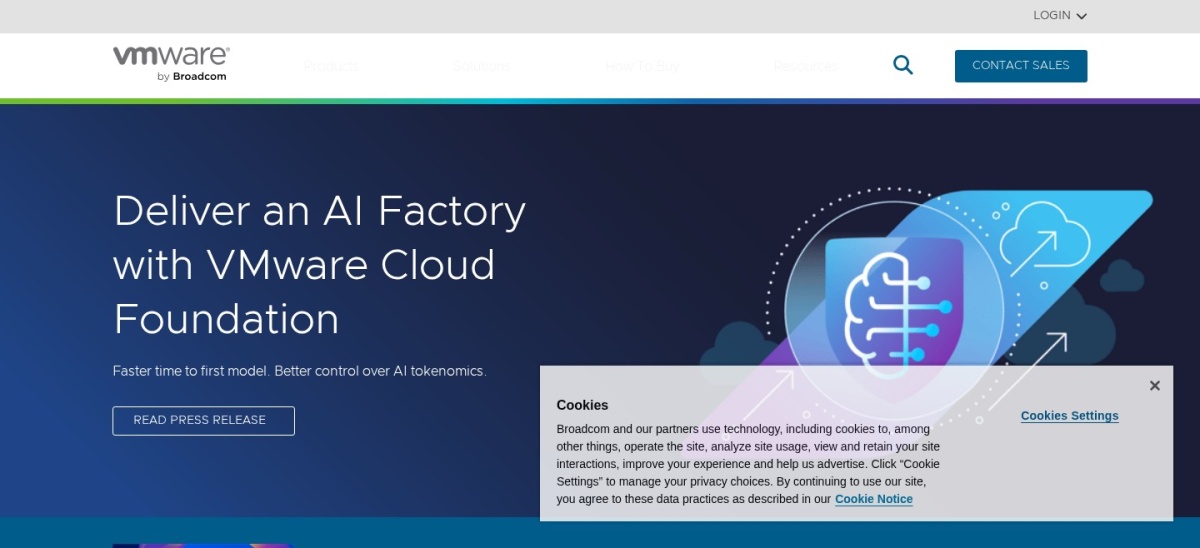
VMware vSphere is the enterprise standard for server virtualization, built on the ESXi type-1 hypervisor and managed through vCenter. It covers live migration with vMotion, automated load balancing with DRS, high availability, and the widest backup and monitoring ecosystem of any platform in this list.
The trade off is price and how you buy it. Since Broadcom took over, vSphere sells only as per-core annual subscriptions through partners, with no public list price and a 16-core minimum per processor. It suits enterprises already running VMware that need the deepest feature set and ecosystem.
What we like
vMotion, DRS and HA are the most mature in the market
Largest backup, monitoring and security ecosystem
Centralized management through vCenter
Watch out for
Subscription-only per-core licensing with no public price
vCenter is resource-hungry and upgrades need planning
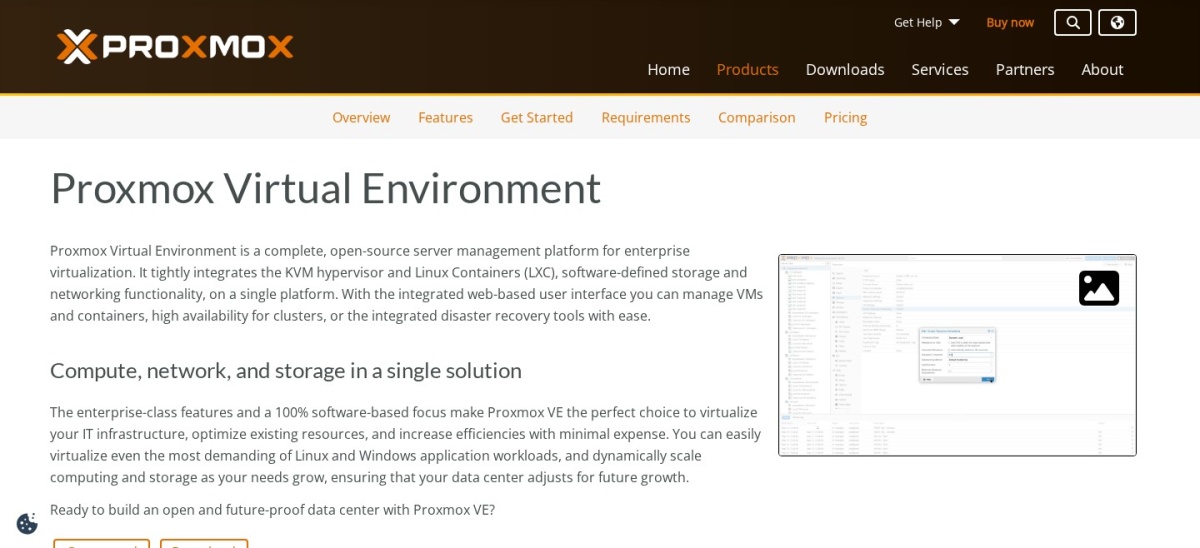
Proxmox VE is a free, open-source virtualization platform that combines the KVM hypervisor with LXC containers under one web interface. Every feature is unlocked free under the AGPLv3 licence, including clustering, high availability, live migration, Ceph storage and backups.
The trade off is support. The tested Enterprise update repository needs a Community subscription at €120 a year per occupied CPU socket (about $138), and ticket support starts at the €370 Basic tier. It suits small teams and homelabs that want enterprise features without licence fees.
What we like
All features free under the AGPLv3 licence
KVM virtual machines plus LXC containers in one UI
Per-socket pricing with no per-core or per-VM fees
Watch out for
Ticket support costs extra from the Basic tier
Enterprise repository needs a paid subscription
Smaller third-party ecosystem than VMware
Community subscription unlocks the tested Enterprise update repositoryVisit proxmox.com
03
SC// HyperCore
4.7/5on G2 (333 reviews, checked Nov 2026)
Starts at$189/core/yr
Best for edge and branch sites
HypervisorKVM-based
DeploymentHyperconverged, 3-node minimum
StorageBuilt-in, self-healing
Paid planStandard, $189/core/yr
scalecomputing.com
SC// HyperCore homepage, captured Nov 2026.
SC// HyperCore is a hyperconverged platform from Scale Computing that bundles the KVM-based hypervisor with storage and networking in one system. It is built for edge, retail and branch sites, with self-healing storage, automatic failover and a single web console for whole fleets of clusters.
The trade off is scale and scope. Clusters need three nodes minimum, and the Standard tier lists at $189 per core per year on a five-year term, with shorter terms costing more. It suits distributed sites that want virtualization with almost no on-site IT.
What we like
Simple setup with single-console fleet management
Self-healing storage with automatic failover
Support is praised across G2 reviews
Watch out for
Three-node minimum for clusters
Fewer advanced VM management features than VMware
Hardware is sold through Scale Computing and partners
Nutanix AHV is the built-in hypervisor of Nutanix Cloud Infrastructure, a hyperconverged platform that merges compute, storage and networking on standard servers. One Prism console manages VMs, storage and networking, with one-click upgrades and built-in backup and disaster recovery.
The trade off is that AHV is not sold on its own. You buy it inside a Nutanix Cloud Infrastructure licence, priced by quote, and the licensing is complex for first-time buyers. It suits enterprises that want one platform for VMs, containers and storage.
What we like
One Prism console for compute, storage and networking
One-click upgrades across the cluster
Strong stability at scale, rated 4.5/5 on G2
Watch out for
Quote-only pricing with a complex licence model
Costly for small setups
Some guest operating systems need manual virtIO drivers
Paid add-ons cover advanced data services and disaster recoveryVisit nutanix.com
05
Oracle VM VirtualBox
4.5/5on G2 (295 reviews, checked Nov 2026)
PriceFree
Best free virtualization for desktops
HypervisorType 2, hosted
HostsWindows, macOS, Linux
LicenceGPLv3 base package
Latest version7.2
virtualbox.org
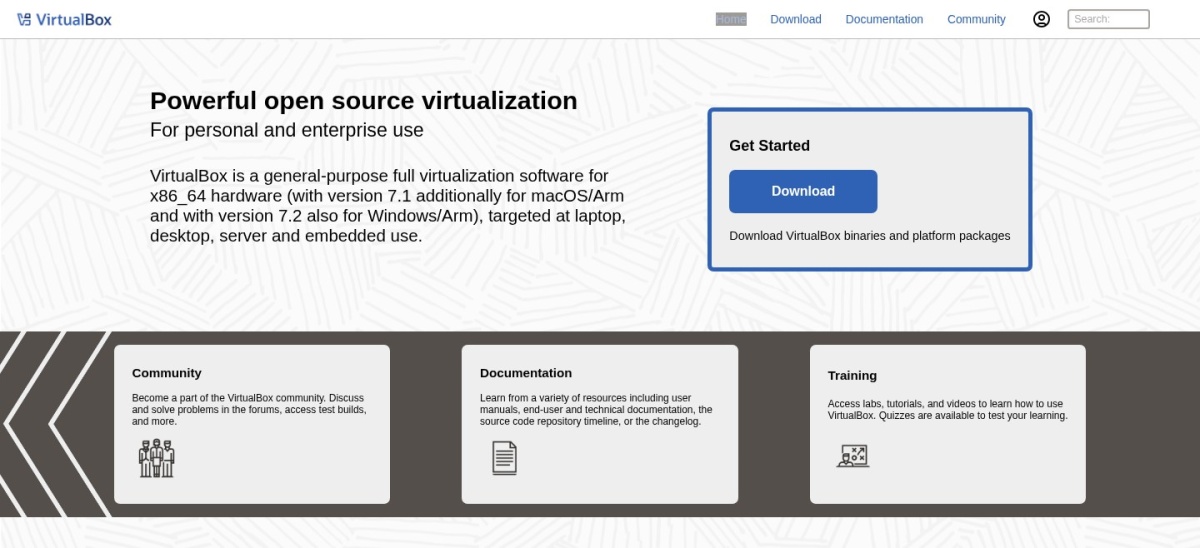
Oracle VM VirtualBox homepage, captured Nov 2026.
Oracle VM VirtualBox is a free, open-source type-2 hypervisor that runs virtual machines on Windows, macOS and Linux desktops. Version 7.2 runs on x86_64 hosts, plus macOS on Arm and Windows on Arm, with snapshots, shared folders and a wide range of guest operating systems.
The trade off is that it is a desktop hypervisor, not a server platform. It has no built-in clustering or live migration, and runs slower than type-1 hypervisors under heavy loads. It suits developers and testers who need free VMs on a laptop or workstation.
What we like
Completely free and open source
Runs on Windows, macOS and Linux
Easy setup for testing and labs
Watch out for
Slower than type-1 hypervisors under heavy load
No clustering or live migration
Interface feels dated
Paid Extension Pack adds USB 3, RDP and encryption for commercial useVisit virtualbox.org
06
Microsoft Hyper-V
4.4/5on G2 (18 reviews, checked Nov 2026)
Starts at$1,176/yr
Best for Windows-first shops
HypervisorType 1, in Windows Server
VMs per licence2 (Standard)
ManagementHyper-V Manager, Admin Center
Paid planWindows Server Standard
microsoft.com
Microsoft Hyper-V homepage, captured Nov 2026.
Microsoft Hyper-V is the type-1 hypervisor built into Windows Server, managed with Hyper-V Manager or Windows Admin Center. It covers live migration, failover clustering, shielded VMs and Dynamic Memory, and fits naturally into shops already running Active Directory and System Center.
The trade off is licensing. Hyper-V itself has no separate price, but each host needs a Windows Server 2025 Standard licence at $1,176 per 16 cores, a one-time cost that covers two VMs, plus CALs. It suits Windows-first teams that already pay for Windows Server.
What we like
Included with Windows Server, no separate hypervisor fee
Strong Windows guest performance
Dynamic Memory and shielded VMs included
Watch out for
Management tools feel scattered across apps
Per-core licensing gets confusing as VM counts grow
Sangfor aSV is a type-1, KVM-based hypervisor inside the Sangfor Cloud Platform, bundling compute virtualization with software-defined storage, networking and security in one licence. Gartner named Sangfor a Visionary in its 2026 Magic Quadrant for Server Virtualization Platforms.
The trade off is reach and pricing. Sangfor publishes no list prices, so you buy through sales or a partner, and the ecosystem is smaller than VMware or Nutanix. It suits enterprises leaving VMware that want one licence covering virtualization, storage and security.
What we like
One licence covers virtualization, storage, networking and security
Gartner Visionary in 2026 for server virtualization
XenServer is the Xen-based type-1 hypervisor from Citrix, now at version 9. It covers live migration, GPU passthrough, storage motion and high availability, with deep integration for Citrix Virtual Apps and Desktops and Citrix DaaS workloads.
The trade off is how you buy it. XenServer Premium is now included with Citrix subscriptions such as Citrix for Private Cloud and Universal Hybrid Multi-Cloud, and no standalone price is published. It suits Citrix shops that already hold those subscriptions.
What we like
Mature Xen-based hypervisor with low hardware needs
Strong networking features including SR-IOV
Included with Citrix subscriptions
Watch out for
Premium only available inside Citrix subscriptions
Smaller knowledge base than VMware
Pools need matching hardware
Premium adds support for Citrix Virtual Apps and Desktops featuresVisit xenserver.com
Four tools publish no price: what to ask
VMware, Nutanix, Sangfor and XenServer all sell through quotes, so there is no list price to compare. The only fair comparison is to ask each vendor to price the same cluster: the same host count, the same core count and the same term length.
Watch the billing unit. VMware and Scale Computing charge per core, while Proxmox and XenServer charge per socket, so a host with many cores can look cheap on one model and costly on the other. VMware also sets a 16-core minimum per processor.
Check what the quote leaves out. Hardware, migration help, backup licences and support tiers are often separate lines, and the cheapest quote can grow once those are added.
How we chose
We started from the hypervisors that appear in G2's server virtualization category and in VMware-exit guides, then kept those with a public G2 rating and a real product page.
Prices come from each vendor's pricing page or G2 pricing data, checked on 26 November 2026. Ratings and review counts come from G2 on the same day. Where a vendor publishes no price, the list shows quote-only instead of an estimate.
We left out KVM on its own, which is a kernel module rather than a product, and OpenShift Virtualization, which has no G2 rating. No vendor paid for a place, and we do not claim to have used these tools ourselves.
How to choose server virtualization software
Start with the hosts you already own, then match the licence to them.
Count cores and sockets first. VMware and Scale Computing charge per core, Proxmox and XenServer per socket. The same host can cost very different amounts under each model.
Check your backup and monitoring tools. Confirm they support the hypervisor before you migrate. Some tools charge extra for AHV or HyperCore support.
Decide how much you want bundled. Hyperconverged platforms such as Nutanix, HyperCore and Sangfor include storage and networking; vSphere and Proxmox expect you to bring your own.
Get quotes for the same cluster. Ask every quote-only vendor to price the same host count and core count, and check minimums such as VMware's 16 cores per processor.
FAQ
What is the best server virtualization software?
VMware vSphere is the best pick for most enterprises. It is rated 4.5 out of 5 on G2 across 791 reviews and has the deepest feature set, with vMotion, DRS and high availability, plus the widest backup and monitoring ecosystem.
What is the best free server virtualization software?
Proxmox VE is the best free option. Every feature is free under the AGPLv3 licence, including clustering and high availability, and it is rated 4.6 out of 5 on G2. VirtualBox is also free but is a desktop hypervisor without clustering.
Is Proxmox really free?
Yes. Proxmox VE is open source and every feature works without paying. The optional Community subscription costs €120 a year per CPU socket and buys access to the tested Enterprise update repository, with ticket support starting at the €370 Basic tier.
Why do VMware, Nutanix, Sangfor and XenServer show no price?
None of them publishes a list price. VMware sells per-core subscriptions through partners, Nutanix and Sangfor sell through sales quotes, and XenServer Premium now comes inside Citrix subscriptions. Ask each vendor to quote the same host and core counts.
Can I run VirtualBox on a server?
You can, but it is a type-2 hypervisor that runs on top of a desktop operating system, so it is slower under load and has no clustering or live migration. For production servers, pick a type-1 hypervisor such as Proxmox VE, Hyper-V or vSphere.
What is the cheapest paid virtualization software here?
Proxmox VE has the cheapest paid option at about $138 a year for one CPU socket, and the software itself is free. Scale Computing HyperCore starts at $189 per core per year on a five-year term, while Hyper-V needs a $1,176 Windows Server licence.
SaaS SEO and WordPress specialist with about 8 years of experience. Rakib compares WordPress plugins, themes, hosting and software using public pricing, documentation and user reviews. See how we rank.